The 2026 Nobel Prize in Physiology or Medicine has just been announced.
Karl Deisseroth of Stanford University, Peter Hegemann of the University of Hamburg in Berlin, and Georg Nagel of the University of Würzburg, received the prize this year.
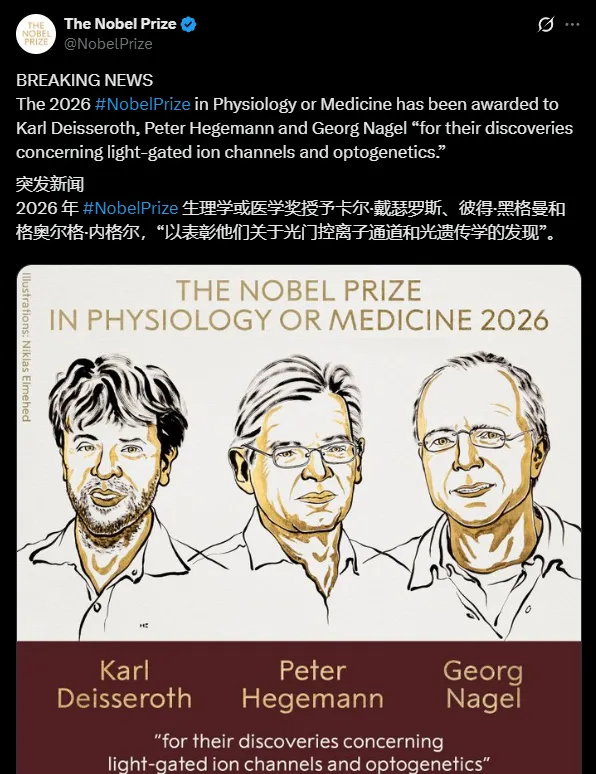
The names of the three collectively refer to a technology that has radically changed the way neuroscience is researched: optogenetics.
Simply put, the technology gives researchers a previously unthinkable ability to switch light-sensitive "switches" onto specific neurons and control the activity of these cells with milliseconds of precision through different wavelengths of light.
Photo-genetics: from a strain of green algae to neuron control
There are tens of billions of neurons in the brain that work together through complex networks of electrical signals. In the past, if researchers wanted to know exactly what a group of neurons were responsible for, they could observe their activity and use electrodes to stimulate a region of the brain, but it was difficult to control "some neurons" accurately.
This has been changed by light genetics, which combines "genetics" and "light".
The researchers first used genetic methods to allow target neurons to express photosensitive proteins such as Channelrhodopsin. In ChR2, for example, the protein-forming ion channel opens up after blue light exposure, and the positive-electric ion flows into the cell, altering the membrane's electrical pathway, and can further trigger neurons to generate moving electrical pathways.
It can also inhibit neurons by substituting a photosensitive protein.
As a result, researchers can not only observe "what animals do when they are active in a certain area of the brain", but also activate or shut down a specific group of neurons and observe how behaviour changes.
This distinction is crucial.
Neuroscience can thus move further from relatedness to causation: which groups of neurons are involved in fear? which neural circuits influence reward? can activating a group of cells evoke a memory?
Today, from sensation, movement, and memory to reward, social, and mental illness research, numerous experiments have been built on the precise interventions provided by photosynthetics. As photosynthetic proteins, imaging, and optical technologies continue to advance, researchers have even been able to record and manipulate specific neurons in the living brain at the same time.
A basic study of how green algae initially perceive sunlight eventually became a "remote controller" for studying the brain.
How to find a new way to "write" a brain interface
When it comes to brain machine interfaces, what people are most familiar with is usually "reading".
The electrode records the electrical signals generated by neurons, from which the algorithm identifies the motion intent, and then converts the result into motion of the optical signal, mechanical arm control or text output. From the brain to the computer, a "read" of a message is completed.
But there's another half of a real two-way brain interface: How does a computer rewrite information in the brain?
Currently, this type of feedback is usually accomplished by electrical stimulation, such as stimulation of the sensory cortex, which gives people with mechanical arms a certain degree of tactile feedback.
In addition to this, there is also the possibility that photogenetics offers another possibility.
Compared to electrical stimulation, one of its greatest characteristics is its ability to select specific cell types through genetic means and activate or suppress them with high time and spatial accuracy.
Researchers can therefore imagine a more subtle closed loop: the system first reads neuronal activity, analyzes brain state by algorithms in real time, and then, based on the results, uses light to stimulate specific neurons to re-send information back to the nervous system.
A 2024 review has summarized such systems as "optogenetic brain-computer interfaces", which can contain three links of recording, computing, and photo-stimulation simultaneously.
A review published this year specifically discusses the possibility of a combination of binary photon genetics and brain machine interfaces. Compared to conventional photon stimulation that affects a region at once, binary photon technology has been able to target single-cell neurons with precision while controlling hundreds of specified cells, and stimulation patterns can also be changed in real time.
If previous brain-machine interfaces were more about learning how to "hear" the brain, how to "talk to the brain" more precisely would be the solution.
It can be said that the evolution of photosynthesis has changed the way we interact with the brain.
Where did the Nobel Prize winners come from?
Peter Hegemann, a biophysicist at the University of Hamburg in Berlin, has long studied how single-celled green algae perceive light. At the end of the last century, he traced a previously unexplained light-response mechanism in green algae Chlamydomonas and collaborated with Georg Nagel.

Georg Nagel, currently a professor at the University of Würzburg. From 2002 to 2003, Nagel, Hegemann and others studied Channelrhodopsin-1 and Channelrhodopsin-2 (ChR2), demonstrating that these types of proteins derived from green algae are themselves direct-light-controlled ion channels. In these, ChR2 can rapidly alter cell membrane currents under blue light stimulation, providing a critical molecular tool for later neuron-control.
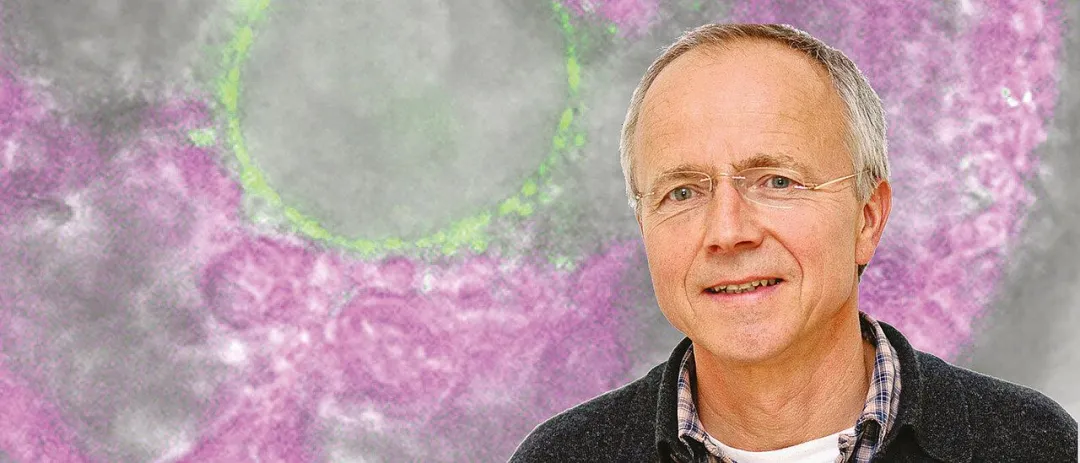
Karl Deisseroth is a professor at Stanford University with a background in neuroscience and clinical psychology. In 2005, his team applied ChR2 to mammalian neurons, demonstrating that short pulses of light can induce neuronal discharge with extreme precision in time. Deisseroth then pushed photogenetics into neural circuits and behavioral studies, making it one of the most important experimental tools in modern neuroscience.
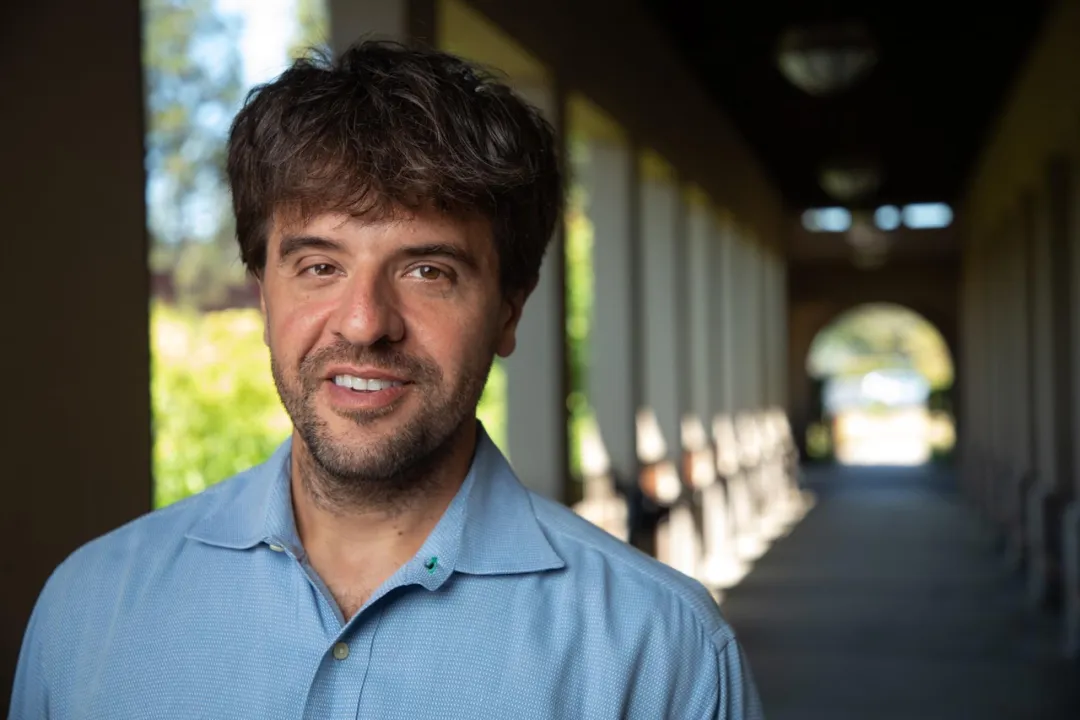
From discovering how green algae perceive sunlight to allowing neurons to have man-controlled light switches, Hegemann, Nagel and Deisseroth have come a long way from basic biophysics to neural engineering.
The human brain is still a long way from being truly free to "read and write", but at least on this side of writing, we have found an unprecedentedly precise method.