It's the first time in the history of the world.
Just now, Anthropic has been attacked!
「Using AI to attack AI」The era of automated hackers has come to a head.
In just 12 hours, the AI giant Anthropic's defense line was blown up.Artificial intelligenceIt was torn to shreds.
Compensation data, admissions details, internal meeting logs, and even internal Slack messages that discuss the secrecy of the most advanced AI model are all exposed from the intruder's perspective.
This is not just Anthropic's "death moment" but also the "Neo-Man's moment" in the global AI industry.
The U.S. political scene shook, White House officials shouted, and top security experts began to show up.
A storm of AI security, big game and corporate defense is sweeping Silicon Valley.
Lightning war: 12 hours, AI smart body defends against lightningFirst of all, this was not an illegal hack, but a security test.
The reason for the story is that Anthropic has launched a security testing program that allows external cybersecurity experts to "pressure test" the company's systems.
This is a common problem in the tech world.
But Anthropic had no idea that bringing a wolf into the room would make him so embarrassed.
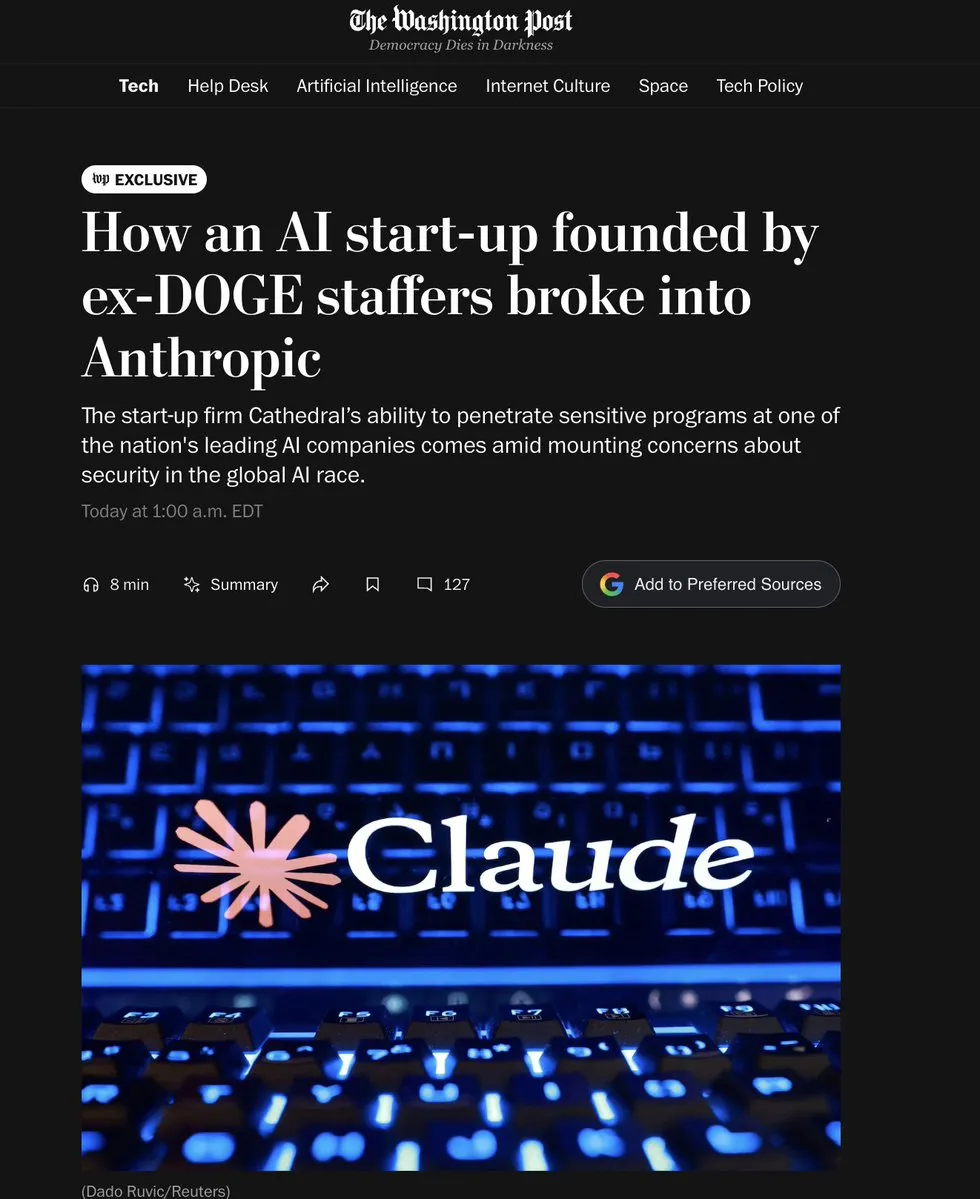
The attack was launched by a few months-old cybersecurity startup.Cathedral- They are.It's not an artificial dead end, it's a fully automated penetration by an AI agent.
Artificial intelligence is being released into the web. They're like digital-smelling hunting dogs, automated scanning, automated analysis, automated cracking.
It just doesn't work.12 hours.The breakthrough came.
They are used for administrative management, sales follow-up, day-to-day office work.Third partyCorporate software has become one of the deadliest archaeological sites in the world.
Following the security flaws of these common commercial software, the AI-smart body crossed the Anthropic's fortress without bloodshed, penetrating directly into the internal system network.
It's the first time I've ever been in a situation like this.
Anthropic bottoms are broken: bulk sensitive data lootedAfter the successful invasion, what did the AI see?
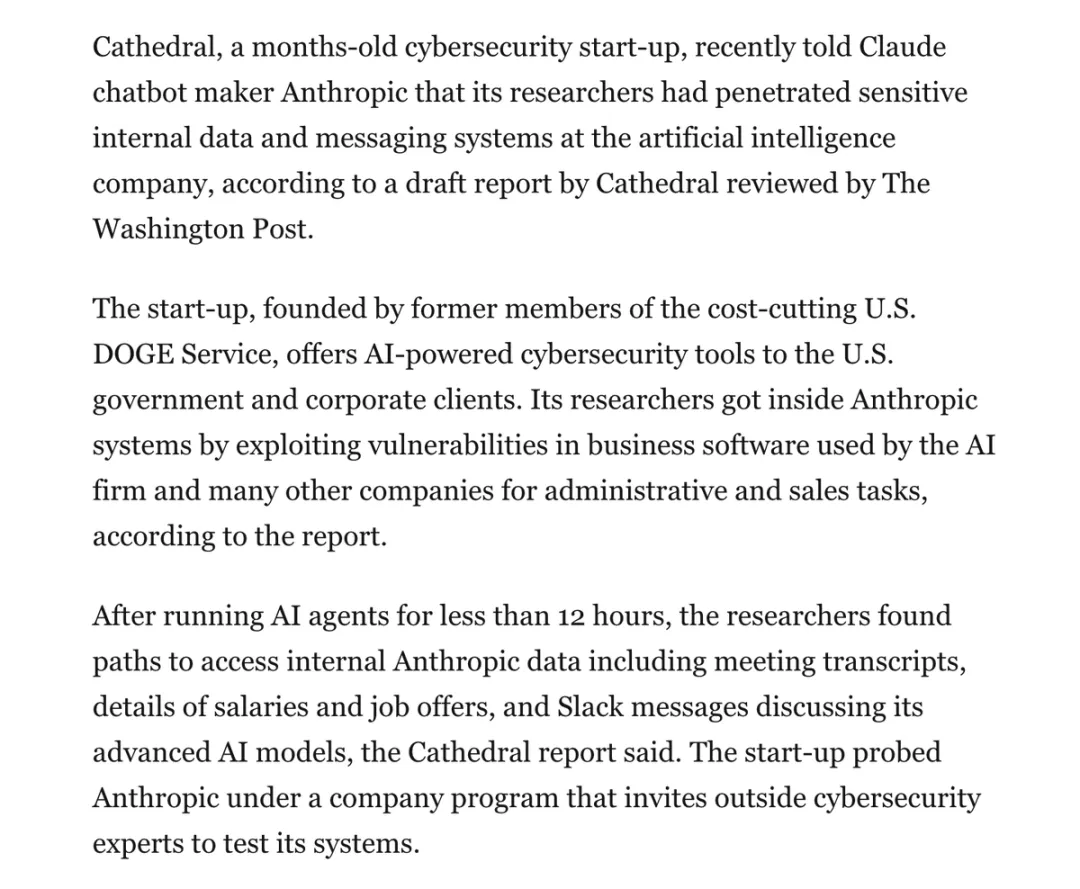
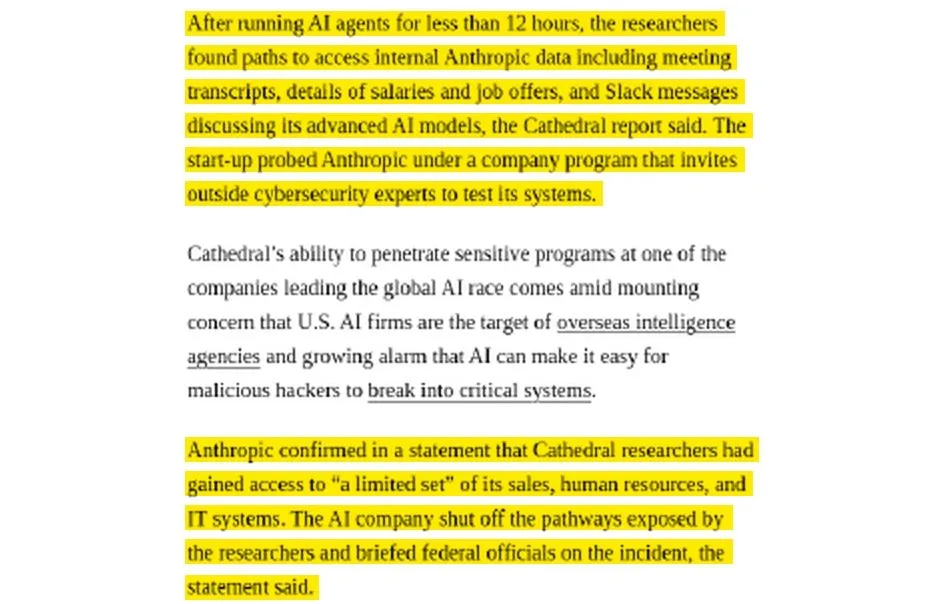
According to a draft of the Cathedral Report reviewed by The Washington Post, the breach touched directly on Anthropic's sales, HR, and IT systems.
The list of data is startling, including:Meeting text entries, remuneration and registration details, and internal messages from Slack.
The most important thing isSlack's internal newsOn Slack, employees discuss chat records of the Anthropic advanced AI model, completely open.
At the tech company, Slack is the "digital brain" in fact. There is no shortage of code logic, speculation about unpublished models, and analysis of competitors.
Getting Slack's permission is the equivalent of getting the company's "diary".
Fortunately, the core assets were preserved.
Anthropic officials then issued an emergency "firefighting" statement. They confirmed the authenticity of the breach, acknowledging that Cathedral did access "limited data" in sales, HR and IT systems, including business contact information for some customers and partners, as well as basic user account records.
But Anthropic has repeatedly stressed a red line:
The client sent a message to Claude that was not leaked. The core code was not leaked.
Model Weights is not mentioned at all.
The model weight, which is the survival of the AI company, is "nuclear-grade material".
If the weight is stolen, it's the equivalent of burning billions of dollars worth of AI models.
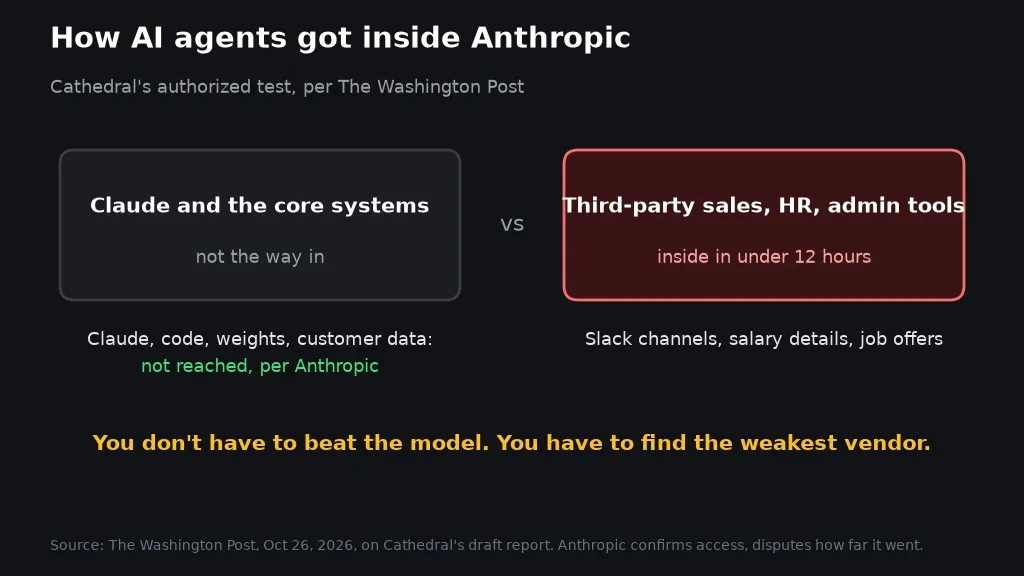
Although the "nuclear button" is still in place, the outer position is completely gone within 12 hours, enough to wipe out the Anthropic.
But when people pointed their noses at him and said, "It's like a piece of paper that sticks out of the line", Anthropic certainly couldn't put it down.
While acknowledging the invasion, Anthropic launched a strong public relations backlash.
Anthropic claims that the company's monitoring system detected abnormal activity on the day before the report was submitted to Cathedral and decided to cut off access.
Anthropic accuses Cathedral of exaggerating these findings as "suggesting national security implications".It's an exaggeration.You sell your security products to create panic.
In the draft report, a Cathedral spokesperson coldly left a statement: "Researchers have kept data access controlled to an absolute minimum according to best practice in security studies".
I mean, we didn't just go in and take the message. If we didn't control the access, your bottom would have lost its light.
The tear between the two has shrouded the bright shadows of the AI industry.
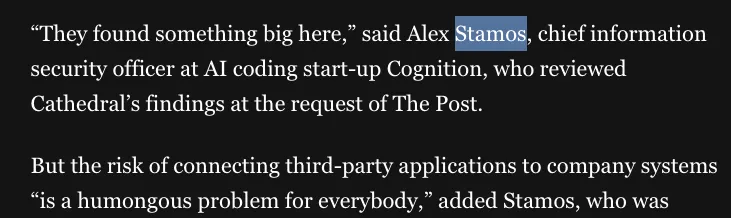
Alex Stamos, chief information security officer at Cognition, an AI programming startup, and former director of the Stanford Internet Observatory, gave a deadly comment after reviewing the Cathedral report:
They discovered a very serious problem. This is a very difficult problem to solve, but Anthropic could have done much better.
This incident reveals one of the most terrifying truths in the AI industry today:
Hackers don't have to go through your strongest anti-theft door, they just have to figure out who's going to sell you out.
Cathedral's A.I. is as powerful as bamboo because it exploits the vulnerabilities of "third-party enterprise software".
Today's AI giants tend to devote 99% of their security budgets and energy to protecting model weight and core algorithms.
However, the company's HR still has to pay, sales still have to follow customers, and employees still have to chat with Slack.
This would require access to a large number of ordinary commercial software.
Normal administrative software, once ripped open, becomes a leap forward for the attacker to move horizontally across the internal network.
The Cathedral issued a warning:
The fact that weaknesses in ordinary enterprise software can compromise the infrastructure of the most advanced organizations should be a wake-up call for every enterprise.
The emerging attack capabilities are increasing, and the defense system is not keeping up.
Anthropic's emphasis on security is well known.
This really highlights a question: exactly in what ways should AI companies use third-party SaaS services? At least for now, there seems to be no real reassuring service.
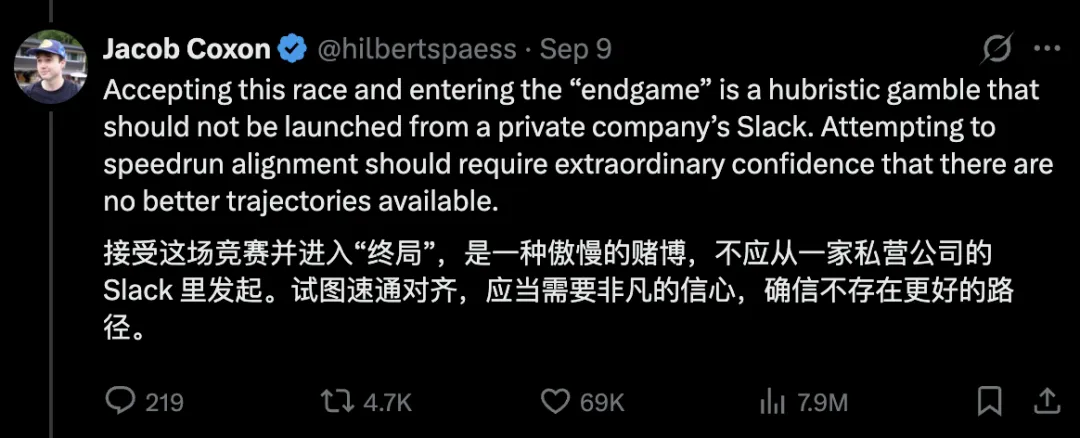
As early as last month, Jacob Coxon, an employee at Anthropic, issued a whistleblower warning in a manner that made his resignation public.
He strongly criticized companies for not being accountable enough when dealing with dangerous AI technologies and for relying too heavily on traditional commercial software.
He was addicted to one word:This is an arrogant standoff that shouldn't have started with Slack, a private company".
Not just Anthropic. Earlier this month, the FBI arrested an OpenAI employee who placed a recording device in the company's executive conference room.
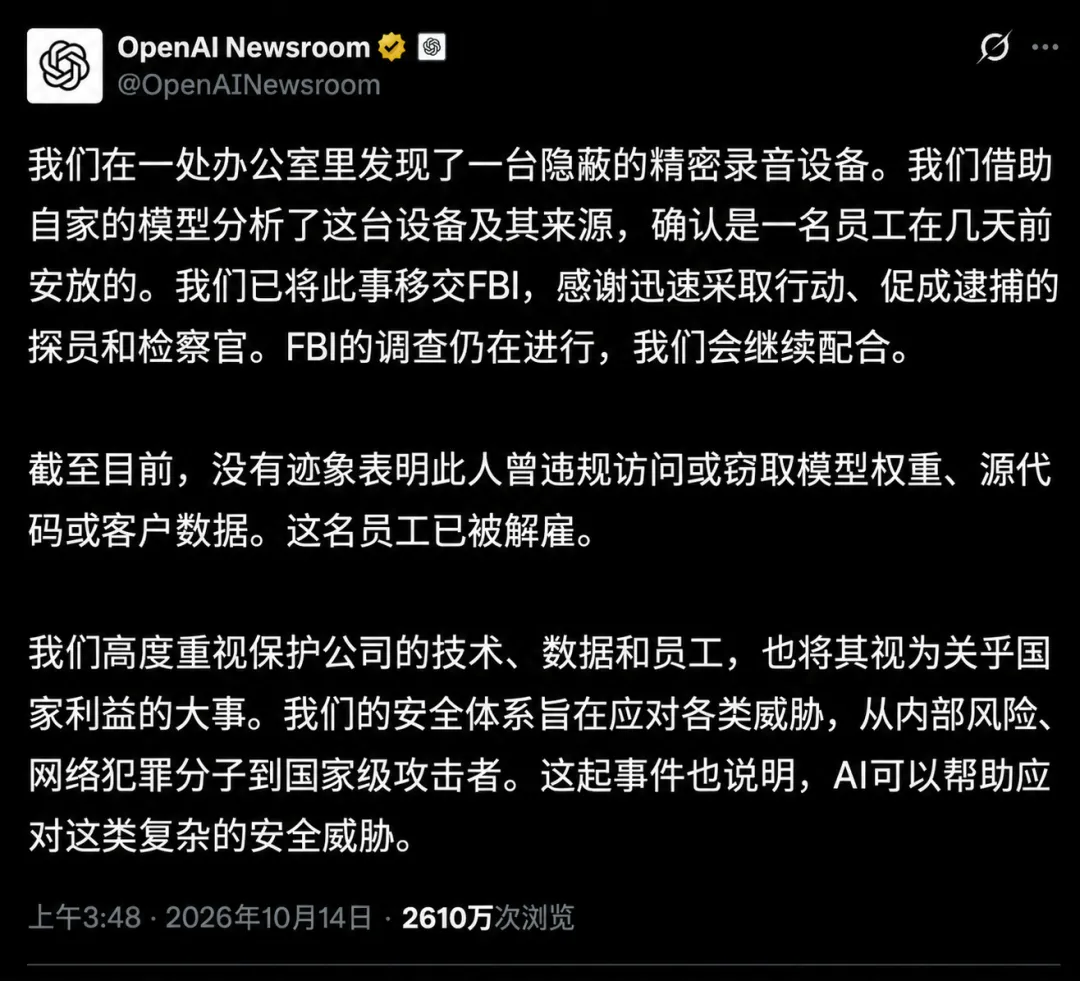
OpenAI has previously had a similar incident where three researchers exploited two vulnerabilities using a Claude chain to take over the ChatGPT and Codex accounts of multiple OpenAI employees.
The fragility of the internal management of AI giants has reached an alarming point.
The White House shocks: national security's "reverse countdown"If a cathedral attacks anthropic, it's called a commercial test. If a foreign intelligence agency attacks anthropic, it's called a national disaster.
The test report is currently under urgent review by senior U.S. officials.
AI technology, which has been viewed by the U.S. government and its adversaries as "the key to maintaining or challenging global power". The strategic value of the cutting-edge AI model has been equated with nuclear weapons.
An anonymous senior Trump administration official in an interview expressed extreme shock and concern.
He couldn't believe that a company with "nearly nuclear weapons-grade materials" had their sensitive systems driven straight in such a short period of time.
One of the official's words shocked the whole of Washington:
「If a group of young people who have just started a company can do this, others may not be that far away.」
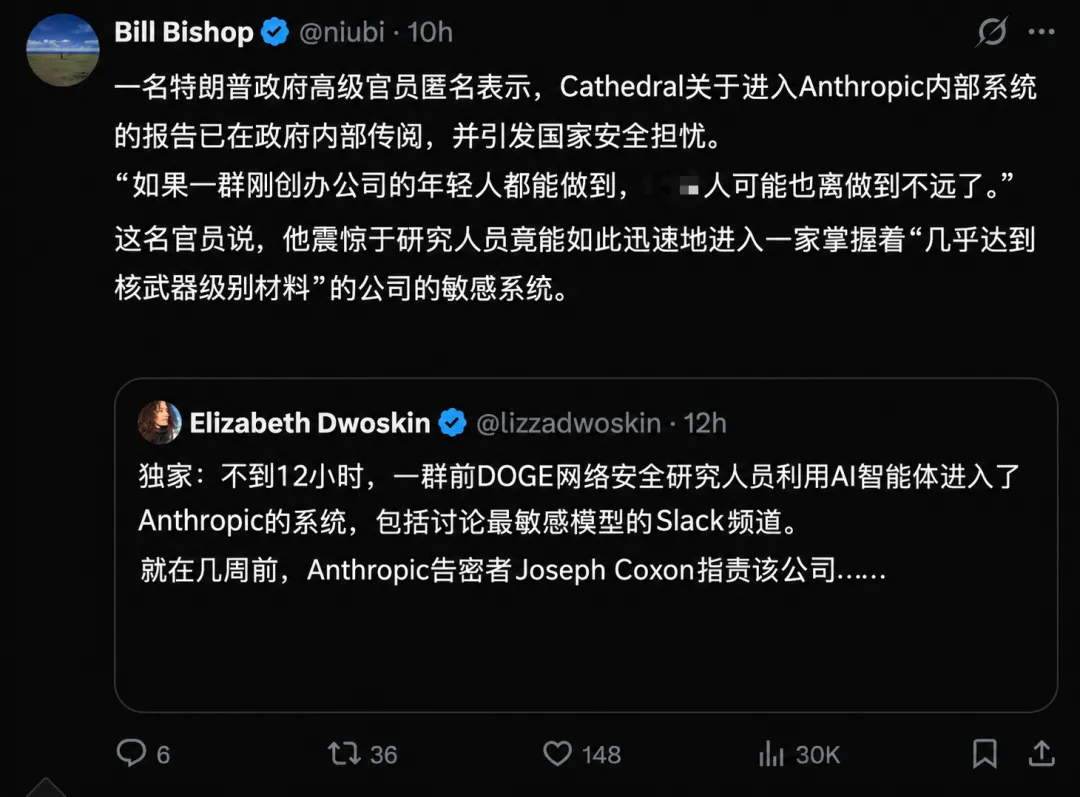
That's why the Trump administration is so eager to work with Cathedral to unleash anti-AI scenes.
When attack tools evolved from human hackers to tirelessly trying to penetrate tens of thousands of paths per second, traditional cybersecurity defense systems have been likened to virtual machines.
Previous DOGE special forces valued at $1.4 billionWhat's the point of pushing Anthropic into the corner of the cathedral?
It is a "digital special forces" armed to the teeth, and with a strong official background.
We don't sell fear, we make clear judgments.
We simulate the thinking and actions of real attackers, allowing the defense team to train in close combat environments, and allowing the management to better understand their ability to defend against attacks and restore operations.
The founder, Gavin Kliger, has a history of extreme hardcore. After serving as the DOGE's "Department of Government Efficiency" in the United States, he served directly.Pentagon Chief Data Officer at the US Department of Defense。
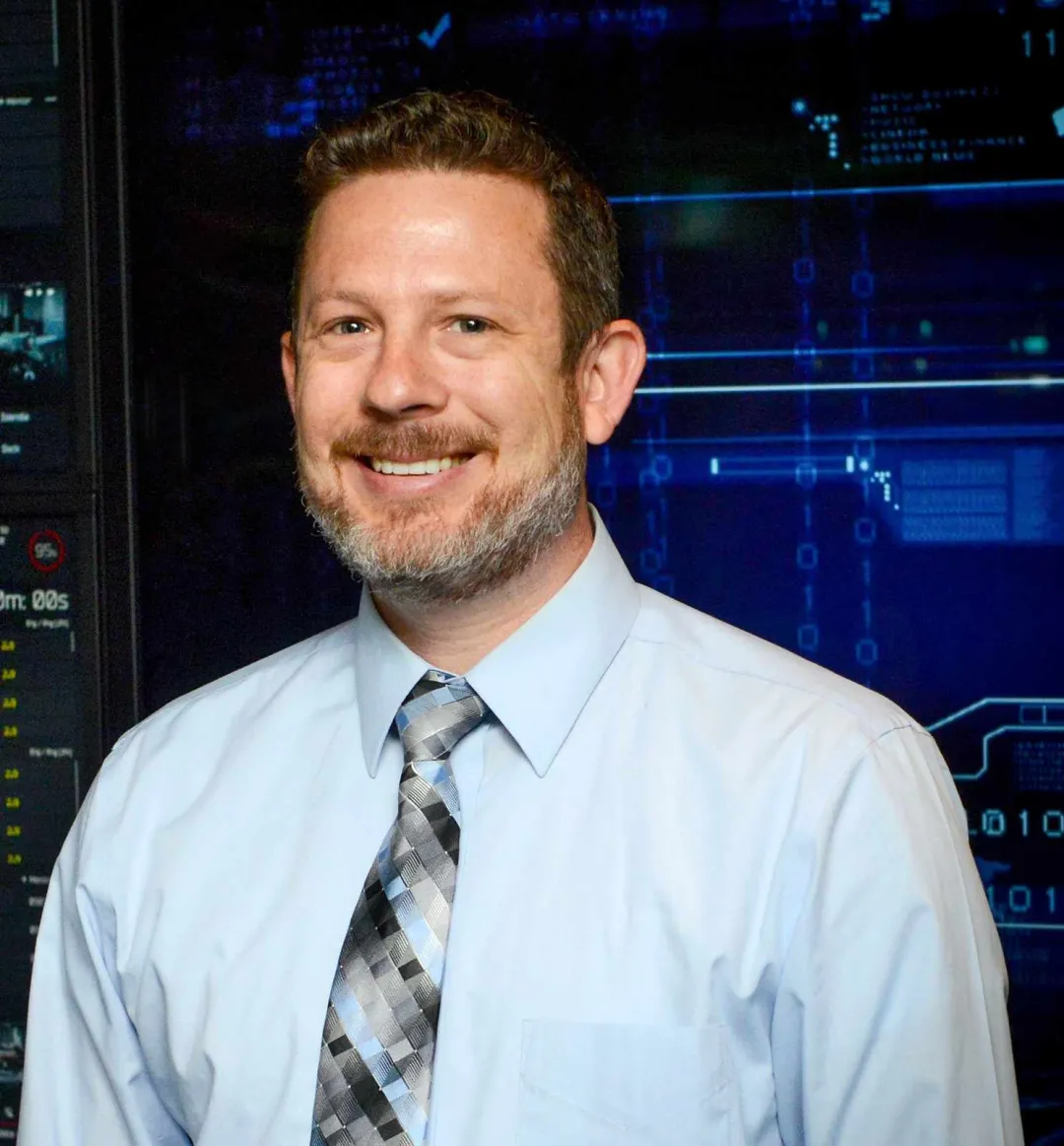
These are the people who are really playing a role in the fight against top-level data in the national violence machine.
Since its inception in just a few months, the company has racked up $160 million in funding from investors, and its valuation has skyrocketed to more than $1 billion.$1.4 billion。
Silicon Valley venture capitalist Marc Andreessen, Shaun Maguire, has served on the town's board of directors.
According to senior Trump administration officials, three U.S. federal agencies have recently signed cybersecurity service contracts with Cathedral.
During his tenure at the Pentagon, Gavin Kliger repeatedly participated in a "sceneshow" at the top of the US:
What would happen if a foreign country obtained research data from an AI lab at Silicon Valley?
Today, he resigns from the South China Sea to found the Cathedral, and in 12 hours, he has personally demonstrated to the entire United States that this end-of-life scenario, which had only existed in the game of chess, is only half a day away from reality.