Yesterday, Tibo promised to "release or reschedule for 28 consecutive days".
Tibo announced that OpenAI has optimized the default speed: subscribing users to use GPT-6 Astra and GPT-6.1 Sol in all products improves the speed by about 50%.
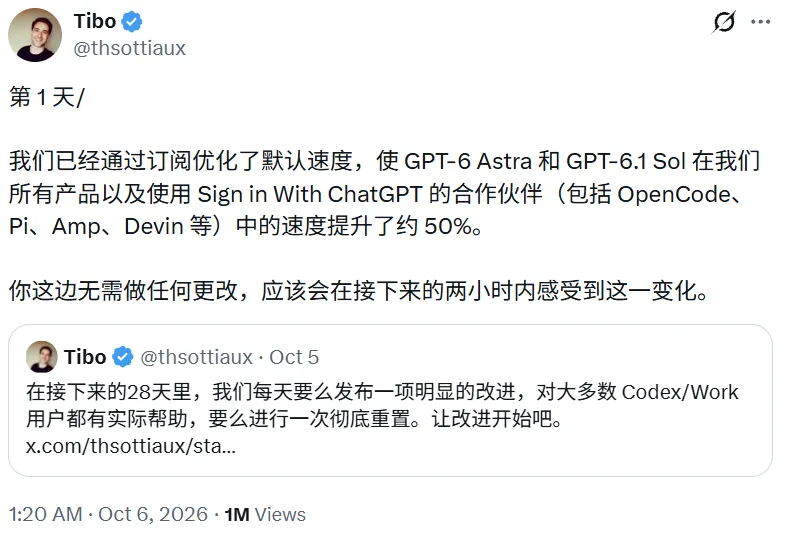
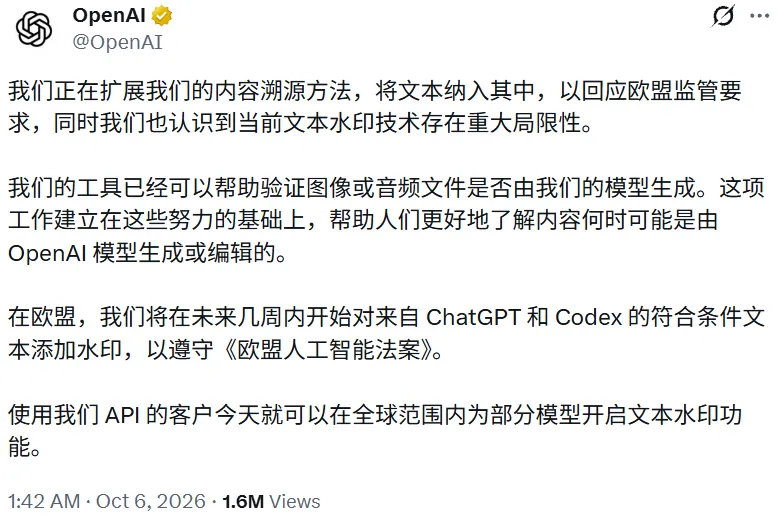
At the same time, OpenAI officials have also announced a feature for text waterproofing:
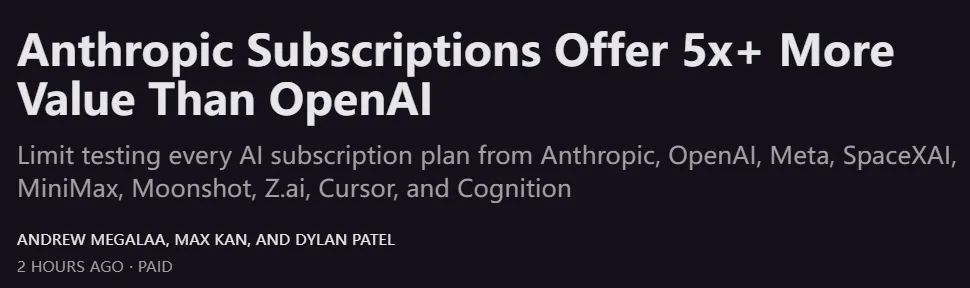
At about the same time, SemiAnalysis released a subscription test report titled: "Anthropic subscriptions offer more than five times the value of OpenAI".
OpenAI may not have imagined that it was just fulfilling its promise that it would be punched in the face by SemiAnalysis, the renowned third-party agency.


Yesterday, we wrote that after Developer Day, OpenAI was facing a crisis of user trust, with user discontent focused on two things: the model was slow, the quantity was low.
Day 1: Slow down first.
Tibo subsequently added a number in his reply: the output speed was increased from 30 TPS to 50 TPS, and it was paired with the currently highest-optimized tokenizer he said. He also emphasized that the number of tokens required for both models to complete the task itself was small.

This acceleration covers not only OpenAI's own products, but also all partners with access through "Sign in with ChatGPT", with Tibo naming them OpenCode, Pi, Amp, Devin, etc. In other words, as long as both models are subscribed to ChatGPT, calls will be faster wherever they go.
But some developers in the comments section said that even so, the ChatGPT model is still slower than Claude.
Some developers have expressed doubts in the comments section, and some test results have been released, such as the test data released by @BrenBuilds showing that the speed of GPT-6.1 is back to the current speed of the model's release.

It's five times the same amount of money.
But the speed is not the same as the limit. The first day update did not mention any changes to the usage limit, which is the focus of the SemiAnalysis report.
The report tested the subscriptions for Anthropic, OpenAI, Meta, SpaceXAI, MiniMax, the dark side of the moon, Z.ai, Cursor and Cognition one by one.
Subscriptions do not disclose price details, and users can only see a 0 to 100% consumption progression bar, typically divided into two windows of 5 hours and 7 days.
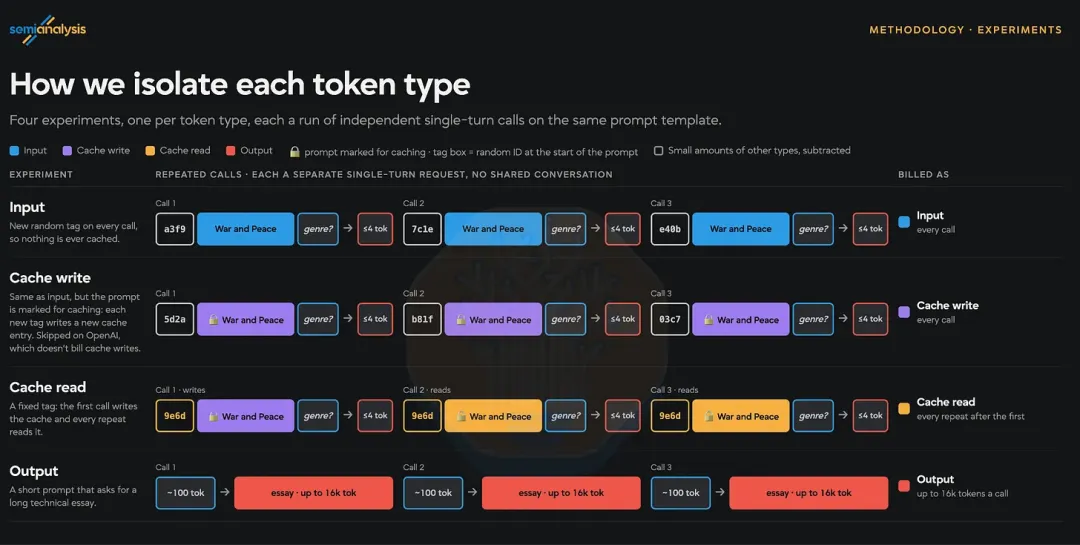
SemiAnalysis is the practice of isolating the input, cache write, cache read, and output of the four types of tokens one by one, using specially designed prompt repeated calls, to record how many tokens are consumed each time the progress bar jumps, until the error is reduced to within ±5%.
SemiAnalysis found that in three of the same subscriptions from the same vendor, one account's volume was about 20% lower than the other two. It was only after communicating with the vendor that it was confirmed that the account was split into a very small volume of A/B testing.
The GPT-6 Astra and Claude Fable 5.1 are relatively close, with the difference that Fable can only take up half of the total in Claude's subscription. At $200, after spending $2,485 on the Fable 5.1, Claude's subscription left half of the quota for other models; the peer OpenAI subscription was exhausted after consuming the $2,897 Astra.
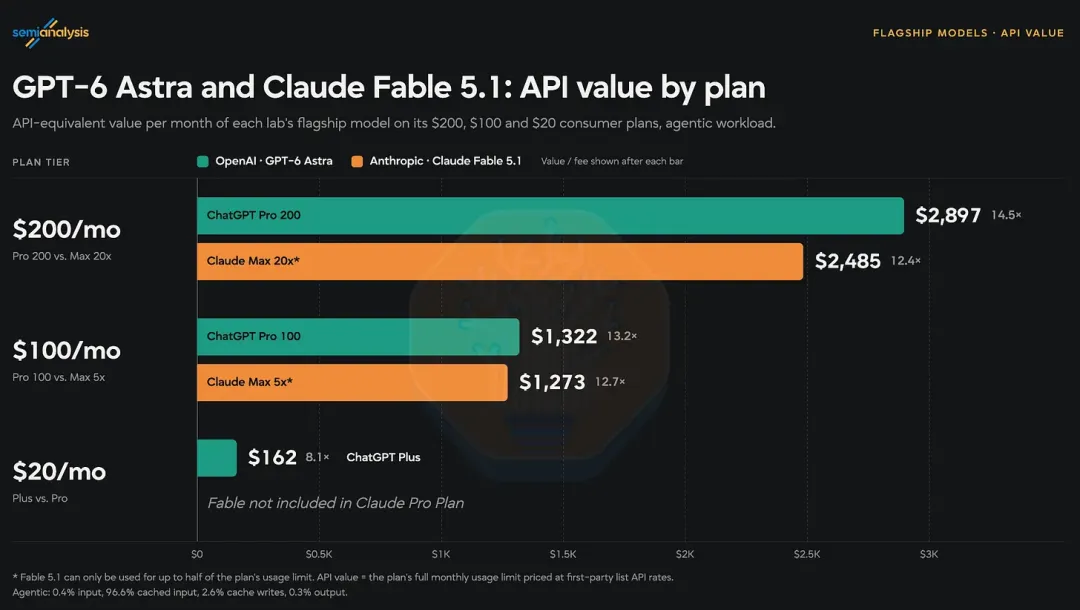
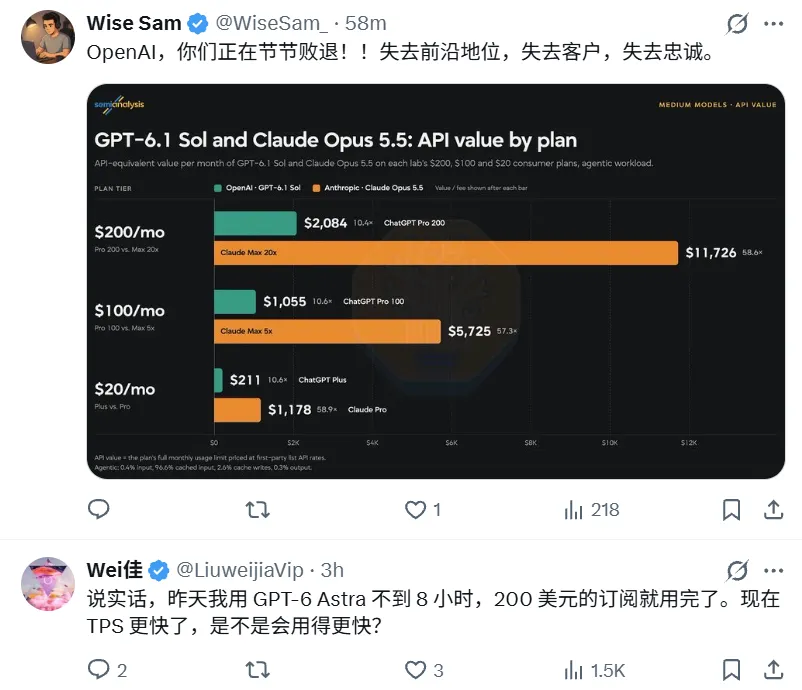
The real difference is the mid-range model, which is that both the Claude Opus 5.5 and GPT-6.1 Sol are the "daily mainstays" of most users. At this level, the value of an API such as an Anthropic subscription is about five times that of OpenAI, and it is the overall leader in all price ranges.
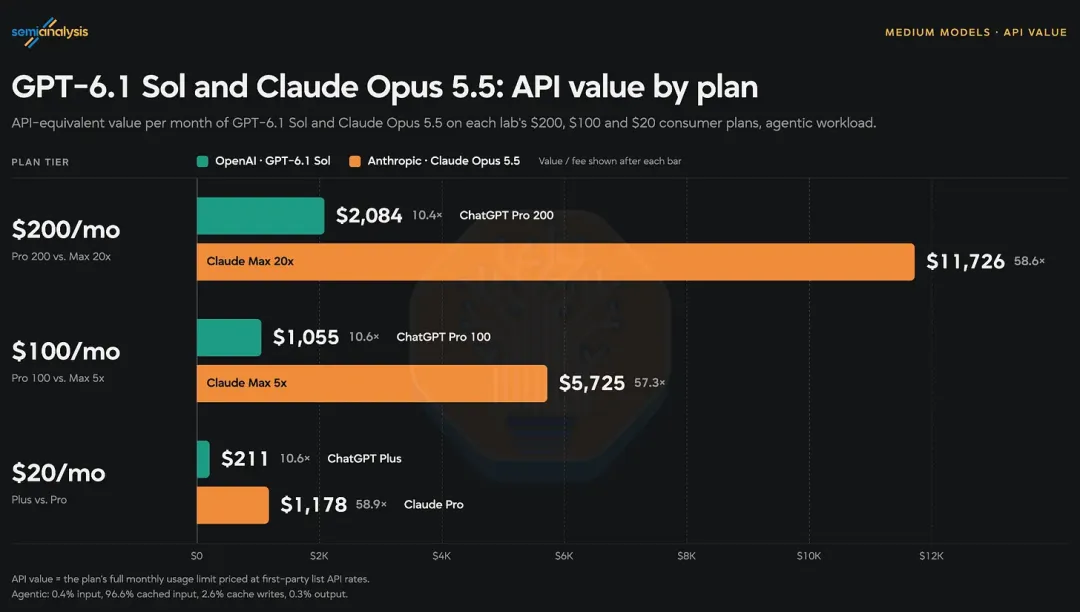
Some would argue that this is unfair to OpenAI: A single API version of 6.1 Sol is much cheaper than Opus 5.5, which is a natural disadvantage for the API.
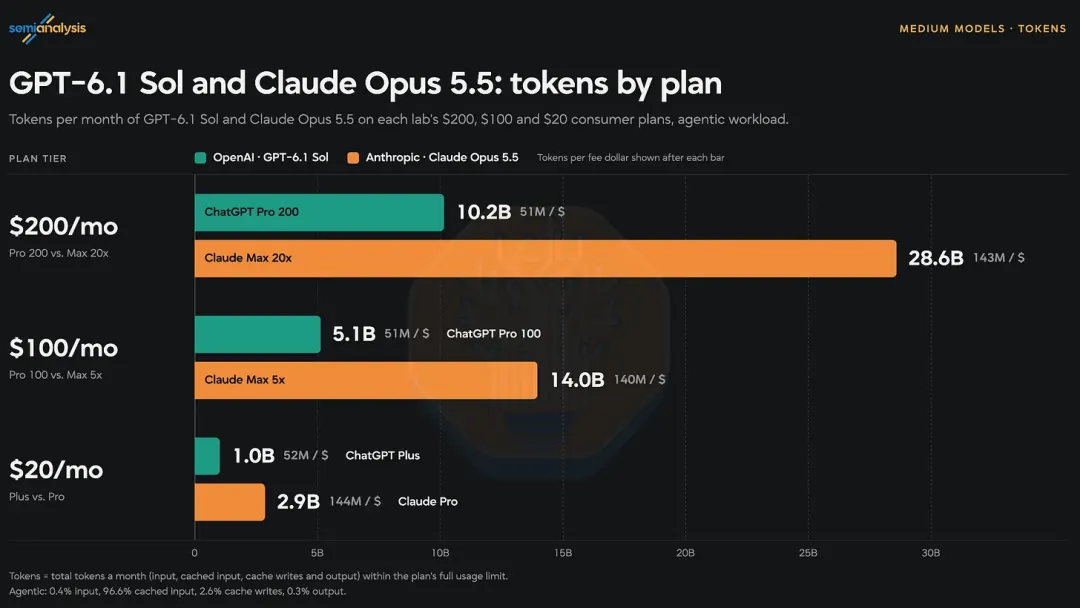
OpenAI's only objection is that its Pro package has no 5-hour limit, making it easier for users to actually use monthly allowances. But SemiAnalysis believes that this is not enough to offset the value advantage of Opus 5.5 that is about four times that of Claude's subscription.
Report judgement: Independent developers used to often praise OpenAI's subscription rate for being more generous than Anthropic, a claim that is no longer valid.
Half cut in half, $500 more than 21 percent
The gap is so big, largely due to last week's adjustment to OpenAI's reopening of the $200 package, but Tibo was scolded.
Follow-up data from SemiAnalysis confirmed Tibo's previously announced change: the price of APIs for the $200 OpenAI package was cut in half. Specifically, the number of tokens available for each model grade was halved; and because GPT-6.1 Sol simultaneously lowered the caching input price, the price of APIs for the Sol-class models fell more than 50%.
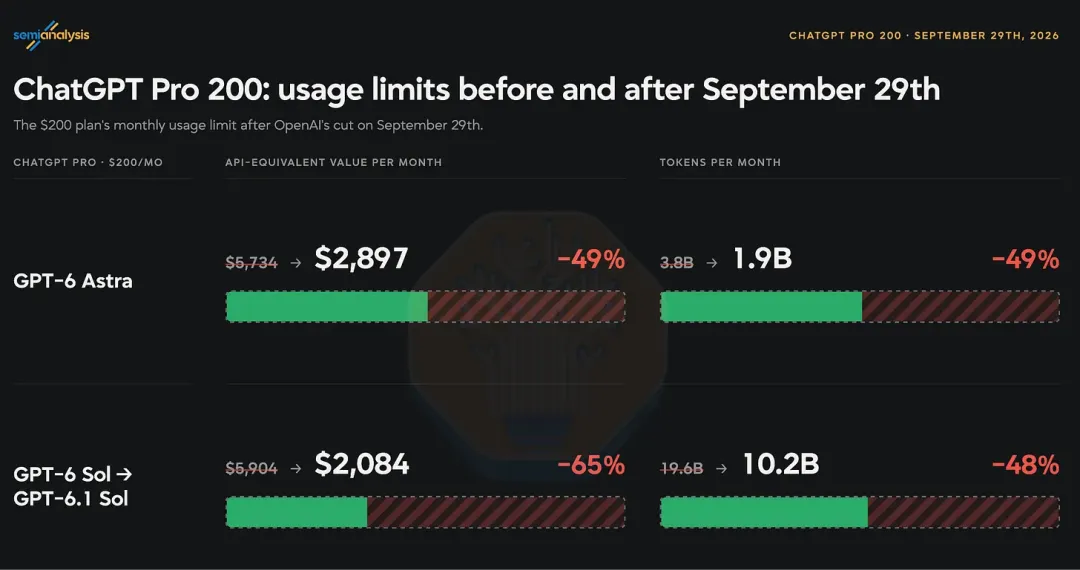
At the same time, the new $500 range, which is only 21% more than the old $200 range, and the value of APIs such as the Sol-class model, has not even decreased. The real selling point of this range is the Ultrafast model of 300 TPS, which SemiAnalysis says is still being tested.
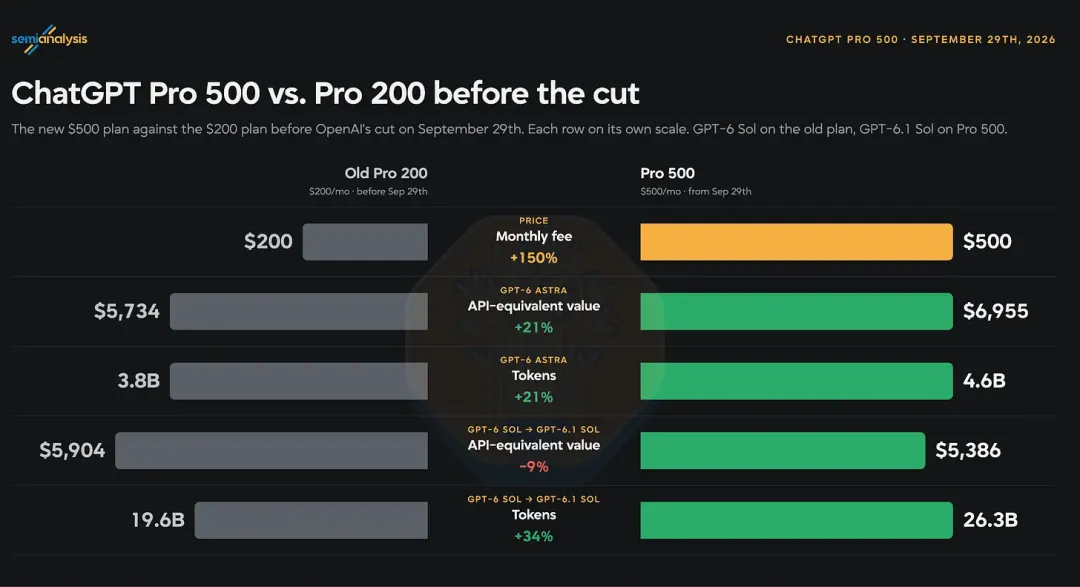
Prior to this, the $200 range was OpenAI's largest subsidized package. Pro 100 was roughly twice as much as Plus on Astra, and Pro 200 was twice as much as Pro 100. After the adjustment, the Pro 100, 200 and 500 three-tier tokens that could be exchanged for each dollar were completely consistent, and the logic of "buying big files is more expensive" no longer existed.
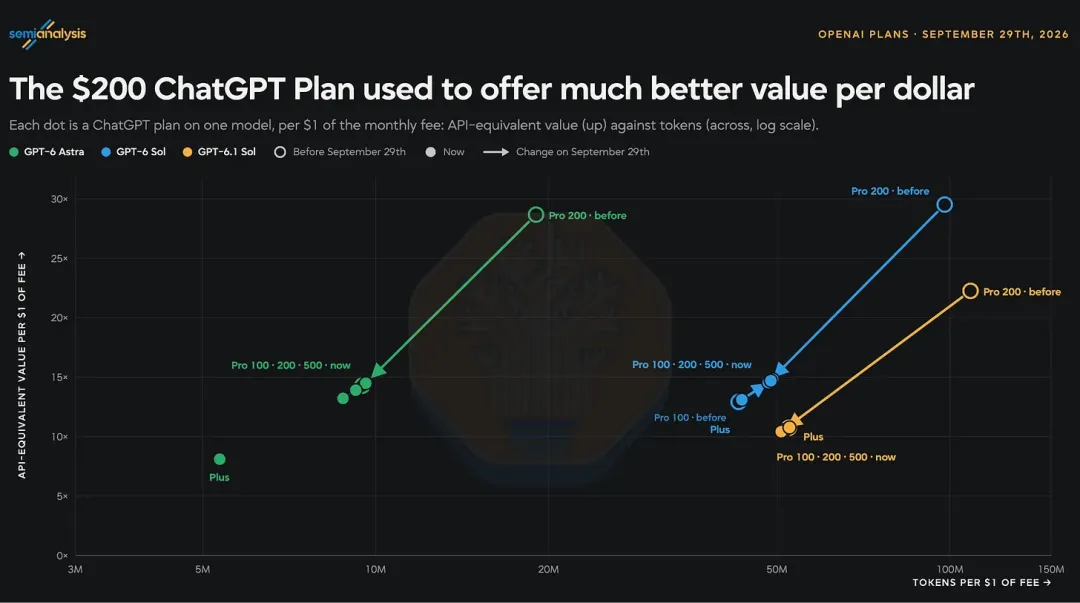
Many users complained that "the money is not enough, the use is less" and that third-party data is now available. Of course, the third-party data itself has been questioned:
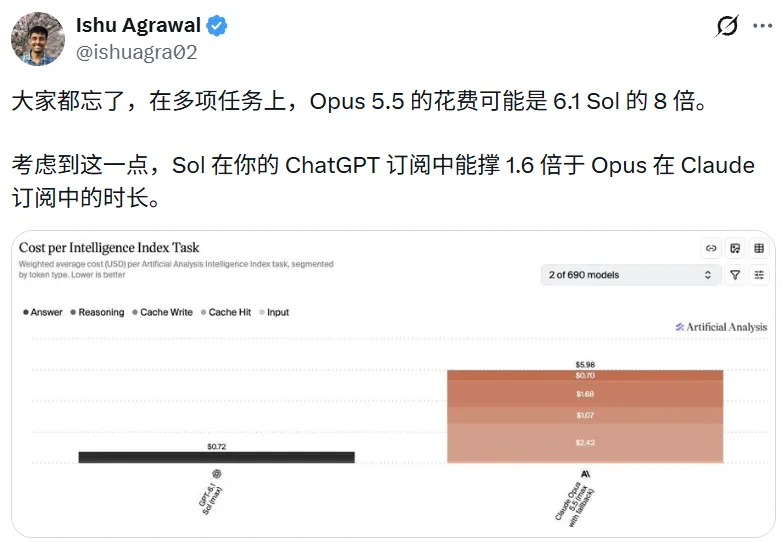
Two ways to reduce subsidies
Subscriptions are highly subsidized products, and in the case of Anthropic, it is estimated that subscriptions account for only about 10% of total revenue, but may consume more than 40% of the calculation power, reducing the combined revenue by about $36 million per megawatt.
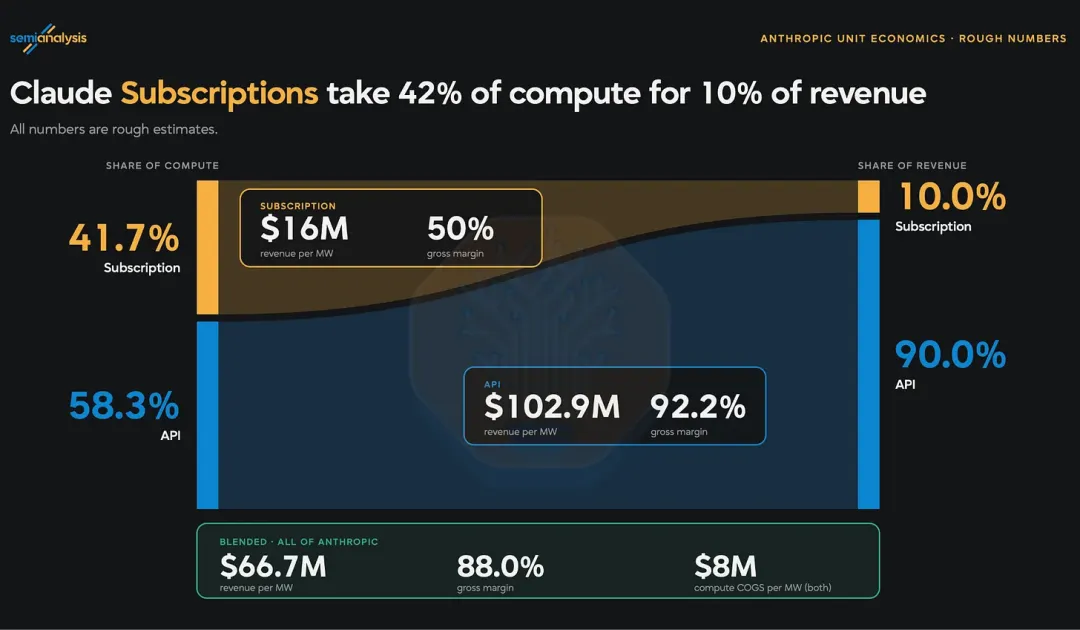
For OpenAI, which has a higher share of subscription revenue, this issue is only more prominent.
Both sides want to reduce subsidies, but the path is very different.
Anthropic follows a progressive path: the higher-end models, the lower the price of the subscription-based APIs. The gap between Sonnet 5.5 and Opus 5.5 is small, and Fable 5.1 shrinks significantly. SemiAnalysis estimates that, under the assumption of 100% usage, the API's gross profit margin of 92% is -369%, and the average profit margin of Fable 5.1 is about 1%; if the more realistic 20% average usage rate is calculated, it is 6% and 80% respectively. In other words, if everyone uses only Fable, the subscription business of Anthropic is likely to have the profit margin of the software level of the company.
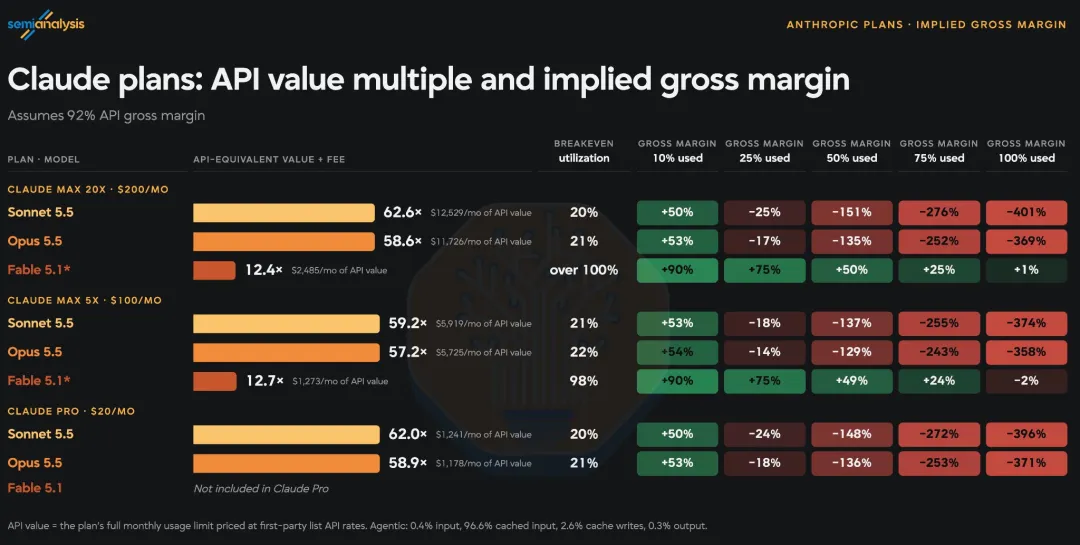
OpenAI is chosen by what SemiAnalysis calls the "nuclear option" approach: directly cutting the quantity of all models down to the Fable level.
SemiAnalysis believes that OpenAI has largely avoided this, possibly due to the large amount of positive publicity from the developer's day that has blurred the previous day's lower quotas and allowed older users to keep their month-old quotas.
It's just that, in terms of the mood on social media these days, this "hide-and-seek" may just be delayed.
The remaining 27 days
The first day's acceleration is a real improvement. Tibo also gives OpenAI's own defensive logic: the model completes the task with fewer tokens, less value than the number of tokens or API, and does not fully reflect the actual output. There is a reason for this argument, and SemiAnalysis itself admits that when a model looks particularly expensive or particularly cheap at the price of the API, the value of an API is lost.
However, "how many tokens can be saved per mission" has not yet been quantified by a third party, and the reduction in the quota has already been measured.
Another time point to note is that the $200 package purchased before the reduction will expire on Oct. 29, well within the 28-day window. By then, a group of heavily protected users will also be directly affected by the change in the quota.
Subscription quota disputes have never been merely a cost issue, but a user battle. SemiAnalysis noted in the report's opening that OpenAI's previous generous quota reset was one of the main reasons for the recent surge in Codex users, and that Anthropic has repeatedly recovered its original subscription rate reduction plans.
The situation has already begun to change.