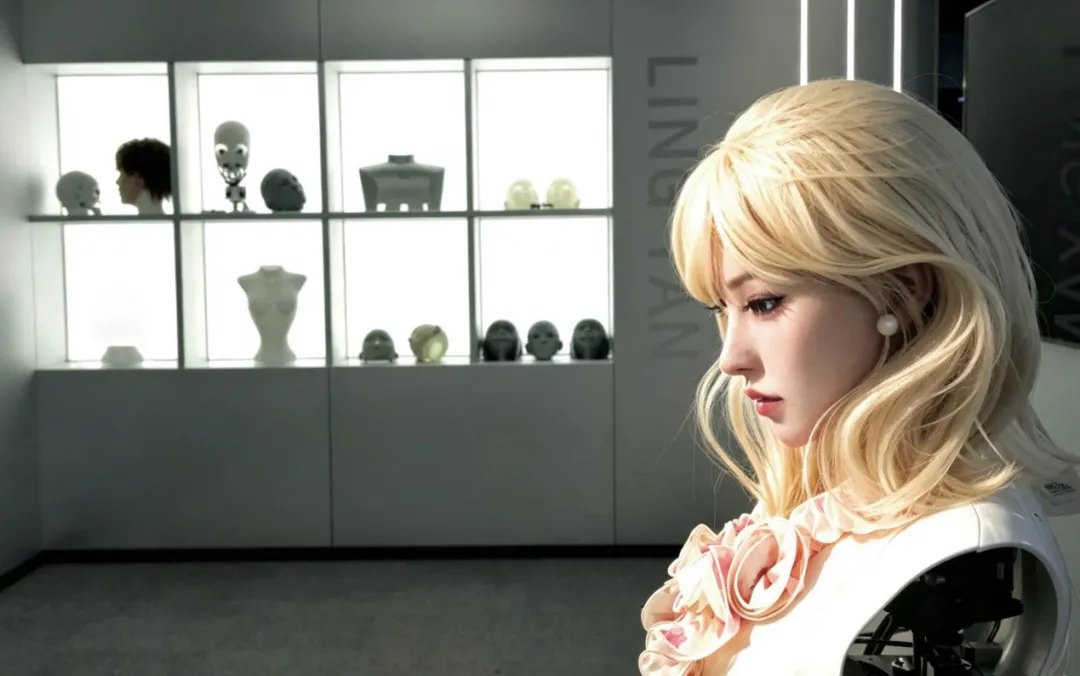
“ Lin Yang Technologies has completed tens of millions of yuan in seed wheels and seed+ rounds financing.
Human-robot racing continues to grow in popularity, with a large amount of resources in the industry focused on hardware such as joints, agility, and body movement control. While everyone is working on their robotic limbs, Hangzhou Lingyan Technologies Limited (Lingyan Technologies Limited) has chosen to cut into a vertical but critical racing track that mimics the agility of faces and emotional interaction.
Seed+Round investments include seed capital, Zhejiang Torque Center, seed+Round joint investments by PDA Capital, Merchandising Capital, Kowloon Capital, the long-standing shareholder in PDA Capital, Kowloon Capital as a financial advisor in this and subsequent rounds.
Founded in Hangzhou in June 2026, RinyanTech is the first company in the country to implement synchronized lip-to-mouth and lip-to-mouth simulation of flexible facial intelligent body research and development, aimed at humanoid robots, commercial service robots, emotional accompanying equipment, and the production of FaceSoul Agent full-featured emotional interaction software.
The founder and CEO of Jilin University is Dr. Jilin, who was deeply involved in the research and development of projects in Ningbo Springs, Hangzhou. The three companies worked together with the Jilin University's Ministry of Engineering Biomedicine Education's key laboratory. The founding team consists of Phnom Penh academic Professor Liu Chunbao, and Professor Liu Chunbao, who also served as the chief scientist of the three enterprises, forming an industrial ecosystem, technological supply chain, highly connected customer resources.
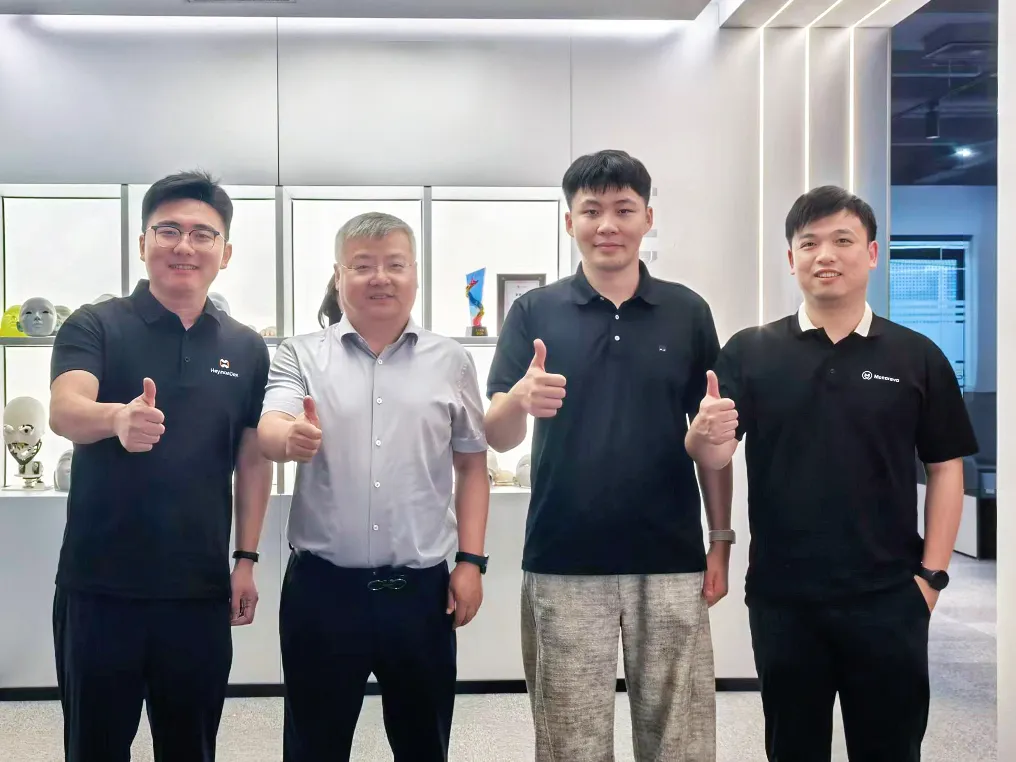
On the basis of this collaborative system, Rinyan Technologies launched the core technology framework FaceSoul Agent, divided into two layers:
• Face (simulated hardware layer): using simulated skin, simulated muscle sensing structure, gesture and temperature sensing hardware to resemble the shape of a real person's face and subtle facial feedback;
• Soul (emotional core layer): equipped with an emotional engine, social cognitive modules, memory learning capabilities, combined with large model capabilities, giving robots the ability to understand expressions and generate emotions.
In terms of product matrix, LinYanTech has planned four major product lines: LinHax M1 for research and education, LinHax W1 for commercial exhibition services, LinHax series for consumer end users, and LinHax series for supplying human-robot host plants, while also providing external IP customization development services, supporting cartoons, animal and non-human image customization.
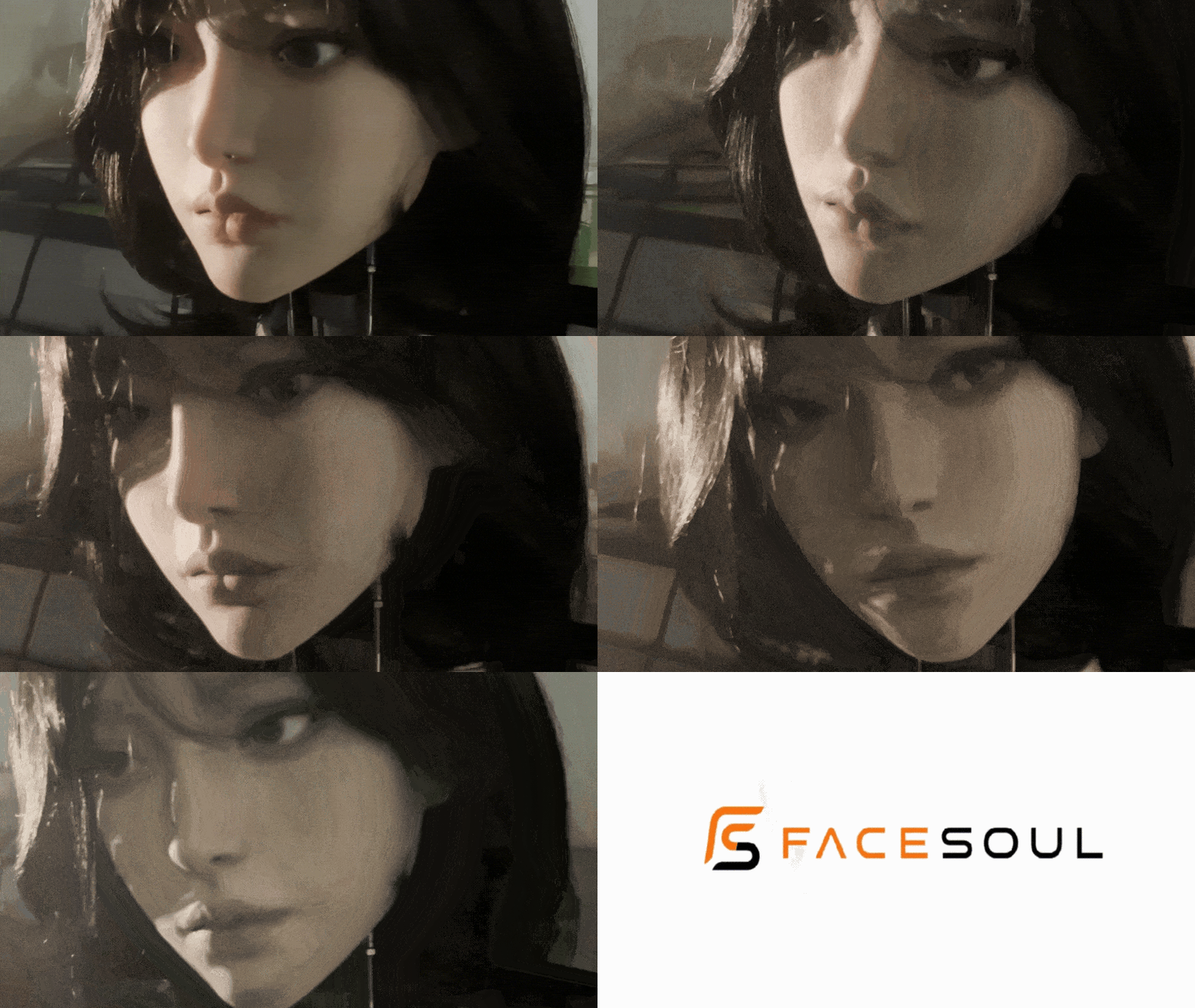
Spiritual Center W1
One of the biggest advantages of the Chinese industrial chain is the rapid replication of mature technology. This line-driven facial program is based on the engineering experience acquired by BlackBerry Technologies online drivers; the micro-driving module of the face, which replicates the mature technology of Quanzhou in robotic joint motors.
The development cycle of the connector system is short, but the short panel is prominent: the structure occupies a large space, the noise of operation is obvious, and the fast reverse characteristics of the connector itself can also lead to a mutation in the speed of the operation end, the appearance of hardness and cracking.
LinYanTech is a team of a small number of deep-farming lines that drive smooth facial pathways. The linear drive structure mimics the human muscle pull logic, greatly compresses the internal facial space, currently achieves 32 facial freedoms, reaching the head level of domestic similar products, and the facial transition is more continuous. The team judges: the connector is only a short-term transition program in the industry; smooth facial power is small, low load, the linear drive is a long-term tightening direction, while the linear drive program requires long-term simulation of biomechanical testing, the accumulation of wiring and muscle point data, there is a higher engineering threshold.
At the algorithm level, Lin Yang did not directly intersect with the General Dialogue Grand Model, but instead focused on the aspect of facial-generation algorithms. Most of the host factories self-developed dialogue, memory, decision-making capabilities, and external procurement of clever faces. The core demand is to get a set of programs that can convert voice, visual input into a smooth mouth shape, eye movements and supporting faces.
This algorithm encodes phonological, phonological, and semantic mood intentions in Chinese speech into a unified timeline signal, mapping to a multi-dimensional facial movement space, and producing continuous natural expressions. At the same time, there is a common problem in the industry: many simulated facial expressions programs rely on external servers, and are difficult to integrate into the body of the robot itself.
At the ground level, the company was founded just four months ago and has entered into or intends to cooperate with operators, tourism exhibitions, commercial services and multi-family robotic host plants. At the business pace, this year's revenue will be based on B-end, C-end direct sales plus IP customization, accounting for about 90 percent; the team predicted that the annual human host plant demand will be concentrated and the robotic support business is expected to account for half of the revenue.
The team has a clear layered design mindset for the challenges facing the industry. It is widely recognized that 75%-85% of people are in the high-risk areas of the horror valley. Therefore, Lynx has made B-end and C-end products more than 90% of people; while IP-customized cartoons and animal images have actively controlled the personality below 65%, avoiding the horror valley from the design source.
In terms of mass production, the majority of the project is still based on manual assembly at this stage, with insufficient capacity for large-scale production. Lin Yang uses modular separation of mind, eyebrows, eyes, and waist independent modules, which can distribute production lines in parallel.
The team decided on the turning point of the fancy face market from the end of this year to the first half of next year. As humanoid robots move from the factory verification phase to the commercialisation of the B-end, C-end, the main focus of the host plant is on the control of body and movement, the ability to interact with facial expressions is generally short-lived, and the needs of external suppliers will be concentrated.
In the long term, domestic operations will maintain host plant support, B-terminal direct operations, IP customization multi-location; overseas market synchronous advancement, the introduction of health monitoring oriented Xiao Ling products for the Middle East market, and the adoption of IP customization for the European and American markets. The goal of hardware generation is clear: the goal of the next generation of full-line driven versions is to achieve 43 facial degrees of freedom, plus 46 facial degrees of freedom in the neck, further approaching real human facial expressiveness.
Opinions of investors
Human robots are moving from technical verification to large-scale commercial, body and sports control competition is already adequate, and the level of emotional expression is a scarce supply of value in the industrial chain.
Moving capital: robots are more than just crutches and limbs, a face that can naturally express emotions, is a key component of deep interaction between humans and machines. Flexible facial track supplies are scarce, lifelong expression is not dependent on a predictive expression library, and lip-eye synchronous interaction capability is at the national leading level.
Early investments emphasized scarcity. The first half of the human robot gameplay control, the second half of the gameplay with real interaction experience, the flexible face is the entrance of the robot from a hydrogen-powered pump to a hydrogen-communicating pump. The team relies on a centralized laboratory in the country that is centered on biology, and individual facial simulation data is a difficult asset to replicate.
Leadership capital: Every round of computing platform change is a change in interaction interfaces. The interactive carrier in the robotic era is no longer a screen, but a flexible face. The difference in real-time expression generation schemes based on big models is evident, and the product adapts to the needs of multiple scenarios. We look at the scarcity of team map emotional interaction pathways and the speed of engineering transformation, which will continue to provide the company with full-cycle resource empowerment.
Zhejiang Torch Center: Lin Yang Technology is a typical early adopter of hard technology, a state-owned alternative. The team originated from the focus laboratory of the Ministry of Engineering Biotechnology Education, across the artificial intelligence and high-end equipment track, opening up basic research, core components to integrated landing chains, is a typical example of laboratory technology moving towards industrialization. The center will continue to provide results transformation, policy matching, and hydrogenation support for these hard technology projects.