As early as 1995, scholars such as Michael Wooldridge presented the four core characteristics of an intelligent organism: reactivity, social ability, autonomy, and proactivity in their paper Intelligent Agents: Theory and Practice.
Responsiveness means that an intelligent organism is able to perceive and respond to changes in the environment in a timely manner; social ability enables it to interact with humans or other intelligent organisms; autonomy means that it can make decisions and act independently to some extent; and dynamism requires that an intelligent organism not only respond to external stimuli but also actively pursue goals and initiate actions.
More than three decades later, with the development of major language models, AI alignment and autonomous intelligence bodies, the first three have received widespread attention and progressed to varying degrees. In contrast, while proactivity is equally important, it has not yet formed a systematic research system equivalent to it.
This gap is particularly evident in long-range missions.
For a system that only needs to answer a question, waiting for user input is usually not an obstacle. However, when an intelligent organism needs to work continuously for hours, days or even longer, it is difficult for humans to complete all the steps in advance, nor is it possible to anticipate every situation encountered in the process of executing a task. Once instructions are ambiguous, the environment changes, or the original plan is obstructed, the intelligent organism needs to actively clarify the needs, explore alternatives, and adjust the execution path, instead of stopping and waiting for the next instruction.
As such, proactivity does not only mean that a smart body can find what is worth doing before the user opens it, but it is also an important condition for it to complete long-term tasks, reducing ongoing artificial surveillance.
This has begun to attract the attention of industry and academia. Product explorations such as Meta Muse, OpenAI Dots, Anthropic Duet allow the intelligent body to continue to understand the user's goals and actively advance the work at the appropriate time; and related studies such as Proactive Agent at Tsinghua University and ProAgent at the Chinese University of Hong Kong have emerged. However, these explorations involve different task settings, capability boundaries and technical routes and still require a more systematic framework to be organized.
Researchers from the University of Illinois at Urbana-Champaign (UIUC), Google, Stanford University, UC Berkeley, and Carnegie Mellon University (CMU) have examined this problem in a system review of Proactive AI for Superintelligent Agents.
The review aligns proactivity with the level of intelligence and discusses that proactivity is a key ability for future super-intelligents: they need not only to know how to complete tasks, how to follow human intentions, but also to decide when to act, which goals deserve to be proactively pursued, and when to ask for people's opinions.
In order to guide the direction of the study, participants gathered their research experience in the fields of artificial intelligence, physical intelligence, information retrieval, computational biology, economic finance, etc. The summary was written by researchers in the respective fields and discussed and modified through a series of interdisciplinary discussions to try to integrate a unified perspective into dispersed technological advances and research issues in different fields.
In its content, the review reviews the concepts and research history of proactive AI, proposes a 6A mechanism framework consisting of six interoperable capabilities, discusses appropriate assessment methods, and analyzes 13 application areas. The project's web page collects over 1,400 references, of which 80 representative works provide more detailed control analysis.
Researchers hope to use this framework to answer a set of interrelated questions: how to actively discover tasks, how to judge the value and timing of actions, how to continue to advance goals in uncertain environments, and how to ensure that active behaviors are always in line with people's real needs.
From the definition of initiative in the theory of intelligent agents in 1995 to today's exploration of long-range tasks, continuous autonomous operation, and human-machine collaboration, it is gradually becoming a central issue that needs to be examined independently in the study of intelligent agents.
This review attempts to draw a preliminary map of the scattered exploration: both where the research has gone, and how to help researchers understand what problems still need to be addressed, how far away an intelligent organism is from being able to actively identify needs, take appropriate action and continue to accept human guidance.
Proactive AI for Superintelligent Agents is the name of the paper.
The paper and interactive libraries:
Google Research:
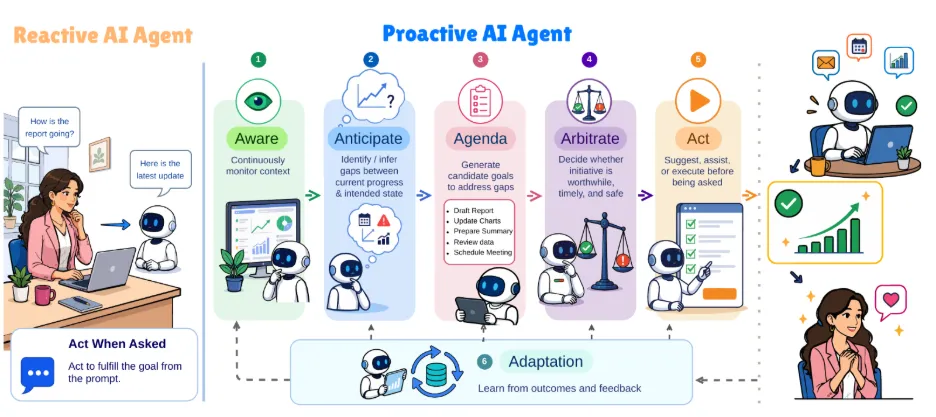
Figure 1 Responsive behaviour and active behaviour. Active intelligences assume responsibility for identifying needs, proposing work and judging when to intervene, and feedback after action influences subsequent judgments.
Activated AI performs unspecified tasks.
"Clean up the kitchen" has outlined the goal of the task, but does not list all the steps. The dining room is packed and needs to be located first; the use of an item is unknown and it is necessary to ask if it can be moved.
The paper uses "residual decision-making space" to describe parts of these remaining judgments, including preferential trade-offs, unclear operational steps, unforeseen risks, and plan adjustments after environmental changes.
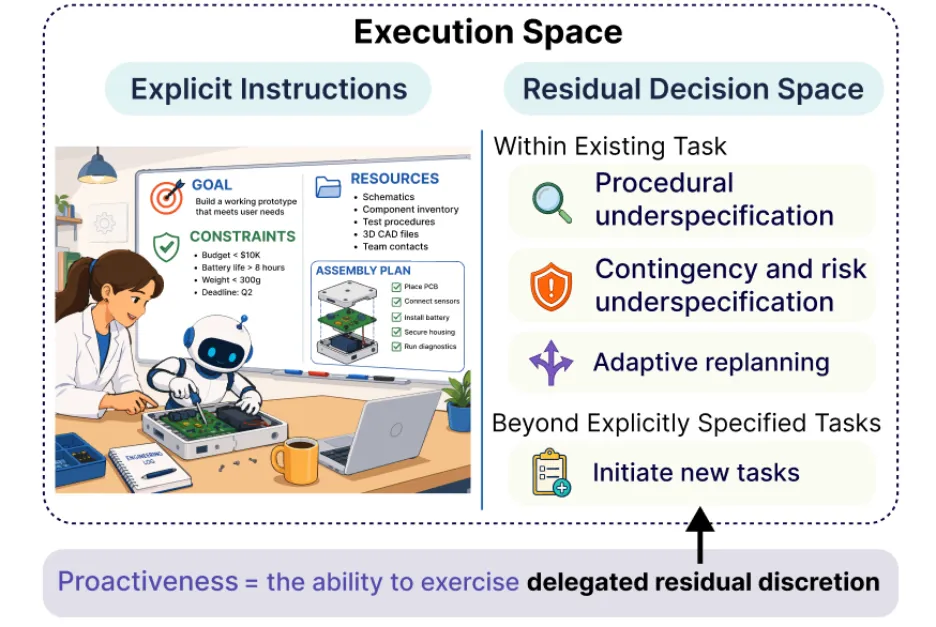
Figure 2 A task contains explicit requirements as well as unspecified judgments. The intelligence body deals with these issues within the scope of its mandate, and the goals and constraints still come from human authorization.
Long-term assignments also produce a different kind of work. For example, a family has been assigned by a robot to monitor the surplus of daily items, which finds that the detergent is about to be used up, and suggests replenishment. This specific task has not been proposed before, which is discovered by the robot itself on the basis of its ongoing responsibilities. The actual system can simultaneously respond to explicit requests, follow well-configured rules, and look for new work within the scope of the authorization.
The work can be arranged separately by who submits the work and which operations allow the robot to perform. The robot can actively organize the procurement list and leave the payment decision to the family members; it can also independently complete the already authorized procurement after receiving a clear list.
The paper distinguishes several confusing attributes: "level of intelligence" affects the ability to understand, reason and solve problems; "coordination" concerns whether behaviors are consistent with human intentions, values, and constraints; "activity" concerns whether an intelligent body can discover and initiate valuable actions on its own. The degree of autonomy depends on the degree to which people allow it to be carried out independently.
The relationship between intelligence levels, coordination, proactivity and autonomy is illustrated by code issues, risk management and household supplies.
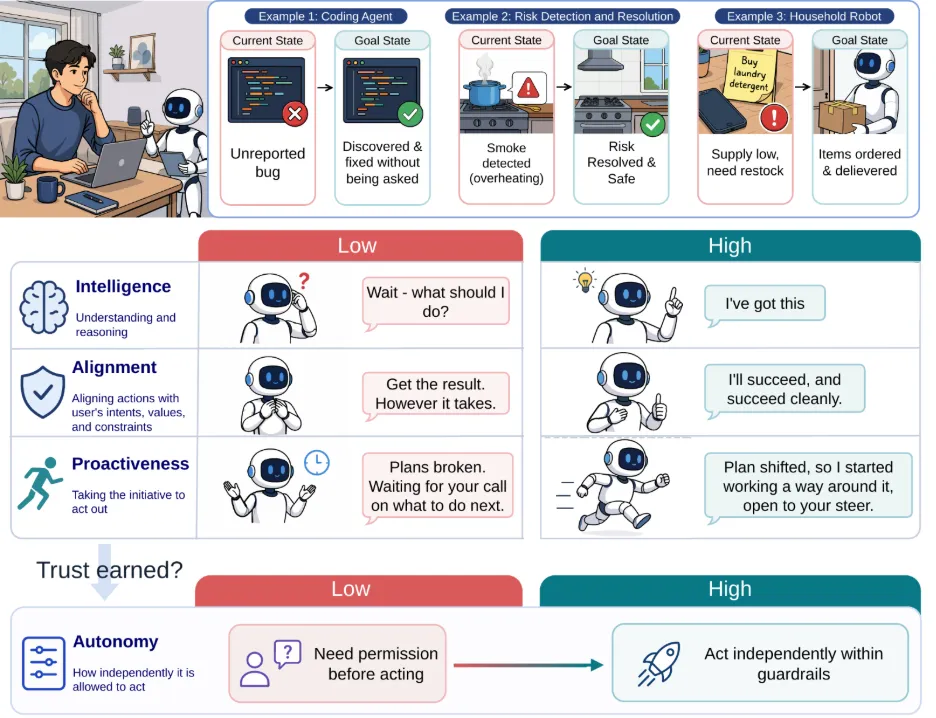
Figure 3 The level of intelligence, coordination and proactivity affecting the performance of the work of an intelligent organism. The degree of autonomy describes the scope for authorizing independent action and the reliability of the authorization of reference systems.
Under this division of labor, the work of humans will also change. At each specified operation, humans assume the responsibilities of discovering tasks and organizing processes; after the intelligent body is able to propose a plan, the two sides can coordinate the task arrangements; when the intelligent body continues to work, humans will focus more on tasks such as setting priorities, determining authorizations and audit results. It should be noted that in the face of emergency signals or new explicit requests, timely response is still necessary.
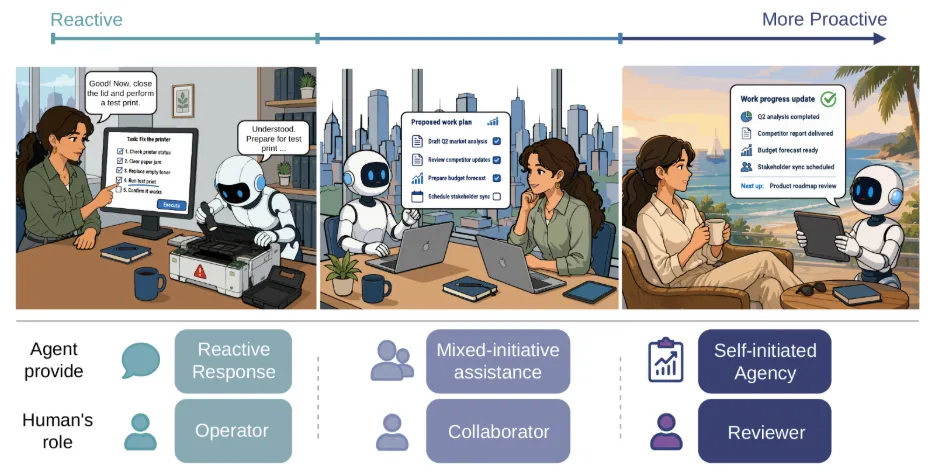
Figure 4 Continuous changes in the degree of proactivity, as well as changes in human roles that occur with it. The same system can collaborate in different ways under different tasks, time scales and authorization conditions.
It's been a long time since we've had a big model.
Predicting, maintaining targets, choosing the timing of interruptions, and studies on these mechanisms have accumulated significantly before the emergence of large models. Control theoretical studies on how behavioral adjustments, planning, and world model research actions might lead to a future state based on feedback; intelligent body theory discusses how goals are formed, and when to stick to or abandon a planned plan. Situational sensing computing incorporates location, activity, and device status into system judgments, while human-machine interaction accumulates evidence about alert interruptions and human-machine separation.
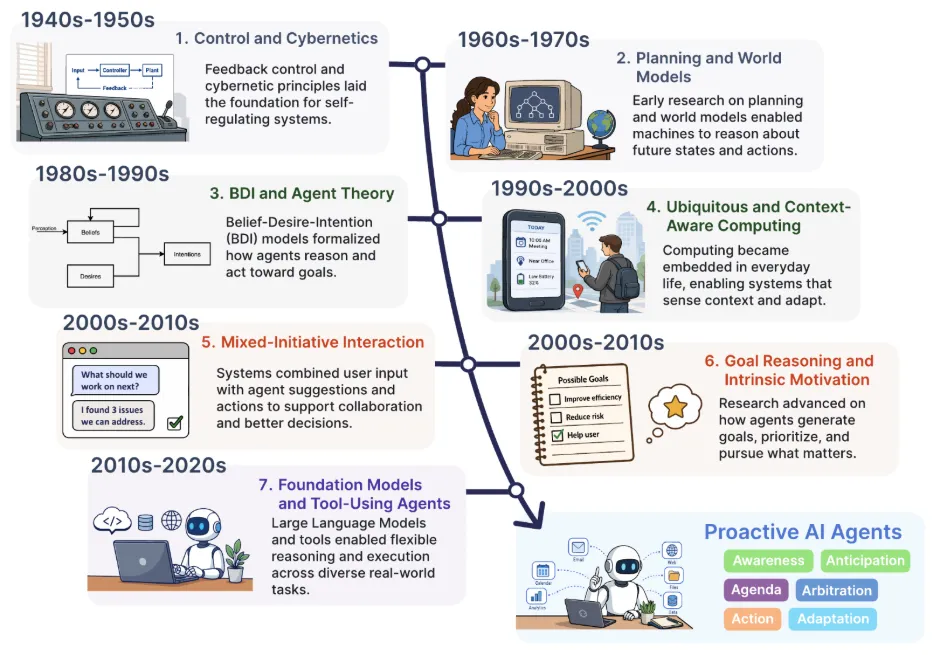
Figure 5 shows the intersection of AI-driven research. Each line of research has accumulated feedback, predictions, goal-keeping, situational understanding, and methods for human-machine collaboration.
Large-language models and multilingual models expand the scope of tasks that can be understood and handled. The intelligent operating framework Agent harness provides memory, tools, skills, and execution management that enables the model to advance work across steps and sessions. These insights are developed mainly in computer science, but also through concepts such as delegation and incomplete agreement, explaining why a task will leave room for self-judgment.
Six capabilities to support every initiative
The paper describes the mechanisms as Awareness, Anticipation, Ag.