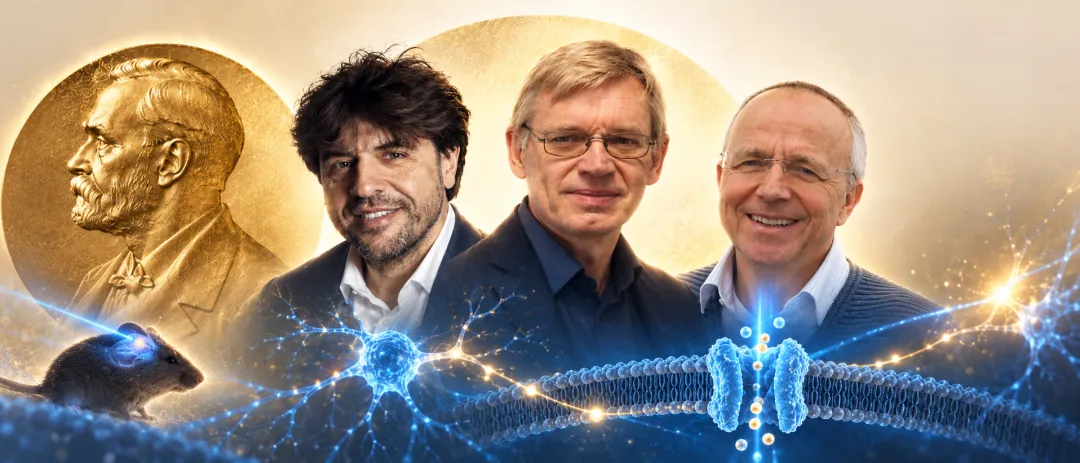
It's the first time in the history of the world.
The Nobel Prize in Physiology or Medicine for 2026 has just been announced!
Three scientists, Karl Deisseroth, Peter Hegemann and Georg Nagel, shared the award in recognition of their "outstanding contributions to the study of photosynthetic ion channels and photosynthetics".
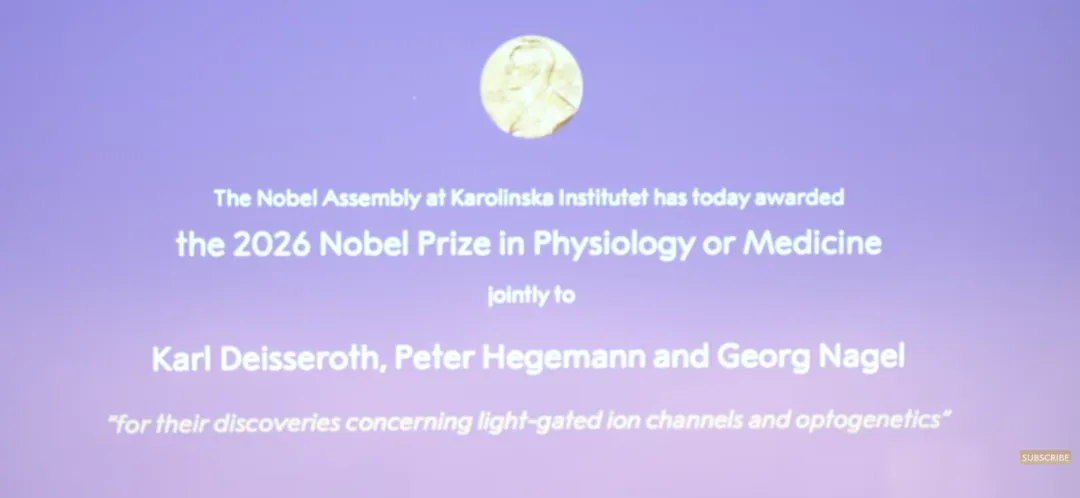
Simply put, the three Nobel Prize winners have found a "light-control switch" for human neurons.
They invented something called「Phytogenetics」(Optogenetics)The technology, with unprecedented accuracy, reveals how neurons in the living brain shape human memories, emotions, and behavior.
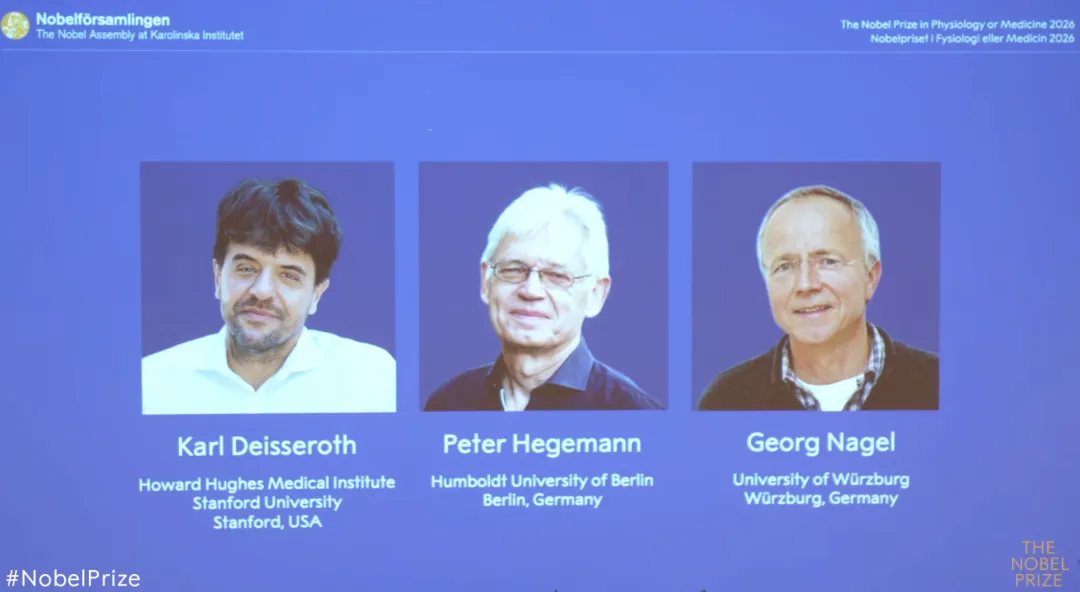
Per Svenningsson, chairman of the Nobel Committee for Physiology or Medicine, said enthusiastically:「Optogenetics offers us the opportunity to map brain patterns in a way that we could only dream of in the past.」
Yes, they've opened up a whole new era for neuroscience. But you can't imagine that the brain revolution, the initial start of which was enough to fit into the history books of humanity, was just a tiny little "green algae" in a pond.
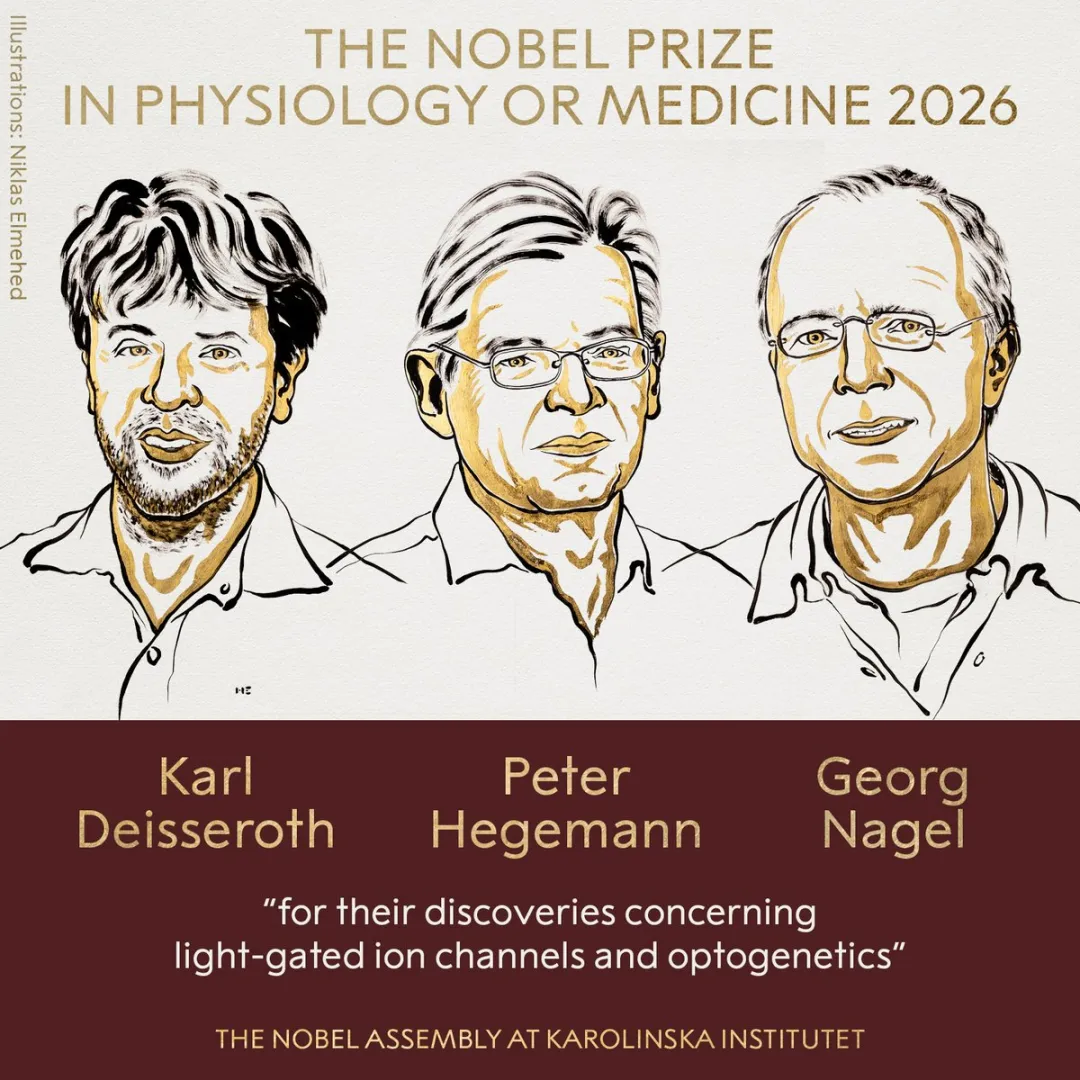
The total prize pool is 12 million Swedish kronor (about 8 million yen, up from 1 million Swedish kronor last year), divided by the three winners.
The first prize in 1901 was 150,000 crowns, which was cut to 8 million in 2012.
For "developing therapies that have revolutionary effects against some of the most devastating parasitic diseases", Butcher, the first recipient of the Nobel Prize in Natural Sciences in China, received half of the prize in physiology and medicine in 2015.
Human brain: the most complex "black rabbit" in the universeBefore we tell this incredible story, we need to understand why scientists have such "headaches" in the brain.
The human brain, which weighs about 1.4 kilograms, contains about 86 billion neurons (neural cells) and tens of billions of connecting points (synapses) - more than stars in the entire galaxy.
How the brain controls our emotions, behaviors, and physical abilities has long been one of the greatest mysteries of human science.
Throughout the 20th century, neuroscientists have been like the blind man in a giant labyrinth holding a flashlight. They have been trying to figure out which areas of the brain affect which functions.
For example, they found that some parts of the brain were damaged and people lost their language skills; they found that some parts of the brain were electrocuted and people were happy.
But the problem is that the past approach is too "rough".
Imagine that you want to repair a line of code in a sophisticated supercomputer, but the only tool you have is a large iron cage.
Past research in brain science has shown that either removing parts of brain tissue, using electrodes for extensive electrostimulation, or using chemicals that affect the entire brain is like using an iron-plated computer.
It's just that scientists can observe the phenomenon, but they can't.「Failure to prove causation」。
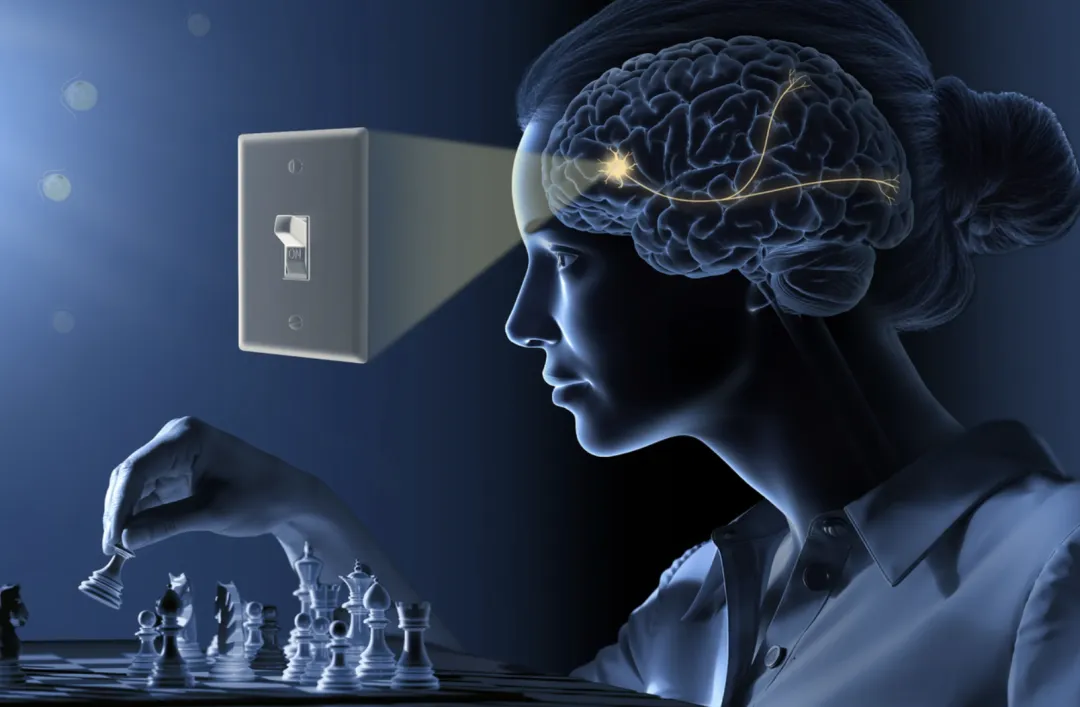
According to the Nobel Prize Committee, the brain image they drew at the time was like a rough "sketch, full of questions and unknowns".
Scientists dream of having a "God's Surgical Knife".It must be accurate enough to control only one neuron or a specific type of neuron; it must be fast enough to keep pace with neuron milliseconds of flash.
The entire neuroscience community is in despair.
Until two German biologists in the crater took a closer look at the floating green single-celled organisms.
Miracles in the pond: Curiosity and lighting algaeThe story's footage was cut to Germany.
One of the winners of this year's Nobel Prize, the University of Hamburg in Berlin.Peter Hegemann is the author of a book called "Peter Hegemann".In contrast to other neuroscientists of the dead human brain, Hegman's focus is much more "humble".
He often stared under the microscope at a single-celled algae moth.It's the first time that I've ever been in the same situation.I'm going crazy.
Algae is a very magical microbe. It has no eyes, no brain, and is completely single-celled. But if you put a lamp next to a culture dish full of algae, you will find a wonderful phenomenon:All the algae will float like magic, brushed to the light source.
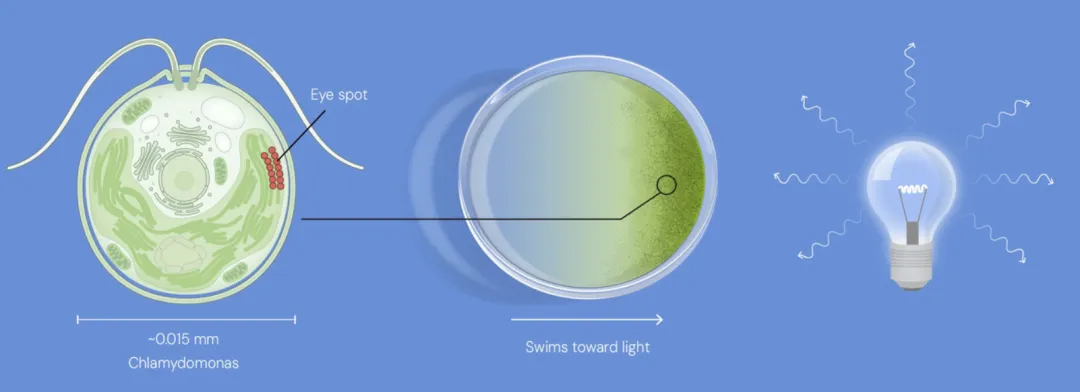
This phenomenon is known in biology as "translucency".
Hegman's curiosity was ignited:It's a single-celled organism that doesn't even have a nervous system.「I see.」How does it convert light signals into light?
MovementDirectionsWhat?
In the early 21st century, Hegman and his old colleague, the University of Würzburg, entered the world of medicine with this seemingly unfathomable question of human medicine.This is the first time I've ever heard of the name "Gorg Nagel".It was the beginning of a crazy treasure-hunting journey.
In this groundless study of botany, they have unearthed the treasure of a shocking world.
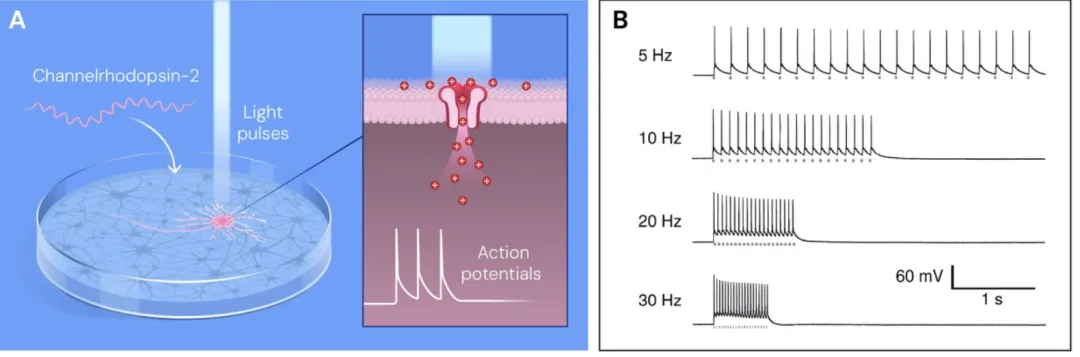
They discovered that there is an extraordinary, unique algae protein on the cell surface of algae.「Channel View of the Purple」(channelrhodopsin) 。
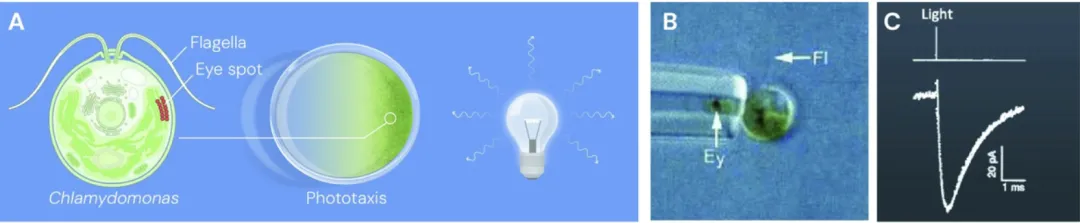
This protein works like a door for a light-controlled sensor:
When blue light reaches the protein, the protein's pathways are instantly opened (light-gated ion channels).
The electrically charged ions then flow into the cell like a tidal wave, producing a tiny electrical pulse. It is this electrical pulse that directs the algae to flow into the light.
What was even more troubling about these two German scientists was that they did a very bold test: what would happen if they put this algae protein in the cells of other organisms?
The results were astonishing:And no matter what kind of cells they put this protein in, they're going to become instantaneous.「Sensitive to light」!When a photo is taken, the cell generates an electrical signal.
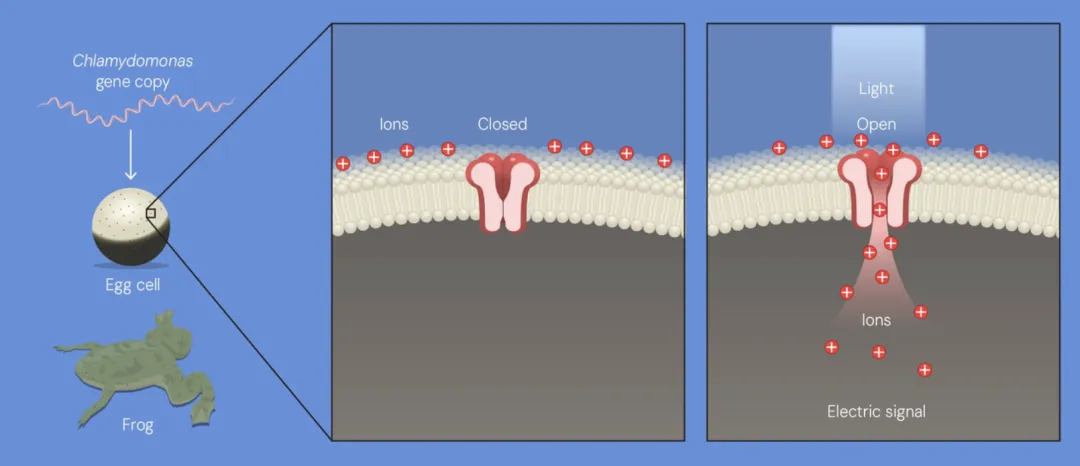
It's as if they've found an all-powerful "light-control switch" that can control its activity as long as it's installed on any cell.
A wonderful discovery has been made.
But no one could have imagined that, in America, far beyond the ocean, a psychiatrist had acutely captured this paper and turned it into the ultimate weapon for understanding the mystery of the brain.
Cross-border freaks: Wizards who turn light into neuron switchesThis brings us to our third Nobel Prize winner today: Stanford University.This is the first time I've ever heard of this kind of thing.。
Deathros is not only a leading neuroscientist, he is also a clinical psychiatrist.
In the clinic, he deals with patients suffering from depression, schizophrenia and Parkinson's disease on a daily basis. He knows how rough traditional medicines and electroconvulsive therapy are and how huge the side effects are.
He's been struggling to find a way to「Accurate control of single neurons」How to do this?
When Hegman and Nagel published their paper on "The Corridor to the Purple Grass", most of the scientific community simply thought "this algae is fun".
A crazy idea was born:If we were to use this green algae,「Light control switch」If genes are implanted in the neural cells of mammals (e.g. mice and even humans), can we not use light to control the brain?
Deathrose and his team started an experiment like "Frankenstein".
Using the virus as a carrier, he would insert a gene with the "purple-red blood pathway" into specific neurons in mice. A miracle happened! Mice's neurons successfully developed this light-control protein from algae.
In 2005, Deathrose published a groundbreaking paper on the history of the death penalty:
In the lab, when he used a very fine fiber of light to project blue light onto these neurons, the light-control switch was turned on, and the neurons were instantly activated, triggering a strong nerve signal; and when the light was turned off, the neurons were instantly silent, without dragging mud with water.
It's accurate, fast, with no side effects!
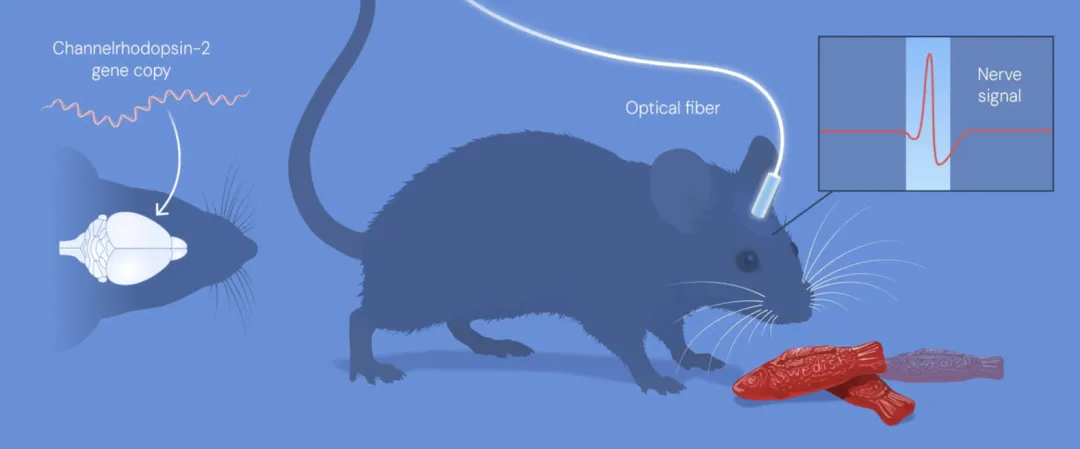
Two years later, in 2007, he even accomplished his breakthrough in reducing the impact of lightning, allowing this light-control switch to work successfully in the brains of live mice!
In the exhibitions that followed, scientists from all over the world saw scandalous and hot-blooded images:
It's a live, jumping mouse with a glowing fiber on its head.
When the blue light came on, the mouse suddenly began to spin the clock madly; when the blue light went out, the mouse stopped immediately as if nothing had happened.
In some experiments, the lights flashed and the angry mice instantly became warm.
In some experiments, a flash of light, frightened of a mouse in a corner, went straight past because the memory of fear was forcibly turned off by "light".
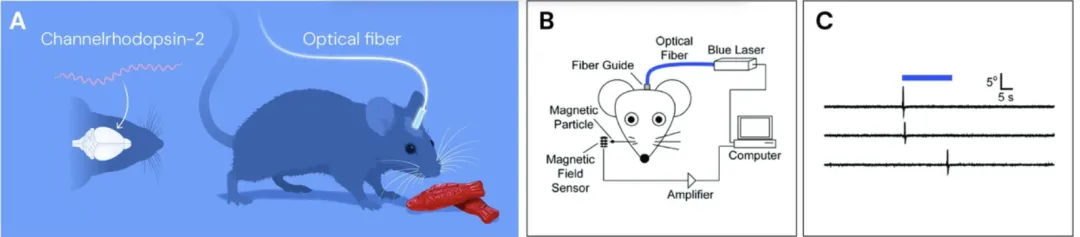
With this perfect blend of optics and genetics, Deatheroz formally named the technique "Oxygen".He is also a professor of optical genetics and optical genetics.。
A whole new discipline is born!
Miracles of Light Go From Drawing Memories to Enlightening the BlindThe appearance of "photogenetics" was like a super warehouse filled with countless impurities in the dark, and suddenly a high-precision high-intensity flashlight was sent to the person, and the flashlight was able to precisely control the placement of each item.
The technology rapidly swept through laboratories around the world, producing nuclear explosive levels.Global impacts。
Over the past two decades, thanks to the presence of photogenetics, human cognition of the brain has skyrocketed exponentially:
Unlocking the ultimate veil of memory and emotion
With the help of photogenetics, researchers are finally able to reveal the neural circuitry that controls specific memories, sensations, and behaviors. Scientists are not only able to find the specific cells in mice that store "first love memory", they can even implant a "false memory memory memory" in mice that they have never experienced. We are finally beginning to understand how our joy and grief function at the material level.
How to deal with mental and neurological illness
Depression, anxiety, post-traumatic stress disorder (PTSD), Alzheimer's disease, Parkinson's disease - all of which have plagued humans for tens of millions of years - have finally led to hopeless breakdowns. Through light genetics, scientists have precisely mapped the neural circuits that trigger these diseases, providing an irreplaceable theoretical basis for the development of new drug-oriented and brain-computer interfacing treatments.
Clinical Miracles: Bringing the Blind to Daylight Again
This is also one of the most exciting clinical applications!In clinical medicine, researchers are using this method to try to restore vision to visually impaired people.
Many blind people are blind because the sensorineural cells on the retina are dead, but the neurons behind the retina are still there.
Scientists are trying to use photosynthetic technology to inject "light-control proteins" from green algae directly into the remaining neurons of blind people, making these neurons that were not sensitive to light directly into "new eyes" that can capture light!
Currently, related clinical trials have been conducted worldwide and blind patients have already seen the outline of the object!
End: A beam of light for the future of humanityHuman beings want to unravel the ultimate mystery of the brain, and fear that they will spend hundreds of years in the dark.
「Photogenetics has fundamentally changed our understanding of the brain. Every day brings new discoveries that help unravel one of humanity's greatest mysteries: how our incredible brains work.」The official words of the Nobel Prize are the most accurate footnotes for this great technology.
From the single-celled algae that hunted for sunlight hundreds of millions of years ago in primitive oceans to the light of human intelligence illuminated in laboratories today;
From the majestic constellations of the cosmos to the microscopic neuronal synapses.
Life, in a very exciting way, has completed its greatest closure.
Let's pay tribute to these three great scientists and to all the researchers who quietly explore the unknown!
Because of them, humanity has finally grasped the "light" that controls its destiny. It is part of a whole new era of great navigation in neuroscience that has just opened its doors today.