
“ Amazon has announced the construction of a machine-made factory.
Logistics warehousing has been one of the fastest-growing avenues of industrial robot applications in recent years. As global e-commerce and cross-border contract demands continue to escalate, leading enterprises are no longer satisfied with the mere procurement and use of automated equipment.
Recently, Amazon announced a major investment: spending more than $100 million to build a new high-end robotics manufacturing plant in Greenwood, Indiana, U.S.A., expected to be fully operational in 2028. The new plant focuses on advanced processes such as processing, robotic welding, automatic powder spraying and assembly, specifically producing equipment and systems for North American filling centers and robotic networks.
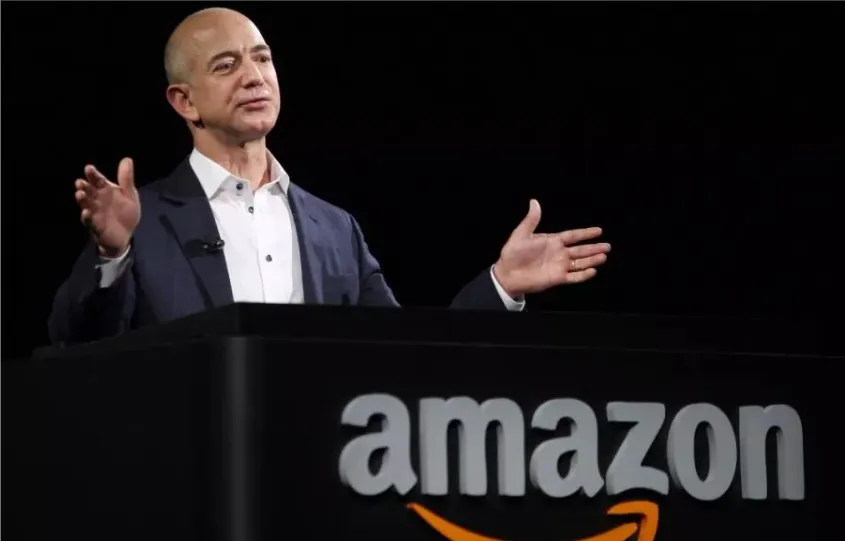
Two months ago, Amazon had just finalized a multibillion-dollar robot manufacturing project in Austin, Texas. With two large plants, one west and one east, superimposed on the original R&D production base, Amazon is accelerating the process of improving the self-deployment of robots.
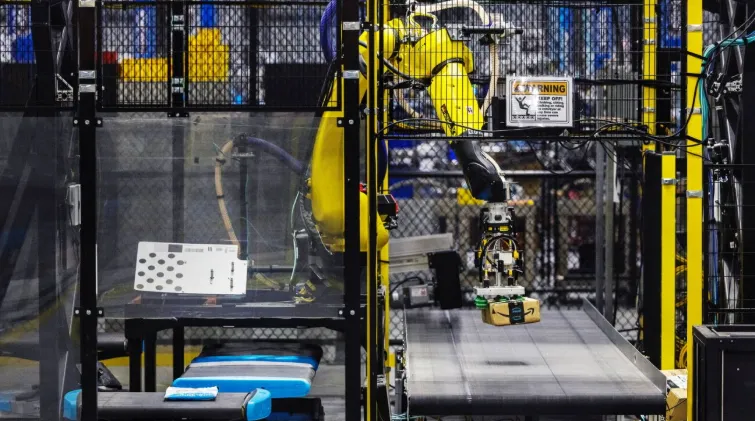
From spending money on equipment, to self-manufacturing equipment, to leading the industry in terms of capacity, Amazon has spent decades pushing the level of automation of its cross-border warehouses to new heights.
It is also worth noting that this battle was never an Amazon unicorn.
On the other side of the ocean, the two biggest domestic logistics giants, Bird, and Jindong, are accelerating out to sea, launching robotic automation programs in overseas warehouses.
01.
Amazon builds its own machine factory and builds the core of the Forbidden City
In 2012, Amazon acquired robot company Kiva for $775 million, which was considered a bold test. At the time, warehouse robots were small products, and the selection pattern for human-seeking containers was not widely accepted.
But it was this acquisition that gave Amazon the opportunity to acquire cross-border automated entry vouchers, which opened up an intelligent upgrade of the warehouse.
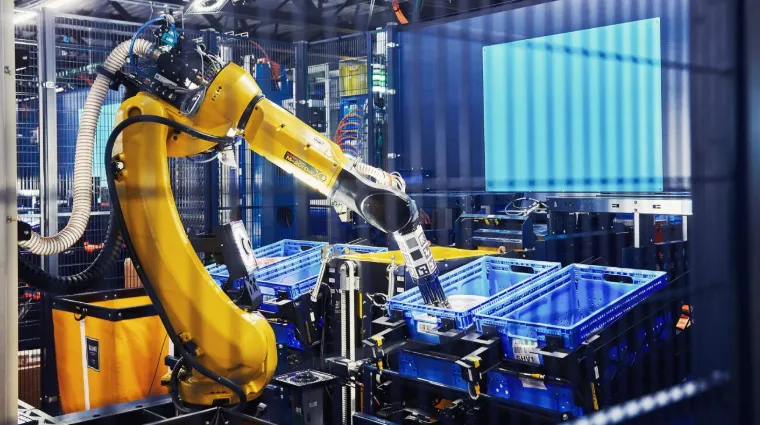
For more than a decade, Amazon has continued to iterate its robotic product matrix, from basic transportation AGVs to reloadable industrial robots, high-precision sorting mechanical arms, covering the entire warehouse scene. To date, Amazon has built over 1 million robots in the United States, with equipment at more than 300 fulfillment stations worldwide, and participating in the processing of approximately 75% of global customer orders.
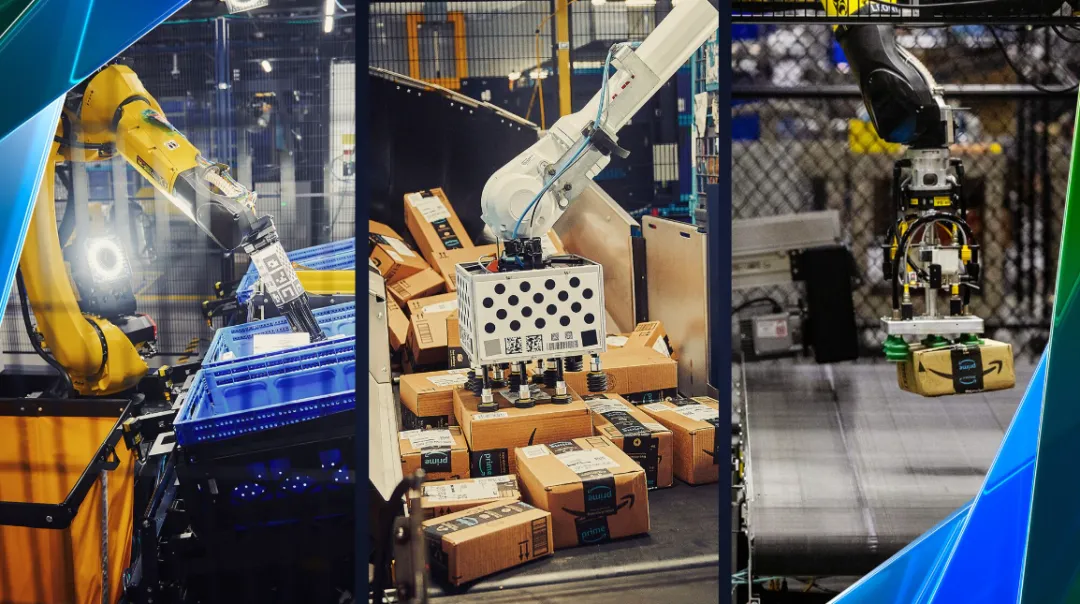
Simply put, every time we receive four Amazon packages, three of them are processed by robots during the booking process.
In unseen warehouse corners, robots have taken on most of the repetitive, heavy-duty, and high-frequency work: when goods enter the warehouse, robots complete the storage and transportation of goods, realize the search for people; after order packing, automated devices take on the parcel distribution, assisting with scanning and line sorting at delivery stations.
This well-established automation system supports the high-speed delivery service that Amazon prides itself on. But as global order volumes continue to fluctuate and cross-border time-efficiency competition intensifies, the mere reliance on inventory equipment is not enough to bridge the gap.
This is also the core logic behind Amazon's gold-linked plant.
The Greenwood plant, which is dedicated to the North American clutch network and mass production of high-end automation equipment. Unlike traditional plant assembly alternatives, the new plant integrates advanced processes such as precision machining, intelligent welding, automatic spraying, integrated assembly, and can independently produce critical equipment such as robot assemblies, core components, and intelligent storage systems.
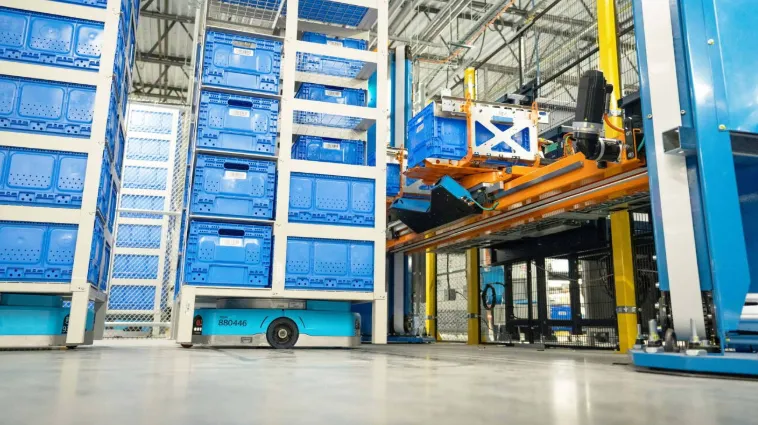
More importantly, the plant is close to Amazon's local fulfillment center, a typical pre-fabric post warehouse layout. The robot can be deployed, configured, deployed and deployed directly after the downline, greatly mitigating the delivery cycle of third-party equipment, multiple adaptation issues, slow post-sales response and other pain points.
From external procurement of equipment to autonomous R&D, autonomous production, autonomous transformation, Amazon has completed the complete chain of compliance capabilities.
For the industry, this means that Amazon's barriers to competition are no longer merely storage size and logistical timeliness, but its ability to self-renew, continuously upgrade, and autonomously build an automated infrastructure.
02.
Chinese enterprises accelerate out-of-sea, nesting birds, overseas warehouses in Jindong to fully automate landings
The overseas layout of the Chinese logistics giant is also progressing steadily as Amazon accelerates its plant-building advantages in North America.
In contrast to Amazon's heavy-asset model, Jindong has taken a diversified path through a China-based strategy, a global recycling strategy, and expanded its overseas cross-border logistics market with advanced warehouse automation technology.
In March, Bird announced that in 2026, it will be deployed in core cross-border markets such as China, Hong Kong, the United States, and Europe, with a large network of robotic smart warehouses, full-service cross-border merchants for local shipments and end-to-end delivery needs.
At the heart of the scheme is a new generation of storage robots and AI smart scheduling systems developed by Nestlé itself, as well as mature technologies that have been verified by mass orders domestically.
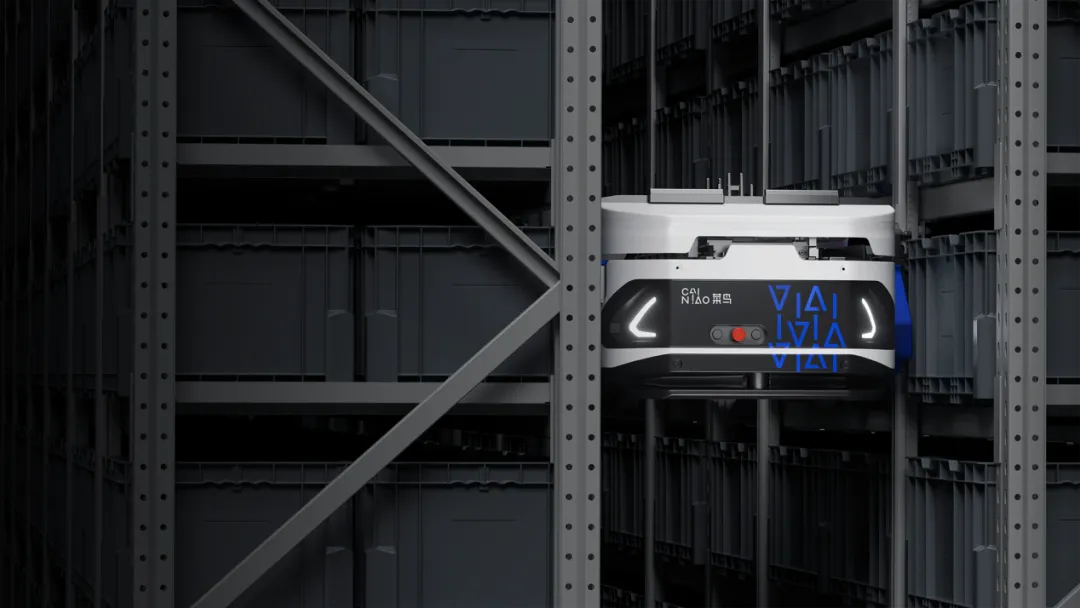
The first self-developed crawling robot named ZeeBot
Unlike conventional low-level shelves, ordinary AGV robots that run on the ground, the ZeeBot crawler robot developed by Bird, which can accommodate up to 14 meters of super-high shelves, can complete high-low-level goods switching in 10 seconds, effectively improving the utilization of storage space.
Data shows that this automation system can increase the storage density of warehouses by three times and is far more efficient than traditional man-made warehouses, and is well suited to cross-border e-commerce SKUs, order fragmentation, and high-time requirements.
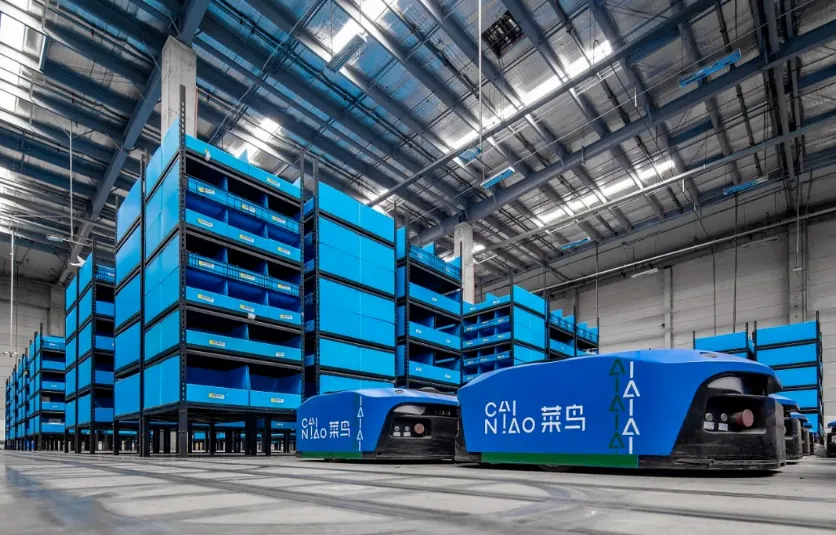
Flying robot AMR/AGV
If a bird of prey is in charge of cooking technology, lightweight and fast copying of cooking, then the logistics of Jindong is the route of heavy-asset self-sufficiency and landing.
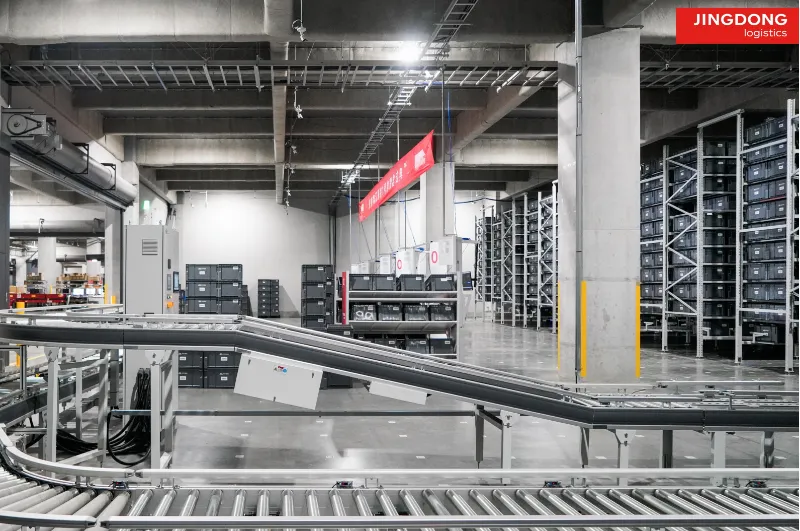
By the end of 2024, Jidong Logistics will be operating its own overseas smart warehouse in Kyushu, Japan, equipped with hundreds of warehouses and sorting robots, built fully automated operational pipelines to serve the core cross-border markets of Japan, South Korea and other East Asian countries.
The landing effect of warehouse logistics robots is significant. Compared to the traditional business model, this overseas smart warehouse has more than doubled the overall processing efficiency, picking accuracy is close to 99.99%, not only mitigating the high overseas labor costs, recruitment difficulties and high error rates, but also shortening the regional overall delivery time by 24 hours.
For cross-border merchants, the time difference of the day is directly related to higher store conversion rates, better user reputation, and lower return rates.
Today, JD Logistics is continuing to replicate this established model, with plans to automate its own warehouses in Japan, South-East Asia and build a network of overseas warehouses owned by Chinese logistics companies.
The two giants, in two ways, are aiming in the same direction: to automate the rebuilding of the overseas compliance system and break the inefficient bottlenecks of traditional logistics overseas.
03.
Why is cross-border logistics betting on robots?
Whether it's the construction of Amazon's heavy-gold plant, or the launch of Jindon's technology, the giants are constantly working with the automation of overseas warehouses, which is the inevitable choice for the industry to move to a new stage of development.
Currently, cross-border e-commerce, which has long said goodbye to the barbaric growth of making money, is gradually emerging, while automation is an effective way to solve many complex problems.
First, overseas labour costs are rising and recruitment difficulties are a common problem.
Mature markets such as Europe, the United States, Japan, and South Korea have high wages, high liquidity, and year-on-year labor shortages. Labor costs once accounted for more than 40% of overseas warehouse operating costs.
Robots can operate 7x24 hours a day, without rest, without repetitive training, with very low error rates, and long-term reductions after a one-time deployment. According to industry data, storage automation can help companies reduce labor costs by more than 80%, and increase order processing speed by more than 1.5 times.
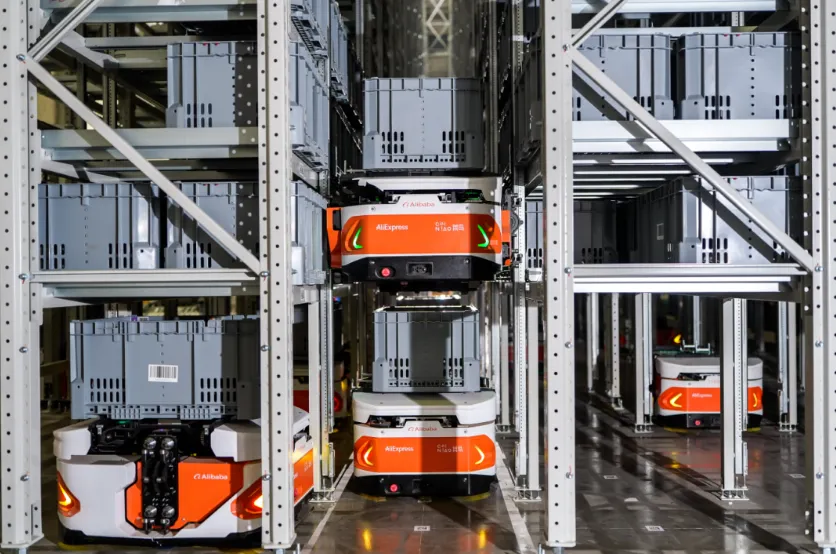
Secondly, the trend of order fragmentation makes it difficult to adapt the artificial model to the needs of the industry.
Today's cross-border orders are no longer large batches, with fewer SKUs, but smaller batches, with more frequencies, with bulk SKUs being fragmented.
Robot + AI scheduling system, able to accurately match each order, quickly finish picking, sorting, stockpiling, efficiently adapting to fragmented orders, significantly reducing return losses.
Most importantly, the industry is increasingly competitive in terms of timeliness, and it's hard to afford shortcuts.
In today's cross-border racetrack, the day-to-day racetrack is the standard, and the day-to-day racetrack is the additive, and the user's tolerance for delayed delivery is gradually decreasing. However, the covenant is a system of ring-bending: in-store pick-up is accelerated, pick-up is not followed and bottlenecks are formed; pick-up efficiency increases, and late final delivery can also cause delivery delays.
Only by advancing the automation of the entire chain can the entire process of storage, sorting, stocking, eliminating every efficiency card point, and keeping delivery timeliness commitments be opened.
04.
What is the meaning of this verse?
Unseen warehouses for consumers are becoming the core battleground of cross-border competition.
With its self-developed full-chain robotics system, Amazon has built high industry barriers to continually consolidate North American cross-border performance advantages; with its domestically developed advanced automation technology, Jindong is expanding rapidly in global markets, taking a new route out of China's logistics.
It can be predicted that overseas warehouse automation rates will continue to grow over the next 3-5 years, and inefficient man-made warehouses will face transformation pressures, and efficient, stable, and smart service will gradually become a benchmark for the cross-border industry.