Over the past few years, single-point depth estimation has been rapidly improving the cross-scene generalization of models from Metric3D, Depth Anything to UniDepth, large-scale data, stronger backbone, and explicit camera modeling.
But at the same time, there is a distinct gap: the ability to estimate base depths is increasingly strong, and models are increasingly difficult to deploy. Traditional lightweight depth estimation models, although fast, are often trained for a single dataset; foundation models are more generalized, but often require tens of millions or even hundreds of millions of parameters. So we want to answer a more direct question: if the model has only about 6M parameters, can the cross-scenario generalization of base depth estimation be maintained?
This is the concern of DepthART (Depth Anything Rethought for Tiny Models). The work has been received by ACM Multimedia 2026.
DeepthART: Scaling Foundation Monocular Depth to Tiny Models
Link to the paper:https://arxiv.org/pdf/2607.17099
The project is currently under construction and is expected to be completed by the end of the year.
This is the first time I've ever heard of this project.
Weight of the model: huggingface.co/Fengxue 93/DepthART
Rather, it's about compressing Depth Anything, rather than researching: which capabilities are most likely to be lost when the model actually enters the lightweight range, and how the training approach needs to change.
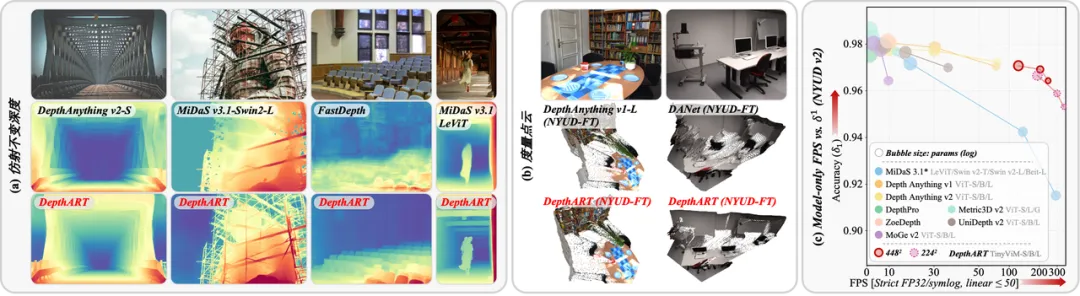
Figure 1. Depth visualization contrast with accuracy-efficiency table
Where is the little model really hard?
We found that the first problem that was exposed after the model's shrinkage was not just a network structure problem, but a data problem. In multi-source training data, the distribution of interior, vehicle, building, object center images was uneven. Large models had enough capacity to absorb these differences at the same time, but for 6M-level models, high-frequency data was more likely to occupy limited representational capacity, ultimately causing the model to be biased.
Thus, DeepthART proposed Bias-Resistant Data Sampling (BRDS). We started from about 44 million multi-source candidate images to reduce the probability of high-density replication samples based on the sample density in the visual character space, while maintaining the sparse regions and ultimately obtaining about 1.7 million more balanced training data. Then, using the pseudo-depth monitoring produced by Depth Anything V2-L, we distilled the relatively deep previews into small models that comprise TinyViM + DPT.
At its core is the fixed training budget, where more training opportunities are redistributed to different scenarios, perspectives, and imaging conditions. Experiments show that how training data is organized can be as important for lightweight basic models as the network structure itself.
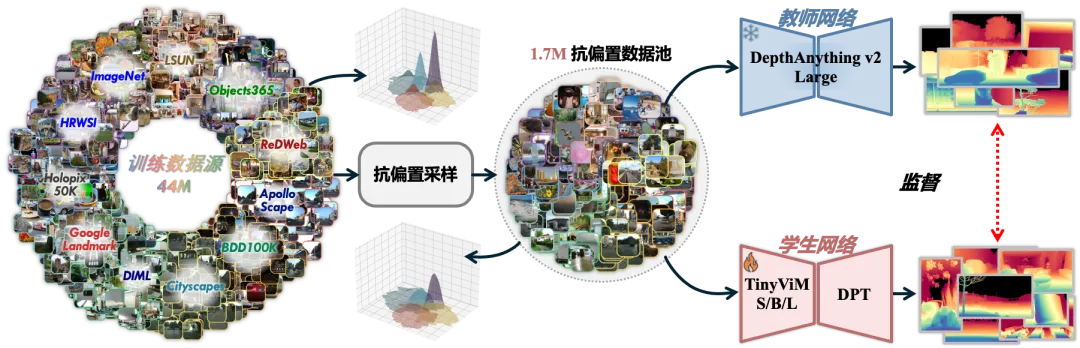
Figure 2. Anti-focused data sampling and distillation learning
The second problem arises in the depth of measurement. A small model that has learned the relative geometry across the scene, if it is fully modulated directly on the NYUD or KITTI, can improve the accuracy of the measurement of the target area, but it is easy to cover the original general geometry representation.
For this purpose, we designed camera-conditioned fine-tuning (CamFT). DeepthART freezes the distilled encoder, introduces lightweight camera adapter modules into the camera, and uses the multi-query Scale Estimation Head to restore the true scale. It follows a simple principle: first protect the geometry that has already been learned, then learn the scale.
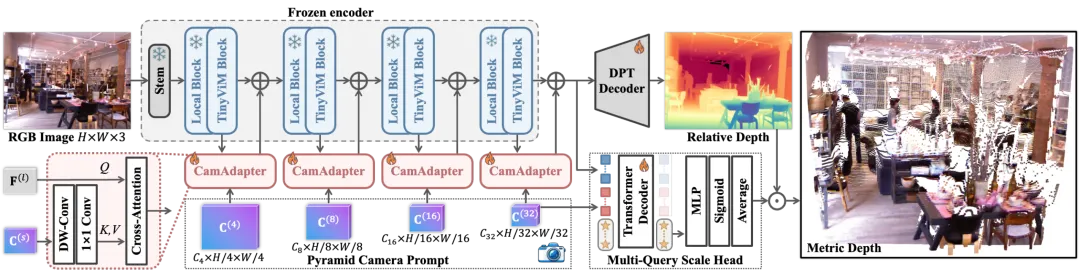
Figure 3. The process of conditioning the camera to fine tuning
What does the 6M parameter really do?
DepthART initially offered three scales, S、B、L, with parameters of 6.0M, 11.4M, and 32.6M respectively. DepthART-S, with only 6.0M parameters, reached δ1 = 0.964; DepthART-L, on ETH3D, reached δ1 = 0.958. As a reference, Depth Anything V2-S has about 24.8M parameters, while DepthART-S has only about a quarter of them.
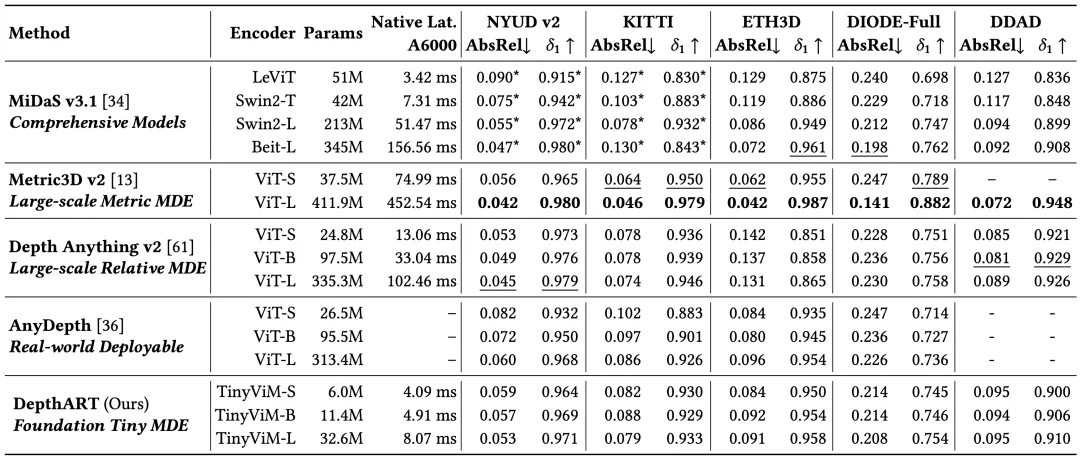
Table 1. Profoundly estimated performance comparisons
In the paper's strict FP32 test, DeepthART-S yielded about 347 FPS for RTX A6000,2242 inputs; the subsequent open version of TensorRT FP16 further reduced the model-only latency for 224 inputs to 0.918 ms. The project currently offers both PyTorch, ONNX, TensorRT and Jetson Orin NX deployment paths.
However, DepthART's focus is not merely on pursuing FPS, but on whether, after the model enters millions of parameters, it can still maintain cross-dataset generalization, scale adaptation and real-world device deployment capabilities at the same time. Large base models still define performance limits, which DepthART tries to advance, closer to the Pareto frontier of accuracy-efficiency in the edge region.
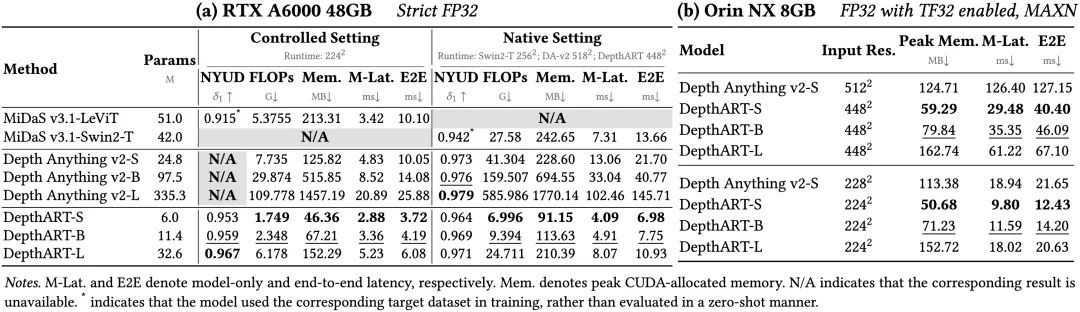
Table 2. Profound comparison of estimated efficiency
Lightweight depth estimates are becoming independent
In July 2026, multiple lightweight/zero-shot monocular depth routes appeared almost simultaneously. ZipDepth was released on July 9, DeepthART on July 19, and Ultralytics officially released YOLO26-Depth on July 22. It should be noted that the basic model of YOLO26 itself was released earlier, where the timeline refers to YOLO26-Depth as the official launch of the single depth mission.
DepthART almost coincided with ZipDepth, and was released earlier than the official depth mission of YOLO26-Depth. This concentration was not a coincidence: the single-point depth competition was moving away from the Foundation Model to the Foundation Model and toward how to really bring Foundation capabilities to the device.
After the paper, why did we do another set?
MobileNetV4 DepthART?
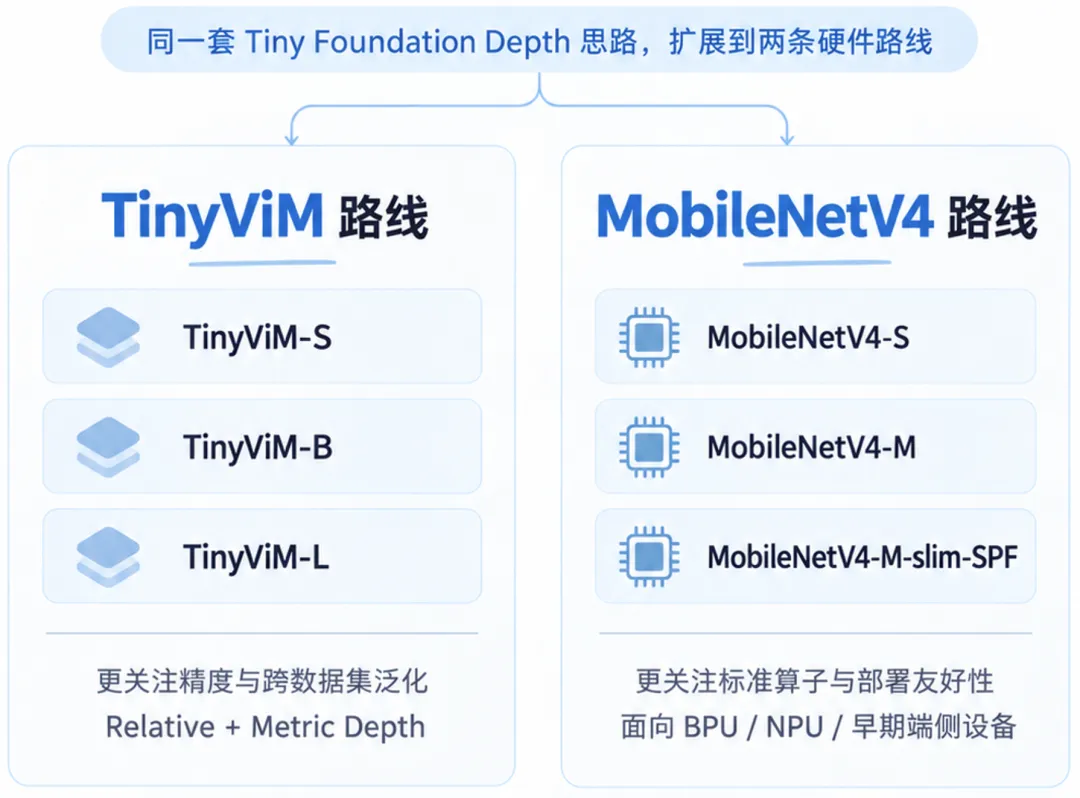
Figure 4. DepthART two parallel routes
DepthART originally adopted TinyViM because it had strong representation at relatively close parameters and was highly efficient with CUDA/TensorRT's Selective Scan plugin. However, studying the model faster than the GPU does not mean that it is suitable for all hardware. Some earlier mobile platforms, BPUs and NPUs preferred more mature convolutional calculators and standard computing charts.
Therefore, in September 2026, the new version of DepthART added MobileNetV4-S and MobileNetV4-M, and further designed the MobileNetV4-M-slim-SPF: Cut MobileNetV4-M encoder, while additionally designing the lighter Single-Path Pyramid Fusion (SPF) to replace the DPT encoder.
Meanwhile, the NYUD δ1 dropped from only 0.953 to 0.952, and the KITTI dropped from 0.931 to 0.928. That is, computing capacity was reduced by more than half, while the main depth performance remained basic. More importantly, the MobileNetV4 version offered output that relied solely on standard ONNX algorithms and no longer relied on Selective Scan custom algorithms, thus reducing the porting threshold on earlier resource-limited platforms such as BPU/NPU.
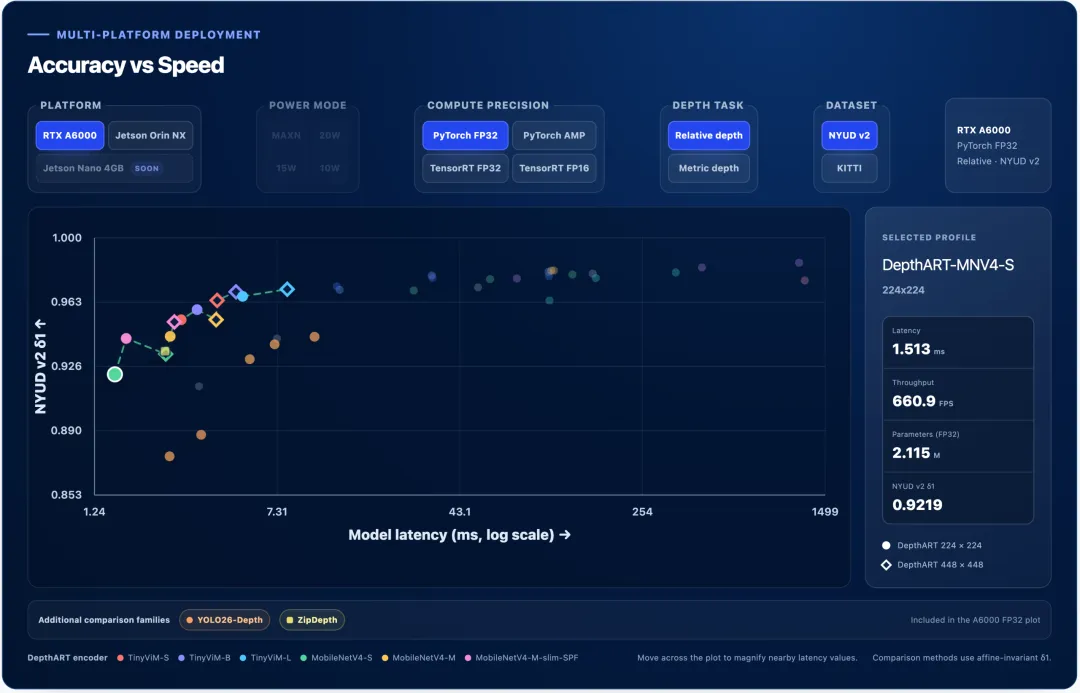
Figure 5. DepthART's program compares delay reasoning with the accuracy of Delta1 in the model on NYUD v2.
Choices from one model to different hardware constraints
Currently, DepthART covers TinyViM-S/B/L, MobileNetV4-S/M, and MobileNetV4-M-slim-SPF, and offers different reasoning paths such as relative depth, camera sensing depth, ONNX and TensorRT.
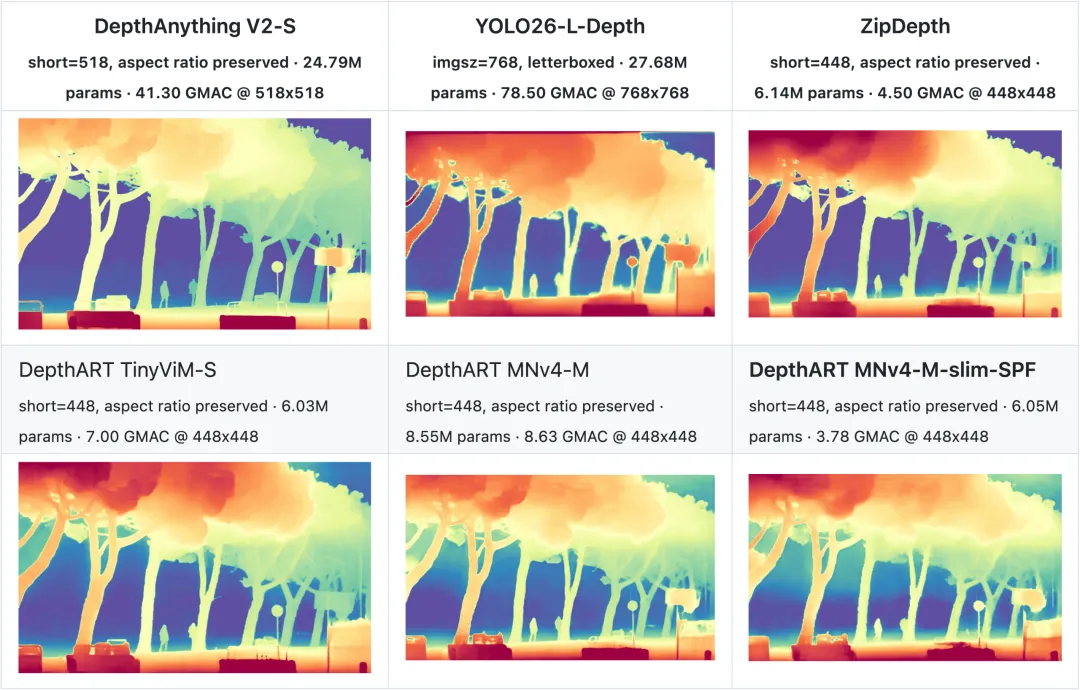
Figure 6: Horizontal contrast in visualization
We increasingly believe that a truly lightweight, deep base model will not be the only one with the best model packs. Server GPU, Jetson, mobile GPU, NPU and BPU do not have the same preferences for calculators; one model consumes extremely high on the NVIDIA GPU, nor does it mean that it is the best choice on another type of chip.
So we're not trying to prove that a 6M model is a complete replacement for a large Foundation Model. What we're more concerned about is how much more generalization the Foundation Model can retain when parameters, computation, and deployment conditions are tightly constrained.
Introduction by the author
He is currently a postdoctoral fellow at the Department of Computer Science and Engineering at the University of Trento, Italy, where he works with Professor Nicu Sebe. He graduated from the Beijing Postal University and is a postdoctoral researcher at Minglong University. His main research focuses on the study of computer vision and multi-mode learning, focusing on single-dimensional depth estimation, efficient visual models, lightweighting and edge deployment of visual language models and visual base models.