“ China's most innovative technology, from machine-to-machine to brain-built, is the capital of the world.
Recently, Zhejiang Provincial Entrepreneurial Investment Group Ltd. (hereinafter referred to as Zhejiang Investments Ltd.) completed a nearly billion yuan investment in Energy Unlimited (INFIFORCE). This investment was promoted by Zhejiang Investments Investor Shenzhen.
It's worth noting that Shen Tho has previously been involved in investing in Chang's snowmobile.
The Chinese high-performance motorcycle company, which maintains its independence and development, has gained widespread attention as Zhang Xie Motors won the world's top motorcycle races. From high-performance motorcycles to physically intelligent, Shenzhen's investment map spans two distinct areas of technology.
The two companies have one thing in common: they choose to continue investing in core technologies and try to compete globally with their R&D capabilities.
In a sense, it's a joint championship of Chinese hard-tech enterprises.
This time, Liu's investment focused on the core of the body-intelligent machine-brain.
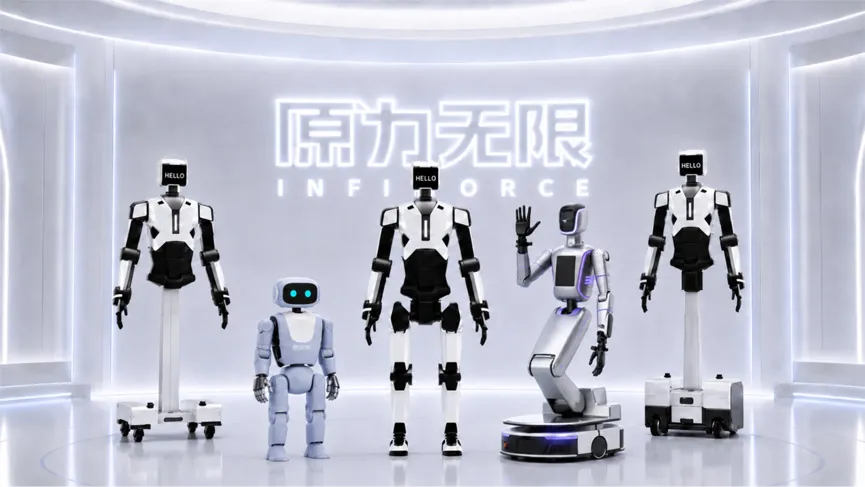
Nuclear Infinite is a Chinese corporate intelligence first-tier enterprise that is at the core of autonomously developed AtomBrain, which uses the Causal World model as its core technology route, and builds a technology system around original research, full-frame AI Infra and multi-form robot applications, covering model research, data training and real-world scenarios.
According to Shen, physical intelligence is entering a competitive phase where it is more dependent on underlying technological capabilities.
He said:
When investing in hard technology, we are always focused on the question of whether enterprises really own their own core technology and can turn their technological advantages into long-term competitiveness.
From high-end manufacturing to physically intelligent, industries are different, but what we value is the same. Competition for physically intelligent people is entering the deep sea, and a real understanding of the physical world, a physically intelligent brain with the ability to continue learning, will be the key to the next stage of competition.
Nuclear Infinity's original exploration of the cause-and-effect world model, and its ability to combine cutting-edge research with real-world industrial scenarios, show us the potential for China's smart enterprises to participate in global technology competition. This is an important reason why we chose to invest in Nuclear Infinity.
In August 2026, the company announced the completion of round A and round A+ financing, with the size of almost 1 billion yuan.
Continued capital support has also given greater attention to the technological layout in the area of brain-to-body.
01.
Betting brains, raw technology builds core competitiveness
As robots have an increasingly flexible body, the technological competition for physically intelligent robots is deepening into the human brain.
But whether robots can understand the physical world, judge the outcomes of different actions, and develop new capabilities in the face of unknown tasks remains a problem that the industry needs to address.
Nuclear Infinity focuses its technology in this direction.
AtomBrain, the company's self-developed, physically-brained AtomBrain, uses the Causal World model as its core technological route, conducting original research around the understanding of the physical world, Causal Reasoning, Continuous Learning and autonomous decision-making.
From an infinite point of view, the intelligence of a robot depends not only on its ability to perform a given task, but also on its ability to understand the relationship between action, environment and outcome.
Using the world model, state prediction focuses on what might happen next, while the causal world model further studies how different actions affect outcomes and explores robotic understanding of physical laws through intervention and counterfactual reasoning.
The goal of this pathway is to allow robots to adjust their decisions based on their understanding of the physical world when faced with environmental changes or mission abnormalities, without having to rely entirely on previously learned fixed action patterns.
Around this direction, a systematic breakthrough in scientific research has emerged.
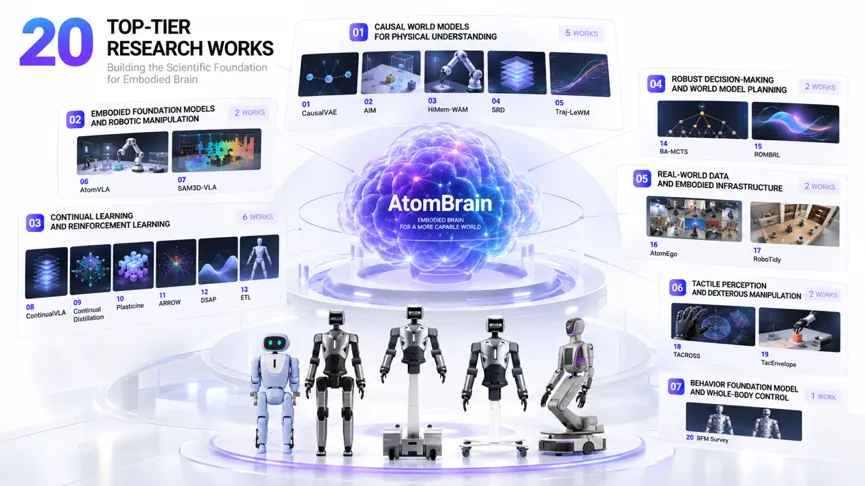
To date, the company has published a total of 20 peer-reviewed publications covering a wide range of topics, including body-based models, cause-and-effect world models, spatial understanding, long-term memory and real-world learning.
Among them, several studies have reached the top of the international authority Benchmark.
SAM3D-VLA improved the model's understanding of object shapes, spatial layout and operational objectives by introducing three-dimensional spatial information, achieving an average success rate of 99.1% in the LIBERO benchmark test.
AtomVLA focuses on complex task understanding and long sequence operations, achieving an average success rate of 97% in the LIBERO benchmark test, which was received by IROS 2026.
AIM explores the synergy between world state prediction, spatial understanding and motion generation, with an average success rate of 93.1% in the RoboTwin 2.0 benchmark test.
In the direction of the Causal World Model, the CausalVAE study, carried out by a research team from the University of Primordial Infinity, explored changes in physical states and counterfactual reasoning through the introduction of causal structures. In the corresponding Physics benchmark experiment, its counterfactual detection indicator CF-H@1 improved by an average of 102.5%.[3]
From spatial understanding, mission planning, to causal reasoning, these studies have provided a wealth of technology for the AtomBrain at different levels.
However, leading performance on the benchmark still needs to be continually tested in more complex real-world tasks. The next challenge for minds is how to further integrate these capabilities and translate them into stable performance across tasks, across scenarios.
This also determines the need for continuous technological research and development of nuclear unlimited power to connect real physical environments.
02.
How does the brain move from science to industry to the real world?
The value of the basic model will ultimately need to be verified in real-world tasks.
In terms of physical intelligence, standardized operations in the laboratory differ markedly from real industrial environments. The location of objects, mission processes, environmental conditions can change constantly, and robots also need to meet requirements such as stability, execution efficiency and safety.
Nuclear Unlimited has been implemented in many industrial directions.
According to the company, its business covers eight industries, including advanced manufacturing, logistics supply chains, aviation transportation, energy power and commercial services, with stable operations in more than 30 cities and more than 100 real-world scenarios across the country, totaling more than 500 million yuan.
In terms of physical products, the company has developed a robotic system that covers a variety of shapes, including human, wheeled, and bipedal.
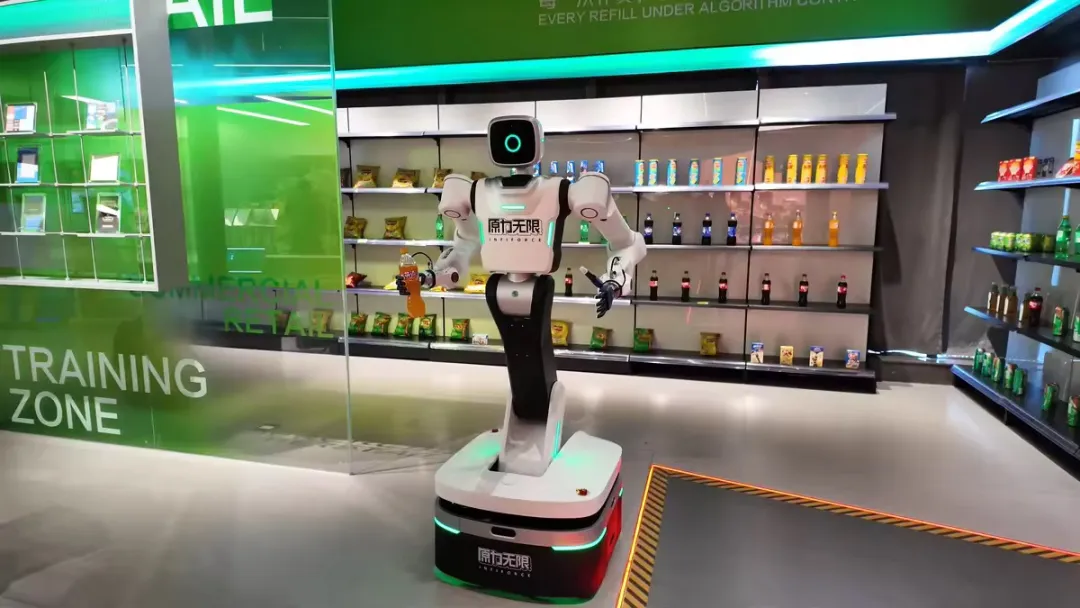
Among them, AD-01 humanoid robots have been deployed in retail pre-storage environments to carry out tasks such as loading and refueling. These tasks involve target identification, spatial positioning, action planning and continuous execution, as well as the ability of robots to adapt to changing environments.
In September 2026, the official strategic landing in Chongqing, China, will be equipped with intelligent full-scenes training, real-scenes training, data collection and industrial application collaboration.
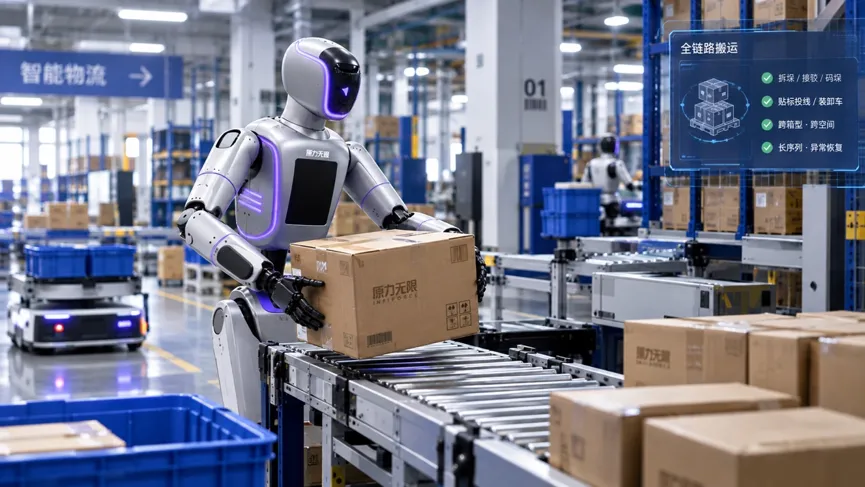
In the case of nuclear unlimited, these industrial scenarios play a role in both technical verification and data feedback.
Robots perform tasks in real-world environments and generate new interactive data that, after being processed, trained and validated, have the opportunity to further improve model capabilities.
To this end, Atomic Energy has built DataGrid's AI Infra suite, which covers the first-person data collection, data governance, model training, real-machine deployment, and data flow, providing the data and engineering foundations needed for continuous learning for the physical brain.
However, the number of scenes and the general capacity of the human brain cannot be directly illustrated.
Will the ability of robots to form in one scenario move to another? Will training and debugging costs continue to decrease in the face of new tasks? These are still questions that the intelligent industry needs to answer through long-term operation.
From this point of view, the continuous input of nuclear energy is unlimited in real-world scenarios, and provides further verification for its path to physical brain technology.
03.
From machine to brain, capital is betting on Chinese raw technology
In a physically intelligent industry, the technological path has not yet been fully crossed.
As businesses explore VLAs, world models and other model architectures, the industry is still looking for effective ways to support complex task understanding, continuous learning, and cross-scenario generalization.
This also means that the long-term competitiveness of physically intelligent people is difficult to judge on the basis of a single demonstration or model performance.
Nuclear Infinite Choice is a core technological route for the Causal World Model, continuing to engage in original research into the body brain, while validating the model's capabilities through multi-form robots and real-world scenarios.
The company has a core team that supports this technology choice.
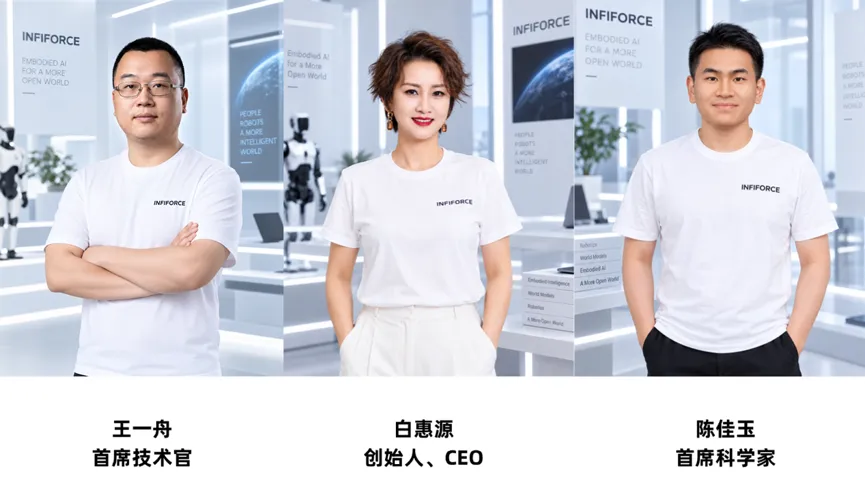
The founder and CEO is a young science entrepreneur from Zhejiang Province; the chief scientist, Chenjia Yue, born in 1998, is an assistant professor and PhD student at the University of Hong Kong, who has long been engaged in cutting-edge research on reinforcement learning, world models, and more; CTO Wang Yi, a Silicon Valley technology giant, has been involved in core technology research and development such as Baidu IDL, DriveAV, and has experience in cutting-edge algorithm research and scale engineering practice.
According to the company, about 70% of the R&D team is made up of talented college gamblers from abroad.
From groundbreaking research, underlying algorithms to industrial engineering, the team's ability structure matches the technological routes of a primarily focused, physically-minded team.
The venture has invested nearly a billion yuan to further support research and development in areas such as AtomBrain, the Causal World Model and DataGrid.
While the technological objects of capital's focus have shifted, the emphasis on original capabilities and long-term competitiveness is similar.
For nuclear infinity, the next key is to continue to advance the study of the Causal World Model and to allow the body-brain to be validated in more real-world tasks.
Whether robots will be able to understand the physical world, continue to learn from real experiences, and increase their efficiency in acquiring new capabilities will determine the next stage of technological competition for physically intelligent people.
The limits of a robot's intelligence will depend on its depth of understanding of the physical world; the next stage of its competitiveness will depend on the speed at which it evolves.
Physically intelligent people are entering a long-running competition around the brain drain.