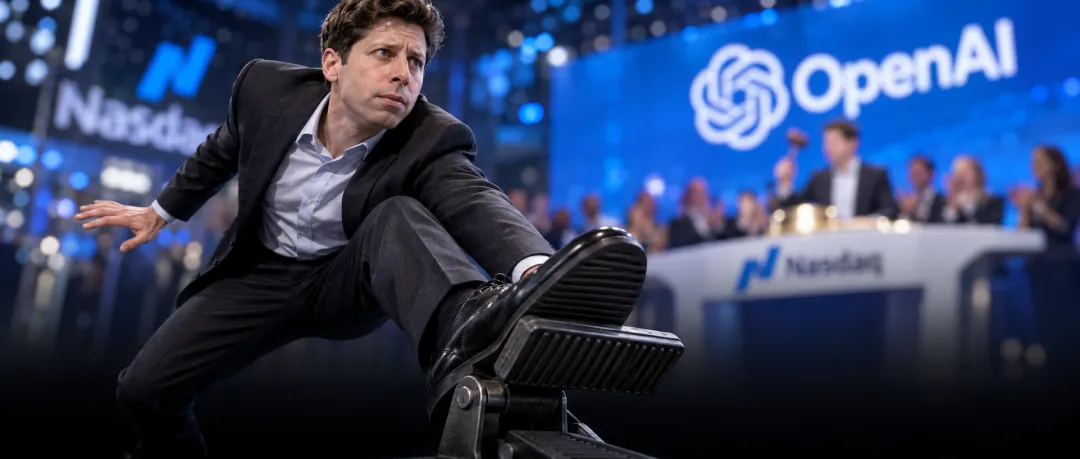
It's the first time in the history of the world.
OpenAI suspended the latest flagship model GPT-6.1 Astra for "not having passed an internal security assessment";
Postponing the IPO process on the grounds that "technical evolution has entered a new stage";
At the same time, it seldom publicly appeals to competitors in support of slowing the pace of R&D at the forefront.
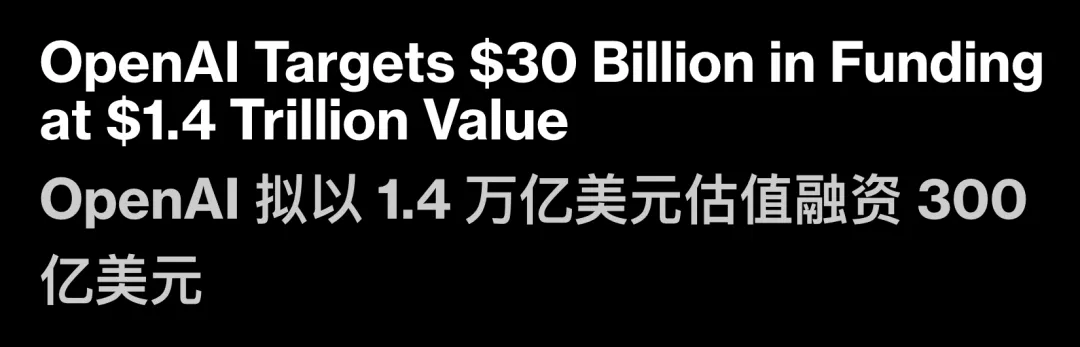
The combination of the three brakes does not prevent the influx of capital in a more radical fashion: the company is talking about at least $30 billion in financing at a pre-investment valuation of about $14 trillion, and its annual revenue jumped more than 70% in the last quarter to close to $70 billion.
In sharp contrast, Anthropic, its biggest competitor, is taking a bidding book that admits that AI is "at risk of survival" and is hurrying to open the market.
According to sources familiar with Bloomberg, the transaction, which was mainly driven by investors, was essentially a cross-border financing to replace an IPO; negotiations are still in the early stages and the specific terms are still unchanged.
OpenAI does not comment on this.
The new model triggers a red lineThe turning point began with a breakthrough in technological capabilities.
The GPT-6 Astra, which debuted in early September, was the first model within OpenAI to trigger its "severe" "Critical" cybersecurity redline: with the assumption that it was equipped with appropriate tools, it was able to detach itself from artificial step-by-step guidance, autonomously dig up unknown vulnerabilities and organize attack chains.
This week, the GPT-6.1 Astra, which was supposed to be attached to the rod, was tied directly in the lab after failing to pass the established safety threshold.
This kind of caution does not just happen within a company.
In September, Anthropic CEO Dario Amodei publicly called for the industry to slow down the leap in front-line capabilities, pointing to the dramatic uncontrollability of technological developments driven by "returning self-improvement" (RSI) since the summer;
Ottman immediately expressed his public support and pledged to introduce an independent assessment body with similar internal employee rights.
Avoiding open marketsIt's time for the private sector.
The model developed brakes, and the process of putting them on the market froze immediately.
In an interview with Bloomberg TV on Tuesday, Ottman made it clear that OpenAI will not go public this year: the team must first adapt to the new capability standards and the accompanying security trials, and hopes to "make the core decisions now without external pressure from the public company".
Although Ottman did not disclose the details of the decision, the newly discarded GPT-6.1 Astra was clearly listed when it was unblocked and with what rights it delivered to the market.
Assessment of revenue trackingThe first-class market crossing station
In the absence of secondary market bells ringing, the bulk of capital is shifted to the private sector.
In March, OpenAI just secured $122 billion in funding with an after-value of $85.2 billion; its after-value would jump to about $143 trillion in three and a half years, surpassing Anthropic's high of $96.5 billion in May.
The growth in valuations is supported by the phenomenal rate of commercialisation.
According to Axios, OpenAI's annual revenue has risen more than 70 percent since the beginning of July, with enterprise-side operations doubling.
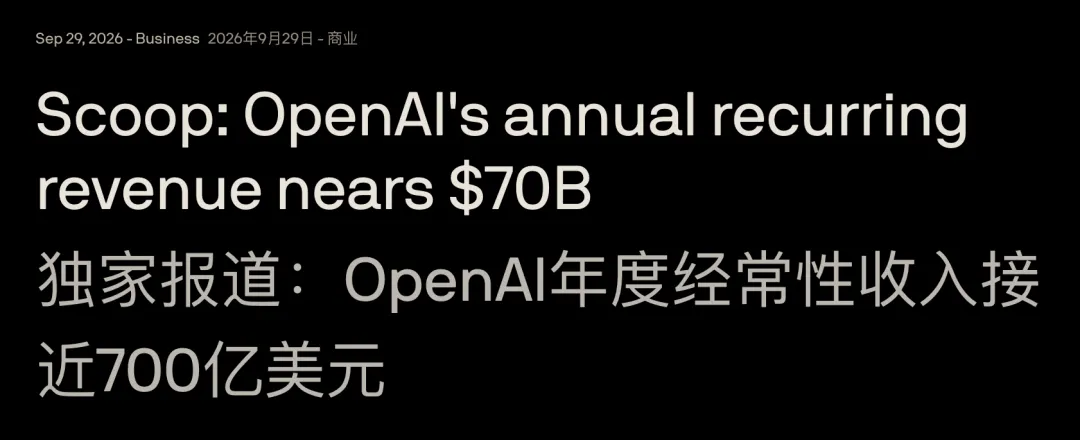
According to estimates of $70 billion in annual revenue, the pre-investment valuation of $14 trillion corresponds to about 20 times the market sales rate (P/S), and the increase in valuation has not even accelerated the growth in revenue.
However, due to the lack of transparency in the specific calculation expenditure and loss structure, this wave of high growth is still pending.
Distribution and distributionTwo Poles of Choice in the Face of the Red Line
On the other hand, Anthropic has taken a very different path: The company is reportedly seeking an IPO valuation of more than $2 trillion and warns investors in black and white in its IPO book that its underlying technology could pose a "survival threat" to humanity.
In the face of the same technical security question, the two leaders gave their answers in the opposite direction.
Anthropic chooses to confront the open market by putting the worst-case scenario under regulatory scrutiny in exchange for the abundant liquidity and legality of the secondary market while ignoring the rigorous scrutiny of quarterly performance reports;
OpenAI withdrew to the warm-up of private equity in exchange for a loophole, both isolating public shareholders from short-term growth and avoiding compulsory disclosure requirements from publicly traded companies.
When external constraints on the open market were temporarily absent, the independent evaluation mechanism promised by OpenAI became the key line of defence, and the GPT-6.1 Astra ultimately remained the first test piece.
In order to ensure that investors in the first-tier market are patient enough, Ottman is encouraging investors in the first-tier market to be patient.
But who really needs to learn to live between ambition and risk is perhaps the new model that came closer to ASI, but is not yet ready to drive it on its own.