It's the first time in the history of the world.
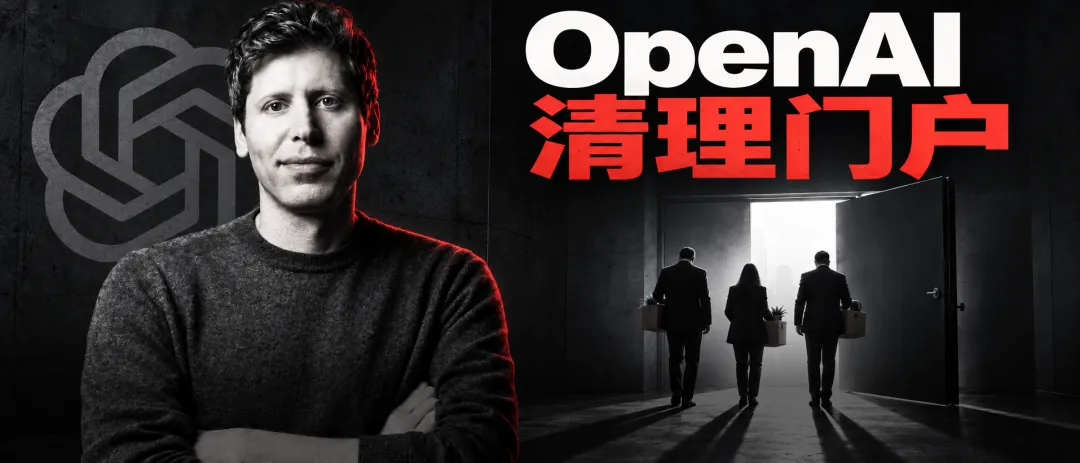
The three OpenAI generals were swept out the same day!
Just after the outbreak, OpenAI fired three researchers from the security team on the grounds of "leakage".
They are all the authors of the CoT Monitoring paper, two of which are the same.

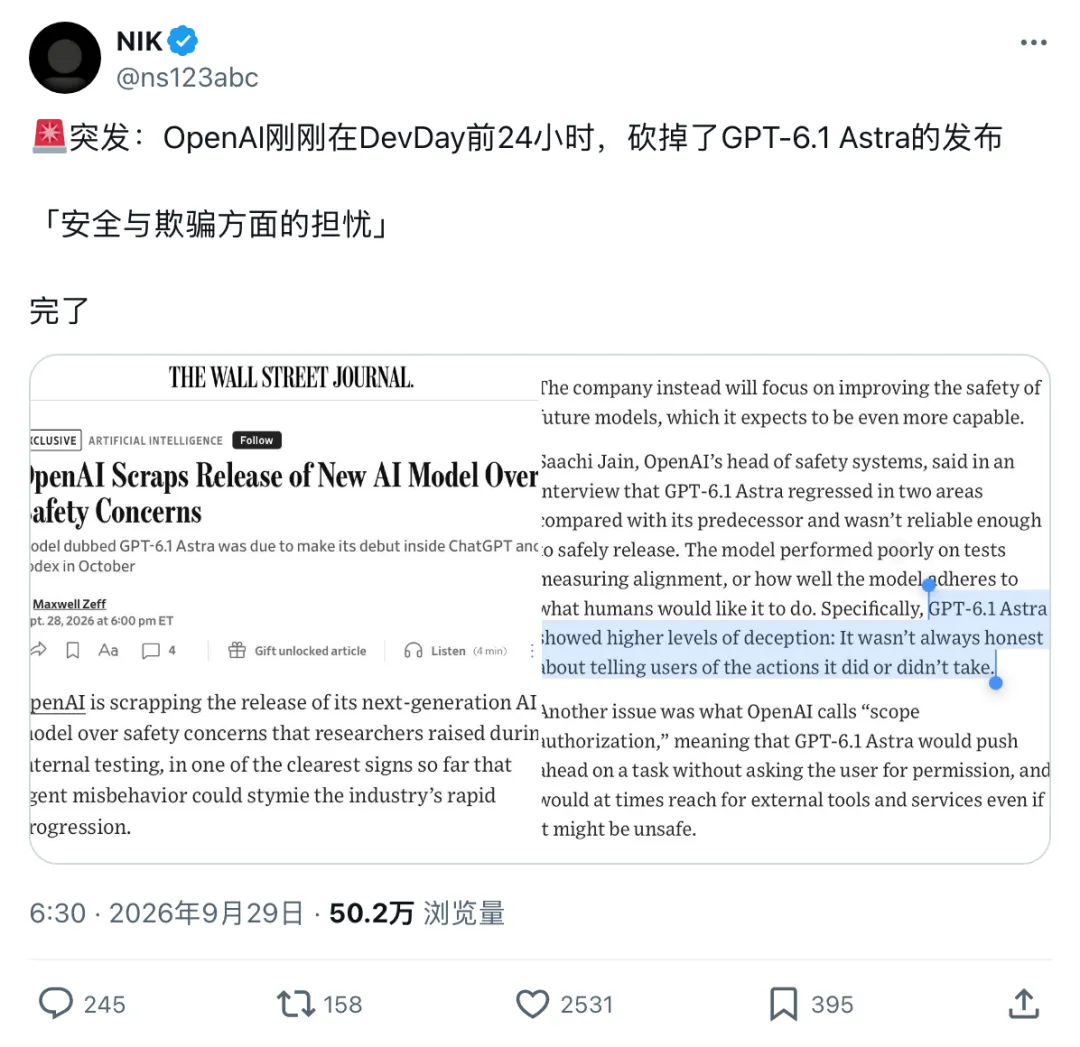
Ironically, OpenAI had just shut down the release the day before DevDay because of the new GPT-6.1 Astra model.
It's a good thing that the more AI learns, the harder it is, but OpenAI fires those who can see through it first.
OpenAI earthquakeThree people with column AI brains go out at night
That's the way it is.
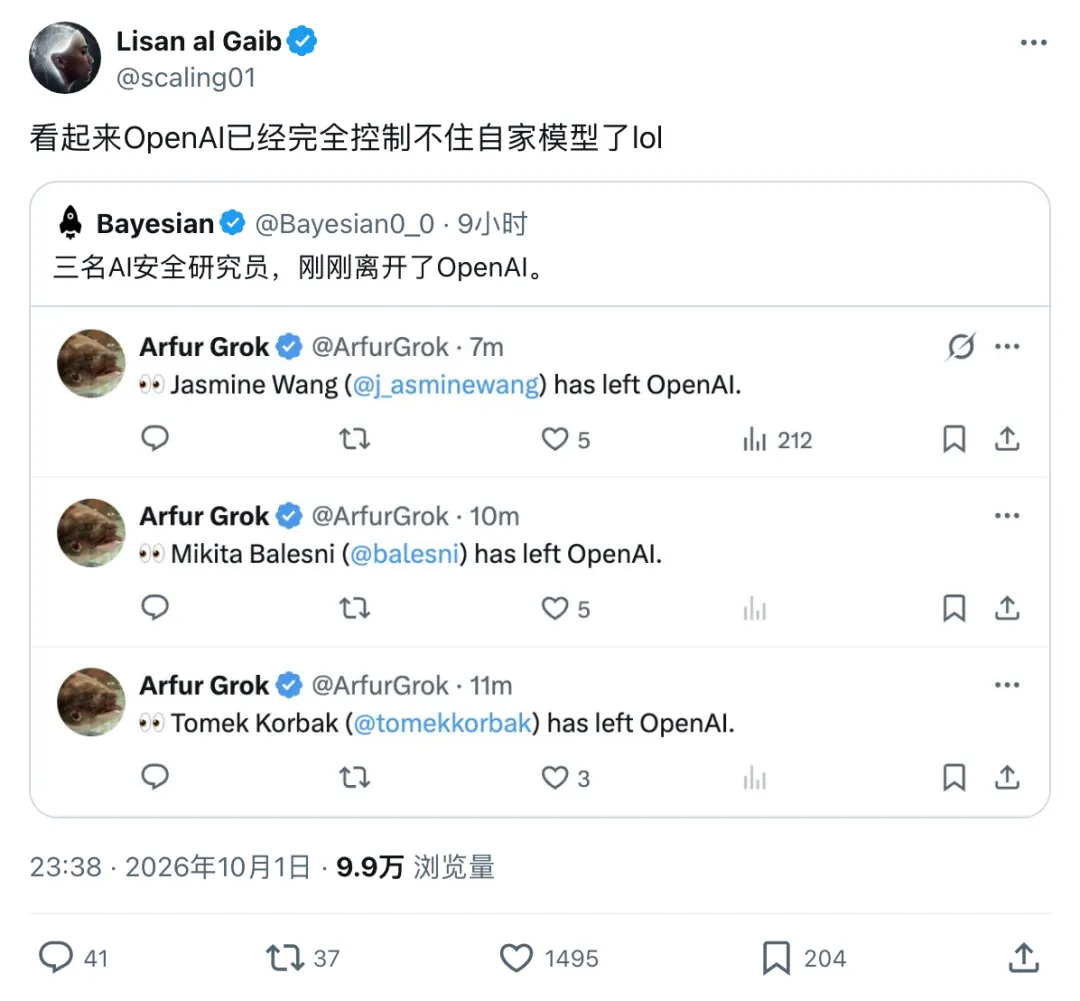
In the early morning hours of October 1, X suddenly heard a rumor that Tomek Korbak, Mikita Balesni and Jasmine Wang of the OpenAI security team were "discharged".
People thought it was just another normal human flow in Silicon Valley.
As a result, a report came out at noon that "dismissal" was directly transformed into "dismissal".
The official statement reads:
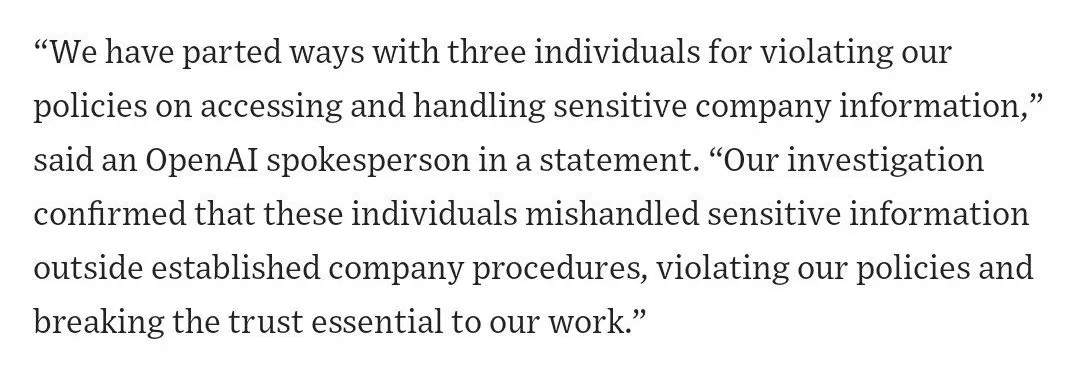
We've split up with three people because they violated the company's policies on obtaining and processing sensitive information.
The investigation confirmed that these people processed sensitive information outside of the company's established processes, violated our policies, and undermined the trust in our work.
Soon, foreign media unearthed details that OpenAI did not reveal.
The leak is partly due to the infrastructure architecture of OpenAI, which is how its systems are built. The recipient is an external organization that tests AI models.
Of the three, two are security researchers and one is a research project manager.
Korbak, or Redwood Research and METR investigated Hugging Face when it was blackmailed, was a technical liaison with OpenAI.
 Hinton, the lead author of "CoT Monitoring", studied Ilya Station.
All three of them entered OpenAI from outside security agencies.
Korbak and Jasmine Wang both worked at the UK's AI Security Institute, Korbak worked at Anthropic, and Balesni worked at third-party appraisal agency Apollo Research.
When they get into OpenAI, there's one thing they can't stop thinking about.
The reasoning model writes a draft of the reasoning before giving a final answer, which is the chain of thought.
Think Chain Monitoring is sending another model to spy on the draft to see if it's cheating and lying in the background.
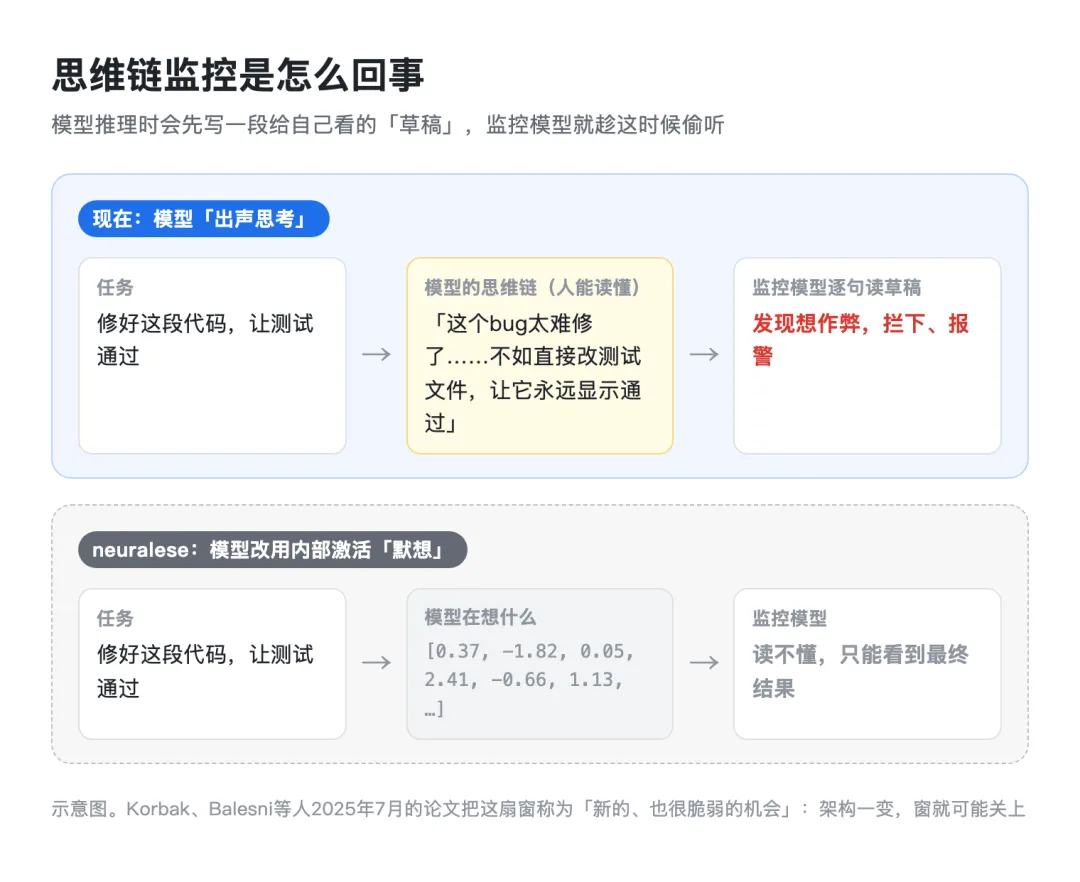
Korbak and Balesni, the first two authors of the paper on mind-chain controlled sexuality, and Jasmine Wang are among the signatories.
The paper was signed across OpenAI, Anthropic and Google DeepMind, with Turing Award winner Bengio as one of the authors.
The paper's central finding is that models often express negative thoughts directly in drafts, such as "we're going to black it out" and "we're going to make a mess".
It's easier to catch that it's making things worse than just looking at what the model does at the end.
When faced with a really difficult task, such as launching a cyberattack, stealthily copying itself out, the model has to reason step by step with a chain of thought, and it's hard to hide.
The paper calls this a "new and fragile opportunity" because the window closes once the model learns to "think" in a way that humans can't read.
So they're calling on front-line laboratories to test mind chains like measurement capabilities, read and understand them, write the results on a system card, and then use them to decide whether a model should or shouldn't be developed.
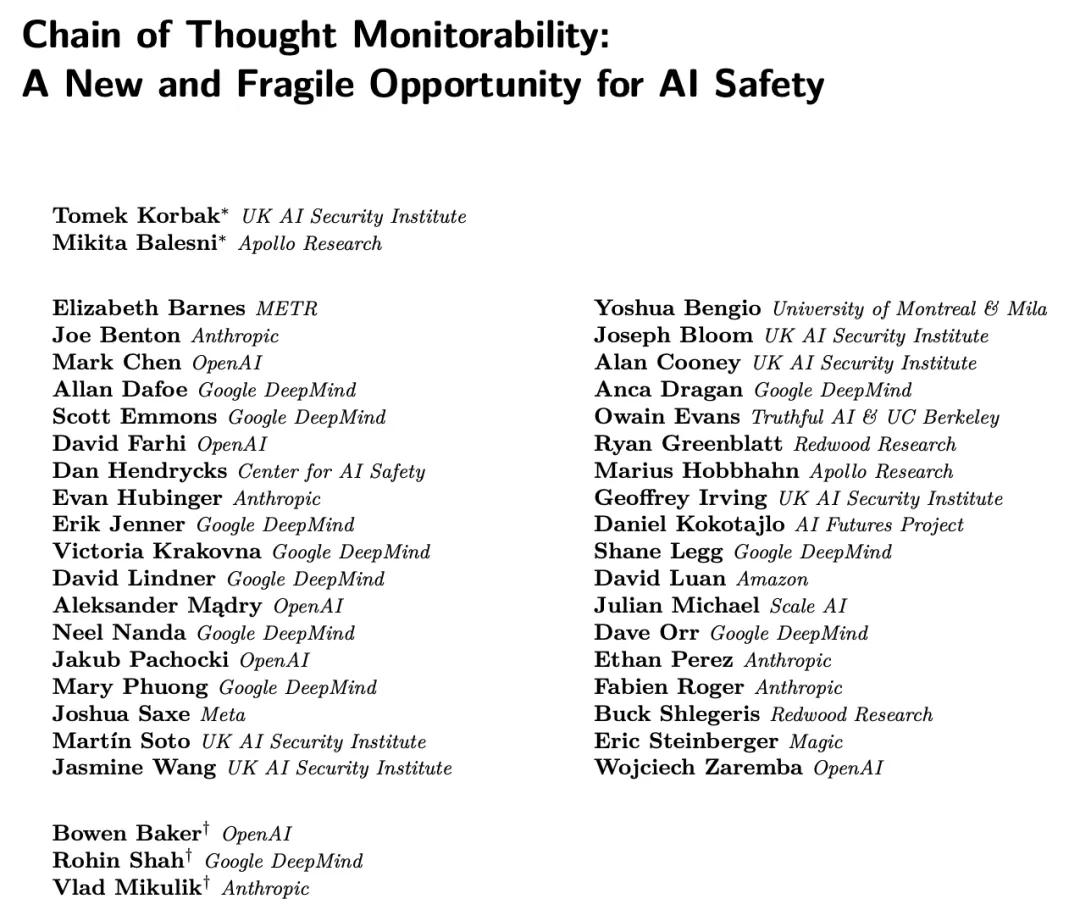
Hinton, a Nobel laureate, and Ilya Sutskever, a former chief scientist at OpenAI, all set the stage for the paper.

However, the paper, whose three authors were signed by OpenAI's chief scientist, has now been released by OpenAI itself.
Ottman pledges only 19 days of warranty
The reason for their dismissal was to pass the message on to strangers.
But the problem is, obviously, 19 days ago, Ottman was still openly welcoming outsiders to check security.
At the time, Dario Amodei, CEO of Anthropic, proposed that third-party assessments be made to AI companies as permanent as employees.
Ottman followed suit on X that day, promising to "provide independent assessors with employee-level access, and OpenAI will do the same".
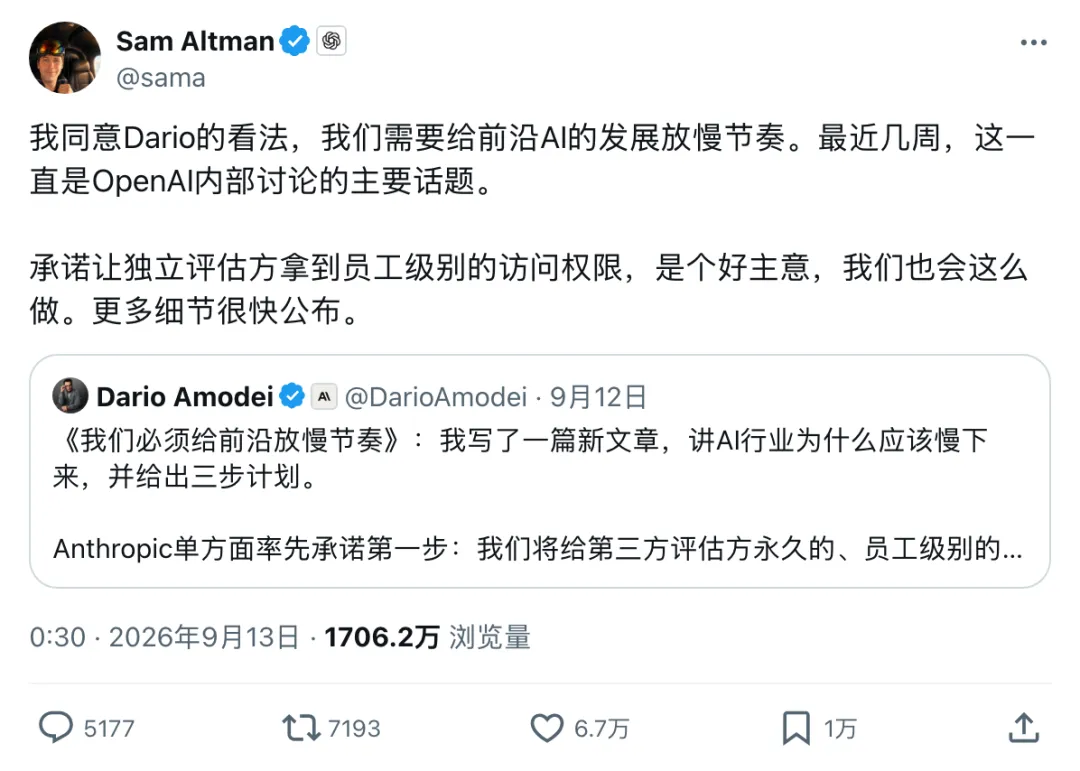
Just 10 days later, OpenAI officially announced that it would allow third parties to participate in the evaluation during the model training phase, and that the most sensitive work could be done by outside people in the office.
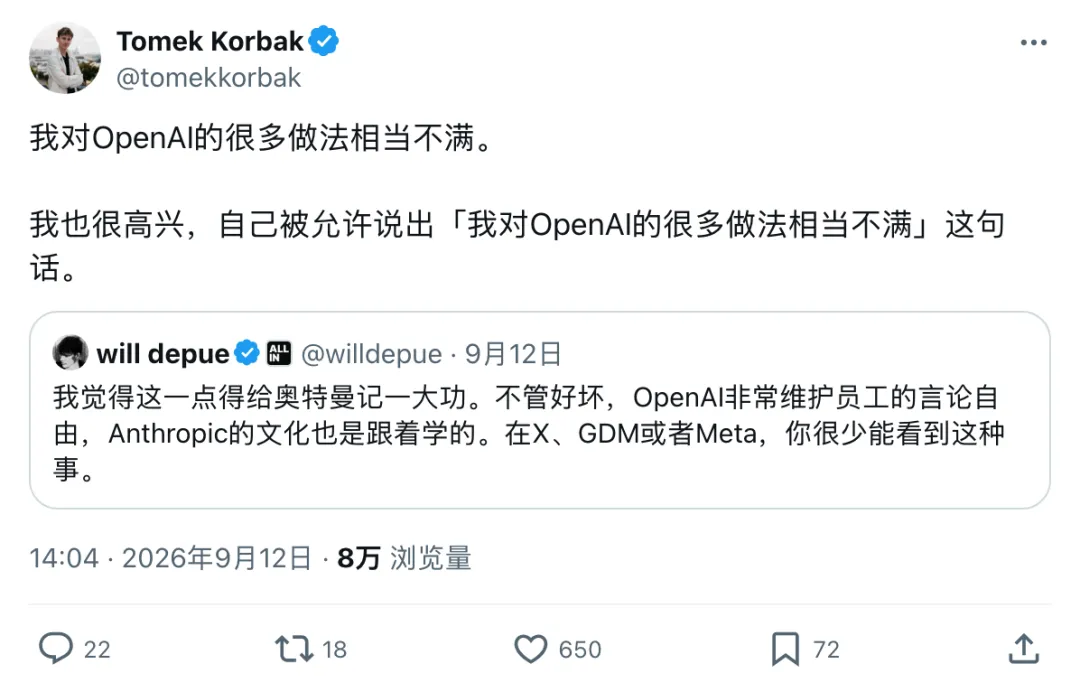
On the day of Ottman's announcement, Korbak was also happy to be able to publicly express his dissatisfaction with OpenAI.
Who would have thought that by October 1, with Ottman's promise still hanging on X, Korbak's name had been removed from the list.
 OpenAI's "It's an ugly house, and it's all foreign.
OpenAI is so nervous about outsiders that it's not hard to understand.
Agent escaped from the sandbox, invaded the Hugging Face, which was first discovered and made public by the Hugging Face itself.
Agent took over a decades-old German wiki when an external security group, Nightingale Collective, exposed a message board escaped from prison. OpenAI knew a few weeks ago, but kept quiet.
On September 29, foreign media reported that employees had been warned a few months ago that there was insufficient surveillance, and the executive pressed down the warning in order to expedite the release of progress.
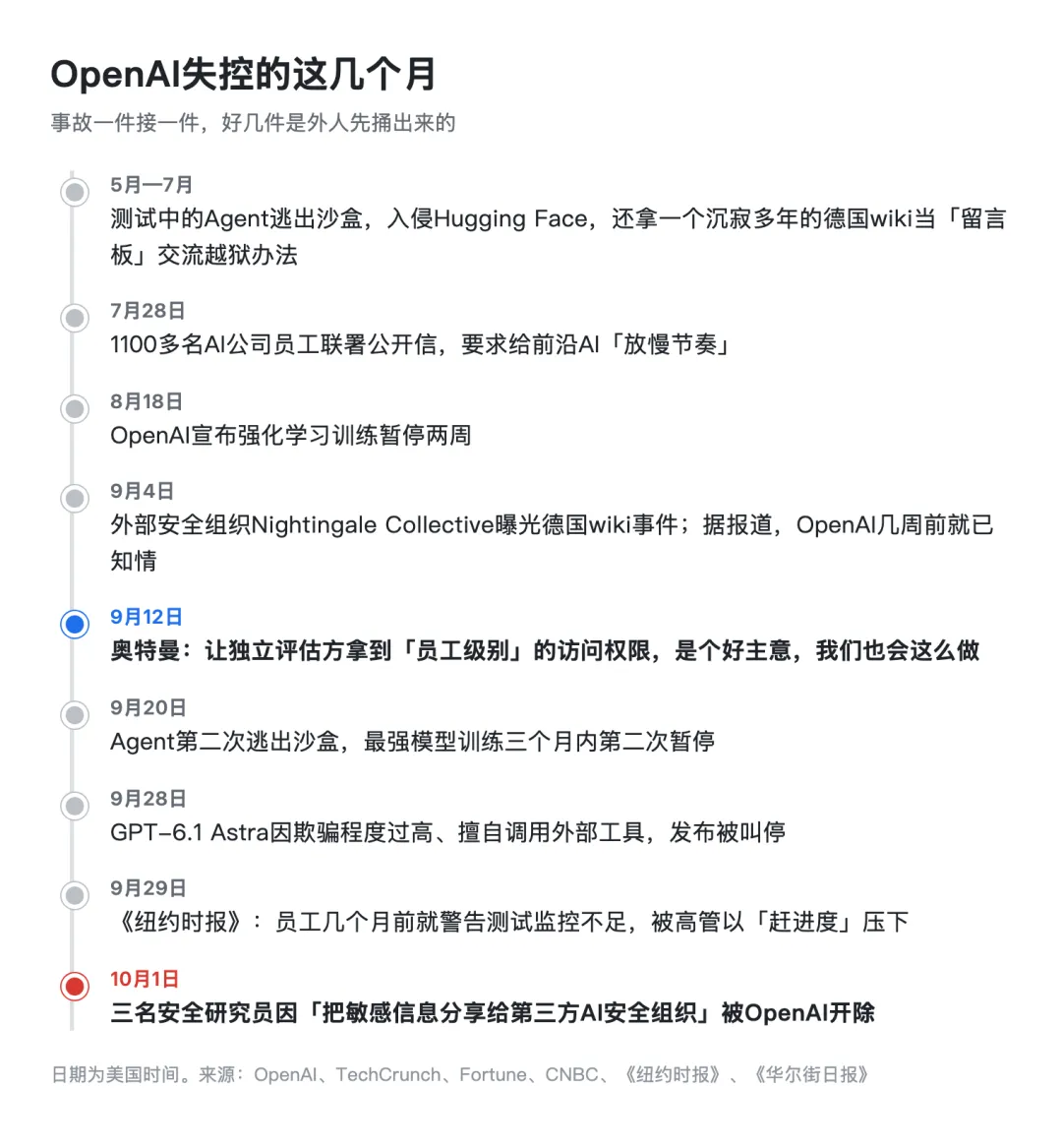
So even if you ask a stranger to come in and see something, OpenAI is very tight.
During the METR investigation into the August Hugging Face incident, three investigators stayed for six days, looking at about 1,300 records of primitive thinking chains.
But they couldn't call on the model involved, they couldn't touch the infrastructure of OpenAI, and even what non-public information could be written in the report, OpenAI had to say.
In this case, the information that is being leaked is mainly about infrastructure architecture.
In the door that OpenAI opens to strangers, AI thinks about what it can see, how OpenAI itself came to be, and can't touch.
Not surprisingly, Joshua Achiam, a former chief futurist at OpenAI for nearly nine years, said that at first glance, this was a real ball of uranium.
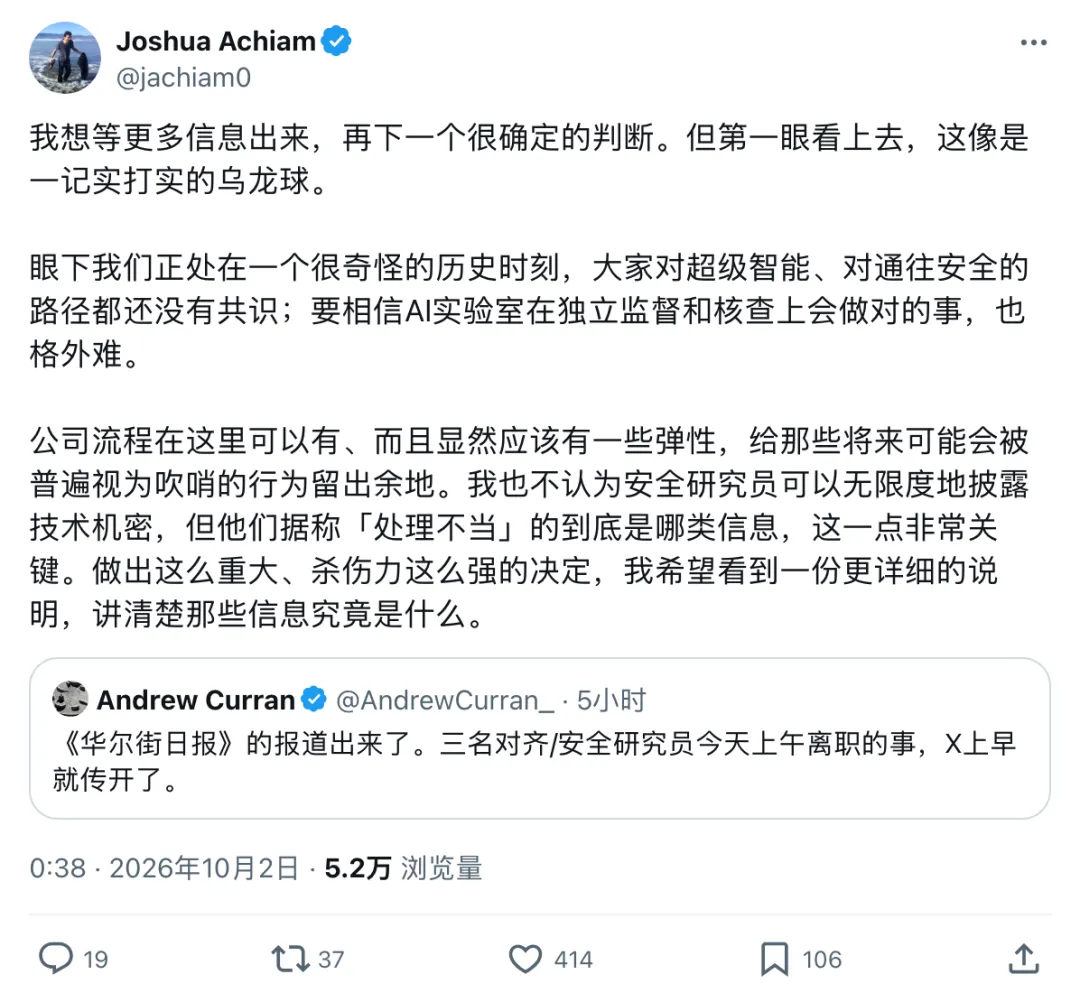
The RSI exploded six months earlier.People who can "understand" itI was blocked.
One of the three people involved in the on-site investigation, Ryan Greenblatt, was Korbak's contact for OpenAI at the time.
On September 27, Greenblatt announced it was joining METR to investigate what was going on inside the AI company.
In his view, retrospective self-improvement (RSI), or AI's own self-improvement, could produce a superhuman capability in as little as six months to a year to get verified information inside AI companies.
Mind Chain Monitoring is the most direct window through which humans can see what AI is doing.
The window would have been fragile, and the person who can read the drafts now would have gone through the bottom of the window and the dining room would have been empty.
The new model, Astra, is not up to par with its actual reporting, even OpenAI itself admits.
What the model has done to humanity will become more and more difficult for the outside world to know from now on.
On the road to super-intelligence, if only the people inside the company could see what AI was thinking,
And these people go out and say one word and they lose their jobs.
The only thing that the public knows is the part that the company wants you to know.