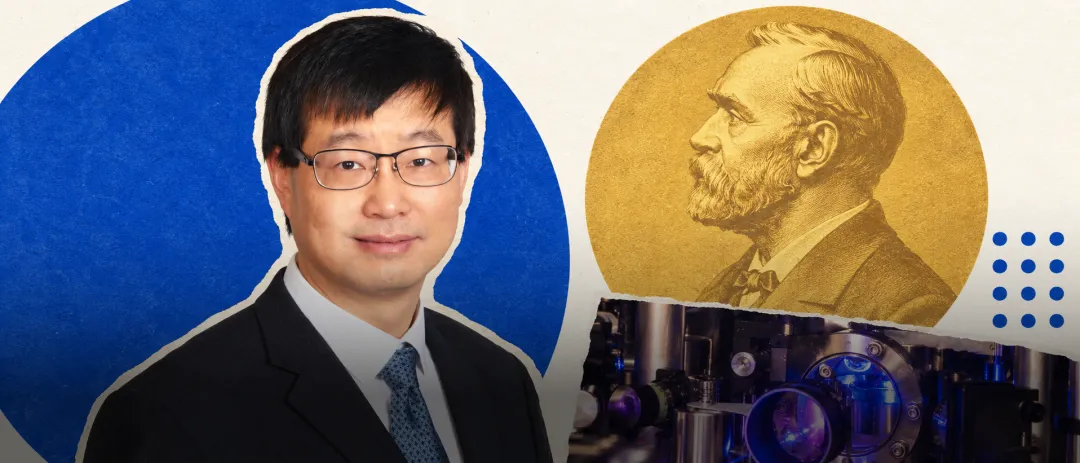
It's the first time in the history of the world.
On the evening of October 1st, the world of physics received the news that the 2026 Wolf Prize for Physics was officially unveiled!The prize was awarded jointly by the Chinese physicist Yuen Yan and the German physicist Immanuel F. Bloch.
This is the second time in 48 years that the Wolf Prize for Physics has been awarded to a Chinese scientist!
The first was the first and only goal scorer of the 1978 tournament.
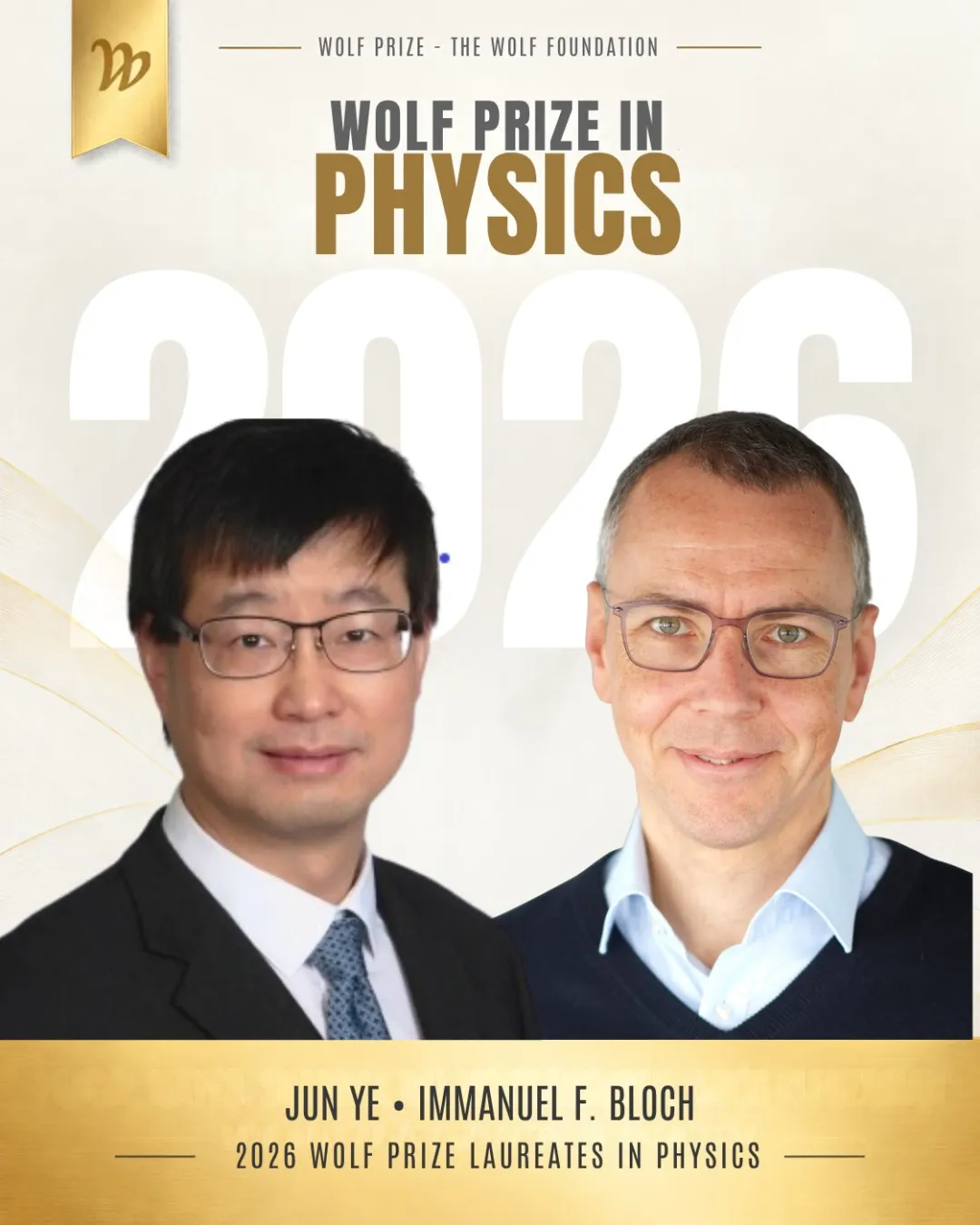
According to the Wolf Foundation,Both brought experimental physics into an area that was almost uncontrollable in the past.This is how the award words are written.
In recognition of their transformative and widely applicable breakthroughs in the regulation of ultra-cold atomic systems.
At this point, only four days before the Nobel Prize in Physics will be announced. As soon as the Wolf Prize is awarded, the eyes of the physics community will turn to Stockholm.
You know what?The Wolf Prize in Physics has a well-known nickname in academia: "The Nobel Prize in Physics".

It was the world's most accurate clock.
According to its accuracy in 2024,Even after the Big Bang, the clock's error is less than half a second.
Broch uses lasers to give an atom an "egg" and creates "artificial crystals" that can be manually adjusted in the lab, pioneering the field of quantum simulation.
In the Wolf Foundation's view, the achievements of the two represent a key shift in modern physics from observing the quantum world to controlling, measuring and driving it.
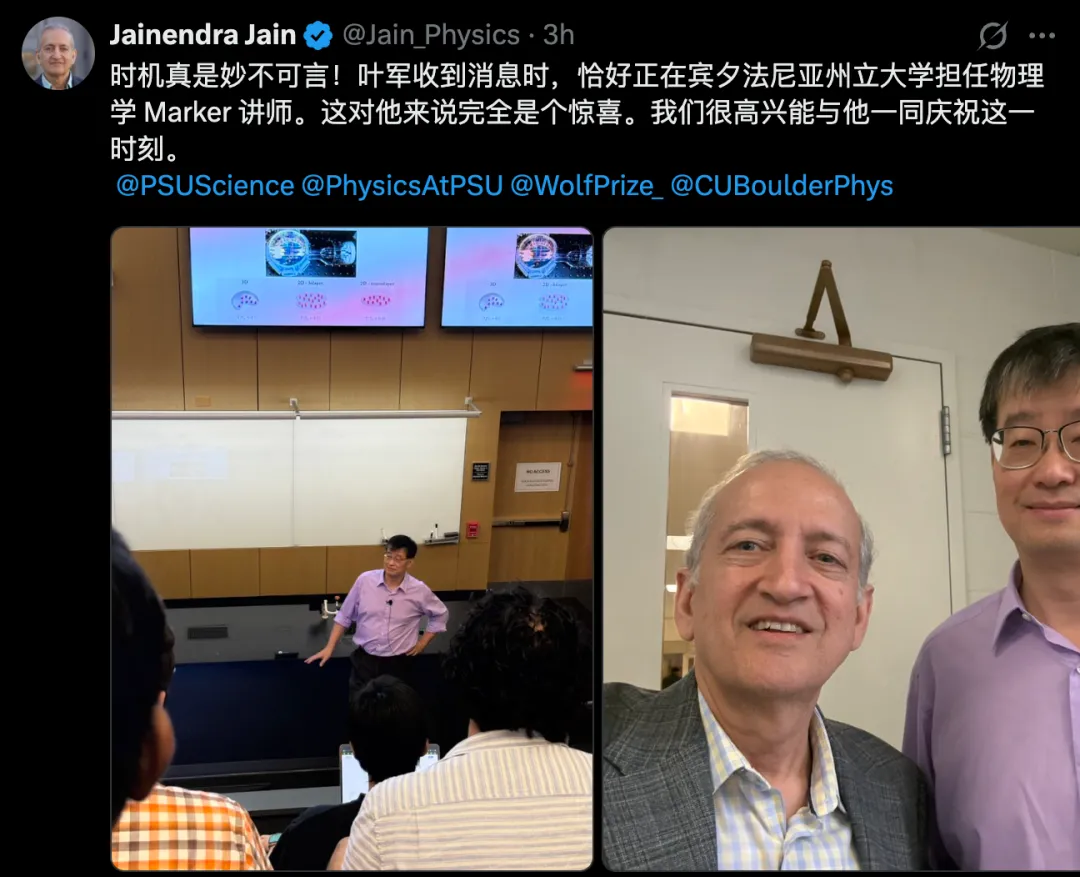
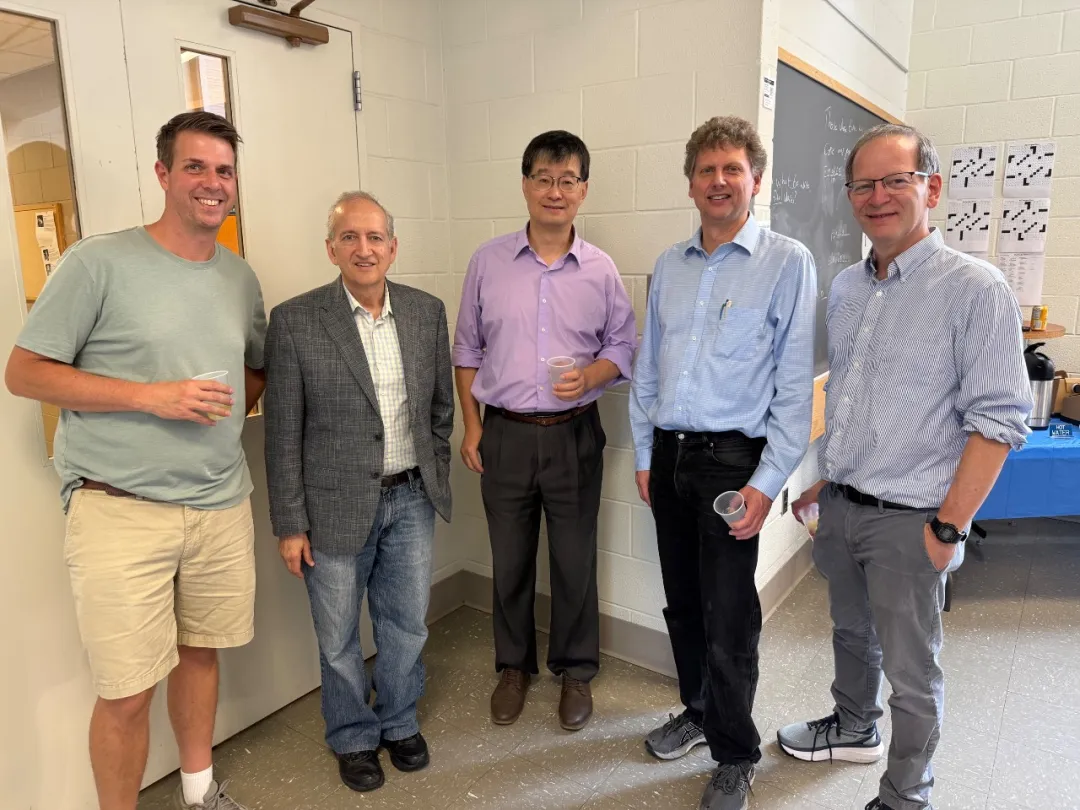
Chinese physicist YeongchunTake the "Nobel Wind to the Banner".
If you look at the "swing" of a clock, it's unstable, fast and fast.
Today, the world defines "one second" as the atomic clock of uranium. Uranium atoms oscillate about 9.2 billion times per second.
The "swing" chosen by the Yankees is the hydrogen atom.Hydrogen atoms oscillate about 429 trillion times per second, about 47,000 times faster than hydrogen.
The thicker the scale, the faster the clock is cut, the more accurate the clock is.
The problem is that atoms run out of control.
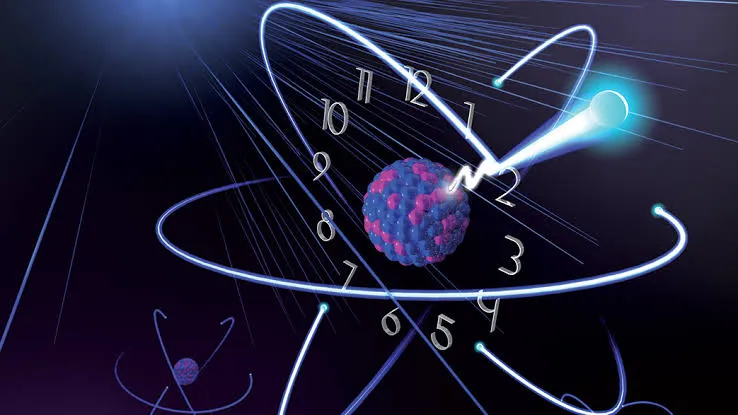
The team first used lasers to cool the hydrogen atoms to close to absolute zero, and then used a bundle of about 813 nanometers of lasers to put thousands to tens of thousands of atoms in a layer of code in a "light egg tray".
The wavelength of this beam of light was chosen very carefully.

It holds the atom tightly but does not disrupt the rhythm of the atom's "ditch", which physicists call the "magical wavelength".
The concept of the "photovoltaic clock" was first proposed by the Japanese physicist Shanxi Hsu Jun.The Yankees pushed it all the way to the limit.
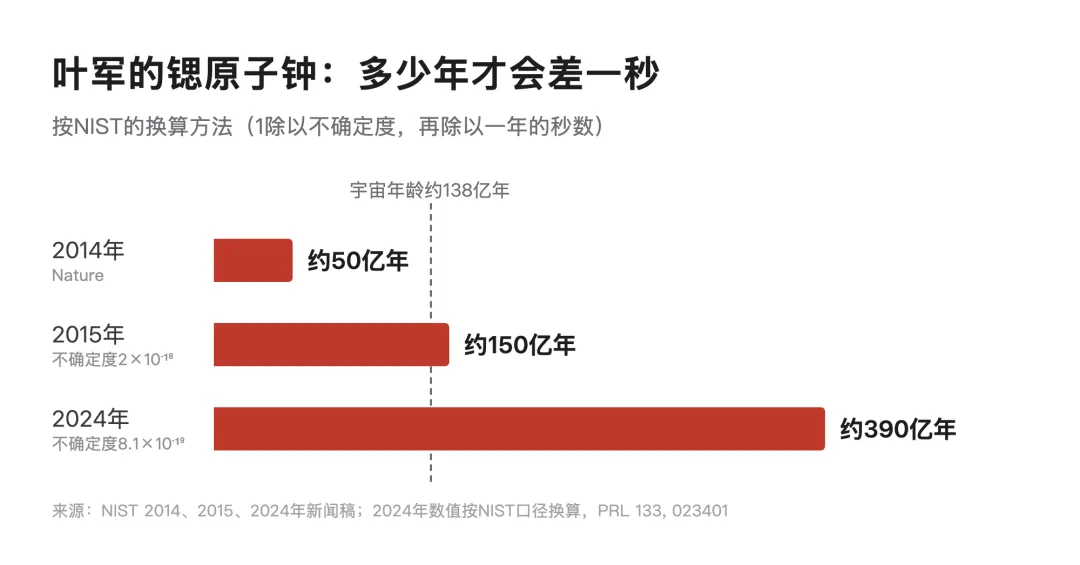 Over the course of a decade, the atomic clock went from about 5 billion years behind a second to about 39 billion years behind a second.
Less than a second of error pushes "time" to the physical limit.
In 2014, the Yeti team's hydrogen atomic clock climbed to Nature, which, according to NIST, is about 5 billion years behind a second.
In 2015, that number jumped to about 15 billion years.It's over the age of the universe.
In 2022, the IAF team measured the time difference between the top and bottom of an atomic cloud of about 100,000 hydrogen atoms in a cluster only about 1 millimeter high.
It's only a millimeter up and down, and time is slowly being discerned.At the time, Yan said, "There is no obstacle" in setting the clock 50 times higher.
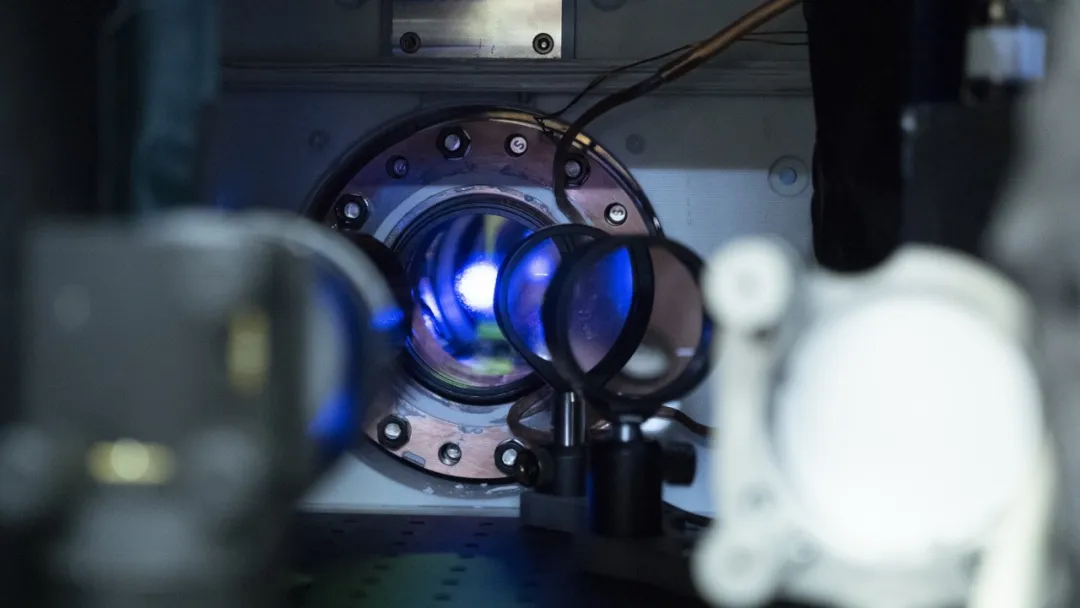 The blue light in the vacuum is a group of hydrogen atoms measured in millimeters of time.
In 2024, they pushed the uncertainty to 8.1×10⁻¹⁹, setting a world record at the time.According to NIST's calculations, a second is about 39 billion years behind us.
In the same year, the Yankees again appeared on the cover of Nature.
For the first time, the jump frequency of the hydrogen-229 atomic nucleus is directly connected to the atomic clock.The accuracy of measurements is about 1 million times higher than before.
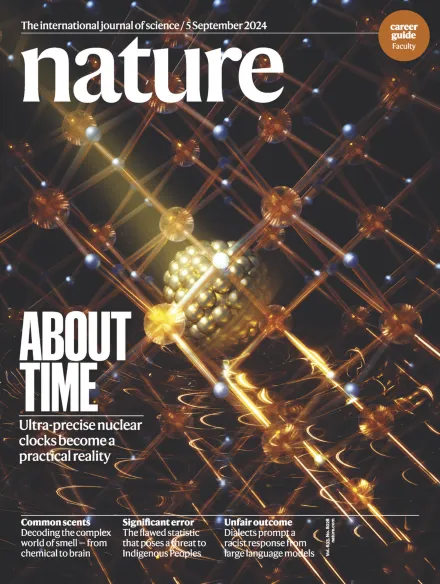
In his own words, imagine a watch that is billions of years away and is no less than a second away.
This man, who later cut "a second" to the limit of human measurement, was the first learning tool he came into contact with as a child, but his grandmother gave him a pencil.
An illiterate grandmother handed him a pencil.
He was born in Shanghai in 1967, his parents were busy, and most of his childhood was spent with his grandmother in Shaoxing.
The Wolf Foundation wrote about this in its award presentation.
My grandmother was illiterate and gave him a pen and a pencil.Let him write what he wants to write, paint what he wants to paint.
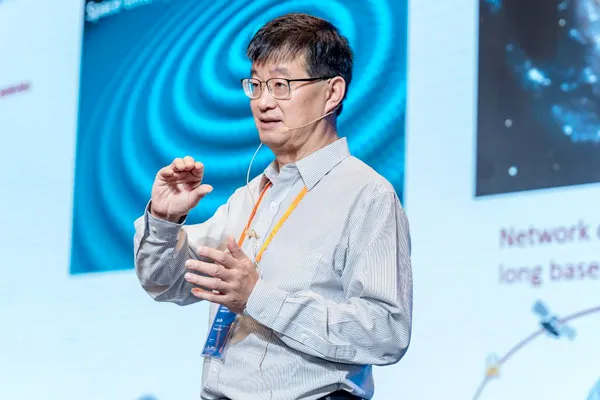
This is one of the earliest memories of the Yanks.
He loved classical poetry and mathematics, once hesitating between science and technology. Later, a secondary school physics teacher encouraged him to participate in a national physics competition, and he became fascinated by experimental physics.
After graduating from Shanghai University of Transportation in 1989, he came to the United States and received his Ph.D. from the University of Colorado in 1997.
His doctoral tutor,He won the 2005 Nobel Prize in Physics.John L. Hall.
In 1999, he joined the National Institute of Standards and Technology (NIST) and has since worked at JILA, a collaborative institute of NIST and the University of Colorado.
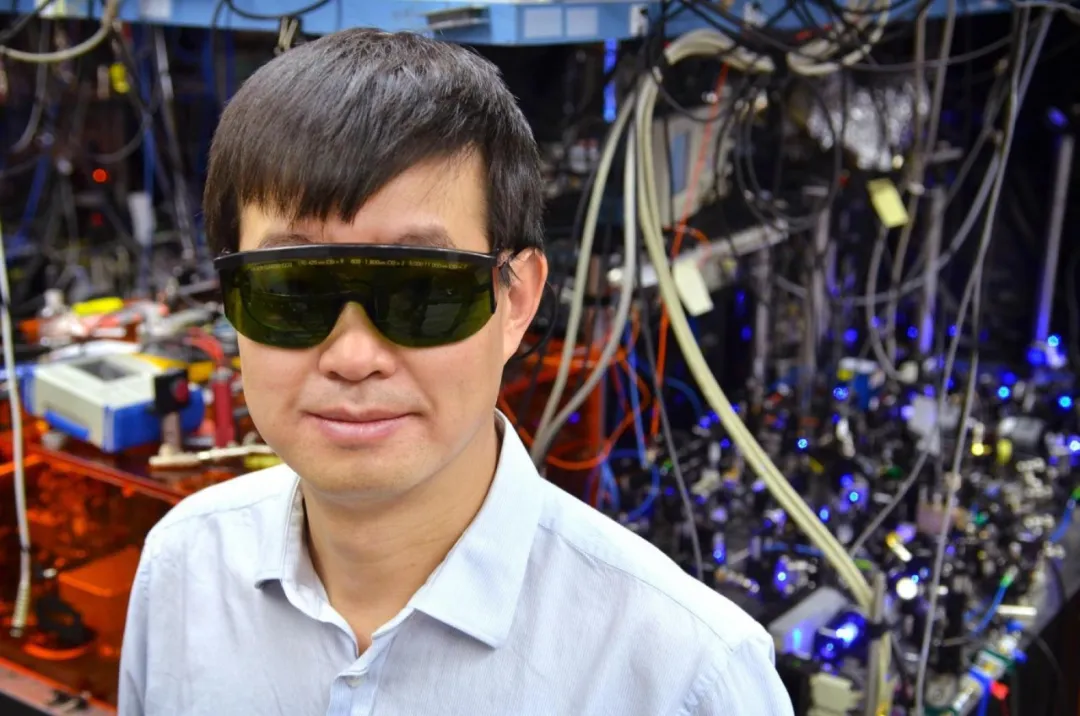
In 2011, he was elected to the U.S. National Academy of Sciences. In 2017, he was elected a Foreign Academician of the Chinese Academy of Sciences.
The 2022 Breakthrough Prize in Science: Basic Physics, awarded to Yao and Shanxi Shu Jun for the invention and development of the light-bulb clock, with a prize of $3 million.
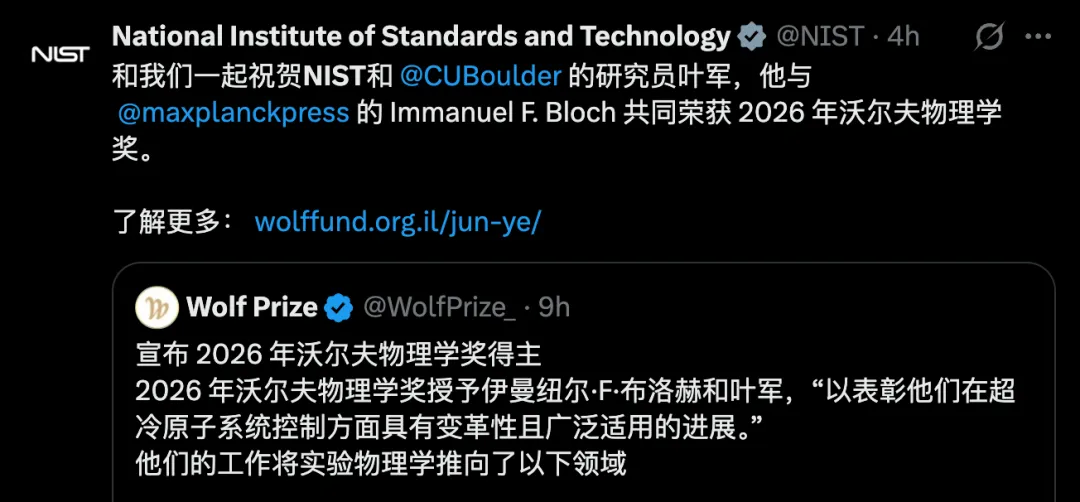
Following the announcement of the Wolf Prize, NIST also released a congratulatory message on X.
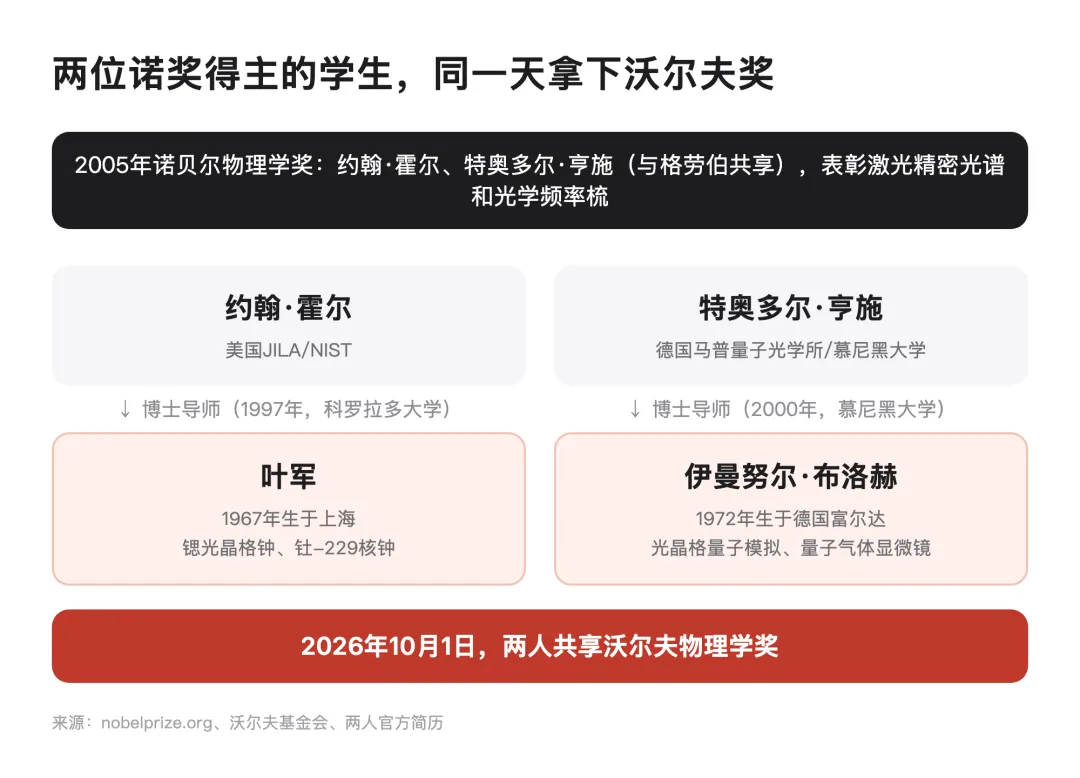
Broch, who won the Nobel Prize with the Yankees, also had a Nobel Prize mentor.
Dr. Theodor W. Hänsch, who was Broch's mentor, shared the 2005 Nobel Prize in Physics with Hall.
Twenty-one years later, the two Nobel Prize-winning students took the same Wolf Prize.
Feyman's madness of 40 years agoIt was made by Nobel laureates.
Broch was born in 1972 in Fulda, Germany, and grew up in a small village he describes as "more cattle than people".
In 1995, while still reading, he caught up with the excitement of the first Bose-Einstein condensation, from which a cold atom is inserted.
The light wavelengths used by the Yan army to record the trapping of atoms, and Broch used the same light wavelengths to "create" matter.
In 1981, Feynman proposed the idea that nature is essentially quantum.If you want to simulate it, it's best to use a quantum system.
How electrons in solids are discharged, how they interact, determines whether a material is conductive, insulating or superconducting.
Bloch's way is,Let the atom play the electron and let the laser play the lattice.
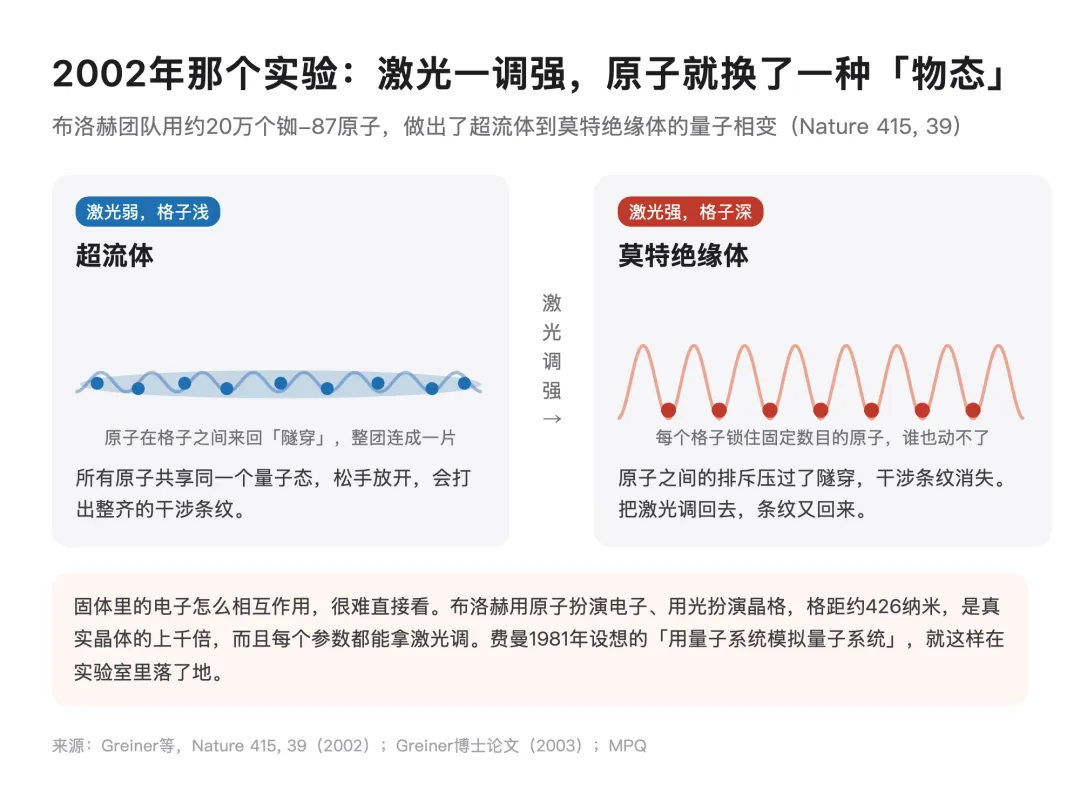
In 2002, Broch and colleagues published an experiment in Nature. They placed about 200,000 hydrogen atoms in a three-dimensional grid made of lasers, about 426 nanometers apart from each other.
When the laser is attenuated, the atomic energy "permeates" freely between the lattices, and the entire group of atoms is joined into one piece, forming a superfluid.
After the laser is amplified, the rejection pressure between the atoms is penetrated, and each atom is locked dead in its own lattice, becoming a dead insulator.
When the laser is turned back, the atom is turned back into a superfluid.It is a kind of material that is switched back and forth by lasers.
The paper was subsequently cited more than 5,000 times.It is considered the beginning of quantum simulation experiments.Broch recalled the moment, saying that it was "a very rare pure frenzy".
In 2010, he did it again.The quantum gas microscope of a single atom can be seen.If there's an atom in every frame of the grid, a picture can count.
The microscope was later used to study magnetic and high-temperature superconducting models.
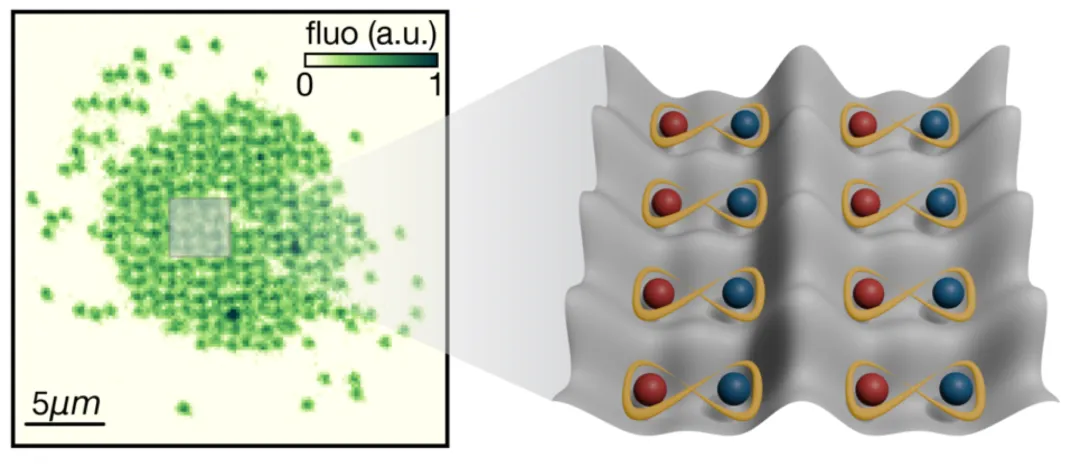 Each green dot on the left is an atom, and the one on the right is a representation of an egg.
In April, his team created a quantum gate with 99.75% accuracy on the platform Nature.
It was designed specifically for simulation of cold atoms, and also for digital quantum computing.
Over a third of the winnersAwarded the Nobel Prize
In addition to the Physics Prize, the Wolf Prize for Chemistry, the Medical Prize and the Mathematical Prize were announced today.
The Wolf Prize in Chemistry was awarded to Pascal Mayer, Shankar Balasubramanian and David Klenerman.
The medical prize was awarded to Charles S. Zuker of Columbia University; the mathematics prize was awarded to David Kazhdan of Hebrew University and Joseph Bernstein of Tel Aviv University.
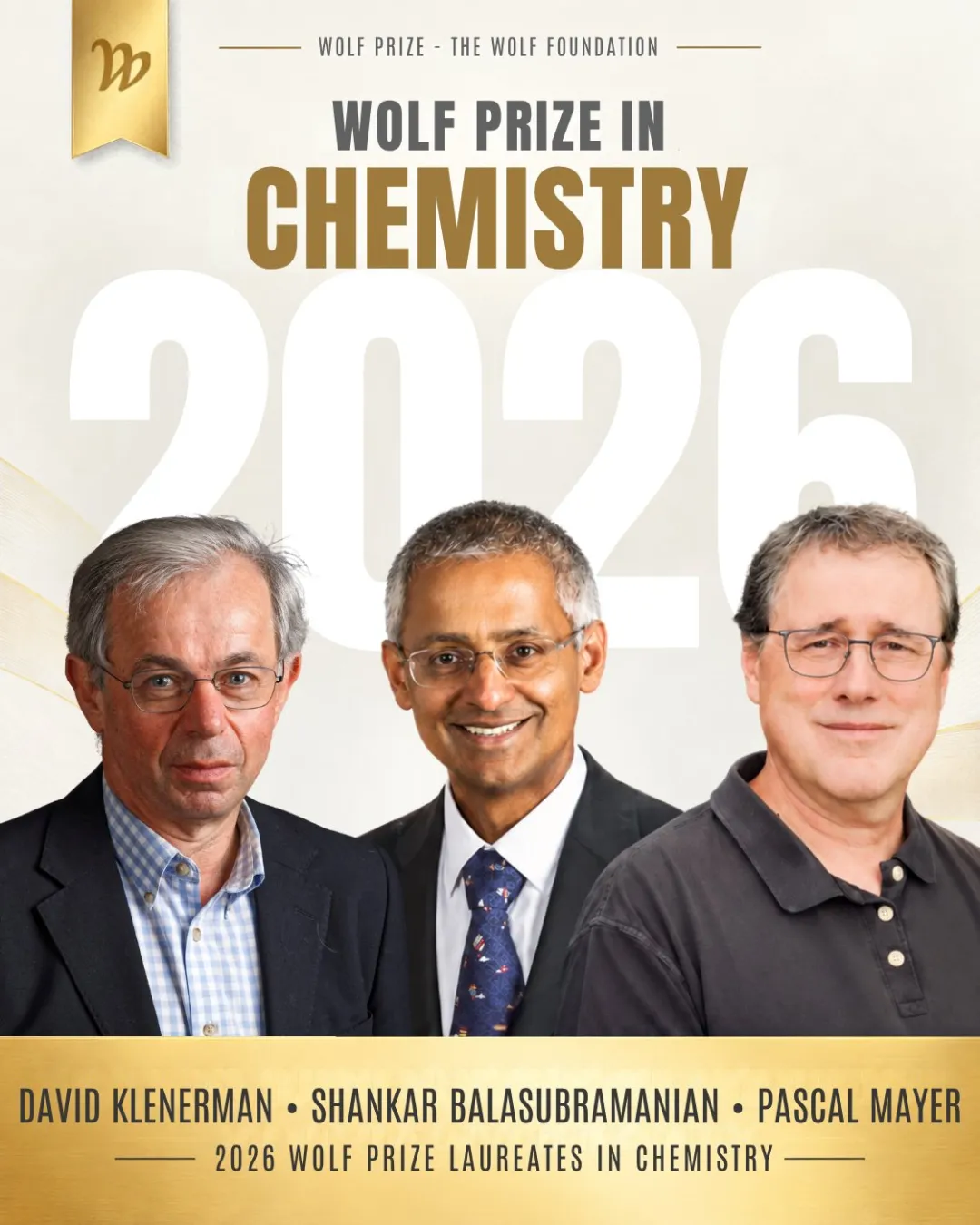 | 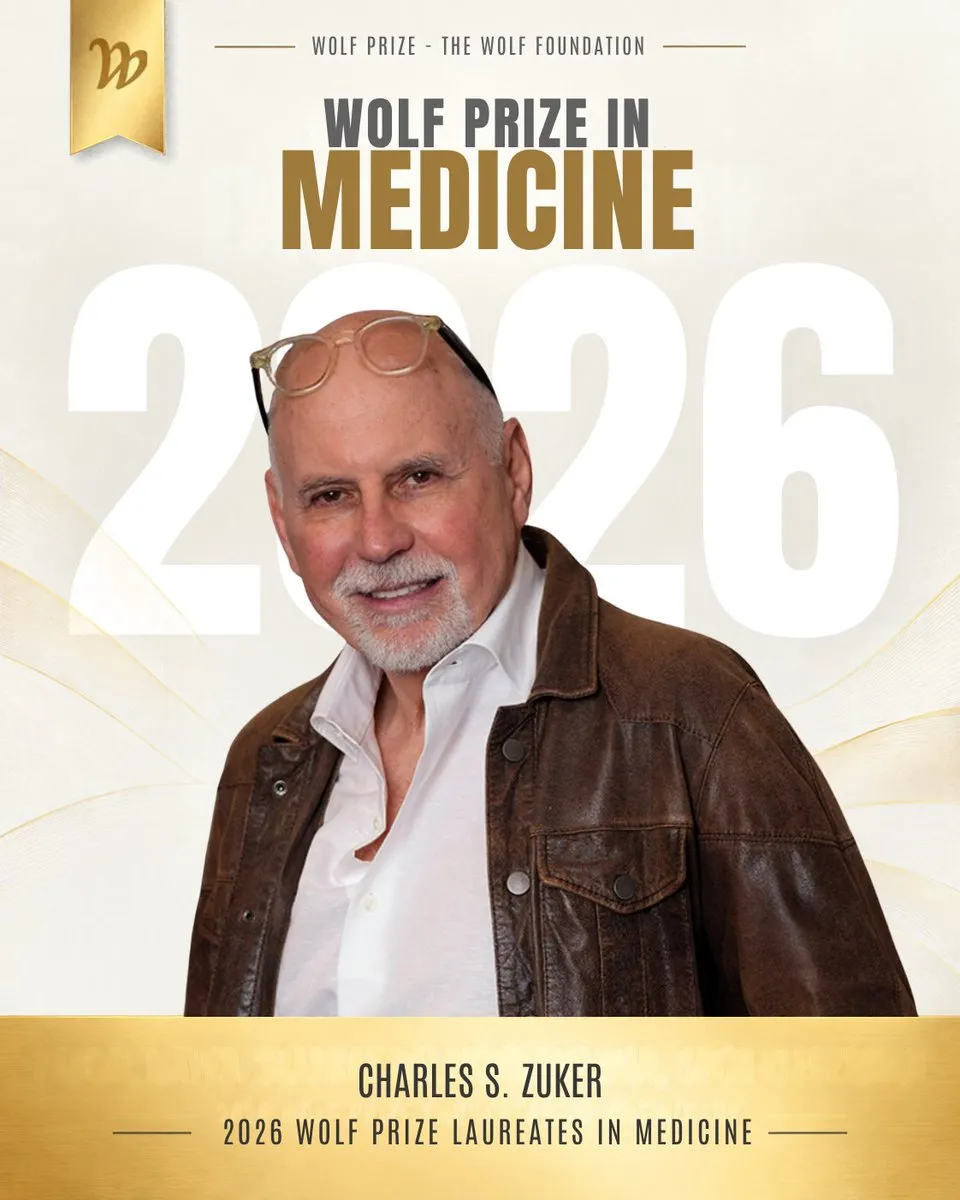 | 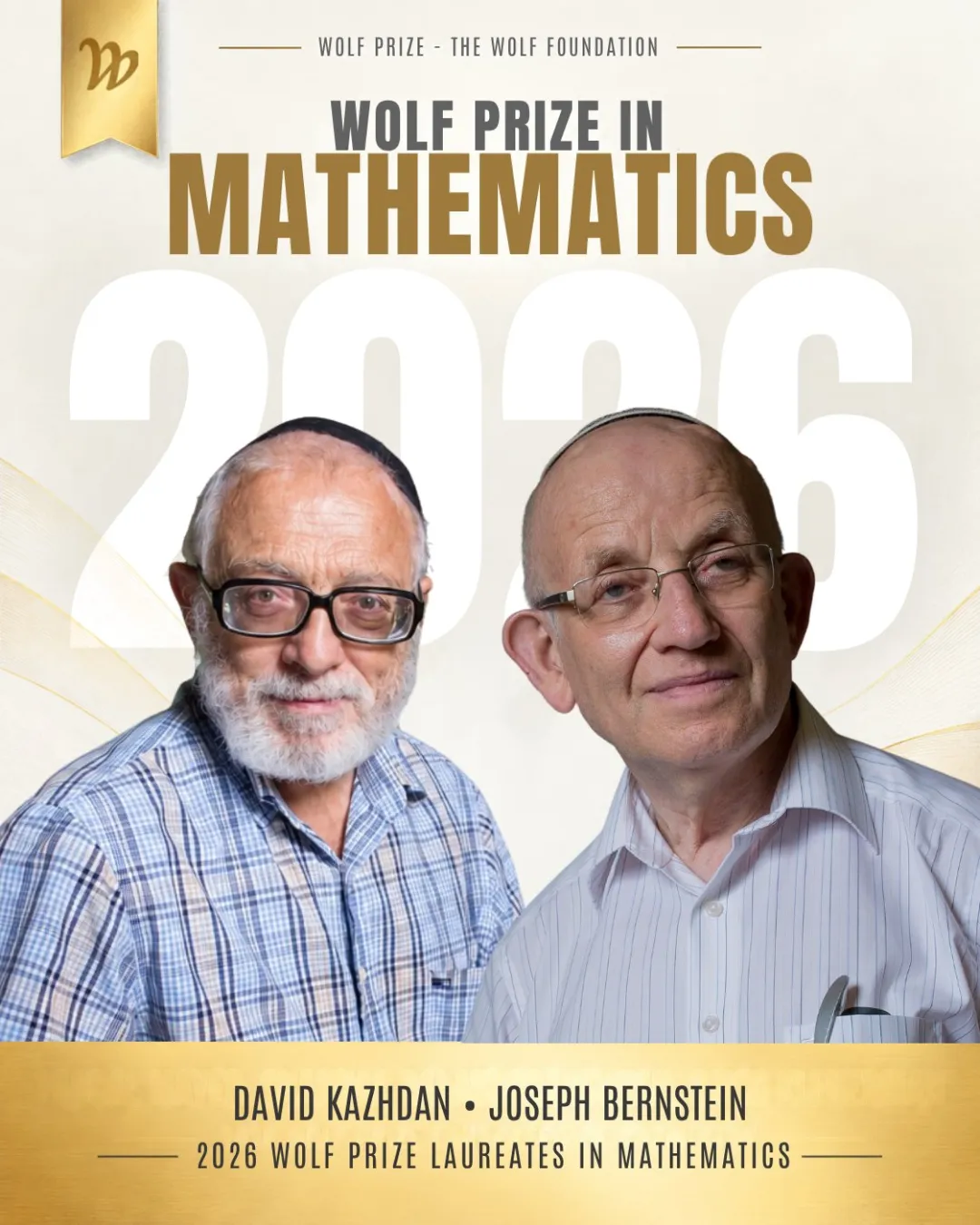 |
The Wolf Prize, awarded by the foundation established by former Cuban ambassador to Israel Ricardo Wolf, began to be awarded in 1978.
It's called "The Wind in the Willows", and it's based on a very hard track record.
Between 1978 and 2025, the Wolf Prize in Physics was awarded to a total of 72 individuals.Of these, 26 later won the Nobel Prize in Physics, accounting for about 36 percent.
All 26 won the Wolf Prize, or the same year.
Giorgio Parisi won the 2021 Wolf Prize and the Nobel Prize in the same year. Ferenc Krausz, a colleague at the MAP Quantum Optics Institute, won the 2022 Wolf Prize the following year for his A-second pulse.
Alain Aspect, John F. Clauser, Anton Zeilinger are 12 years apart and Roger Penrose is 32 years apart.
Four days after the Nobel Prize was announced, the clock is ticking.
This year, the timing of the Wolf Awards announcement is extremely subtle.
Last year's Wolf Awards were announced from 1 to March and this year moved to 1 October.The Nobel Prize in Physics is only five days away.
Yan Yan should have been in this year's prize prediction.
In the Physics Forums' 2026 Nobel Prize prediction paper, the University of Gothenburg's prediction list, which was published by the editors, shows the results of the study.There is also a group called Hidetoshi Katori and the Yanks.
Every year, the beginning of October is the moment when the heartbeat of the global scientific community accelerates.
With the Wolf Prize in Physics' Gecko theorem, the focus of the entire web is on the ultimate suspense:
Will this year's Nobel Prize in Physics be an optical atomic clock?
Our judgement is:The light bulb clock will wait for the Nobel Prize sooner or later, and Ye Jun and Chan Chan Chan are the most likely group.
They've won the Science Breakthrough Prize and the Ink Quantum Prize together, and now they've won the Wolf Prize.
Four days later, in Stockholm, no matter when the Nobel boots landed, the Chinese physicist's name was already engraved in the endless sky of human precision measurements.
RoboInd editorial channelResearch, robotics companies and market intelligence for cross-border sourcing.Explore the channel ↗
Share this
End of editorialExplore more from Global Robotics News ↗