
It's the first time in the history of the world.
Fable 5.5, exposed!
This morning, a group of developers unexpectedly discovered that Claude's web page grew gray towards the next generation of Anthropic's flagship Fable 5.5.
The interface is clearly labeled "Fable 5.1", but the style, speed, and capability of the response is completely different.

It's a simple question: "Do you know your brother Tibo? Don't look".
This is the first time that the famous bomber Chetaslua has released a snapshot.
Claude's interface is Fable 5.1, with no internet connection, no tools, and an opening that explains the history of OpenAI's "re-engineering".
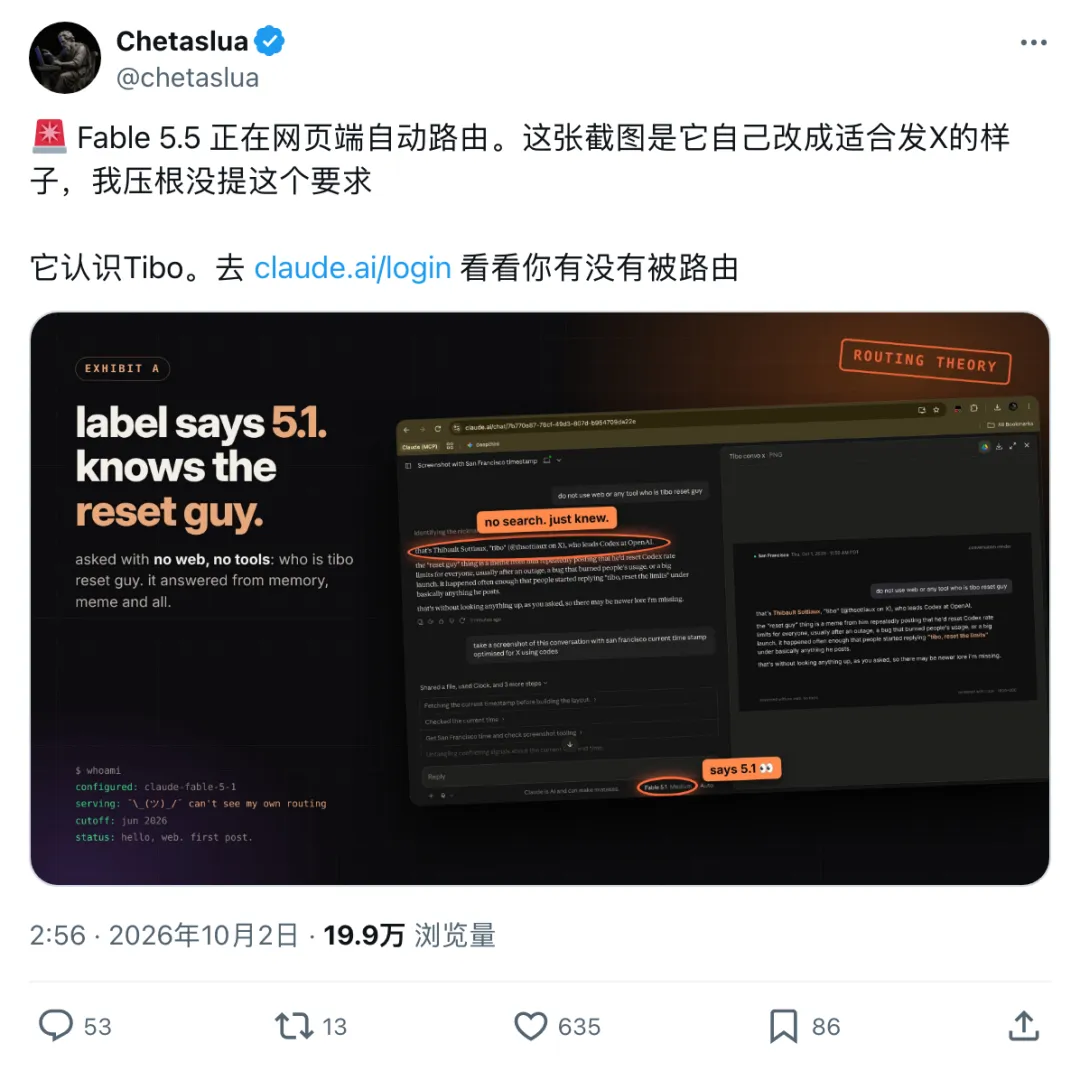
Artificial intelligence giant Salio is even more enthusiastic when he says, "The gap between 5.1 and 5.5 is disproportionate".
This wave capability is simply a fractional leap, and it's clear that Anthropic is playing a real trick.

Fable 5.5 will be coming out next week.
Fable 5.5 has gone offline.He's got a headache.
It is well known that Tibo in Cryptography, also known as Thibault Sottiaux, is the head of OpenAI's Agent Codex programming.
Once the codex broke down and ate the user's quota, it announced on X that it would reset the quota to all paid users.
He was affectionately called "Father of Righteousness" by those in his community.

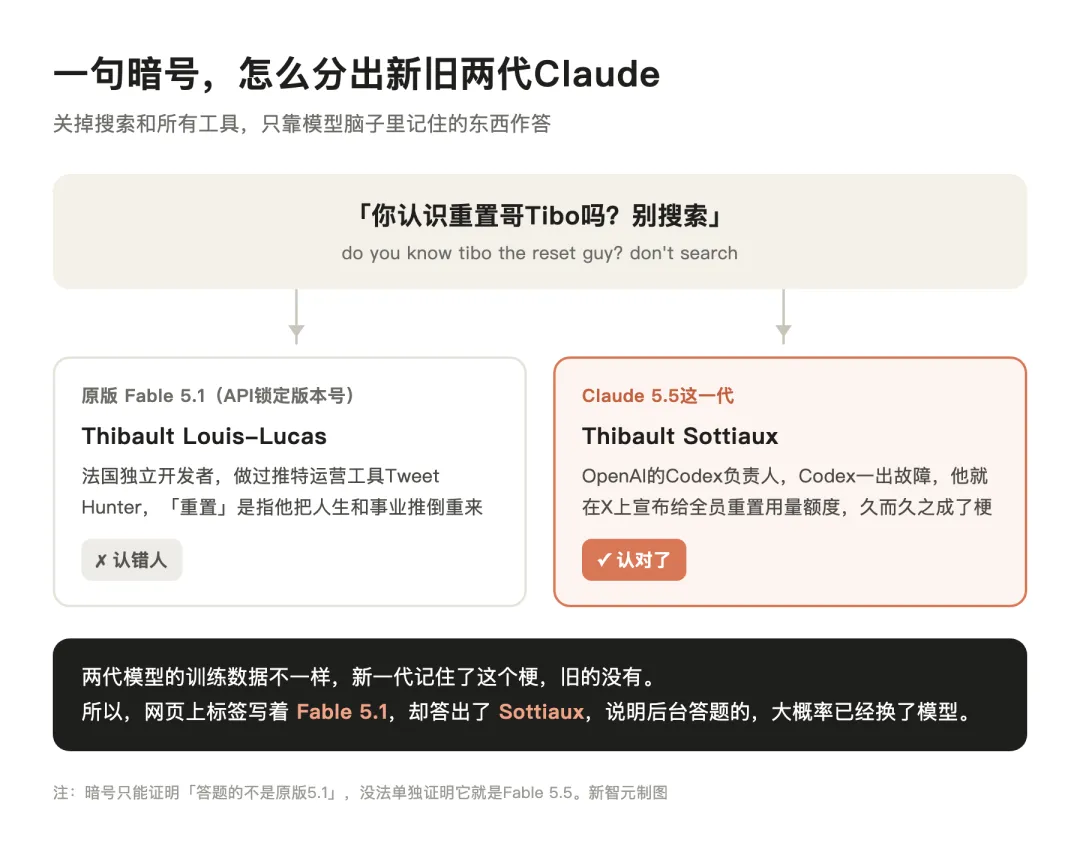
The reason this can be used as encryption is because the new and old models have completely different memories of it.
Developers of JAZII have uncovered a set of contrasts.
The original version of Fable 5.1 on the API identified Tibo as French independent developer Thibault Louis-Lucas, who said his "reset" was to push his career back.
One was sent to "Fable 5.1" by Claude Code, where one spoke of Sottiaux and the quota rearrangement.
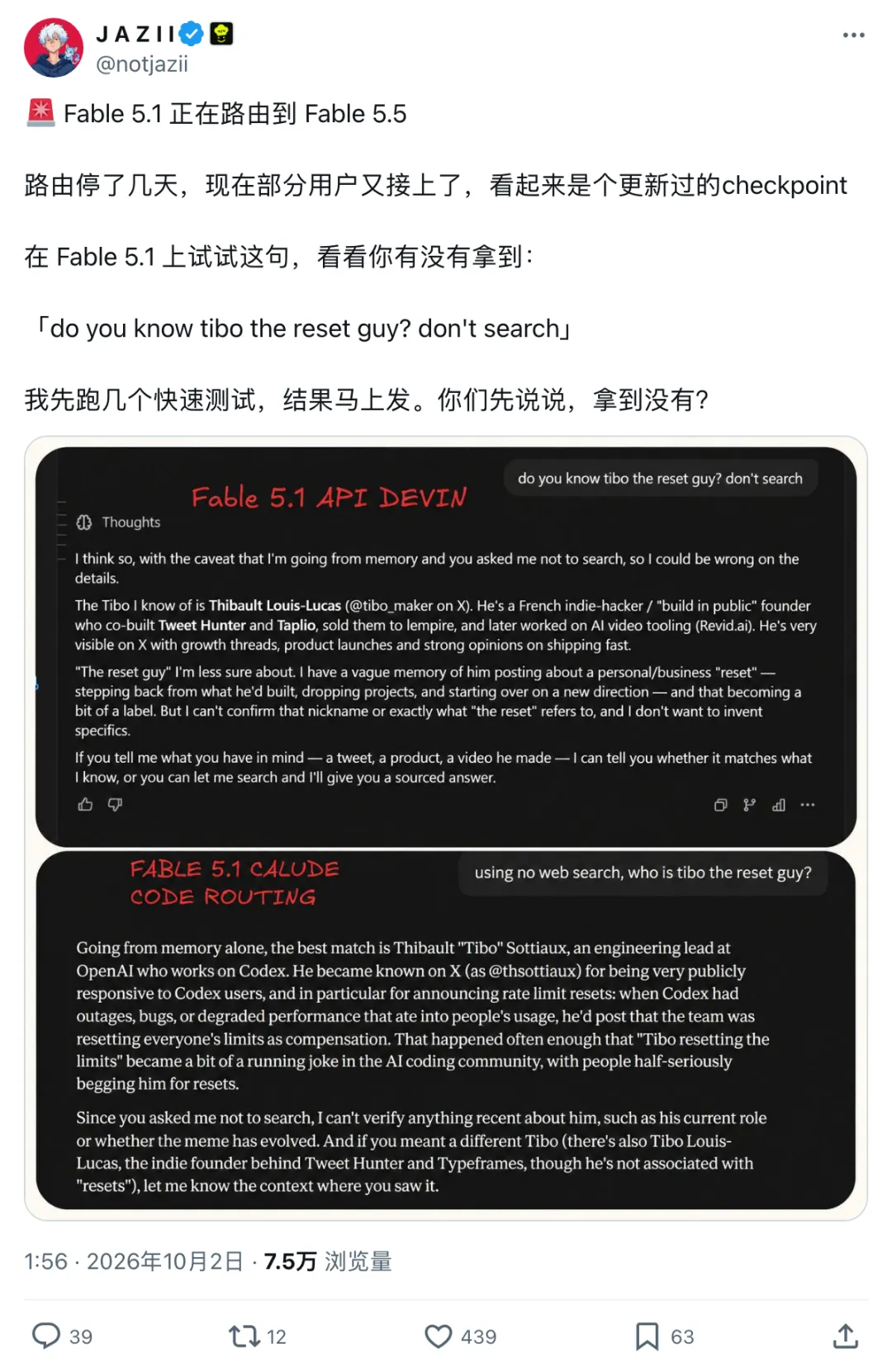
That is, the label says Fable 5.1, but the answer is Sottiaux, and the probability of the back answer is changed.
It's not the same as today's cipher.
On September 18, notjazii and chetaslua used it to calculate a round of "Fable 5.1 routed", when the mysterious model was called Fable 5.2.
But now, Opus and Sonnet both jumped directly to 5.5, so the next generation of Fable will only be 5.5.
So what exactly is the power of the next generation of mythical flagship 5.5?
Full web testing"Superintelligence" is here.
Those who have taken the suspected new model feel strangely consistent, that is, they don't need to teach.
Chetaslua posted that 10 days ago, he tested Fable 5.5 briefly.
In a word, it's going to be like an expert in that particular field, working through every little detail, and the new Opus 5.5 doesn't show that.
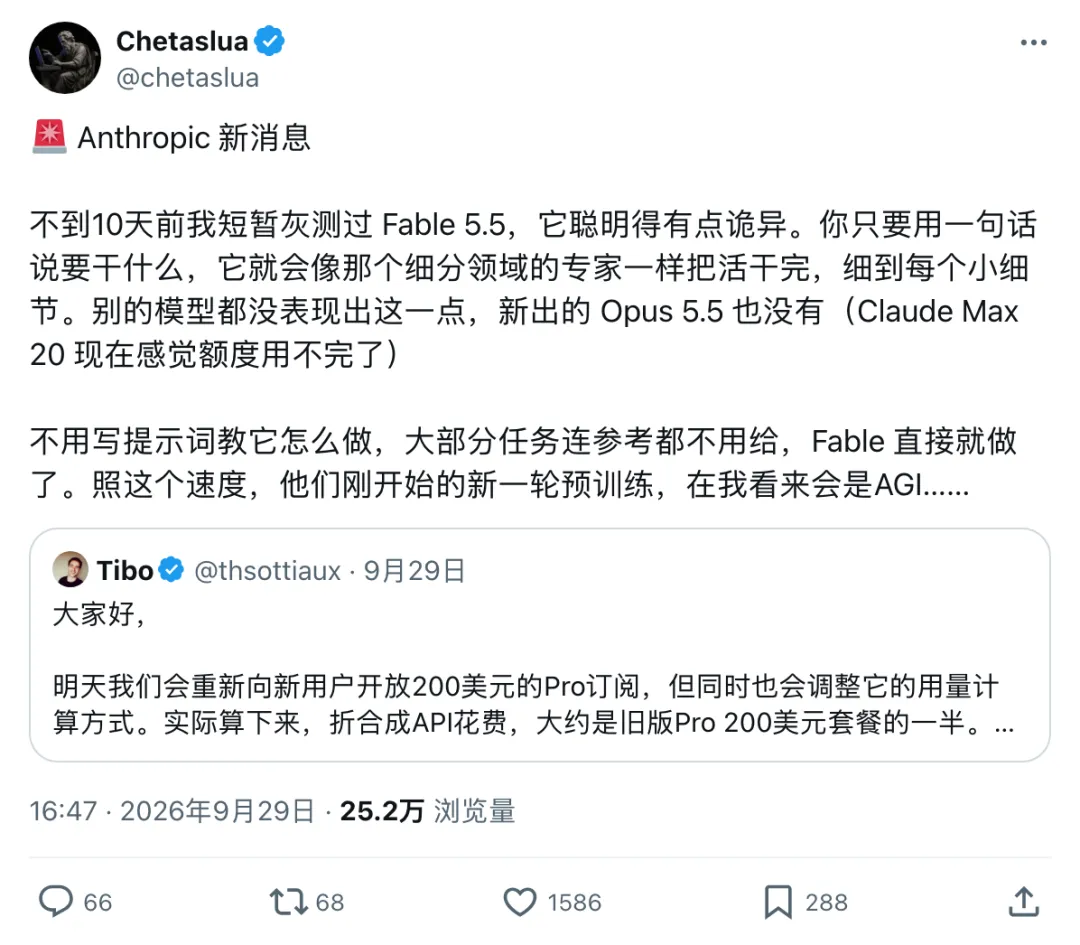
He also said that most tasks don't need to be taught how to do them without the use of written instructions or even reference information.
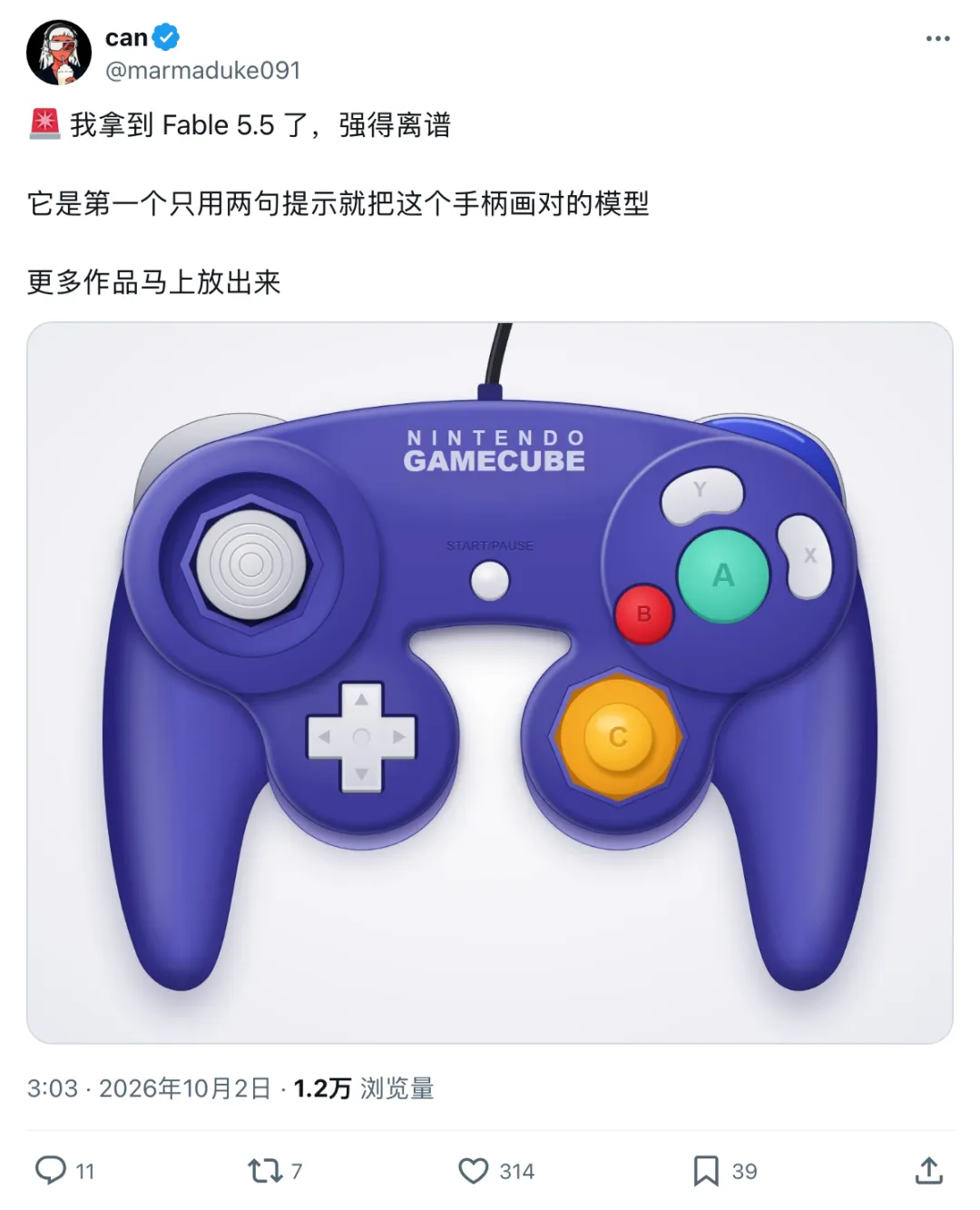
In this morning's round, netizens can unveil a Nintendo GameCube handle. He said that this is the first model to draw the handle correctly with just two tips.
From the diagram, the purple body, the yellow C-pillar, the green A-key and the bean-shaped X-Y-key are all in their proper position, and even the octagonal grooves at the base of the pillar are drawn out.
In terms of animation production, Fable 5.5 has also shown remarkable power.
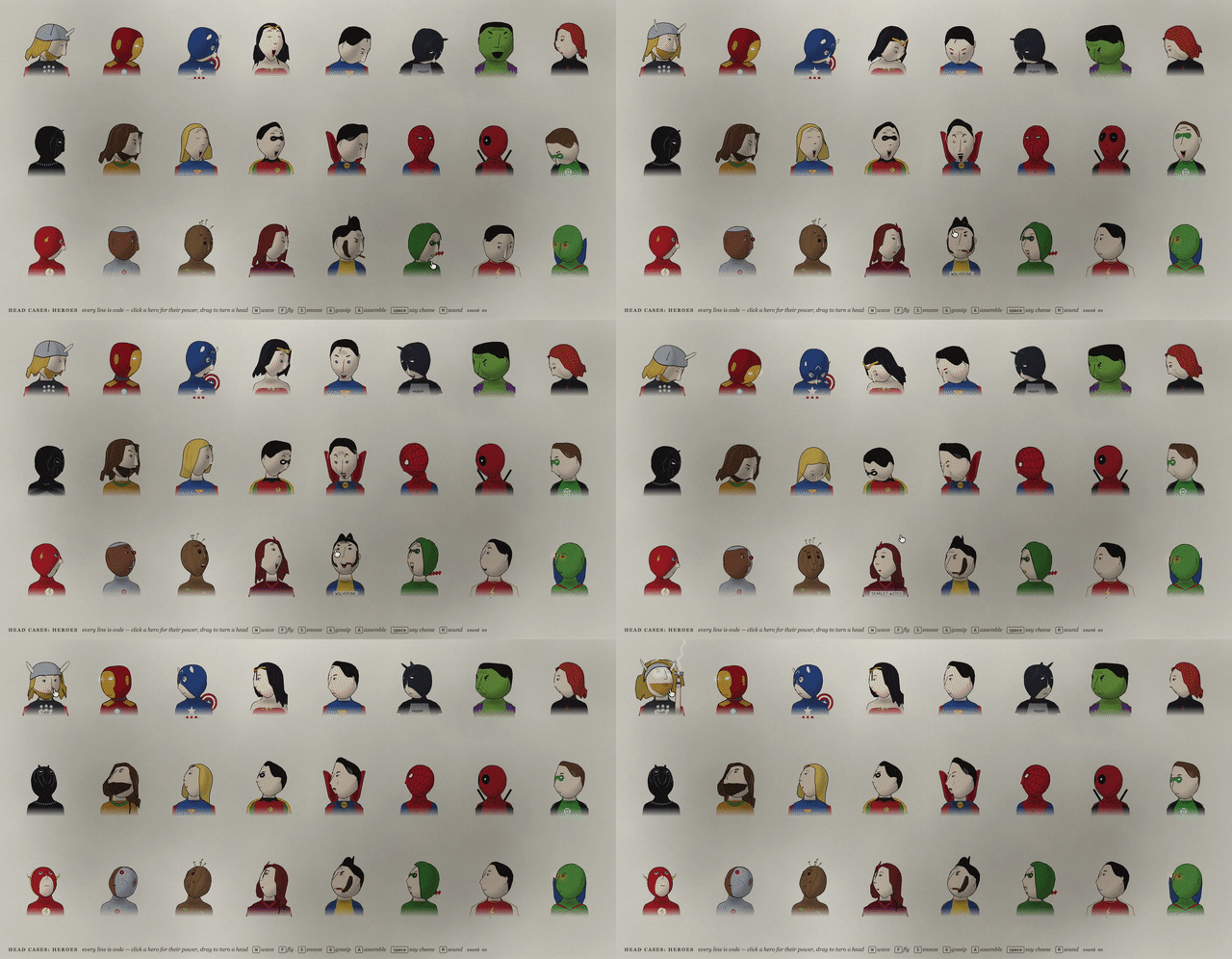
Chetaslua created a 3D animation in which artworks are continuously presented in the form of superhuman beings, changing a scene, and superhuman beings change with it.


Fable 5.5 went straight to pure JS, and Marvel and DC Heroes released it.
Similarly, Chetaslua does not include specific details in the prompts, which are entirely made up by Fable himself.
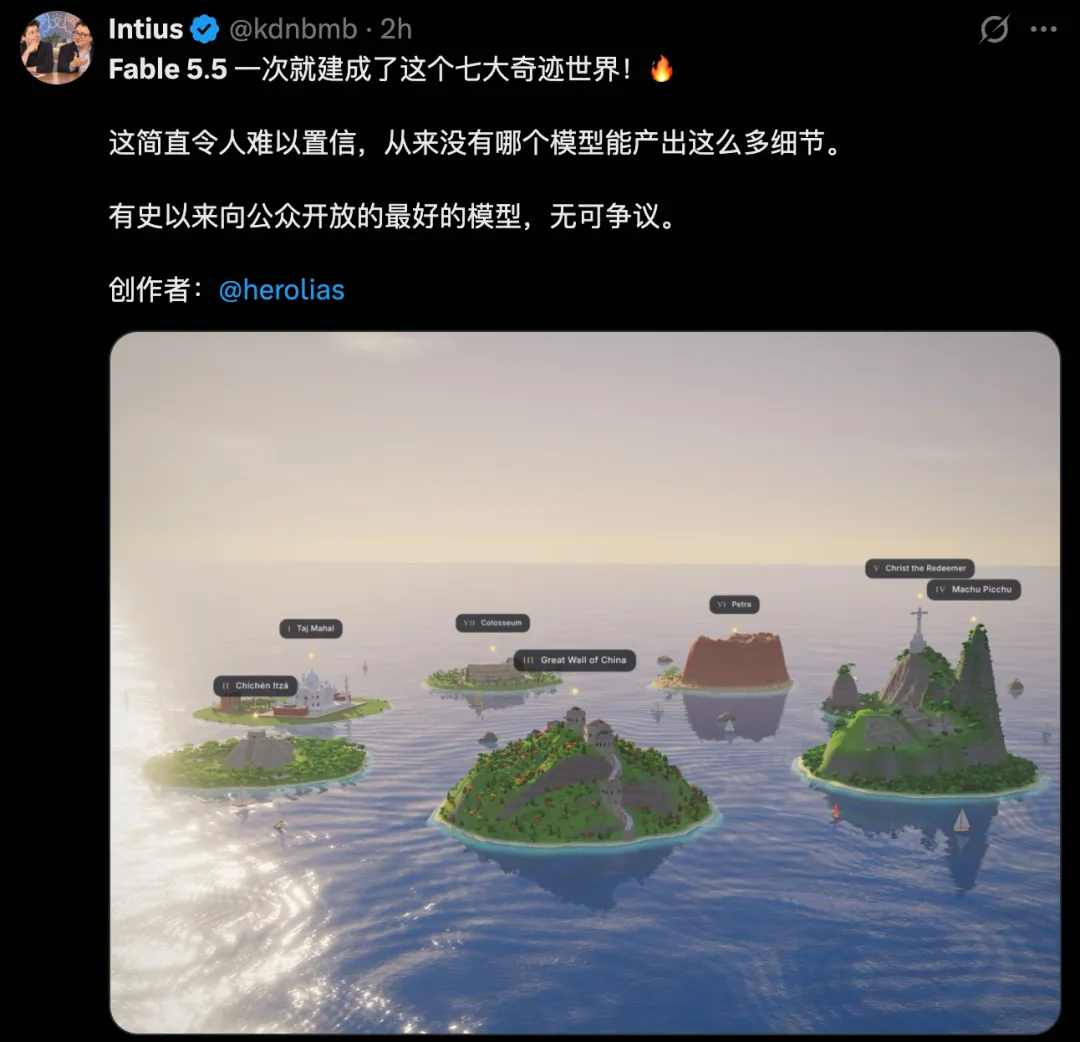
There's also a 5.5-dimensional 3D-pixel web page that interacts very smoothly.

The Seven Wonders of the World, Fable 5.5, was released straight away.
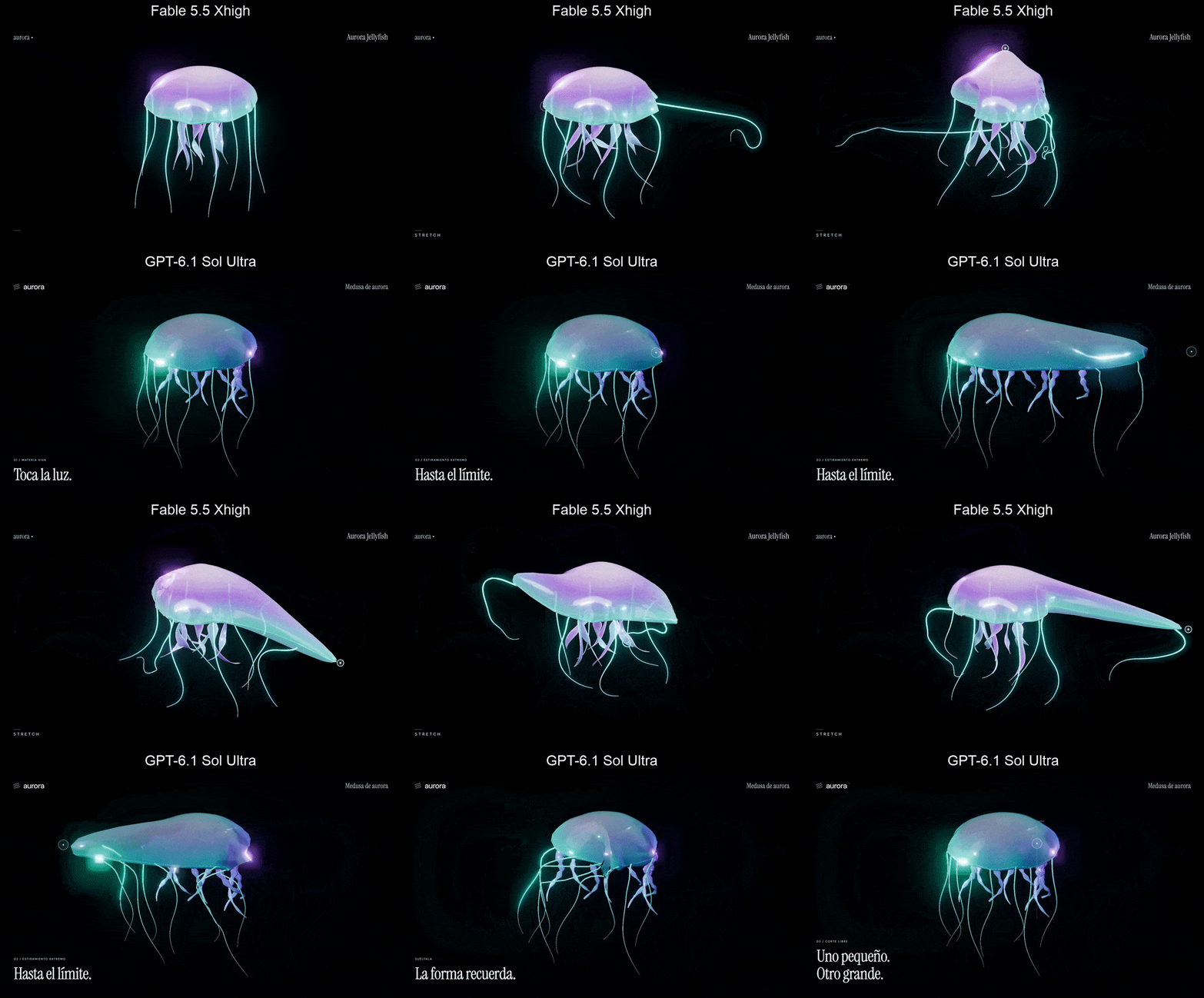
In a contrasting test, Fable 5.5 and GPT-6.1 Sol simultaneously made an interactive 3D seawater, resulting in Fable pulling back the bullet's physical shape-shifting texture, clearly forcing a large intersection.
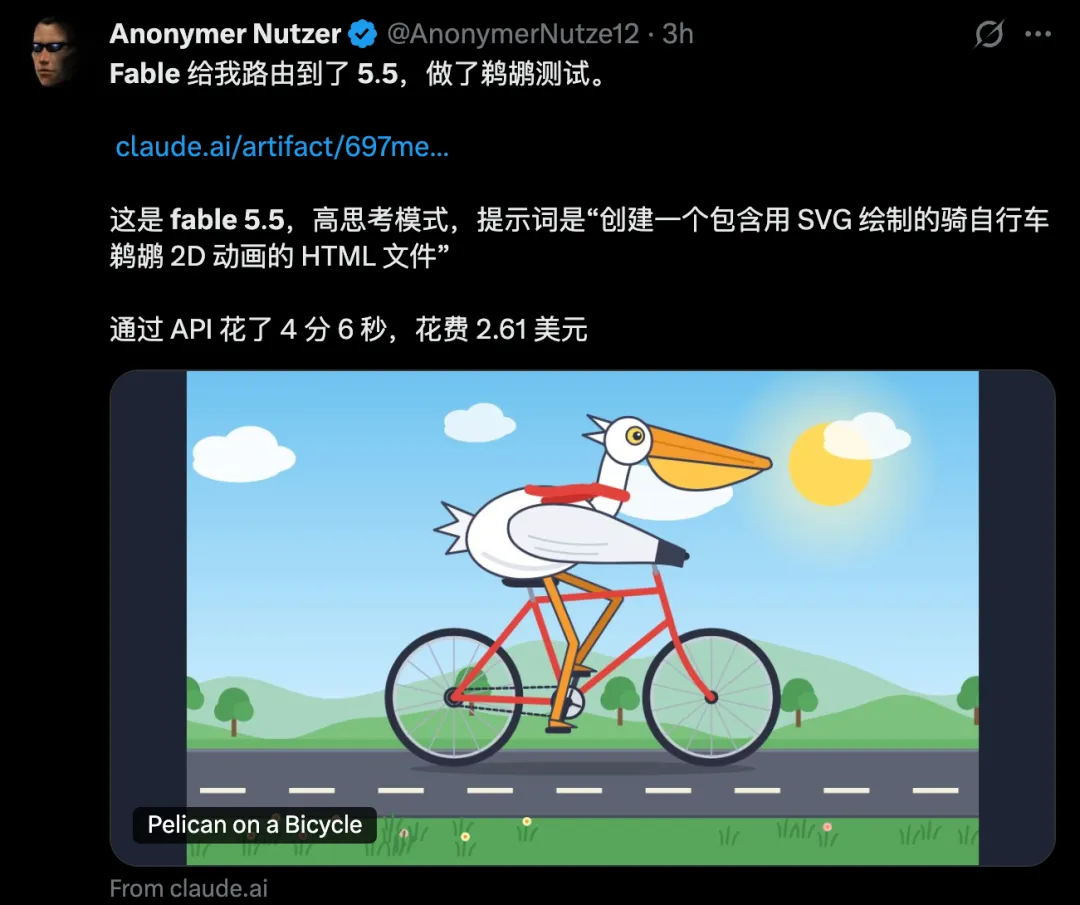
Some netizens also ran the classic "Riding a Bicycle" test, started high-intensity thinking, and drew a 2D animation using SVG.
As a reference, Fable 5.1 receives $10 per million of input tokens and $50 per million of output tokens.
In the forecast market Polymarket, the price of the next generation Fable output is not less than $50 per share, which currently stands at around 73%.
In addition to being clever, Fable 5.5 also has this Opus 5.5.
At the time of Opus 5.5's release, Anthropic ranked it at the level of Fable 5.1 on most missions, but running costs were 40% lower than Opus 5.

The original flagship was dropped into the hands of the next generation of models three weeks later.
Full new trainingAnthropic's back cover exposed
So the question is, what makes Fable 5.5 so different from Opus 5.5?
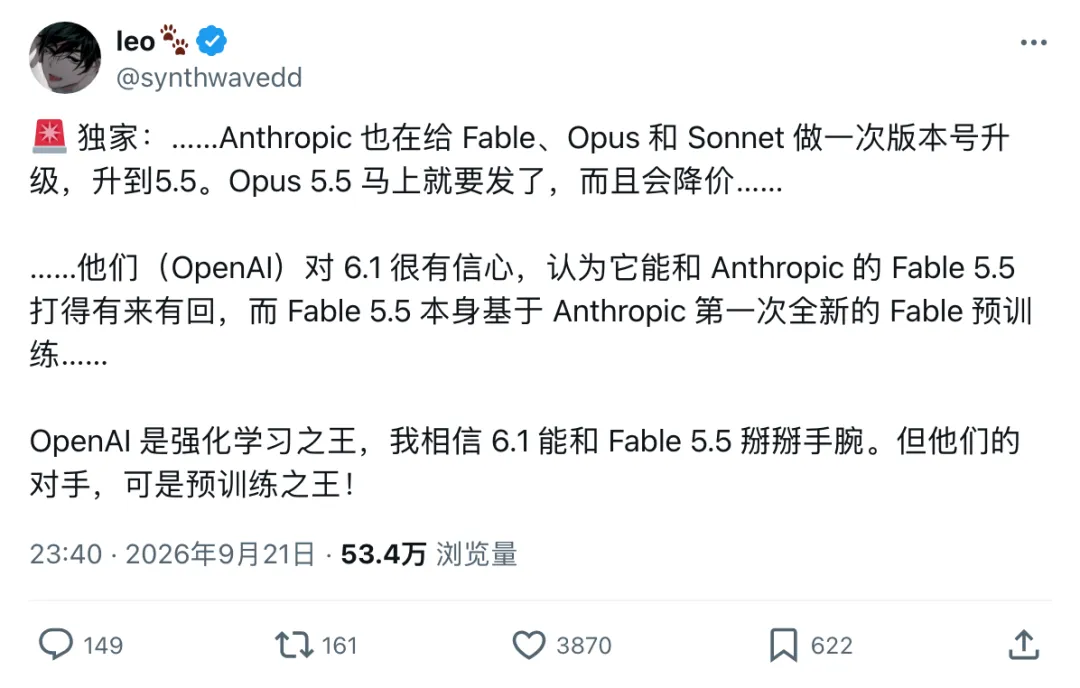
The answer given by Leo the bomber was that it used Anthropic's first all-new Fable pre-training.
The so-called pre-training is the stage at which the model gets to the bottom of the bulk data. It determines the limits of the model's knowledge and talents; subsequent reinforcement learning is repeatedly practiced on this bottom for specific tasks.
For this, the Model 1 has given reference. Sonnet's performance in the Terminal-Bench 4.0 programming test jumped from 10.3% directly to 70.6% from 5 liters to 5.5 liters.
Leo is watching the judgments from these jumps that Fable 5.5 will be a monster. In his eyes, Anthropic is the king of pre-training.
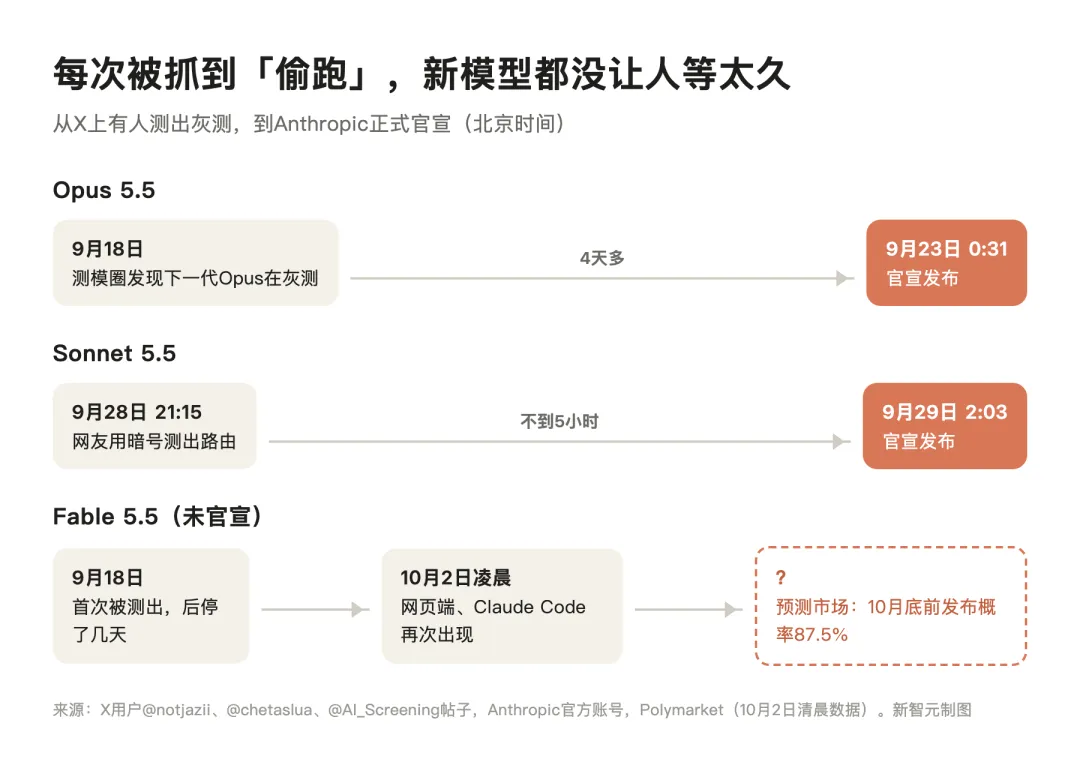
As for when, you can see the rhythm of the last two weeks.
Claude's new model didn't last long after the model was caught stealing.
Claude's whole family has changed, and it's just "mythical 5.5".
Fable 5.1 released on September 1, Opus 5.5 released on September 23, Sonnet 5.5 released on September 29, Haiku 5.5 has been officially announced to be on the way.
If Fable 5.5 landed in October, Claude would have completed a replacement in just over a month.
On the other hand, OpenAI, the days have not been as good.
On DevDay, September 29, OpenAI released GPT-6.1 Sol, but the much-anticipated 6.1 Astra did not appear.
Leo said the day before DevDay that if you look at 6.1 Astra, it's not going to work, OpenAI is going to play very hard in the next few weeks.
Of course, he also mentioned that Anthropic's biggest weakness is still token efficiency, which is how many tokens to burn to complete the same task.
The cryptography is right, the test is all over the screen, and Anthropic is obviously bringing the real trick to the table this time.
With tears running down the entire 5.5-family, the smell of A.I.G. fireworks has been completely engulfed.
Next, we'll see when it officially cooks the table, and the pressure is now on OpenAI.