It's the first time in the history of the world.
What kind of computing platform should Agentic AI be running on?
A few days ago, one of the most crowded concepts at WAIC 2026 - the Agent Computer Concept - began to emerge from the stand as a real engineering challenge.
Having a device run a large model locally is no longer the hardest part. Even more difficult is whether the chip will remain stable under the constraints of power consumption, delays and costs when the agent continues to read files, retain memory, call tools, and run in the background for a long time.
Tops, model parameters, and per-second tokens are still important, but if the memory bandwidth doesn't match, the CPU doesn't sync with the NPU, the software can't maintain the task state, a nice peak may be enough to complete only one demo.
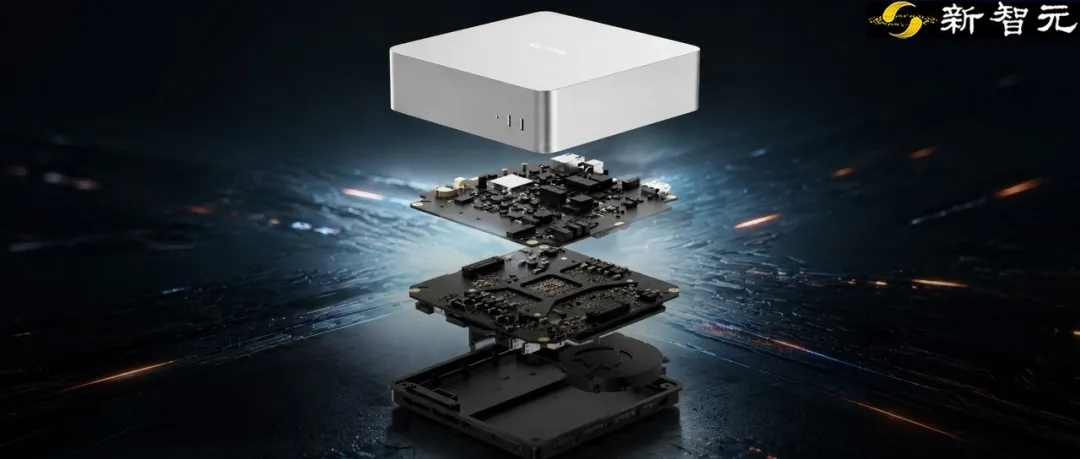
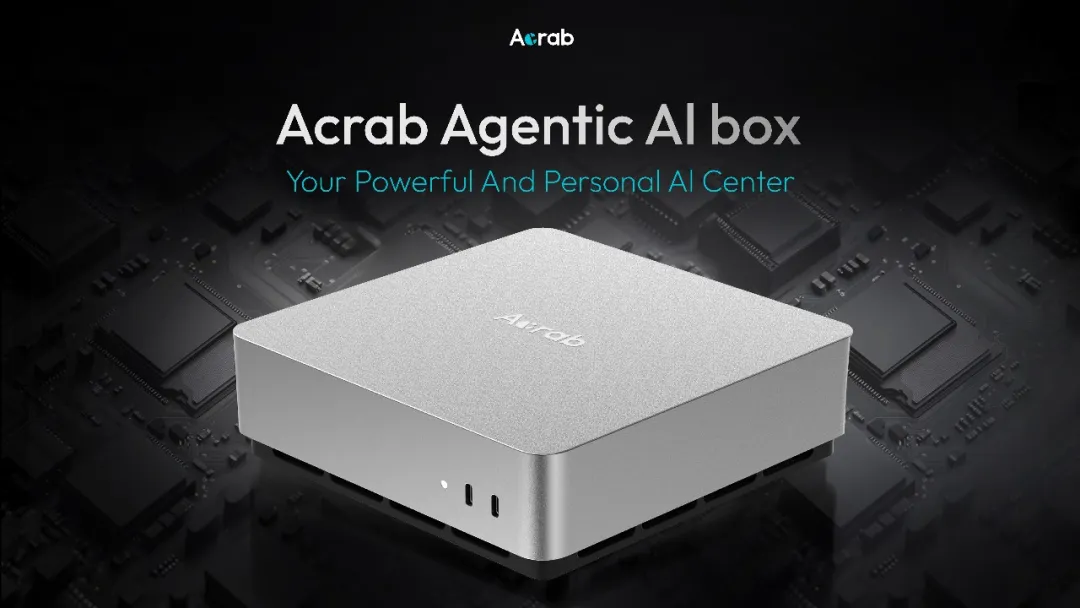
We noticed that this week, Singaporean company Acrab held an online conference and released Agent Box, which may give a demotable sample.
At the event, the AI Infra company put on the stage Prefill, Unified Memory, CPU-NPU synthesis and Agent sorting at the same time.
These keywords point to the same judgment: end-to-end AI is moving from "running a model" to "running a smart system in the long run".
The chip needs to be solved, not just by not having enough computing power, but also by how data flows, how tasks are scheduled, and how software and hardware continue to collaborate.
So, as WAIC's hot flashes and new product releases and industry trends gradually subside, the real question that is worth asking is clearer: what exactly is the end-to-end chip going to do after Agent goes from a call to a continuous job?
Chatbots typically complete a round of questions and answers. Once an agent has received a task, it may first search for information, read a file, then call a code, browser, calendar, or office software; after completing a portion of the results, keep the task state, and wait for the next trigger. A task often involves multiple rounds of model calls and repeated switches between different models, tools, and applications.
Acrab demonstrated a relatively complete task process at the conference: users would like to create a space-themed gift for children, the system would continue to give them ideas, assist with selection of programs, call on relevant tools and keep up with production progress; when new conditions arise in the environment, it could be connected to other smart devices for processing.
The point of this demonstration is not how clever a single answer is, but whether a natural language can be translated into a series of continuous actions. For computing systems, Agents are no longer simply "calling a model", but continuous switching between models, data, software, and devices.
This way of working first amplifies the division between end-to-end clouds.
The cost of single reasoning may not be high, but calls become high-frequency. After continuing, tokens will turn from technical indicators to real bills; a network waiting for a limited impact on the chat will build up in layers in multi-step tasks; agents will have more complete personal context, data returning to the cloud repeatedly, and expanding exposure.
The more realistic structure is: high-frequency, privacy-sensitive, tasks that require rapid response and long-term stability remain locally as much as possible; complex reasoning beyond the limits of device capability, and recalling cloud resources.
The real change is that the edge no longer carries a single model of reasoning, but a set of intelligent systems that cannot be easily disrupted.
It must both run large models and handle long-range contexts, multitasking and tool calls; performance must be strong enough, power consumption and cost cannot be out of control, and runtime, toolchain and agent ecology must be kept up to date.
The end-to-end solution is that the model cannot be embedded in the device, and the solution to Agentic AI is that the model, memory, tools and applications cannot work together in the device for a long time.
 A pile of NPUs is not enough.The CPU, memory and software packages have to be rebuilt together.
In the past, adding an NPU to a CPU or SoC allowed the terminal to have more AI capabilities such as voice recognition, image processing, and more. But when the Agent becomes the core of the device, simply adding peak computing is not enough.
The reason for this is that Agent is not a fixed neural network logic link. Large-scale parallel computing is highly dependent on the CPU. The more dynamic the task path, the more important the coordination between the CPU and the NPU.
Acrab CEO Ken Phua summed up the change as: "CPU is once again at the heart of the AI era".
In his judgment, AI is entering a heterogeneous computing environment where the execution effect depends not only on the performance of the NPU, but also on whether the CPU and NPU can synchronize seamlessly.
This is also the clue of the Acrab minority team that deserves to be expanded.
Ken Phua led the Asia-Pacific Application Engineering team at Arm UK and was involved in the development of global IP strategies before becoming the joint CEO of Arm China.
This experience is not just about an industry background, it also explains why the company redefines Agent workloads from the intersection of CPU architecture, heterogeneous computing and real-world application needs.
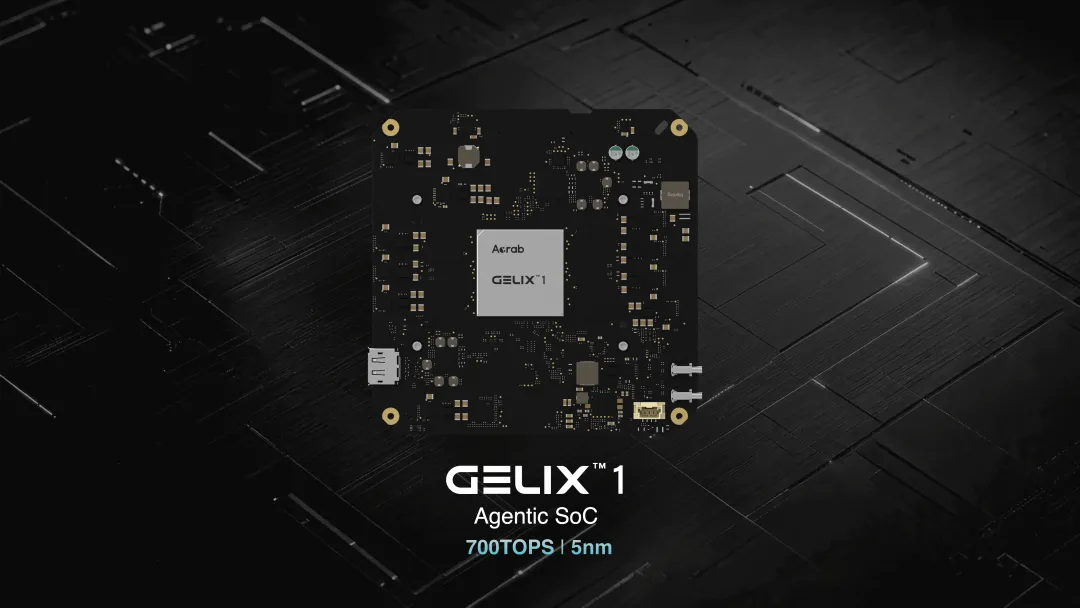
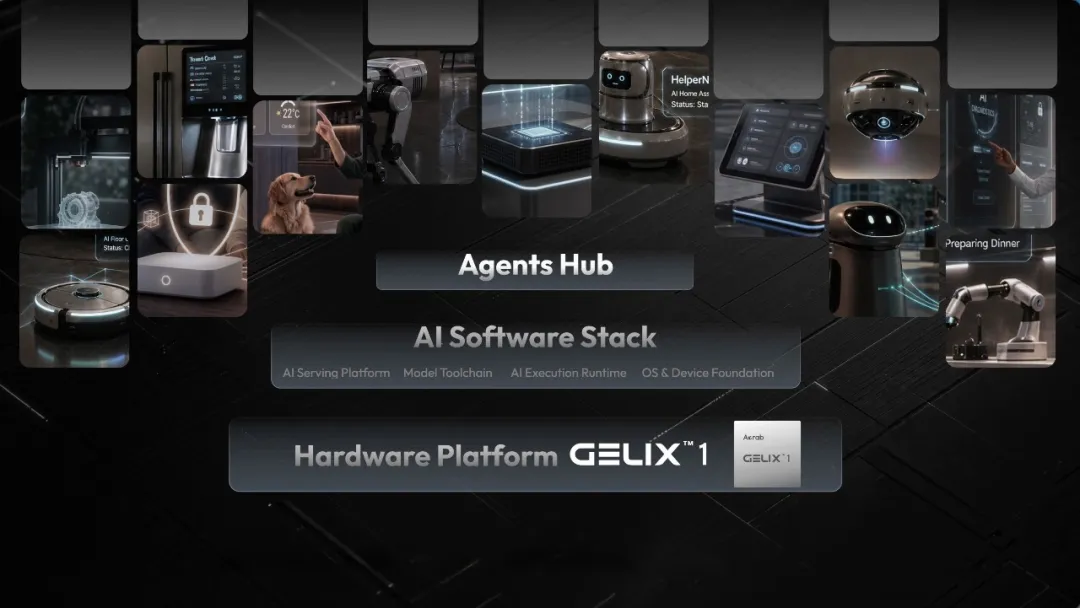
Acrab does not define GΞLIX 1 as a traditional AI processor, but rather as a computing platform for the edge-side AI era.
The hardware side is core to GΞLIX 1; the software side covers large models, optimized runtime, complete tool chains, and the Agent sorting layer of connected models, tools, devices, and services; on this basis, the company also provides Agent reference designs for typical scenarios to help developers and eco-partners build applications faster.
Agent Box is the first software hardware platform to appear in full product form. It is defined as a Personal AI Center that can run 100 billion parametric models locally and maintain core capabilities even without a network connection.
Acrab is derived from the initials of Agentic Compute, Reasoning, Action and Brain, which is also the name of a multi-stellar system in astronomy, as well as its design philosophy: to allow different computational units to function in sync, like a stellar system.
The company aims to build the next generation of computing platforms for Agent, a brain that can think and act.
Singapore-based Acrab has accumulated over $350 million in funding, with investors including Vertex, a global venture capital firm owned by TMC, and K3 Ventures, a leading technology investment firm in Singapore.
Its first-generation computing platform, GΞLIX, has been validated in a demanding real deployment environment and is moving towards the industry's first import and scale production.
Financing can buy time for heavy construction, but it is still the system that really determines whether the route will be established or delivered.
From this point of view, "CPU back to center" does not mean that NPU is no longer important.
On the contrary, it means that AI computing has become so complex that it can no longer rely on an isolated accelerator to solve all the problems.
Many times, the bottleneck of big model reasoning is not just that the units aren't computed fast enough, but that the data isn't delivered to the units.
Even if the chip has high peak computing power, the NPU still has to stop and wait if the memory bandwidth doesn't keep up.
It requires frequent reading of historical records, transmission of data between different models and software, and continuous preservation of mission status. Each replication increases latency and power consumption, and the longer the mission runs, the greater the importance of system design.
The design focus of GΞLIX 1 is to keep the data required by the model as close as possible to the computing unit and to reduce the movement of data back and forth between CPUs, NPUs, memory and different operating systems.
GΞLIX 1 offers an AI of more than 700 TOPS and a unified memory bandwidth of 273GB/s, an internal chip configuration of 8MB L1 Cache, a shared L2 Cache with a bandwidth of 768GB/s, four parallel NPU cores, and a dedicated acceleration module designed for Attention computing.
According to Acrab, the latter could improve computational efficiency by up to three times.
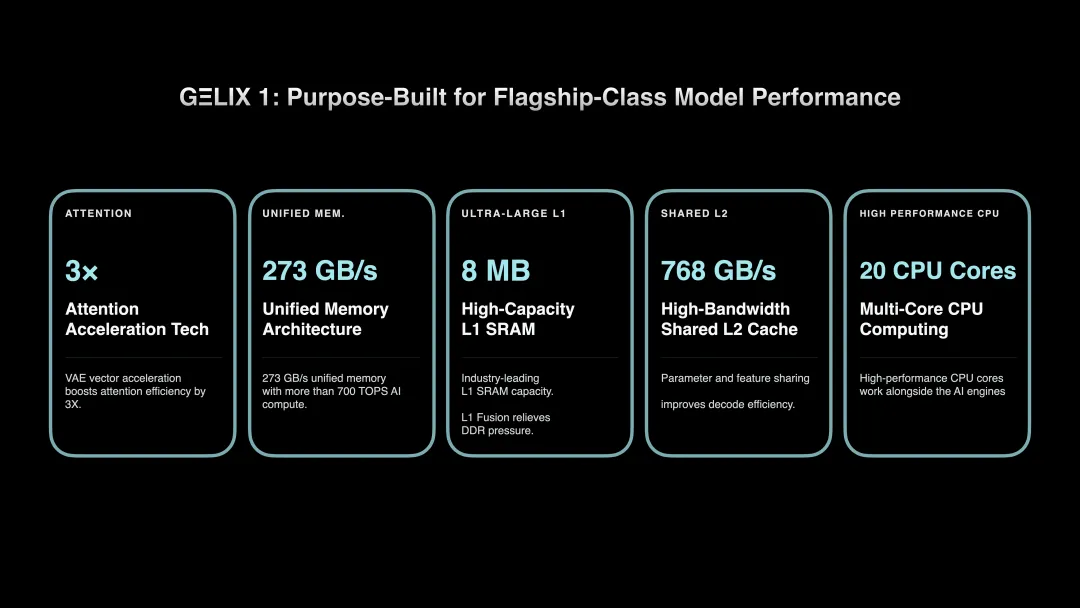
Larger files are cached to bring critical data closer to the computing unit; shared L2 Cache allows for efficient sharing of parameters and intermediate characteristics between computing units; and unified memory architecture reduces unnecessary data copying between models, operating systems, and applications.
Acrab also adopts a multi-system unified memory architecture that allows different operating systems to share memory more efficiently. For devices running only one model, this may be just efficiency optimization; for agents that require continuous cross-application, cross-tool work, it will directly affect the task's ability to progress smoothly.
This also explains why Acrab places Prefill in the center of the conference. Agents often need to re-process new information when introducing new files, restoring task status, or updating context. The longer the task chain, the more pronounced the impact of Prefill on the overall experience.
In a set of autopsies disclosed by Acrab, GΞLIX 1 ran a 26 billion parameter Gemma model, using 40K KV Cache and 10,000 Token inputs, and prefilled at more than 1,416 tokens per second; at the same load, it performed more than seven times the performance of a mainstream general-purpose desktop platform.
Acrab also compared GΞLIX 1 to a similar desktop-level AI computing platform under the same test framework.
The data shows that GΞLIX 1 enters relatively close performance ranges in the two core indicators of Prefill and Decode, with lower power consumption and more competitive overall costs.
Acrab chose to emphasize Prefill and the data pathway, which in itself illustrates a product orientation: the end-side Agent chip can not only pursue how fast the model is output, but also whether the model can read the context quickly, restore the task state and start working.
Users don't pay attention to how many layers of cache a logical link has gone through, and they don't look at the TOP before each interaction. There are only three things users really feel: whether it can be understood quickly, whether it can continue to run, and whether having it is budget-friendly enough.
From chip to platformReal competition is beyond the parameters.This year's WAIC comes with Agent Computers, personal AI centers and enterprise-side devices that have yet to form a unified product form.
Family scenes emphasize personal memory, content, and device collaboration, while enterprise scenes place greater emphasis on knowledge bases, file processing, and internal data security.
The more fragmented the terminal, the more difficult the computing platform becomes. It is difficult for a chip to cover all scenarios using only parameters, but also to provide runtime, model adaptation, development tools and an agent framework to help customers convert the underlying algorithms into products that can be delivered.
It's also a problem where the Agentic AI chip comes out more than a normal reasoning chip: the chip performance determines whether the model will work, the software pack determines whether the developer will be able to use it, and the Agent ecology determines what the device will ultimately be able to do.
Acrab tries to capture these links at the same time. The advantage is that the product definition is more complete, and the risks are direct: the front lines are long.
The chip needs to demonstrate performance, stability and scalable delivery capability, the software needs to keep up with the rapid evolution of the model, and the Agent sorting layer needs to be compatible with ever-changing tools and applications. Personal files and long-term memory must also be addressed simultaneously after they remain locally.
Therefore, whether or not Acrab will be a computing platform for the Agentic AI era is ultimately not dependent on how many tokens are run at the launch, nor on how many tasks Agent Box can demonstrate.
More critical verification is whether developers can produce products quickly on this set of platforms; whether performance, power consumption and stability are established at the same time after hours of continuous work by the agent; whether the underlying software hardware cannot keep up as the model and the agent framework continue to change.
Architectural innovation determines the limits of a chip company's capabilities, while engineering and ecology determine whether these limits can be converted into orders.
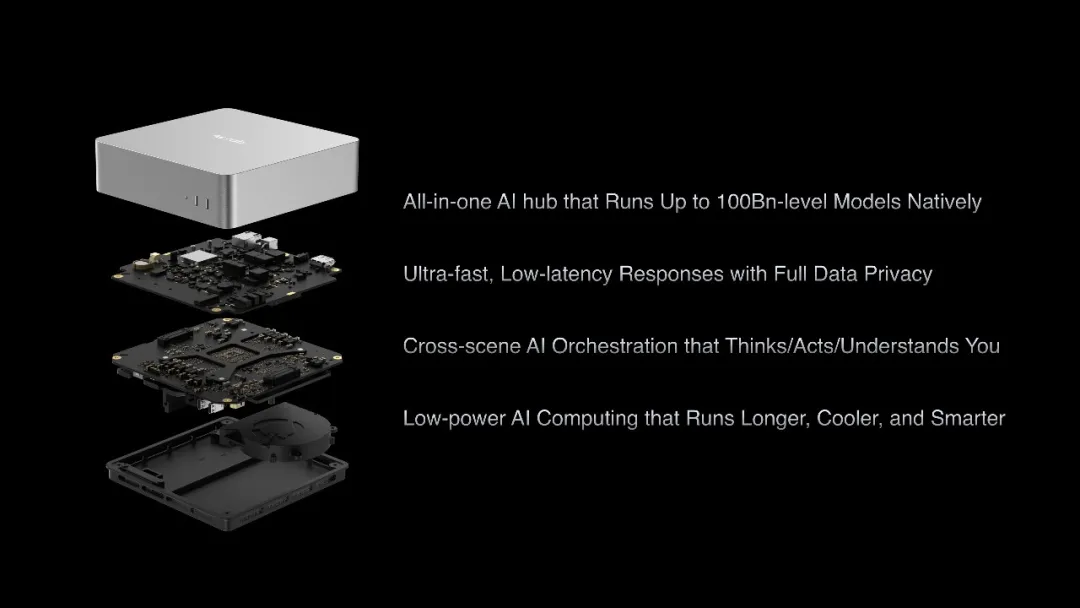
The emergence of new terminals on WAIC shows that the industry is moving from "getting the big model running" to "getting Agents working continuously". The first phase is larger than the computing, memory and model size; the next phase is to address context, personal memory, tool calls and multitasking.
This is exactly the change that Acrab is betting on.
Agent Box is not the end, but a public test of platform capability.
The end-side chips need to be "reworked", not because TOPS is not important, but because Agent is transforming computing from peak numbers into long-term operating system capabilities.