It's the first time in the history of the world.
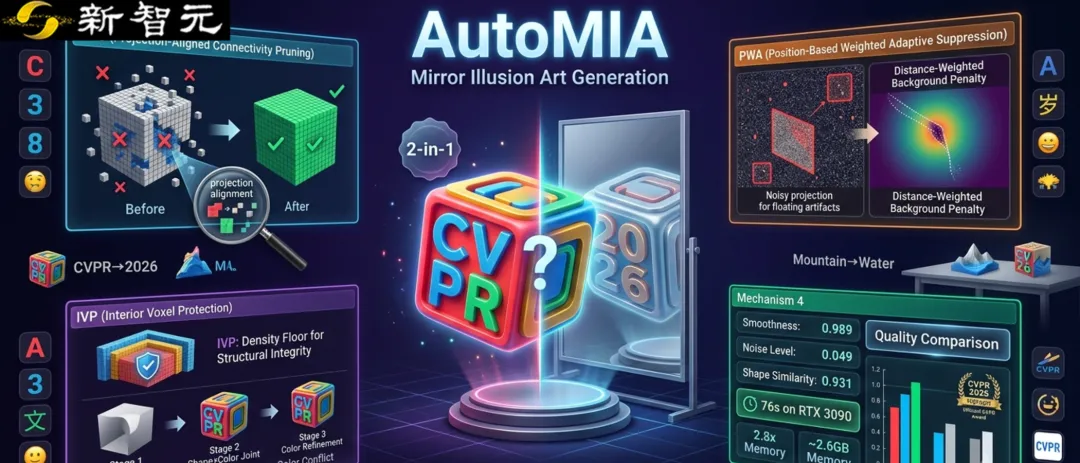
The AutoMIA system, developed by a team led by Liu Xiaobo, can convert any two images into 3D artwork with a mirror illusion effect, achieve visual representation of opposite sides of different patterns, and support 3D printing.
Take a look at the two groups of images below: in each group, on the left is a frontal pattern of the object in front of the mirror, and on the right is its reflection in the mirror. Strangely enough, the two almost irrelevant objects in front of the mirror are: the first group is "CVPR", which turns into "2026"; the second group is "Mountain", which turns into "Water" in the mirror.
Their outlines, colors, and meanings differ, as if they were an illusion.
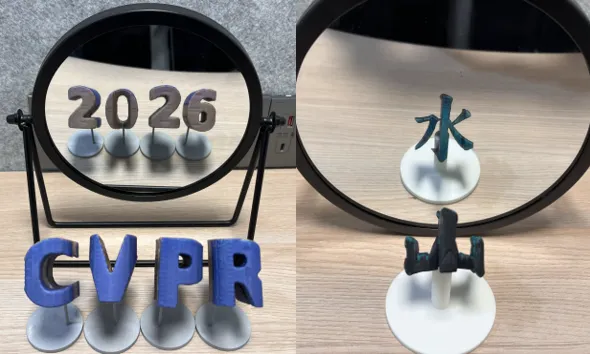
The reason behind this is that it comes from a specially designed 3D object that uses the "symmetric full effect" of the human visual system to create illusions, a phenomenon known as mirror illusion art.
By carefully designing three-dimensional geometry and surface colors, the researchers enabled a real object to exhibit dramatically different visual effects when viewed directly and in mirrors.
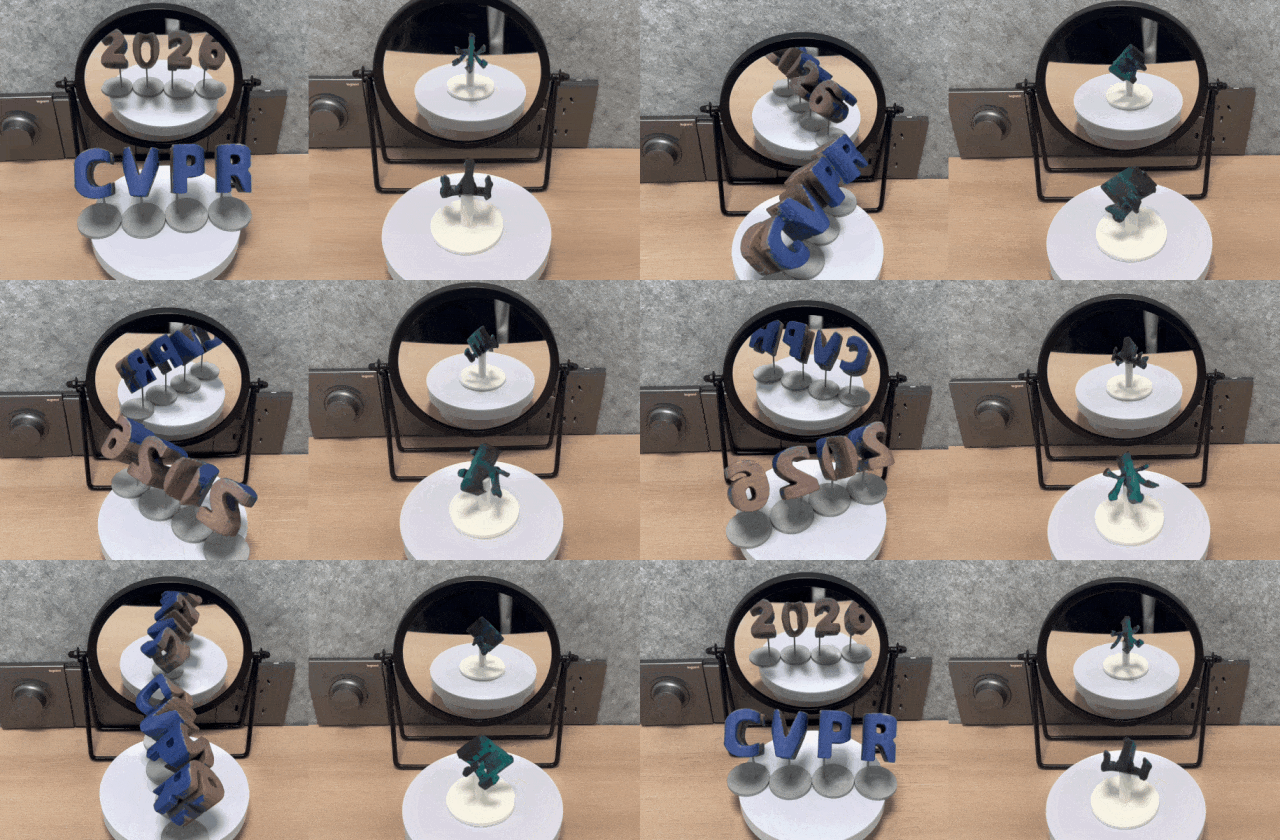
Below is a video of the two sets of corresponding "encryption".
Traditionally, the design of this type of artwork requires skilled conception by professional artists, as well as a large amount of complex artificial design experience and mathematical calculations, and the design of this type of artwork has a high threshold for ordinary people.
So is there a way to automate this kind of artistic design so that ordinary people can turn their inspiration into art?
Recently, a team of researchers from institutions such as Tsinghua University has proposed AutoMIA, an AI design method for automatically generating mirror illusion art, where users can automatically complete the design of 3D artworks and support direct 3D printing to create artworks by arbitrarily specifying two images, respectively, in front of the mirror and in the mirror.
The paper has been accepted by CVPR 2026 and has been designated as a Highlight Paper by the General Assembly; at the same time, the paper also received the CVPR Efficient CVPR Award for its high computational efficiency.
Background of research
Optical illusion art has long been an important issue in the intersection of art, psychology, and computer vision. Common 2D illusions include mixed images, visual deformities, and 3D illusions include Shadow Art, Multi-View Wire Art, and others.
These methods typically rely on specific perspectives, projections, or shadow relationships to give the same object a different appearance under different observation conditions.
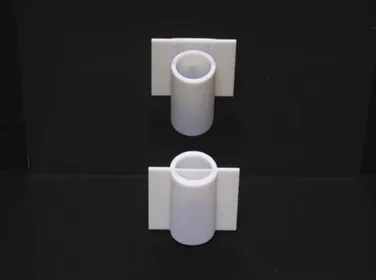
Mirror Illusion Art is a more special 3D illusion: when a real object is placed in front of a mirror, the observer sees one pattern on the face and another pattern in the mirror.
Previously, related designs often required a large amount of manual guidance and adjustment, and were more focused on shape design, making it difficult to process color patterns at the same time. Using methods like Shadow Art, it was easy to generate surface noise, background float or internal rupture, affecting visual quality and physical production.
Thus, the authors pose a direct question: can AI automatically design such a mirrored hallucinatory object? given two target images, can the system simultaneously optimize 3D shapes and colors so that the same object presents two designated appearances from two perspectives?
Research methods
AutoMIA modeled the problem as a dual point of view reverse design task. The system uses an object to represent a 3D object, with each object containing density and color information; the object is then rendered from two specified points of view through microscopic rendering, and the resulting rendering is compared to the two target images.
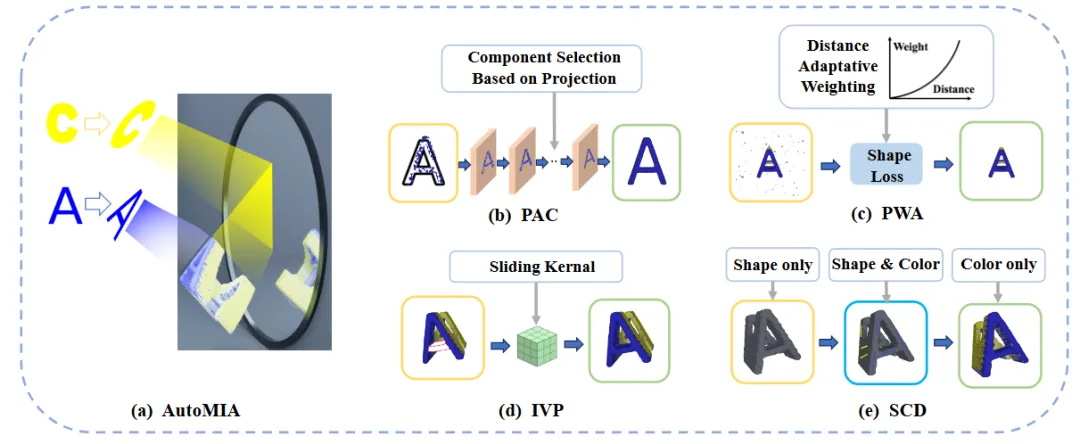
Optimization targets include both shape similarity and color similarity, so that the generated object can both meet the outline requirements and generate the color of the target image.
In practical optimization, the authors discover four key problems: surface noise, background noise, internal rupture, and the imbalance of shape and color optimization.
For this purpose, the paper proposes four core mechanisms.
The first is PAC, which is a projection-aligned connectivity domain cutoff. The system projects the amount of connectivity in the current object into two perspectives and evaluates them based on the degree of overlap and background overflow of the target mask, retaining the structure that really helps the target pattern and removing the floating or ineffective noise portion.
The second is PWA, a position-based overweight adapted noise attenuator. It adjusts the background punishment weight based on the distance from the pixel to the target area, so that incorrect projections away from the target pattern are punished more severely, thereby reducing background noise at a distance.
The third is IVP, which protects the internal body. Because the image is primarily confined to the surface of the object, the internal body is easily impaired in optimization, causing structural rupture. The IVP identifies the internal body and imposes density limits to help maintain the integrity of the object, which is especially important for subsequent 3D printing.
AutoMIA divides the training process into form-optimization, form-color combined optimization and color refinement phases, avoiding premature color interference with geometrical structures and reducing conflicts between different colors from different perspectives.
The results of the experiment
The paper validates AutoMIA when entering multiple types of 2D images, including alphabetic, numeric, character, geometric patterns, emoji, cartoon patterns and logos.
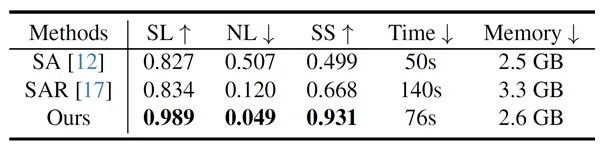
In the experiment, the authors compared AutoMIA with methods such as Shadow Art (SA) and Shadow Art Revisited (SAR). Since the baseline methodology mainly supports shape optimization, the comparison focuses on metrics such as smoothness, noise levels and shape consistency.
The results showed that AutoMIA had a clear advantage in rebuilding quality. In the paper report, the smoothness of AutoMIA reached 0.989, the noise level dropped to 0.049, the shape consistency reached 0.931; compared with SA and SAR, there was a clear gap in both shape consistency and noise control.
At the same time, AutoMIA has an average design time of only 76 seconds on a single-disc RTX 3090, with an average storage capacity of around 2.6GB, demonstrating efficient computing efficiency.
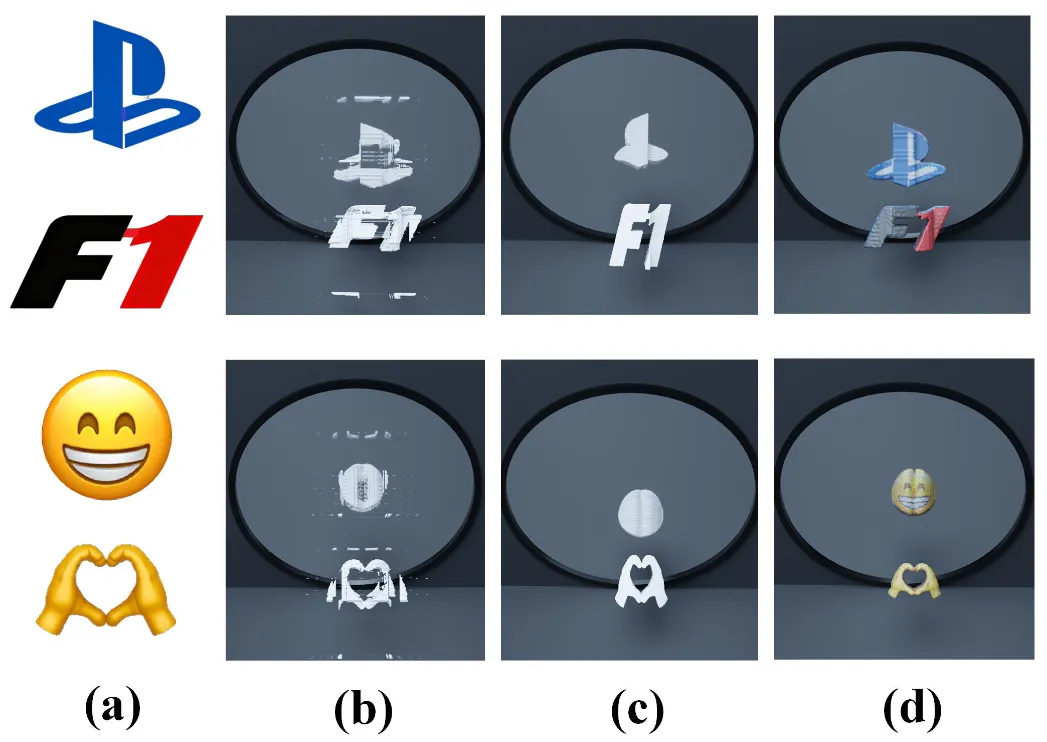
In terms of visualization results, SA and SAR are prone to problems such as suspended noise, surface unevenness or internal rupture, which makes it difficult for objects to form a stable, complete physical structure.
AutoMIA results not only better match the outline of the two target images, but also reconstruct the colour surface of the input image, giving a clear visual meaning to both the positive angle and the mirror angle.
This is particularly important for the art of mirror illusion: if the shape is correct but the color is confused, or the color is close but the structure is broken, it is difficult to produce a convincing illusion in the end.
Dissolving experiments further showed that PAC, PWA, IVP, and SCD all contributed to the final result. Removing any module would lead to a decrease in the quality of reconstruction. For example, removing PAC would significantly increase noise and decrease shape consistency; removing SCD would affect shape, color, and smoothness.
This shows that AutoMIA is not based solely on optimization, but is systematically designed to address the problems that arise in mirror illusion design.
Below is an example of a set of digital worlds, as can be seen in the diagram, rendering well-effective mirror imaging objects in a blender-based digital simulation software.
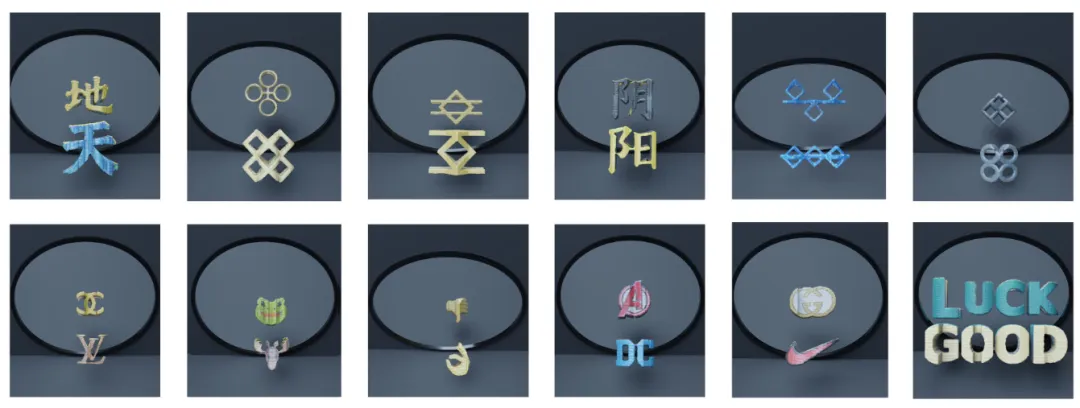
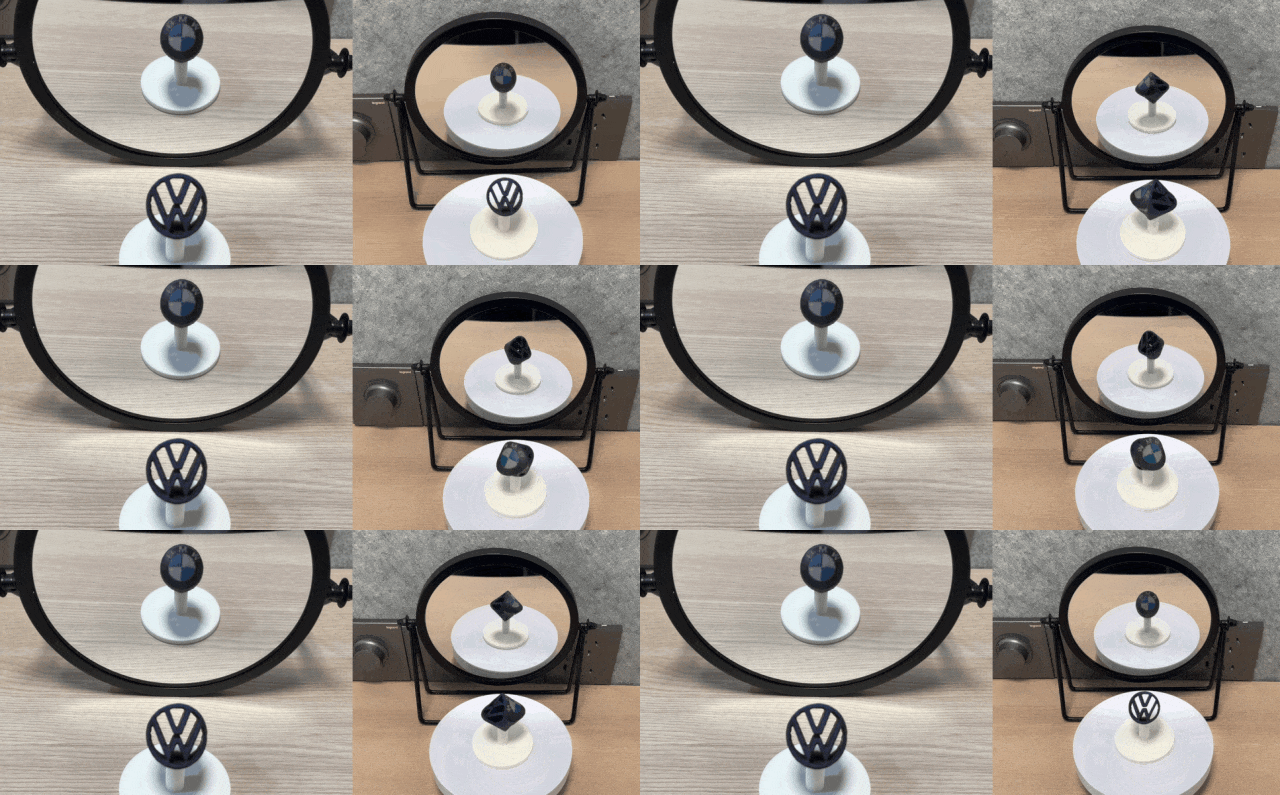
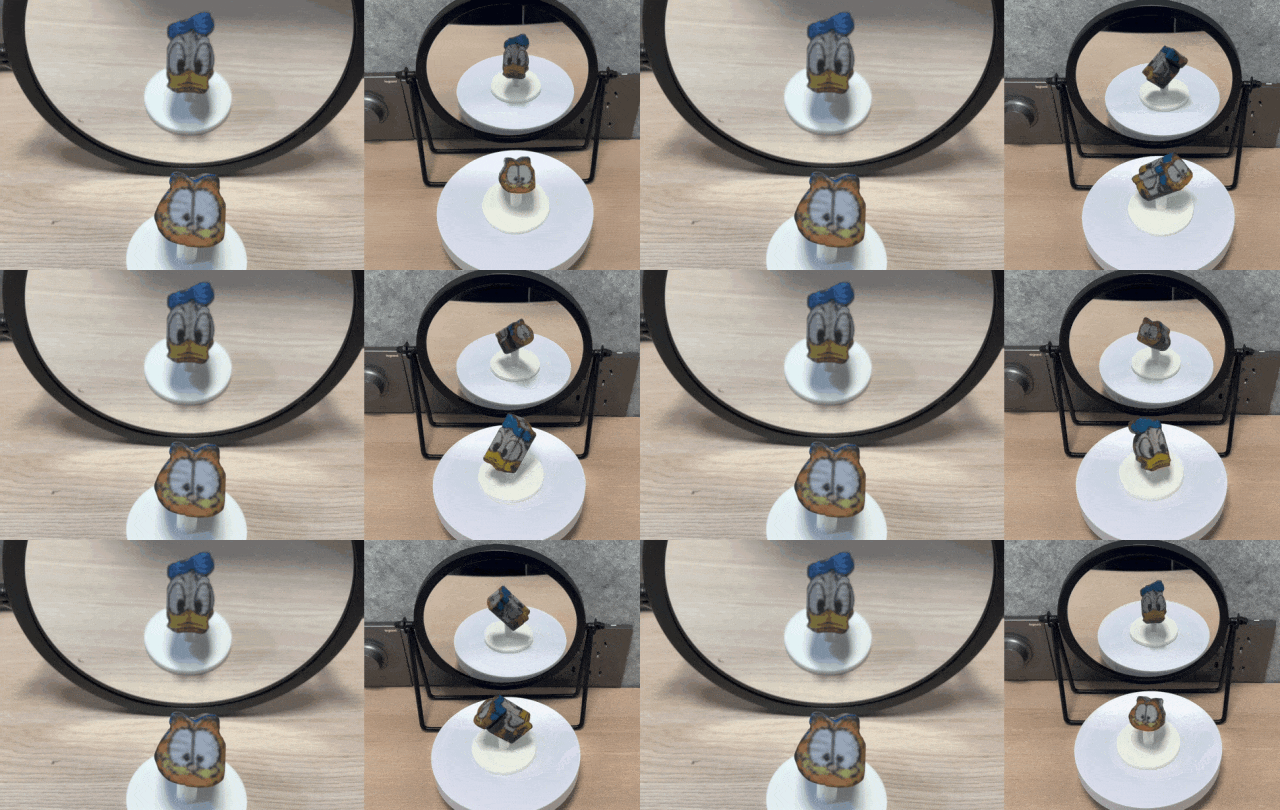
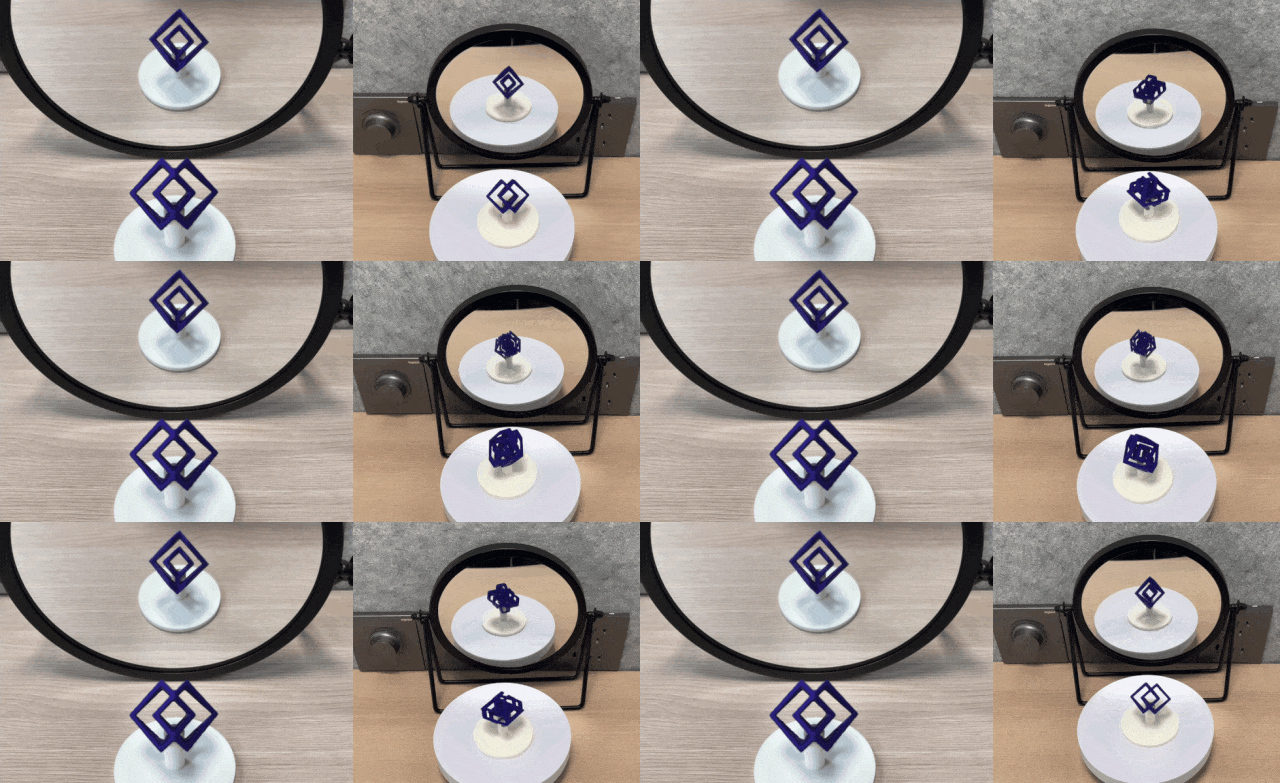
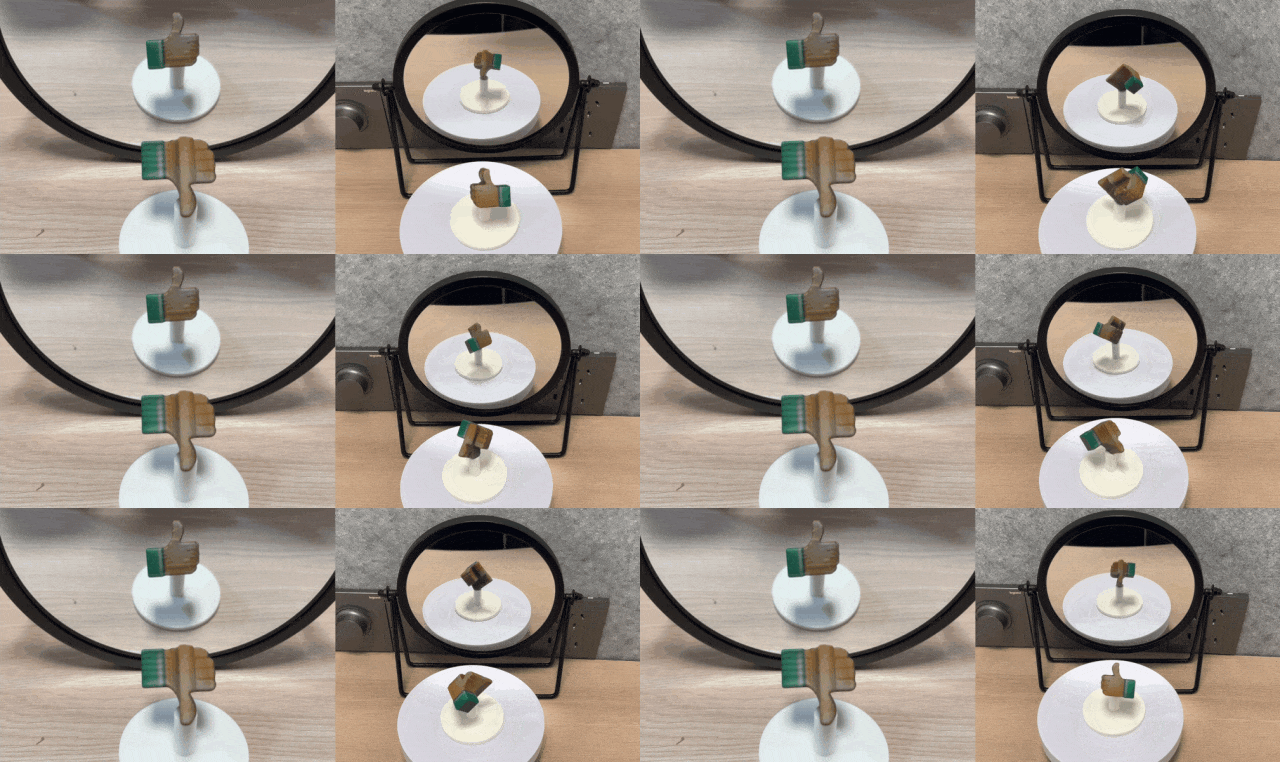
In addition to the digital results, the paper also shows several instances of physical production. The authors converted the optimized physical model into a 3D-printable format and created real objects through 3D printing.
In physical photography, different patterns are presented in the faces and mirrors of objects, suggesting that the method can successfully move from digital design to the physical world.
Users can create a variety of artworks based on this method.
Conclusions and Prospects
Researchers have proposed AutoMIA, an AI design system for automatically generating Mirror Illusion Art.
It can start from two 2D images, combine to optimize the shape and color of 3D objects, and improve the quality of results through mechanisms such as PAC, PWA, IVP, and SCD, making the generated object smoother, more complete, and more suitable for actual production.
This work shows new possibilities for AI in computational design and artistic creation: not only can it generate images, but it can also design objects with physically feasible 3D illusion. One object has only one form in reality, but it can present another visual identity in the mirror, the effect of "faces that are not consistent with mirrors", which also provides a new direction for visual perception, reverse graphics and digital manufacturing.
Author's noteSubsequently, the authors of the paper were Zuo Pe, an aquarist at Tsinghua University, co-directed by Prof. Zuo Zhong; Li Jie, a co-author of the paper; undergraduate students at the Chinese University of Science and Technology, and Prof. Zuo Zhong and Vice-Professor Hu Xiaolin of Tsinghua University.