It's the first time in the history of the world.
On October 20, the first Physical AI and World Model Congress 2026 will be held at the Nanjing International Exhibition Centre.
The conference will be called "Physical AI Spring Evening": Turing Award winner Yann LeCun will be presenting the keynote address of two academics sitting in the town on the beach.
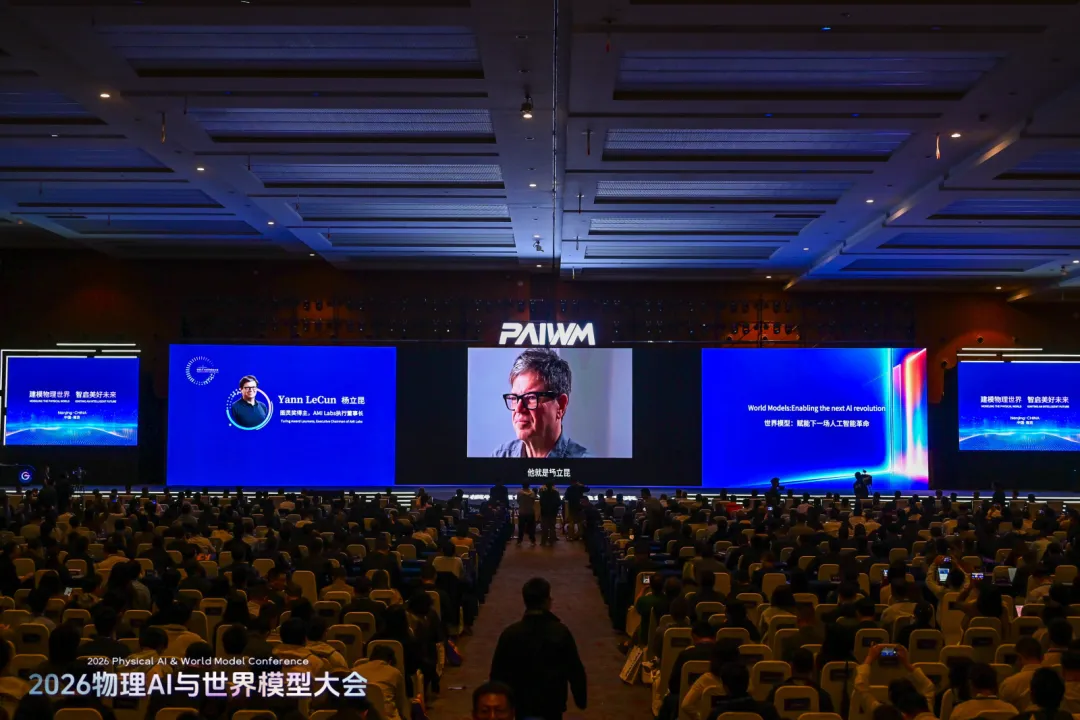
This is almost the top line-up in the world of physical AI.
On the world's leading stage of physical AI, a Chinese company that was founded in just three years and has completed nine rounds of financing has made its mark.
This company is a millennial tech company.
Founder Gao Hai Kawa attends the main forum for the opening ceremony of the congress.Official release of the body-intelligent brain base for the real physical world
The Polibrain predictive world model.
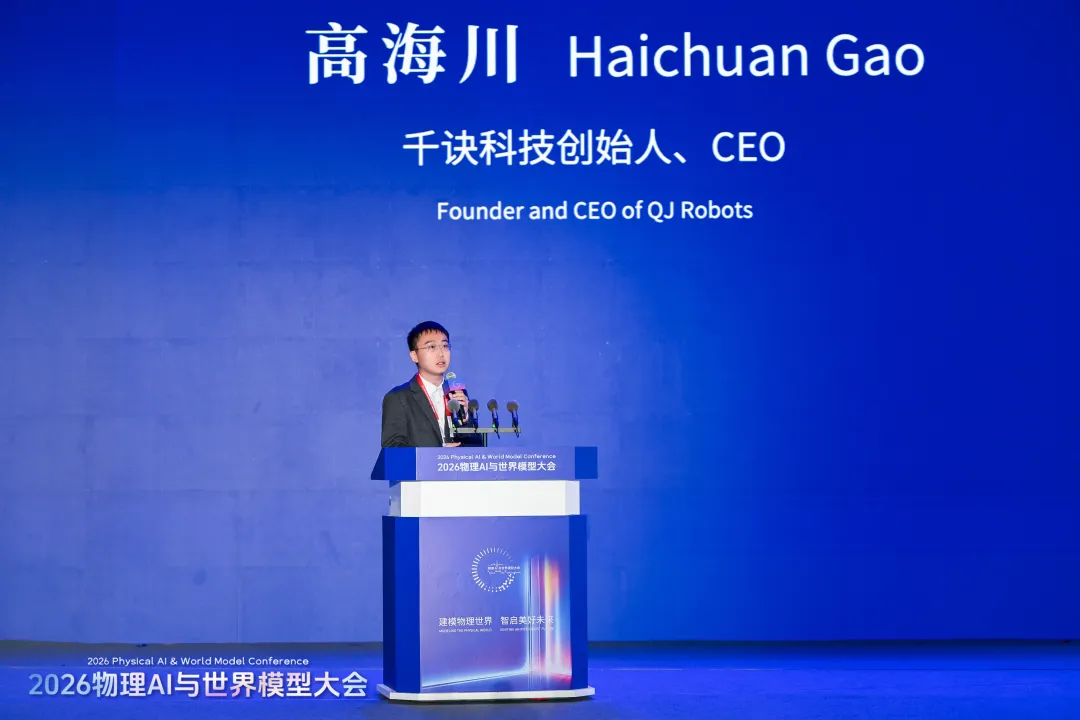
Behind this badge is the public results published by the team of Chiang Kai-shek University of China on the key issue of "Identifiability of Hidden Variables".
This is about a year ahead of the LeCun team's similar work.
The robotics industry doesn't have a "ChatGPT moment".Over the past two years, a heatwave of big models has swept across the world of physical intelligence.
In the first half of 2026, global funding for physical AI alone surpassed $6.4 billion.
There's a belief in the industry that as long as you put enough video into a big enough model, a robot will automatically learn how to write essays like a ChatGPT.
And then what?
The human-shaped robotic steps on the stand are beautiful, the action is smooth, and once you walk into the real hotel hallway, the lights change, the guests suddenly push the door, hundreds of thousands of iron guys are in the machine.
In an interview, Kaohsiung said a special "killing frenzy":There is no such thing as a "ChatGPT moment" in the robotics industry. Without a single technological breakthrough, there will be an instantaneous turning point for the entire circuit.
Why? Because the digital world and the physical world have a dilemma.
The error message can be deleted, the code crashed and can be run backwards.
But the physical world is irreversible. The cup is broken, the mechanical arm is hit by the wall, and every time it tries and fails, it's pure gold and silver.
Language models have inherited the vast amount of text that the Internet has accumulated for decades, while the field of robotics has never experienced the historical stage of "large-scale collection of physical interaction data".
Data is extremely scarce and the cost of trial and error is extremely high.
This is the real dead end of being physically intelligent.
The question is, which way to go?
Life and death on both routesThe concept of the World Model (World Model) is set on fire in 2026.
LeCun left Meta to found AMI Labs, taking over the largest seed cycle in European history at $1.030 billion. Half a year later, the biggest explosion came on September 28, when AMD announced the acquisition of World Labs, founded by Li Feifei, for about $8.2 billion in a full stock transaction. Li Feifei himself became AMD's executive vice president and chief scientist.
Even the chip giants have bought the "World Model" themselves, suggesting that the world model is no longer a concept in academia, but the next main battlefield on which the entire industrial chain is waging.
But the four words of the "World Model" obscure the battle of the lines.
Production routesIt follows Sora's logic: allow the model to predict each pixel of each image in the future, producing "pictures" of light, texture, and reflection.
What is the problem with this road?
When you play ping-pong, does your mind gradually render a 4K video? No. You just intuitively prejudge the ball's trajectory and then wave. That "intuition" contains no pixel information, only the laws of evolution of physical states.
Wasting limited computing power on billions of background pixels is not only necessary to reason slowly, but more importantly, generative models are extremely likely to produce "physical hallucinations": tables disappear in space, cups pass through walls.
A model full of physical illusions is allowed to command the steel body, and the consequences can be imagined.
Predicted routesIt's a completely different approach: don't draw a picture, count straight.
It does not rotate in pixel space, directly into the potential representation space.
The focus is not on "what the future holds", but on "what action will lead to change".
How do objects move, how do interactions change, and to what extent do tasks progress?
Forget the background texture, lose the lighting noise, and the core variables in the causal chain are dead and gone.
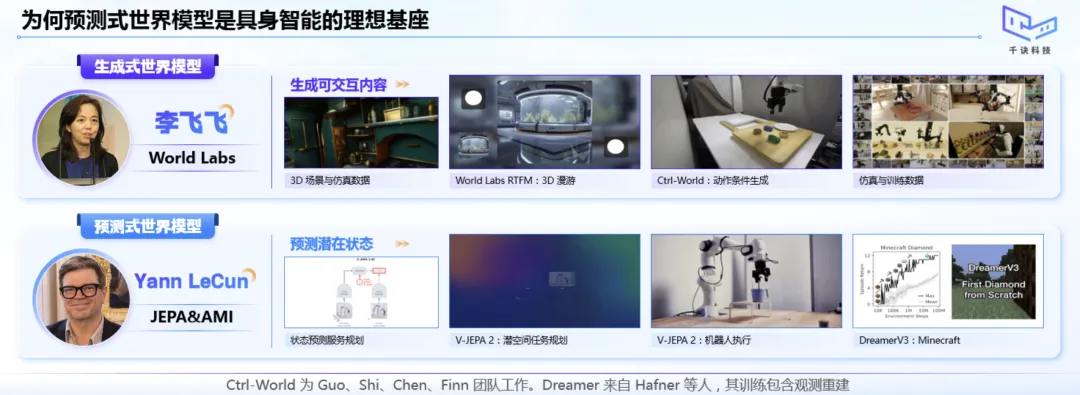
This is the basic logic of Polibrain:It's a very low computational cost, in exchange for very high decision certainty.。
On the first day of its founding in 2023, Millennium chose a predictive route. At that time, the industry consensus was "VLA+ end-to-end", and the world model was not even a popular catchphrase.
According to Kauai, he was forced out by the reality of data.
The cost of collecting real machine data is too high, and the algorithm must have extremely high sample efficiency, otherwise it will never cross the threshold of commercialization.
Looking back three years later, the predictability of this judgment is almost to the point of pressure.
The mathematical bottom of LeCun's first yearPolibrain's technical underpinnings are a continuous assault from underlying mathematics.
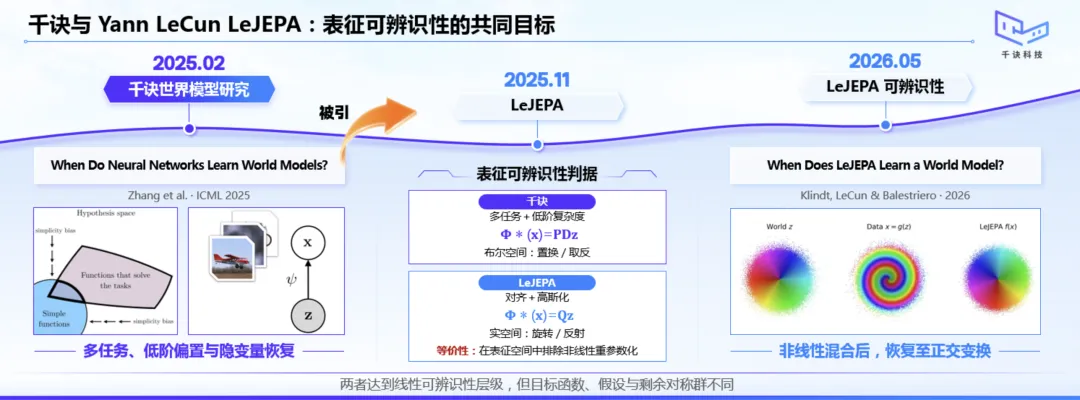
In May, LeCun's team published a paper titled When Does LeJEPA Learn a World Model? exploring when neural networks can restore the real hidden variables of the physical world, which has attracted considerable attention in academia.
However, few people have noticed that the team of Prof. Chen Feng of the automation department of Chiang Kai-shek University of Technology (Chinese University of Technology) together, the first author of the study, has published a book titled When Do Neural Networks Learn World Models? on ICML in 2025.
The core issues focusing on the two studies are highly consistent: starting with the identifiability of hidden variables, using the stages of a function to depict "simplicity", using the training goal of preferring lower-level solutions to explain when the model can restore the real structure of the world.
The public results of the Qin-Qin team are about a year earlier than the LeCun team.
The bigger ones are in the back.
In the latest work of ICML 2026, the Chiang Kai-shek team won another medal:Polynomial Representations with Effective Degree (ED)。
The research directly hits one of the most classic puzzles of deep learning.
Let's give an example. A student who does 1,000 exercises and encounters a new question that he hasn't seen in the exam, as well as answering a new question, we'll say he's "learned". But if the student's brain is big enough to answer 1,000 questions with a single word, does he really understand the answer to the exam, or does he just happen to answer a similar question?
Modern neural networks are students of this "super-capacity brain" whose parameters often exceed the amount of trained data, and can theoretically completely memorize every single piece of data.
Strangely enough, it didn't cheat, but actually learned the rule of thumb.
The most mainstream explanation in academia is called "simplicity bias": in the face of a myriad of answers that can explain training data, neural networks naturally tend to choose the simplest one. As Holmes said, excluding the whimsical explanation, the simplest one that remains is often the truth.
This sounds reasonable, but there is a deadly question:How is "simple" measured?
In the past, the academic community has tried many ways to see the size of the parameters and the loss curve. But these indicators are hard wounded: some only apply to specific network structures, some can only be evaluated afterwards, can not be used directly during training, and some are vulnerable to changing a writing parameter, the numerical values are completely changed.
The solution of the Chiang Kai-shek team is absolutely brilliant:It's called a CT scan of neural networks.
Operations within a neural network, carried out in a space of thousands to tens of thousands of dimensions, are not directly visible to humans.
The team's approach was counterintuitive: randomly picking out two samples of real data, such as two photographs, drawing a line between them, and then observing how the output changes as the model moves along that line from one end to the other.
A tens of thousands of-dimensional black box is cut into a one-dimensional curve.
The length of the curve cut out reveals the model's "learning mode". If the curve is smooth and comfortable, like a slope, the model learns a simple rule; if the curve jumps up and down, it bounces like an electrocardiogram, the model is hard-coding an isolated pinpoint answer.
The team quantified this "level of fluctuation" as a number, called the "level of fluctuation".Effective Degree (ED)The smoother the curve, the lower the ED; the steeper, the higher the ED.
The results of the experiment showed that in the classical image dataset CIFAR-10, the correlation between the performance of the ED and the model on the new data, up to 0.99 tonnes, is almost the lower the ED, and the better the model can be generalized.
But what's really great is in the back.
This ED can not only "post-exam" but also "exercise edge correction". It can be written directly into the training goal, so that each step of the model is followed by a "complexity penalty point". The model consciously moves in a simple, smooth direction in order to be punished less.
The problem with Polibrain is that every step of the model's self-evolution involves one hand pressing it to the "most essential physical laws" and not allowing it to remember those fancy but useless details.
Regardless of the background lighting changes or the ground texture changes, the Polibrain can automatically filter out these irrelevant visual disturbances, holding tightly to the physical variables that really determine the success of the task: where the cup is, how far from the claw, whether or not to pick it up.
This solves the problem of "characteristic pollution" that has plagued the industry for a long time: previous models often mixed "cups" with "wallpapers on the back of the cup", leaving a room that no longer recognizes the cup.
Causal memory: allowing robots to stop "forgetting"Solving the generalization of the spatial dimension and the coherence of the time dimension.
In the real world, there are shadows and accidents everywhere. Workers pass by, blocking the view of the mechanical arm; parts are placed in the box, and the image instantly enters the blind spot; the sensor signal is sometimes delayed.
The traditional model encounters these situations, basically "forgetfulness" on the spot.
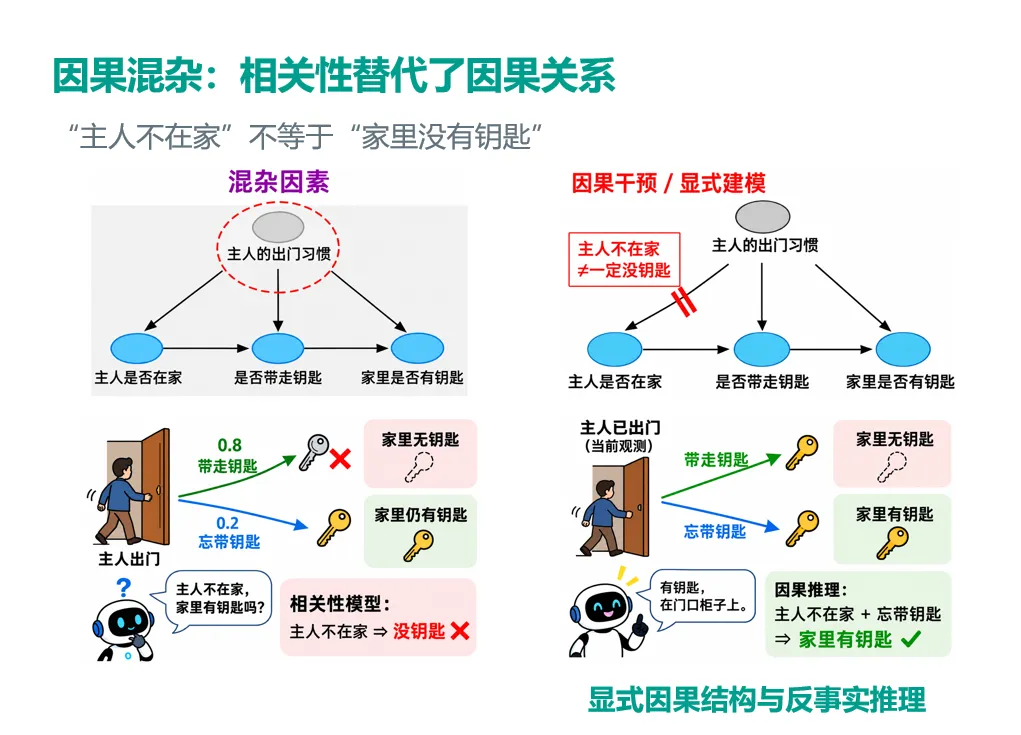
Polibrain offers a second core technology:Causal memory mechanisms based on counterfactual inferences。
Robots don't have to play back every second of history like video monitors, so they can both explode and introduce a bunch of unnecessary noise.
Polibrain is smarter: "questioning against the facts" of every piece of historical information.
If this historical record is deleted, will the future predictions change?
It's the key causal node that must be kept in mind. No? It's redundant information, decidedly rejected.
This mechanism allows Polibrain to accurately synchronize critical historical information and make coherent decisions in complex situations such as shadowing, delaying feedback, and depending on multi-step tasks.
It's the first time we've done this.Continued decision-making closureIt's more about letting robots say goodbye to "blind execution".
The traditional mechanical arm runs the open-circle script: receiving instructions, generating trajectories, enforcing execution. Even if the parts slip two millimeters in the middle, the system will continue to slide until the engine overloads the alarm.
Polibrain is different.
Each time a command is sent, the model generates an "expected feedback" internally.
If the actual execution results deviate from what was expected, will the model reverse track the deviation in milliseconds? Is the root of the deviation crawling? is it sliding? is it hitting an unexpected obstacle?
The field then re-evaluates the overall mission objectives, dynamic adjustment of the action plan.
It can predict, it can verify, it can recognize mistakes, it can heal itself.
This is the smart closure that really dares to be placed in the industrial landscape and the home scene.
It's a set of brains, infinite bodies.The ultimate battlefield for physical intelligence is not to create a perfect humanoid robot, but to make "intelligence" itself a replicable infrastructure.
In the words of C.O.O. Schaefer:In 10 years, robots will no longer be human beings.
There is no single organism in nature that can adapt to all environments.
Similarly, robots may be the most efficient on the flow line as a six-axis mechanical arm, the most economical in storage may be a wheeled chassis, and the most reliable in special surveys may be a four-foot platform.
If a model of the world could only be tied to one body, it would not go far.
Polibrain has done something crucial since the beginning of architectural design:It's a great way to break down your brain and body completely.。
The upper layer is the baseline of general intelligence, responsible for task understanding, environmental representation, physical state prediction, and causal reasoning: this layer has absolutely nothing to do with robot growth.
The lower level is the hardware adaptive interface, responsible for matching different robot control systems, motion native language and trajectory planning capabilities.
The shape of the cup, the shape of the wheel, the shape of the arm, the shape of the arms, the shape of the legs, the shape of the body are different, but the physical perception of how the cup is lifted and how the box is pushed is the same.
What Polibrain is going to do is submerge this set of shared understanding and then quickly adapt it to all kinds of robot shapes, like the "plug-in" operating system.
In order to feed this brain, Polibrain has also opened a pathway for the integration of multicore heterogeneous data.
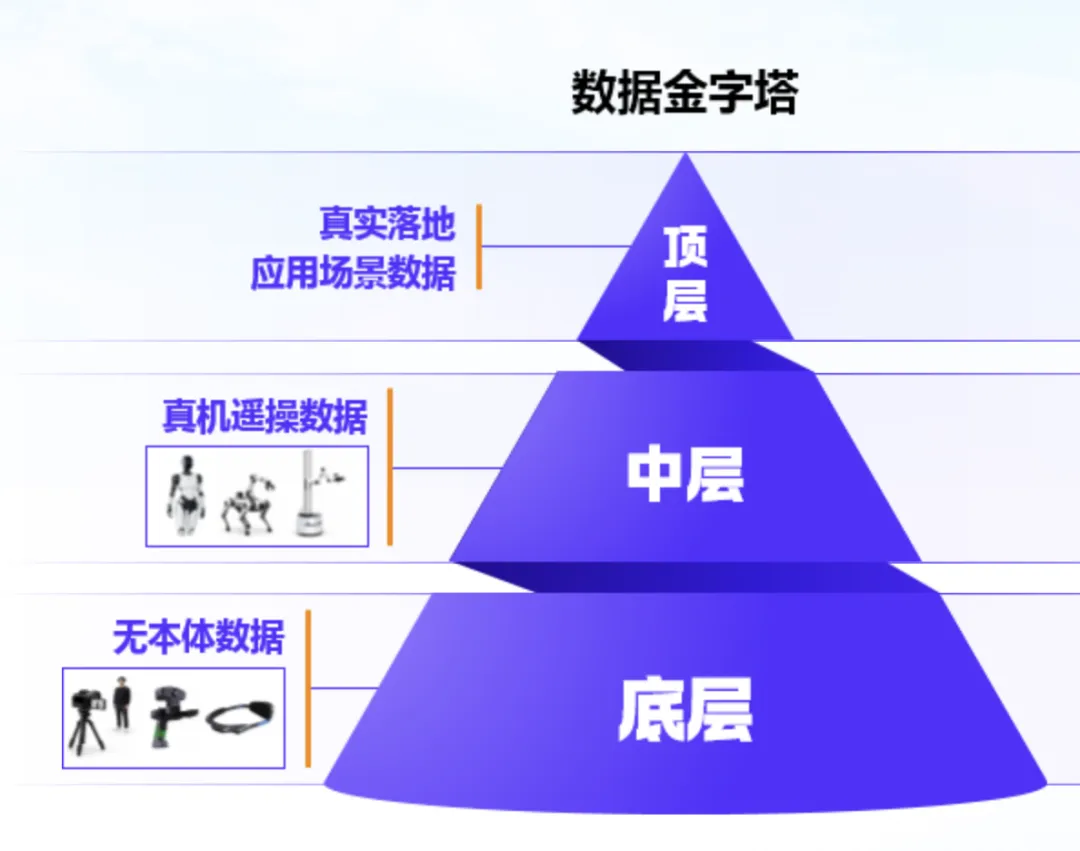
The human first-person perspective uses the video church model "What is the physical relationship between the world" and the real-world data church model "How to power a specific motor". Two types of data collaboration training have significantly improved the efficiency of using effective data.
As of now, Thousand Tech has adapted Polibrain to nearly 50 different types of robots.
From industrial mechanical arms, to moving wheeled chassis, to multi-fingered hands and two-legged human figures, the same Polybrain core can be operated with a different neck.
I won't pay a penny more for a cool demo.There is a pragmatism in Kauai that is rare in AI entrepreneurship.
His original words were:I have to consider the commercial reality first, and then the technology.
The phrase, from the mouth of a Dr. Qinghua, is a bit of a "backbone", but it also highlights the most real hardship facing the physical intelligence industry.
Customers don't care if you use a VLA or a world model.
The hotel owners just want to know: can your robot pick up the lost sneakers in the room? The warehouse manager only cares: can the pick-up error rate drop? A robot that can pick up the shoe cabinet, a pile of paper, and put it on a doll might sell 200,000, but the psychological price of the user might be 3,000.
It's not a superstitious demo on the stand.
Polibrain's capabilities have been proven in service, logistics, retail and home environments.
Environmental perception, object operation, cross-level scheduling, multi-step task planning, abnormal state processing are all things that happen every day in real business.
More importantly, the Millennium has always insisted on not being the core.
It is clear that the biggest concern of integrated system manufacturers is the conflict of ecological positions.
If brain suppliers were robots, collaboration would be impossible. It's not a technical issue, it's a question of trust. Thousands choose to do pure "brain infrastructure" and maintain a clear division of labor boundaries with their own manufacturers.
The commercial model is already in use. Polibrain adapts to nearly 50 prototypes, accumulating real-world scenario data of billions of dollars in size.
Every time you access a robot, the data flyer spins a circle, and the model is smarter.
End: The golden age of physical AIFrom the world's leading theory of hidden variables at ICML in 2025 to the comprehensive engineering of multi-dimensional representations with effective stages in 2026; from the spotlight of the first Physics AI conference to the bustling operation of nearly 50 robots in real-life scenarios, Millennium Technology has proven one thing in three years:
In this course of physical AI, the Chinese team is not with the runners, it is the pioneers.
They did not follow in the footsteps of overseas giants, but took the lead in finding the breaking point at the bottom of mathematics and physics. When LeCun focused on a billion-dollar world model, the millennium had already made a big leap along this path.
Robots don't need to draw the world out for people to see. Robots need to understand gravity, friction, causation and make the right decisions in the potential space.
As Polibrain makes accurate state predictions over and over again in the potential representation space, those once clumsy steel bodies are unlocking the pre-set program.
They are beginning to understand the world.