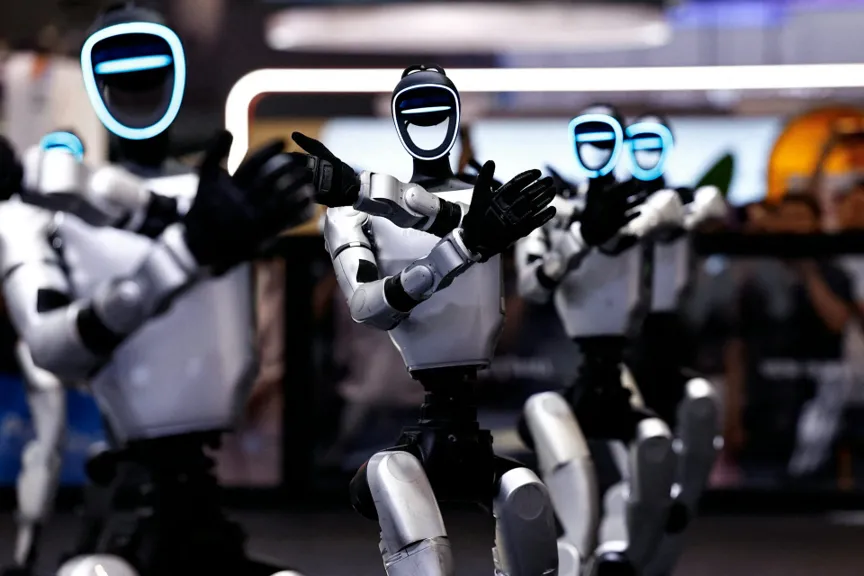
“ The door can be closed and the road won't disappear.
Recently, the U.S. Treasury Department issued a fine for the robotics industry. Interestingly, the actual release date was three months ago.
That is, in July 2026, the U.S. has actually imposed two regulations on the robotics industry.
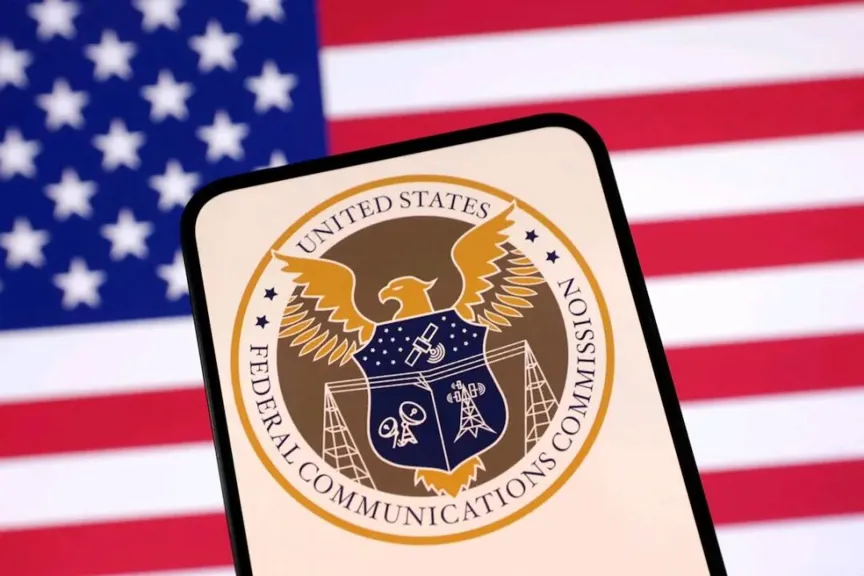
On July 28, the FCC issued a notice adding foreign-made advanced robotic equipment to the controlled list. The newly added overseas production models cannot in principle be licensed by the FCC and cannot be imported, marketed or sold in the United States.
Interestingly, after the ban was imposed, Intel was the first to rush. Recently, it requested a conditional exemption for its U.S. chip plant's self-driving cars (AGVs). Intel said it had not yet been certified in the U.S. to replace existing equipment that would take years to replace, and any disruption would immediately have a negative impact on Intel's semiconductor manufacturing capacity in the U.S.
Although the main suppliers of these AGVs are Japan's Mureda Machinery and Dafo, Intel's pioneering statements mean the impact of the ban is significant.
In the same month, the U.S. Treasury fined Amidi $200,000 for its Chinese fund investing about $925,000 in a Chinese furniture company in April 2025, failing to file a transaction notice required by the OISP to the Treasury. The fine is more than double the amount of the investment. This is the first civil penalty OISP has imposed since January 2025.
One thing is governance, one thing is governance. It's two separate law enforcement agencies that appear to be on the same timetable and are both sides of the same threshold. The U.S. is simultaneously shutting down two channels of the robotics industry to China, the flow of goods and the flow of capital.
More importantly, while the U.S. Treasury Department may have deliberately postponed the public release of the fine to avoid a collision with the FCC's ban, this cover-up will instead expose the real intent behind it.
These two policies are not really aimed at products sold abroad by Chinese robotics companies, nor at any particular investment, but at the pace of transforming the competitive assets at the core of China's biotechnology industry.

01.
The target of the FCC's ban
The FCC's most fun rule is that it doesn't prohibit anything.
Certified models are unaffected and can continue to be sold; software and firmware updates of approved equipment are available until January 1, 2029; enterprises can also apply for conditional approval from the Department of Defense. In other words, Chinese robots approved on U.S. shelves yesterday for sale, but as of July 28, any new overseas models will in principle be difficult to obtain new certification.
It is easy to conclude that licensed models continue to legally sell aluminum. This is confirmed by Yu's response to the letter of invitation issued on July 31. It states that G1, H2, R1 and four-legged robots such as Go2, B2, A2 have been FCC certified and that existing products are not affected by U.S. sales for a while.
But in reality, this judgment omits a structural fact. The basic competitive logic of the robotics industry is intergenerational competition, not stock competition. China's most central competitive force is never to make a single product world number one, but to reduce the cyclical feedback of the supply chain to one-fifth of its competitors' cycles.
Nowadays, physical intelligence is in a technological boom, and every generation of products that jumps on the ability to control movements, give feedback, and generalize tasks may determine whether a company enters the next round of competition.
Forbidden is not forbidden, and frozen is the entry ticket of tomorrow. The same logic was broken by Tom Forbes: a truly competitive market is always the next generation of new cars, and if foreign manufacturers can only rely on old models, it will lose its share of the accumulated market in the United States.
The definition of restricted devices is also worth looking at step-by-step. Ground mobility, autonomous operation of operators, more than 2 kilograms of integrated base stations, environmental sensing sensors, networking capabilities of at least 200 kbps, and software that controls navigation or data collection.
A commercial category that has not yet been standardized, before the year of commercialization, has received a regulatory definition. This is pre-legislation for a production method that has not yet been standardized.
In terms of export data, China's robots were exported to 171 countries and regions in eight months this year, with exports totalling 350.52 billion yuan, of which the United States is undoubtedly the leader. For example, according to data disclosed by Yuri, the U.S. market revenue for the last three years was 18.39%, 19.54% and 13.30%, respectively, and overseas revenues totaled more than 40%.
The same is true for smart companies with unpublished revenue structures, which need to use technology to support the valuation narrative, while the gap between the old and new payments is far more fundamental than the revenue gap in a quarter.
02.
$200,000 and $925,000: pricing for fines
We're going back to the US Treasury Department's $200,000 fine.
$9.25 million is not counted on the first-tier market, and $200,000 is not counted in the history of law enforcement at the Treasury. But the fine is more than twice the amount of investment, which reveals the nature of the whole thing.
The reason for the penalty was that Amidi's investment was not declared. What if the initial declaration was completed?
According to public records, the OISP entered into force on January 2, 2025, targeting specific semiconductor, quantum information technology and AI investments made by the U.S. to mainland China, Hong Kong, and Macau-related entities, respectively, to set trading bans and declaration trading requirements. Its policy logic is consistent with the FCC's ban. Therefore, even if Amidi declares, the Treasury Department is unlikely to agree.
This can also be seen in the law enforcement case. It puts a negative price on the fact that tens of billions of dollars of capital are touching China's smart bucket. When the $90,000-level gap is overturned, the penalty is more than doubled, any quantitative cost of compliance exceeds the potential benefits, and rational capital has only one option: self-censorship.
The fact that such a small transaction can be detected is what really makes this case of industry weight. After all, the Ministry of Finance's announcement clearly states that the transaction is not the company itself, nor internal reports, but it is actively identified in the daily market monitoring.
This incident sends a signal to the entire venture capital industry that the scrutiny of Chinese robotics companies has been reduced to a vascular level, from merger scrutiny of the entire fund to a subtle obligation to declare early investments.
It is precisely because the investment is small that this penalty is exemplary.
03.
A Preventive Industrial War
Putting two things back on the timeline, you'll see something cooler: Huawei's robotics industry is ahead of its time.
Huawei was not sanctioned until after it became a strategic asset; Jiangsu was sanctioned after it occupied the market.
While today's humanoid robots, the real millennium of global commercialization has not yet arrived, there is almost no market in terms of shipments, and Washington has closed both sides of the door to goods and money simultaneously.
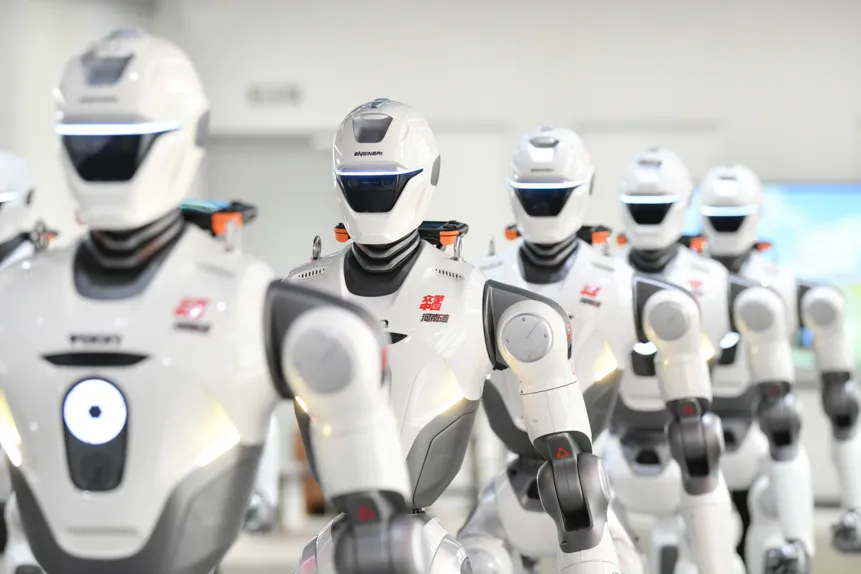
This can only illustrate the fact that the decision-makers have acknowledged in their minds a fact that they do not want to admit, that the next struggle for industrial dominance takes place at the intersection of the physical world and intelligence, and that China's display of costs and adaptability in this direction makes them dare not wait for the formation of a great empire.
After all, the U.S. market has seen a surge after the Djibouti region was placed on the Limits List.
Therefore, the nature of this round of regulation is preventive, not to deal with threats, but to prevent the emergence of threats.
04.
More expensive than losing the market
In the short term, the direct losses of the FCC rules are limited. The U.S. market is not a major source of revenue for most Chinese robotics companies, and stock models are fairly accurate.
It's the spillover effect that really needs to be taken care of.
The existence of an exemption mechanism means that the valve is essentially a filtering system for reliable suppliers. The FCC sets cards for all foreign robots first and then decides who gets conditional approval from the Department of Defense. Reuters quoted people with knowledge that most non-Chinese manufacturers are expected to be exempted.
Although only the U.S. does this today, the history of communication equipment and drones proves that the U.S. definition of security is overwhelming and that allies' standards are only a matter of time.
The CEO of Agility Robotics has openly supported robotics regulation legislation, admitting that he has a direct interest in the bill, saying that his humanoid robot Digit is the direct opponent of Chinese companies.
At this point, policies, capital and local enterprises have completed a closed cycle. The anxiety of commercial competition has been translated into a security narrative, and the security narrative has been written into the rules of market access.
Policies can shut down a market, but they can't shut down a physical law. The rate of conversion of physical intelligence has nothing to do with the frequency of list updates in Washington, depending on the density of movement data and mission feedback accumulated in real scenarios. Whoever has the largest scale of real scenarios has the rate of conversion; whoever has the rate of conversion defines the product's generation interval.
The U.S. gate is a door, and the way of Chinese robots, in factories, warehouses, hospitals, mines, in all the real scenes that are not covered by political narrative.
The door can be closed and the road won't disappear.