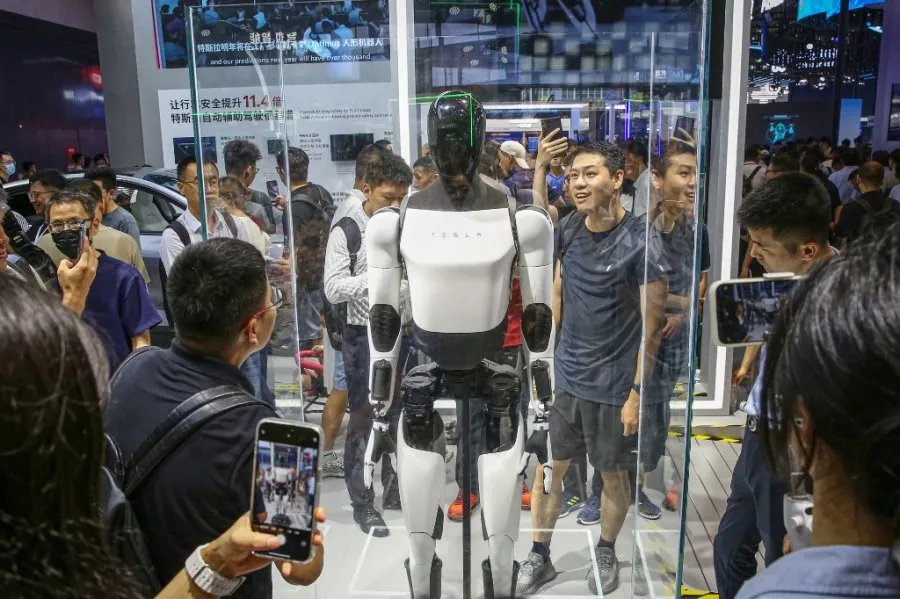
“ This is the latest in a long-running wave of money laundering and smuggling in the smuggling industry.
In October 2026, the Department of Electronic Engineering at Tsinghua University and the Intelligent Testing Laboratory of the Chinese Institute of Information and Communication released a report on the development of artificial intelligence (AI) in 2026.
This is the third year in a row after 2024, and the third year after 2025, that the Institute has released an annual report on physical intelligence. The report summarizes the state of the industry this year in one word: hot and cold.
On the one hand, the global warming of the supply of capital, policies and products in the first half of the year has resulted in a total of 322 billion yuan of domestic IT financing, which is about 93.5 billion yuan, a five-fold increase compared to the same period last year, and the new products released by the World Robot Congress increased from 123 to 311, while on the other hand, technology and landing are significantly lagging behind, and demonstration progress is not equal to the actual capacity of the production line.
If the lens is aimed at this type of robot, this cold-heat tear can be seen more clearly.
01.
Over 22,000 were shipped, where did these robots go?
The report shows that in the first half of 2026, global shipments of humanoid robots exceeded 220,000 units, an increase of almost 300% compared to the previous year. The five domestic automakers together accounted for more than 86% of shipments, and the global supply has shifted significantly to domestic ones.
Data shows that the structure of shipments in the first half of the year was: entertainers and academics accounted for more than 60% of the total, guides accounted for about 19%, intelligent manufacturing and storage logistics accounted for about 13% and 5%, respectively. That is, robots sold out, more than 60% went to exhibitions, shows, teaching and collecting data, and only 13% of the smart manufacturing that actually operates in the production line, even if 5% of the storage logistics is calculated, is less than 2%.
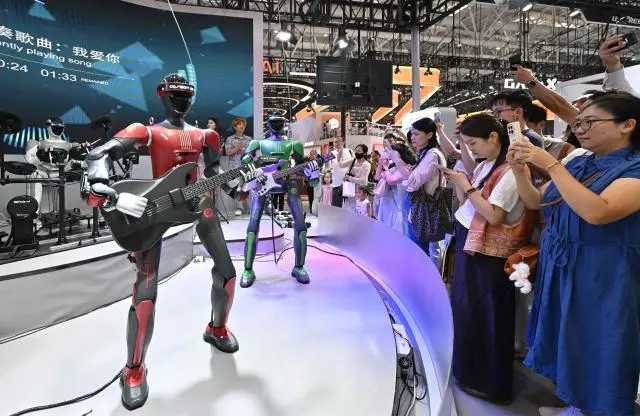
In 2026, the number of participants in the half marathon of humanoid robots in Beijing also increased from 20 to 102 in 2025, reducing the time to finish the championship from 2 hours 40 minutes 42 seconds a year ago to 50 minutes 26 seconds, less than a third of last year's time.
The second World Robot Games attracted 666 teams from 16 countries, with 2,056 robots on the podium, an increase of 138 percent over the first, and a doubling of the number of robots; the time to finish the 100 meters was cut from 21.50 seconds to 9.32 seconds.
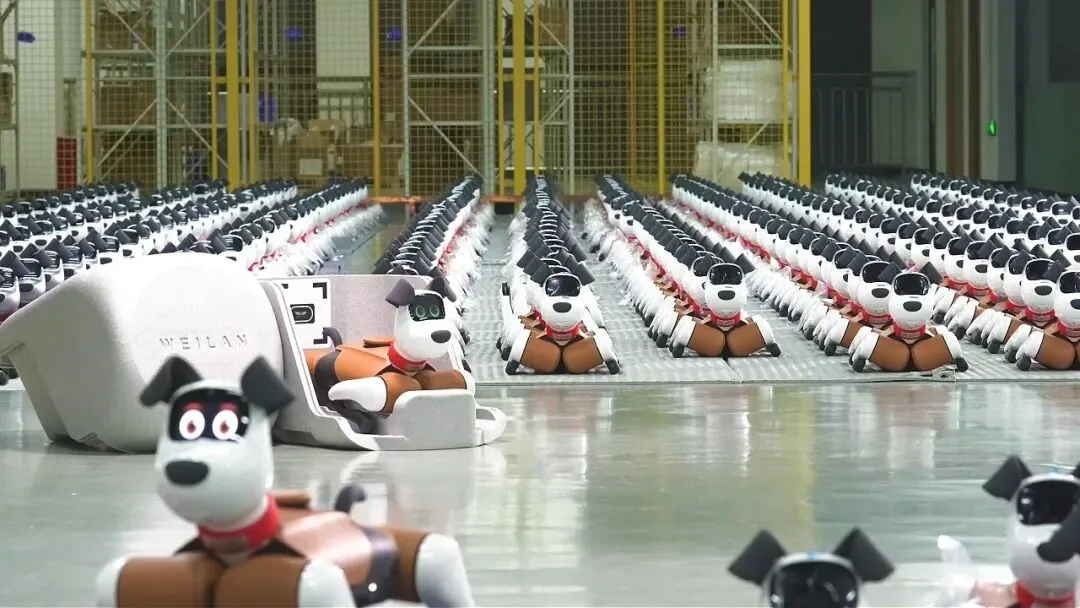
Consumer-grade products were the first to run out of real payments. BabyAlpha series consumer-grade machine dogs have cumulative sales of more than 25,000 units, with home users accounting for 90 percent; Vita Power Consumer-grade quadruped robots have completed 1260,000 large model interactions as of August, 23,700 kilometers of users accompanied by miles and 1315,000 hours of user companionship; in overseas markets, Cassio AI accompanied robot Moflin has cumulative global sales of more than 20,000 units, while the relaxed accompanied robot NICOBO has cumulative sales of more than 10,000 units.
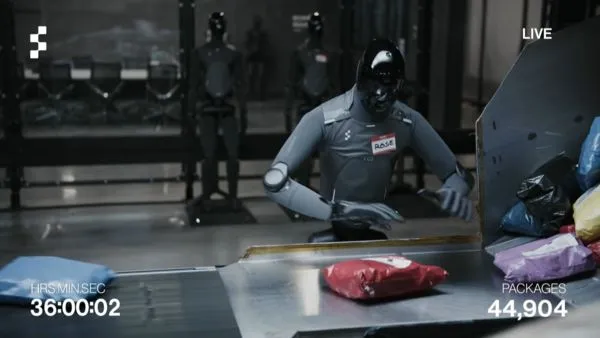
Verification of production scenarios is still being carried out on a small scale. Figure AI humanoid robot live parcel sorting, continuous operation of more than 200 hours, cumulative processing of about 2496,000 pieces; autonomous variable robot hourly parcel sorting 1816 pieces; Southern Electric Network based on electricity-sized model research and development of robots has been completed in Shenzhen, Guangzhou multiple power station trials, autonomously, switchboard inspection, infrared temperature measurement and other operations.
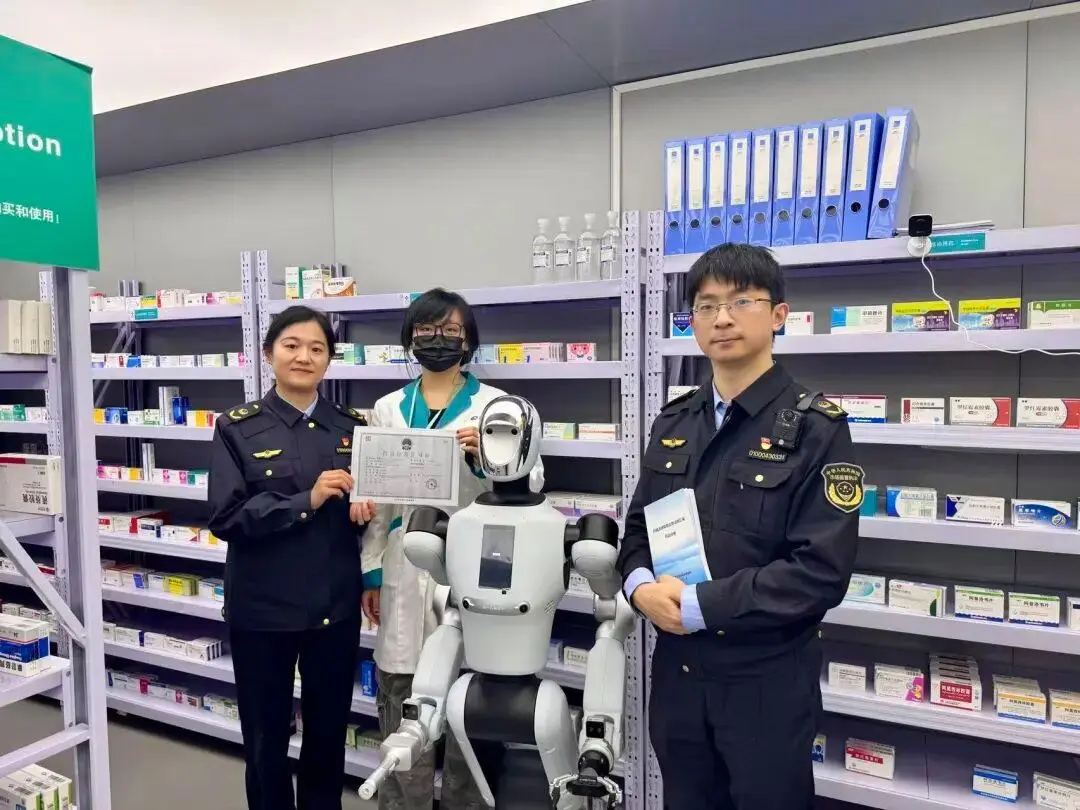
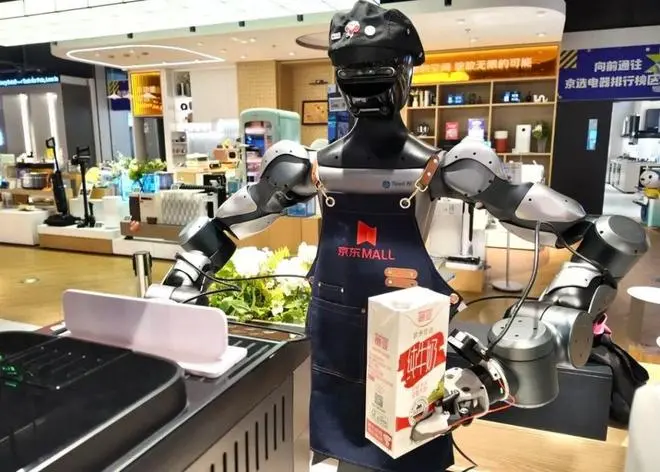
In the retail scene, the Galaxy General robot is responsible for listing, filling, removing and packing more than a dozen co-operative pharmacies in Beijing, processing 200 to 300 orders per day in a single store; the intelligent Moz robot serves as a coffee maker in stores under the JINGDONG MALL line. These cases prove that the robot can work, but single-point verification has to be replicated in multiple scenarios, economic stability remains difficult, and scope is limited to a few structured links.
The same bias can be seen from the procurement side. The report cited statistics showing that 55.5% of the publicly disclosed projects with physical intelligence and humanoid robots in the first half of the year were in education and research institutions, 20.6% were in government and public platforms, and 21.1% were in industrial and technological enterprises.
And these public orders are a mixture of formal procurement orders, framework agreements, strategic cooperation, intent orders, and policy and demonstrative procurement framework agreements, which often only agree on the number of procurements without cooperation intentions, demonstrative procurement band assignment attributes rather than market behaviour, and are not directly equivalent to real business needs.
02.
From 100,000 to a million hours of data, the success rate is only eight points.
One of the roots is that the model has not yet crossed the capability threshold, while the ceiling of the model's capability rests on the data.
Most domestic enterprises are still focused on replicating and fine-tuning earlier open models such as π0,π0.5 and OpenVLA, which are based on about two generations of backward front-end closed-source models with a gap between industry availability and front-end levels.
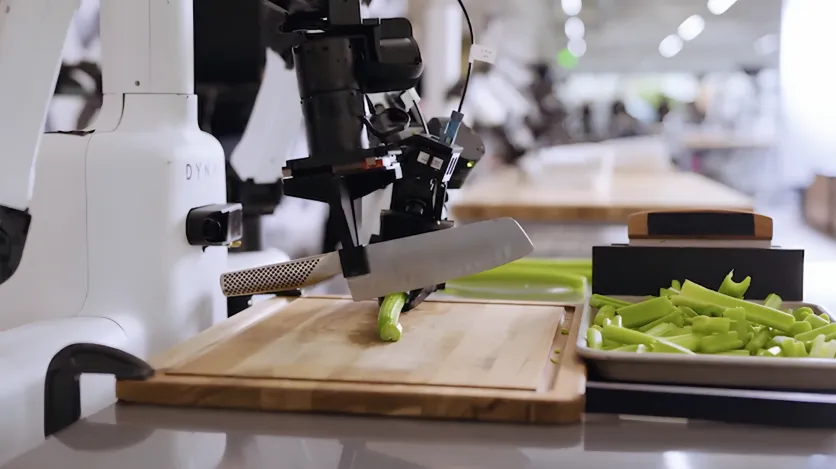
Data efficiency is low, directly limiting the upper limit of the model's capabilities. The Dyna-2 model was released in August 2026, discussing the law of expansion for the first time at the million-hour data scale. The results showed that the average success rate on 14 self-built task sets increased from just 45 percent to 53 percent after pre-training data increased from 100,000 hours to a million hours. While most models in the country remained within 100,000 hours of the data, and the front-end level remained at about a numerical level.
The data gap itself is also large. The report cites external measurements, in order to achieve the robot "ChatGPT moment", models require tens of millions of hours of effective data. But the multi-modal interaction data required by physical intelligence has never been systematically recorded and cannot be directly accessed from the Internet and can only be produced from scratch.
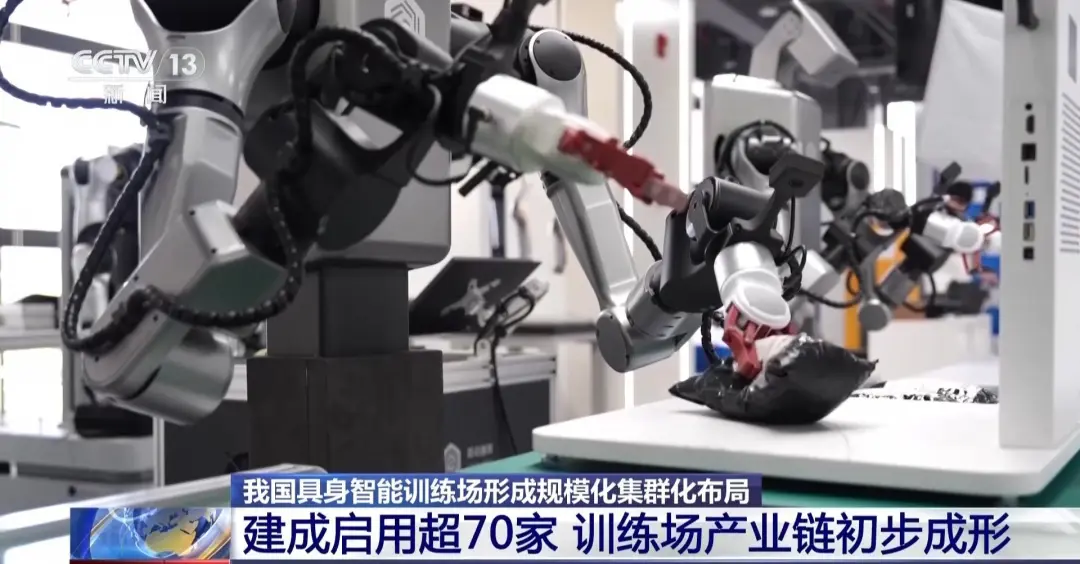
To fill the gap, dozens of companies across the country have entered the path of physical data, with 97 financing incidents involving 34 companies in the past year, revealing over $20 billion; by the end of June 2026, more than 70 physical intelligence training sites had been set up nationwide, covering more than half of the provinces.
In data engineering, robot data is naturally heterogeneous, coming from different entities, different tasks and different collectors, and the mixing directly affects the training results, with a 77.3% success rate with only Open X-Embodiment data under the Unified Endpoint Execution Coordinates system, whereas mixing heterogeneous real robot data decreases to 73.8%.
In training engineering, there is no stable correlation between the decrease in model pre-training losses and the actual success rate of the task. In systems engineering, the movement instructions produced by the model are strongly bound to the body, and deployment to the robot usually involves one-by-one handling of the skills of connecting, labeling, contact force control and fault recovery.
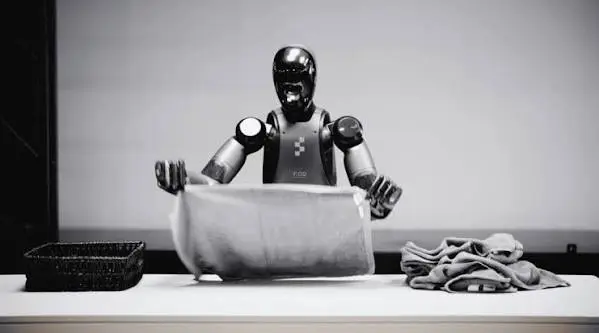
Even when the data is complete, the deployment threshold is still high. There is still a clear shortcut to model generalization capabilities, work rhythms, continuous operation and fault recovery, which can be sorted, moved, loaded, overlapped and grabbed in limited environments, but with a lot of ability dependent on fixed locations, pre-built maps, limited materials or man-made takeovers. The best basic models for performing complex tasks still generally require targeted data retrieval, fine-tuning. Landing patterns essentially do not jump off the path of traditional robots "every scene, every task repeat".
03.
The rents fell from 20,000 to 1,000 yuan a day, and show business is still booming.
The low threshold scenario was first felt cold, and prices were the most direct signal, but the fall was not the overall sales price, but rather the rental price and second-hand residual value.
The daily rent for human-robot performing leases has dropped from about 20,000 yuan in early 2025, to the thousand yuan level in 2026, falling 8 to 90 percent. In the second hand market, part of 2024 to 2025 purchased old engineering samples worth 300,000 to 800,000 yuan, and the second hand sector has fallen to 30,000 to 60,000 yuan in 2026, and the deficit contracted by nearly 90 percent.
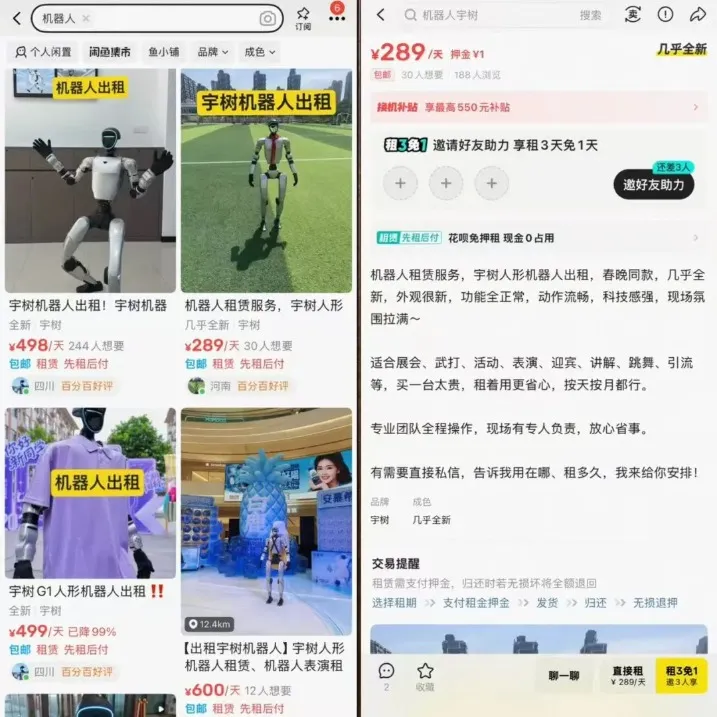
Prices have collapsed so quickly because supply is stagnant, demand is limited. The task at hand at this stage is still mainly focused on small standardized or semi-structured processes such as packaging and parts sorting, packaging transportation, unloading, overloading, quality inspection and inspection, with companies crowding out competitors for similar customers and similar jobs.
The early business model that relied on the scarcity of equipment to showcase and showcase "fast money" is rapidly failing. The report clarifies the profits of such low-threshold markets, leaving behind tested technology, capacity and supply chains as a signal that the industry is returning to rationality.
04.
In the first half of the year, the company generated $316 million in revenue and lost $108 million, and why is it still not profitable?
Rents and second-hand prices have dropped, but landing costs have not, which is the structural reason for most businesses to increase revenue and not increase profits.
In the first half of 2026, Vietnam TECH's operating income was 316 million yuan, an increase of 106.6%, but net losses expanded to 108 million yuan, an increase of 163.8%. The revenue is still mainly from traditional collaborative robotics business, with physical intelligence business not yet profitable.
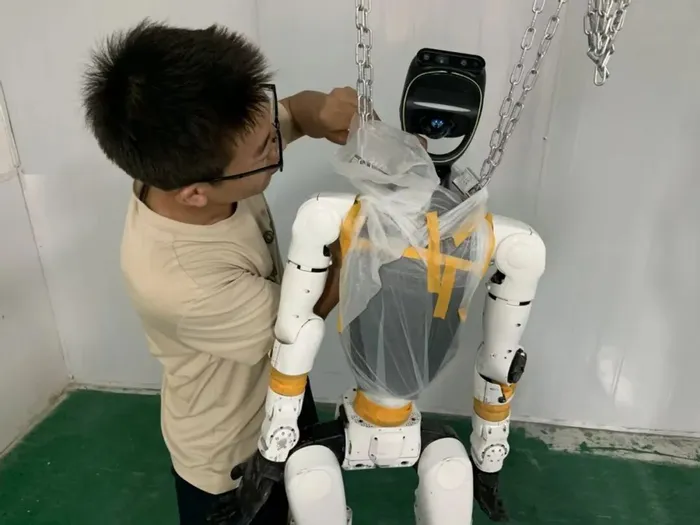
The cost structure is rigid. Single-arm or two-legged humanoid robots cost around 500,000 to 700,000 yuan a year for overall maintenance, which is higher than the cost of manpower for most jobs. The cost of the whole machine may only account for 40% to 60% of the total cost of ownership, with the remainder being scene modification, system integration, data collection and model training, operator configuration and failure stop loss.
Revenues began to be distributed at different locations, but most locations were not profitable. The data locations were closed first, and the UMI Robot Data Supermarket collected real-world data for 100 items sold as a single product, with individual products selling for hundreds of dollars, and remote-operated real-machine data for hundreds to thousands of dollars.
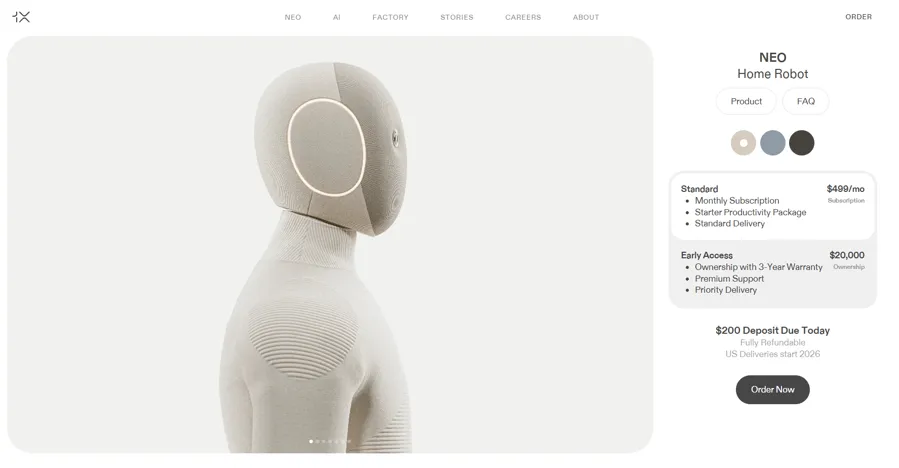
The core link is a dual-track parallel to vending and leasing of integrated circuits, with 1X's NEO offering a $499-a-month inpatient program and a 3-hour, $149-a-hour smart cleaning service with 58 cities in Shenzhen. The report concludes that the majority of the industrial chain is in a "growth-established, profit-unestablished" exploratory phase, with a mature closed loop not yet formed.
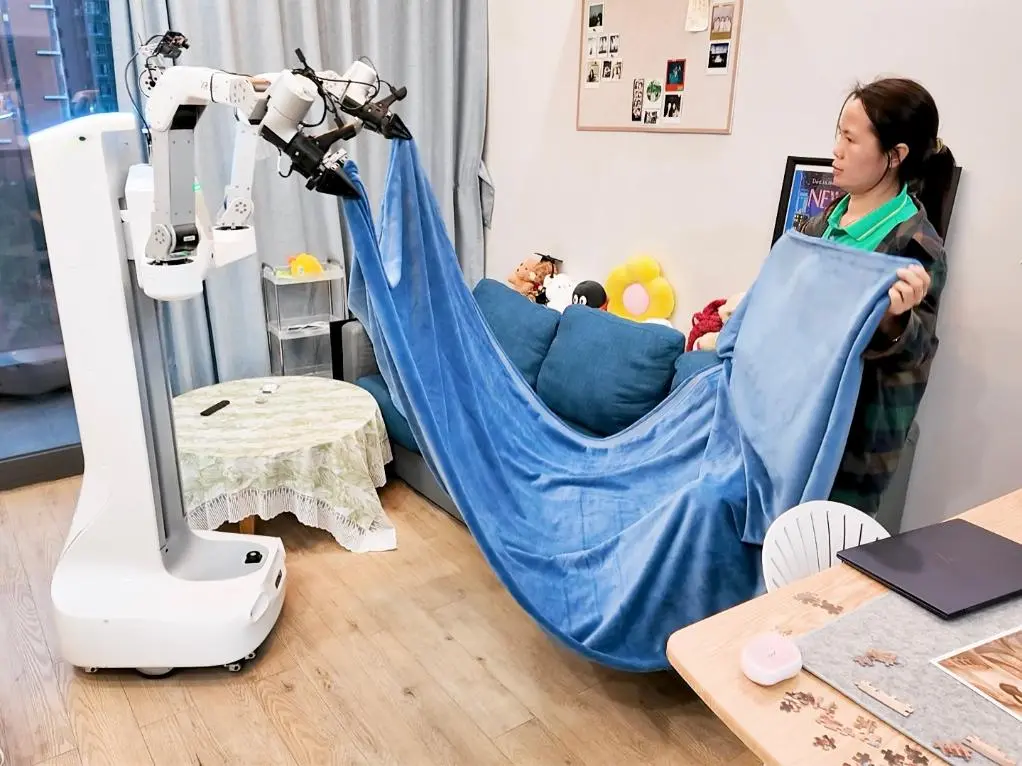
In July 2024, Uber entered the Walker S series for the first time in an automotive factory internship, and by March 2025, it will take one to two years for the first multiple, multi-scenes, multi-tasking collaboration training to truly realize industrial production capacity.
Responsibility and risk are also lacking, and if human robots cause personal or property damage, enterprises may face civil damages, product recalls and administrative fines at the same time. In July 2026, the first single-person robot application insurance was launched in Ningbo.
05.
In the next two to three years, industrial washing will officially begin.
Cold-heat separation is changing from anticipated to operational reality, and shutdowns have already occurred in individual cases.
The report concludes that industry rebranding has begun, and that the next two to three years will see companies and models that lack real value eliminated through market competition, completing the first round of industry clearance.
The hard-tech industry was accompanied by a phased bubble from phase 0 to phase 1, and the Internet bubble 2000 years ago propelled the construction of broadband networks and data centers, and after the new energy automotive industry experienced capacity expansion and bubble squeezing from 2015 to 2018, the entire electric vehicle industry chain is sinking.
The policy edge is also pushing the industry in the direction of "working". The "real-world training special action" mentioned in the report suggests that by the end of the year, robots will move from "demonstration" to a normalized "working model" and land above 10,000 devices. The competitive logic of the individual enterprises is also changing, the industry will move from "spelling numbers" to "reality skills", and the core indicators for the next two to three years will gradually shift from "robots can't move" to "robots can't do real work stably".
By the end of this year, whether robots are actually in the showroom or actually in the production line, this hard indicator of "over 1,000 devices" will give some of the answer. The real thing that will be left are the companies that solve the problem of generalization, reliability, cost and data closure at the same time.
Sources: Report on the development of artificial intelligence in hardware and software (2026), Institute of Artificial Intelligence of the Institute of Information and Communication of China, Department of Electronic Engineering of Tsinghua University, Laboratory for testing physical intelligence in October 2026.