
“ The pace of the race, which has been almost silent for a decade, has changed from "by the number of years" to "by the number of months".
In the autumn of 2026, the "Global Explosion List of Domestic Underwater Robots" hit the spotlight.
Look at the two sets of figures. In the decade from 2015 to 2025, the total number of publicly disclosed investments in the underwater robot industry in China was less than 30 and the highest in 2016 was only 5. In the context of hard technology, this frequency is almost equal to no capital participation.
In the first nine months of 2026, the maritime economy sector has completed 123 financing projects, bringing the total to 125 in 2025, according to CVSource's projections. Since 2020, there have been 735, of which about 69% have taken place in rounds A and above, with seed and angel rounds totaling 178 rounds.
01.
In the last six months, the financial records have been brushed three times
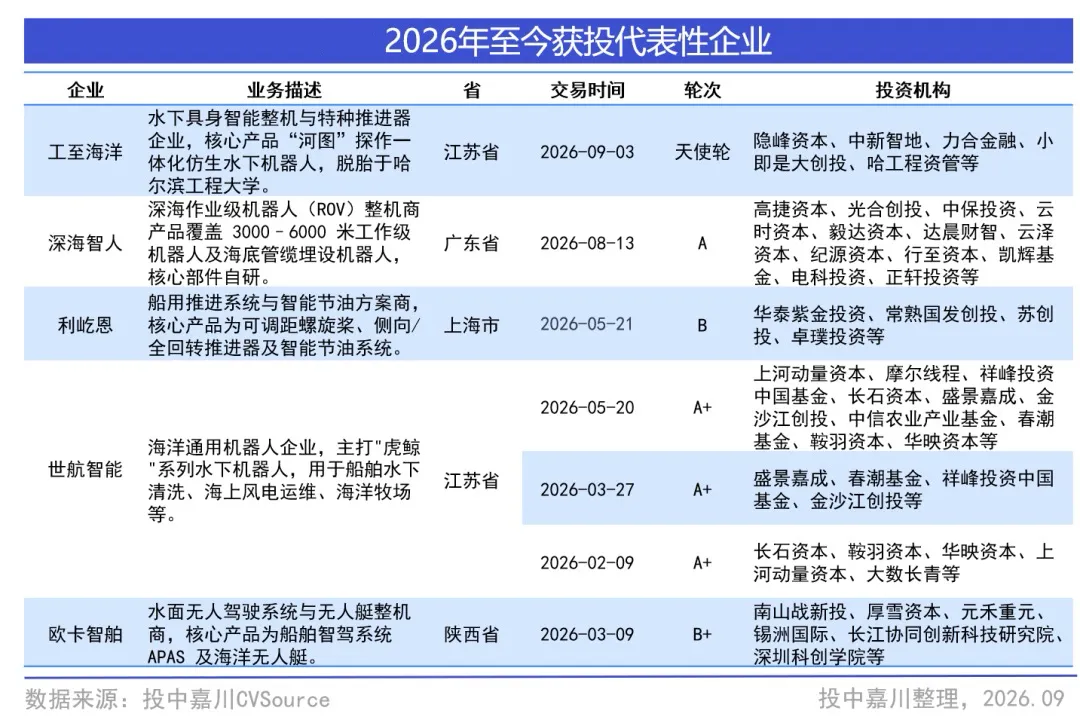
The density of underwater robot financing in 2026 is concentrated in several of the top companies.
In June, Samsung Smart completed its round of A-finance of over 1 billion yuan, renewing its global single-cycle financing record for marine robots, with investors including Upstream Dynamics Fund, Temassee's Vertex Growth, Shenzhen Capital, Kinshasa Capital, and others on the list.
In August, Shenzhen completed over 500 million yuan A round, setting the record for the highest domestic A round of deep-sea robots. This round of structure is quite rare: co-investment, Da Morning Finance, record capital, the four leading venture capital firms in Shenzhen for the first time; China Securities Investment and China Electric Investment, two major state-owned venture capital partnerships; Doal Energy Science and Technology Fund, which is managed by Kaizen Fund; marketed venture capital investments in National Team Wars, and foreign investment in industrial capital, increased in the same project.
In September, after just two years of work to the sea with almost a billion yuan angel wheels, the volume of the deep sea equipped angel wheels directly doubled.
Other nodes in the same period include: Shandong Future Robot completed hundreds of millions of yuan A round in August 2025 by China Petroleum's Kunming Capital Strategic Consolidation, China Gold Capital, with the participation of GDF, and another hundreds of millions of yuan B round in January 2026, with the construction of funds, central core pooling, and network investment portfolios; potential innovation completed nearly billions of yuan C round in March 2026, with the completion of C+ round in August 2026, with the rapid addition of C+ round in August 2026, with the acquisition of China Internet Investment Fund by China Gold Capital, with the participation of China GDF in January 2026, with the acquisition of China Internet Investment Fund, the country's leading industrial investment fund in the field of Internet trust; the Blue Line launched its IPO on December 26, 2025, with the announcement that the IPO had been suspended in March 2016 due to financial difficulties; and the resumption of the acquisition of Chinese Internet Investments Fund by China after a brief update of its share book on January 27, 2026.
The water direction is also accelerating, and it offers a different sample than underwater. In March 2026, the company completed nearly 200 million yuan of B+ rounds, considered the largest single-scale financing of a domestic water-level self-driving track; in July, the C-Round was completed, with a combined annual financing of nearly 300 million yuan. The company, founded in Xi'an in 2017, was founded by Xu Jinping, Ph.D. from Northwestern Industrial University, and the seed investor was the Dong Dongsan Lake International Robotics Institute.
It is worth mentioning that it is not due to funding, but that large-scale operations have already taken place: the self-developed ORCA-APAS unmanned aerial vehicle fleet, supported by an autonomous navigation system, has been deployed in 75 cities across the country, in more than 130 bodies of water, and operates at a scale of 1,000 ships, with a cumulative unmanned navigation distance of more than two million kilometers.
The signals on the policy side are clear. The 2025 government work report for the first time has written "Deep Sea Technology", along with the commercial space, low-space economy; "155" plans to align the ocean economy with a single chapter, the deep sea and the polar regions are listed as strategic directions; the 2026 government work report lists intelligent robots as one of the six emerging pillars of the industry, while marine-type intelligent robots are already its underwater and surface branches.
02.
Business models are more important than the amount of funding
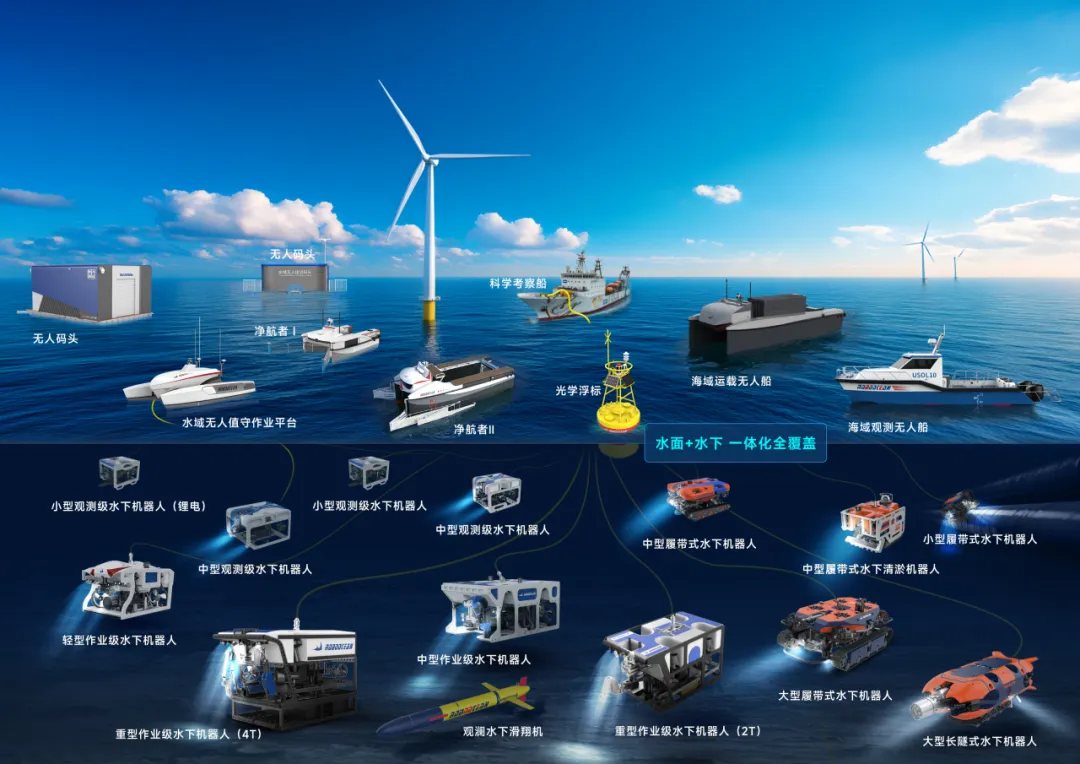
According to publicly available orders and operational data, the industry has formed several representative manufacturers, but they are not competing on the same track. The order size of Boya Industries 2025 is about 710 million yuan, of which over 500 million yuan are open-source projects such as the South China Sea Observatory Network, and it has been profitable for many years. This is quite rare in the underwater robotics circuit, which is generally at a loss. The company's technology is derived from Beijing University's Intelligent Simulation Design Laboratory, where the founder is Dr. Beam Mining of the Northeastern University of Technology, and the first product is the simulation machine fish BIKI, which was later awarded a new prize at CES. The product line has now expanded to twenty pieces, accumulating over 300 national patent services.
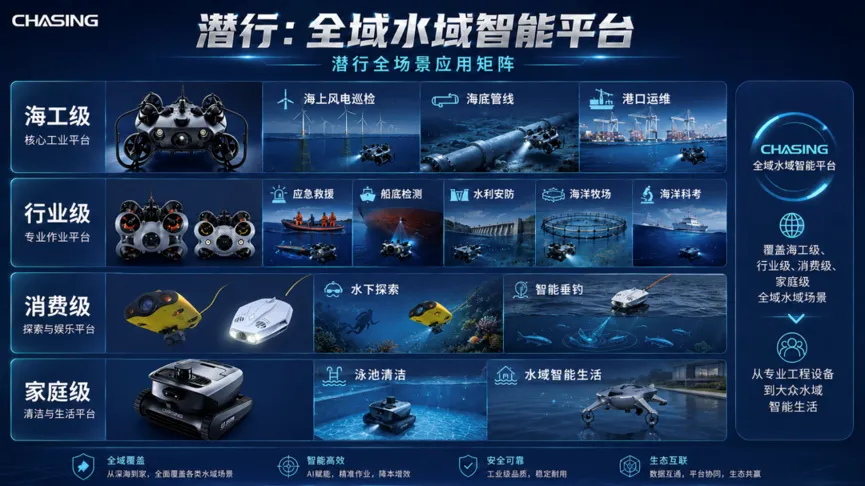
Deep Blue is another path. It was founded in 2013, with a cumulative financing of over 1.3 billion yuan, revenue of 355 million yuan, growth of 41.7% in 2025, gross domestic net profit of 10.15 million yuan, loss of 85%, and sales of products to more than 70 countries. Its structural peculiarity lies in the complementation of consumer and industrial levels: Sublue brand underwater boosters account for about 60% of the global share, consumer products have a cumulative shipment of about 150,000 units, gross profit of more than 50%, and use high frequency consumer cash flow to counter low frequency ROV, AUV, water-slifting machine development. In this respect, it is quite the opposite of the path of Jiangsu.
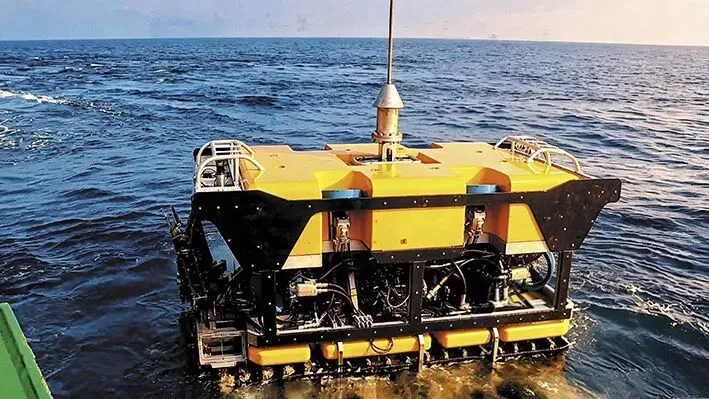
Shandong's future robot is a typical division champion. Its predecessor dates back to 2005, with a market share of roughly 60% in the deep sea padding cable ROV market, with orders ordered by the following year. The 1500-meter padding robot operating system and core subsystems achieved 100% domestic production, over 50 product models, a maximum submersible depth of 6,000 meters, sales to more than 30 countries, peak overseas orders reached 70%.
Submarine Innovation represents standardized products overseas. Founded in 2016 and based on Shenzhen's smart hardware supply chain, overseas business accounts for more than 85% of the long-term, covering more than 100 countries and regions, continued profitability, gross margin of about 45% since 2019, revenue of about N$192 million in 2025.
Established in 2023, and cutting in from body cleaning, the "Tiger" series compresses the original two-week workday to 10 hours, 50 times more efficient than man-made, in a survey by Fujian Shipping Group. The company disclosed orders of more than 1 billion yuan in the first half of 2026.
It must be emphasized here: public intermediaries, formal contracts, framework agreements, equipment deliveries and service intentions are completely different in terms of certainty, revenue confirmation and delivery cycles, statistical years are not consistent with quality, and should not be merely summarized or absolute ranking. There are significant qualitative differences between first-half orders disclosed by some companies and public intermediaries in 2025, which may include market compounds, framework agreements, cross-year orders and service reserves using different statistical methods.
For this specific scenario, verifiable indicators should include changes in ship's oil consumption before and after cleaning, equipment reliability and operational efficiency, cross-port service network coverage, waste recycling and environmental compliance levels. The congestion of the corridor has begun to be reflected in the price: By the end of 2025, the number of enterprises that have achieved China-class ship cleaning robot certification has grown by almost 90 percent compared to 2024, and the number of companies that have sold US$201 million worth of underwater machine washing vessels in the global market, according to YResearch.
03.
From 85% to 20% below: where has nationalisation gone?
If we only talk about financing, we will miss the most substantial changes in the industry in the last eight years.
In 2018, domestic underwater robot core component import dependence was up to 85%, with more than 90% of advanced systems and nearly 80% of high-precision sensors. By 2025, this figure has dropped to less than 20%.
In 2016, at a domestic exhibition, he wanted to see a small foreign robot of about a meter, and was stopped by staff, telling them "Chinese are not allowed to touch". He judged that the equipment had a limited technical content, so he translated it: less than three years, this stuff filled the streets. Less than three years later, mass production of these products was achieved at home.
To build a 3,500-metre floating operating robot, the difficulty lies in the 3000-metre level of pressure resistance, long-distance transmission and communication, tens of thousands of parts. They set up 22 groups of software, hardware, hydraulics, high-pressure electricity and other projects one by one, conducted tens of thousands of experiments, and a year later delivered a deep-sea robot weighing 4 tons, 150 horsepower.
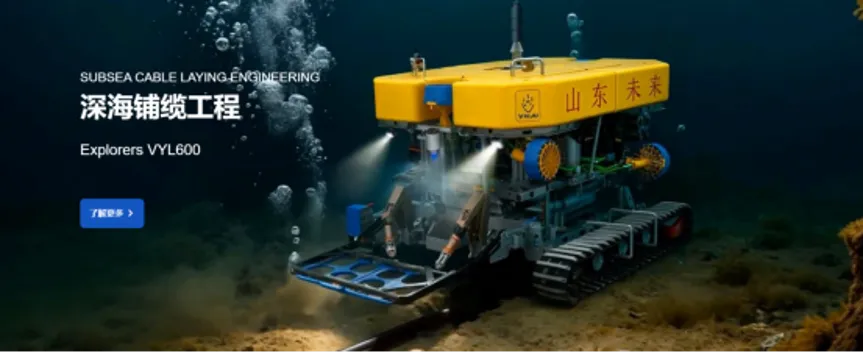
In the summer of 2025, it defeated the United Kingdom, the Netherlands, and Norway, which took orders from the UAE Telecommunications Group, delivering a single machine worth nearly 10 million dollars, a 13.5-tonne 3000-metre "Tony 600" deep sea cable operating robot, achieving China's first commercialized export of deep sea robots. In October of the same year, customers purchased their first retrospective purchase of core components other than sensors and audio sensors. The company developed its own core components, with core parts producing up to 90% of the country, covering electrical liquid servo control, optical fiber multiplexing, optical and magnetic transmission components.
Changsha's state-of-the-art state-of-the-art technology provides another reference: a seven-tonne domestic first-generation robot (ROV) that rewrite the history of China's deep-sea soft mud, reef-bound floating machines.
It has a maximum depth of 6,000 meters, a total domestic production rate of 100% and can operate continuously for 48 days under the sea, traveling more than 200 km with zero failures, while its processing and support enterprises are all located in the Yangtze region, with more than 60% of R&D personnel.
But the rest of the list is equally clear. In the field of high-end synthetic porosity acoustics, Teledyne in the United States and Kongsberg in Norway together account for about 85% of the global share; strategic fiber gyroscopic fiber has about 40% of the import dependence; high-end deep-sea hydraulic connectors are still 60% and 80% dependent on imports; deep-sea wireless audio communication chips are also dependent. One high-end ROV, more than half of the cost is spent on imported components. The barriers to accumulation of credentials and global service networks such as Oceanering, Kongsberg, Saab Seaeye, TechnipFMC remain strong for decades.
As a result, upstream prices began to be priced separately. The company completed the B-Round, financed mainly by domestic high-end underwater instrument replacement; even Cloud Port Power Ship Technology focused on large ships' integrated power propulsion systems, establishing orders in excess of 50 million yuan in just six months. The core components accounted for more than half of the total cost of the machine, and the profit rate was higher than the total, and the logic of "selling seafarers" was being rediscovered, regardless of which scenario the downstream would take advantage of.
04.
The real difference: the big models underwater, and who operates the machines.
The sexiest story on the track is that the ocean is physically intelligent.
On April 25, 2026, Samsung Smart released its ocean-sized model, SEACEORION, based on millions of hours of commercial operational data training, which uses a single end-to-end architecture, covering 12 major underwater operational scenarios such as patrol, detection, cleaning, and seizure, with mission success rates in simulation tests and precise positioning seizure success rates exceeding 90 percent. In May 2026, Deep Sea Smart released the multi-task decision-making model SEAgent 1.0, aimed at the transition from artificial remote control to human-powered.
Questions are also specific. Electromagnetic signals underwater decline dramatically, real-time cloud synchronization is almost impossible, the brain and brain have to be embedded in the body, while underwater robots have limited power and computational space; underwater scenarios vary greatly, and one scene's data is difficult to migrate; current public success rates mostly come from simulation, whereas real-world low light, high-density, complex ocean currents and high-pressure corrosion are difficult to replicate fully. Sim-to-Real itself is an unprecedented dilemma.
Another bottleneck that has been underestimated is people. The head of the Shenzhen City Marine Development Office has noted that underwater robotics operators, maintenance engineers, and research and development positions such as underwater positioning, vision, are in great demand for complex talent who both understand robotics and are familiar with the marine landscape, while there are hardly any mature people on the market. The head of HR at Shenzhen Source Technology said directly: It's more about migrating people with relevant backgrounds to marine operations.
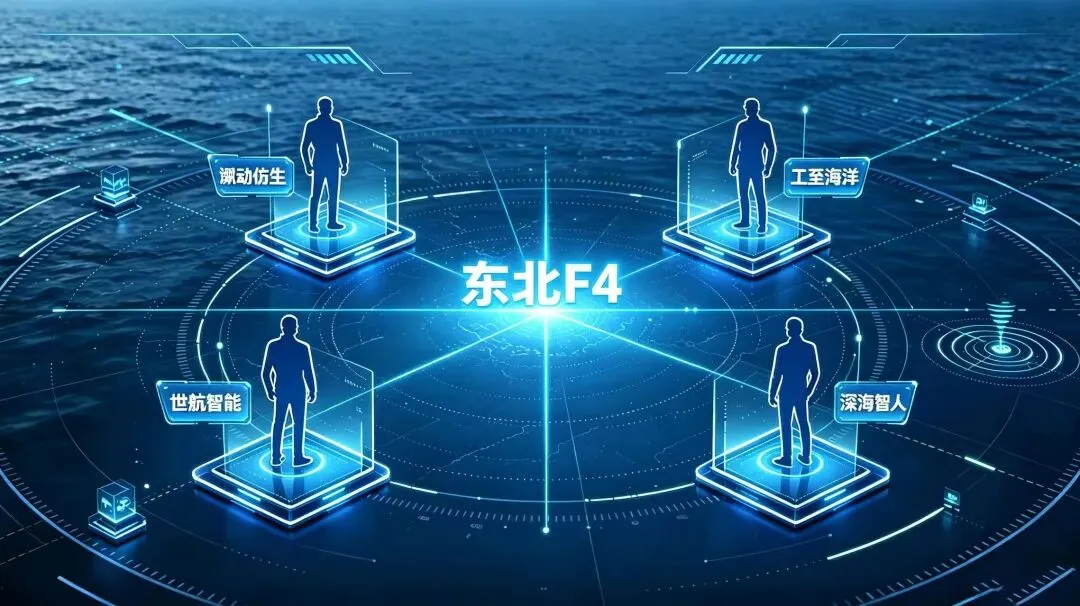
The other side of the talent supply is precisely what explains the technological source of the outbreak. Several of the newest core players are highly focused on the Northeastern technological system: Huawei Intelligent Chen Xiaobo, Shenzhen Intelligent Man Ma Mi-young, Industrial to Marine Guo Chunhua, both from the University of Engineering in Harbin.
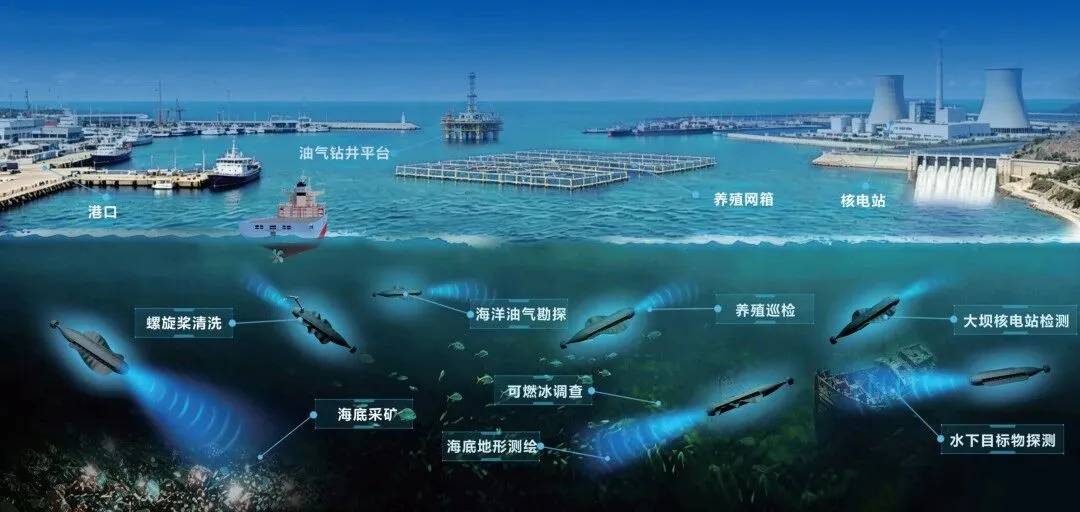
Guo Chun Huang is a national geochemist, and the team is exempt from the Ha Engineering Ship Promotion Performance Subject Group, whose "Hea Chart" explores the integration of underwater robots using flexible fluid simulation and vector jet propulsion, with a maximum operating water depth of 1,000 meters, has completed deep sea practical tests, intended for orders in excess of 160 million yuan; in the aquarium inspection scenario, it presses a single synthesis book from about 5 million yuan to 700,000 yuan, the cycle is shortened from 6 months to 20 tons and there are about 940,000 aquariums nationwide.
These numbers point to the industry's true underlying support: demand is rigid. Globally, the effective hours of operation of seamen and divers with internationally recognized qualifications at depths of 200 meters are only about 10 minutes, 300 meters is the physiological limit, and domestic rescue divers are only 300 to 500. Global average annual undersea cable failures exceed 200 times, traditional man-made maintenance costs up to $5 million, and robotic programs can be reduced by more than a quarter.
The market size is also being recalculated. According to the consultant, the size of China's underwater robotics industry is 16.76 billion yuan in 2024, an increase of 18.3% and a compound growth rate of 29.7% over the past decade; ICV Tank expects the global market to grow from $9.4 billion in 2024 to over $60 billion in 2030, CAGR 36.3% and China from $1.4 billion to $14 billion. More remarkable structural changes are: China has shifted from net imports of underwater robots to net exports in 2025, with exports of $630 million flowing mainly to Southeast Asia, the Middle East and Africa; Chinese companies have increased their share in the light operations and observation models market from 18% in 2020 to 27% in 2025.
But deep water heavy operations are still firmly held by Europe and the US, accounting for about 56% of the world's top five enterprises. This is why it is still necessary to be clear in a "bomb bill": the flow of funds is extremely uneven, most of the money is squeezed in the shallow trough that can account for, and the breakthrough of deep-sea core technology requires another kind of patience.
Financing density is the easiest to observe and the easiest to overestimate indicator. It records the speed at which capital is judged, not the maturity of the industry. The next two years need to be tracked: how long a single unit of equipment operates effectively in real-world waters, how the framework agreement translates into the ratio of formal contracts to reimbursements, the rate of customer repurchase. The first can be driven by policy, subsidies or willingness to experiment, and the second depends only on whether the equipment is actually working.