If we look at physical intelligence as a developmental game, the 2026 version update will focus on "growth systems".
This year, the model of the world continues to evolve, allowing robots to preview and explore the future in a virtual environment; RSI (returning to self-improvement) research is also increasingly active, trying to turn success in interaction into a learning experience.
From the point of view of video skills, to repetitive hands-on practice in virtual environments, and to continuing to accumulate experience in real-world workplaces, the "practice level" of robots is increasingly rich, and a path of growth through pre-training, post-training and post-deployment is becoming clearer.
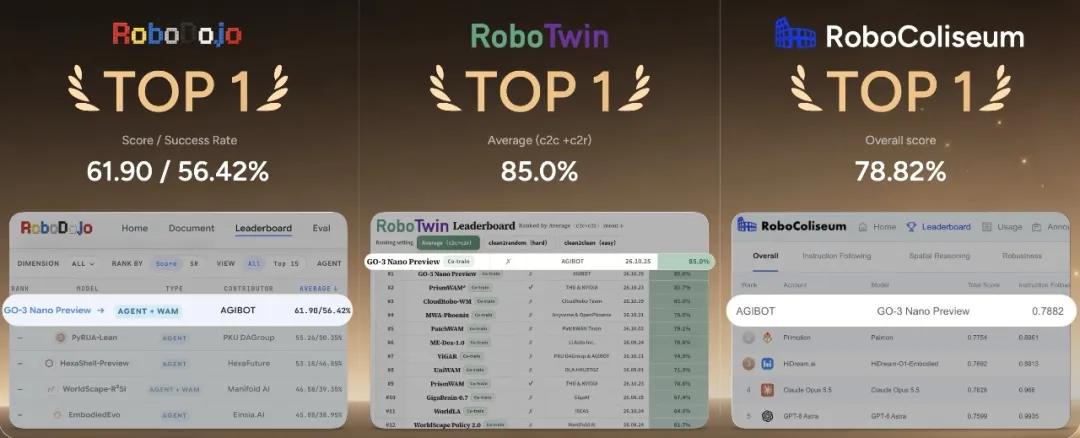
On 29 October, Jiang officially released GO-3 Preview, a physical model of pre-training, post-training, and post-deployment complete chain-scale chemistry learning, taking RoboDojo, RoboTwin, and RoboColiseum as the top three authority ratings.
From GO-1's ViLLA architecture, GO-2's "action thinking chain", to the full-link-scale chemistry learning of GO-3 Preview, Chiu is extending learning about body models to a more complete robotic lifecycle.
This time around, Chiu wants to open up the whole process of robot growth from learning skills, repetitive exercises to real upbringing.
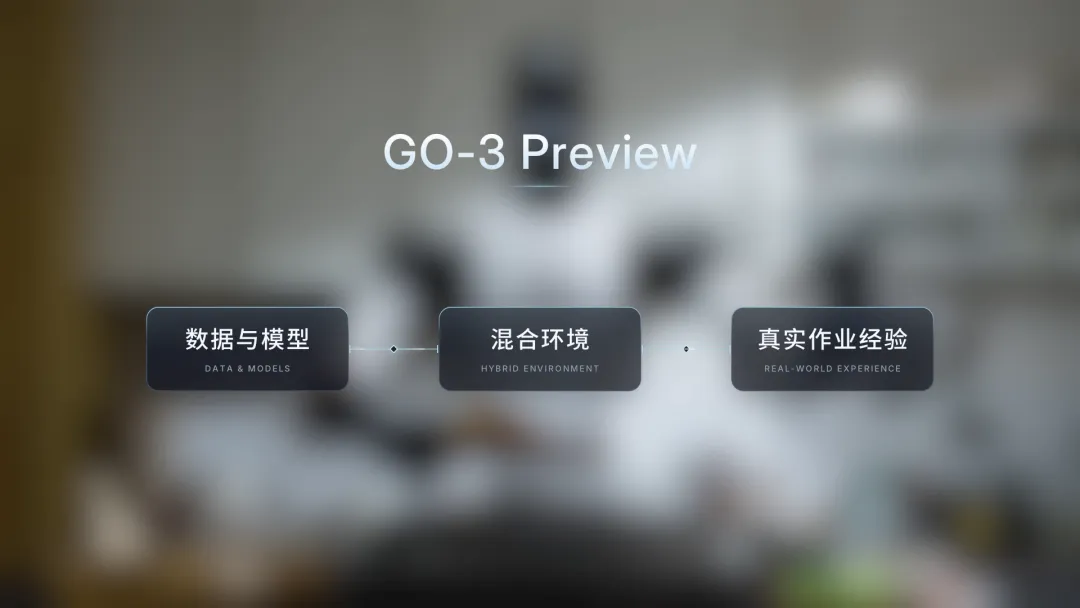
How do robots "upgrade" step by step along this path?
How do robots brush videos, how do they brush skill points?
Browsing videos has become an important way for robots to learn human skills. About 90 percent of pre-training data from GO-3 Preview comes from a human first point of view, covering a broader range of scenarios and skills than demonstrated by robots.
But understanding how humans operate does not mean that robots can do it. The linkage between human posture and robot control, the trajectory of the end-user, is not directly interacting with each other, and robots need to learn how to adapt the observed operating experience to their own actions.
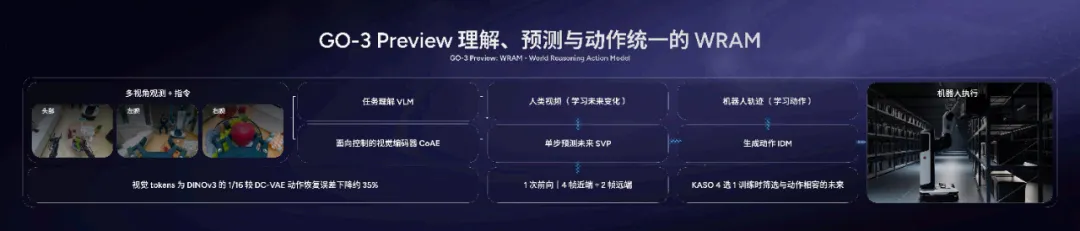
For this purpose, GO-3 Preview uses the native WRAM (World Reasoning Action Model) architecture to synchronize task understanding, future state prediction and action generation, allowing robots to both predict how physical states change and learn the actions needed to implement these changes.
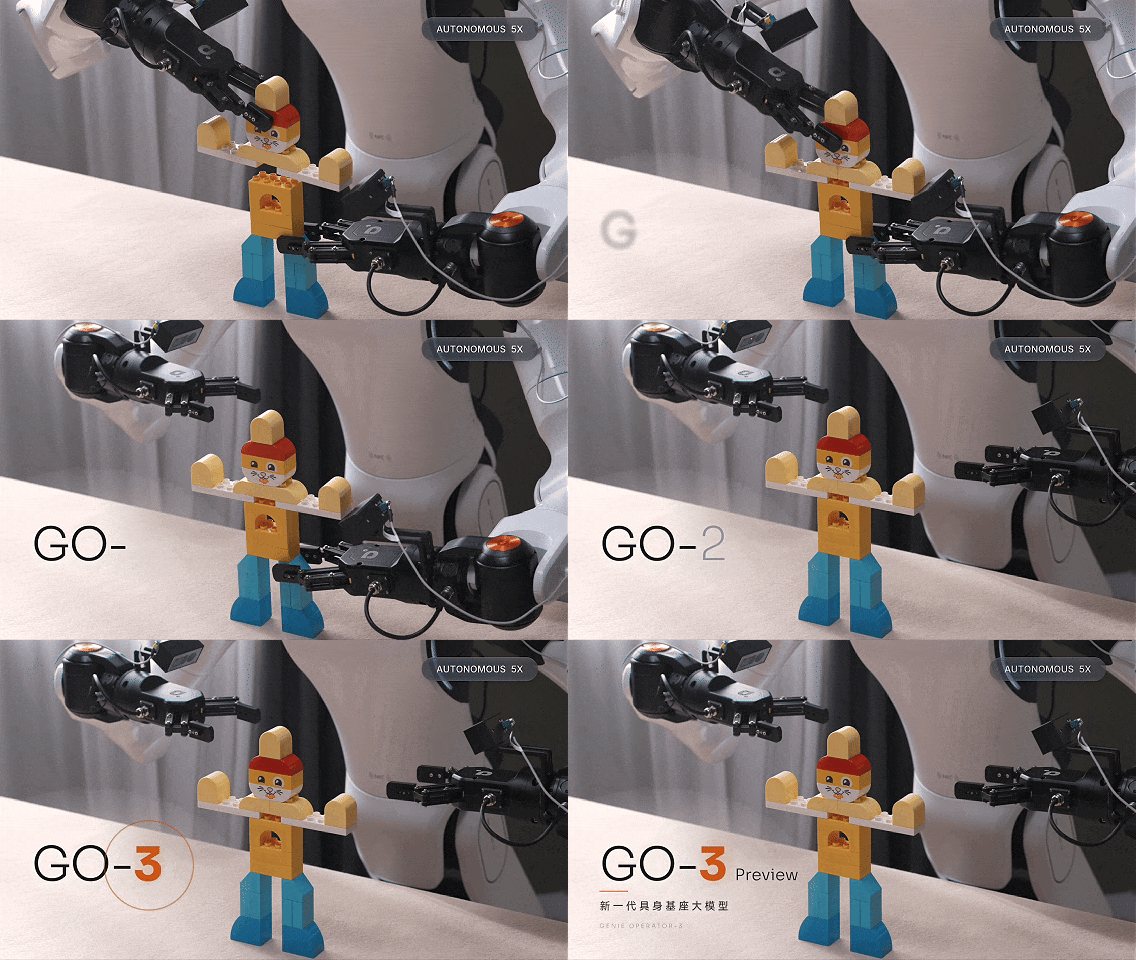
For example, in the Lego setup, robots not only recognize the spatial relationship between the parts and the slots, determine the target position and gesture of the parts, but also control the mechanical arm to complete the grip, alignment and insertion, handling the ever-changing contact relationship.
WRAM gives this process to multiple modules that work together.
The first is CoAE, a controlled visual representation module. It is responsible for extracting operational information such as the position, shape and relationship of objects from the camera's image, while simultaneously ensuring the abundance of visual information and real-time reasoning efficiency.
If you have a present scenario, then you can predict the future.
SVP (single-step vision planner) converts the prediction into executable action by predicting the visual state of several future moments on the basis of current observations and mission conditions, computed forward, and combined with the robot's own state by an inversion dynamics model.
As a result, human video and robot trajectories play their respective roles: the former helps models learn how physical states change, and the latter provides training information from state changes to motion controls.
However, there is a problem with predicting the future: there may be multiple reasonable ways to accomplish the same task.
For example, by placing the cup in a designated position, the robot can either approach from the left or grab from the right. Different operating paths can achieve the same goal, so the predicted future state of the model also needs to be correlated with actual action learning.
KASO (Knowledge Matching Selective Optimization) was designed for this purpose. It evaluates the compatibility of predicted outcomes with actual action by generating multiple candidate futures, selecting more appropriate outcomes to participate in joint training, and keeping future state prediction and action learning in sync.

This suggests that, under given test conditions, expanding the size of the training data can improve the operating performance of the model for new scenarios, new objects, and show performance gains on different robots themselves.
Specifically, in GO-3, Qiu divided pre-trained mission capabilities into Zero-shot and Few-shot settings. The former tested the migration capabilities of target mission-specific microcontrollers; the latter further improved the accuracy and coordination of complex operations through a small number of demonstrations.
According to Shio, the GO-3 Preview has the capability to open up hundreds of missions.
The GO-3 Preview, with a small sample fine-tuning, was able to complete precise movements such as part crawling, positioning, and inserting, and was continuously assembled under Agent arrangement.
In addition, GO-3 Preview also demonstrates cross-body capabilities. On the two-legged humanoid robot X2, the model is capable of performing movements such as opening two-handed doors, kneeling and lifting objects.
Pre-training Scaling is expanding the scope of the robot's skills, but in order to complete more complex physical tasks, it is not enough to just "watch video" and robots need to practice their hands repeatedly in interaction.
It's a way of communicating with the real world and practicing the physical world.
If a robot also has a five-year high-level three-year simulation, desktop ice cream can probably be considered one of the physics majors.
The theme looks simple: control the force and angle, knock the opponent's ice out of the scoring circle while keeping their own ice in the circle. But when actually operated, friction, collision and movement trajectory all affect the outcome, with a slight deviation in hand strength, which may change the final position of the ice.
Based on the experimental case studies provided by Chiyoung, GO-3 Preview achieved a higher win rate than normal human players in desktop ice-cream missions in just a few hours by continuous practice in real-world environments and models.
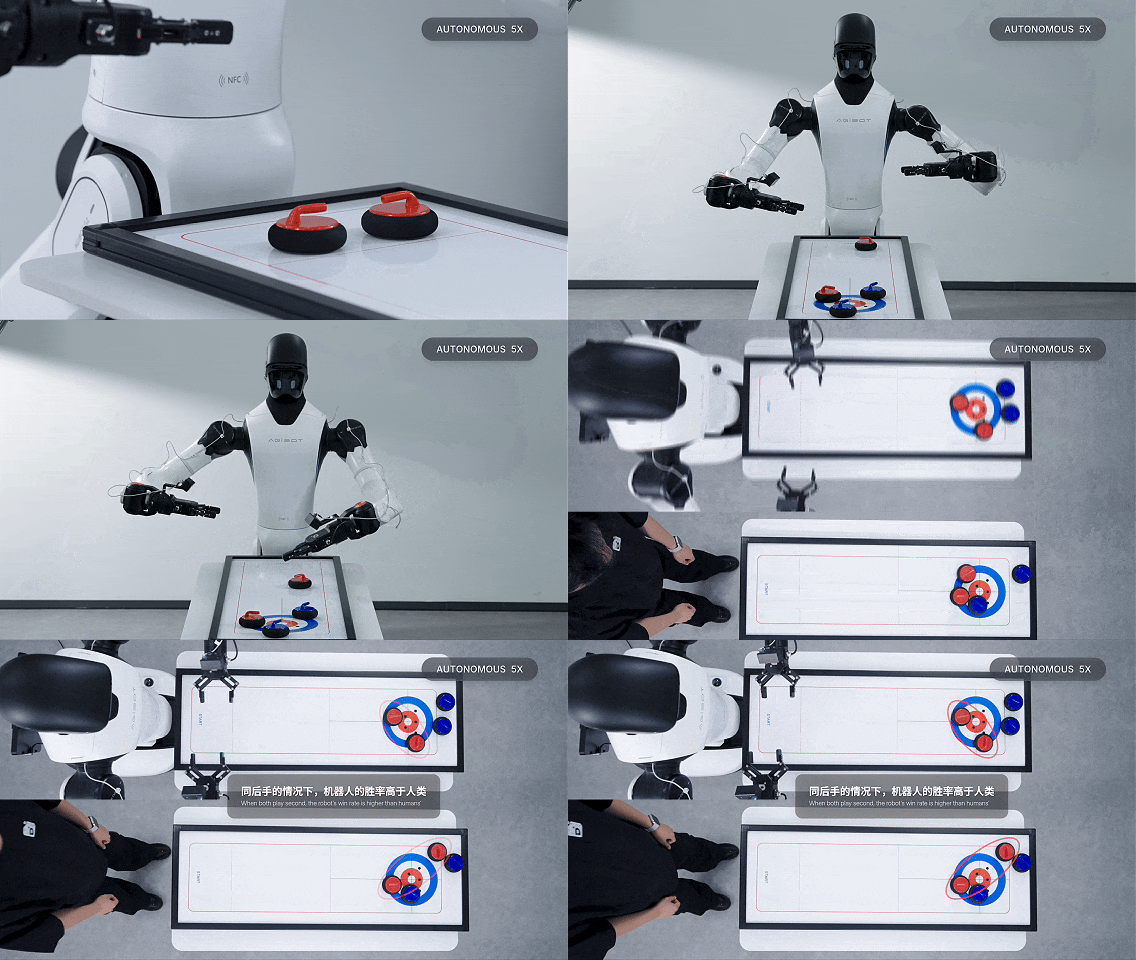
This is in line with an important aspect of post-physical intelligence training: allowing robots to continuously improve their ability to perform complex actions through interaction, feedback and strategy updates.
But robot training requires consuming real resources. Each physical interaction involves the operation of the device, environmental replication and data collection, and repetitive testing is accompanied by equipment loss and security costs. To get more skills, robots need to scale the interaction experience while improving data utilization efficiency.
For this purpose, GO-3 Preview has built the Genie Evolver, a distributed mixed environment post-training system that combines real machines, physical simulations, and world models.
There are three different types of environments.
The first class is real robots that provide reliable physical feedback.
Genie Evolver relies on a cluster of 100 real machines to bring together execution experiences through CEL (Group Experience Learning).
For example, when different robots grabbed objects, there were some successes and some failures. The system allows individual experiences to serve group learning by retrieving clips of successful actions, analyzing the context of failures and updating sharing strategies.
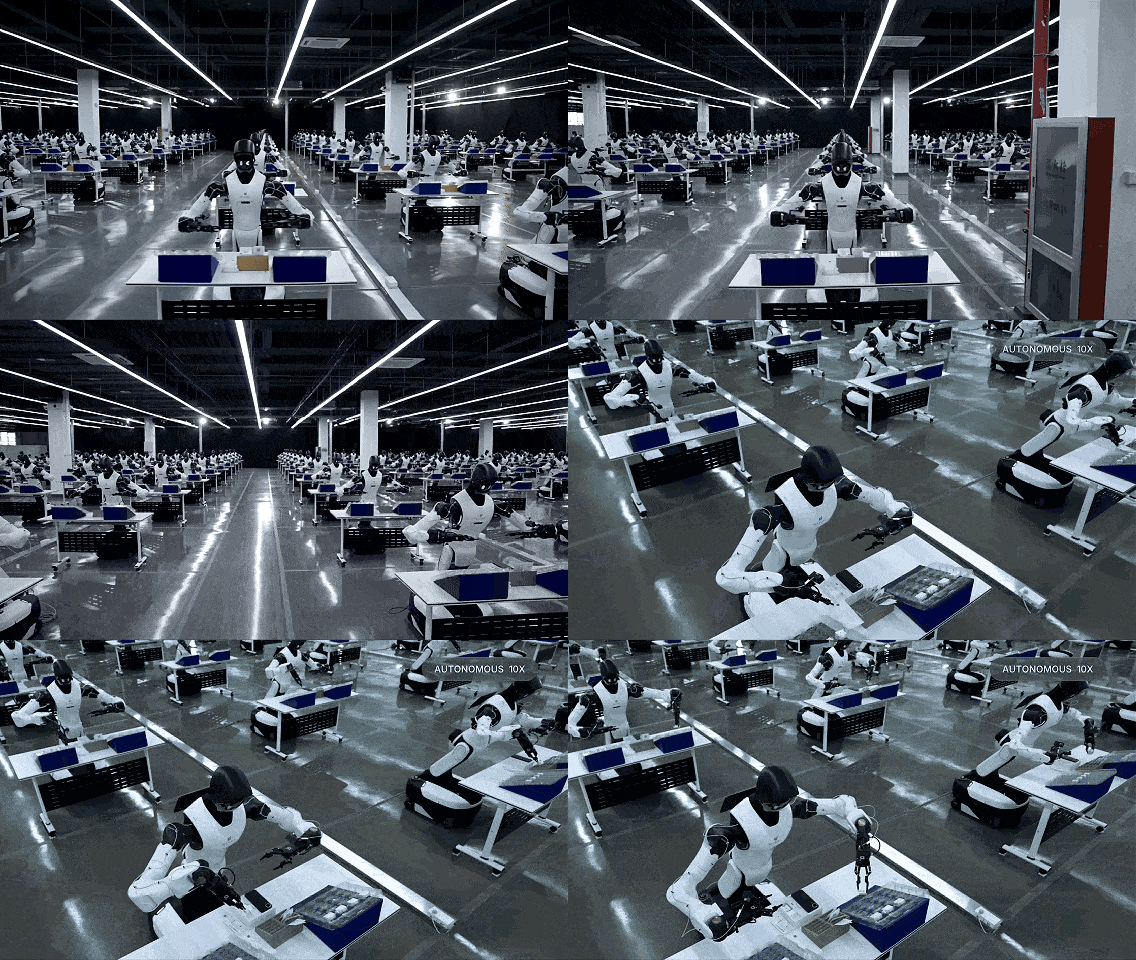
The benefits of this mechanism are also reflected in real-machine-scale experiments. During the same training period, the success rate of mobile packaging tasks increased from 50.8% to 98.3% as the real-machine scale of learning expanded. In multi-stage mobile packaging long-flow tests, the failure rate of 120 tests decreased from 25 to 2 times, reducing to 92%.
The second category is physical simulation, which provides numerous repetitive practice opportunities.
In simulation environments, the system can adjust parameters such as object position, friction coefficient, and collision conditions to allow the robot to try different strategies. For desktop icing, simulation can cover more initial states and starting conditions, making it easier to compare the execution results of different strategies.
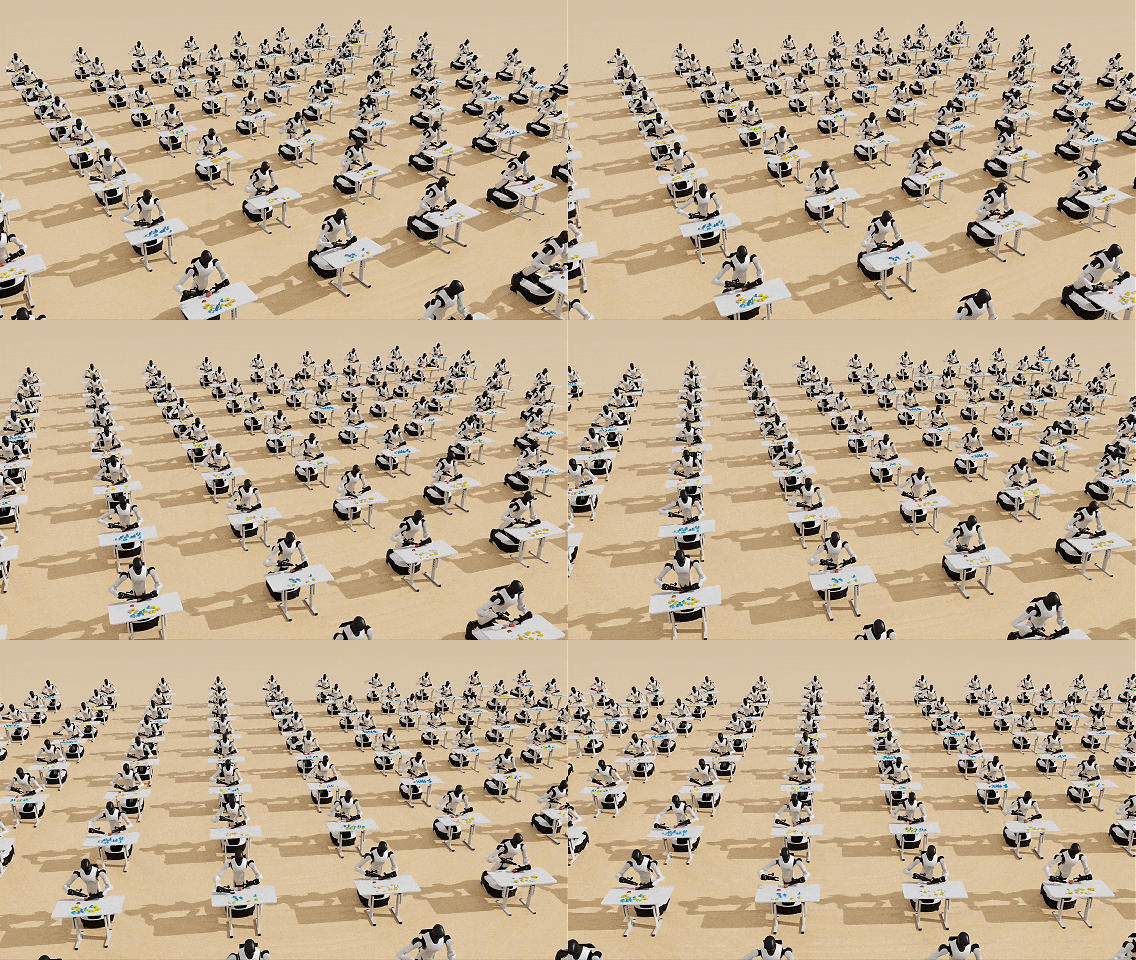
The third category is the world model, which further expands the exploration space for candidate action.
Iceberg is still an example. If one throw deviates from the goal, the world model can return to the previous key decision-making points, predicting the results of different intensities and angles. Thus, a real experience can be the starting point for exploring multiple candidate moves.

The system uses feedback optimization strategies generated by world models to return to real-world verification, thereby improving the utilization efficiency of real-world interaction data. Since world models can still misjudge physical processes such as friction, collision, real-machine verification is essential.
The desktop ice cream test was precision controlled, and another experiment extended the difficulty to a continuously changing physical environment.
For example, the GO-3 Preview requires stacked red blocks to be pulled out in succession, but each operation changes the position, gesture, and force relationship of the remaining blocks. The robot must continuously observe, adjust the follow-up movements, and test its ability to track state and continuously adapt to long-range tasks.

From a system design perspective, the goal of Genie Evolver is to expand the scale of effective interaction that robots can exploit: real machines provide physical feedback, simulations expand training scope, world models explore candidate futures, and the three work together to drive strategy continuous improvement.
When robots complete their training and enter a more complex real-world work environment, these jobs themselves can become new learning opportunities.
Robots go to convenience stores and "brush the experience" on the edge.
In games, after completing the training cutoff, characters often enter a new map, take on tasks, and accumulate experience values.
For GO-3 Preview, the convenience store is such a "new map".
The robot needs to identify the goods according to the replenishment task, plan the operation order, complete the grab, move and place. But the shelf space, the location of the goods and the packaging material vary, and there may also be anomalies such as slippage, change in the space of the place.
For this purpose, Xiao built the Genie Master Agent framework, which combines task planning, execution of checks, abnormal recovery and experience memory.
In order to make sure that the task is actually executed as an action, the Genie Master introduced the EEP execution protocol, connecting the ability to call, execute routing, result feedback and task continuity. After the robot executes, information such as success or failure, at what stage the card will return to the Agent; when the task is interrupted, the system can also retain progress and reprogram from the breakpoint.

As an example of convenience store replenishment, the Genie Master can arrange the operation steps, check the execution results, and adjust the plans after abnormalities occur.
One is to put experience into tips and memories and improve task planning.
The Genie Master can memorize successes, failures and abnormal recovery cases, extract operational sequences, critical constraints, and attention. When the robot encounters similar tasks again, it can retrieve relevant experience, assist with planning and abnormal processing.
For example, in convenience stores, the robot was unable to locate the hanging due to the lack of visibility of the head camera; the label was obscured. After Agent Retro failed to record, the execution method was modified: to bring the left hand closer to the target, to supplement the close-up view with the wrist camera, and then to complete the hanging with the right hand. This processing method can also be immersed in experience for subsequent similar tasks.
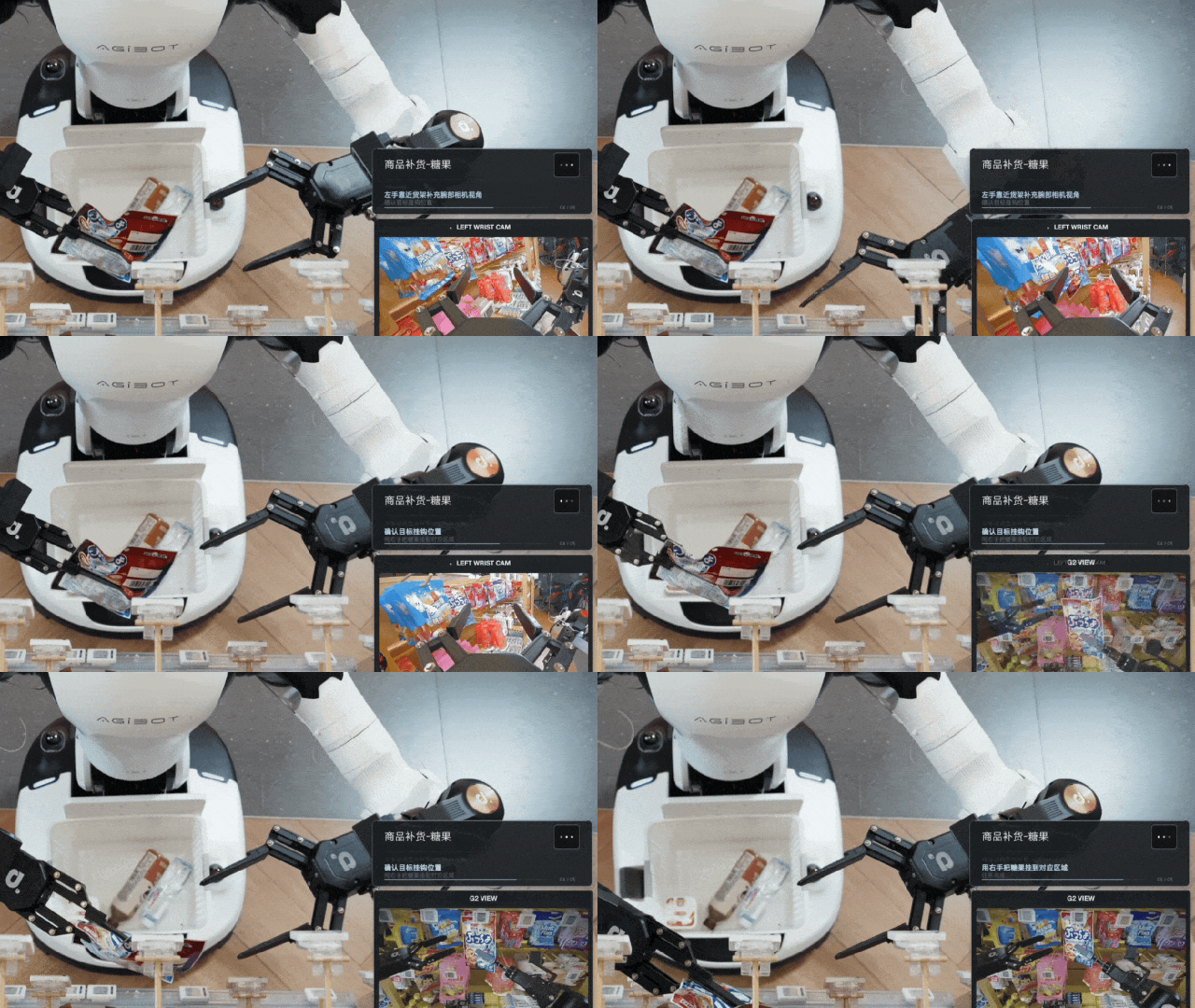
The second is to get execution and recovery data into training and update action strategies.
Accumulated trajectories of success and failure in real work can also be used in motion model training.
For example, when outsourcing packaging, water bottles and cloves are easily held by a white ribbon. Agents use more specific action tips to guide the cloves to be picked up first and then tried again in the packaging bag. Following processing, the relevant execution and recovery data can be used for follow-up action strategy training.
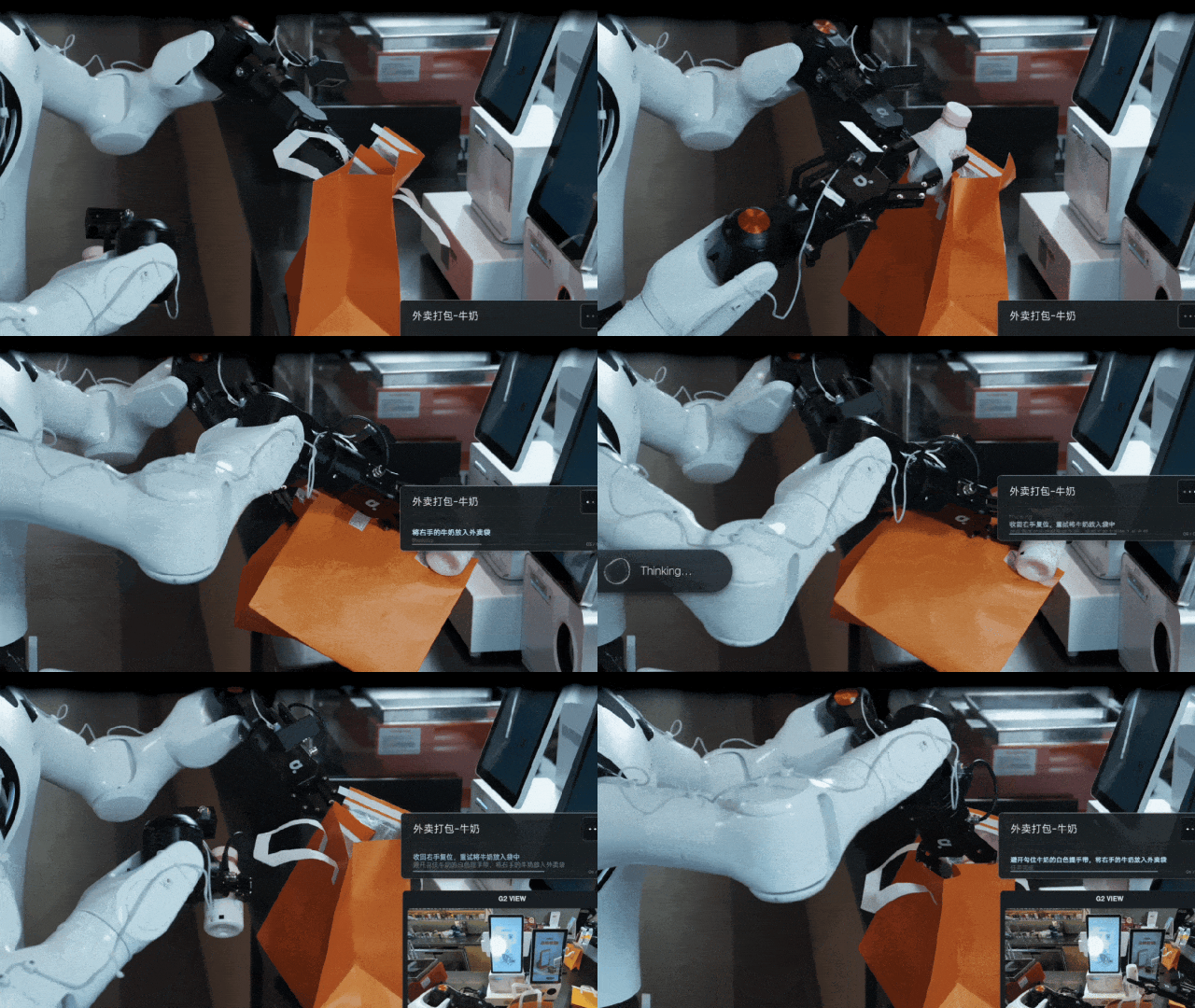
This is the industry's first jump out of the simulation environment, going out of the lab, verifying the Physical RSI in real-world business scenarios. It makes real-world successes, failures, and abnormal recovery experiences the next round of capacity upgrades.
According to Shio, the Genie Master G2 has deployed verification in real convenience stores, continuously improving on tasks such as cooking, packing, picking up and filling, without relying on artificial demonstration and modeling, by positioning problems, adjusting execution methods and accumulating experience.
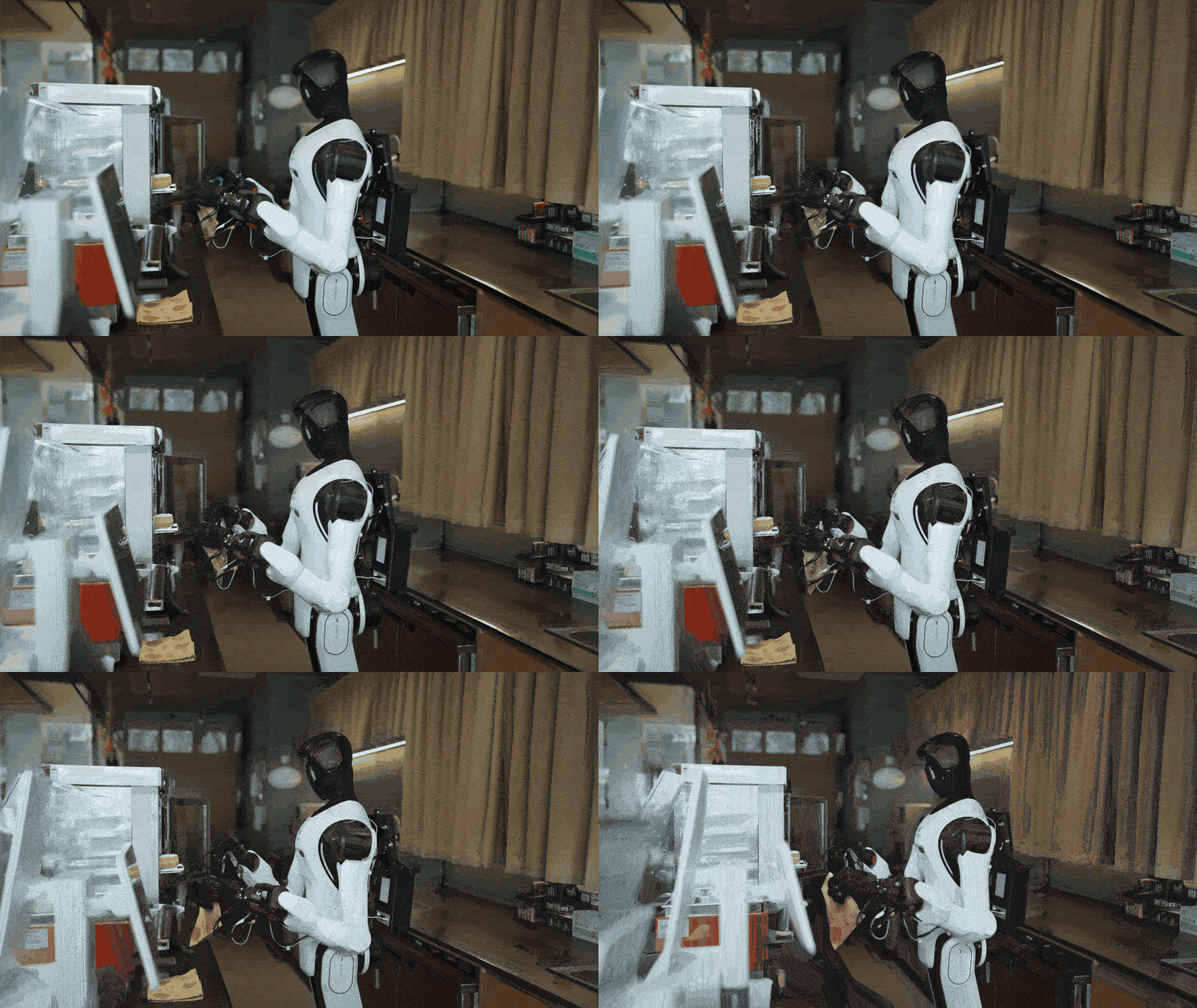
In the meantime, GO-3 Preview builds general operational capabilities, Genie Evolver optimizes interaction through virtual reality strategies, and Genie Master allows robots to continue learning from real work.
What is the meaning of this verse?
Role upgrades in games typically have a clear experience value and skill tree. However, real-world tasks vary and the growth of robots is difficult to measure with a single progression bar.
The real world is like a game that is constantly updated, with the possibility of new disruptions every day. As the experience of robots accumulates increases, how to effectively screen, reuse experience and make new and old skills compatible will become an important issue for large-scale deployments.
The growth of physical intelligence will also be reflected in the continuous accumulation and transformation of these experiences: more skilled operation, more resilient handling of anomalies, and faster adaptation to unfamiliar tasks.
Perhaps the real "full scale" of robots is that they are making their once-amazing capabilities a familiar and reliable representation in real life.
© THE