The first author of the paper was Li Yang, a 2026 PhD student from Tianjin University's School of Artificial Intelligence, and Professor Hanya Hong, whose main research focuses on physical intelligence. The results of the research have been published in top international conferences and journals such as CVPR, NeurIPS, TPAMI. The study was completed by Tianjin University in collaboration with a team from Tianjin University of Hybrid Industry.
Imagine a robot exploring a building that has never been entered.
It has passed through a corridor and has seen several different paths. However, due to limited visibility, the robot does not know which path leads to a larger space, which path may be dead end, or what exactly is the structure of the area yet to be explored.
Where does it go?
Currently, many types of learning proactively build three-dimensional mapping methods, often predicting only one long-term exploration goal and then planning paths accordingly.
The question is:When robots don't know enough about unknown environments, why should we bet one direction in advance?
To address this issue, a team of researchers from Tianjin University and the University of Hygiene and Petroleum Industries has put forward a proposal.FAME(Flow-driven Anchor-based Multimodal Exploration)Contrary to traditional methods, FAME uses Conditional Flow Matching to generate multiple possible exploration targets while combining path planning, exploration pattern clustering and layered selection to help robots find more suitable exploration routes in unknown environments.
At the moment, the results of the study have been published in the journal Science and Technology.NeurIPS 2026 receives and is further selected for Spotlight (Highlights paper)A total of 7,900 papers were accepted at this session, including:What is the meaning of life?Select Spotlight, which accounts for about half of all papers.3.7%。

All Roads Lead to Rome: Flow-driven Multi-Anchor Exploration for Open-Environment Active 3D Mapping
The main page of the project:https://vollichor.github.io/FAME/
The article links to:https://arxiv.org/abs/2609.36889
From "only one way" to preserving multiple exploration possibilities
Active 3D Mapping (Active 3D Mapping)Not only does it require robots to restore the three-dimensional structure of the observed environment, but it also requires proactively deciding where the next step is to gather information, striving for less movement and the cost of observing, and reconstructing as complete a scene as possible.
However, what robots can observe is always only part of the environment.Even if the local structure of the two scenes looks similar, areas that have not yet been explored may be completely different.If a model predicts a long-term goal based only on past experience, it is easy to choose the wrong direction when faced with an unfamiliar environment and miss out on other valuable areas.
The team noted that, under some observable conditions, long-term exploration targets tend to haveMultimodal characteristicsIn other words, for the same current state, there may be multiple reasonable future directions of exploration at the same time.
In theory, when multiple rational exploration targets are distributed in different directions, a single-target prediction model based on square error training makes it easy to give these targetsAverage locationHowever, this location is not necessarily a suitable exploration target, and may even be in an obstacle zone.
This is why we are here.Instead of allowing the model to predict only one goal, it is better to allow it to consider multiple possible directions of exploration simultaneously.
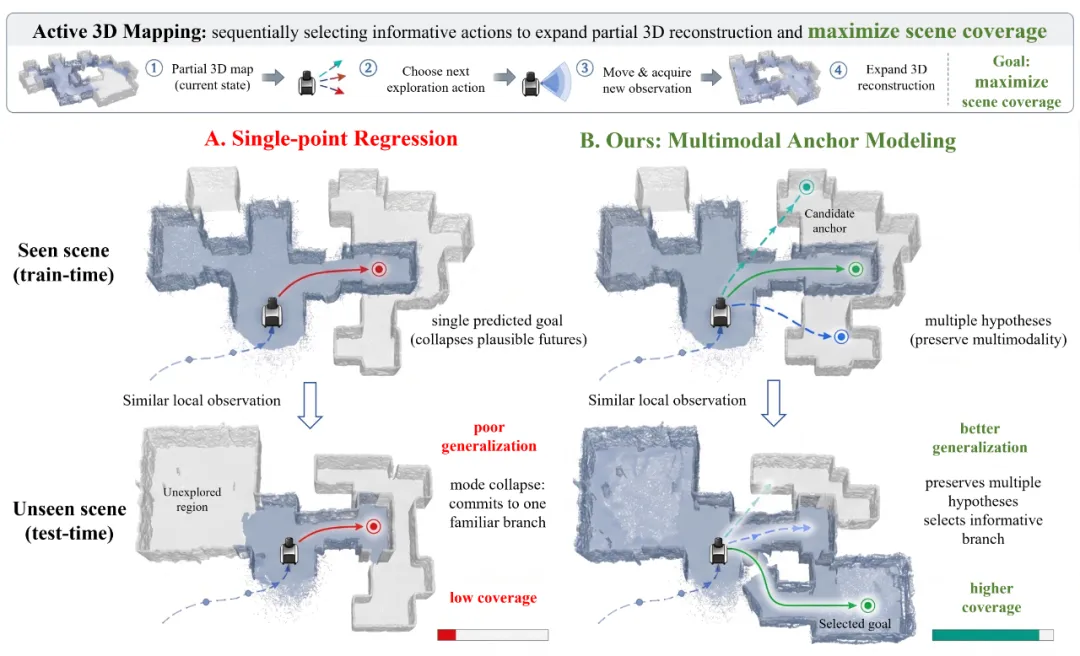
Figure 1: Comparison of single-target prediction and motivation for multi-modal exploration
Using Flow Matching to create multiple exploration hypotheses
In order to enable robots to generate multiple possible exploration targets at the same time, the research team has introduced the concept of "exploration".Conditional Flow Matching(CFM)。
Specifically, the model is based on maps that the robot has already constructed, starting from random noise, and gradually generating several different locations and search targets in different directions, i.e.Anchor (point of view)Each Anchor represents a possible long-term direction of exploration.
For example, some tipping points may guide the robot into a left-handed room, some may correspond further down the corridor, and others may point to local areas that have not yet been covered.
In contrast to a direct-generated full exploration route, FAMEAll you need to do is predict the location and direction of the target.Simply put, the model is responsible for proposing several possible locations, and the path planner then calculates how each goal should go based on an obstacle map.
It's like this.It's a great way to explore the world.It is not necessary for the model to directly generate the entire route.
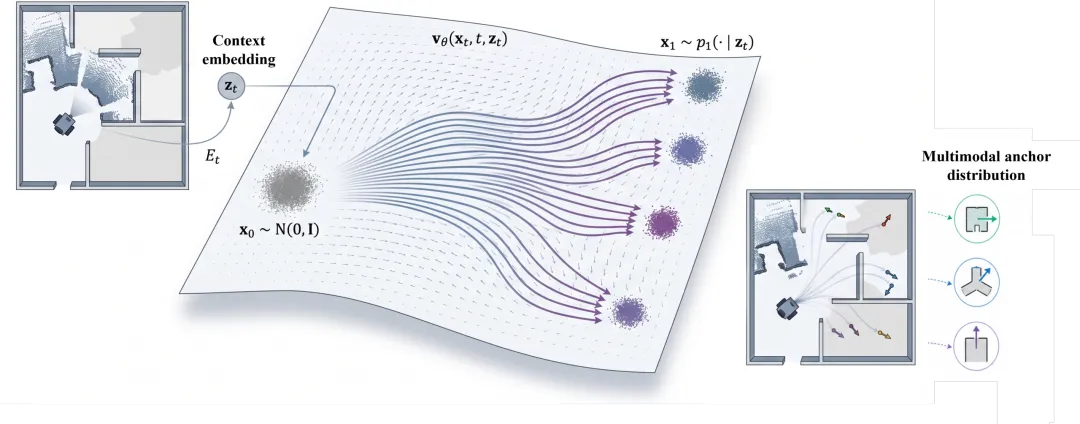
Figure 2: Conditional Flow Matching Multimodal Objects generate diagrams
It's not just about creating a few routes, it's about learning how to choose.
As previously mentioned, CFM can help machines create multiple exploration targets.Deciding which routes work and which routes should ultimately be chosen。
For this purpose, FAME usesA* based route plannerAccording to the current obstacle map, a candidate path is created for each Anchor.
Subsequently, the system clusters similar paths based on information such as path endings, geometric shapes, previous execution behaviours, and obstructive topology.
In this way, even if multiple anchors ultimately correspond to nearby routes, they can do the same.They're organized into the same exploration pattern.Reducing the interference of repeat candidates in subsequent decisions.
In the end, it's a choice of layers.
FAME is not a one-time direct sequencing of all paths, but rather a one-time sequencing of all paths.Choices are made at the model level of exploration, and specific paths are selected within the model.。
The first layer focuses on the potential benefits, risks, uncertainties, costs and diversity of exploration; the second layer further compares the gains, risks, costs of implementation and continuity with existing plans.
It's like this.Select a strategy to explore, then choose a route to execute.It was designed so that robots do not have to switch back and forth between a large number of similar candidates.
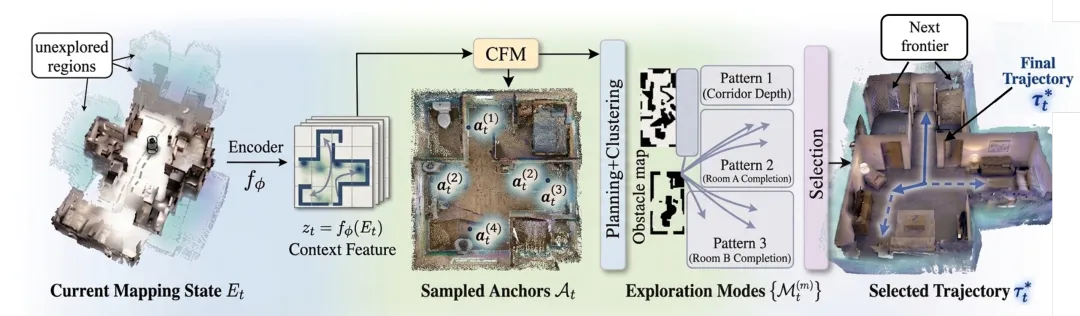
Figure 3: FAME's overall architecture
Quantitative results: How does generalization work in unknown environments?
To test the effectiveness of the method, the research team conducted system experiments on both AiMDoom and Matterport3D (MP3D) benchmarks, focusing on the generalization of cross-scenario distributions.
In the AiMDoom dataset, FAME outperformed the other comparison methods in the four difficulty levels of Simple, Normal, Hard and Insane. In the most difficult Insane setting, the final coverage increased from 47.2% of NBP to 47.2%.53.4%This is an increase of 6.2 percentage points.
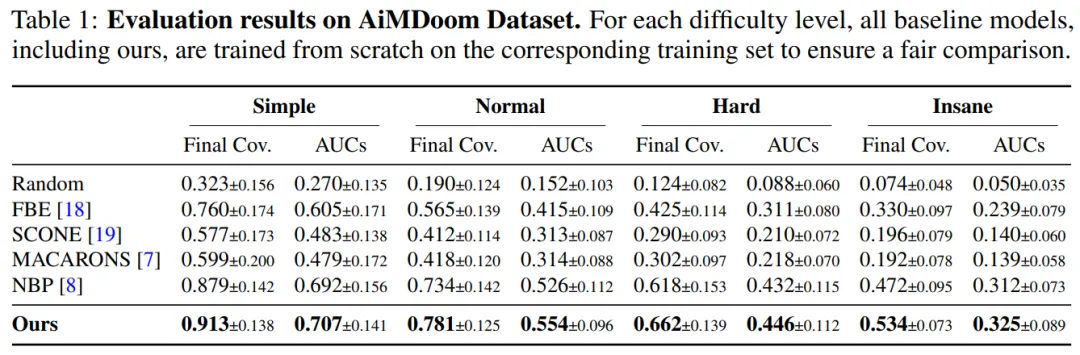
Table 1: AiMDoom Database Assessment Results: Final coverage of FAME under four difficulty levels and AUC both lead the comparison method
On the Matterport 3D benchmark, built on real-world in-room scanning data, FAME's rebuilding completion rate has been reached.82.67%The research team migrated the model directly to MP3D testing after training on AiMDoom, without any tweaking. In this more challenging setting, FAME's rebuilding completion rate still stands.68.45%This is an increase of 6.64 percentage points compared to 61.81% for NBP.
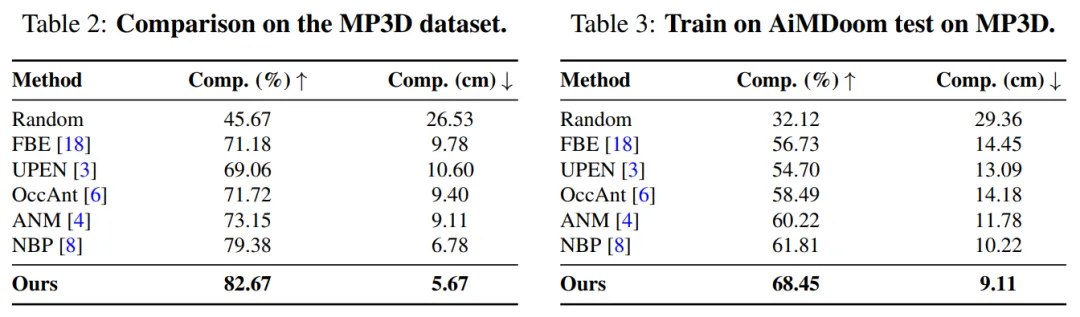
Table 2; Table 3: MP3D rebuild completion rate versus rebuild error (left); AiMDoom→ MP3D cross-data set migration results (right); FAME was the best
A qualitative demonstration of how robots can "leave multiple paths" in unfamiliar environments
The moves below show the exploration process of NBP (left) and FAME (right) in the same scene, under the same starting point.
You can see that.NBP makes it easier to continue exploring in one direction while ignoring other unexplored areas.Even if there are rooms or passageways next door, the robot may continue to move along the current route, causing parts of the area not to be fully rebuilt.
By comparison,FAME will not only consider one exploration goal, but will simultaneously generate several possible exploration directions, from which to choose the most appropriate route.In this way, robots will have the opportunity to explore more areas that would have been easily overlooked, making the map that will eventually be reconstructed more complete.

Figure 4: NBP (left) and FAME (right) comparison of exploration coverage in the same scene
Future prospects
FAME's research is not only about finding the right path for robots to explore, but more importantly, it is about finding the right path for robots to explore.It enables robots to model and visualize multiple possibilities for the future based on limited observations, and thus guide current decisions.This idea is also in line with the world model that emphasizes "understanding the environment, imagining the future, guiding action".
In the future, the research team will continue to explore further in this direction, from predicting the direction of future exploration to gradually expanding to imagining and reasoning about unknown scenarios and outcomes of action, enabling robots not only to perceive the world ahead but also to make rational predictions about the world yet to be seen, further enhancing their independent exploration and decision-making capabilities.
© THE