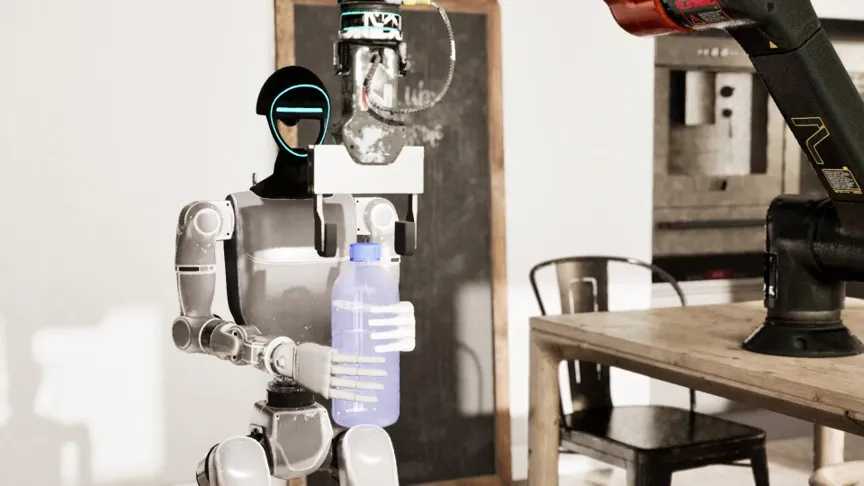
“ Where is the cure for data anxiety?
In the field of physical intelligence, the most lacking is the data anxiety dilemma, and the most lacking is the effective data dilemma.
When the parameters of a robot model jump from several million to hundreds of millions of quantum levels, the capacity to supply high-quality physical interaction data, does it keep pace with the model's expansion?
According to relevant data previously disclosed, there are currently only 500,000 hours of real-world physical interaction scenario compliance data in the country, whereas the commercialization of robots requires tens of millions of hours of data, with a gap of more than 99%.
According to a 2026 study published by the China Telecommunications Institute (CTI), a body-based model requires at least tens of millions of hours of data to support ChatGPT at any given time, while the current global availability of high-quality real data ranges from hundreds of thousands to millions of hours, far from reaching the critical point where support capabilities have emerged.
What does this mean? Big language models have training data accumulated on a 10-billion-hour scale, while the data gap with physical intelligence is 3 to 5 numerical scales.
But the real reason for the shortage of data is not because of the lack of data. Related statistics show that over the past two years, China has emerged with around 100 smart data collection centers, from Beijing's Shandong Mountain to Shanghai's Pudong, where all kinds of training sites are concentrated.
The real problem is that a large number of data sets are not usable, they don't add mass difference, they don't break formats, and they can't be reused across bodies.
Under the image of data scarcity, there is a deeper illness: the lack of data infrastructure.
01.
Structural shortcomings: three major contradictions in dismantling body data
A data dilemma with physical intelligence is essentially a structural shortage of silicon, composed of at least three layers of overlapping contradictions.
The first layer of contradiction is the high cost of extraction. Real machine data is the most scarce resource with physical intelligence and the most expensive resource, although the data quality is high, physical interaction is strong, information integrity, but the cost of extraction is not high. Industry measurements show that real machine remote operation after large-scale operation effective data cost about 275 yuan per hour, and small-scale extraction phase can even reach thousands of yuan.
While simulation of synthetic data can generate large quantities of samples at a lower cost and cover long-tail scenarios, it faces the long-term illness of Sim2Real Gap. Physical engines find it difficult to 100% recover the shape, friction and material properties of the real world, and the skills practiced in the virtual world.
Some scholars have summarized this situation as a triangle of intangible data that cannot be made up of high-quality, large-scale, and low-cost triangles, all of which cannot be shared.
What's more tricky is that intelligent data has a very strong hardware dependence. Data formats between different robot entities, labeling specifications are incompatible, and data assets are difficult to replicate across projects. The same crawling movements, a 1.2 m tall robot and a 1.8 m high machine, mechanical arm movements, sensor distribution, force matrix characteristics, etc. are completely different, and the accumulated experience of the former is difficult to transfer directly to the latter.
The fragmentation of data has become an industry epidemic, forming another form of data isolation.
The second layer of contradiction is that the capacity expansion of lithium pumps and lithium quality anxiety pumps in parallel. As mentioned above, the training ground as a new type of infrastructure is accelerating landing, and relevant data shows that more than 70 training sites have been built nationwide, and more than 40 training sites are under construction or planned, and a large-scale clustered layout has been formed.
However, as construction surged, questions and controversy surfaced. Reports called the current business model of parts of the training ground a "loop-of-the-mill": robotic enterprises sold machines to local government-built data centers and then poured money back in the name of procurement data.
At the same time, centralized numbers take into account common problems such as scenarios that are untrue, cost structures that are unsustainable, data binding intrinsically and with low repeatability across scenarios, and limited real capacity.
In July, the Ministry of Industry and Communications approved the release of the first industry standard in the field of Intelligent Intelligence, Key Basic Technologies, Intelligent Data Set Quality Requirements and Assessment Methods, which will be officially implemented on November 1, 2026.
The establishment of the standard is undoubtedly an important sign that the industry is moving towards maturity, but the implementation of the standard takes time. Currently, most companies are still struggling in the data collection, labeling and use links, and lack a unified toolchain and evaluation framework.
The three-tiered contradiction points to a common problem: getting more hydrogen fuels isn't the same as getting more efficient hydrogen fuels. What's really scarce for the industry is the ability to refine the world of non-standard data into standardised hydrogen fuels, which is why data infrastructure exists.

A virtual training test site with physical intelligence
02.
Real2Sim2Real is a two-way bridge between reality and reality.
At a time of widespread industry anxiety, unsuspecting psychology has chosen a more systematic path: building an all-chain data base for the extraction, identification, training, simulation, and validation of data using the Real2Sim2Real enclosure to construct data paradigms for virtual fusion enclosures.
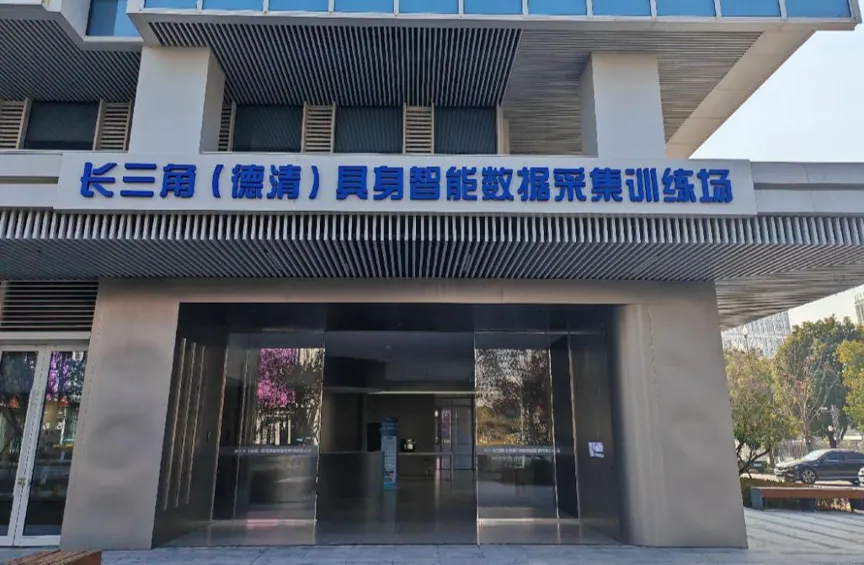
At the acquisition level, it is unquestionably the largest artificial intelligence data collection training ground in the Long Triangle. It has 3,000 square meters of indoor, 505 square meters of outdoor enclosed space, 937 square kilometers of open scenery, a three-tier training system covering the six core scenarios of logistics storage, household services, hotel, tourism, industrial manufacturing, office services, retail and commercial.
As of now, the training site has achieved an annual data capacity of over 10 million, more than 900TB of multimodal effective data, containing 1.2 million atomic orbits, covering more than 500 real-world scenarios, 230 complex missions, and 99.5% scenario recovery.
Data collection is just the starting point for data value, from the raw data to the model-available Model-Ready state, marking this deep gap in the middle. The self-developed wwwDataEngine data platform, based on the 10B multi-modal automated marking agent, uses the MOE hybrid expert model architecture to achieve more than 90% recall and accuracy, 70% efficiency improvement, and more than 99% delivery accuracy.
The multi-sensor time-space mapping accuracy of the platform is pixel-level, can be configured according to automatic rules based on natural language, and can continue to iterate modeling capabilities through automated incremental modeling frameworks, allowing data marking to move from a lean-to-work-intensive to a lean-to-smart-driven model. At the same time, the platform uses the MOE model to solve domain adaptability problems, solve logical understanding of different scenarios through different experts, upgrade single tasks to multi-tasks, complement 2D and 3D information, and support multi-modal marking tasks.
The unique Real2Sim2Real dual-directional closed-loop system is the most diverse technological foundation in the field of intellectual science. The Scan2Sim bio-level reconstruction + gen2sim generated generalized binary pipeline architecture allows for the generation of hundreds of spectroscopic variants derived from a real-world scenario while maintaining the core geometrical structure and semantic functions, while generalizing in terms of appearance, texture and physical properties, allowing the brain model to learn the essence of the task rather than the memory of a specific scene.

Global understanding of automated data production pipelines built by models
Unquestionably, Intel has shortened the build time of SimReady assets from 3 days to 5 minutes and created a million-dollar SimReady asset base.
In addition, the construction of the wwwSim Physical AI simulation platform is equally critical. Through the combination of the rendering engine and the physical simulation engine, Intelligent Design has unquestionably achieved a closed loop of simulation scenario generation - data generation - model training - simulation evaluation. Real data provides models with real-world pointers, while simulation data extends the coverage of scenarios, tasks and long-tail samples.
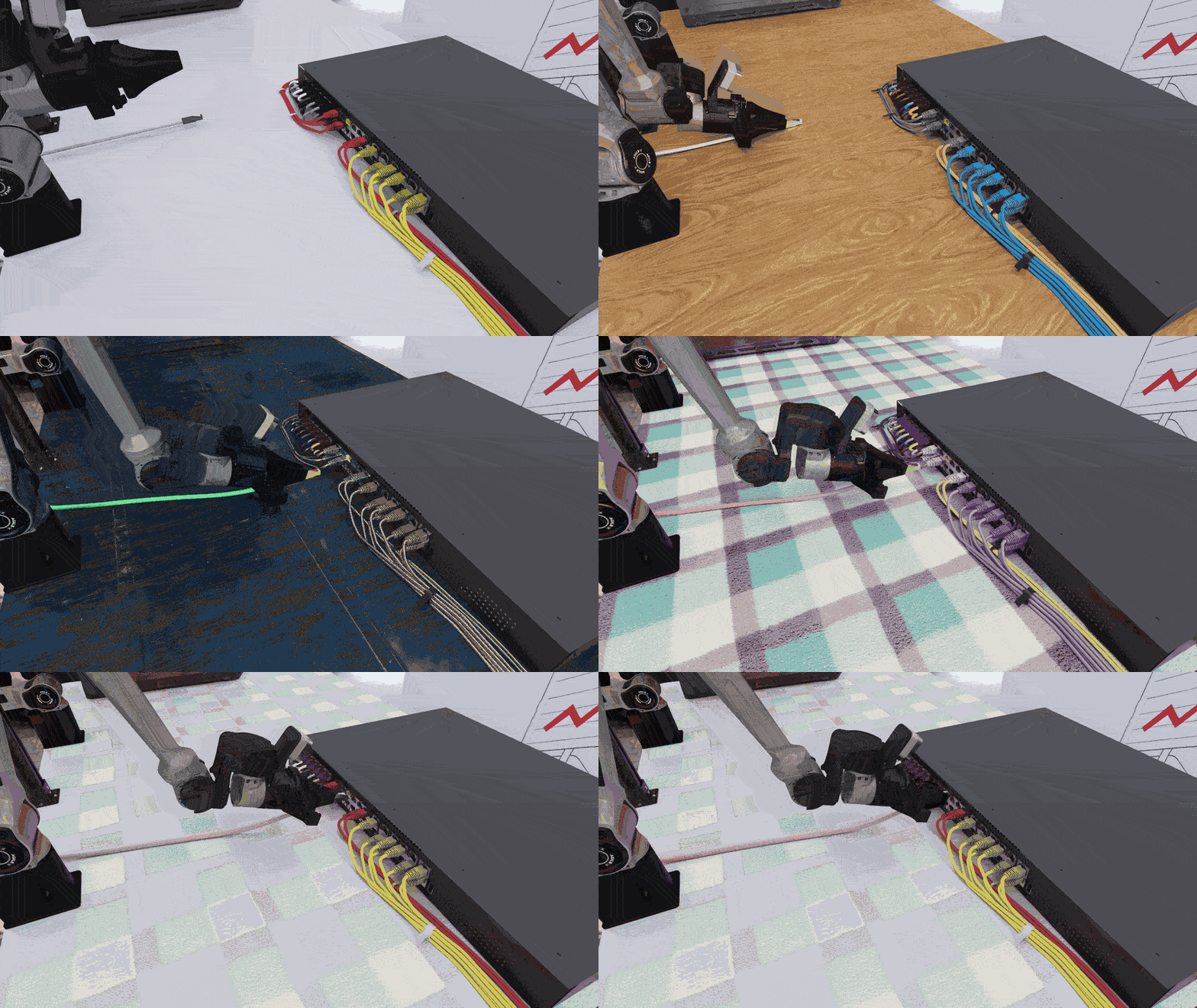
High-precision world producing physical simulation
It is reported that the success rate of the model in the basket charging task improved by about 20% after adding sensory field extraction data on the basis of open-source machine data sets; in virtual fusion closed-loop verification with the main client, online reinforcement learning increased the success rate of the model simulation from 9.7% to 79.8%, and the success rate of the task increased by more than 50% after the migration to the real robot.
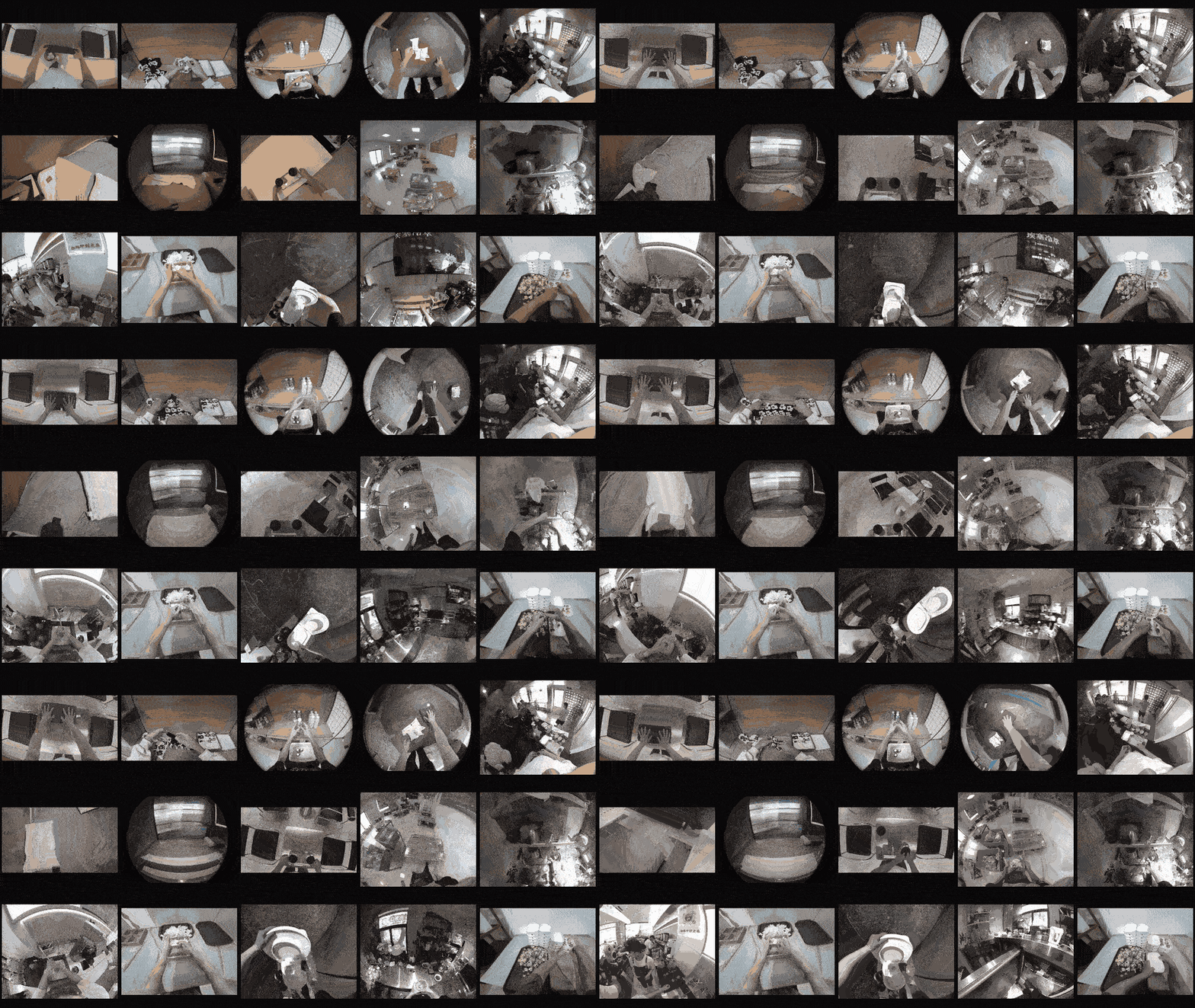
Large-scale sensor-free modeling for efficient data acquisition
A complete pipeline of data-driven flight has been shaped: real data reduces simulations of Gap, simulations of data against mammalian models are generalized, and model landing scenes generate new high-quality data. The closed loop of Real2Sim2Real, unquestionably used by intellectuals, builds a two-way macro bridge between the physical world and the digital world. It allows simulations to say goodbye to the ideal pipeline, and real data to break through the physically expensive and inefficient pipeline.
03.
Capital is voting to build a data base
Capital has always been the strongest wind.
In September 2026, unquestioned Intel announced the completion of the hundreds of millions of yuan A round of financing, with excess capital being pursued by former shareholders such as HongTai Fund, HongShan Capital, China Electricity Numbers, Lions City Capital and Investments, Bridge Capital, Strength Combined Finance, Strength Combined Economics, and ClearKilling Future Fund.
In an increasingly cautious capital environment, financing is not only an injection of funds, but also a deep recognition of the capital market for its strategic direction and technical team.
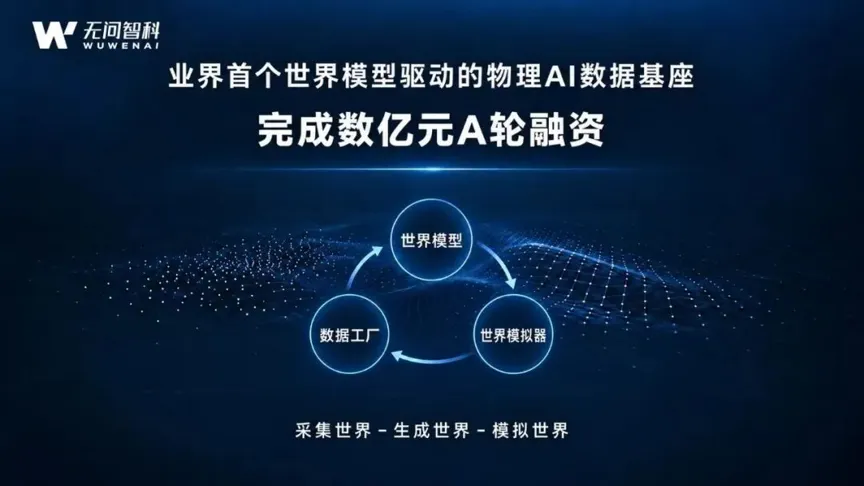
Without question, SYCO has completed its A-Round financing of hundreds of millions of dollars
According to the company, unquestioned orders for the Intelligent Fitness business have reached hundreds of millions of yuan, with orders growing at a rate of more than 3,000%, revenue expected to grow at a rate of more than 1,000%, and headline customer coverage and customer repurchase rates exceeding 80%.
Long-term partnerships with startups such as Star Wars, Starfleet, Intelligent Aircraft, Intelligent Aircraft, and other enterprises, with orders for Q1 2026, including byte jumps, Infinite Dynamics, and Eagle Dynamics, have formed the complete commercial closure of the Silicon Valley R&D and Landing Scenes.
At the same time, the De Qing training ground, built without question by Intelligent Design, has built up a luxurious collaborative ecological camp, star-shaped era, intelligent hands, deep cloud technology, horizon, Zhejiang University and more than a dozen other leading national enterprises and universities are deeply involved in it.
In a collaborative model, Intelligent Design has positioned itself as the core hub of the steam data-driven flywheel: downward-connecting scenarios to access real-world scenarios and raw data, upward-providing robot companies with collection, marking, training, simulation, and verification integration solutions that help them quickly transform algorithms to meet the needs of scenarios, forming data-driven value loops.

04.
Infrastructure is slow variable, but it determines the limits of all fast variables
Infrastructure has always been a slow-moving variable array, but it determines the limits of all rapid-moving variable arrays. The scale of physical AI also requires an unseen ground array such as a data base.
In today's millennial industry, there is no question that Intel has chosen to be the groundbreaking architect. Its core is the World Model X Data Factory X World Simulator, which uses Real2Sim2Real to encode the complexity of the physical world as a data asset that can be trained, evaluated, and replicated.
From the tens of millions of data capabilities of the Long Triangle (DTC) training ground, to the 10B automated marking capabilities of the wwwDataEngine, from the scan2sim bioscale rebuilding to the gen2sim generated generalization, there is no question that AI is building not only a technical toolchain, but also an industrial data production paradigm for the era of physical AI.
When the industry moves from worrying about how much data it has, to worrying about how much calming it has, to thinking about how much calming it is, those who really know how to transform the non-standard world into standard fuel infrastructure players will have the power to define the rules of the race without asking the intellectuals, who are at the forefront of this paradigm shift.