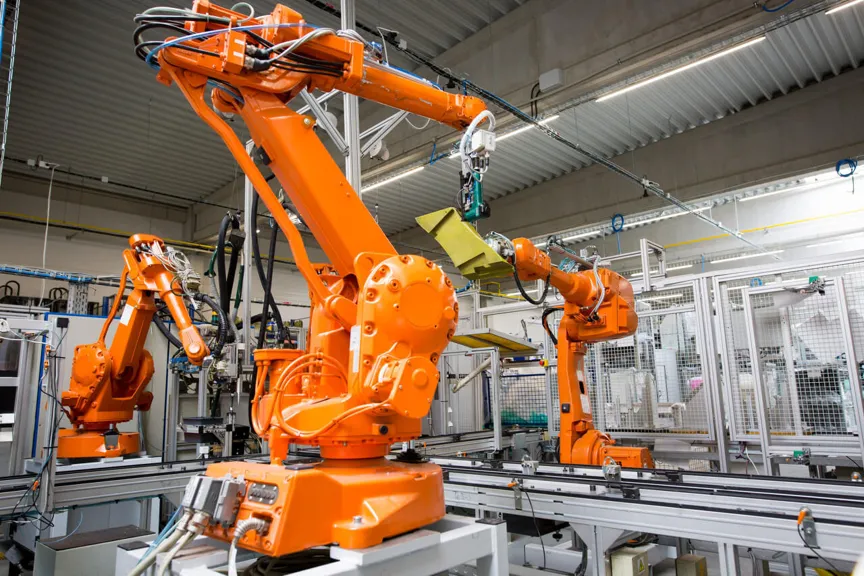
“ On average, every 90 seconds, a brand new industrial robot completes power generation, calibration and testing on a production line in China.
According to the International Federation of Robotics (IFR) World Robotics Report 2026, released on September 24, 2026, China's new industrial robot installations reached a record high of 354,000 in 2025, an increase of 20%, accounting for about 59% of global total installations.
A record high of 35.4 million, almost 60,000 more than a year ago, means that by 2025, nearly six of every 10 new industrial robots installed on Earth will be on the production line in Chinese factories.
There is a more intuitive comparison: in 2025, the United States added almost 385,000 units, Japan 362,000 units, and Germany less than 25,000 units. The three main traditional manufacturing powers, the United States, Japan, and Germany, combined, have added about 100,000 units, less than a third of China's market.
The 354,000 robots are telling the story of a brand new Chinese-made robot.
01.
From the biggest buyer of rice to the biggest seller of rice
If you focus only on the installation volume, you will miss a more quantitative change.
In 2025, China's exports of industrial robots grew by 48.7%, surpassing imports for the first time, and China officially became a net exporter of industrial robots.
At the same time, the process of domestic product replacement in the domestic market is equally rapid.
According to MIRRIO Industrial, the share of domestic brands in China's industrial robot market rose from 29% in 2018 to 54% in 2025, while the market share of foreign brands shrank from more than 71% to 46%.
Now, the IFR report further confirms this trend. In 2025, the installed capacity of Chinese domestic suppliers will increase by 15%, reaching 195,000 units and a market share of 55%.
In other words, one out of every two newly installed robots on the Chinese market has a Chinese brand.
In the 1980s and 1990s, robots in Chinese factories were almost entirely under the control of the four generations of the Genko, ABB, Anakawa, and Kukaku. In the twenty-first century, China's automotive production was booming, but the backbone was still foreign-owned mechanical arms.
The turning point came in 2017, when America completed its acquisition of Germany's Coca-Cola, a cross-border merger that paved the way for local industry.
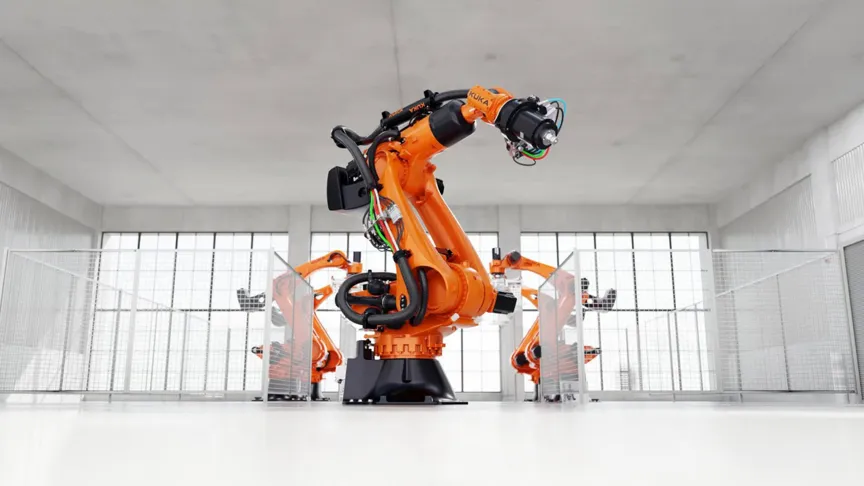
Today, Aston, Huizhou, Suzhou, and Efters have transformed delivery cycles, scenario understanding, and attachment services into a fortress. Behind the figures in the IFR report, a group of Chinese companies are re-writing their industry seats.
Easton's total year-round shipment of industrial robots exceeded 30,000 units in 2025, the first time a foreign-owned brand has topped the list of Chinese industrial robots shipments, and the first in eight consecutive years.
What's more, this isn't an old story of a cheap replacement for aluminum. Aston's R&D spending in 2025 was $476 million, accounting for 9.74% of revenues, accumulating 634 patents, of which 279 were inventions.
The country's leading companies are entering a new phase in the process of moving from being unable to make coal to making coal.
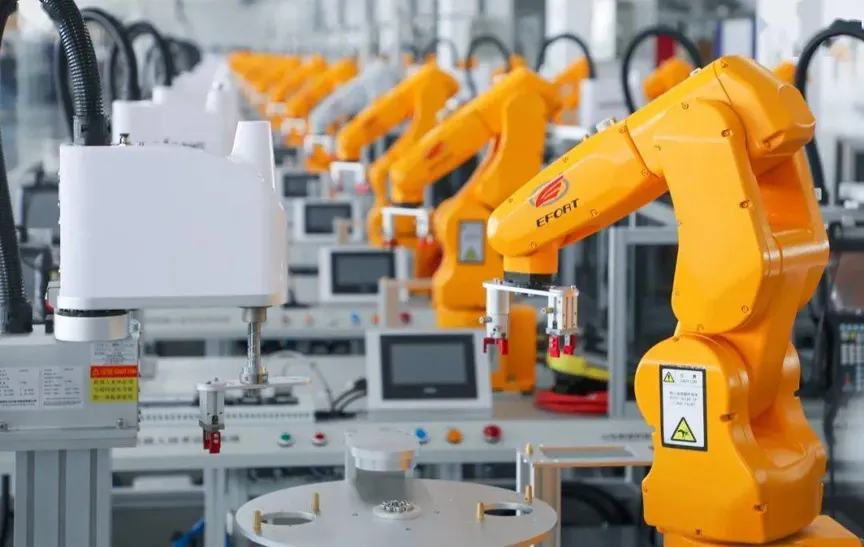
Experts at the Department of Commerce have broken the logic behind this. Robots are the dominant industry in the application scene, with China's huge market attracting developers, driving increasing supply and, in turn, increasing the competitiveness of the entire robotic system.
This is one of the deepest basics of Chinese industrial robots. From automotive assembly to silicon winding, from 3C precision assembly to photovoltaic strings, every detail scene is a rehearsal ground. More importantly, once considered to be the three core components of the decelerator, servo system, and controller, the state-owned substitutes are shining a light on the chain.
02.
77.3 million units and 71 industries: the roots of robots sinking
One dimension that is easily overlooked is the extent to which industrial robots penetrate Chinese manufacturing.
According to the National Bureau of Statistics (NBS), the production of industrial robots in 2025 was 77.3 million units, an increase of 28.0 percent. Production has more than doubled in five years from 36.6 million units in 2021 to 77.3 million units in 2025.
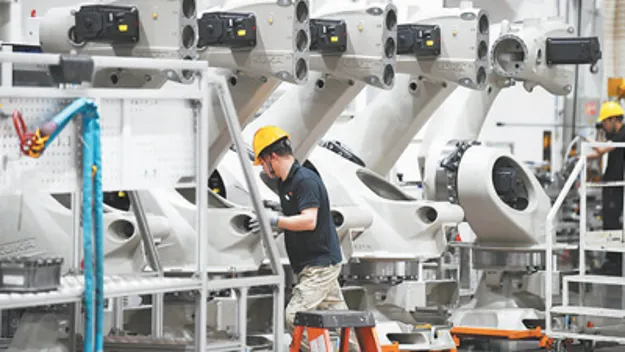
It should be noted here that the output of the Office for National Statistics and the installed quantities in the IFR report are not statistical qualities of the same dimension.
Production reflects the supply capacity of domestic manufacturing terminals, while installed volumes focus on the actual deployment of end users.
The gap between the two countries, with a significant portion flowing to overseas markets, also explains why China could become a net exporter of industrial robots for the first time in 2025.
As domestic commodities make a double breakthrough in terms of price and stability, more and more Chinese manufacturing robots are moving into the global market as high-value-added products, no longer confined to the internal cycle. A substantial portion of the huge capacity of 773,000 units is being transformed into international market share, further demonstrating China's substantive transition from being the largest buyer to the largest seller.
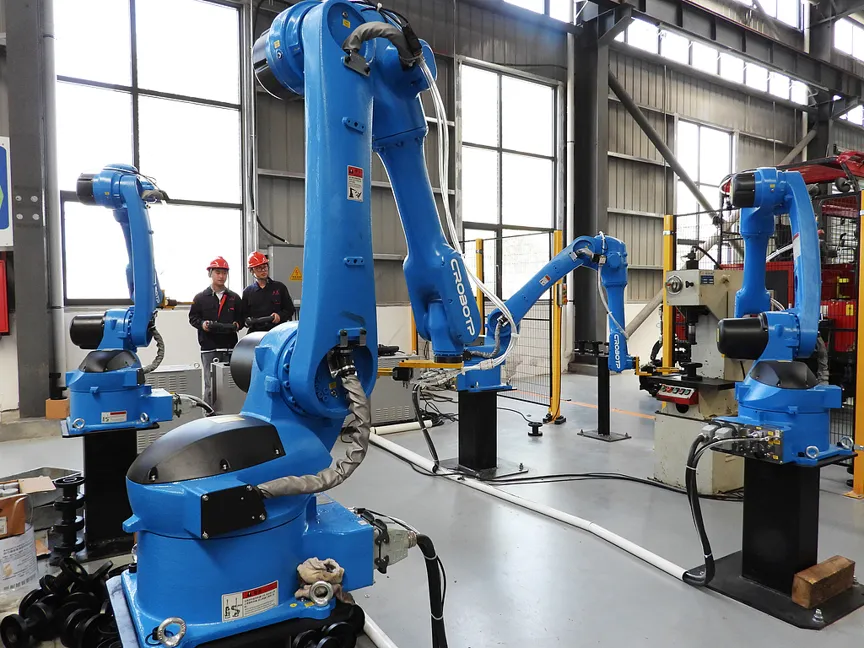
More interestingly, industrial robots have been applied to 71 major sectors of the national economy, 241 middle sectors.
This means that the silicon-catalyzed welding of robots has long been limited to welding workshops in automotive factories. In the photovoltaic industry, in the manufacture of silicon batteries, in the metal processing industry, industrial robots are covering an increasing number of processes.
The decline of robotics is essentially a complete release of the need for manufacturing intelligence. In an interview, IFR Secretary-General Susan Biler noted that the decline of a relatively limited degree of automation is gradually becoming a new space for the expansion of robotics applications.
03.
Next stop: From automated makeup to smart makeup
Over the past decade, the keywords for Chinese industrial robots have been lithium-scale lithium and lithium-scale alternative lithium, and the next keywords are becoming lithium-scale smart lithium and lithium-scale fusion lithium.
In the release of the report, IFR President Jane Heffner said that China's ongoing Five-Year Plan will focus on the study of the applications of physical AI, and that robots are seen as an important driver of economic growth.
Industry data has already confirmed this direction. IDC data shows that China's industrial robot market size in 2025 is about 5.74 billion yuan, of which about 3.6 billion yuan is the market for industrial robot-carrying smart applications.
New forms such as collaborative robots, integrated robots, and others are bringing the ability of robots to learn and execute decision-making skills into the real industrial landscape.
This path will certainly not be flat. Fully autonomous control of core components will still take time, breakthroughs in high-end application scenarios will require ongoing investment, and uncertainty in the global trade environment is increasing.
But the direction is clear: China's industrial robotics industry is shifting from lithium-scale expansion of lithium to lithium quality leap, and from lithium-scale replacement to lithium-scale innovation.
The 35.4 million units are not the end, but the beginning of a new journey. When robots are no longer just mechanical bracelets that repeat their actions on the waterline, but also intelligent bracelets with perceptual and decision-making capabilities, the underlying logic of Chinese manufacturing will be redefined.