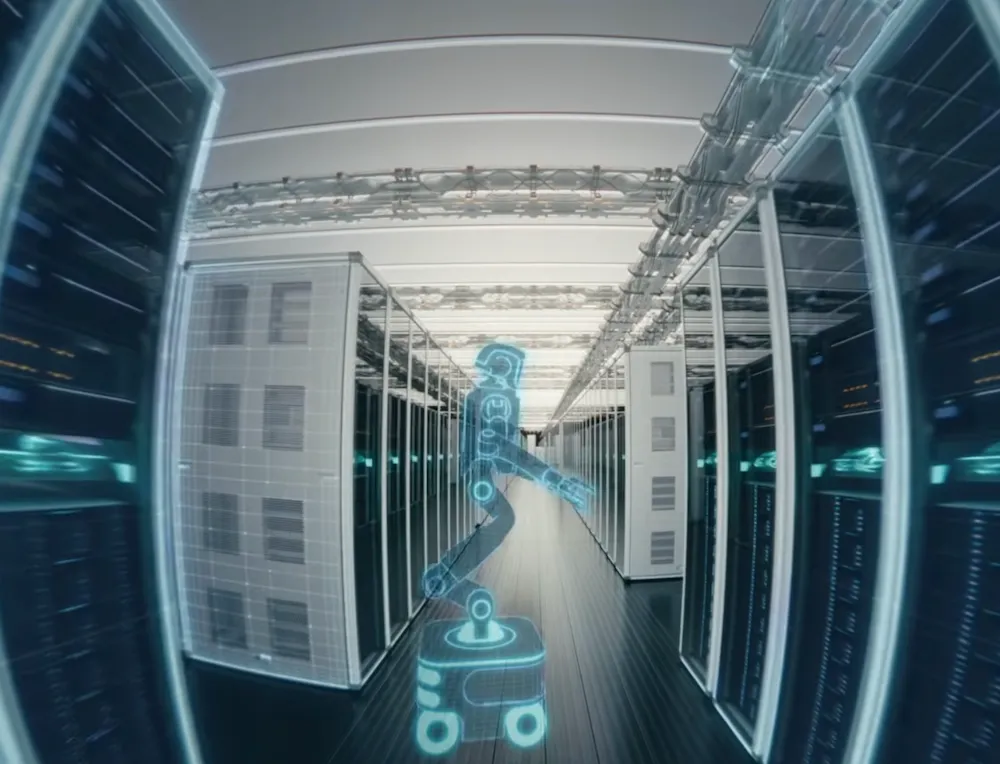
“ Two-legged man, why agility seeks survival in a wheel-compromise.
In mid-September, American robotic company Agility Robotics released its fifth-generation product, Digit 5. The company has been working on two-legged robots for more than a decade in a lab at Oregon State University. Its flagship product, Digit, has been operating in sites such as Amazon, GXO Logistics, Chevrolet and Toyota's Canadian plants. According to the company, it has been in continuous commercial deployment for nearly three years.

When the video was released near the end of the video, an image flashed for less than a second: the upper half looked like Digit, and the lower half turned into a set of wheels.
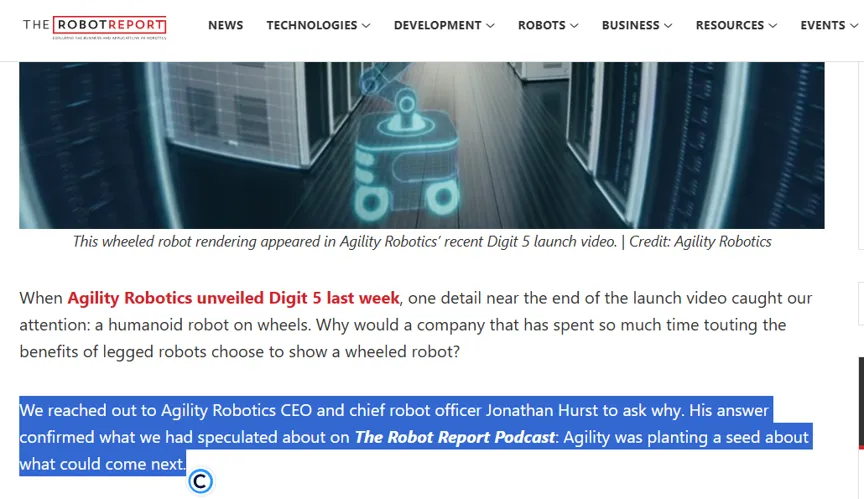
The U.S. robotics industry media outlet The Robot Report caught on to the mystery and sent an email to Agility co-founder and chief robotics officer Jonathan Hurst asking for a confirmation.
According to the report, Hurst confirmed that the company was exploring a range of robotic designs and shapes, including wheeled ones, to meet different operating environments and customer needs. But he left a premise: as the safety, reliability and capabilities of foot robots continue to improve, he expects the legs to become the right fit for more and more scenarios; exploring other options, just to get robots into more and more environments faster.
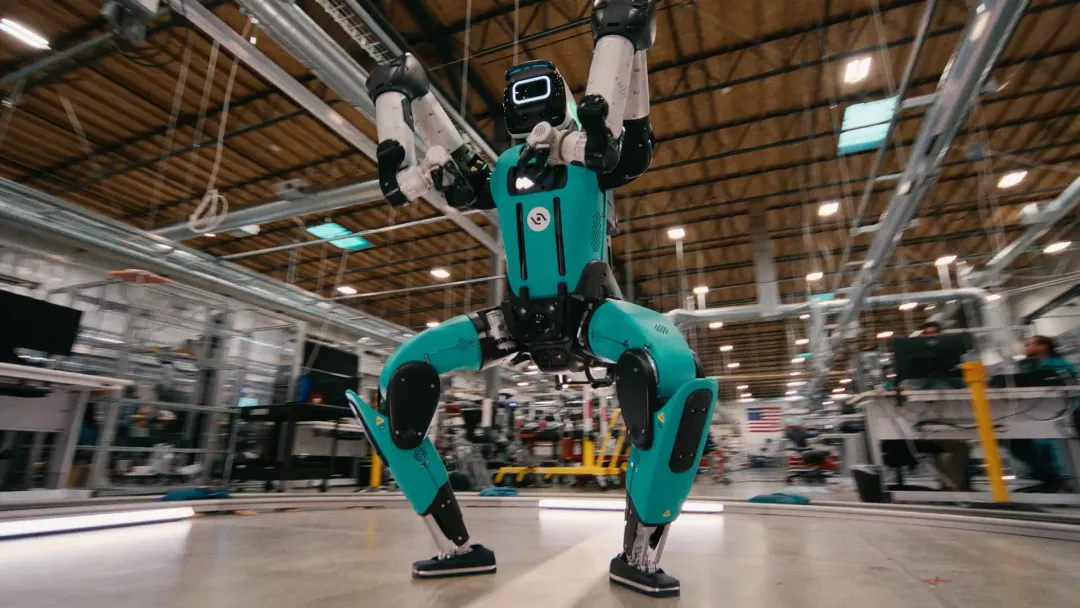
On the same generation of products, Agility also made another change: Digit 5 removed the iconic anti-joint bird legs and replaced them with human legs. Depending on the self-developed swing line executor, the robot can dive deep enough to repeatedly carry 50 pounds (about 22.7 kg) of load. According to Hurst, this load capacity enables Digit to cover single-carrying tasks in OSHA regulated areas.
The official explanation for the leg change is simple: the factory doesn't have to be a fast-running robot. Hurst mentions that old-fashioned deep-diving boots will stick their feet to the ground and not fall. Oh, we don't need a robot to run a marathon, we need it to move heavy objects. Oh, and he has a more direct expression: Digit 5 evolved like this, not to mimic humans or animals, but engineering brought us here.
If you can change the form, what can you change?
01.
Inside the fence, the humanoid robot is just another mechanical arm.
The debate over legs and wheels has raged for three years: on the one hand, stability, cost and durability; on the other hand, the ability to pass through unstructured terrain such as stairs and ceilings.
The debate has a very rare premise that robots are already in the workshops. But the reality is that a few humanoid robots that are currently running in factories are largely unable to work with humans.
They are surrounded by fences and run in secluded areas. A fenced-in robot, standing from the customer's point of view, and a fixed industrial machinery arm are essentially indistinguishable. Its value is locked in unwanted jobs and is expensive.
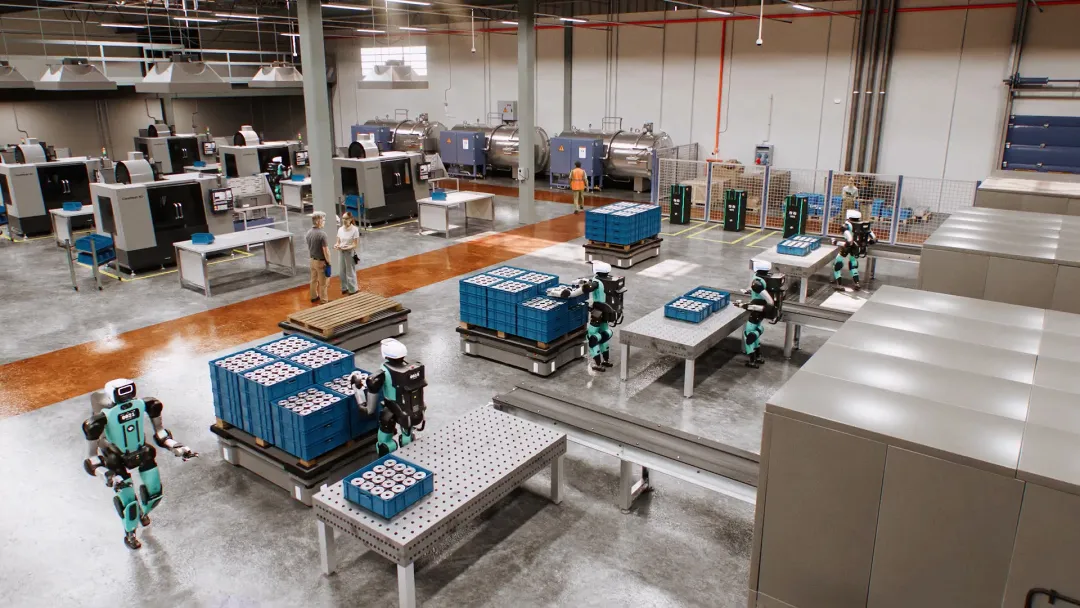
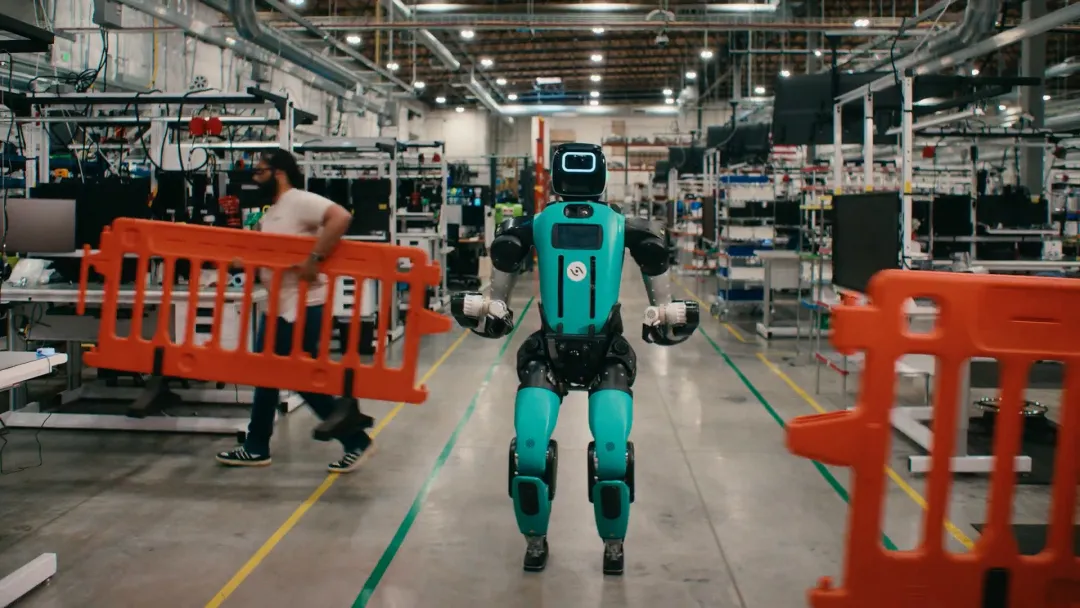
Digit 5 has a long list of parameters: 1.81 meters tall, 129 kilograms in weight, 90 minutes of duration, 9 minutes of charging.
The first: no longer relying on fixed safety zones. Multi-type sensors with proprietary algorithms continue to monitor people around; once people approach, the robot dynamically evaluates the risk, decelerates, then stops; when necessary, drop the load, sit on the ground, and shut down the motor. Hurst's expression of this capability is much more than a publicity stunt: safety is not a silver bullet.
Second: Agility is at the standard-setting level. It is not a product that gets a certification certificate, but the rules themselves are not yet written. The ISO website shows that the ISO/CD 257851 safety standard for industrial mobile robots is still in the drafting stage and has not become a formal international standard. This standard is governed by robots that can walk and fail to break down.
Both of these things have nothing to do with the shape of the mobile chassis.
A factory would be reluctant to accept a robot, would dare not let it stand beside the workers, depending on whether it can produce evidence that it is safe enough. Trapped inside the fence, the humanoid robot can only calculate value according to the logic of the mechanical arm; jumping out of the fence, it is a new class that can replace manpower calculation.
Agility holds three assets: 65,000 hours of real-world operational data; participates in the drafting of ISO/CD 25785 1 industry locations plus NRTL certification; and Agility Arc, a cloud fleet platform that connects customers to existing AMR, transmission line and storage systems, output equipment availability, throughput, MTBI and other indicators.
All three of these things don't bind to the body shape, but their carrier is a $150,000 BOM machine.
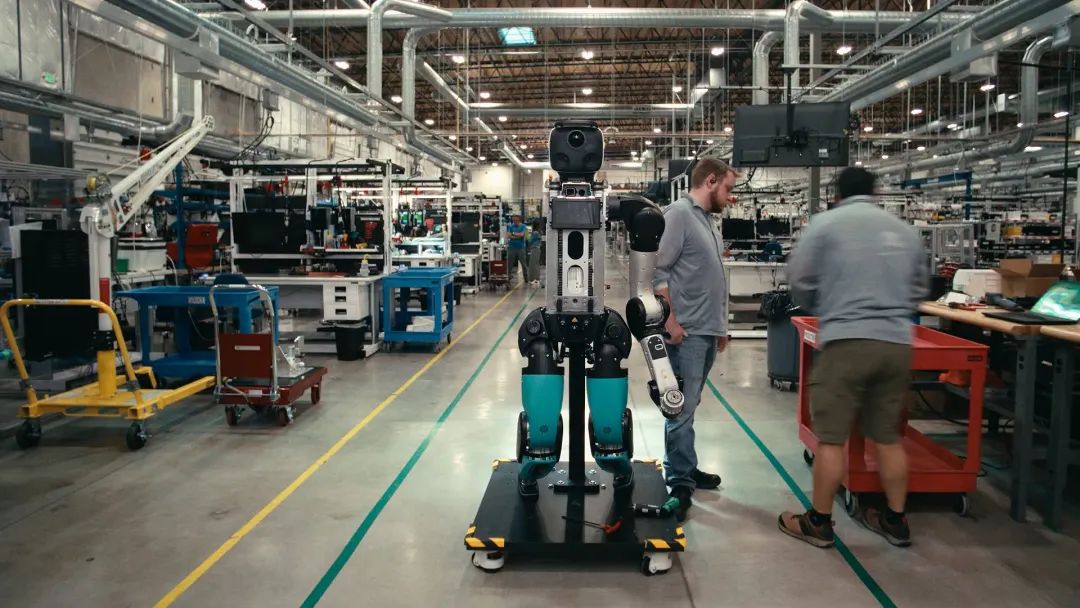
So the one-second snapshot can be interpreted as follows: the ability to take this set off from the expensive two-legged carrier and put it back on a much cheaper backrest. After removing the high-torque joint module from the leg, the perception, operation, safety strategy, and adjustment capabilities of the Arc can all be preserved. According to industry measurements, the executor accounts for about half the cost of human-like robot parts, and the two legs are the most concentrated place for the executor.
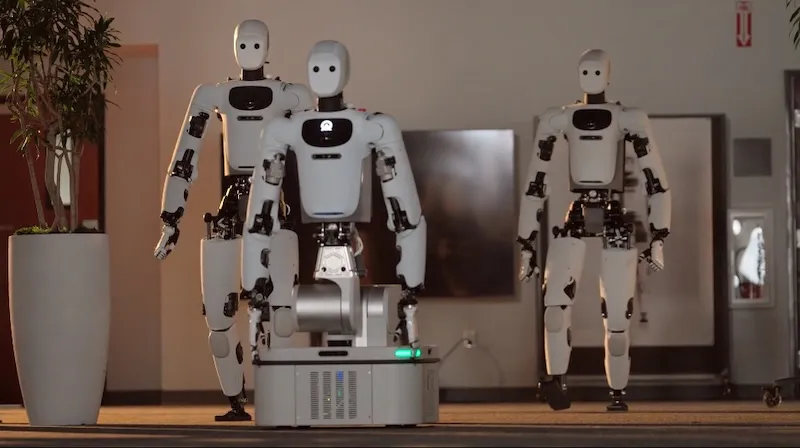
Apptronik is also following a similar path: Apollo 2 offers both two-legged and two-wheeled configurations at the same time; the wheeled version intentionally aligns with existing industrial mobile robot safety standards, with the goal of reaching customers today. UK Humanoid's KinetIQ architecture is positioned to be able to simultaneously schedule wheeled robots, bi-legged, and even non-human robots.
From this point of view, the $200 million PIPE that Foxconn is investing is more like a cost-cutting curve: Agility can't move this capability to a cheap base and then rely on the electronics manufacturing supply chain to squeeze down mass production costs.
02.
How much money can you save by cutting off your legs?
Wheelchairs are cheaper than bicycles, which is an industry consensus. The only issue is how cheap they actually are: some say that bicycles can cut the overall cost in half, and some say that bicycles and bicycles cost 10 times as much as bicycles. Rather than referring to these chaotic experience figures, it is better to look directly at the cost curve given by Agility itself.
Investor materials give three grades of BOM material costs: $150,000 and $200,000 for the initial public offering phase; 1,000 units per year, down to about $750,000; 10,000 units per year, down to $35,000.
Revenue side: RaaS subscribes for about $8,500 a month, $102,000 a year, and charges a one-time deployment fee of $250,000; buys an integrated system for about $200,000, adds up to $20,000 deployment fees, and charges about $36,000 a year for Arc software and maintenance.
The real problem lies in the slope of this cost curve. From 200,000 to 75,000, the threshold is 1,000 units per year; if you want to keep going down from 75,000, you have to rush to 10,000 units per year.
The pace of deployment given by Agility is about 800 units by 2027. RoboFab's full-scale design capacity is 10,000 units per year; multi-year orders of $300 million are dismantled, approximately 1,000 units in three years, and delivery must meet contract milestones.
Over the next two years, it will continue to survive in the $15.2 million BOM range. It will cover more than 150,000 material costs per year and 150,000 annual service costs, and will distribute the company's operating losses of about $140 million by 2025.
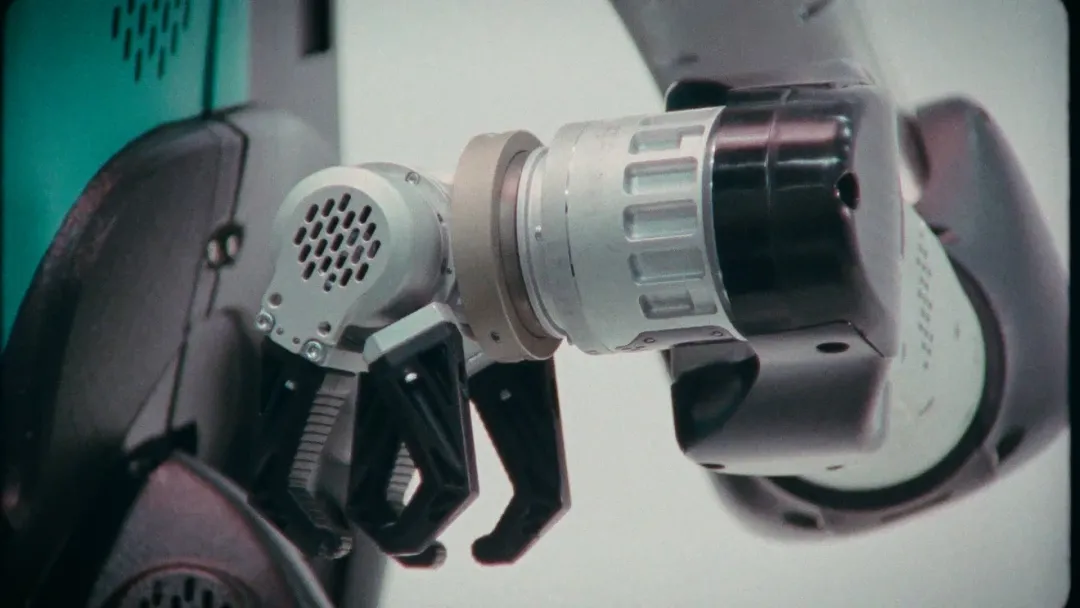
The problem with the wheel is the speed at which the cost curve decreases. The high-torque actuator on the legs, the force control sensor, the heat management, is the steepest part of the entire curve, and it is possible to leverage the curve at a thousand-scale stage.
65000 hours are all from the previous generation of v4s. The early delivery of Digit 5 is expected to last until the first half of 2027, and it is not yet available to any customers. 65000 hours are distributed to nine customer sites, with an average cumulative of about 7200 hours per site.
There is also a time window. ISO/CD 25785 1 is still in the draft stage of the committee, the distance that can really be taken to determine conformity, and the distance. This period is both an opportunity for Agility and a risk: the window period does not generate large-scale revenues; the draft is officially landed, and other players will also be on the same starting line.
The standard can only be changed in time. Orders must be delivered one at a time.
03.
The wheels are going to hit the wall.
Turning to the wheel also means one thing: actively abandoning one's most important technical barriers.
Agility's ability to replicate is the most difficult, without the need to modify the environment to fit a space designed by humans. Once it's turned into a wheel, this advantage is essentially wasted. It takes the $15.200,000 BOM that was originally intended to serve both legs and rushes into a battlefield that is already crowded with players and opponents who have already delivered.
On the US side, Apptronik's Apollo 2 follows a dual-shaped parallel route and has been continuously collecting data at sites such as Robot Park, Mercedes-Benz, GXO, and Google DeepMind.
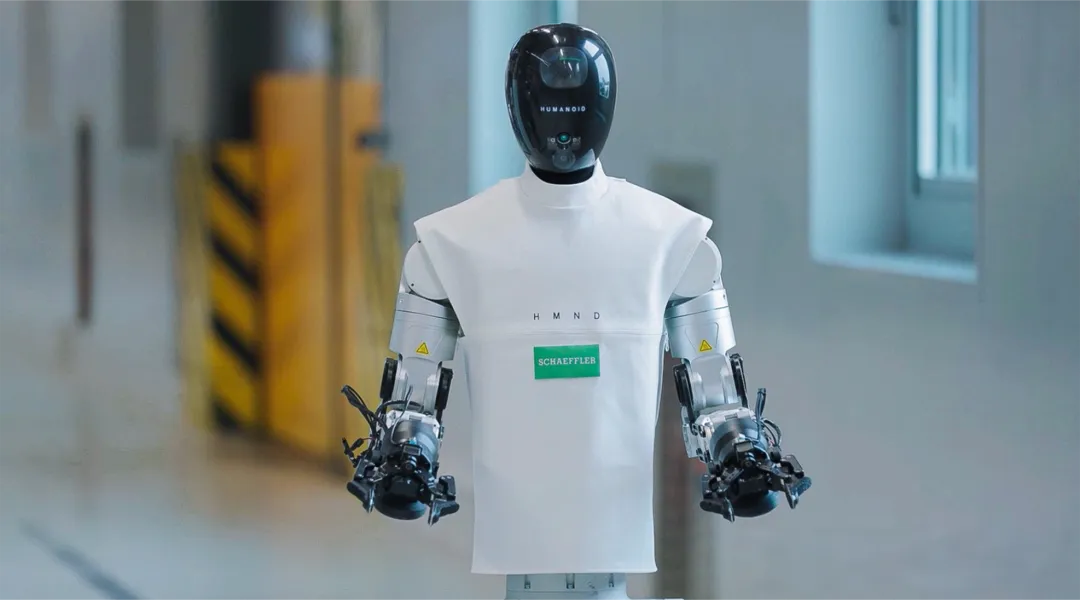
On the European side, Humanoid and Scheffler in the UK signed a four-digit wheel robot deployment agreement, with the first plans to go online in December 2026 at two plants in Germany. More noteworthy is its collaborative structure: Scheffler became the leading supplier of Humanoid executors at the same time, providing more than 50% of the supply of joint executors. The machine ran for eight hours at the Siemens Erlangen electronics plant, moving about 60 boxes of feed per hour; according to Humanoid's disclosure, the pick-up and placement success rate was more than 90%.
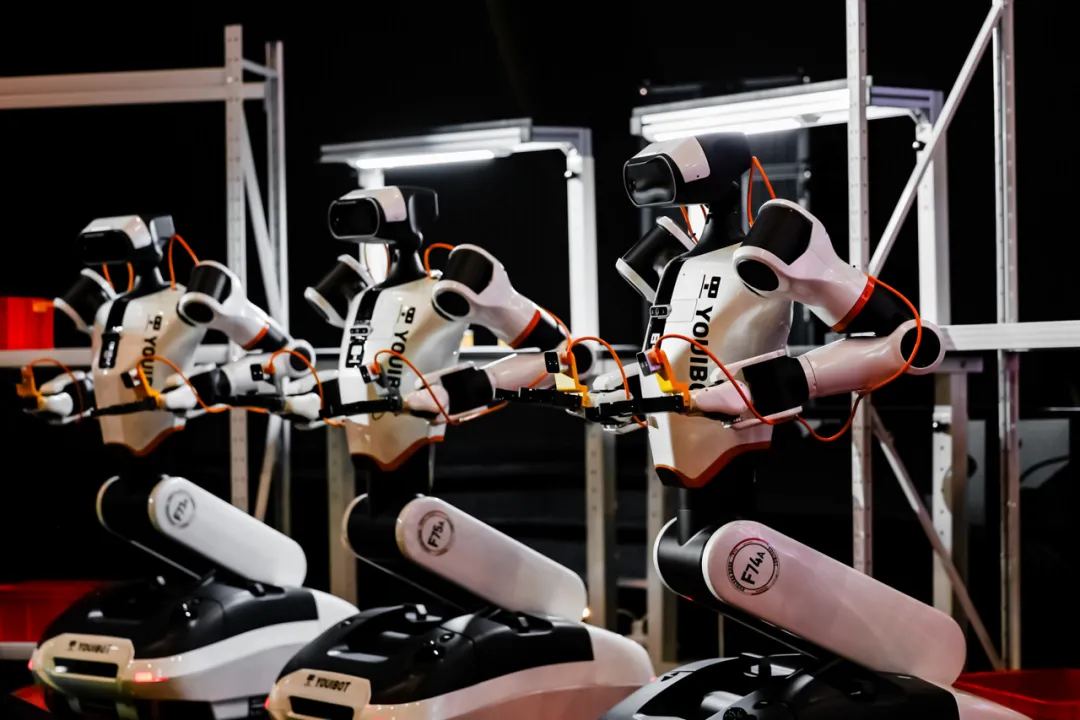
Look at the domestic market. In June, Yu Aichi Group released a rotary humanoid robot with a gap gap gap, a standard pricing of 29,90,000 yuan, and an imported model of 49,90,000 yuan, both of which are equipped with all-wheel-drive underpants. On the day of the conference, 4,000 subscriptions were signed with eight ecological partners.
Three types of competitors are already on the horizon: one that has completed dual form and security certification; one that turns supply chain giants into its own suppliers and channels; one that directly pushes prices below RMB 300,000.
04.
The most likely answer is a single arm.
In an interview with The Robot Report, Hurst asked a very specific question: "Will we make a brand new robot with a completely different name, shape, and shape, like a single-arm mobile operating robot?"
Multiple third-party agencies estimate that the global market for single-arm mobile operating robots will be approximately US$10.5 billion by 2025, projected to grow to US$40 billion by the mid-2030s, with a compound annual growth rate of about 13 percent to 20 percent.
If the first wheeled product was a single-arm mobile operating robot, the whole thing would logically go smoothly: without educating customers, without the need to argue the need for a role model, as long as its best-performing mechanical arm, verified security strategies, plus Arc's scheduling capabilities, are inserted into an inexpensive console for sale.
This also explains why less than a second of footage was shown in the video: the plan has not yet been finalized, but to let customers and investors know that the card is in their hands.
05.
Link to the Future
Back to that second shot.
Agility used the plug-and-shut mechanism to participate in the drafting of ISO standards, attempting to break through the barriers; Apptronik's approach was to use the wheel version to directly align with existing mobile robot safety standards, bypassing the uncertainty of new standards. The two competed for the same thing: entry into the workshop.
This qualification will be diluted over time. Once the standard becomes a formal rule, the scarcity disappears and the rest of the puzzle comes back to cost, equipment availability, delivery, and repurchasing. These are precisely Agility's current shortcuts: 65000 hours of running data belongs to the previous generation; $300 million orders correspond to less than 1,000 units; the goal is 800 units by 2027; Digit 5 has no on-site running data to date.
So turning to the wheel, the essence is a time-switching transaction with form. Taking the relevant access capabilities away from expensive carriers, relying on cheap underpants to load the machinery, turning the cost curve, waiting for the era of leg-like robots. Hurst's expression itself means this: legs are a long-term solution, and wheels are other paths that allow robots to penetrate more environment faster.
If this transaction can be completed, we will see: customers make money by buying wheeled robots, whether they buy the entry qualification, or the machine itself.
If Agility were to buy the machine itself, it would have rushed into a red sea of its own cost-free advantage and hit that already well-built wall.