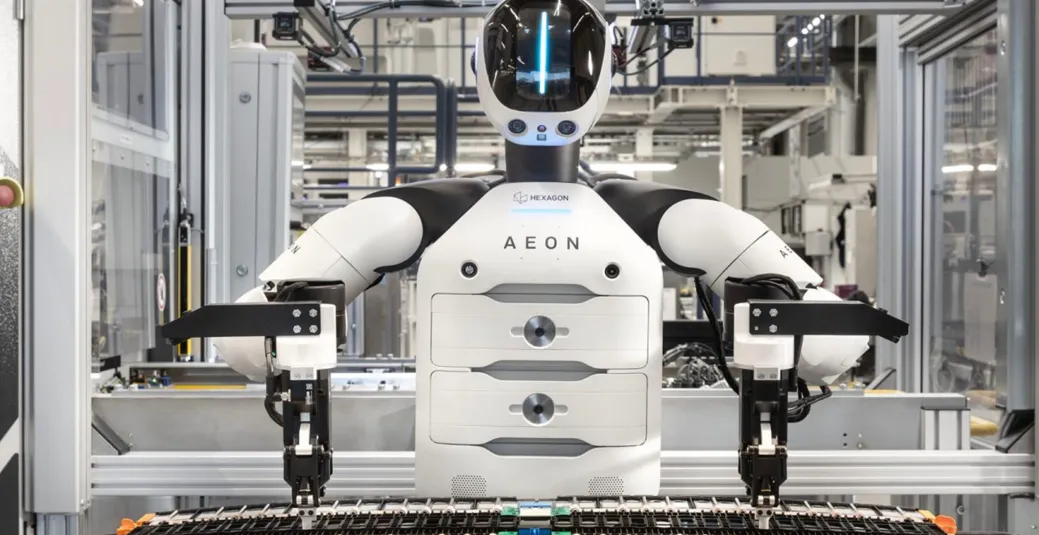
“ In the industry's frenzy of 2026, profits fall into the hands of people who aren't robots at all.
2026 is an industry-recognised year of mass production, and the data is on the rise. According to Counterpoint, around 19,000 human robots were shipped globally in the first half of the year, an increase of almost three times; Goldman recently upgraded the global market forecast for 2035 from $38 billion to $138 billion, with corresponding sales of 6.48 million units, up 4.7 times from the previous version forecast.
In an interview with the Central Television, Musk gave another quantitative level, which he believes will be at least 1 billion humanoid robots in the world in 10 years. The country is equally crazy, the first half of the year with more than 935 billion yuan of financing for the smart track, the production of smart factories in the first half of the year, the 20 thousandth robot of a single manufacturer, the first high-end general-purpose humanoid robot automated production line in the world, the story of capacity one day at a time.
In the first half of 2026, A stocks with the highest association with humanoid robots earned a combined net return of about 900 million yuan; the combined market value of these stocks was about 140 billion yuan, and the average static market rate stood at 90 times.
This 90 times is not basic, it's pricing ahead of time until 2028.
If you ask where these 900 million profits come from, you'll find that it's not the human-robot business, but industrial robots, car parts, control motors, these traditional mainstream industries. Draw out a revenue structure of these companies, the human-robot business accounts for less than 5% in their reports.
For the first time, the industry's newspapers, bringing together the industry's most dignified narratives and the hardest-to-see reports, were placed on the same table.

01.
In the past, there has been an increase in losses due to the collective burden of debt.
Of course, this does not mean that the industry is not doing well. Because most of the capital understands that the front-end hardware industry is in the start-up period, losing money is a normal strategic cost. But the report reads not how much, but where the lost money went.
In the first half of the year, A shares of several old corporate headquarters returned to their parent company with a net profit of about 606 million yuan, a net interest rate of 1.6%.
The nature of the losses has changed. This is 0.96 million yuan, a significant part of which is not research and development costs, but financial costs. Old brand corporate headquarters in the past relied on continuous mergers and acquisitions of overseas companies to develop the entire industrial chain itself, leaving foreign debt and interest rates, reporting debt back pressure, and the burning money invested in the future of the front-end industry, two different accounts of different nature.
Putting foreign-owned players in the same coordinate system makes the gap clearer, with the former having an entire car business or an accounting partner, the latter relying on the backlog of capital, and the A-capital leader, taking a high-leverage balance sheet, singling out the multi-currency flows of global leaders.
Before the downstream orders really hit scale in 2027, the main link quality is a fully self-developed hoax. Winning is only one premise, to scale before the cash flow breaks. This time gap is the biggest risk margin for the main link.
02.
97% share, not converted into reporting
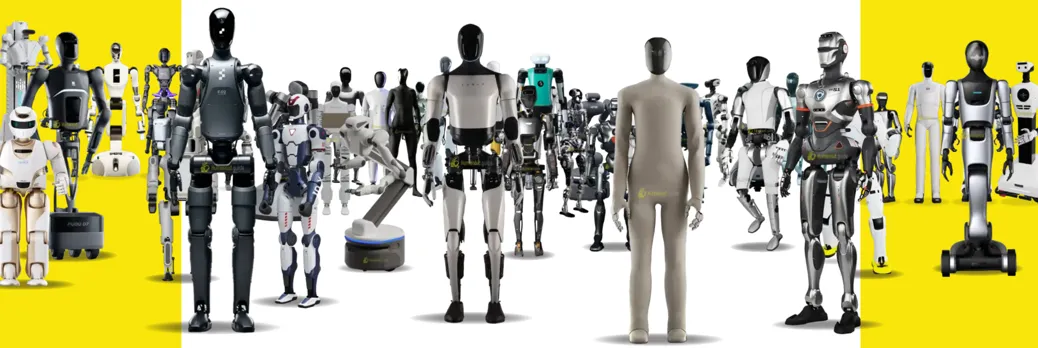
In August, the global share of human-robot shipments in China rose to 97 percent. This figure is good, but a different subset has changed.
Worldwide, about 20,000 units were shipped in the first half of the year, with Chinese manufacturers accounting for more than 97%, and 230,000 units were discounted in the following year. This volume was put into the headquarters of a publicly traded company, even with a profit of 100 billion, and it was based on emotions and valuation, not revenue.
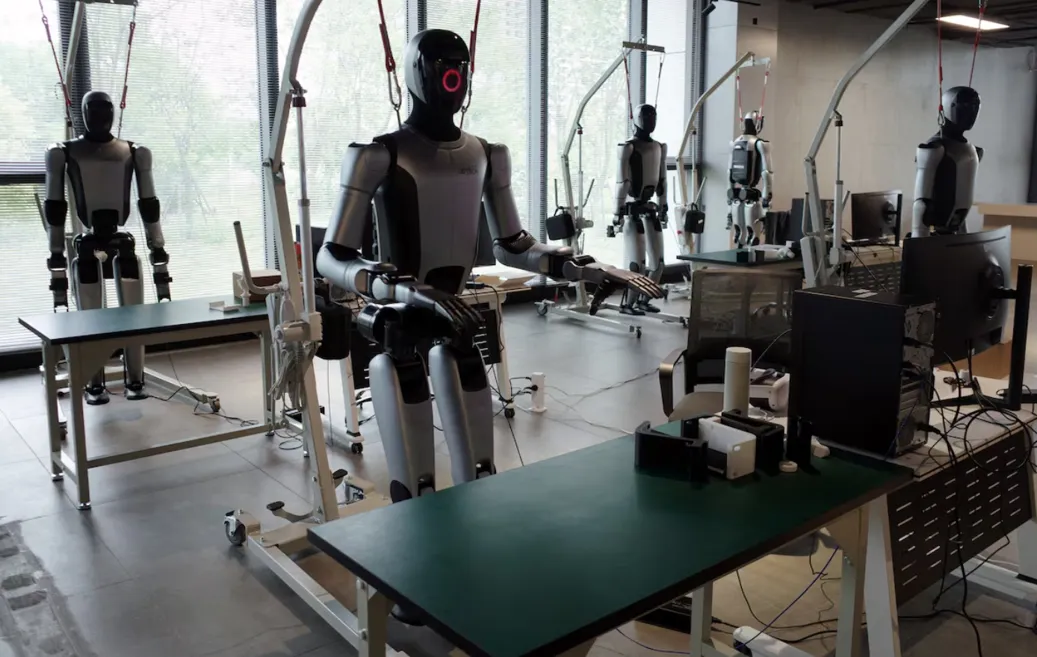
Then to the next level, where are the 97% of these items going? Factories buy robots that can't work eight hours straight on the production line, can't go through quality checks, can't interact with existing automated equipment. Now most manufacturers around the world have robots that can dance, sit down, and do a set of demonstrations that solve the problem of making people see, not making the factory save money.
The showroom is the marketing budget, the production line is the revenue, and at this stage of the industry the money is flow and policy rather than industrial money.
The global amount of humanoid robots can only stop in the showroom, not because the manufacturer doesn't want to enter the factory, but because the door to importation has not yet been crossed. Factories need to be stable, acceptable, able to deliver in parallel, equipment failure rates, operational responsiveness, engineering capabilities to connect production lines, these are the weakest link in humanoid robots today.
Manufacturers have demonstrated robots that have not yet been able to run for 8 hours on the actual production line. In order to keep up with engineering capabilities, the goods will be moved from the stand to the workshop, and the loss structure of the body will be reversed.
03.
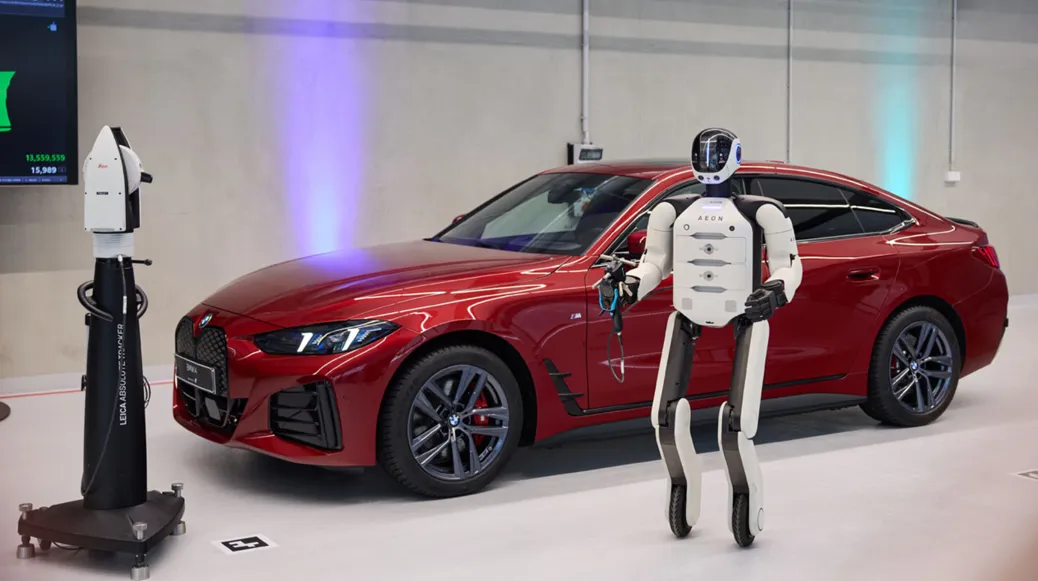
The real money is made by people who don't make robots.
One of the most uncommon stories in the media is whose pockets the money in the industrial chain has ended up in.
Take a look at the two main executive suppliers of Tier 1 in the first half of the year, with net earnings of about 2 billion yuan and 1 billion yuan respectively. They are mainstream cash flow, relying on cars and general automation to make real silver.
Looking back at the component layer, the rules are clearer. The linkage of the pulp reducers, RV reducers, planetary rolling column silks, the rate of domestic production has climbed to a high level in the last two years, the more suppliers have gathered, the more integrated factories have gained the right to bid, the suppliers can only make profits as collateral, the industry's overall gross interest rate is under pressure. This is not a business problem of one company, it is a replacement for the current rules of the industry.
It's a fact that has never been forgotten. The real money that is being made today is neither from manufacturers of physical robots, nor from manufacturers of pure robotics parts, but from companies that specialize in automotive and general automation, alongside the supply chain of robotics. Their bottom line profits are unrelated to robots, and the robotics business is close to zero in the reporting.
Hot money is priced at three words per man-made robot to these suppliers, priced at the share of man-made robots they can eat in the future; but what the reports show is that they are now earning money from the automotive and automation industries.
One is the future, the other is the present, and the cycle of profitability of an entire industrial chain is in the middle. The market is priced in 2026 according to the story of 2028, while the industry is still settling for industrial demand in 2025.
04.
The higher the fertilization rate, the less money you make
Behind this set of controls is a straightforward industrial chain law.
In the traditional sense, the higher the GDP rate, the higher the substitute dividend, and the more money the upstream earns.
This law was established in the previous few years, and the replacement of dividends was still in place. But when the replacement was completed, the law reversed. When the domestic production rate of a certain segment exceeds 70%, suppliers gathered, integrated factories gained the right to negotiate prices, supporting national products to slide quickly into competitive purchases, and the upstream share of insurance only allowed profits, and the overall gross interest rate of the industry suffered.
This scenario is not new. Power cells from 2018 to 2020 and photovoltaics from 2020 to 2022 have all been completed. The date of the replacement of dividends is the beginning of the industry as a whole.
This introduces an anti-intuitive logic of screening. Investing in the supply chain of humanoid robots should not follow the high-level link where the domestic production rate has climbed to more than 70%, just to see that the domestic production rate is less than 30%, and the cash flow of the mainstream is large enough to hold the link in the long-cycle process inputs.
If you look closely at the three criteria used by China's publicly traded robotics companies, you will find that at the same time they meet technical barriers, the mainstream cash flow is positive, and the robotics business contributes to independent profits, mostly concentrated on 30% to 50% of GDP.
The closer the link to the already domestic product, the more difficult it is to get excess profits; the closer the link to the non-domestic product, the pricing rights brought by process upgrades remain. Interestingly, this law and the intuition that retailers buy at the rate of domestic production is the opposite.
05.
Link to the Future
A humanoid robot isn't a phony proposition, but it's also not a credit card that can be used indefinitely.
We believe that in the next 12 to 24 months, the human-robot industry will gradually enter the engineering competitions. Who can get robots from the showroom to the workshop, who can keep the equipment running for 8 hours continuously, who passes the quality inspection, who has already automated production lines connected, who has qualified production volume. Deliveries account for 97% of the global volume are not the Citadel, the import rate is only; financing is not cash flow, the acceptance rate is only; domestic production is not a security bubble, the supply chain is only a link.
So, the future judgement coordinates are only one: time. Because the direction of humanoid robots is virtually uncontroversial globally, the controversy is all about speed. Speed is not determined by narrative, but by good rates, supply chain verification cycles, downstream order rhythms. These slow variables are not accelerated by rising stock prices. Current pricing is time, not direction.
We think there are three counterfeit indicators to follow: first, whether the gross interest rate at the linkages such as pulsed accelerators, RV accelerators, planetary rolling column silks can stop and return to above 35 percent; second, whether the import rate can break 15 percent in 12 months; and third, whether there is a purely legitimate company that makes human-robot business revenues of more than 5 percent.
By then, the winners must be companies that can turn technology into goodwill, turn orders into acceptance, and turn shares into cash flow.
The end of humanoid robots is believable, but the road to the end is still to be paved with one report.