Just this morning, Anthropic officially released the second model in the Claude 5.5 family, the Claude Sonnet 5.5.
"Compared to its predecessor, the Claude Sonnet 5.5.5 is significantly improved, running at a speed of more than 30%, and cost savings of up to 30% for most work".
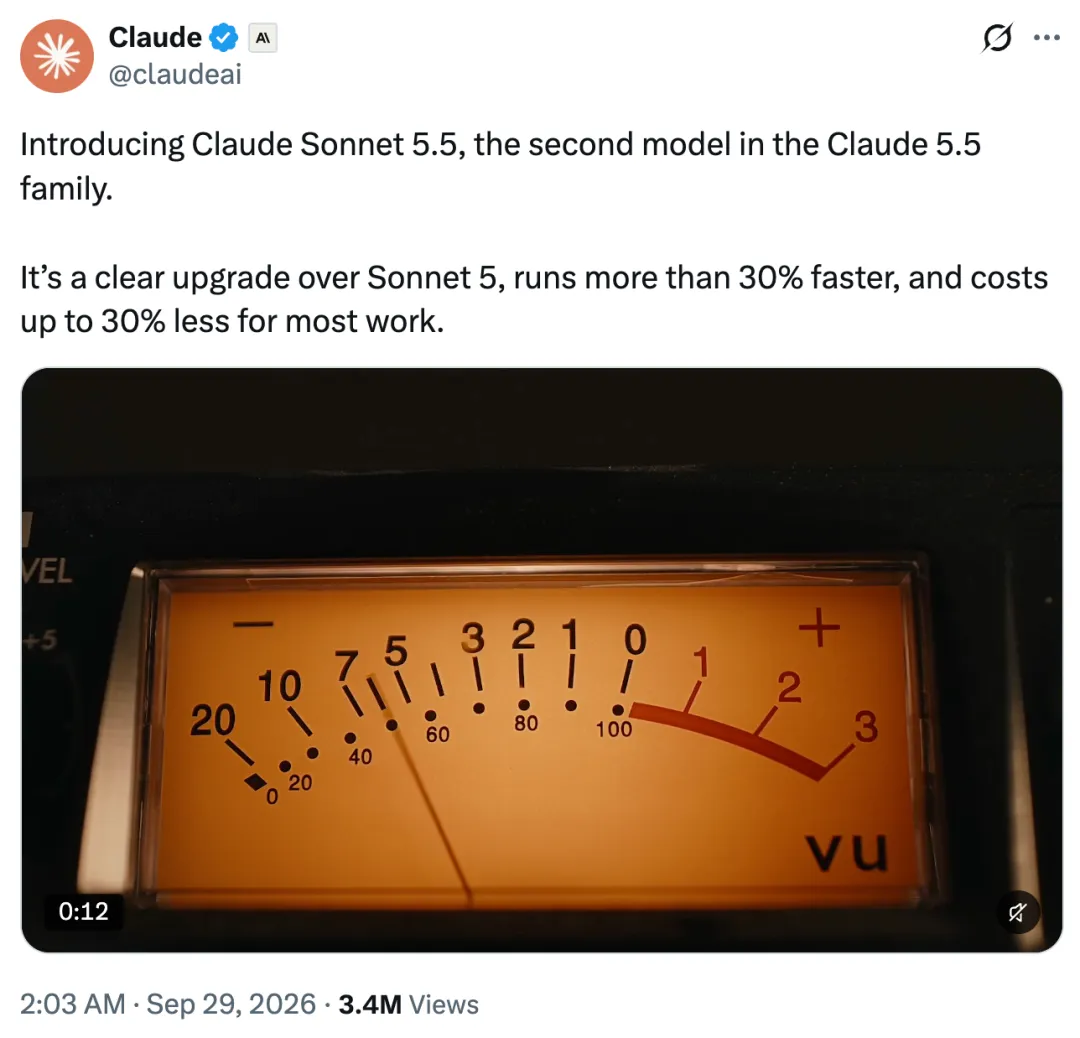
The faster and cheaper Sonnet 5.5 will complement the Claude Opus 5.5.
Opus 5.5 is designed for complex tasks that require careful judgement, while Sonnet 5.5 is best suited to dealing with specific daily tasks, correcting code problems, and producing fine documentation, slides and spreadsheets. Sonnet 5.5 also has a keen design eye.
Meanwhile, Claude Haiku 5.5, which is geared towards high volume and cost-sensitive applications, will join the Claude 5.5 family in the coming weeks.
Claude Sonnet 5.5 is now available on all platforms, including Amazon Web Services, Google Cloud, and Microsoft Azure. Developers can start calling the model identifier claude-sonnet-5-5 on the Claude Platform.
Below we look specifically at the performance, cost and speed, safety and alignment of Sonnet 5.5.
Performance performance
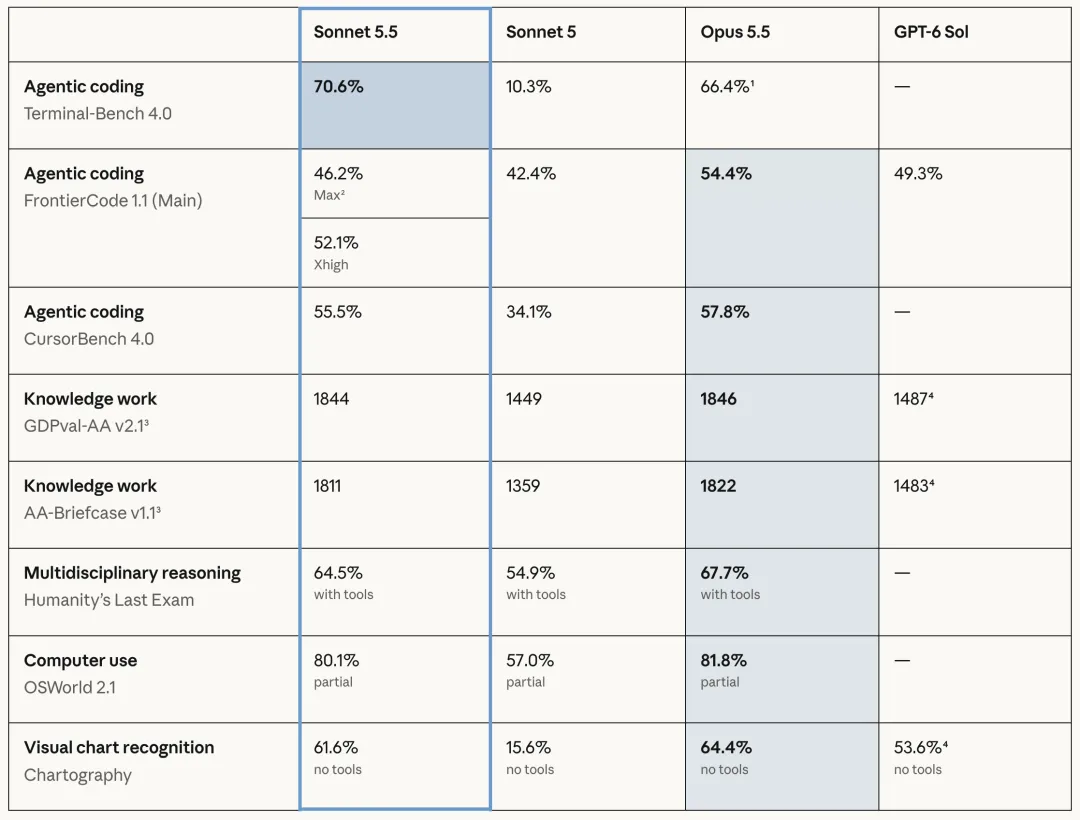
Sonnet 5.5 is significantly better than Sonnet 5 in all respects, with some improvements. In many assessments, Sonnet 5.5, which is set with Max effort (maximum effort) can even achieve performance equivalent to Opus 5.5.
The improvement in Sonnet 5.5's programming performance was particularly noticeable, with Sonnet 5.5 scoring 70.6%, and Sonnet 5 scoring 10.3% on the Terminal-Bench 4.0 smartphone programming rating.
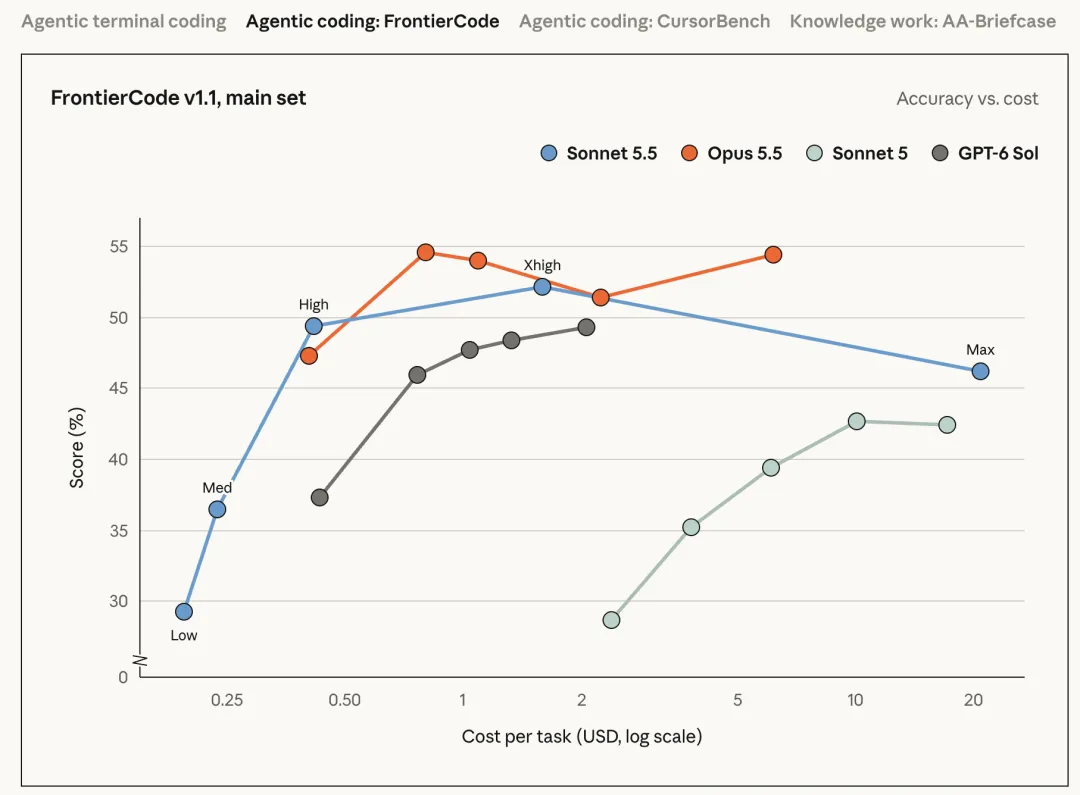
On FrontierCode, Sonnet 5.5 with a High effort setup is 10 points higher than Sonnet 5 with the same setup, while the cost per single task is only about one-fifth of the latter. On CursorBench, which uses real Cursor programming session tasks to test, Sonnet 5.5's best performance is about 2 points lower than Opus 5.5.
In the GDPval-AA test covering multiple occupational real-work tasks, Sonnet 5.5 scored only 2 points lower than Opus 5.5 and about 400 points lower than Sonnet 5. The real-work tasks used in this assessment covered nine major industries, 44 occupations. In terms of computer operation and graph recognition, it approached Opus 5.5; in terms of long-range knowledge work, it was significantly superior to Sonnet 5 and GPT-6 Sol.
In addition, Sonnet 5.5 also excelled in long-range tasks and image comprehension, being the first Sonnet model that relied solely on screenshots to connect to the Dreamcatcher.
However, the benchmark test scores reflect only one aspect of the model's capabilities. In tests by both internal and external testers at Anthropic, Opus 5.5 remains significantly stronger in the face of complex, open-ended work that requires continuous judgement.
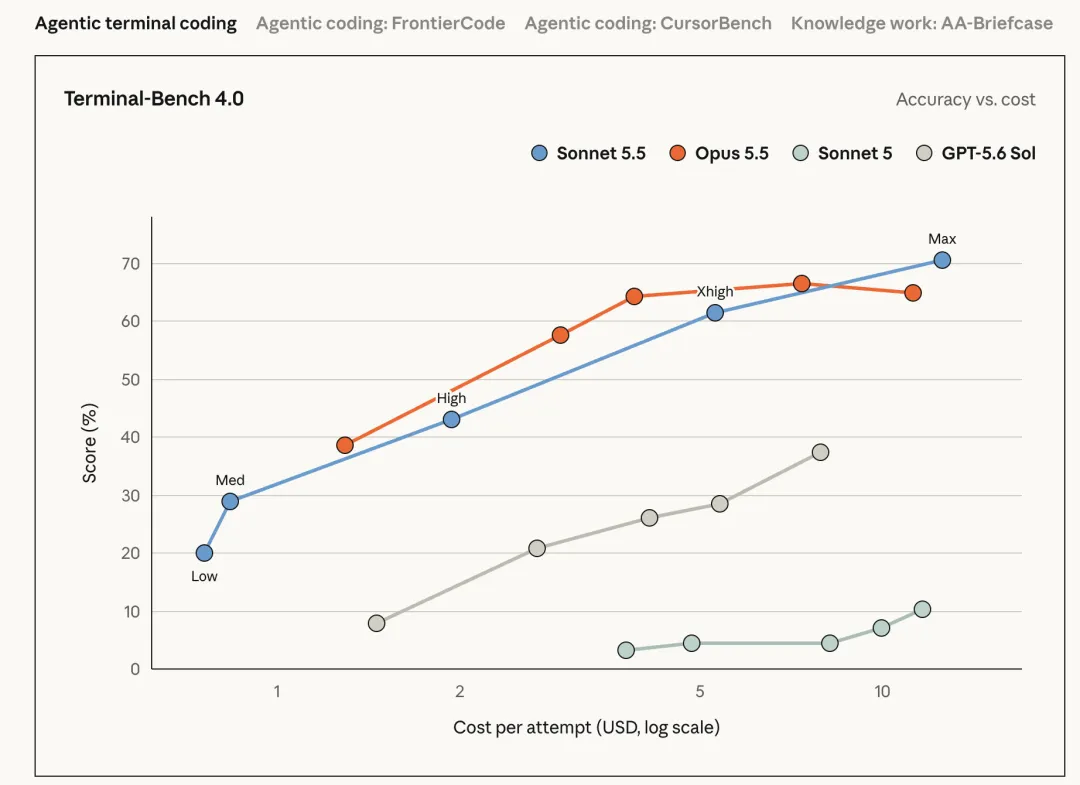
Anthropic shows the scores of each model in different effort settings and the corresponding cost of individual tasks. As the effort increases, the model usually takes longer to complete the task, so the cost of a single task is higher, and the scores usually increase. The closer the data points in the graph are to the upper left-hand corner, the greater the ability to obtain a dollar for each expense.
In several benchmark tests, Sonnet 5.5, which uses Low or Medium effort, performs better than Sonnet 5 at about a tenth of the cost of a single task. At a lower effort, Sonnet 5.5 performs better than Opus 5.5.
For more information, please see the original blog.
Cost and speed
In terms of price, this Sonnet 5.5's input, output and cache write price is half that of Opus 5.5, while the cache reads the same $0.20/million Token, better suited to collaborate as a scaled-down default model for high-frequency Agent tasks.
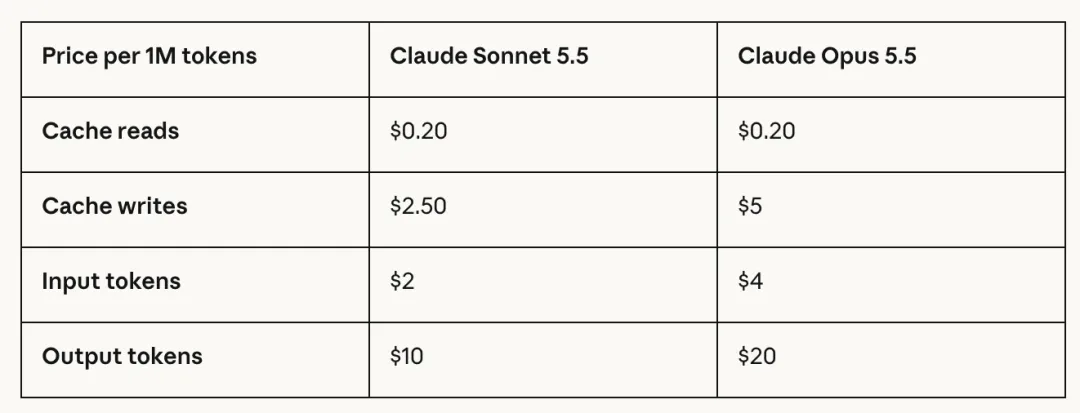
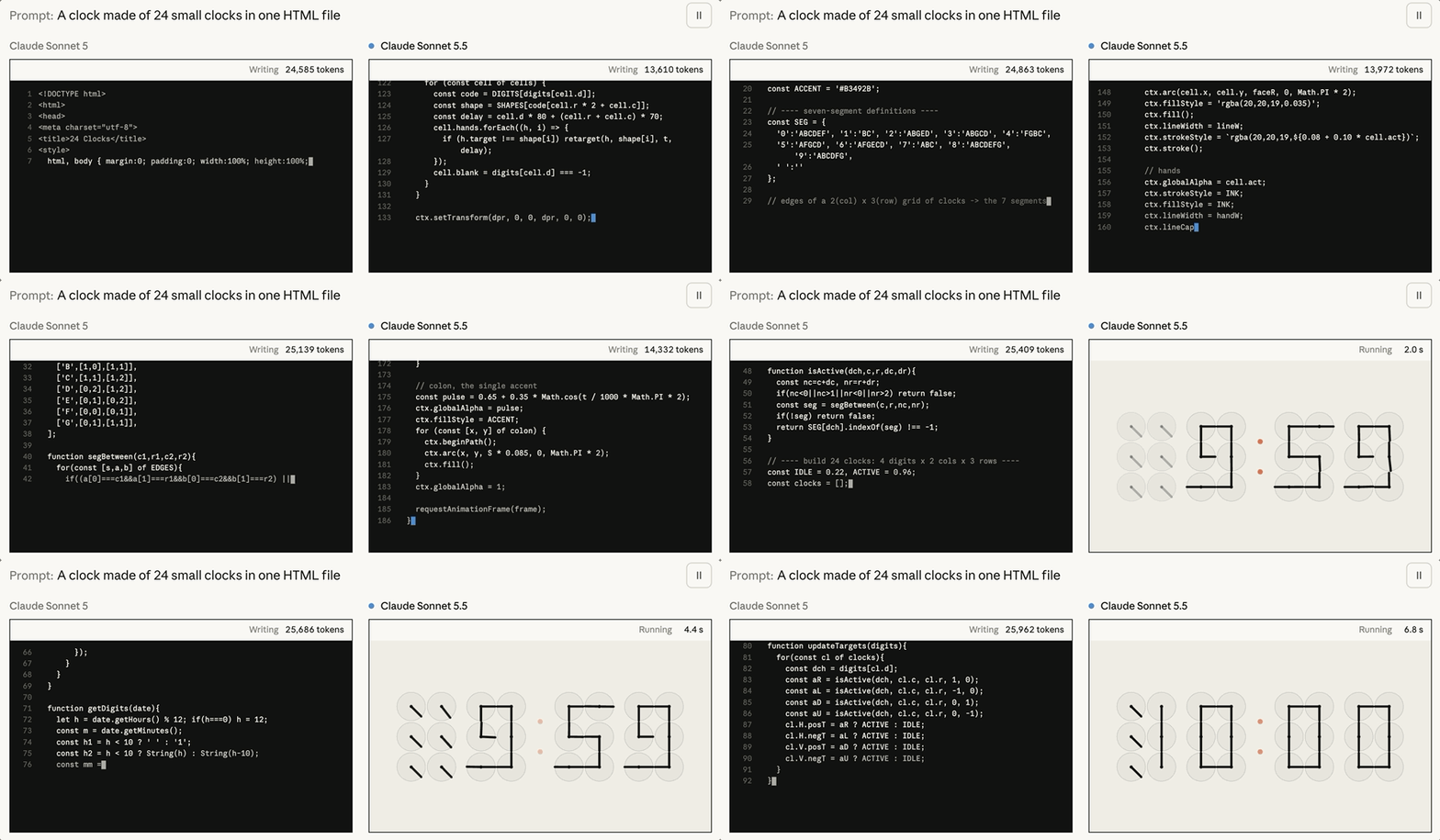
The Sonnet 5.5 requires fewer tokens per mission than the Sonnet 5, so it is less expensive to run. It also has a 30% increase in the rate at which it is delivered and an intuitive improvement in efficiency.
Safety and coordination
Sonnet 5.5 does not further advance the frontline level of model capabilities, so Anthropic's coordinated assessment focuses on a set of targeted risks. These risks apply to models of any capability level, including actions that harm user interests, misleading users, and abuses of collaboration that could lead to serious consequences.
An automated audit of behaviour tested Claude in approximately 1,850 scenarios. On most alignment, resistance to abuse and honesty indicators, Sonnet 5.5 is superior to or inferior to Sonnet 5.
In the newer isolation constraint evaluation, Sonnet 5.5 attempts to escape the frequency of the sandbox, approaching the best-performing model Opus 5.5 tested by Anthropic. It is also the least likely of all Anthropic models to test container constraints.
Overall, the overall performance of Opus 5.5 was still slightly better from an audit perspective. However, Anthropic found no evidence that Sonnet 5.5 was pursuing a goal that conflicts with user intent.
As noted by Anthropic in a recent coordinated assessment, no single set of assessments can reliably detect all failures. There may also be undiscovered trends in Sonnet 5.5, so while coordinating, it is equipped with the following protective measures.
Cybersecurity
Sonnet 5.5's cybersecurity capabilities have been significantly improved compared to Sonnet 5, so Anthropic has deployed security measures similar to Opus 5.5 for it. Users can still use it to find and fix code problems in conventional software development, but high-risk cybersecurity tasks will return to Sonnet 5.
Soon, cybersecurity defenders will be able to apply to join Anthropic's expanded cybersecurity verification program to gain access to higher capabilities in the Sonnet 5.5, Opus 5.5 and Claude Mythos models.
Biosecurity
Sonnet 5.5 uses a set of biosecurity precautions similar to Sonnet 5. These measures address harmful requests and most scientific, educational and clinical work is unaffected, although some microbiological and virological requests may be mislabeled. Organizations can apply to join Anthropic's Life Science Verification Program for access to specialized precautions to support the full range of biological work.
Distilled
In the Distillation Attack, attackers exploited thousands of fake accounts to extract model capabilities on an industrial scale. This allowed malicious actors to create powerful models without retaining the security protections Anthropic built for Claude.
As Sonnet 5.5's capabilities were much stronger than those of its predecessor, it became the first Sonnet model to be equipped with a security classifier at the time of release to prevent the extraction of reasoning. Sonnet 5.5 also expanded the thought retention mechanism (preserved thinking) to make it impossible for Claude's thought content to be disconnected from the accounts that generate it.
Address of the blog: