Within robotic joints, problems such as line bending, touch point wear, frequent maintenance, are becoming important factors affecting the long-term stable operation and system integration efficiency of robots. As robot freedom increases, higher requirements for reliability, integration and maintenance costs of joint connections are being raised. To address this need, the world's leading ultra-short-distance millimeter wave connectivity chip design company Shenzhen Microelectronics Ltd. has shown today the millimeter wave wireless wireless circuit millimeter non-contact connectivity application for robotic joints. Related products use a combination of wireless data transmission and power supply architecture to provide more reliable connectivity to the field of applications for robotic joints, electricity, and hand claws.
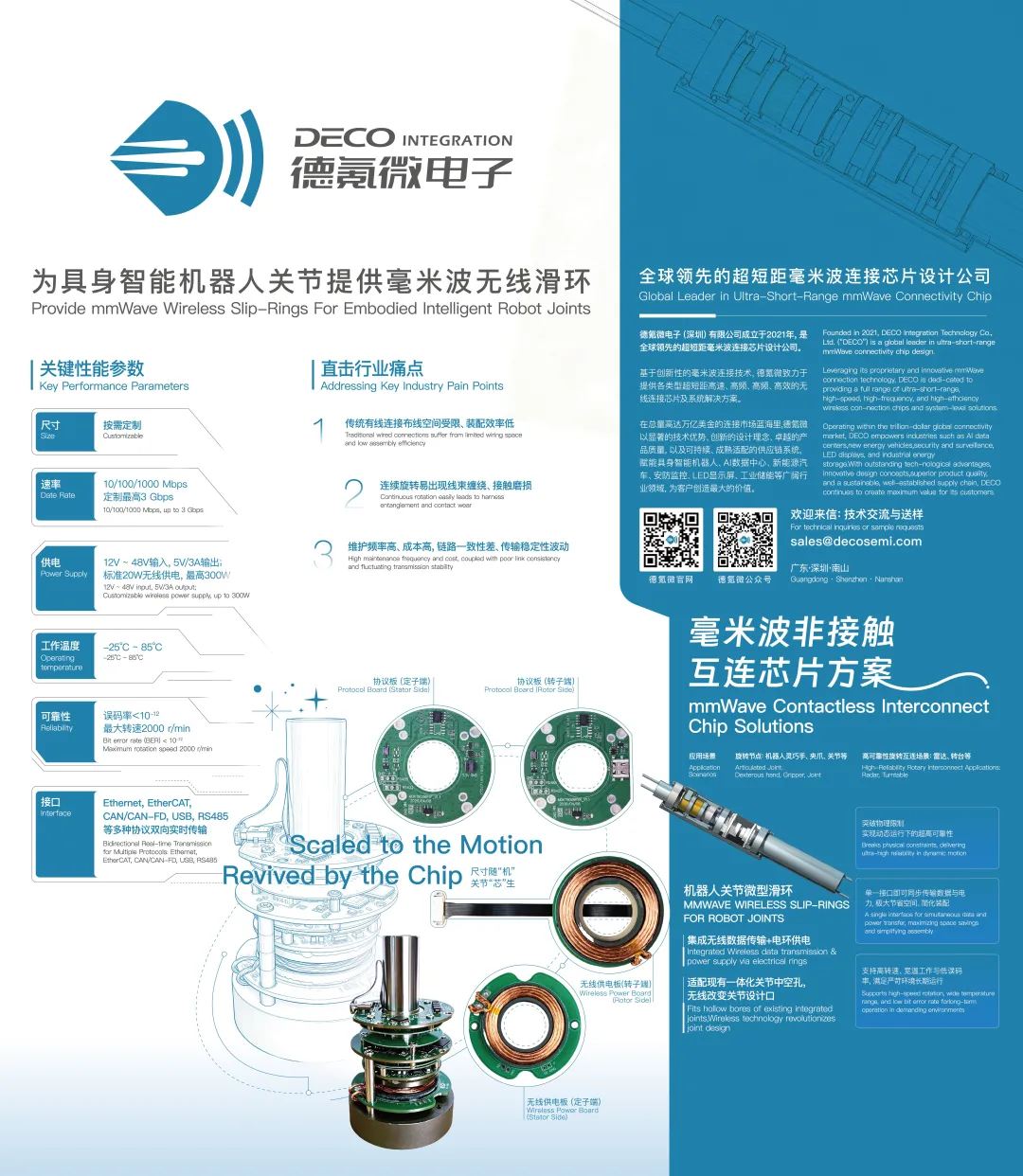
For robotic systems, joints are not only a motor execution unit, but also an important node for data transmission, control synchronization, and power supply connectivity. In continuous rotation, multi-frequency movement, and long-term dynamic operation, traditional wired connectivity and contact systems still have to cope with problems such as winding lines, mechanical touch point wear, maintenance replacement, and stability fluctuations. As robots move to higher freedoms, the importance of connectivity in overall machine reliability and engineering integration continues to increase.
In response to these challenges, the Microwave Millimeter Wave Wireless Sliding Circuit uses an architecture that combines millimeter wave wireless data transmission and power supply to integrate data communication and power supply in a rotating interface, reduce the constraints associated with mechanical contact points and complex wiring bundles, and improve connection stability and long-term reliability under dynamic operating conditions.
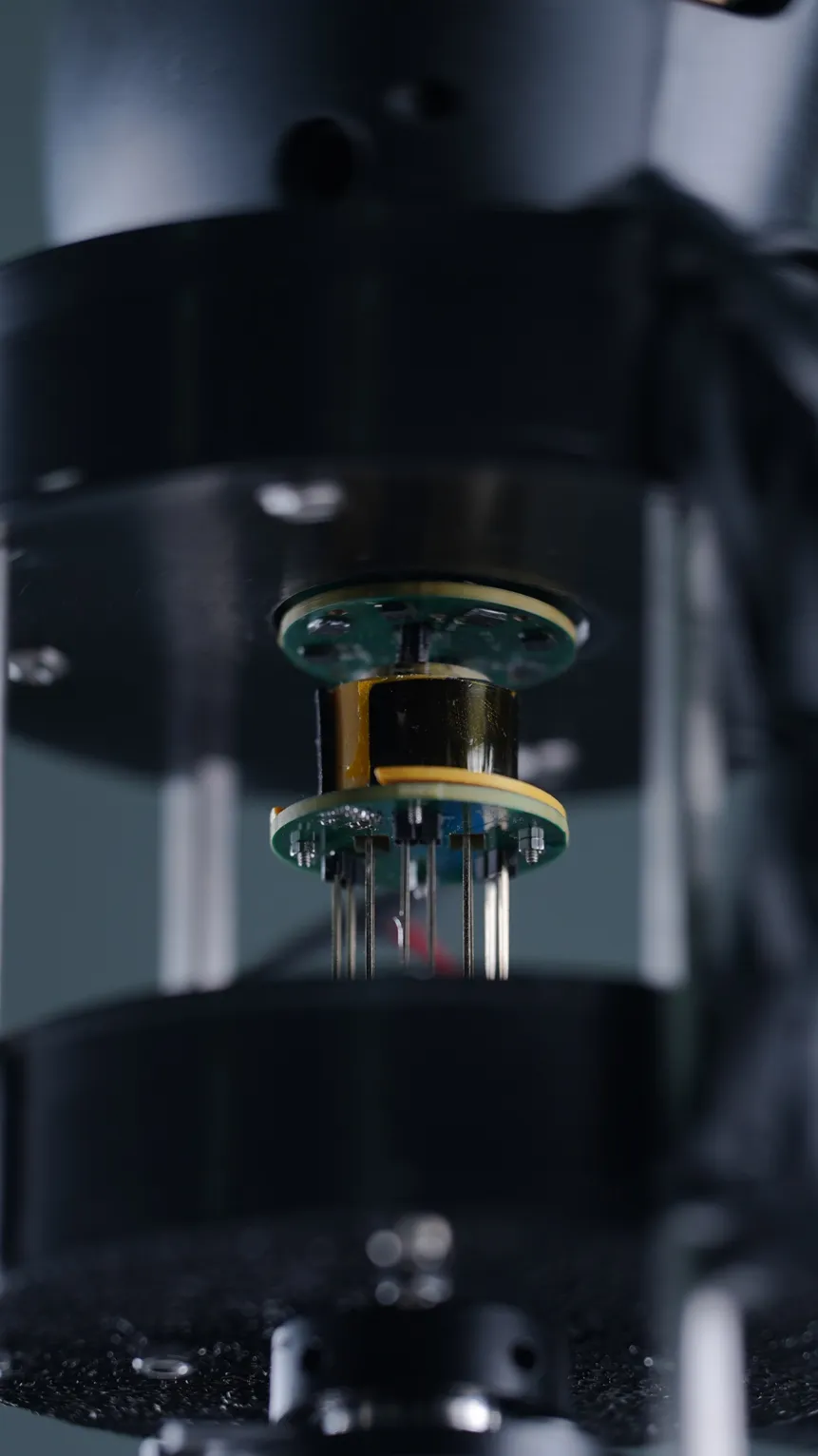
In addition to the millimeter-wave wireless sliding circuit, Deon Microsystems also demonstrates a millimeter-wave non-contact interconnection module for robot joint applications that supports mainstream communication protocols such as Ethernet, EtherCAT, CAN/CAN FD, USB, RS485, which can meet the needs of different joint structures and applications. The communication side supports 10/100/1000 Mbps, which can be expanded to a maximum of 3 Gbps in customized interface and structure configuration; the target error rate (BER) is less than 10−12, the maximum turnover speed can be up to 2000 r/min, the working temperature range covers -25°C to 85°C, and the modular design makes it easier to complete the system.
With the rapid development of the physical intelligence and robotics industry, robotic connectivity technology is continuously evolving towards greater reliability, greater integration and long-term stable operational capability. At present, the company has developed a product layout covering millimeter wave wireless sliders and millimeter wave non-contact interconnection modules, focusing on application scenarios such as robotic joints, smart hands, claw, and more, continuously promoting the engineering application of millimeter wave connectivity technology in the field of robotics to provide more reliable and flexible connectivity solutions for robotic enterprises.