Over the past two years, the robotics industry has almost formed a consensus: the next stop for robots is to become more human-like. From empowering big models, working with their hands and feet to walking with their feet, more and more businesses are powering on the same path, allowing robots to own human bodies, mimic human movements, and ultimately integrate into human production and life.
But Vietnamese began to think of another problem in which the human figure was one of its important directions, but the ultimate form of physical intelligence should not be defined only by the human figure unlike the human figure, but also by the human figure unable to solve the problem in real-life situations.
When AI moves from the screen to the physical world, it needs to learn not only how to behave like a caterpillar, but also how to perceive the environment, make judgments, and behave like a caterpillar.
The central question of traditional simulation is whether the acronym is not the same as the acronym, whether the skin is realistic, whether the action is fluid, whether the material can simulate the real anatomy. In essence, it is still a high-level toy logic: all the action is written in advance, taken up, tailed, screamed, and played in a loop according to the procedure.
Vietnam is trying to push this path forward: not only to replicate life forms, but to repeat life's behavior. An intelligent body with a truly vibrant sense of life should be able to generate its own behavior in the moment, based on changes in people, environment and other intelligent agents, and it should not only "move", but also know "why move".
When this life-threatening mushroom was actually injected into the product, the gap with traditional models became apparent. Recently, the Shenzhen Museum of Nature opened, and two living mushroom-like dinosaurs from Vietnam emerged from 338 simulated models and became the treasure trove of the town hall.
As a result, Vietnam has redefined hybrids as hybrids: physically intelligent agents with physical, perceptual, decision-making and behavioural capabilities.
If humanoid robots are trying to replicate the human workforce, the way in which they want to reproduce is the way in which life relates to the world. This is also the first boundary that Vietnamese people are trying to draw for a new path. While others are studying how to make robots more like humans, Vietnamese people are already thinking about how to make AI autonomously generate behaviour in real physical space.

01.
From re-creation of morphology to cognitive repetition of morphology
A new pathway has actually been set up to answer a question: what kind of product can be called a superbiogenic organism? The answer given by Viet Jian is cognitive reinterpretation. Simply put, past biotechnology has largely remained at the physical level.
However, it is not the same as a live cat. Because a real animal will be alerted to the presence of a stranger, will adjust its posture according to changes in the environment, and will change its behavior due to the presence of a companion. The same stimulus at different times, in different states, and may even receive a completely different response.
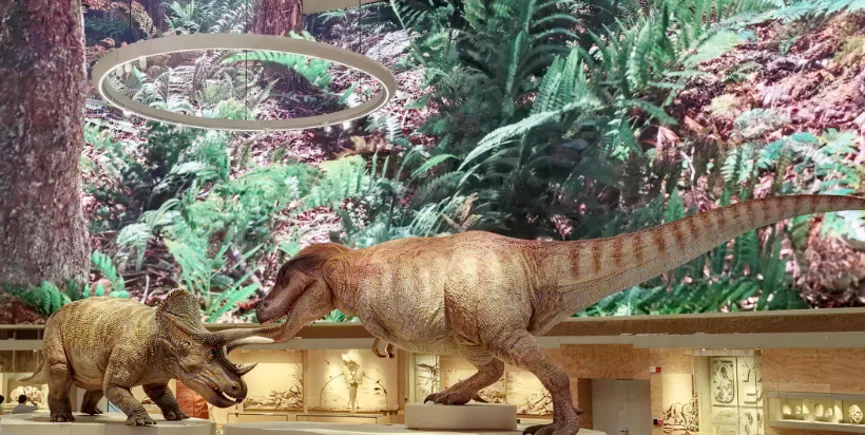
(Note: The Shenzhen Museum of Nature has used Vietnamese super-animal dinosaurs)
This self-reflection in uncertainty is precisely an important source of human perceptual vitality. Thus, over the physical layer of traditional life imitators, Vietnam added a new technological dimension: physical cognition.
Super-simultaneous organisms no longer rely on a fixed scripted loop of playback, but instead use sensory systems to obtain information from the surrounding environment, combining decision-making models with their own role and state-generating behaviour to form a closed loop of sensory feedback to understand decision-making feedback.
When a visitor approaches, why does it turn around; when strange voices appear, why does it wake up; when another intelligent body approaches, it should approach, hide or alert. When these actions no longer stem from the process of writing death, but are determined jointly by the environment and its own state, it is only when life-forms begin to replicate a form of life from a mouse to a mouse that replicates a life form.
This is also the first set of racetrack standards that Vietnamese authorities have attempted to establish: mimicking its shape is just the starting point, giving it the ability to understand the environment and self-generate behaviour, and is the real watershed of surrealism.

02.
From museums to science and education, family: the path to commercialization of physical intelligence
In the Shenzhen Museum of Nature, the Dragon Dragon and the Dragon are just the flagship models of the Vietnamese surrealist matrix. In fact, Vietnam has already developed a product line that covers the three main scenarios of literature, education, and family.
(1) Blog: Creating a dynamic and vibrant life scene
In addition to the Shenzhen Natural Museum, Vietnamese products have also made their way into tourism projects such as the Chinese Dinosaur Park (Chinese Dragon Park), the Shanghai Dragon Zoo (Shanghai Dragon Zoo), and other attractions.
For the venue, its core value lies in breaking the boundaries of the traditional exhibition static set-up or screenplay loop. Through multi-intelligent collaboration and autonomous behaviour generated, surreal biology delivers continuously updated dynamic content to the travel space, allowing visitors to have a different interactive experience each visit, thus increasing the attractiveness and visitor rate of the venue.
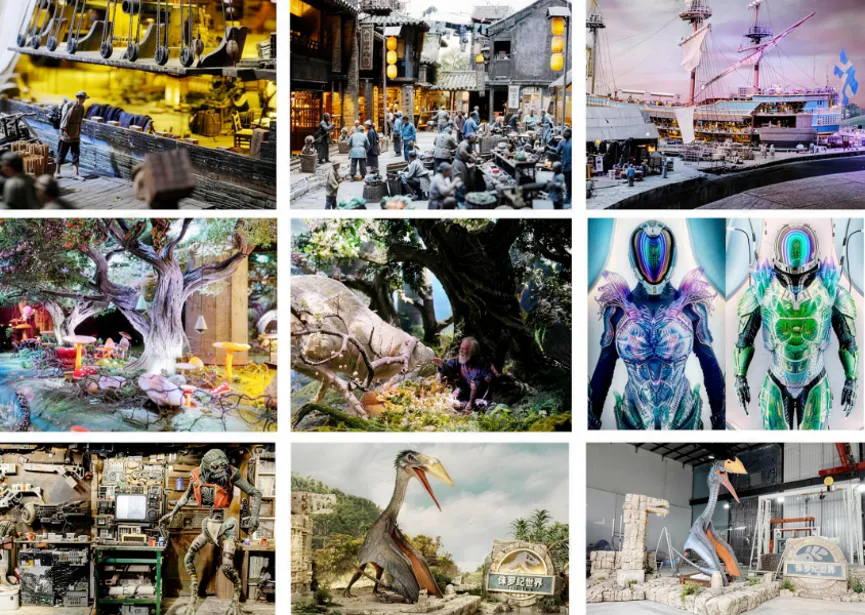
(2) Research and education: From teaching tools to research platforms
In the field of science and research education, traditional educational robots are essentially a demonstration tool for screening pre-set programs + remote-controlled execution of screens, where students operate by instruction and verify known results. In Vietnamese superbiologists provide an inspired educational solution. Due to their unpredictability of behavior, students are faced with no longer a defined program output, but a screening of organisms that respond differently to different stimuli.
(3) Family consumption: From cooking tables to lighting tables
In the consumer-level market, Vietnamese will be stepping down from the brothel-level to the brothel-level, with the introduction of two flagship products from its parent company:
A seemingly stationary dinosaur egg breaks slowly in front of the child, and the internal mimicry of the larvae is gradually revealed along with the breathing rhythm, and is able to respond in real time to touch, light, and sound. The product is centered on lightness, safety, and strong interaction, allowing children to experience the process of life's birth in an intuitive way, and is the first point of contact for home users in Vietnam.

Mind miniature replicas: triangular dragon, Chinese dragon, and other super-sized replicas, with realistic anatomical details and fluid action feedback. They are no longer animated model kits, but can be placed in the mind, building long-term emotional connections with children. The product is a signature product for family-friendly, family-friendly and IP-derived consumption, where the super-replicas move from public space to private life.
From large-scale exhibitions in Beijing, to research platforms in the field of education, to consumer-grade products for home desktops, Vietnam has developed a clear, replicable business landing logic: establishing brands and technical benchmarks through large venue projects, achieving large-scale revenues through education and consumer-grade products, and ultimately building an all-ages, full-scenes, ultra-biomics business ecosystem.

03.
From a life-shaped creature to a whole ecosystem
A real life is one that never exists in isolation. Individuals in nature observe the environment, respond to their peers, and change behaviour because of competition, collaboration, and risk.
This is the next layer of Vietnamese definition of super-simultaneous organisms. In the past, even if there were ten mechanical dinosaurs in an exhibition hall, they were essentially ten independently operated devices.
When different intelligences are able to perceive each other's locations, states, and behaviors, one alert can change another's actions; a visitor entering space can also become a variable that affects the entire system. At this point, what happens in space is no longer a play-by-play show, but a dynamic system that constantly generates new behaviors.
If the first stage is to allow a machine to behave in accordance with its own logic, the next stage is to form a behavioural relationship between multiple intelligences. This will also redefine the commercial value of super-imitative organisms.
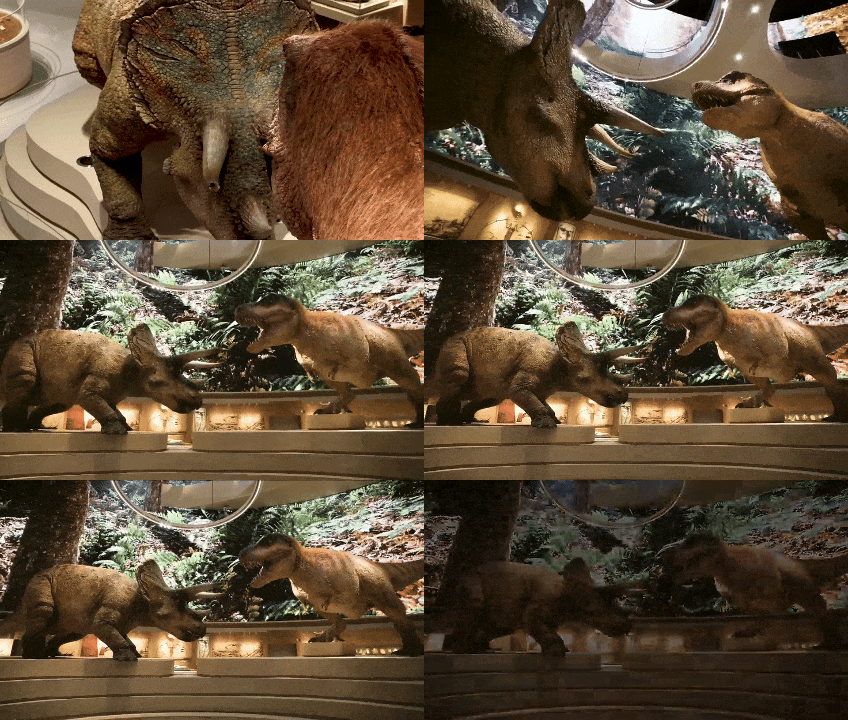
In the future, customers such as consumers and museums may not buy a dinosaur, a robot, or even a stand-alone object, but a whole spectrum of survival scenarios that can continue to operate: different intelligences have different roles, humans interact with robots, robots with robots, and the entire physical space has dynamically changing content.
Once traditional robot products are deployed, the experience tends to be fixed. Whereas a space driven by physical intelligence can continue to generate new behaviors, relationships, and even narratives. This means that customers may not buy a dinosaur or a standalone project, but a whole spectrum of life scenarios that can continue to function: different intelligent agents have different roles, humans interact with robots, robots with robots constantly, and the entire physical space therefore has dynamically changing content.
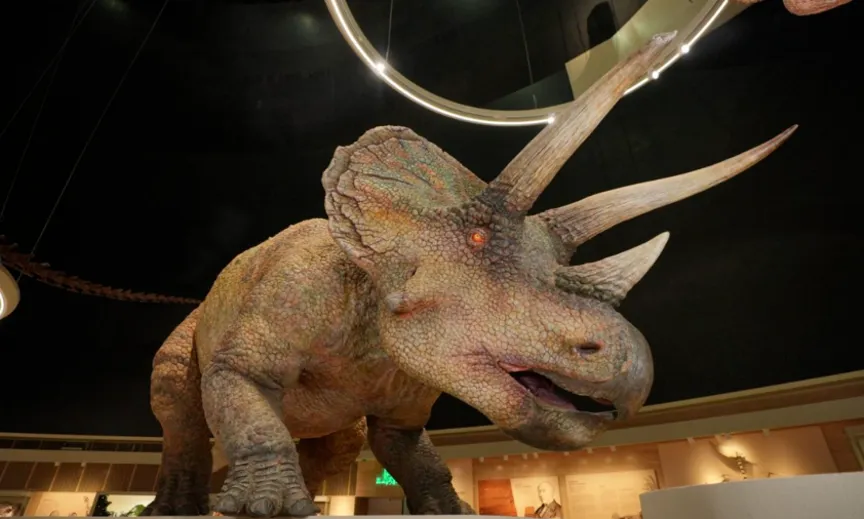
It's also the business logic that Vietnam is validating through projects such as the China Dinosaur Park, the Shanghai Dragon Zoo, and the Shenzhen Natural Museum, underneath which are robot controls, environmental perception and decision-making models that can carry dinosaurs, animals, all sorts of IP roles, and even imagined life that never actually existed.
From a longer-term technical point of view, the system has a different meaning.
Big models used to understand the world primarily from Internet data, whereas physically intelligent people needed to learn physical laws, spatial relationships, and behavioral costs in real environments. Every move, avoidance, interaction, and decision-making is a process of AI re-understanding the real world.
In the past, AI generated text, images, and video, and what Xinjiang is exploring is allowing AI to generate behaviour directly in the physical world. When individual intelligence moves further into group intelligence, superbiomics will open up not just a new robot class, but a new way of producing spatial content.
The dinosaur is never the end, it's just an intuitive enough beginning.

04.
Android apps with physical intelligence: value for bottom generic, top-level adaptation scenarios
When all robots are searching for the best body arm, the answer is that they don't have to choose one of the forms, but instead allow different forms to serve different scenarios, sharing the same set of brains. In the current domestic smart racing circuit, Vietnam is not one of the loudest concepts, but it is probably the leading enterprise with the most industrial application value.
This is very similar to the logic of the Android system. Android has become the cornerstone of the mobile ecosystem, not because it defines what a mobile phone should look like, but because it provides an underlying universal operating system that allows mobile phones, tablets, cars and TVs to be adapted to different use scenarios.
Currently, Vietnam's product layout covers four areas: the precise operation of collaborative robots in industrial and commercial settings; humanoid robots exploring how machines get closer to human living environments; multi-legged robots breaking through the mobility of complex terrain; and superbiomorphic organisms geared toward travel, education, and consumer settings, creating deeper emotional connections with humans.

The four forms respond to the needs of four distinct scenarios, but are supported by the same set of continuous evolutionary capabilities, movement control, environmental perception, decision-making models, and rapidly developing artificial intelligence technologies.
This means that what Xinjiang really builds is not a simple set of four robots, but an ever-expanding, physically intelligent platform, with each product line being both an independent product and a testbed for the capabilities of the entire platform.
The future of the robot is not to find the only correct form, but to allow the physical intelligence to enter the real world in more ways to create industrial value. When robots begin to adapt to the form, become widespread in factories, shops, museums and homes, generate large-scale industrial value, companies with universal capabilities are most likely to become this eco-friendly industrial infrastructure.
At that time, Vietnam must be at the center of the stage. Because it does not bet on some form, but builds the core of the ability for all forms to share the same brain, which is precisely the key infrastructure for physical intelligence from technology to industry.