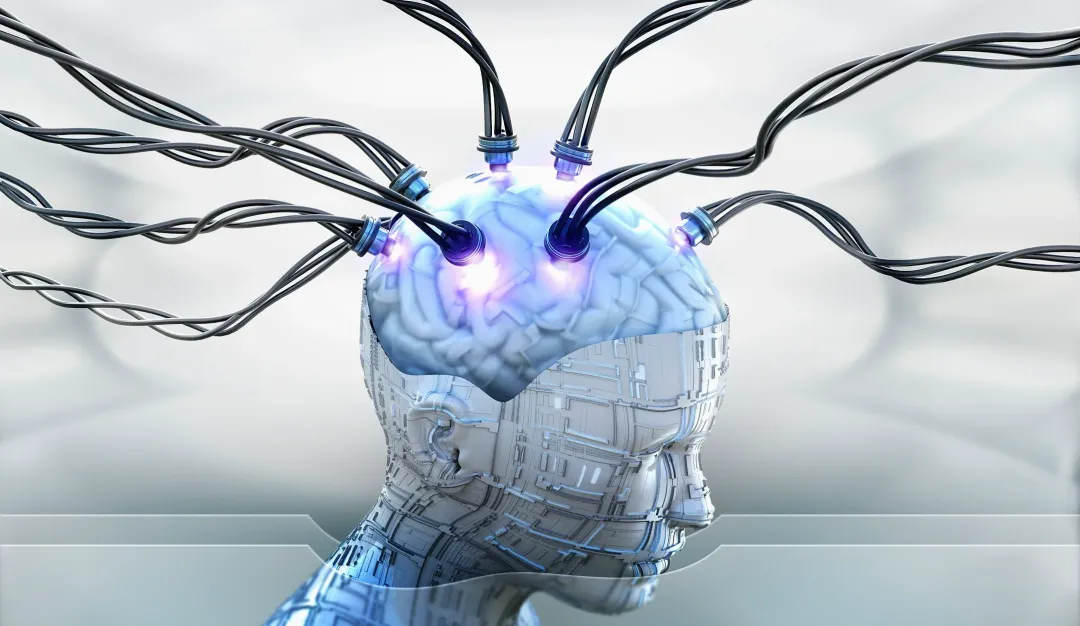
“ Four types of product form, one data dark line.
If you've been sleepless, you've probably been through a night like this: you're tired, but your brain is busy. A lyric runs twenty times, then jumps to the email that didn't come back this afternoon, and finally starts to remember the name of the high school principal.

You may have tried melanin, bracelets, bed bugs, but it's not the same as touching your brain directly, so it's not a cure.
Now, a bunch of brain interface companies are trying to change that -- headbands, pillows, mattresses, sleeping bags, all sorts of products have been around for the last two years -- and they're no longer just recording how well you sleep, they're just reading brain waves directly, judging where you're at right now, and then using microwaves or sound waves, directing brain waves to sleep.
Sleep is becoming an important landmark for the multi-year brain-machine interface industry looking for a commercial breakthrough.
01.
A market dominated by monkeys
It's finally time for an intervention.
Today, sleepwalking is becoming a huge necessity.
According to the China Sleep Health Survey of 2025, the sleep disorder rate among people aged 18 and over in China is 48.5%, representing more than 300 million people. This means that almost half of adults struggle to sleep in harmony every night.
This has also created a huge sleep market.
By 2025, the global sleep economy will be close to $600 billion. Of these, the market for the diagnosis, treatment and intervention of sleep disorders will be about $30.5 billion, accounting for more than 35% in Asia-Pacific, making it one of the fastest-growing regions globally.
But I observed that for a long time now, sleeping devices have only solved a problem of letting people know how to sleep.
In many sleep detection schemes, long-term multi-directional sleep monitoring is the clinical gold standard, requiring patients to sleep with an electrode for one night in the hospital, although accurate, it is difficult to get into everyday life.
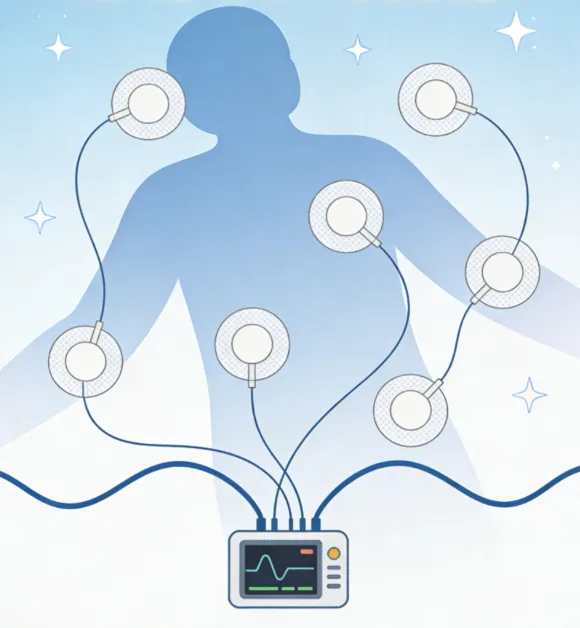
The global market for portable sleep monitoring headsets reached $2.13 billion in 2025, an increase of 67.2%, and is expected to exceed $12 billion by 2030.
These devices completed an important round of market education: the first time ordinary people saw their sleep, deep sleep ratio, wakefulness, and reporting from hospitals to mobile phones.
But seeing a problem is not the same as solving it.
For insomniacs, the most painful is not a bad sleep report the next day, but lying in bed at 3 a.m., physically exhausted and unable to turn off the machine late in the morning.
This is the limitation of traditional devices. The rings collect external signals such as heart rate, body movements, body temperature, and can only speculate on the state of sleep and cannot directly read brain activity. While sleep is essentially a switch in the state of neural activity, light sleep, deep sleep, rapid eye movement, correspond to different brain electrical patterns.
The value of the brain machine interface is here. It directly touches the neural roots of sleep problems and reads the brain's electrical signals, which is equivalent to getting the raw code for sleep.
But learning to read is only the first step, and real quality changes can be achieved after learning to read.
02.
The killer mouse of the brain machine interface
From opening the loop to closing the loop
The brain machine interfaces the value of sleep with two words at its core: closed loop.
The traditional ring is an open ring, and its only way of working is to collect data - generate reports. It can tell you that you didn't sleep well last night, but it can't make you sleep well tonight.
This is exactly what makes up for this gap in brain-machine sleep products. Its logic is to collect brain electrical signals to determine which phase of sleep you're in, then use microwave or acoustic stimulation to guide your brain to the ideal slow-wave state, and finally collect feedback to form a closed loop of brain perception-analysis-decision-control circuits.
To give a simple example, an open-circuit device is a thermometer that tells you to keep the room cool and warm, and a closed-circuit device is an air conditioner with a thermostat that can sense the temperature, regulate it automatically, and cycle back and forth.
Therefore, theoretically, the brain-machine interface is the most direct pathway to interfere with sleep, touching the neural roots, but it's not easy to really walk that path.
Brain electricity harvesting in sleeping situations is much more complex than in the laboratory, with hair, scalp conditions, flipping movements, and environmental noise affecting signal quality. The real test of consumer-grade products is not whether the brain electricity can be detected in the laboratory, but whether the device can work steadily every night while the user lies in bed. In recent years, the development of dry electrode materials, signal processing algorithms, and AI models are driving non-invasive brain electrical devices in a smaller, more stable direction.
Once this pathway passes, it can do much more than help people fall asleep. The real imaginary space between sleeping machines is to understand and regulate the process of sleep itself.
Each person has different brain electrical characteristics, each person sleeps differently each night, and the closed-loop devices can turn the clock on and off, which is what medications and fixed procedures cannot do.
03.
Who is making brain-controlled sleeping pills?
In recent years, sleep has become the busiest raceway for consumer-grade brain machines, with different product formats and strategy cards available in different households.
Head-mounted closed-circuit devices: most mainstream and most crowded
Headgear is currently the main battlefield for sleeping brain machine interfaces, and is the most direct carrying form of brain-reading+intervention logic, with products based on headgear and headbands.
On this track, the fastest-running Zhengjiang-Haiyang sleeping brainstorming headset in China was unveiled at the Tianjin brainstorming industry conference in late May, and in June, it headed to the production line, which will soon be on e-commerce platforms such as Jindong.
The headpiece is equipped with high-precision brain electricity collection chips and multimodal sensor modules, which collect brain electricity, heart rate, blood oxygen, physical activity, acoustic five-dimensional data for sleep segments, interventions with audio and microwave stimulation, guiding to sleep. From a functional point of view, it almost integrates sleep technology at the current level of consumption.
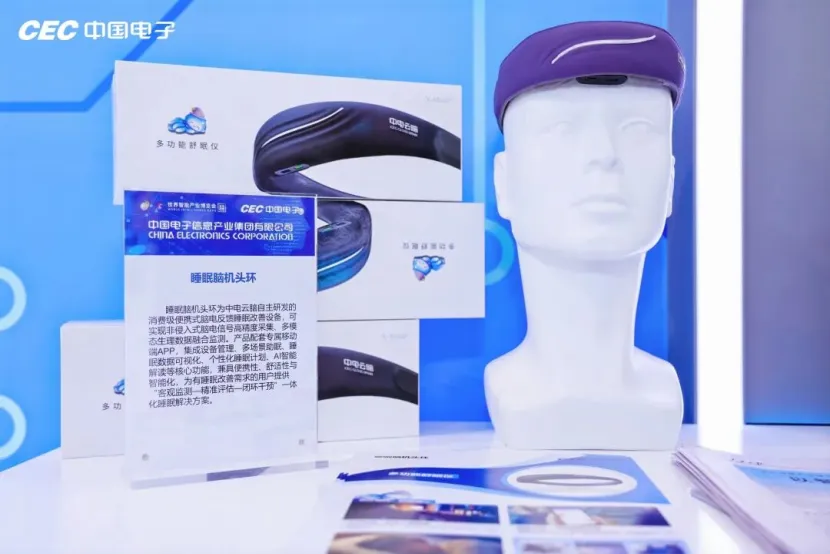
In general, startups have to spend two or three years researching, developing, testing, and running algorithms, and it relies on the support of Tianjin's industrial chain, which directly takes over the mature technology of the Mekong River Laboratory. Dry-electrical, signal processing, neural control systems, laboratory models have accumulated over the years, with the world's largest pool of patents in the field of brain-machine interaction, companies only need to complete the product.
There are a few others on this line that try different ways.
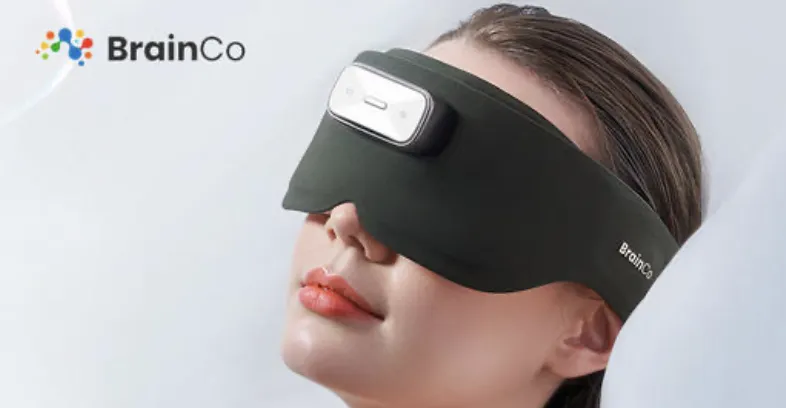
As one of the six small lobsters in Hangzhou, China, it is the first unicorn in the field of non-invasive brain machine interfaces in the country, and in 2022 launched the first consumer-grade brain machine interfaces product deep dolphin brain intelligence insulator. The product is shaped like a mask / headband, uses a frontal lobe brain electrical collection system, stimulates multi-mode sleep intervention by photovoltaic, has been certified by the FDA. Clinical data show that 90% of subjects have significantly improved their sleeping speed after use.
The LumiMind, a rock-like brainwashing device from Rock Mountain Technology, follows a purely acoustic closed-loop technology that does not touch electrical stimuli. This is a smart choice.
In terms of product configuration, LumiSleep is equipped with four-channel EEG, PPG and inertial sensors, which collect frontal brain power through seven dry electrodes, and all signal collection, brain state analysis and sound generation are done on a local chip, without relying on a mobile phone or cloud.
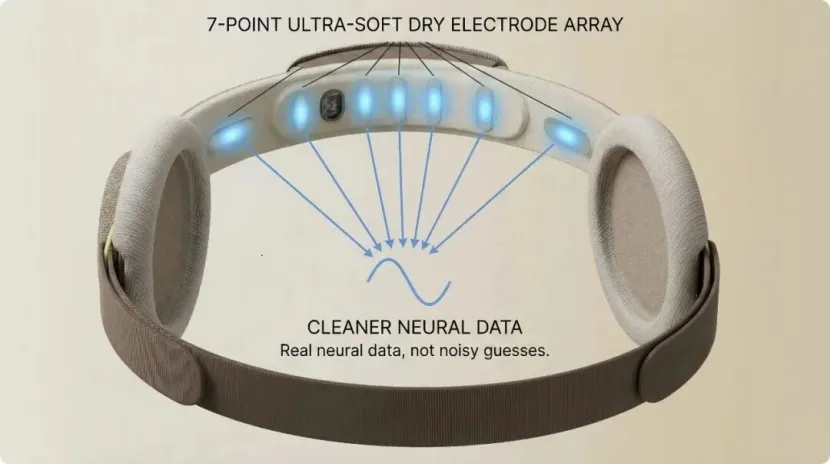
Its core technology is derived from a large-scale brain electrical model at the IWATH Brain Research Institute, which, by decoding brain electrical data in large-scale tubes, identifies for the first time key brain electrical characteristics closely related to the sleeping process, the device determines whether the user is approaching the pattern based on real-time brain electrical state, and dynamically generates low-frequency rhythm sound guides to sleep. The entire intervention process does not involve electrical stimulation and supports continuous use for up to 12 hours.
Accordingly, LumiMind's main focus is on the ability to decode and change product freedoms, understanding the brain electricity accurately enough, responding quickly enough to achieve closing effects with this soft method of acoustics. The technical difficulty is not low, but after running, the acoustic program will be the decisive chip in compliance and overseas advantages.
Hague's intelligent sleep sensor is another set of logic that does not do deductions and additions. The Chinese cloud brain uses single-channel brain electricity plus several external sensors to cover sleep monitoring, while Hague is synchronizing neuronal signals from the brain, optic and multi-channel neural signals, while monitoring physiological indicators such as heart rate, blood oxygen, CES microwave interference and audio bidirection. It is not simply a stack of functions.
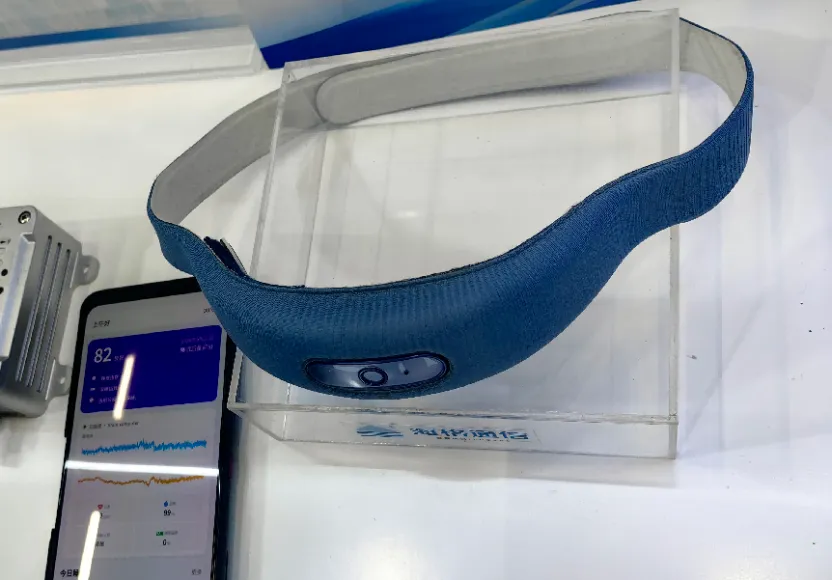
Supporting this phenomenon is Hegel's multi-channel weak signal processing capabilities accumulated over many years in the field of military communications and intelligent perception.
The risks of this approach are also evident. Multi-channel neural signal harvesting means more dry electrodes, more difficult to balance the comfort of wearing, and higher power consumption and complexity of the entire system than single-channel systems. But once run, the technical barriers are much thicker than those of pure consumer products companies.
These two companies are actually at different stages of the same battle. The speed and volume of production, LumiMind's compliance and outsourcing, and Hegger's communication technology are all part of the same battle. But all the top-tier products do not get around the same question: will users not be willing to sleep every night wearing something?
Pillow/bedding shape: the most insensitive entrance
If the headpiece is the technical density, the pillow and mattress are the zero migration of the user's habits.
Dream Neighbors, co-developed by the Guangdong Provincial Institute of Intelligent Medicine and Nanjing Medical, hid the brain machine interface in their pillows. Users do not need to change any sleep habits, lie down and the device starts working.
This is a typical example of a collaboration between research institutes and enterprises in the field of hypnosis. The main product is sleep intervention and deep sleep enhancement, which can prolong deep sleep by more than 30 percent. When AI detects abnormal brain electrical fluctuations such as nightmares, it helps users to maintain relaxation through non-invasive neural feedback regulation.
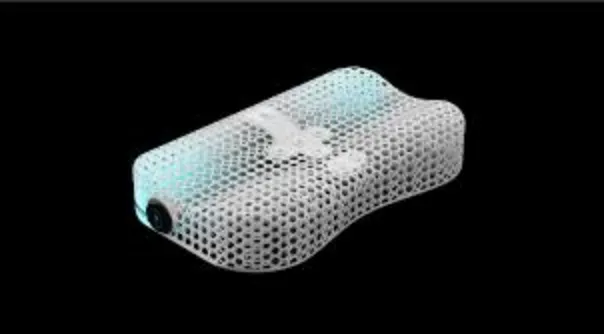
The Rhinoplasty series is similarly in the shape of a pillow, but the technical narrative is more focused. The author learns that the team is headed by Prof. Cao Xiaoping, who serves as chief scientific advisor, and the technical director is Dr. Li Bo, a postdoctoral researcher in biomedical engineering at Tsinghua University. The product is not working perfectly, but only at one point: deep sleep slow wave enhancement, actively prolonging the N3 deep sleep phase through microwave stimulation. However, the product is still in the early stages of research and development.
The advantage is that it does not require the user to change any habits to lie down and walk. But the cost is to collect the signal from a longer distance. The head ring is tightly attached to the forehead, the pillow next to the hair and pillow, and the signal decline is not a measure.
The bed bugs walk more thoroughly on this road.
BrainCo, which is a collaboration between Shenzhen and Brain Technology, uses a brain electrical plug to directly implant brain electrical modules into sleeping devices. Users normally go to bed and the bed mat automatically performs monitoring and regulation below. The technology is fully integrated into existing life habits.
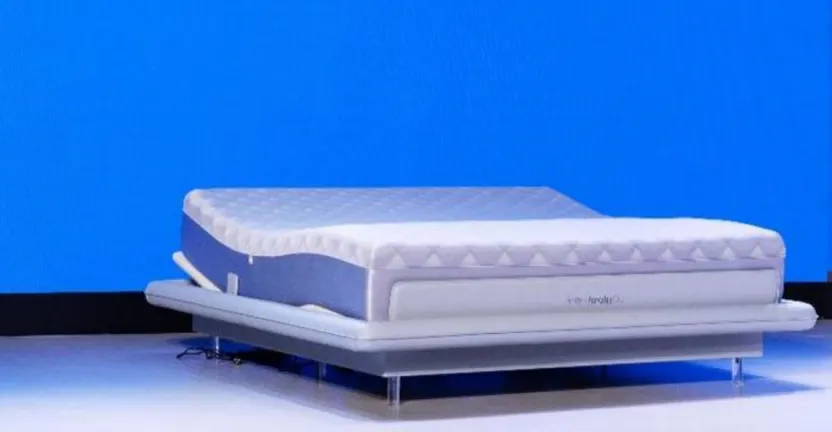
But the shape of the mattress is also faced with a small engineering challenge. The brain electrical signals through sheets, mattress fabrics, multiple decreases in human movement can still be used, is the biggest technical link. Once the difficulty breakthrough, it may be the most insensitive of all the schemes.
Scenic schemes: from single items to sleeping spaces
When the single-device form becomes extreme, the other way is to turn the entire sleep environment into a product.
In March of this year, he learned that the product had been certified as a national medical device of the second class and landed in the sleep management service of a flight attendant.
It is clear that its aim is to get to the B-end and fully immerse itself in the C-end of product verification for enterprise procurement, airline health management, high-end rehabilitation facilities, etc. This path is not uncommon in the field of medical health hardware. The sleeping respirator company represented by ResMed gradually opened the home market after establishing clinical trust through hospitals and sleep centers.
As opposed to building awareness from scratch at the consumer end, B-end institutions have a long-term partnership once they recognize the effectiveness and safety of their products.
Concept exploration: reshaping dreams
While all the players are still asleep, some players have turned their eyes to a deeper fantasy control game.
At the end of 2024, Machinery Tech released the world's first AGI-based dream monitoring and reconstruction algorithm, the Dreamgear. The product was presented to the public for the first time in June this year, where viewers can experience ideas on the ground through brain electrical devices.
According to official information, the product is equipped with 10 brain electrical signaling channels, coupled with the Dreamer, a dream big model developed jointly with Zhejiang University, and uses the AGI algorithm to analyze and decode the neural signals in sleep in an attempt to realize the dream sequence.
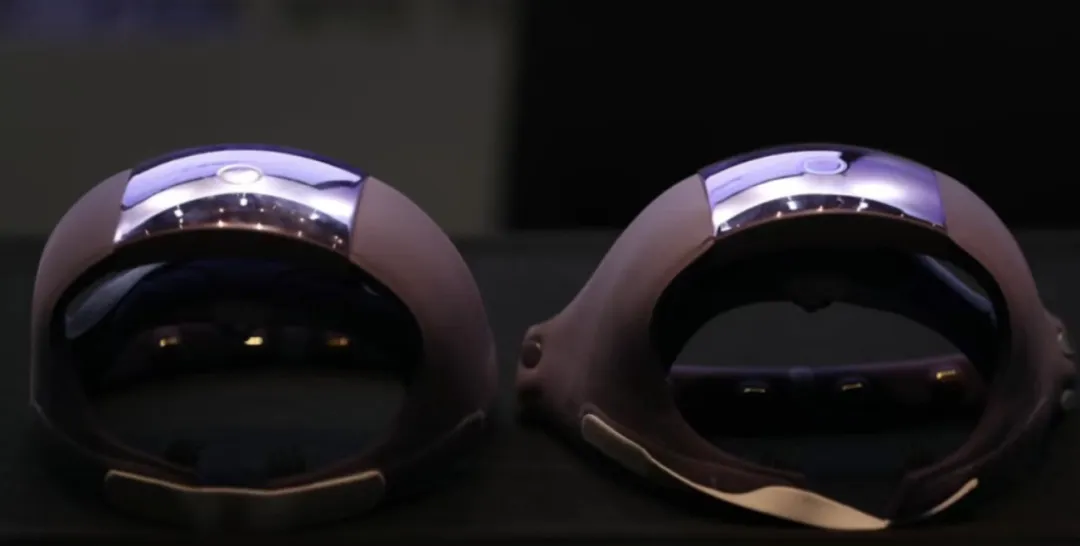
Re-constructing dreams sounds like a spatial puzzle. But behind re-constructing dreams is a technological pathway that has not yet been scientifically proven, and is still an exploratory topic in the field of neuroscience. The machine itself has positioned it as an early application exploration stage.
However, in my opinion, this direction is still worth considering, because it tests a proposition: if a brain-machine interface can help people see their dreams, it is attractive enough for a bunch of people to pay.
04.
It's not just a sleeping business.
Or the entry war of brain electrical data.
On a deeper level, the mixture of the four categories of products, the underlying reality is that there are two completely different commercialization logics in the race.
The first is the slow logic of sleeping pills and multi-channel head rings representing the extreme precision and interference of the signal. This path will inevitably face registration barriers from the NMPA or the FDA, cycle length and input weight, but once approved, the highest shield can be built.
The second path is the fast logic of consumer electronics make-up. They are represented by pillows, lightweight headsets and dream concept products, which are stuck in the middle between precise medical care and everyday comfort. Users don't need to know how many microwaves the slow wave extends, they just need to subjectively feel like they fell asleep last night. In this path, technological leadership does not necessarily win, supply chain cost control, channel packing capacity and the accumulation of sleep data are all variables.
And wherever it goes, it's actually gold-containing, high-voltage brain electrical data collection inputs.
Sleep is the only part of the human body that is fixed for seven to eight hours a day and cannot be actively interrupted by a physiological window period. During this window period, the brain-machine interface is able to steadily collect high-quality static brain electrical signals, which are extremely expensive and scarce in a laboratory environment.
Once a company's equipment runs for a long time on tens of millions of beds, it will accumulate a large database of brain-time sequences in the real world. This will provide the most core fuel for future mood recognition, cognitive decline warning and even more precise neural control algorithms.
But to achieve the long-term operation of the shell, the user is willing to wear it every night. This is behind the combination of two capabilities: engineering and materials, solving the problem of shell wear; algorithms and experience, solving the problem of shell willingness to wear shells. Both are done well and the final winner.