“ There is a shortage of skilled workers, but why does the industry not want to engage in nursing?
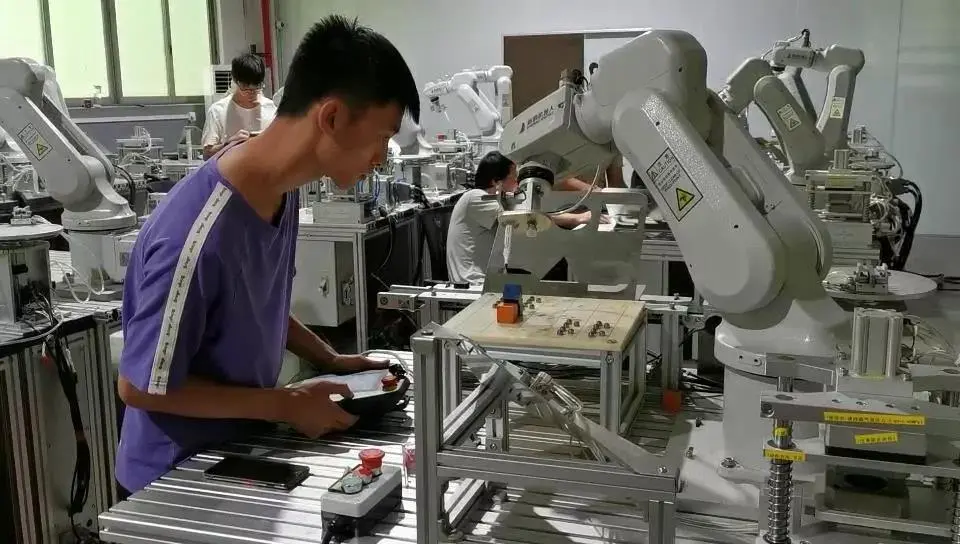
At the end of September, the 48th World Skills Competition was held in Shanghai, where robots competitions were all focused on real-life scenarios, real-world tasks delivered. At the same time, Xinhua published a special study on new trends in employment in the robotics industry. Three industry events linked together, pointing to a simple conclusion: robots are rapidly entering factories, but people who can use, call, and stabilize equipment production are seriously insufficient.

This talent shortage industry judgment has lasted for five years. Many years ago, the manufacturing talent plan proposed a gap of 4.5 million people in 2025, which is still repeatedly cited. Three years ago, the industry was concerned about the shortage of industrial operators, and this year the focus of opinion turned to the gap of millions of people with physical intelligence.
What's even more important is that it's a gap that keeps rising in prices but is unsatisfactory in the long run. According to the rules of the market, high wages are enough to attract talent, balance supply and demand, and why can't the robotics industry slowly repair itself?
01.
How much water is there in the data gaps for the talented people in the industry?
There are 280,000, 1 million, 4.5 million, 5 million differences in talent gap data circulating in the market, and the core of the discrepancy is not statistical errors, but statistical qualities that are completely different.

The closest to the actual recruitment needs of enterprises today is the narrow vacancy gap in robotics operations and debugging. The widest circulation of 4.5 million, compiled jointly by the Ministry of Education, the Ministry of Human Resources and Industry and the Ministry of Information in 2016, is that "the real talent gap in the field of high-end CNC machines and robots will reach 4.5 million people by 2025".
The hotly debated million-level gap in the industry corresponds to the complex type of talent in the field of physical intelligence, covering cross-positions such as control, vision, algorithm adaptation, system integration, which belong to the high-end talent supporting industry upgrades, and the infrastructure operators do not belong to the same level. Some data are long-term growth forecasts of the industry, based on industry expansion measurements over the next few years, and not the jobs that companies urgently need to fill.
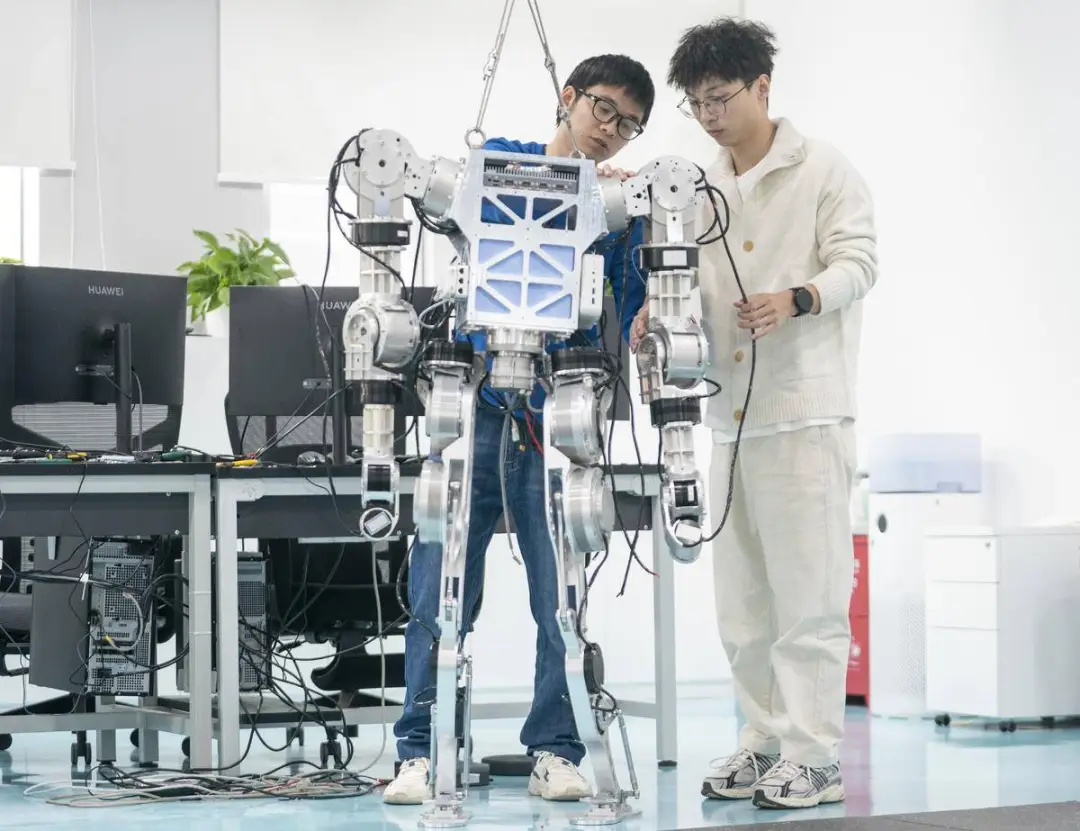
Real industry supply and demand are very prominent. Enterprises are really willing to compete for high salaries, are middle-level engineers who can place complex projects and adapt production line processes, while the market source is constantly producing, mostly primary people who will only standardize operations. Many studies show that the first and secondary skills positions in robotics have tended to shrink, and the demand for jobs in life is severe, and enterprises only have real recruitment needs for high-tech talent.
The revenue structure of the main enterprises also confirms the reality of the current demand for talent. As an industry-leading enterprise in terms of shipments, the revenue of humanoid robots largely comes from research and education and commercial consumption scenes, the application of real-world industrial product lines is extremely low, which also includes a large number of exhibition hall exhibitions, corporate demonstrations and non-production scenes.
02.
Who is he who cultivates and reaps the cherry blossoms?
Complex robotics engineers have no fast track, all the real-world capabilities to solve problems on the ground, all of which come from long-term projects, and standardised classroom teaching is difficult to develop mature talent to suit the industry.
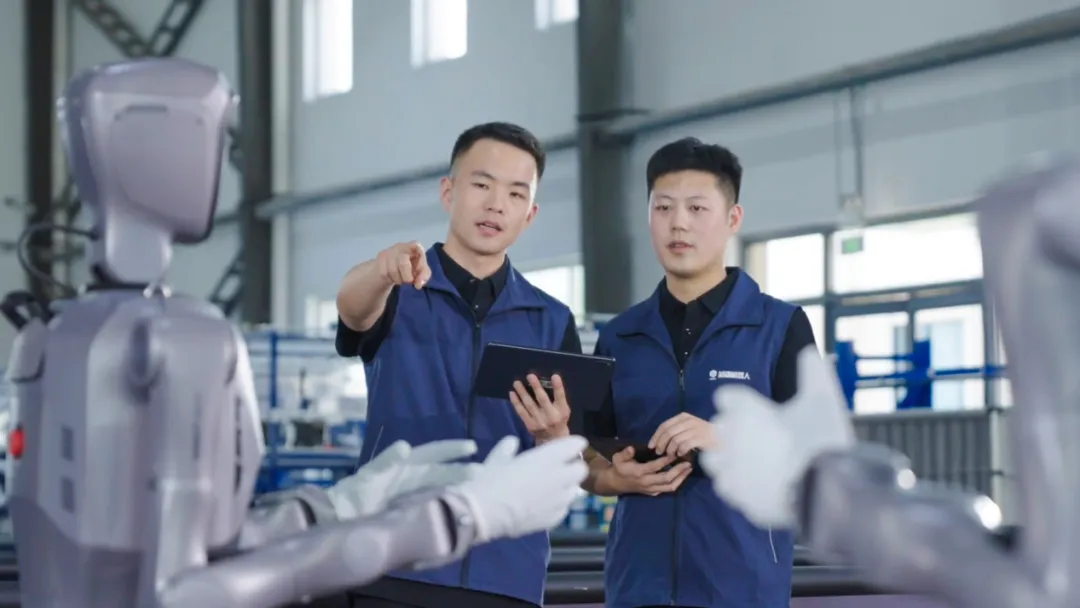
Vietnamese technology combined with a first-line working scenario summary, qualified integrated engineers need to be proficient in robotic programming modulation, electrical wiring, read the production line process and customize adaptation schemes, while having an integrated capability of on-site disconnection and security control. The online situation varies, the standard process of the curriculum cannot be adapted to all scenarios, multi-device coordination, on-site problem placement, program dynamics optimization, and the core capabilities can only rely on accumulation, the industry generally needs three to five years to train a mature engineer.
The industry as a whole relies heavily on system integrators, who are precisely the weakest and least profitable link in the industrial chain. More than 80% of the industry's revenue comes from integrated projects, but the net interest rate of integrators is generally less than 5%. Projects are highly non-standard, duplicable, overlapping industry 3,331 staircase payments, long-term leverage patterns, long corporate return cycles, poor profitability, and there is simply not enough profitability to support long-term employees, talent trials and team retention.
Under cost pressures, the industry has shaped a shaky lifestyle. Terminal car companies, high-end manufacturing companies with massive funds, low-paying engineers hunting for mature engineers. Currently, the median annual salary of new energy robotics engineers has reached 400,000, and head companies have even doubled their salary, leading to severe loss of core talent for integrators, and a dramatic increase in the salaries of practitioners.
At the same time, integrators continue to compete for low-price orders, and the profits of project services are greatly squeezed, which can only be maintained by reducing manpower costs, increasing single-person workloads, and further exacerbating the loss of industry talent.
The core contradiction in the industry is not in the lack of talent, but in the total imbalance of the training mechanism. The end-enterprises of high-paying miners, never investing resources to train new people from scratch, only harvesting mature talent from the integrators. It costs years of integrating people, not staying with people; able to pay high-paying big factories, not willing to feed people. In the long run, the subjects of the industry actively cultivate new people are becoming less and less, and most enterprises choose to directly mine people, and the talent gap is permanently consolidated by this industrial mechanism, which cannot always heal itself.
03.
What jobs will be eliminated in the wave of AI transformation?
AI technology continues to penetrate the robotics industry, and many people believe that smart tools will replace the artificial talent gap, but in the current situation, AI eliminates only basic repetitive work, and the value of high-tech manipulators continues to rise.
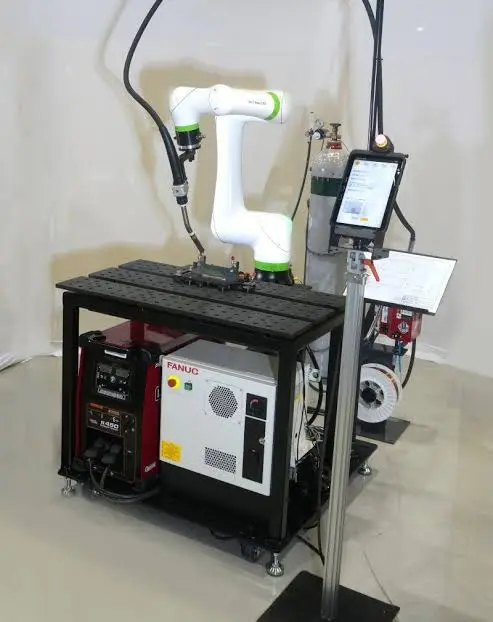
In September this year, Gennoco Joint Google launched an AI welding program that can automatically recognize drawings, generate welding parameters and operating procedures, with zero demonstrations and zero settings. However, the technology has not yet completed mass production scenario verification and will be officially shipped by the end of 2026.
Companies such as ABB, UKDA, and domestic companies such as McCandless and SparkCard are also advancing AI programming, virtual modeling, and gradually replacing traditional artificial signage, trajectory planning, and other basics.
Domestic landing thinking is more in line with industrial reality, with most enterprises adopting the "artificial decision + intelligent execution" model, allowing robots to undertake repetitive operations, core process judgement, quality control, and security decisions to remain entirely AI-dominated, with AI instructions not to break the boundaries of production safety and quality, avoiding the landing risk of purely intelligent.
Work that can be done by system testing, standardization, is being replaced by AI, including point-to-point demonstration, trajectory fine-tuning, standardization of barriers, basic documentation sorting, and so on. Work that requires a combination of man-made on-the-spot judgments, work on the basis of production line efficiency, production safety, product quality, is irreplaceable, scarce, and salary premiums continue to improve.
Capital markets and employment markets are markedly different, with capital mostly focused on hardware and basic software development such as robotic bodies, chips, intelligent models, and focused on "making machines"; but the market's new positions are all focused on the landing link of "using machines, stability of production". The industry's current core problem is never that robots are not smart enough, but that high-end equipment is landing, the lack of professional talent to modify adaptation, optimize artificial intelligence, and release artificial intelligence.
04.
Why don't we fill the core gap in the industry with a continuous influx of road talent?
In recent years, there has been a steady expansion of industry talent input channels, but new recruits have built up a whole base layer that has not always been able to fill the core gap in middle-level complex talent.
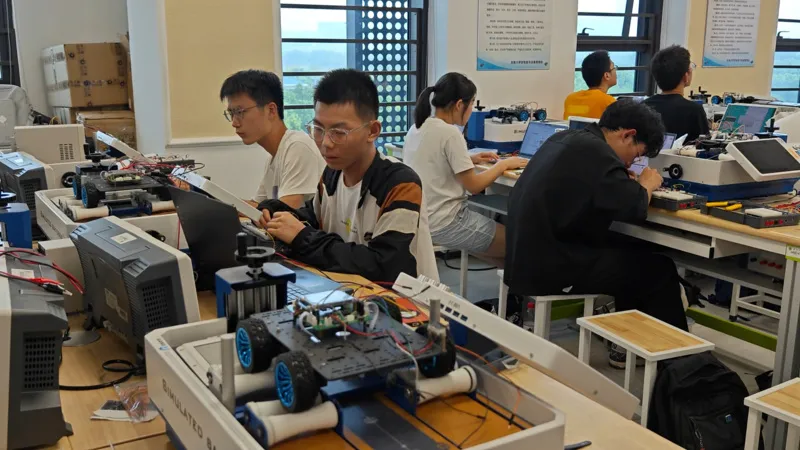
Schools are the main source of supply of talent, but there are serious gaps in time and quality. There are nearly 400 undergraduate schools in the country that open specialized in robotics engineering, more than 700 higher education institutions that open specialized in industrial robotics technology, with an annual cohort of 60,000 graduates, the supply scale is not small. The structure and rhythm really stuck: emerging professional first graduates are not concentrated in the market, the short-term can not mitigate the need for industry. At the same time, the technology boom in the industry is much faster than the speed of teaching update, the training scene, teaching content and factory production lines are severely disconnected, a large number of students have difficulty adapting after entry, the active displacement rate remains high.
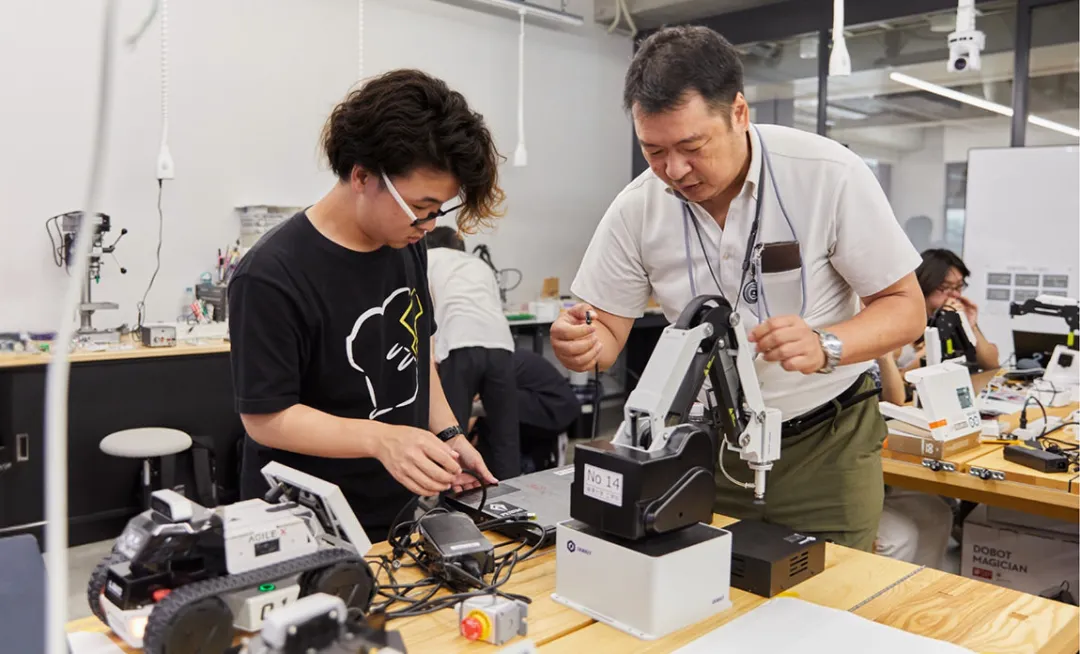
In-company transformation has been the mainstream way in recent years to harness the labor force's inventory, leading companies through collaboration and de-production training to develop a large number of first-line blue columns as robot operators, quickly filling the underlying operational job vacancies. But this kind of talent is unique, able to handle only simple equipment maintenance, unable to cope with complex tasks such as system integration, process optimization, full-line modeling, and adding no value to the core talent gap in the industry.
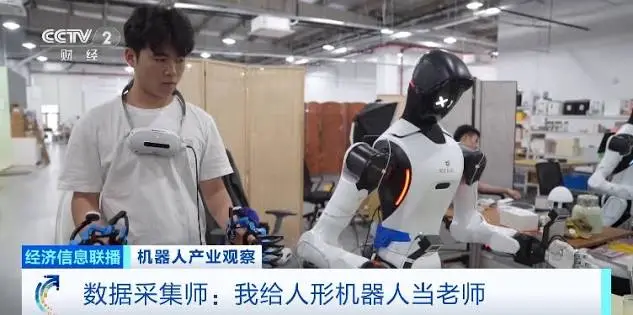
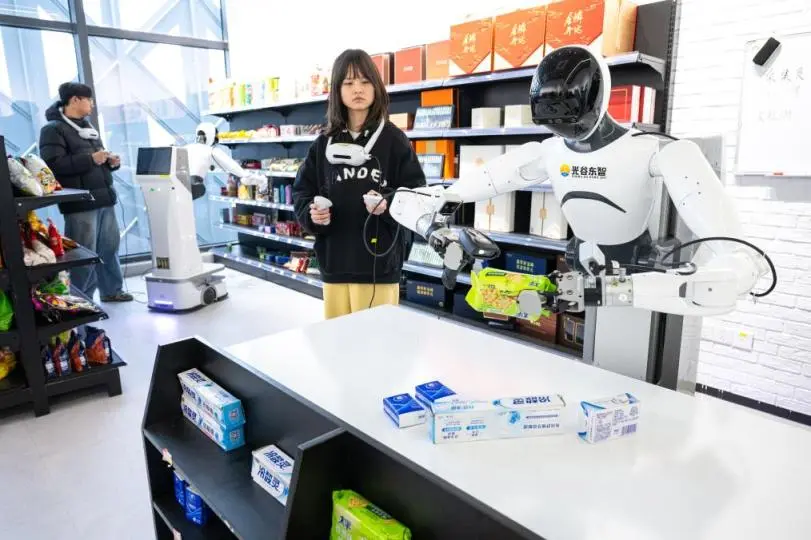
Data collection and model training positions are the fastest-growing new grassroots positions this year, with low entry thresholds, easy to handle, but highly repetitive work content, vague career paths, limited growth space for practitioners, extremely high job losses, and difficulty absorbing long-term technical talent in the industry.
Overall, all the talented people in the industry are continuing to fill the underlying infrastructure gaps, resulting in a turmoil within the underlying infrastructure. Complex engineers who can truly independently manipulate whole-line projects, optimize production processes, assume production responsibilities, and still rely only on long-term enterprise projects to grind, without scale-up cultivation pathways, and the core gap exists for a long time.
05.
When will there be a real reduction in the talent gap that has been going on for years in the industry?
There is a real gap in talent in the robotics industry, but it is not simply a shortage of numbers, expansion, subsidies and basic training that cannot eliminate the problem. The root cause of the five-year supply and demand imbalance is the distortion of the cost and interest patterns of the industrial chain, the lack of income for those who earn money, the lack of income for those who earn money.
The definition of "complex talent" currently promoted by the industry remains biased, largely confined to the superimposition of mechanical, electrical, and programming skills. The real scarcity of enterprises is that of those responsible for taking root in the production landscape, taking full responsibility for the process results and the quality of the production line.
Whether or not industry gaps can be narrowed depends on the profound changes in the industrial ecosystem. If integrators can break away from the low-cost pattern of pure manpower assembly, turn years of cumbersome process experience into a replicable standardization scheme, forming a technological premium, it will be beneficial for the bottom line to continue to cultivate and retain talent and alleviate the plight of users from the source.
The logical transformation of the users of the terminal enterprises is equally critical. Large factories long-term high-paying miners, but short-term shortcuts to avoid the cost of cultivation, cannot create new talent for the industry. Only the terminal enterprises are willing to build a long-term cultivation system, assume the cost of conversion, and the good cycle of industry talent can be restarted.
In addition, the real proportion of landings in the machine-to-machine industry determines the true colour of the need for talent. If the equipment stays in scientific research and demonstration scenarios for a long time, it is unable to deploy large-scale production lines and normalize production, the current shortage of talent contains fake needs generated by large amounts of capital, which will fluctuate dramatically with the financing cycle.
After all, five years of talent in the industry is scarce, and what is missing is never a basic operator who will teach, who will moderate. The real scarcity is the core engineers who know the process, can land, dare to take responsibility, and can sign the bottom of the production line.