From 20 to 22 July, the China-UK Housing Policy Industry Roundtable Dialogue organized by the National Development Commission International Cooperation Centre was held in Beijing. The National Development Commission, the Ministry of Commerce, the Ministry of Human Resources, the British Embassy in China and leading enterprises in the Chinese-UK household sector came together to implement the high-level consensus of the two countries and conduct in-depth industry research.
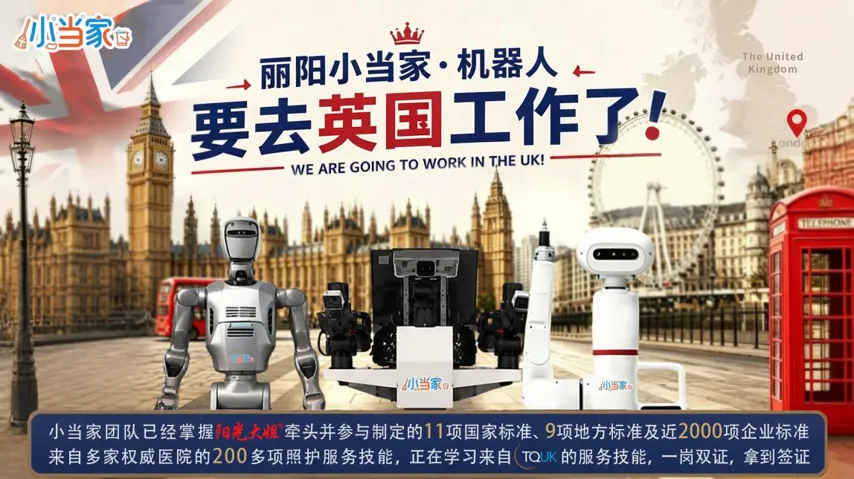
It has been noted that at the forum, an unusual Chinese housekeeper was studying the requirements for service positions in both Chinese and British countries and was about to get a passport to the United Kingdom.
It is named after Liang Xia, a renowned renowned renowned model of renowned renowned renowned renowned renowned renowned renowned renowned renowned renowned renowned renowned renowned renowned renowned renowned renowned renowned renowned renowned renowned renowned renowned renowned renowned renowned renowned renowned renowned renowned renowned renowned renowned renowned renowned renowned renowned renowned renowned renowned renowned renowned renowned renowned renowned renowned renowned renowned renowned renowned renowned renowned renowned renowned renowned renowned renowned renowned renowned renowned renowned renowned renowned renowned renowned renowned renowned reno.
01.
What's the bottom line about China's robotic craze?
In 2026, China's robotics industry is moving to the world at an unprecedented rate, especially in the field of service robots, where Chinese companies have a clear advantage. Customs data shows that in the first five months of 2026, China's total exports of robots reached 1037.7 million units, with a total export value of 199.9 billion yuan.
China's service robots are gaining ground on the global market with their mature landing applications and price-performance advantages. However, a key question remains as to how far away are the vast majority of these outbound robots from the industrial scene or the commercial scene, and how far away are they from us?
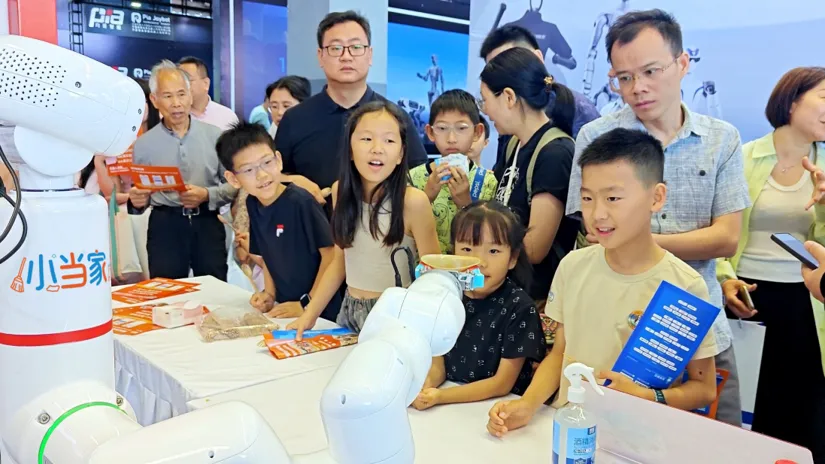
Service robots, especially those entering the home scene, have always faced a central barrier: service standards and lifestyle habits.
The way older people in the UK look for care is different from the way older people in China look for it, and British families have different requirements for hygiene and Chinese families too. Who can lead the way in developing an internationally recognized set of service standards and who can really open up this trillion-dollar household market?
The first step was taken by Liang.
02.
International certification from Nurse Practitioner to TQUK
On 29 January 2026, the two countries signed a Memorandum of Understanding (MoU) on Vocational Skills Education and Training Cooperation.
TQUK is one of the UK's top 10 Ofqual-certified accrediting bodies, covering more than 160 countries around the world. The Sunrise Group is a leader in the domestic household healthcare industry and is responsible for the Secretariat of the National Council for Civil Service Standardization Technology, leading and participating in the development of 11 national standards, 9 local standards and nearly 2,000 enterprise standards.
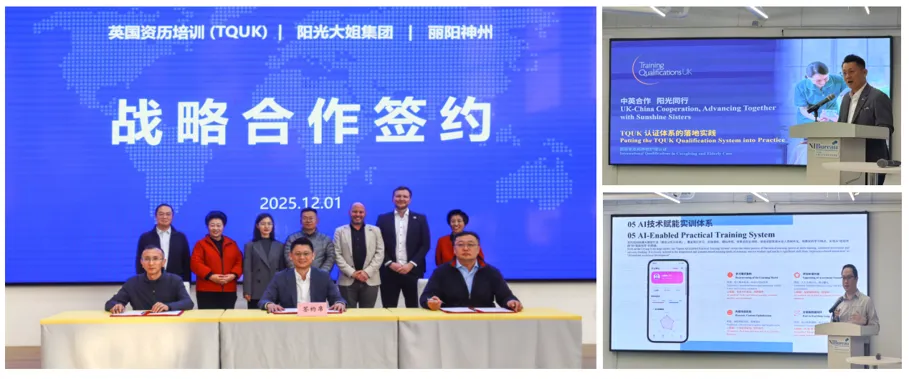
In December 2025, Sunrise officially entered into a strategic partnership with TQUK, completing the three maternal, infant, retirement, and comprehensive care positions with a full-dimensional matching and standard accuracy of up to 90% of the TQUK three-level qualification framework, the first domestic benchmark project to be matched to an international accreditation with a complete Chinese state-of-the-art system.
It's the little ones who are trained in this system.
03.
It's not just people, it's robots.
The training standard is no longer a single technical indicator, but is based on the strength control of the toilet, the procedures for entering the elderly room, the collection of standardized processes and the interaction with service objects.
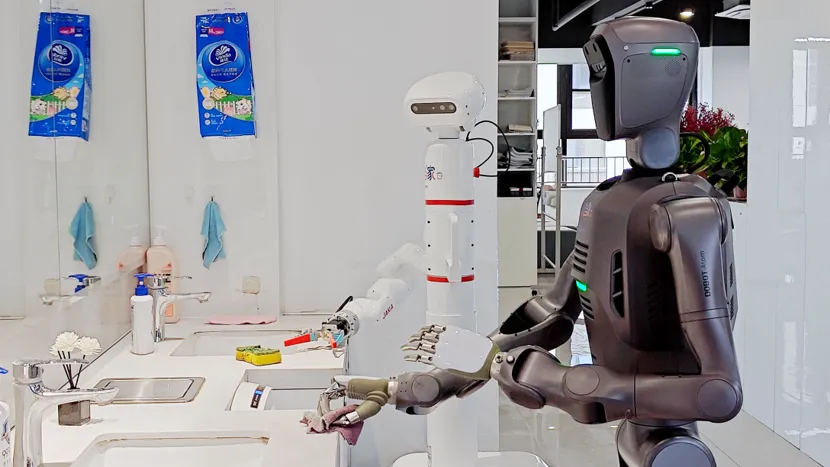
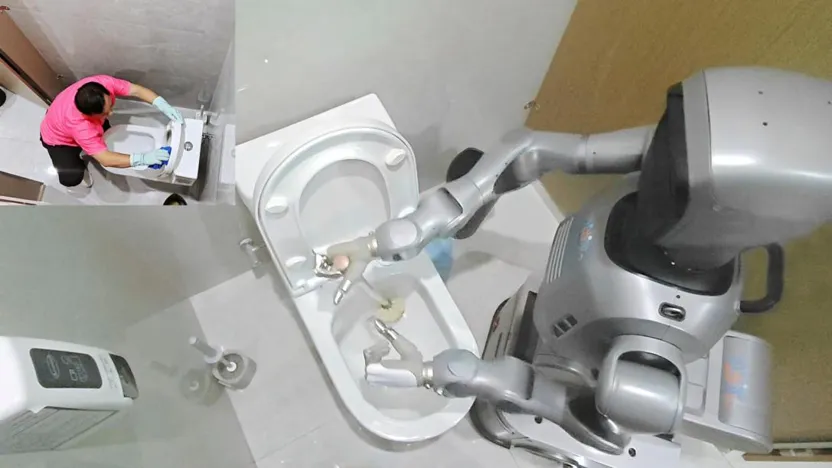
In strong collaboration with TQUK, Sunrise offers not only human certification, but also a set of service quality standards that can be understood, accepted and verified by cross-cultural families. When the temperature between firefighters becomes machine-readable data, children's learning is no longer an abstract set of AI capabilities, but based on verifiable, verifiable international domestic interconnection service standards.
It is the first in the country in the field of services through the National Internet Trust's registry of services. It is the most comprehensive collection of household standardization knowledge from several authoritative three-bedroom hospitals, which translates two complex standards into a robot-learable, executable sequence of actions, opening up the last centimetre of each operation from the standard code to the mechanical arm of the pump, and allowing the family to naturally adapt to the international market.
After being repeatedly trained, tested, and verified under this standard, the company eventually became the world's first home-service robot with the capability of double certification.
04.
Young Liang: The first service robot brand to be launched
At this Chinese-English Household Forum, Li Xi shared topics around China-English collaboration, the landing practice of the TQUK certification system, three service positions, a one-size-fits-all approach, in-house specialties, more than 800 skills requirements... demonstrating not only standard bi-directional alignment, but also a solid foundation: Chinese service robots have the ability to work in the UK.
At a time when China's smart enterprises have become part of the European landscape of industrial and scientific research, Liang Young is represented by an entirely different path to enter and exit the home service landscape. This path is broader and more difficult.
The brand is becoming the first outdoor brand on the track. It measures not only a robot's distance to the world, but also a new model of China's service standards coming out of the gate to connect the world's different cultural systems.