At the end of July, the World Cup final ended with Spain beating Argentina to win the Power Cup, in fact, in today's stadium, in addition to real people, smart people can also play crazy games on the pitch, and the Chinese team even took away the robotic World Cup trophy!
According to the Robotics Workshop, there are already a large number of robotic teams that can play football in China, including the Shanghai University of Agriculture, ZJUDancer University of Zhejiang, Blue Panthers University of Science and Technology of China, TCMOS, and dozens of other university teams.
Among them, the team at Tsinghua University is particularly prominent, with the team's humanoid robotics team having won the Silver World Cup twice, most recently at the 2026 RoboCup Robotics World Cup, where the Chinese fireworks team with domestic hardware successfully defended the Silver Robotics Large Group Championship.
It's also worth mentioning that the accelerated evolution of its robotic products packed with two-legged dolls all-group gold medals, and 38 teams from around the world took part in the competition to select hardware platforms from Chinese manufacturers.
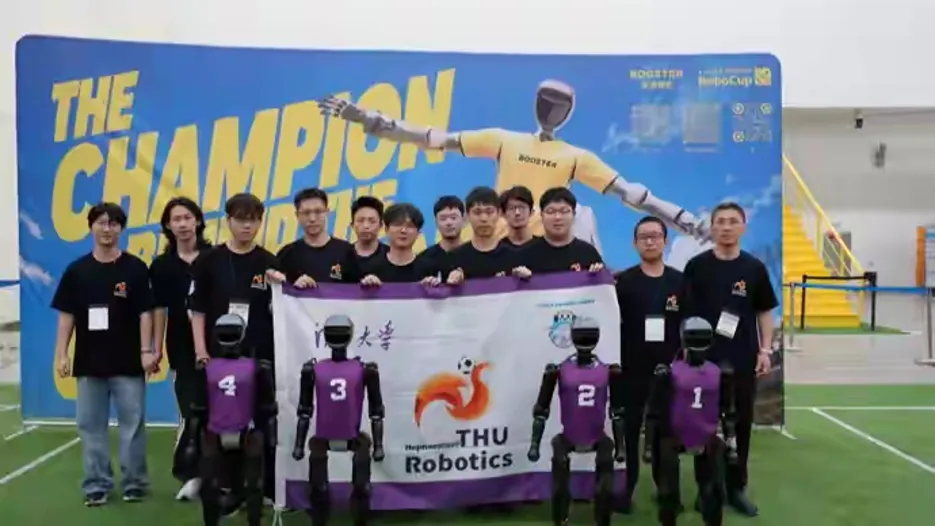
The team's championship honors are largely due to the fact that football is a fusion of sports and technology, and the human movement is becoming the ultimate testing ground globally recognized in the body-smart industry. Running, controlling, shooting these normal human actions, placed on humanoid robots, crosses the technical threshold of mechanics, algorithms, and sensing multiple disciplines.
Human robots are now able to play and move freely on the ground, and while the action still looks twisted and harsh, we believe that in time, human robots will achieve human adaptation and even transcend human crossing!
At the time, the lowest man on the field was probably the real David.
01.
Go to the first human stop and make robots fall in love with football
To be honest, football is not a showcase for robots, it can still be understood as a standardized test ground for the testing of integrated physical and intelligent capabilities. Chinese manufacturers have been leading the way in this global competition, relying on hardware platforming.
The 2026 RoboCup Robot World Cup in Incheon, South Korea, bringing together 364 teams from 45 countries and regions, has been fiercely contested since 10 years ago.
However, in the big group final of robotic football, the Qing Dynasty were still strong, beating their opponents 6-2 to successfully defend the world title.
Just a year ago, at the Brazilian Grand Prix, the team had just broken the 28-year history of the Chinese championship.
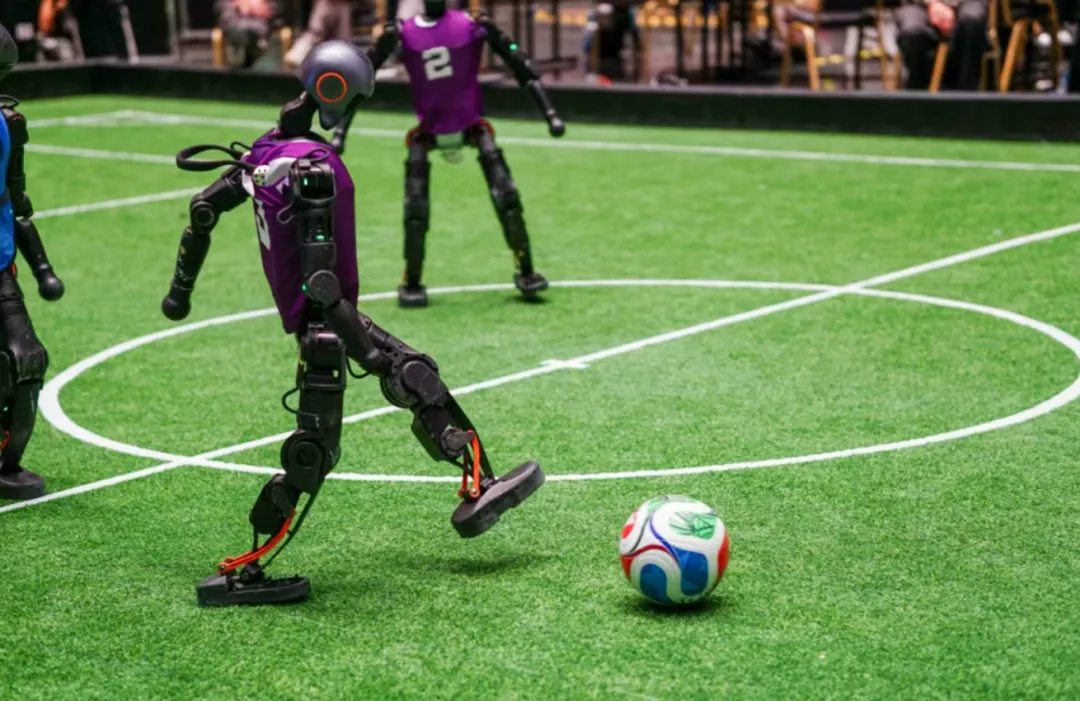
Particularly noteworthy is the hardware layout behind the tournament, which featured the champions of three large and medium-sized two-legged humanoid groups, all featuring the accelerated evolution of Booster Robotics' robotic platform, with 38 teams selecting the branded hardware, accounting for more than half of all humanoid teams.
It is understood that Accelerated Evolution was founded in August 2023, with the core team disengaging from the robotics control laboratory of Tsinghua University, established in less than three years, and its humanoid robots have a global shipment of more than 700 units, covering more than 200 customers in more than 20 countries, and collaborating with more than 70 universities and research institutions.
However, the company's path is not a full-fledged application, and they are good at focusing on the basics of robotic hardware and basic movement control, making robotic bodies, operating systems, and development tools a standardized platform, allowing the team to focus their research and development efforts directly on perception, decision-making, and synchronization of these top-level algorithms without having to design mechanical structures from scratch, modulating basic steps.
The Booster Robotics platform has also changed the internal consumption situation in which teams repeat wheels in previous competitions, and now the RoboCup is being completely changed by standardized hardware. It should be noted that football is just one typical scenario.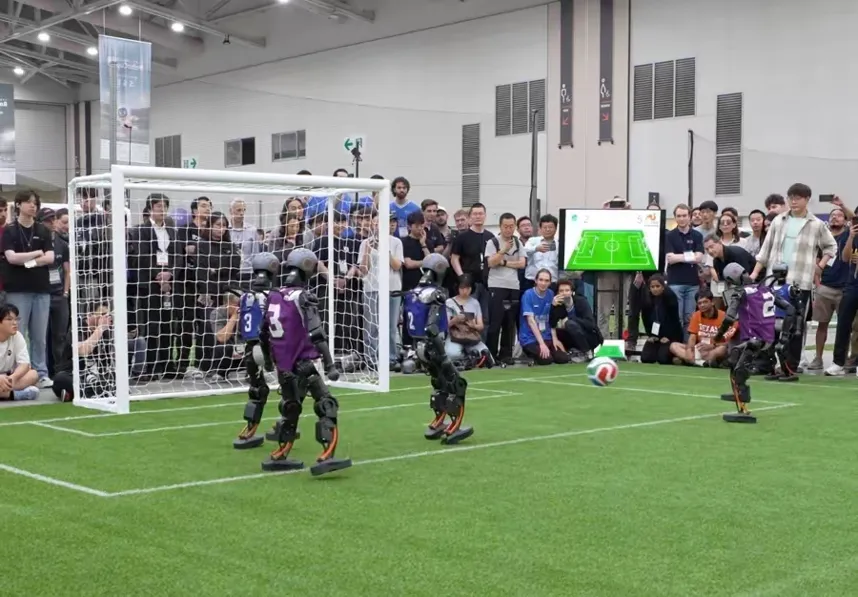
In addition to accelerating evolution, there are other strong teams in the country, such as the Dionysus team of Jiangnan University of Automation and the Academy of Intelligent Sciences, who performed well in this year's RoboCup Soccer Simulation 3D competition, ultimately winning the world title and achieving a historic breakthrough.
In fact, the football field has been recognized by academia and industry as the most rigorous real-life physical test site with physical intelligence. Because every move performed by human players on the field, simultaneously invoking environmental perception, body balance, instant judgement, multiple team collaboration capabilities, ball rolling trajectories, opponents' interference, subtle ups and downs of the field, are all unpredictable dynamic variables.
On the contrary, robots in industrial scenarios only need to repeat fixed moves, which will fail in the face of variables, while football stadiums continue to manufacture random scenarios, forcing robots to simultaneously grind multi-dimensional capabilities.
The Vice President of the International Federation of RoboCup World Cup Robots Long has mentioned that football is a standard test of robotic technology, and that robots can work with balls on the pitch and move objects in real life, avoiding obstacles in the home environment.
This means that every run on the pitch, every touch on the ball, is a measure of the robot's ability to adapt to the real world, and the amount of trophies won is far more than an athletic honor.
Of course, in addition to the brilliant performances, the public's perception of the awkwardness of the movements, the slowness of the pace, the blunt revelation of humanoid robots playing at real human-like distances, and the number of technical obstacles that must be crossed.
02.
There are a number of disadvantages to making robots really play football like humans.
In theory, the balancing of our human walk, run, and play is done unconsciously by the brain and the nervous system, and the whole process does not require intentional consideration. To achieve the same effect, human robots require real-time collection of torque, angular data from all body joints, calculating the position of the center of gravity, adjusting the output of each motor, and maintaining the dynamic stability of the two legs throughout.
At the 2025 World Robotics Games in Beijing, robots competing in the event run at a speed of about 1.2 meters per second, far below the speed of 7.8 meters per second for professional athletes.
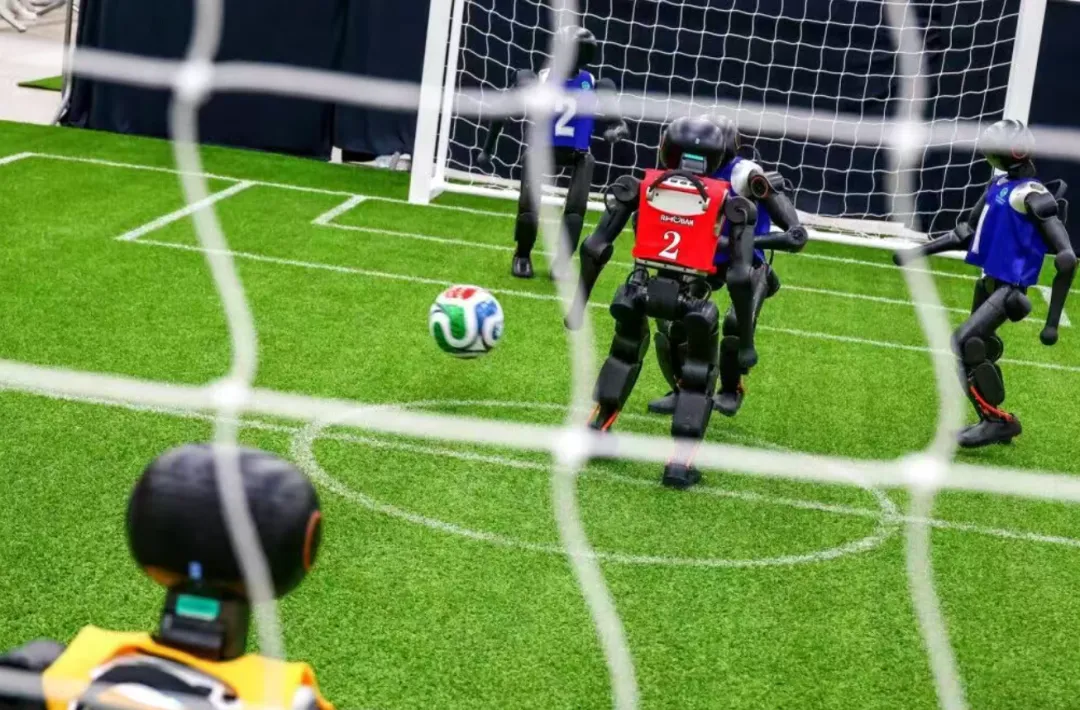
For example, in a football 5V5 match, human robots perform real-time calculations, but this also means that there will be a lot of instability during the game, such as two teams clutching together to grab a ball, and even a team-to-team shootout.
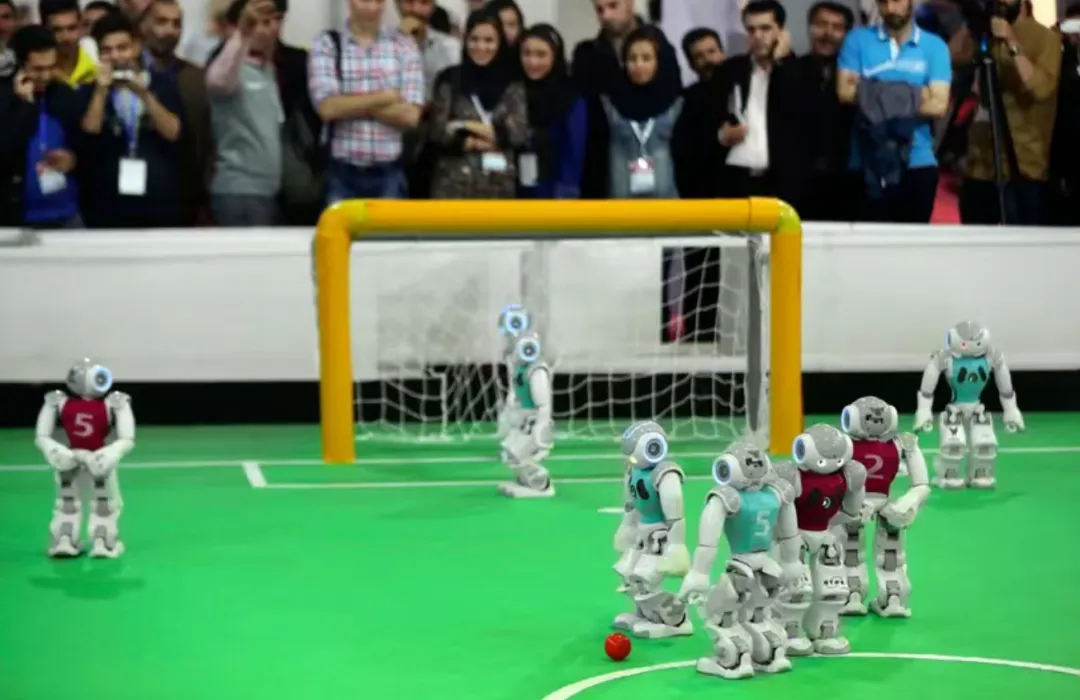
It's the same thing with human robots, why do some people run wildly naturally, why do some people logically act, and why is there a lot of ridiculous frequency of uncontrollable situations?
The primary core gap focuses on the complex thresholds of software algorithm development. For example, the Nautilus G1, a hardware-level integrated model with a maximum of 43 group activity freedoms, single-joint peak torque of up to 120 kVm; the software end supports the Nautilus self-developed UnifoLM model, significantly enhancing replication and autonomous learning core capabilities.
It's not easy to build a real team that plays football, let alone play human robots.
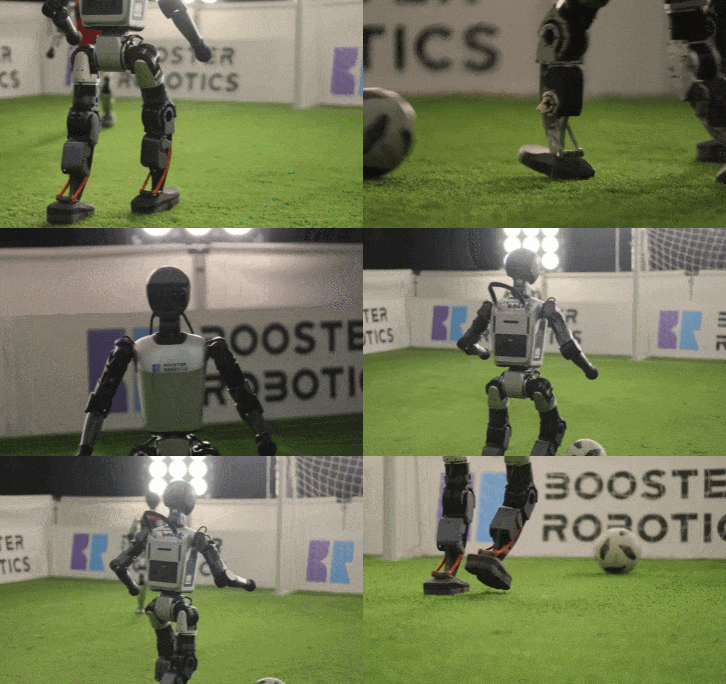
In addition, motion control is the foundation of the body, while the perceptual system is the eyes of the robot, and the slow response between the two is another barrier to the ability to play.
This is because the robot uses a camera to capture the position of the football, which requires image recognition, coordinate calculation, trajectory prediction, and then transmits the data to the decision-making system to generate action instructions, which are then output to the joint motor to execute. Each step of the entire process is time-consuming and accumulates significant delays.
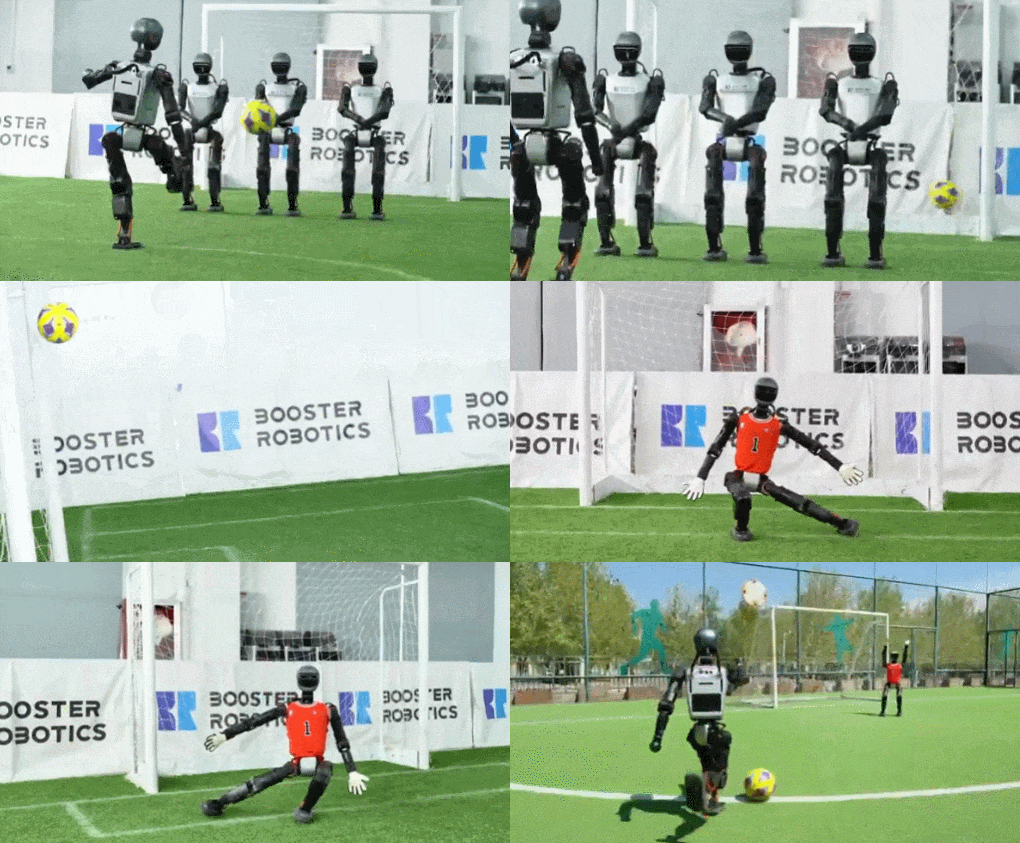
On the pitch, the football is always in a rolling state, and the position of the opponent is constantly changing, as the robot completes the calculation to make a move, the goal has often deviated from its original position.
In past competitions, there have often been reports of robots running on the ground and playing football in the open, the main reason being the difference between perception and movement. In high-speed combat scenarios, the effect of this delay can be further amplified, intercepted and fired at times of extreme demand, and the chances of success with delays rise and fall cliff-like. If multi-machine collaboration also has to accommodate the position of teammates, the movements of the opposing hands, it is also necessary to complete tactical division work, transmission cooperation.
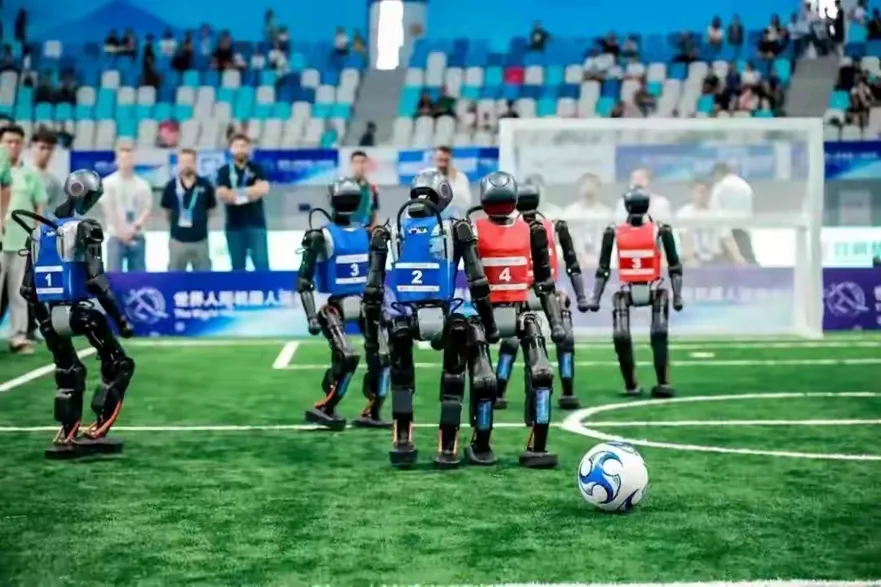
The biggest difficulty of the 5V5 football tournament is that robots need to adjust their roles according to the dynamics of the position on the pitch, they can't stack the balls, and they can't find a defensive space. In the real game, multiple robots struggle to grab the same ball, and the runway overlaps together. Because each robot has an independent decision-making system, there are delays in communication between each other, there are errors in the synchronization of global information, and a tactical cooperation that is as fluid as the human team is required for response time.
In the real world, the parameters in the laboratory and simulation environment are always ideal, the real world grasslands have convex wear and tear, the field lights change over time, and the extent of the wear on the football also affects the visual recognition effect. These subtle differences can cause the training of mature algorithms in simulation to fail. In the industry, this phenomenon is referred to as a virtual gap.
The two above-mentioned card-point technology locks the loop together, all at once, and alone breaks through a technology that cannot solve a fundamental problem. The industry wants to break the bottleneck, and needs to form systematic solutions, from hardware to algorithms, to solve problems one by one using engineered thinking.
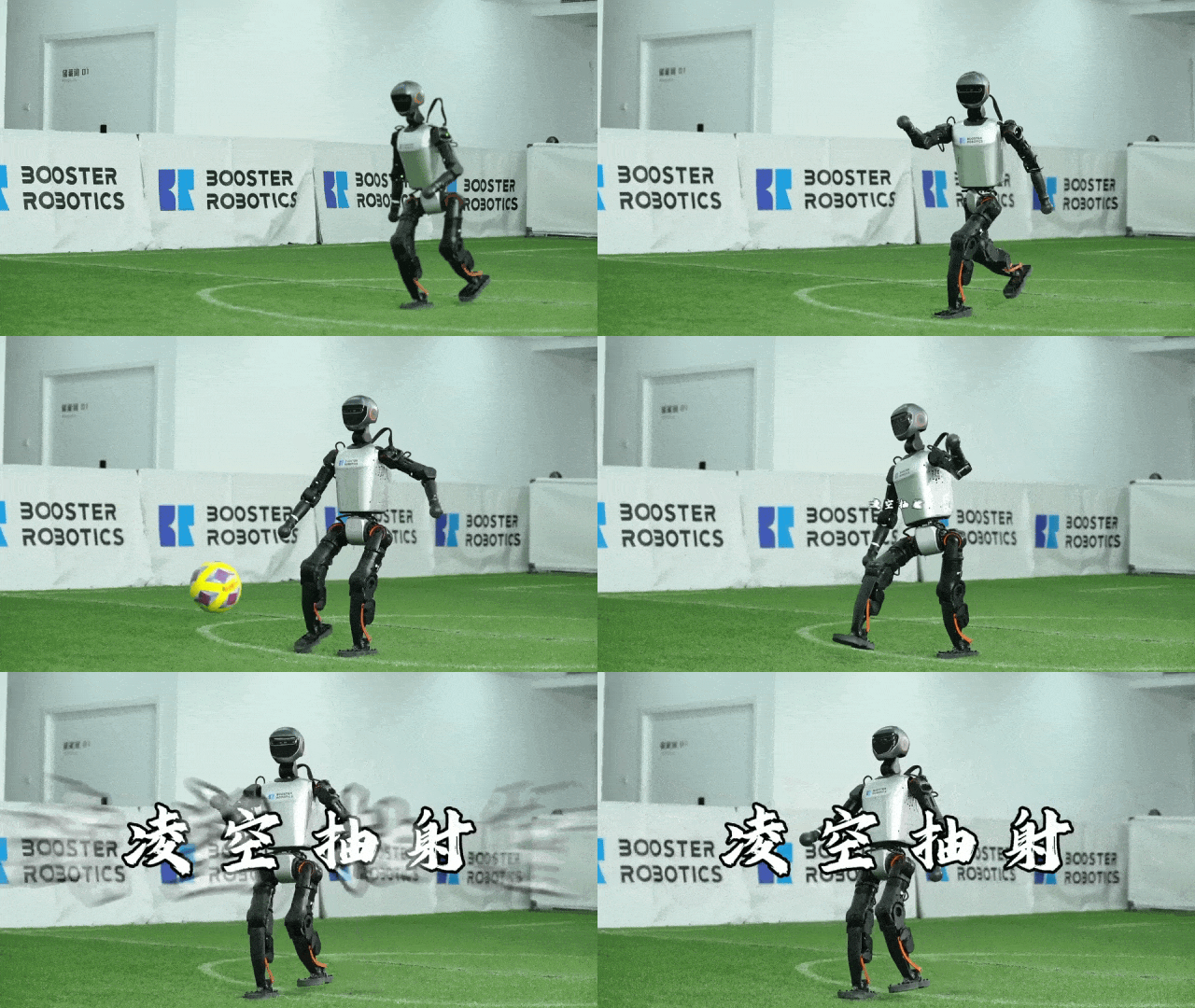
03.
How do you make a robot play football like a real player?
In the industry, the technical bottleneck of breaking the game of humanoid robots requires improving reproductive efficiency through industrial division, gradually approaching the mobility of human players.
At the more difficult algorithmic level, it is possible to improve the difficulty by means of platforming. In the past, the teams participating in robotic football competitions, most of which need to start from scratch designing mechanical structures, developing joint motors, modeling basic steps, and consuming large amounts of R&D resources on repetitive underlying work, can really put in the energy to optimize the upper-level algorithms is very limited.
As an example of accelerated evolution, these enterprises focus on leg and foot movement control technology, standardizing the robot body into a general platform of high reliability, built-in advanced basic step patterns and movement control algorithms. Once the team gets the hardware, it is no longer necessary to complicate the unstable problems of walking, and can directly focus all its attention on the development of these advanced capabilities for visual perception and tactical decision making.
This year's RoboCup featured 38 teams using the same hardware platform, reflecting this industry-wide division of labor trend. Hardware standardization has significantly lowered the research and development thresholds, and even secondary school teams can participate in international competitions using mature platforms, accelerating the pace of industry-wide transformation.
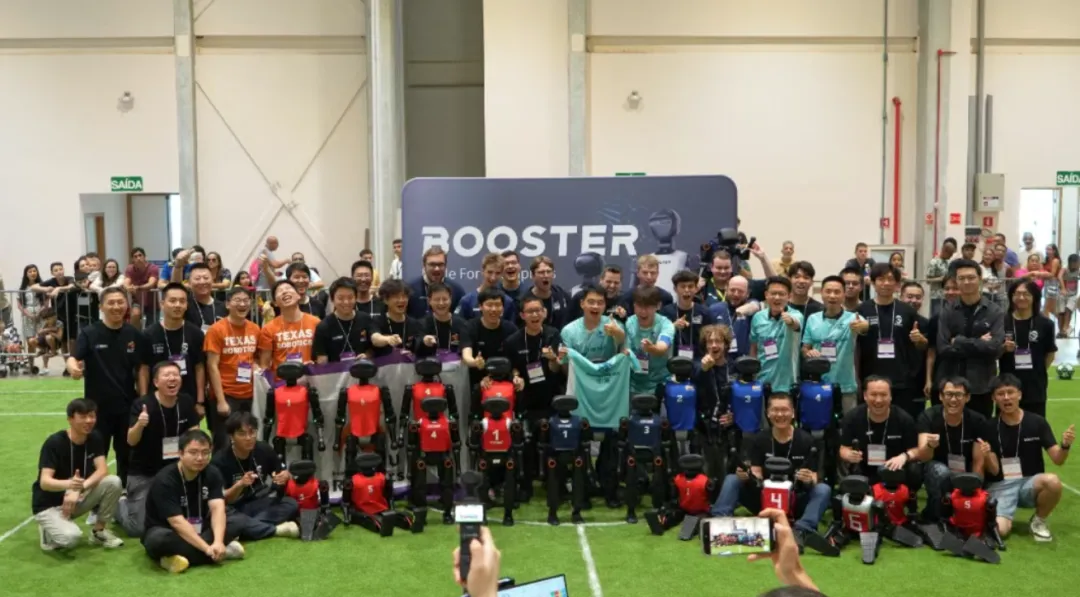
Speaking of the value of platforms, why platforming? It's not even about creating a fully functional terminal, but about providing a platform structure with unlimited functionality that can be generated.
As an example, Microsoft used to be an operating system, which was actually a software ecosystem platform, and Android software had to rely on this platform to run on mobile phones and PCs, as well as on robots, which had to rely on this platform to train and build data scenarios.
Previously, the HumanoidKick algorithm, developed by the Byte Jumping Seed team in collaboration with Tsinghua University, used end-to-end deep reinforcement learning to achieve a unified strategy for the entire process of finding the ball, chasing the ball, playing the ball, visual perception and motion control to form a millisecond response to dynamic rolling football, with adaptability far higher than traditional pre-set strategies.
As for the complexity of multi-machine collaboration, the industry's solution is based on a unified global coordinate system, giving a single robot the ability to make autonomous decisions while sharing critical information through low-latency communications, avoiding the bandwidth bottleneck of centralized control.
For example, the Qing Dynasty Fire Team has upgraded its multi-smart body coordination strategy, optimized role dynamics and runway prediction algorithms, and connected five goals in the second half of the final, relying on the efficiency of team collaboration rather than the individual abilities of a single robot. In addition, Chinese mobile rhinos robots use laser radars, wide-angle cameras, deep camera multi-sensor integration, build a unified body coordinate system that allows each robot to accurately determine the relative position of its team and football, and at the same time win the overall championship in the MWC Shanghai Human-Shaped Robot Scoring Tournament, winning multiple awards, including gold gloves, and gold boots.
04.
Link to the Future
In retrospect, football is also part of a high-level verification scenario of robotics technology. Every uncertainty that robots learn to cope with on the green court today will be transformed into their ability to solve problems in factories, homes, and public spaces tomorrow.
Like soccer, the charm of the game is always in breaking through the self, the greenery of human robots, and with the continuous breakthrough of technology, there is never an end to it.
But where the next shot will fly, the entire industry is waiting.