In the age of intelligence, the game of AI computing is also upgrading.
On September 23, at the 2026 Long Summit, CEO of Qualcomm, Cristiano Amon, officially introduced Qualcomm's strategic transformation into the Agent era.

At the same time, Qualcomm released two new generation flagship SoC phones: the sixth-generation Snapdragon 8 Elite Extreme Gen 6 and the sixth-generation Snapdragon 8 Elite Gen 6.

The new generation of chips is upgrading AI computing as a core upgrading direction, with a focus on end-to-end AI intelligence reasoning, memory architecture, personalization and multi-modal processing capabilities.
Chip capacity, full reversal to AI
This year's competition for cell phone chips is fierce, and it's the last flagship chip to be released, and it's a good thing we don't have a white chip.
Both of the Elite Gen 6 models released today are powered by a 2nm processor (N2P) and are equipped with a new generation of high-end Oryon CPU with an 8-core configuration. This is the first time that Qualcomm has introduced two flagship products with different positioning in the same generation of the Elite Series.
In the CPU configuration, both chips use an 8-core CPU configuration, including two Prime cores with the highest frequency reaching 5GHz, and six Performance cores with the highest frequency reaching 4GHz. This is the first time in the industry that mobile CPUs have been upgraded to 5GHz.
In order to support such peak performance, Qualcomm even used new packaging technology. Offset Package-on-Package (Offset PoP) changes the location of the phone processor and memory chip from where it was originally stacked, moving memory to one side, leaving a more direct heat dissipation pathway for the processor. Qualcomm says the new packaging allows the processor to maintain peak performance at high loads for more than twice as long as the original.
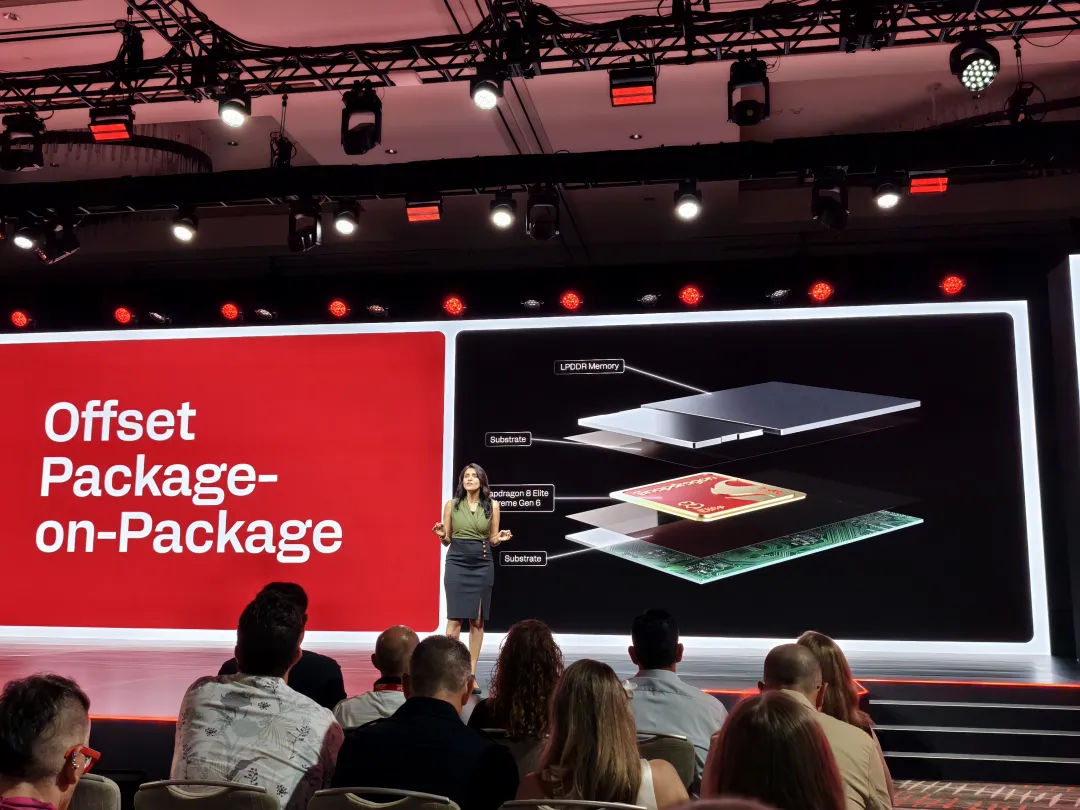
Cache will also continue to increase, with Qualcomm introducing a loaded CPU caching technology such as Agent workflow, video editing, and Oryon FlexCache, with 16MB of shared L2 caching for the CPU. Unlike traditional fixed caching allocations, FlexCache allows different types of CPU core dynamics to access the same pool of caching resources. When a high-performance core needs to handle large tasks, more caching space can be used, reducing the frequency of access to external memory.
It seems that Qualcomm's upgrades to the CPU are very prone to the task load of the smart body. Similar to AI computing in data centers, in the past the CPU was mainly used for general computing, or as an auxiliary computing power in AI computing, but in the era of the smart body, the CPU needs to be responsible for the organization and scheduling of the entire task, so its importance has increased significantly.
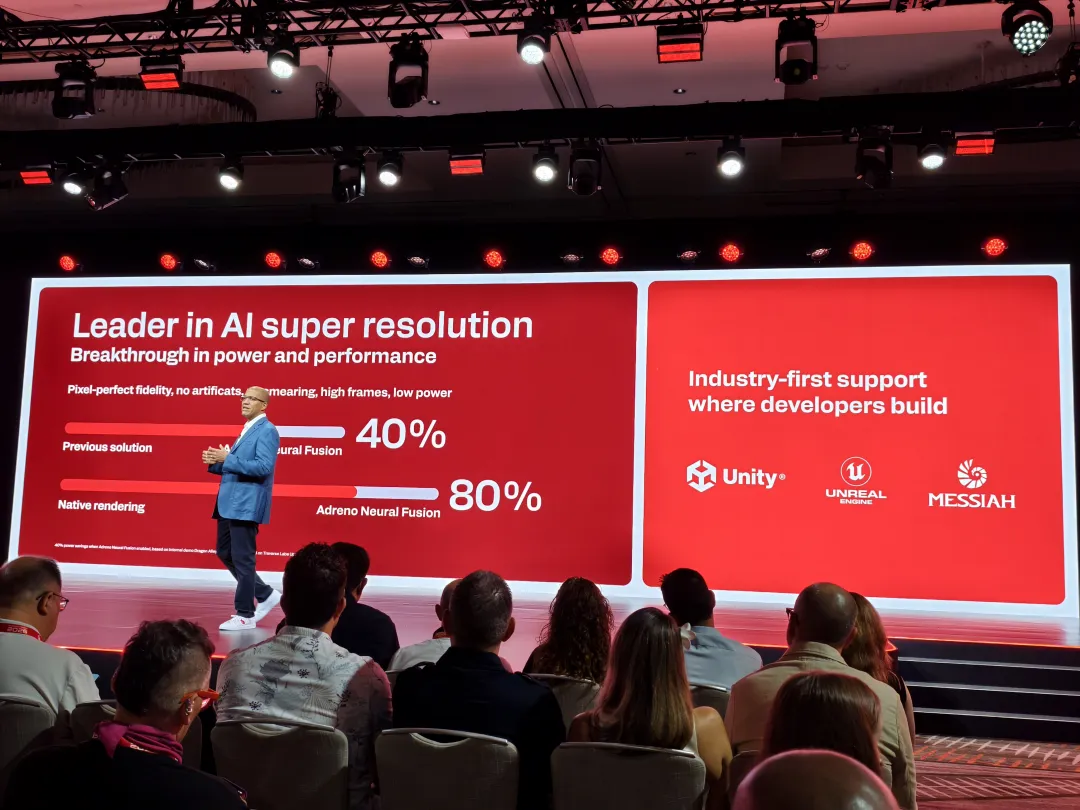
On the GPU side, Qualcomm added the Adreno Matrix Cores (matrix core) specifically designed for AI computing to its all-new Adreno GPU, and introduced the new graphics rendering technology Adreno Neural Fusion. Additionally, 18MB of Adreno's independent high-speed display (HPM) provides GPUs with low-latency chip storage resources.
Adreno Neural Fusion integrates neural network computing, AI super-resolution and crystal generation into the same graphical rendering pipeline. Now mobile games can first use low-resolution crystal images and then rebuild high-resolution images with AI models. Crystal generation technology can generate additional intermediate crystals based on existing images and motion information.
This means that developers don't have to rely entirely on traditional GPU rendering to increase image detail, but also to improve the game's visual performance and streamliness. Similar technologies (like Great Britain's DLSS) have been around for a while in PC gaming. According to data released by Qualcomm, the new program can achieve up to 40% power savings in supported games.
In terms of AI computing, Qualcomm not only improved the computing performance of the Hexagon NPU, but also made architectural adjustments and optimizations specifically for the operating needs of the Transformer architecture, large-scale MoE models, and AI Agent.
The newly added Element Accelerator is a hardware accelerator designed specifically for optimizing Transformer-related computations, which can work in sync with the original scale, vector, and volume computing units to improve the efficiency of big language model reasoning. The design is aimed not only at traditional single-cycle text generation tasks, but also at AI agents that need to be processed in a long context, multi-step reasoning, and switching between multiple tasks.
Added to the NPU's shared memory capacity, which was 50% higher than its predecessor, the sixth-generation SuperLon 8 is most capable of supporting MoE models that run 30B parameters on mobile phones. This landing was the StepEdge-Omni 30B-MoE, implemented by Qualcomm's joint venture Jumpstart, Unlimited Fire and Jumptron, based on the sixth-generation SuperLon 8.
For conventional high-frequency AI applications, Qualcomm has upgraded the Sensing Hub, which uses a dual Micro NPU architecture and supports continuous processing of information from sensors and microphones at low power levels. The performance improvement of the Sensing Hub reaches up to 85% and also supports Qualcomm Personal Scribe, which can help devices process voice-related information and create and maintain user situation information for personalized AI assistants.
In addition to video, both chips upgraded the Spectra ISP and introduced technologies such as Intelligent Pixel Control (intelligent pixel control) and Elite Color Engine. Among them, Intelligent Pixel Control further enhanced the ability to exchange information between ISP and AI computing units, enabling ISPs to more accurately identify and process different pictograms and photographic subjects in an image.
In terms of communications, both new platforms are equipped with the Qualcomm X105 5G modem modulator and RF system, as well as the FastConnect 8800 mobile connectivity system.
Overall, the two chips share the same CPU, processor, and bandwidth, with differences mainly in GPU, cache, memory, and NPU shared memory.
Compared to its predecessor, the fifth-generation Dragon 8 Elite Gen 5, the performance improvements are as follows:
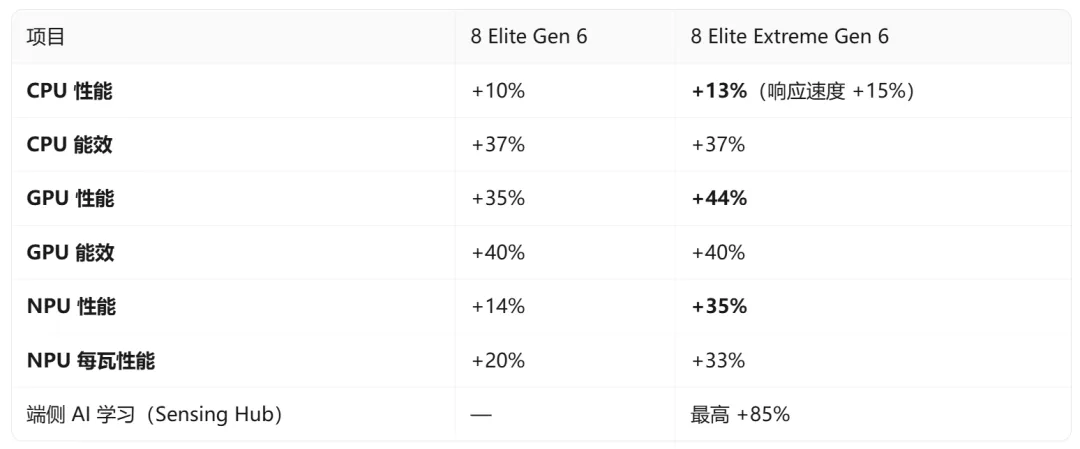
Such performance upgrades could drive more new forms of AI applications.
For example, after a future user receives a meeting invitation email on their mobile phone, Agent can automatically understand the content of the email, extract the time, location, flight and other relevant information, and perform a series of tasks; Personal Scribe can process information in daily conversations, such as organizing meeting logs, with user authorization, and organize the information into the user's personal knowledge graph.
The future of computing architecture will revolve around Agent.
Recently, AI Agent has changed the way people work, and it is also changing the definition of smartphones.
At yesterday's summit, Qualcomm CEO Anmon delivered a keynote address titled "Snapdragon for the Agentic Age", which introduced Qualcomm's push for a paradigm shift from "mobile-centric" to "AI agent-centric".
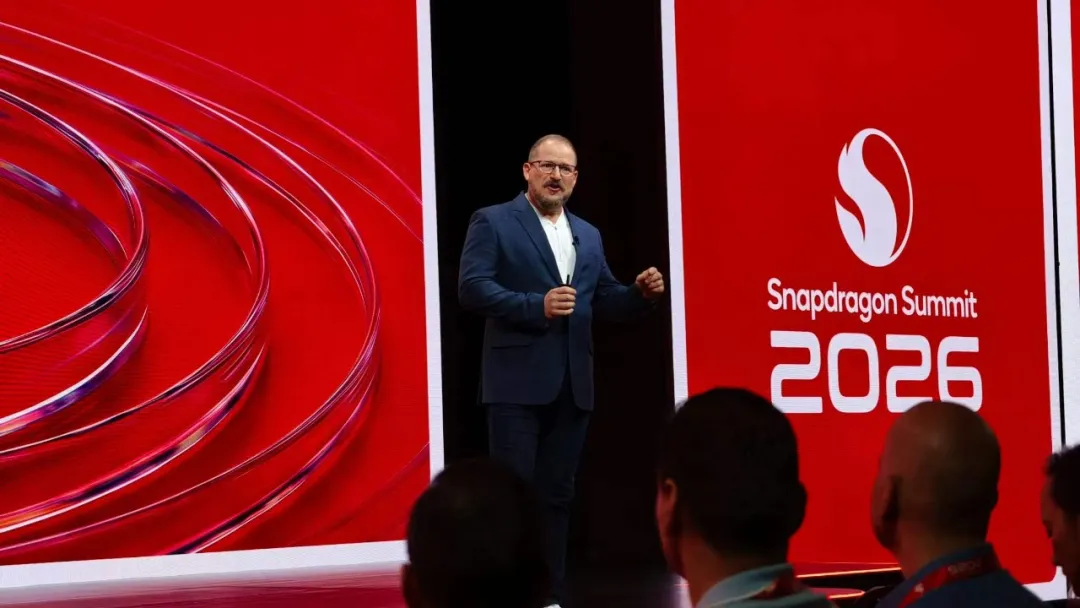
He recalled Qualcomm's previous judgments on mobile AI: Initially, AI was primarily used to enhance features such as mobile photos, and with the breakthrough of big model technology, Qualcomm presented the Ecosystem of You (a user-centric ecological) vision at last year's Long Summit. By this year, with the development of technologies such as the MoE model, Agent, Harnes, Skills, MCP, and others, Anmon believes that the future of end-to-end devices is beginning to become clear.
Examples of this include the "second-generation bean bag phone", the Nubia NaviX Ultra, the Honor Robot Phone, and the Qwen Book, an unreleased smartphone.

Of course, their outstanding capabilities will also have a significant impact on flagship phones. Rather than answering questions, AI allows Agents to understand user needs and complete tasks instead of users. The core criterion for future evaluation of AI phones may be "how much it can help you work".
This means that AI mobile phones do not simply fit into a large model, but also require long-term context, task planning, cross-application calls, and the ability to perform operations under user authorization.
On the other hand, the role of mobile phones in the future will change dramatically: since the Agent drives the use of various tools such as the App, the mobile phone will no longer necessarily be the object of direct user operation, but it can also be a node for information and computing, which will be used by the Agent to drive other devices.
According to Anon, smartphones in the Agent era need to support a two-dimensional user experience:
The first dimension is direct use. Operations are initiated by humans and the mobile phone responds to instructions, such as opening an app, using the mobile phone to take photos, watch videos, play games, process work, etc.
The second dimension is that the agent helps people use their phones. The agent needs to continuously perceive the environment, understand the user's intentions and context, and reason, plan, remember and operate when necessary.
Under such a premise, a mobile device agent needs to have a range of capabilities, including access to user-authorized personal knowledge, maintaining continuity of context and memory; performing operations on behalf of users after being authorized through a secure authorization mechanism; understanding different formats of information, such as language, visual, audio; coordinating different models, apps, Internet services and data; and maintaining a consistent user experience between different devices.
This means that in the future, when users are not actively operating, agents may continue to use the computing resources of their phones in the background. Therefore, future AI phones cannot rely solely on larger NPUs to solve AI problems, and the importance of memory and energy efficiency will be further emphasized.
Interestingly, Anon also proposes a standard for the popularity of Agent: it must be easier to operate than the user himself.
In the past, e-commerce transactions were mostly done on PCs, but now are mostly mobile apps, one of the reasons being that mobile phones make it easier for users to perform the same tasks. Therefore, whether the agent can become a new task entryway also depends on whether it can further reduce the operating threshold.
This means that you can no longer work as a PC with a smart body, entering complex prompts into AI, repeatedly correcting its understanding, and repeatedly confirming execution results in the process of execution. A useful end-user agent must be simple to interact with, and can be automated using a variety of application tools, cloud services, and AI models.
Of course, the skills and computational resources needed to be coordinated in the background will be more complex.
Anmon talked about moving the High Bandwidth Compute (HBC) that was originally aimed at data centers to terminal devices powered by the Qualcomm platform, and developing a dedicated collaboration processor for Qualcomm. It will bring memory closer to the AI processing unit, thus improving computing speed and energy efficiency. The new computing architecture is expected to reduce the expense of consuming large amounts of data between different computing units when AI models are reasoned.
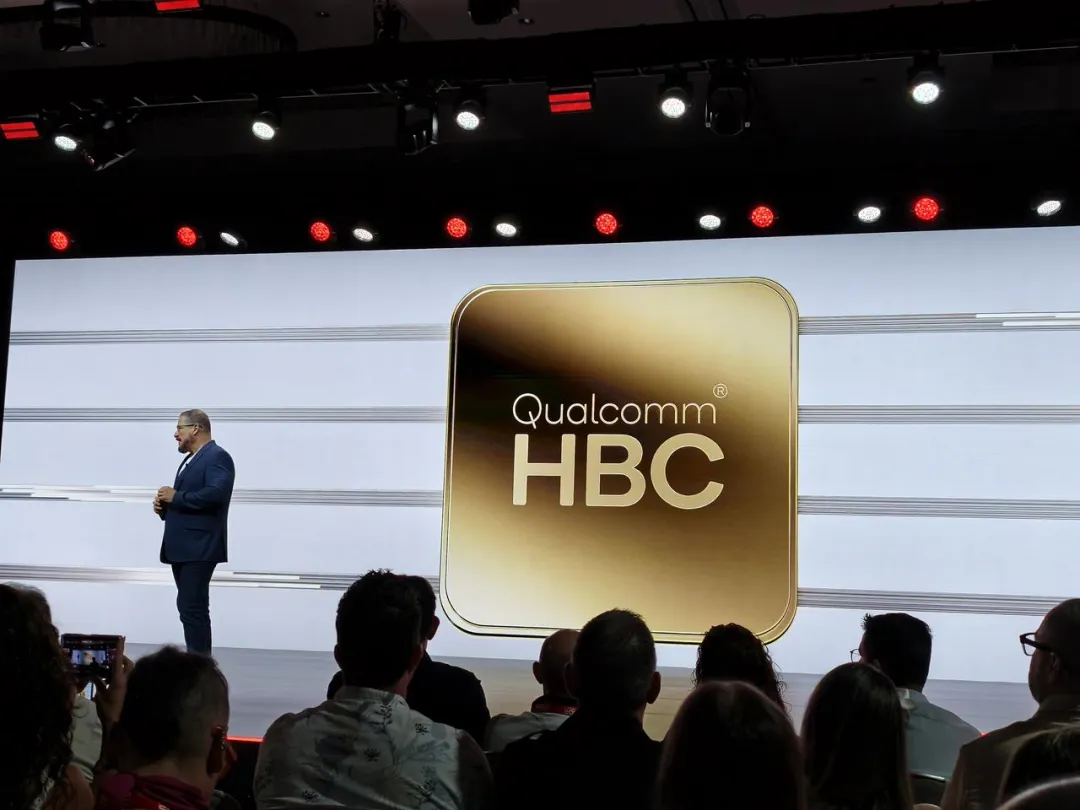
Finally, future users of personal AI can choose the most convenient device to interact with the Agent based on their environment and current tasks. It can be mobile phones, PCs, smart glasses, watches, other wearable devices, or cars. At the same time, computing tasks can be allocated between different terminals and cloud resources based on actual needs.
In the past, Qualcomm's core business has been providing processors, communications and multimedia computing capabilities for mobile phones. In the future depicted by Anon, mobile phones, PCs, smart glasses, wearable devices, and even automobiles will all be the different interaction terminals of a single AI Agent.
This means that end-to-end, cloud, and cross-device computing needs to work together as a whole.
In order to enable developers to rapidly develop in heterogeneous AI computing, Qualcomm is committed to providing a unified development platform. Following the completion of the acquisition of the cross-hardware compiler and runtime company Modular in the field of AI in July this year, Anmon directly announced in a speech yesterday that Modular's modular open-source system-level programming language Mojo will be modulated with the unified AI reasoning service engine Max.
Modular's AI native software platform, complemented by Qualcomm's solutions, covers data centers, edge infrastructure, personal and industrial AI, and its technological capabilities as a neutral portable compilation layer can be compared to CUDA.
What is the meaning of this verse?
AI mobile phones have been around for a few years, but there is still a lot more innovation to come in terms of new applications, agents, and cross-device, cross-ecological integrations.
From this Long Summit, the computing system around AI is changing: CPUs, GPUs, and NPUs need to redesign workloads for smart objects, and memory, connectivity, and energy efficiency will determine whether Agent will continue to run, while the unification of software and computing platforms depends on whether AI can truly span different devices, models, and applications.
In the Agent era, the problem of computing platforms that need to be solved is shifting from how to make a device run faster to how to distribute computing resources across different devices to accomplish user switching tasks together.
This is also the evolutionary direction of the new generation of Qualcomm chips, as Qualcomm is extending its technical layout to new computing architectures, AI software platforms, and a personal device ecosystem consisting of mobile phones, PCs, smart glasses, and cars.
The competition for personal computing has opened a new page.