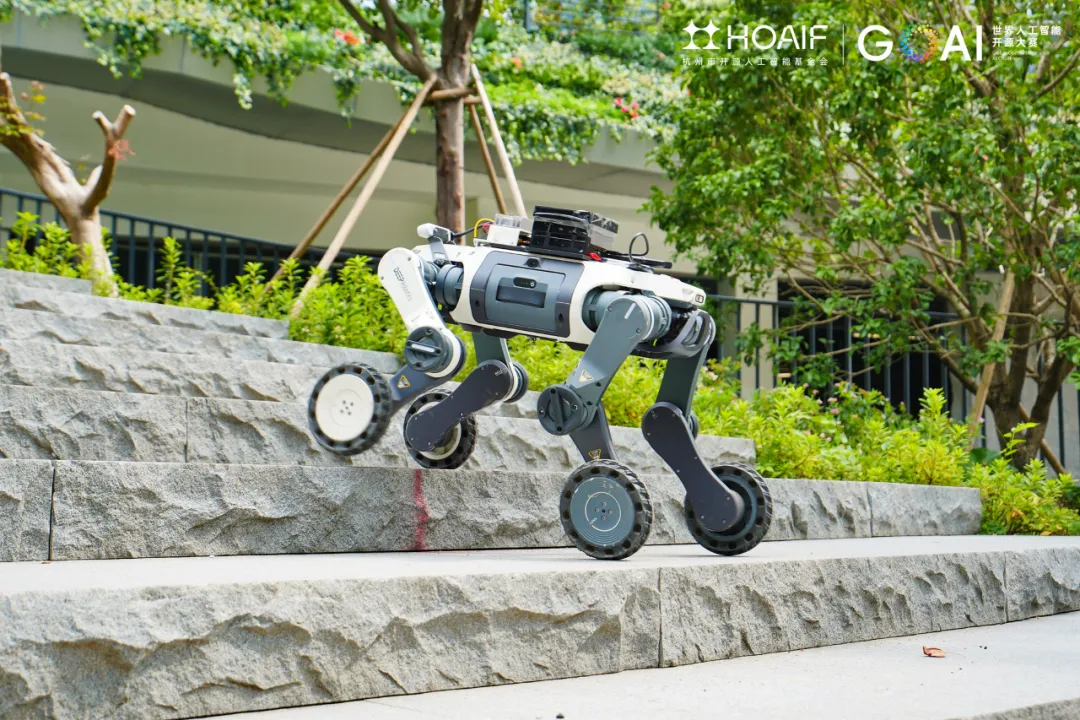
“ One of the rarest moves in the industry is to hand over robots.
On September 22, in the center of the Cloud Valley in the West Lake district of Hangzhou.
This is not a purpose-built playground - slopes, rubble, narrow stairs, wet sliding road surfaces, dynamic barriers - they are the real face in the day-to-day running of the park.
The teams that entered the final, using different technical routes and the same cloud-deep science and technology mountain cat S10 wheeled foot robot, completed the same all-terrain patrol task, with the fewest times winning.
The racetrack is real, robots are unified, and time is the most direct arbiter.
But if you only see the fastest runner, you might be missing something that's really worth paying attention to.
The volume of the GOAI World AI Open Source Competition is far more than just a technical competition, and the "Futuristic Future" competition held by Cloud Deep Technology, a two-part industrial park all-terrain patrol challenge, just happens to be the hardest part of the logic of the competition.
It doesn't test PPT, it doesn't test answering skills, it opens up its own mass-produced Cat S10 machine dog in the cloud to ten external teams to complete algorithm development, real-world deployment and field competitions on the same machine.
When everyone was discussing when hardware intelligence could really land, Cloudways chose a slightly different way of answering the question. It would open up its own mature products, allow more people in the industry to push the issue forward, push the issue forward, and use the certainty of running faster, in exchange for the possibility of running faster for more people.
01.
The teams faced the same question collectively.
If you look at the technical routes of these teams, you will find something that is very patient.
They come from completely different coordinates, including university research teams, industry teams, individual entrepreneurs, and so on. If you draw the source of these teams into a graph, it's the cross-section of China's intelligent talent structure.
It is also worth noting the technological path they have chosen.
The GOAL LAI team performs purely autonomous navigation, pinching the laser radar and 2.5D high-altitude maps together to determine when to accelerate and when to slow down with a touch of confidence; the Viking warship team combines reinforced motion control and 3D chart positioning to allow the robot to find the best pacing combination between the slope and the staircase; the squadron, in turn, proposes a close-up of Real2Sim2Real, recreates real scenes with mobile video, trains tactics in simulation, and then returns to verify on the real machine.
Multiple technological routes point to the same set of problems: perception, location, planning, control, and simulation of migration to the real machine.
These terms are found in industry reports and are a few lines on every company's PPT. But in this competition, they have become a real problem that ten teams must solve on their own. No team can bypass a perfect run in a foam simulation and fail repeatedly on a real machine; no team can do without dealing with visual blind spots, location drift and geo-errors; no team can avoid one thing. The ultimate examiner for a robot is not an algorithmic score, but the physical world.
This is precisely the essential difference between the game and the vast majority of robotics competitions.
What the game is really looking at is who can complete a set of algorithms to design and simulate the simulation of the simulation to verify the entire process of the simulation of the simulation of the simulation.
The hardest part of this process is the engineering problems that are only exposed on a real machine and that do not appear in papers.
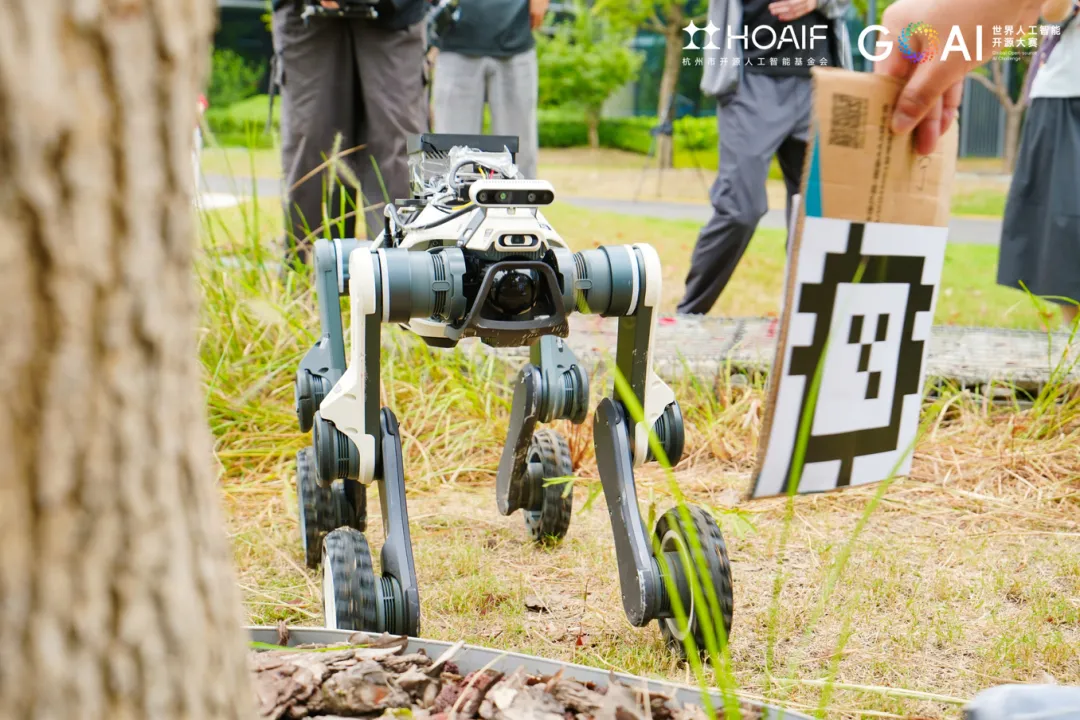
The story of the team is more convincing than the results.
For example, the Intelligent Team, which summarized a principle in the Pre-Race: to ensure a stable finish, to talk about speed; to affect safety, backwards. Only those who have actually been in the industry know the ratio of these two words backwards. It means a fear of reliability, it means recognizing that robots will always encounter unplanned conditions in the real world, and it means that the goal of system design is not to fall off the chain every time.
After all, the best simulation programs do not have to be implemented after the real machine. Sensor errors, changes in ground friction, errors in robot actions, changes in vision in different environments can cause a perfect algorithm in a virtual world to fail in the face of reality.
This is the most real dilemma facing the physically intelligent industry today: Algorithms can be changed overnight, but engineering reliability can only be refined by an inch.
In the depths of the cloud, the Cat S10 foot robot was open to all competitors as a unified hardware platform, essentially doing one thing. It shortened the most time-consuming journey from algorithms to real machines to the time of a race.
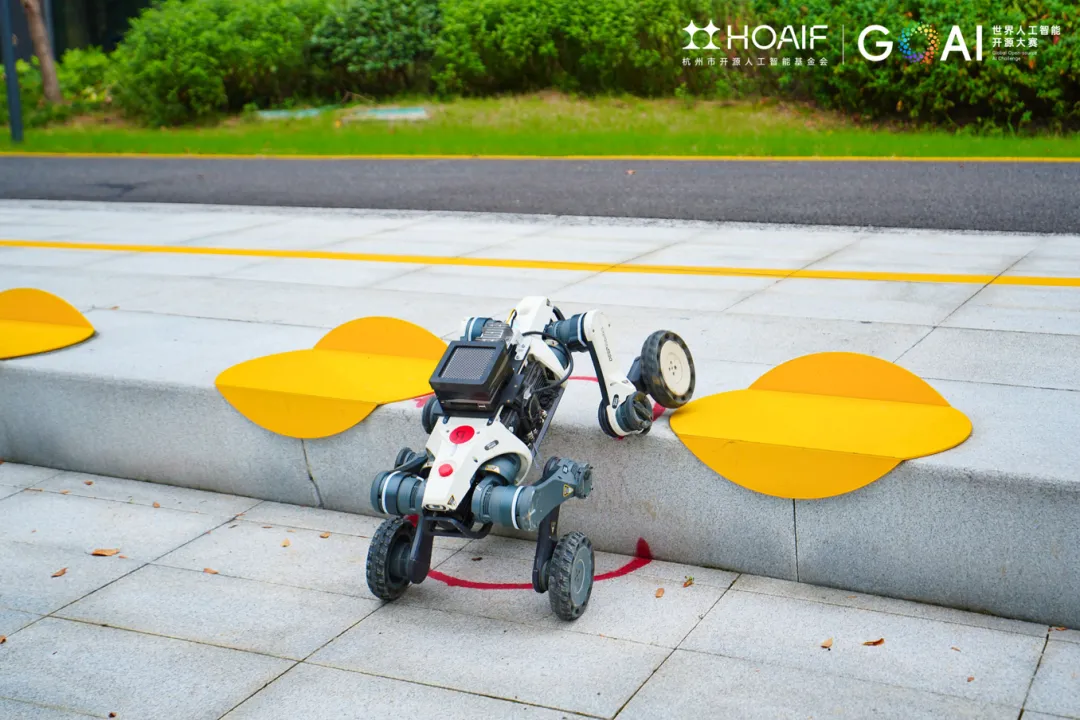
Cloud dares to use a real park as a racetrack, dares to use self-developed mass production equipment as a unified platform, dares to let the finalists fold freely on their own products, and each dares to stand behind the engineering underpinnings that it has wrestled in front-line scenarios such as energy power, emergency fire, industrial inspections.
From an industry point of view, robotic companies that can bring mass-produced products to an open development platform, indexing can be done, which is not a gap in parameters, but a gap in maturity.
02.
From robots to robots to platforms: an underrated transition
The most easily overlooked details of the game are the locations where it takes place: the Cloud Valley Center, a real industrial park, rather than a well-built experimental space.
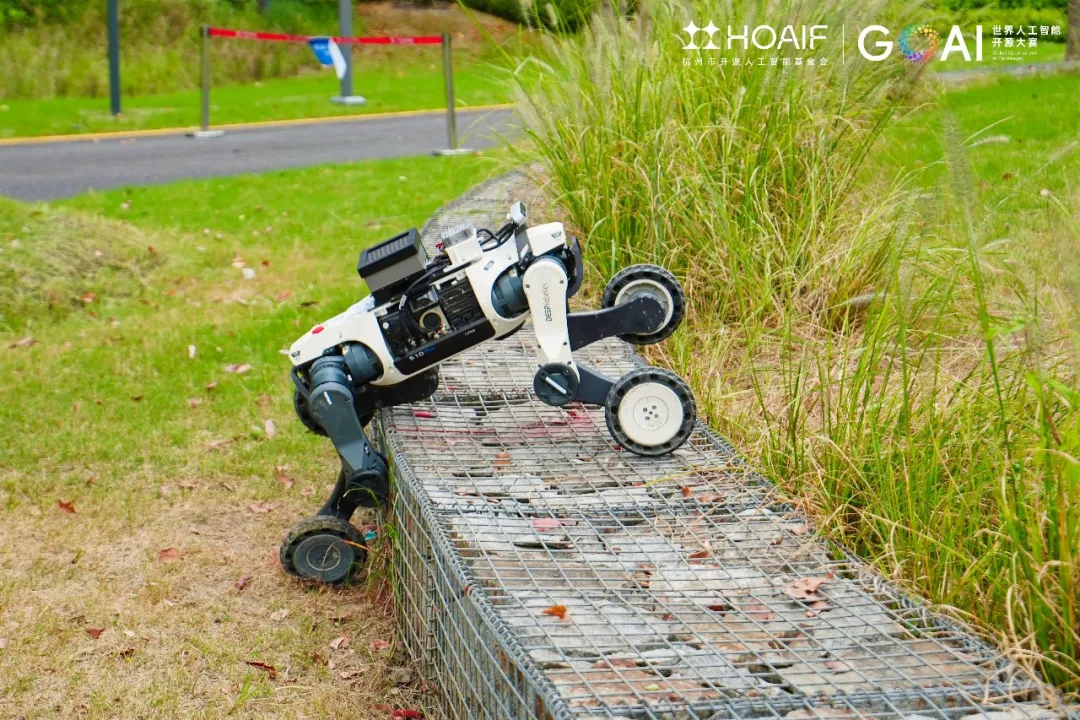
There are slopes, debris, stairs, wetlands, and dynamic obstacles that would have existed. The task of the team is to allow robots to judge, adjust and operate autonomously in these terrains.
All of this is backed up by the hardware of the Cat S10 machine dog itself. The overall battery weighs no more than 20 kg, is equipped with 16 high-precision joints, can cross 50 cm high barriers, protection level reaches IP66, and the operating temperature range ranges from 20°C to 55°C.
The overall design is portable and easy to deploy, capable of reaching through narrow channels and rubble gaps untouchable by ordinary robots.
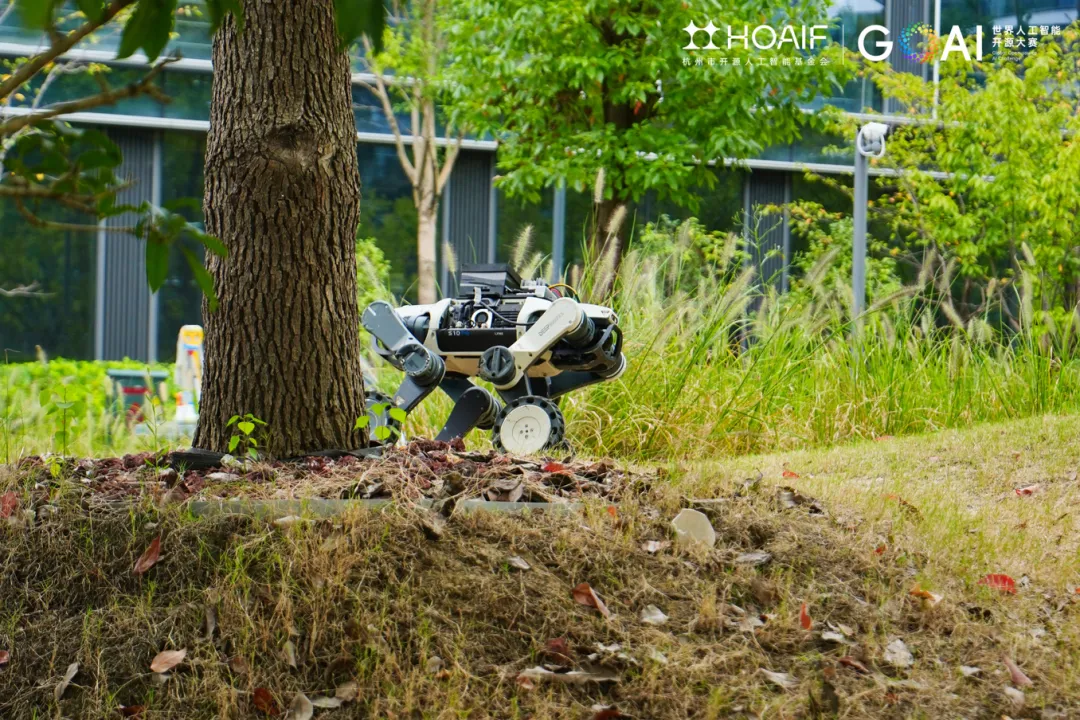
But more important than these parameters is another set of implicit data puzzles, which is what developers can do on this robot.
Cloud deep provides the team with not only hardware equipment, but also development support such as robot-related model warehouses, product information, secondary development interfaces, and technical questions.
This means that external developers can develop algorithms directly on cloud-based mass-produced products, rather than performing technical performances on a modified device that is packaged with an addiction-competing special cabin.
The robots used in the competition, and robots used on the customer's premises, are the same. The robot product itself is evolving from a silicon terminal device to a silicon development platform.
The importance of this issue needs to be seen in the coordinates of the industry. The most common form of organization in the smart industry today is still vertical integration. Each company designs its own hardware, writes its own algorithms, finds its own scenarios and controls the entire chain from top to bottom.
This logic was reasonable in the early days of the industry. When there were no hardware schemes, no software packages, no standards, any openings lacked stable interfaces.
However, when an industry starts to see a booming platform-class product boom, closures are replaced by open ones.
After the emergence of a stable flight control platform, the industry went from one company to a chip factory, a flight control plant, a shelf factory, a collaboration of application developers.
One of the hallmarks of an industry that has matured is the rise of critical hardware from aluminum products to aluminum platforms, from the subject of athletics to the foundation of collaboration.
This is also the main line implied by using the S10 as a unified platform in the cloud deep. Although the game is an algorithm, there must be a sufficiently reliable robot body underneath the algorithm.
A platform that is mature enough for developers to focus on algorithm and application innovation. For the industry, the qualification of a mature platform is not overwhelming, it's refined: not only do products have to pass external testing, documentation, interfaces, and technology to answer these technical details mature enough to win a competition that allows others to play freely on their robots.
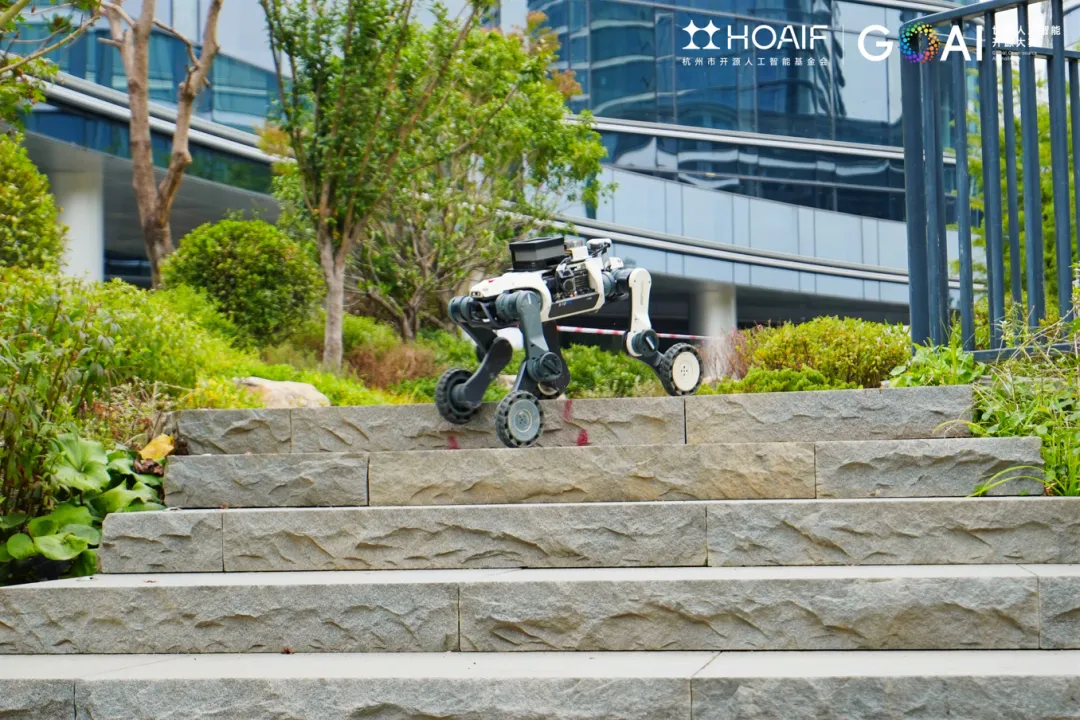
The finalists were able to innovate their algorithms without hesitation, because the Cat S10 had already solved the hardware problem for them.
It can be said that the game can be successfully held on the condition that the cloud deep wins a more difficult contest for everyone, and that a reliable industry-class robot is built into a development platform that allows other teams to fold at will.
This is an open-ended sword about the maturity of the platform, an external verification of the maturity and engineering capabilities of the cloud deep product. In this opening exam, the cloud deep is looking at itself, after all, if the product itself does not meet the standards, the outcome for external developers is likely to be double losses.
03.
Outside the pitch: a long-term investment in talent
There is another dimension worth considering.
Among the participants were students from universities, entrepreneurs, engineers from industrial companies, and individual developers.
In today's smart industry, this experience is often more persuasive than a degree.
The rapid development of physical intelligence has had a direct impact on the industry's rapid increase in demand for complex types of talent. Robot algorithms, motion control, perception, and systems engineering are difficult to develop in classrooms and simulation experiments alone. Real robot researchers need to go through a complete loop: algorithm design, simulation training, real machine deployment, parameter modeling, failure analysis, system optimization, and verification of real-world tasks.
The vast majority of universities' laboratories and curriculum systems cover only the first two or three links of this chain.
GOAI's "Future Race" offers the latter half of the chain. The contestants get not just a simulation environment, but a real, industry-class wheelchair robot.
This provides a scalable solution to the plight of physically intelligent people. As industry-level hardware platforms become open and accessible, the smallest units of talent cultivation are transformed from enterprise training to community development.
In this competition, the contestants are faced not with theoretical problems under ideal conditions, but with real problems that they will only encounter on the first line.
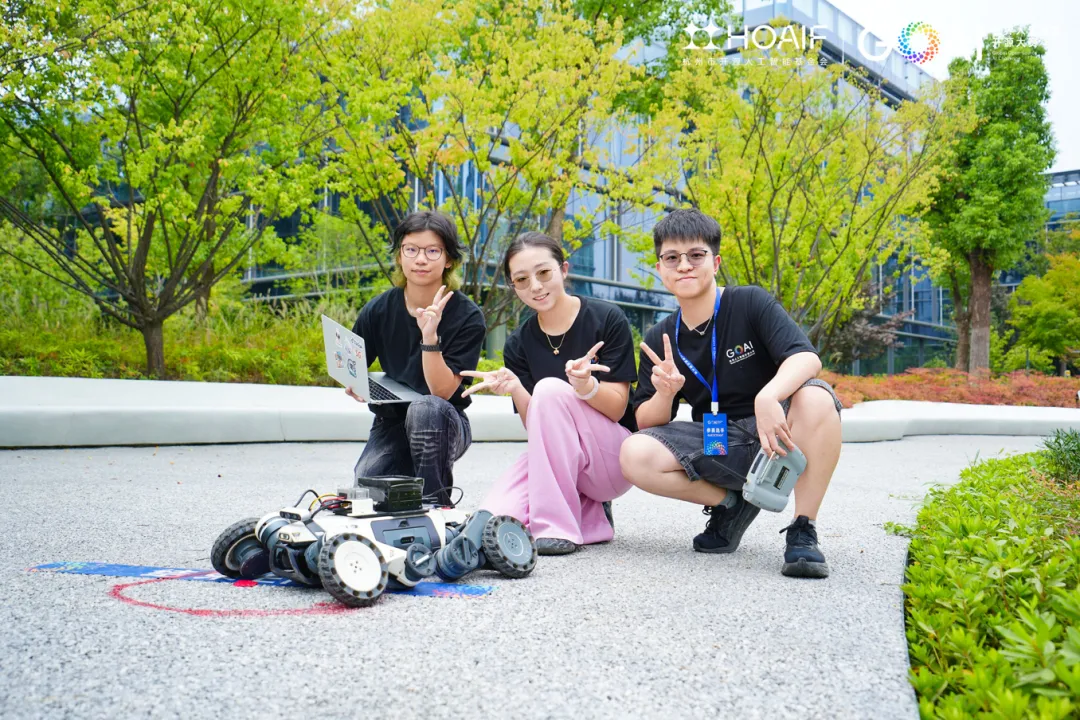
Although the teams come from different backgrounds, they are connected by the same entrance: a mountain cat S10, a scenic race theme, a real-life scene. This entrance is a cloud-based infrastructure kit that provides the widest possible pool of potential talent with the opportunity to undergo a complete engineering training on an industry-level platform.
This vision of talent is consistent with the way of the future in the depths of the cloud. A company founded by professors came out of the university laboratory and naturally knew how to cultivate talent in the long run in the industry.
Genetic research in the field of biotechnology has led to a different understanding of human resource development in the cloud than in general enterprises.
When a cross-age team of algorithm engineers and middle school students are able to work together on engineering issues such as simulation and real-machine differences, positioning restarts, sensor chains and procedural abnormalities, it may explain the meaning of the game more than any other championship result.
It is the enterprise that actively delivers industry-level platforms in the cloud that drives this threshold down.
Handing the Cat S10 into the hands of young people, allowing them to complete the complete loop from algorithm to machine in real life scenarios, is something only companies willing to do for the entire industry to cultivate the next generation of R&D power.
Behind this vision of talent is a deep-seated judgment about the long-term development of the industry: competing with physical intelligence is ultimately competing with talent, and talent needs a real platform to grow.
04.
Two definitions of leaders
Back to the question at the beginning of the article: what does the depths of the cloud prove by this game?
The answer may lie between two very different interpretations of Liu's identity as a leader in the pottery industry.
A common interpretation is that the leader is the one who runs ahead, and you can't catch up with me, so I'm the leader. Under this logic, all action is about raising barriers, raising distances.
Another interpretation is that the practice is being practiced in the depths of the clouds. The leader is not only the one who runs the fastest, but also the one who is willing to stop and build a road, build a bridge and set a road mark for the latter.
This leadership is not about locking technology in Shenzhen, but about opening up capabilities to the environment; it is not about positioning on the monopoly track, but it is about lowering the entry threshold for the entire industry.
Through this event, Cloud Deep proved that true industry leadership stems from empowerment and commitment to shared growth.
When a company no longer focuses on how to run faster, but begins to think about how to run the entire track further, it evolves from pure competitors to eco-builders.
This is not only an upliftment of the business strategy, but also the most profound redefinition of the word "leadership": not to stand tall and look down, but to bend down, to steady the ground under which everyone can run.
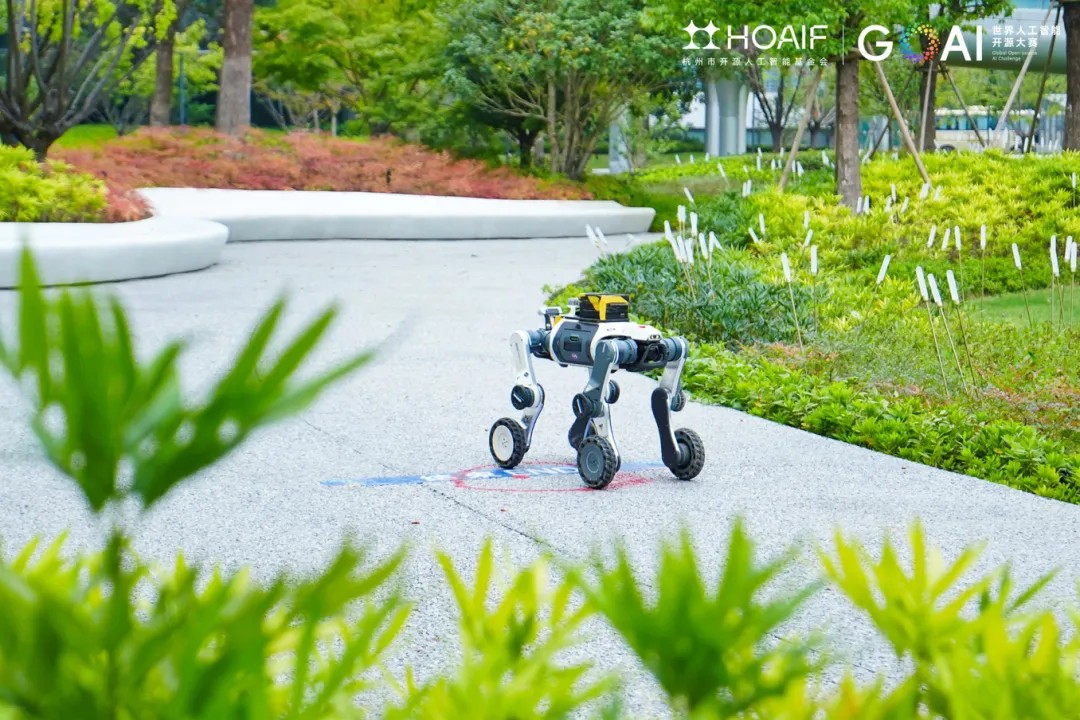
Cloud deep transforms its accumulation into an industry-shared collection, opening up the needs it sees in the industry to the entire developer community in search of answers.
One of its most influential moves after establishing itself as a global leader in consumer-grade drones was the RoboMaster A-League, which introduced an extremely complex robot competition system to universities around the world.
The cruelty and openness of the competition trained an entire generation of engineers directly for the Chinese robotics and unmanned aerial vehicles industry.
This forms a precise correlation. When a company reaches a binding position in the industry, its competitive logic is no longer about how much its products are more useful than its competitors, but whether it can integrate the entire innovation ecosystem of the industry into its own rhythm.
It is true that there is still a long way to go from the dominance of the market in the clouds, but the logic is consistent.
05.
To turn the race from the end to the beginning
Compared to the final result, the game is really saturated with algorithms running in real park environments, reproducible technical documentation, and engineering problems solved one by one late at night during testing. These real experiences from the racetrack will eventually enter the open-source flow, become a common accumulation in the industry, and become the cornerstones for the next generation of developers to set foot on.
In this sense, the game itself is just a centralized presentation. It's a real continuation, and once the open platform starts, it doesn't stop because of the end of the game. In the future, more technical teams will be researching, making products, and doing secondary development on cloud-based robotic platforms, and cloud-based deep will draw new scenario needs and algorithmic ideas from these external innovations.
This formed a cycle where enterprises provided platforms and scenario inputs, developers provided algorithms and cognitive diversity, and the industry harvested talent and technology.
Over the past decade, the competitive narrative of China's robotics industry has largely been hardware capacity shortages, a phase where hardware gaps are gradually closing, product homogeneity is approaching, and price wars are hanging on top like ghosts.
And what the cloud deep is doing now is turning robots into a development platform, turning real-world scenarios into open questions, and incorporating talent into the industrial ecosystem, which is a sign of the next decade.
When algorithms and ecology become a new source of differentiation, it is the developer who first defines the input and who master the structural advantages of the next stage of the industry.
A true leader is not one who stands at the top and tells others where to go, but one who paves the way and lights the lights so that more people can go further. The most valuable companies in an industry are often those who are willing to turn their past into the starting point for others.
The race is over, but the ground has been laid, and the depths of the clouds are always on the way.