The global shipment of humanoid robots is forecast to exceed 50,000 units this year, an increase of more than 700% according to Consolidated; according to industry statistics, Chinese manufacturers accounted for about 97% of the global market in the first half of the year.Genocide is a key issue in mass production。
A humanoid robot has dozens of joints throughout its body, each in a tight space, simultaneously completing motor control, dual encoder processing, multi-protocol communication and security protection. Joint modules account for more than half of the cost of integrated hardware.
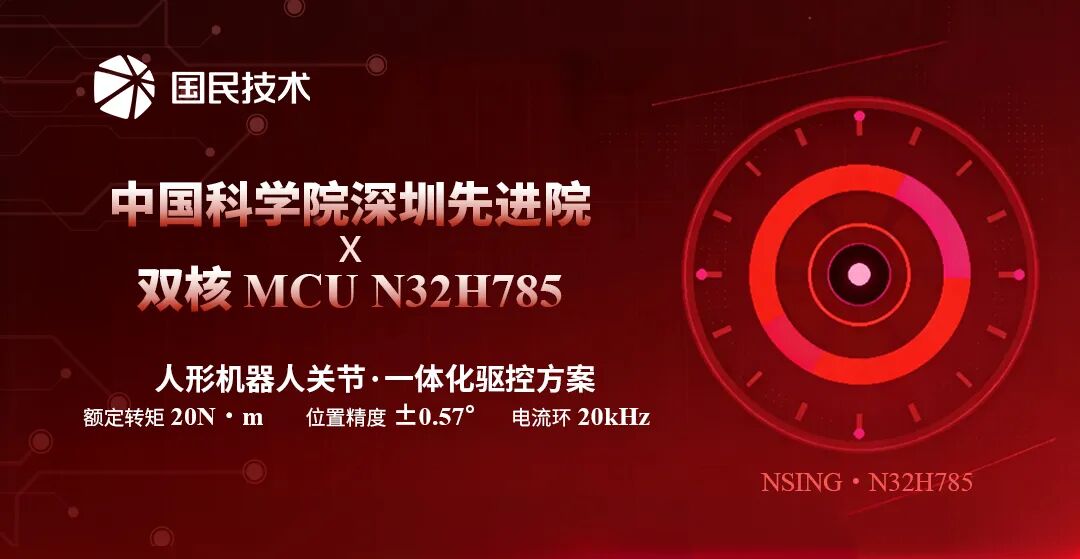
Today, I'm here.National Technology officially announces: A team of experts from the Joint Chinese Academy of Sciences, Shenzhen Advanced Power Driving Systems, has launched a new generation of human-like robot-connected motor-driven integration programThe program is centered on the national technology high-performance dual-core MCU N32H785, integrated drive main control, unbroken rectangular motors, dual absolute value encoders, communication modules and accelerators, from chips to algorithms, from drive to perception, and provides a reference for the miniaturization and modular design of robotic integrated systems.
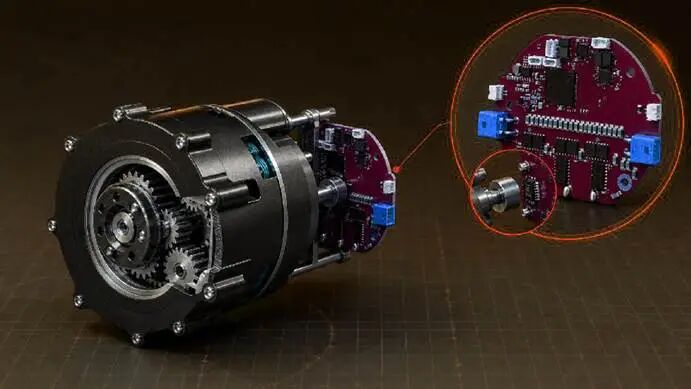
Structure of joint motors driven by integrated sampling
01.
Why the N32H785?
Consider the industry's old problem of single-core programming: machine control algorithms and communication protocols run in the same core, control cycles are microseconds, and communication cannot lose data. Two tasks are competing for resources, real-time and stability are difficult to match.
A team of experts from Shenzhen's Advanced Electric Drive Systems repeatedly verified a conclusion in a joint trial:The bottleneck of joint control, often not in algorithms, but in arithmetic architecture。
The answer given by N32H785 is isotope bi-nuclear fission:
● Core of Cortex-M7, main frequency up to 600 MHzSupport dual-precision floating point operations with DSP instructions, full-time FOC motor control, torque/speed/position tricycle control, dual encoder data processing and security protection;
● Cortex-M4F core, main frequency up to 300 MHzIn addition to this, the company is also involved in the processing of CAN FD, EtherCAT and serial communications.
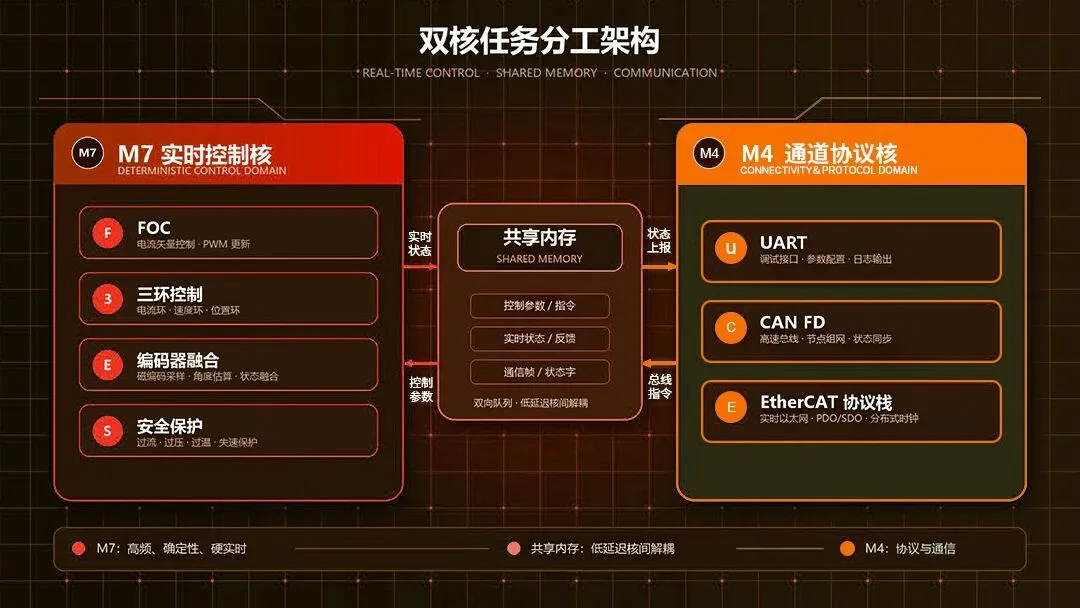
N32H785 Bi-nuclear mission division architecture
One tube is "muscle" and one tube is "nerve", each of which does not interfere with the other. The two nuclei exchange control instructions and operating status via SRAM on the chip and complete the trans-nuclear synchronous communication load with SEMA4 hardware signals and slowly drag the motor control cycle.
02.
Rich on-board resources for high-performance control
In addition to dual computing power, the N32H785 also integrates a complete external matrix for high-performance control:
● Two 16-bit ultra-high precision timers(SHRTIM1/2, control accuracy up to 100 ps) with 4 16-bit advanced timers (control accuracy up to 3.3 ns) to generate the complementary PWM signal required by the three-phase inversion bridge;
● 3 12 bit 5 Msps high-speed ADC, 4 high-speed simulation comparators and 6 12 bit DACIt covers phase-current sampling, mother line voltage monitoring and rapid failure detection.
● 8 routes CAN FD, 2 Ethernet MACsThe EC model supports EtherCAT;
● Flash on 2MB/4MB with 1504KB SRAMContaining control algorithms, communication protocol packs and running data;
● Working temperature range of the device- 40°C to +105°CIt also integrates reliable resources such as SRAM ECC, independent/window watchdogs, temperature sensors and more.
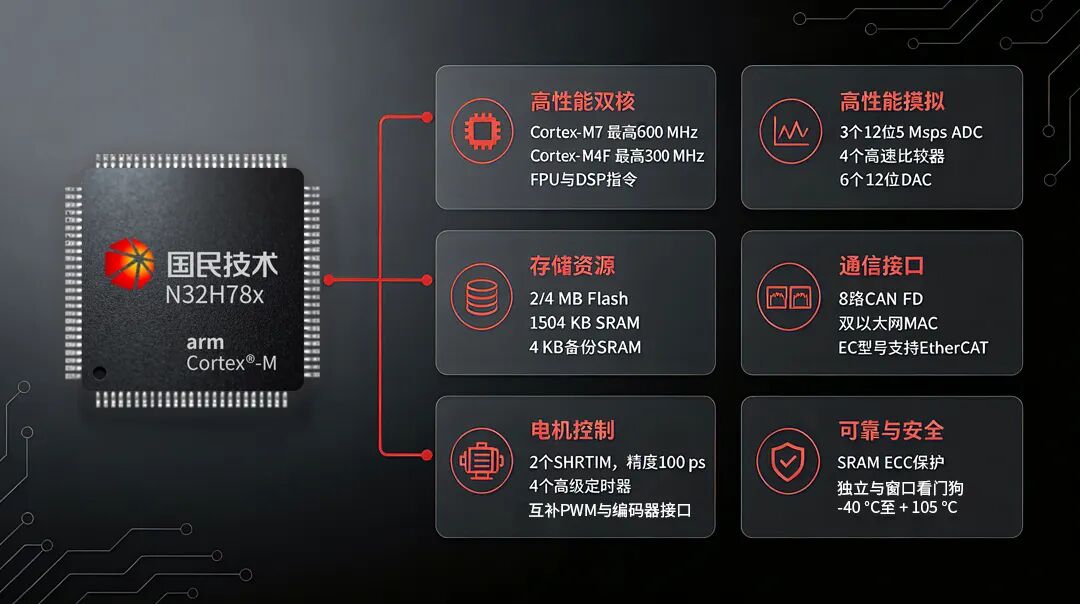
N32H78x series of critical resources overview
Depending on the resources on the high-integrity film, the program significantly reduces peripheral control devices, shrinks signal processing links, and provides direct support for the miniaturization and high-integrity design of the joint control panel.
03.
Hard-tested: data speaks
In the standard stand-up load test, the key performance of the joint module is as follows:
● Rated torque 20N m, peak torque 60N mThe pump covers the main power output needs of the whole engine movement;
● 20 kHz circuit, combined force torque/speed/position triangle control system, force torque instruction response in milliseconds;
● 0 to 100 rpm speed jump, average response time of 106msThe maximum over-tone is only 4.43%, and the torque fluctuations are ≤±5%;
● The maximum position tracking error is 0.01rad (about 0.573°) and the average error is 0.54°.It's a 360° wide-ranging motion that takes 1 second to reach its destination.
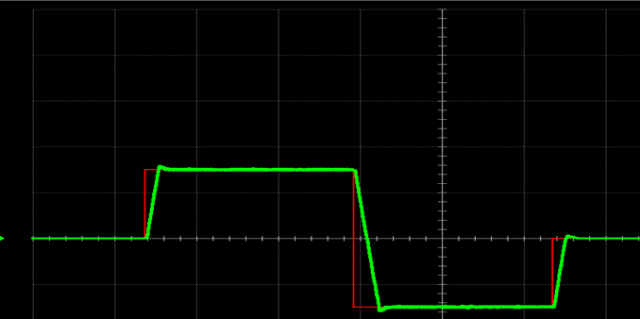
Testing data capture 0 to 100 rpm shift rate jump response
Detection data captured and tracked at ±360°
What accuracy means: the robot grabs an egg without crushing, passes a glass of water without leaking, and relies on the ability to control the position of half a degree.
04.
Integrated design, born for integrated design
The program uses an integrated structure that integrates control, drive, perception, communication and deceleration devices into the joints, while shortening the signal link, to provide a reference for the miniaturization and modular design of the entire robot.
The dual-absolute-value encoder simultaneously collects feedback from the motor side and inside the decelerator, allowing the joints to "know where they're headed" and perceive the position more in a three-dimensional way.
At the communication level, full support for the three protocols: serial port, CAN FD, and EtherCAT, and the flexibility to directly connect hydrogen production adaptations, regardless of which main line is chosen by the assembly plant, lies in these details.
05.
Production research collaboration, from reference design to delivery plans
The way this joint release was completed is just as important as the program itself:
A team of experts from Shenzhen Advanced Electric Drive Systems is responsible for the in-depth refinement of electric drive control algorithms and position integration strategies.National Technology R&D team responsible for chip-level implementation and verification of mass production locationsProduction research and development have combined "reference design" into a "delivable solution".
The year 2026 is the anniversary of the mass production of humanoid robots, with joints as the core power unit, accounting for more than 50% of the cost of integrated hardware. Around the different power grades, coding types and the needs of the integrated network, developers can complete parameter adaptation and application verification on this reference platform, accelerating the deployment of joint controls.
Injecting "core" power into the robot joint with high-performance domestic MCUs. National Technology will continue to invest in the research and development of human-robot core control chips and programs, together with industrial chain partners, to hold the key link in its own hands.
If there is a need for a robot linking program, please contact National Tech for complete technical information and sample support.
• Inquiry about sales, authorized agent contact details
Source: National technology