The Pew Research Center's analysis of U.S. users' browsing behavior on Google found that the percentage of users clicking on traditional search results from 15 percent to 8 percent fell directly when AI abstracts were available.[1]
Users are completing explorations and comparisons in conversations, and ads are moving along. OpenAI has officially launched ChatGPT Ads, and Google has also introduced ads with AI Overviews, which they give in response to sponsors' small cards, directly continuing the pattern of the age of search engines.
When the media turns from a full-page search result into a response generated in real time, what should advertisements auction?
For three decades, online advertising has always been based on a default premise: an ad space exists first, and auctions decide who gets it. Names of search results, which displays in the flow of information, are pre-defined opportunities. But the answer to the big model is generated word for word: whether a brand is suitable to appear, where it appears, how it is presented, depends on what has been written before.
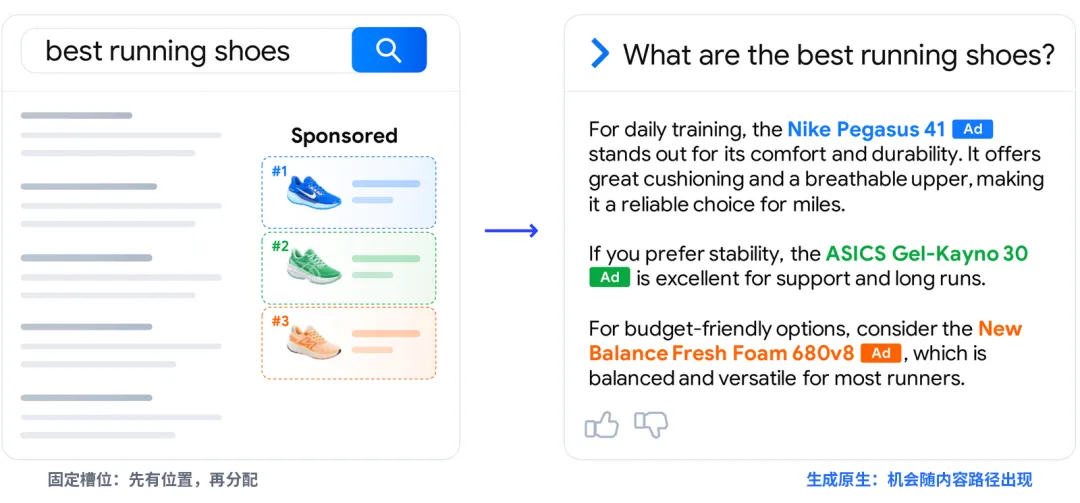
Figure 1: In generated media, where advertising opportunities appear, who gets them, and how they are presented have a common impact on marketing effectiveness and user experience.
Therefore, generating is not only filling advertising opportunities, it is also shaping advertising opportunities. Under this new paradigm, studies have begun to explore how to insert paragraph-level ads, respond to bids and other auctions, and a research team from the University of Manitoba and Stanford University has further advanced the competition of large-scale native ads into the process of generating tokens.
They proposed LAMA, which allows content generation to evolve alongside ad allocation: every time a Token is generated, it affects how the response is rewritten in real time and who ultimately receives ad exposure.
Title: Token-level Advertising
The author of the book is Hanbing Liu, Bowei Zhang, Changyuan Yu, Yinyu Ye, Qi Qi.
Unit: High School of Artificial Intelligence at the People's University of China, Stanford University
Every big model writes a word.
It's a bidding process.
Promoting an advertisement auction to the Token level is not only the last chance for advertisers to get exposure, but also the answer to which direction to write next. For example, the same recommended holiday destinations, traffic or accommodation, may give different advertisers an advantage in subsequent competition. Advertisers also have new strategic space: not only can adjust reports to affect current generation, but also can change subsequent strategies based on the content already written.
This puts a higher demand on the mechanism: not only should advertisers be willing to provide real value information when it opens, but it should also continue to tell the truth while it is being generated. At the same time, the answer cannot be limited to meeting the price and deviating from the original user's question.
LAMA's full title is Latent Advertiser Mixture Auction, which is a mixed auction for potential advertisers. It allows advertisers to link to the current text and report how much value they have for me, then combine the original language model to form a strategy for generating the advertiser's preferences. The platform then generates a token-by-token response and continually updates the probability that each advertiser will ultimately receive the exposure: the more the content is written in the direction of an advertiser's preference, the higher the probability that it will be distributed.
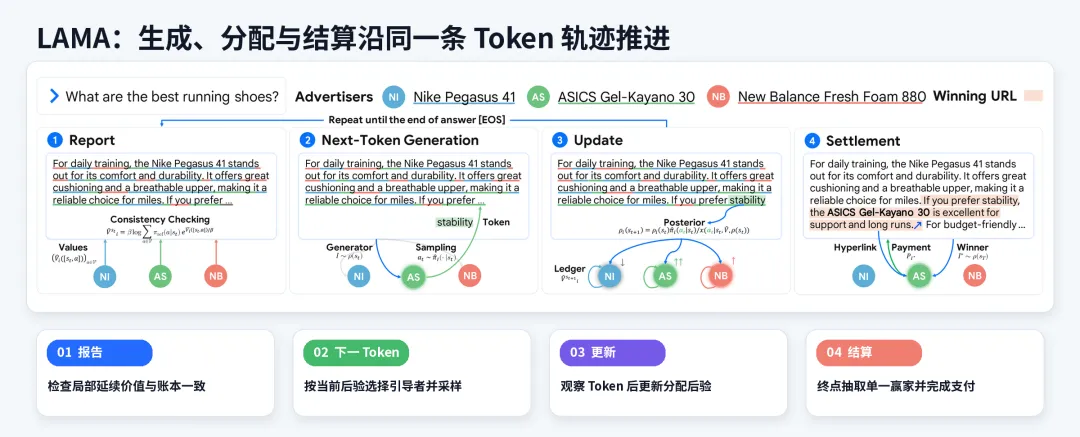
Figure 3: Operation of LAMA. Reporting, generating, updating, and final allocation and settlement are completed at the time of each Token generation.
LAMA has carefully designed local reporting tests and payment rules to support this generation process.
The focus of the analysis is on whether the back-and-forth report is correct: the value judgement of the advertiser for the next step different writing, the summary must be consistent with the previous report on the current text. The platform requires only one local verification at each step to limit the advertiser's arbitrary change of language. The payment follows the adjustment of the generation process: one step makes the probability of the advertiser receiving exposure and the value of the back-and-forth combined more favorable, resulting in corresponding costs; when disadvantaged, provides subsidies and then completes the settlement together with the initial costs.
This mechanism satisfies the Markov Strategy Incentive Compatibility (Markov DSIC): No matter what feasible strategy other advertisers adopt, as long as an advertiser reports as good as it was before, continuing to report as good as it is will not be worse than subsequent changes to other feasible strategies. That is, honesty is not only applicable to opening bids, but can also be used throughout the response generation process.
At the same time, LAMA also has a Social Welfare Guarantee: a clear theoretical boundary with the ideal optimal mechanism, with the goal of subtracting the value of advertising from punishments that deviate from the original answer. This allows the mechanism to limit the impact of advertising on user experience while pursuing commercial value.
From how each step is written, to who ultimately gets exposure, to how much they pay, LAMA incorporates them into the same mechanism.
The theory is successful.
What is the real effect?
The team selected 1239 real-world commercial search queries from the Webis Generated Native Ads 2024 data set as proof-of-concept, covering three common scenarios: fitness, vacation and car, each of which was a competitive environment for three advertisers.
The experiments used the Qwen3-14B as a reference language model, and the reporting model was shared by advertisers through LoRA training. Advertising values were estimated from predictions of open-source prediction models, and user experiences were evaluated on a comprehensive basis based on indicators such as relevance, information quantity, flow coherence, ad nature, ad factuality, and invasiveness provided by the GEM-Bench. The baseline methodology included two prior-to-post allocation methods, combined with native content editing inserts, three methods of generating reinforcement strategies, and the response-level aggregation mechanism MOSAIC.
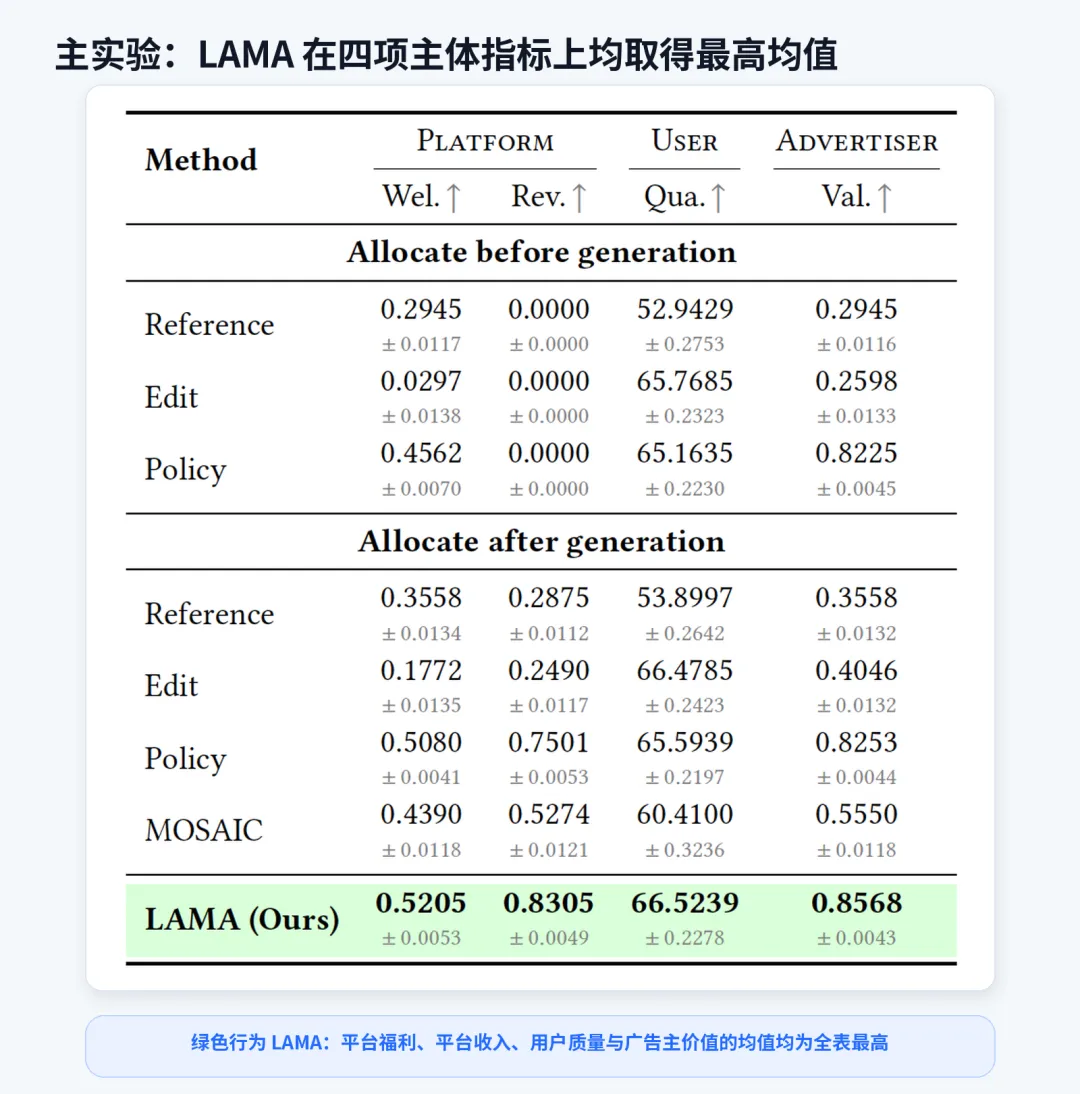
Figure 4: Table of the main experiments
LAMA reached the top spot on all four indicators, not only achieving double-winning platform revenues (+10.7%) and advertiser value (+3.8%), but also without sacrificing user experience at all.
A query in the holiday scene specifically: "Best beach vacations in the world" ("The best beach vacations in the world") provides an overview of destinations and planning factors; the first part of the response generated by LAMA is Expedia and the second part is Tripadvisor, where advertisers are constantly switching controls in the process of generating, but the responses generated are still natural, flowing, and provide valuable information as much as the reference responses.
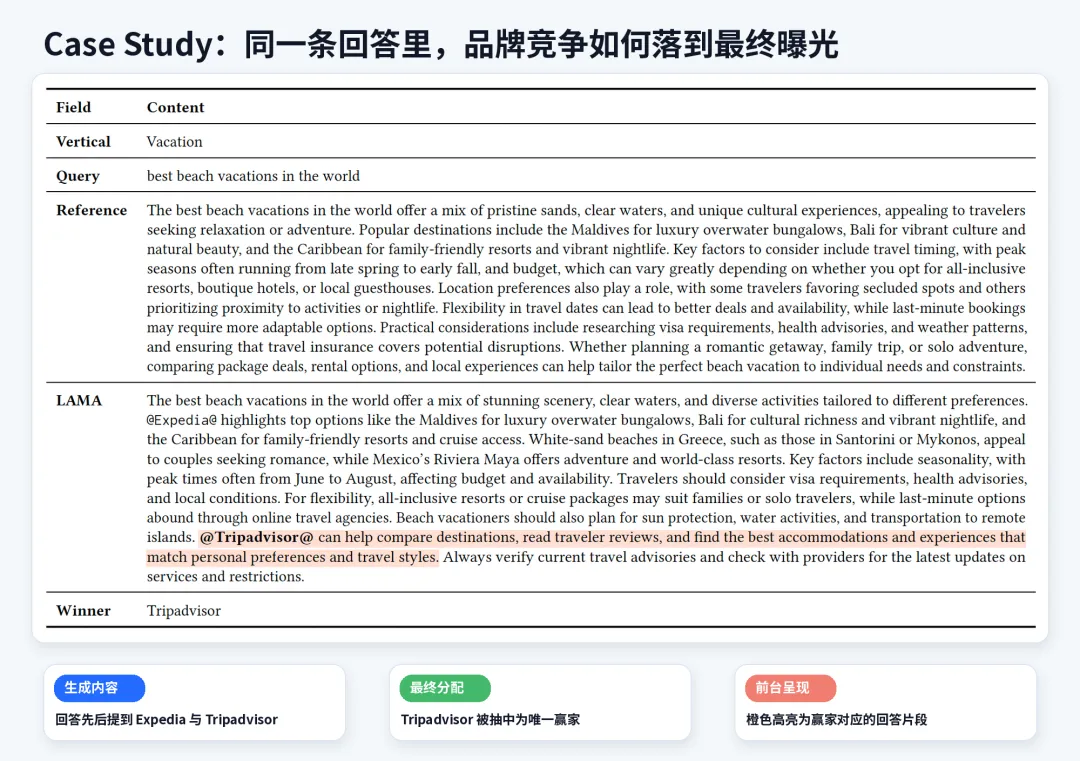
Figure 5: Example of responses in holiday scenes, orange highlights are assigned to hyperlinked text spaces.
After its creation, Tripadvisor's distribution probability was significantly higher and it was chosen as the ultimate winner in this response.
Why Tripadvisor? In the first half of the text, Expedia looks more like a brand spotlight for destinations such as the Maldives, Bali and the Caribbean; while the mention of Tripadvisor directly explains what the product can do: compare destinations, check visitor reviews, filter accommodation and experiences, with a more complete expression of value.
The team also conducted an intuitive bid disruption experiment: fixed other advertisers' reports remain unchanged, only adjusting the target advertiser's report overall from the actual value. The results were intuitive: the higher the report, the higher the token ratio it contributes, the higher the probability of allocation and payment. However, the real expectation of efficiency does not increase indefinitely, but just peak when the report is honest.
Figure 6: Production ratios, allocations and payments increase as the report increases, with real expectations of efficiency peaking when they are honest.
What is the meaning of this verse?
Where is generative advertising suitable? A natural landmark is the scenario where users are looking for business advice: when shopping compares merchandise with digital purchases, when traveling to a hotel, or when a smart body chooses a payment tool to use in its daily workflow. When commercial information responds to the actual needs of users and clearly identifies advertising boundaries, it is more likely to be accepted without disrupting the valid objective facts of the answer.
What LAMA explores is how to deliver on this vision: allowing advertisers to compete in the process of generating, while using rules to restrict strategic behavior, balancing business value and response quality.
In the past, auctions determined who acquired an existing ad space. Today, the mechanism can also determine how ad opportunities formed in responses. From ad allocation to ad generation, LAMA provides a new design path for large-scale native ad mechanisms.
Information from the author
The third-year Master's student at the Chinese People's University's Guangzhou Institute of Artificial Intelligence, Professor Liu, is studying the direction of intelligent decision-making and mechanism design in generative AI, and is expected to graduate in 2027.
What are you doing here?
He is a PhD graduate of Stanford University and a lecturer at Yale University. His research areas include algorithm theory and mechanism design, big model and smart body, multi-smart body systems, optimization and intelligent decision-making, etc. His research has been widely published in leading journals such as MS, OR, MOR, GEB, TR-B and CCF-A class conferences STOC, ICML, NeurIPS, ICLR, ACL, AAAI, KDD, SIR, WWW, etc. He has worked extensively with companies in the fields of advertising, digital marketing, digital marketing, digital marketing, digital marketing, digital marketing, and digital marketing.
What are you doing here?