What these "artons" lack most is the ability to create hardware and not lack the need to change for new products.
Four supply chains, known as cannons, intersect.
"Can you hear the noise around me now?"
While we were talking, Wang Yang, the deputy general manager of Shenzhen-based Shenzhen-based Shenzhen-based Shenzhen-based Shenzhen-based Shenzhen-based Shenzhen-based Shenzhen-based Shenzhen-based Shenzhen-based Shenzhen-based Shenzhen-based Shenzhen-based Shenzhen-based Shenzhen-based Shenzhen-based Shenzhen-based Shenzhen-based Shenzhen-based Shenzhen-based Shenzhen-based Shenzhen-based Shenzhen-based Shenzhen-based Shenzhen-based Shenzhen-based Shenzhen-based Shenzhen-based Shenzhen-based Shenzhen-based Shenzhen-based Shenzhen-based Shenzhen-based Shenzhen-based Shenzhen-based Shenzhen-based Shenzhen-based Shenzhen-based Shenzhen-based Shenzhen-based Shenzhen-based Shenzhen-based Shenzhen-based Shenzhen-based Shenzhen-based Shenzhen-based Shenzhen-based Shenzhen-based Shenzhen-based Shenzhen-based Shenzhen-based Shenzhen-based Shenzhen-based Shenzhen-based Shenzhen-based Shenzhen-based Shenzhen-based Shenzhen-based Shenzhen-based Shenzhen-based Shenzhen-based Shenzhen-based Shenzhen-based Shenzhen-based Shenzhen-based Shenzhen-based Shenzhen-based Shenzhen-based Shenzhen-based Shenzhen-based Shenzhen-based Shenzhen-based Shenzhen-based Shenzhen-based Shenzhen-based Shenzhen-based Shenzhen-based Shenzhen-based Shenzhen-based Shenzhen-based Shenzhen-based Shenzhen-based Shenzhen-based Shenzhen-based Shenzhen-based-based Shenzhen-based-based-based-based-based-based-based-shorten-based-shorten-shorten-shorten-shell-shell-shell-shell-shell-shell-shell-shell-shell-shell-shell-shell-shell-shell-shell-shell-shell-shell-shell-shell-shell-shell-shell-shell-shell-shell-shell-shell-shell-shell-shell-shell-shell-shell-shell-shell-shell-shell-shell-shell-shell-sh
A few minutes ago, the earpiece he was wearing was out of power, and he just changed another one. When I heard the question, I was a little nervous: noise?
It wasn't until the end of the conversation that I learned that he was in the middle of a change, an AI headset prototype, doing design verification, or DVT, as the hardware industry often calls it.
Wang Yi said that the new headphones were the main focus of the conference transcription, AI translation, etc. Our conversation has also been transformed into a "real war test".
"Our goal is to have mass production shipped by the end of this year", Wang revealed, adding that two brand customers have already placed orders.
This isn't the only real machine we've seen.
Consumer electronics vendor IDH's innovative AI headset prototype is also on the table.
The computer plays a TED talk in English, clicks a few headsets, the sound starts, the voice enters the App, the mobile device rolls in real time to show Chinese translations, and a set of synchronized translations runs like this.
On the other hand, the engineering test boards of the hardware equipment with full module development capability, ODM KONEYSIN, have entered the software access and software hardware integration phase, with plans to promote the brand to customers after completion of DEMO.
At the same time, the headset is being modeled by the ODM Mays Group, which is working with partners to develop a new generation of AI headphones.
It is currently in the business development phase of projects for LG's South Korean subsidiary, as well as its own brand MEES. According to plans, the next step will be to access and purchase the partner's AI program, which is expected to involve about 100,000 devices.
Several seemingly independent projects were finally brought together, and what they were accessing was actually the same company's technology:Hojo's Vision of Permanent Unity (abbreviated as Hojo)。
The company was founded less than two years ago and is backed by the "archery" of two voice channels: Yang Hengjie, formerly head of the voice business for small cars, and Sudan, former head of the voice technology center for Tencent AI Lab.
In the mainstream media narrative, big tech companies are defining the next generation of AI hardware from top to bottom with their big models, self-developed chips and operating systems.However, a number of samples have gone deep, and what is seen is a much broader picture of reality.
Large traditional hardware manufacturers are also actively looking for a downside to AI.
They hold hands with product lines, brand customers and manufacturing capabilities that have been dormant for years, but they don't have a self-developed model or software team.
How do you really put AI into the next product that you're going to sell? How do you turn a piece of hardware that's sold out from buying and selling to a business that continues to generate revenue?
It's their general confusion, and it's where Hojo comes in.。
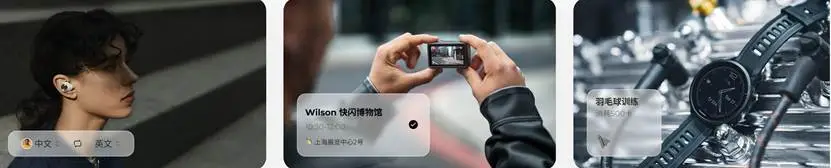
The division of labor disrupted by the big model requires a new role
I'm going to ask you a question, by the way, is this conversation going to be recorded?
"Yes", Wang said.
For Macro, AI headphones are just one direction in the latest round of product exploration. In the past, they have also made other AI audio hardware, equipped with single- or double-digit glasses, and even tried brainstorming devices.
Brand customers are always looking for new products, looking for differentiation, and the supply chain is always moving forward with chip, acoustics, structure and interaction technology.
It was only after the big model emerged that this innovation began to transcend the boundaries of traditional hardware.
In the past, customers often came with relatively clear drawings and specifications, and the factory was responsible for making the product stable.
By this time, ODM could no longer wait for a map to come down, but rather entered the product definition: discussing scenarios together, deciding what functions are worth doing, and moving on to chip selection, hardware design and engineering implementation.
Conwayson describes the challenges of moving forward more clearly.
For example, is the computing power of a chip unable to run the required audio path? When existing hardware conditions do not work, is it to reduce the functionality, adjust the program, or replace a platform?
Today, it is not enough to define an AI hardware by simply "what the user wants", but also to answer these "cross-border" questions of "supervision" in order to conceive of a software engineering path for your product.
It is also important to note that there are a number of ways in which innovation can be seen, including through the use of new technologies.
Over the past few years, the headphone program has become more mature and the hardware has become more homogeneous, with some of the work originally undertaken by IDH being gradually absorbed by ODM's own R&D and program department.
AI has further complicated the issue.
For the first time ever, models, chips, apps, acoustics, and cloud services have to be synchronized in a headset. Brand and ODM have begun to need someone in the middle to organize these capabilities.
However, relocation does not mean that the models, software and interactive capabilities that are needed will grow naturally.
Wang Yi told a story. In 2024, they spent about 10 months developing an AI mini-voice box.
"When we did that, we felt we were strong enough", Wang said.
And because they really did it again, they saw the limits of their abilities more clearly.
Appearance, structure, circuit design, and acoustic modeling are all familiar tasks. When it comes to interface design, how users operate and how experiences are continuously adjusted with feedback, it is necessary to replenish lessons.
Furthermore, after the product is sold, software upgrades and subsequent maintenance have to continue, which are beyond the scope of experience and resources.
At the same time, the manufacturing end itself has not stopped upgrading.
Conwayson has been invested in developing hardware innovations for wireless audio.
Wang said in a half-joke that they were "putting screws, splashing water". But now even the splashing has been highly automated and will have to be done.AOI and visual detection.
In 2025, the company invests millions of yuan in upgrading production lines and testing equipment to prepare ahead of time for new hardware requirements and testing needs.
The limited energy and resources of the team, which capabilities to continue to do on their own and which to entrust to partners, are also a practical choice of operation.
It was in this shift in industry that Hojo's business logic began, playing a "new role" in connecting hardware manufacturing and modeling capabilities.
AI The old cannon delivered "a glass of water".
Nowadays, a headset that wants to add audio transcription, translation, or AI conversations is difficult to break down into two simple steps: "Hardware works, software connects".
Modeling effects, chip capabilities, audio collection, solid-state transmission, app connectivity, cloud handling, and even who continues to provide services after the product is sold will all come together in the same user experience.
Chi Chi innovation summarizes it as "one cloud, two endings": the cloud, mobile phones and app, headphones need to work together. Any link off the chain, users see only the same result: bad use.
For this reason, Hojo has built a set of smart hardware.AI StackModels, systems, memories, and apps can be integrated into the same system. Headphones, pencils, and glasses can be used to replicate the underlying capabilities, and then adapted to the chips and specific products.
Every typical customer's needs can be addressed in this comprehensive set of capabilities.
For example, at the real product definition stage, different chips correspond to different computational budgets, power constraints, and cost ranges, and how much functionality can be installed, which capabilities are on the edge, and which are delivered to the cloud, needs to be weighed together in the integrated program.
This increases the value of self-development models.Hojo also chose to master the underlying models of ASR, TTS, and all-in-one voice.。
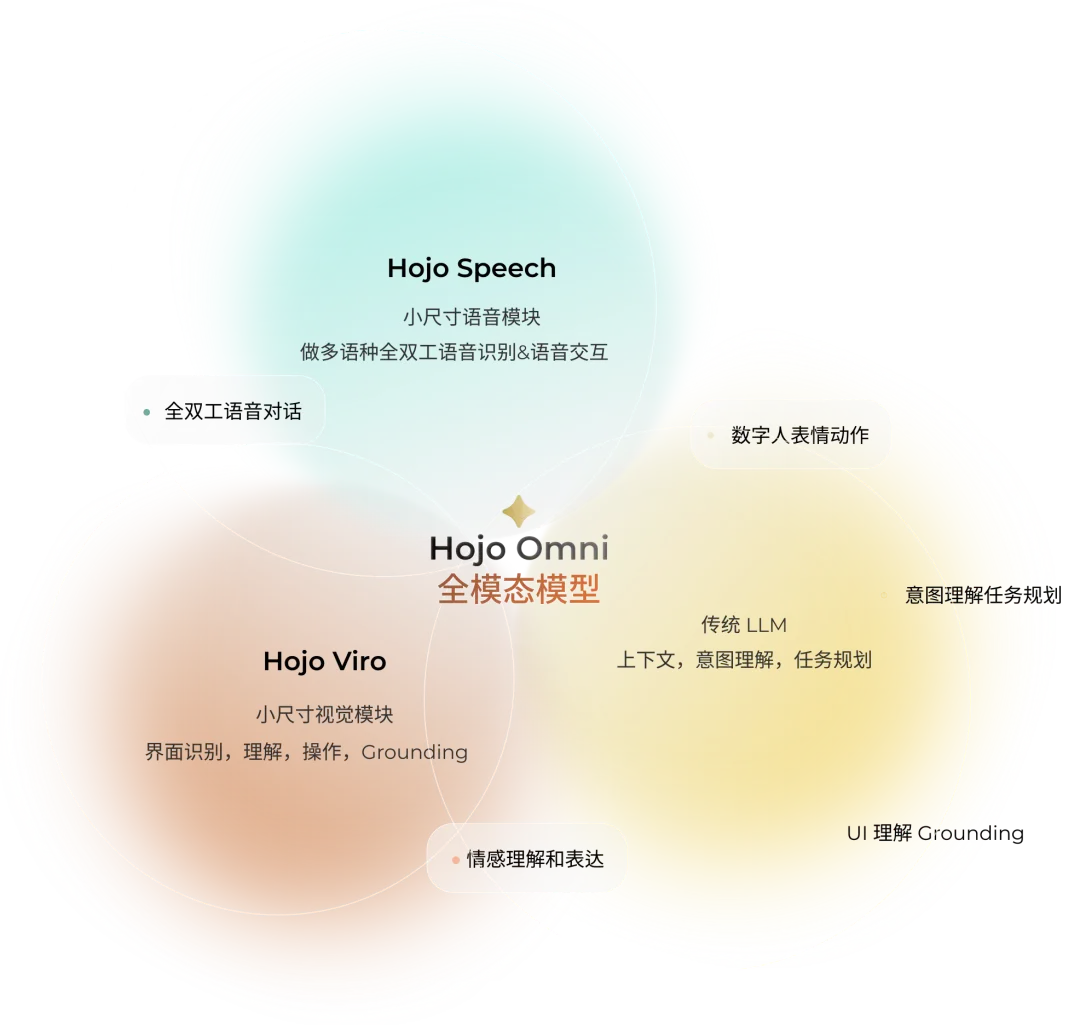
Consumers don't care which models run behind the headphones, they care about how long the word takes to respond, transcribe incorrectly, translate unnaturally. Manufacturers also need to calculate more than one layer: what chips are needed to run the device, how much functionality can be left on the end, how much it can be delivered to the cloud, and what long-term call costs can't afford.
The self-development model is not only about making a benchmark high and meeting a specific project, but also about adjusting accuracy, response speed, deployment and cost, with more definition freedom.
If we don't have enough models, someone needs to link the whole thing together.
A linking call by Conaysex exposed this need very specifically. At the time, the hardware did not connect to Hojo software once it was accessed. It started to look like a software bug, continued to search down the link and found a problem in the firmware.
On the surface, "Apps can't connect", which actually spans software, protocols, hardware and hardware. If it's handled in the same way as previously defined boundaries, it's easy to turn into software to find hardware, hardware to find hardware.
So, according to Conay, moving from Bluetooth audio devices to AI products is really not just a few AI features, but a functional link that has to be done by software and hardware together.
Recording transcription, translation, AI interaction, can run, not only depending on the model itself, but also on how the audio is collected and transmitted, which pathways the chips support, how the firmware works, and finally how the app is delivered to the user.
That's it too.Hojo is continuing to work on Agentic OS at the system level.The model is simply a source of capability, which determines the experience, and is the ability to cross an entire software-hardware chain.Customers need a role closer to the system level to unify devices, protocols, models and apps.
And then there's another one:The ability to run is not the same as having a product in place.
When it comes to AI speakers, Hojo has already paid a tuition fee. So Hojo and App did it themselves.
Limited software vendors can directly use existing apps; brands that already have their own apps and user systems can also add capabilities through SDKs.
See Hojo's full-length.It's not a unilaterally defined set of capabilities, but rather a little stretched by the demands of customers who keep pushing forward.:
As customers go one step further, Hojo's boundaries of ability also extend forward, eventually becoming what it is today.
As for the value of this set of capabilities, real projects and orders have to be answered.
The client also has a set of Benchmarks.
During the interview, Wang Yi wore an AI headset with a single-sided three-microphone system.
Hojo is responsible for structural stacking, acoustic tuning, manufacturing output and product control; Hojo is responsible for models, software protocols, core algorithms, supporting apps, and subsequent AI services.
The borders on paper are not complicated, and after entering the project, a large amount of work is done at the intersection of the two sides.
Wang Yi used three words when evaluating the cooperation between the two countries:Transparency, predictability, shared responsibility。
At the product definition stage, the two sides have already begun to work together.
Which AI capabilities are already stable enough to fit into this generation of products; which are worthy of being the core selling point; and which are limited to existing chip, power, or algorithmic capabilities should be temporarily abandoned.
New ideas can be discussed at any time and seen if there is a way to get into the product.
At the development stage, this collaboration turned into a round of specific joint mediation.
Can the sound collected by the microphone stabilize into the algorithm link? Can the headset button match the software state exactly? Can the system recover after a weak network, disconnection?
These problems were not large at first glance, but directly determined if a headset reached the user's hands and was not useful. With the Bug, both parties continued to go back and forth, and then moved on to the next round of modifications.
What impressed Wang Chen was the fast pace. "Basically, two, three, four times a week".
On one occasion, after discussing a few issues in the afternoon, he thought that the remote meeting would continue the next day without having to run again.
This blending, in turn, changed the tools and processes on both sides.
The hardware team proposed a set of tools to perform basic self-testing before formally co-deploying the Hojo App. While the Hojo App was still undergoing iteration, the team made another test app.
Before sending the test, the hardware team runs a check first, confirms the basic status of the interface, links, etc., and then enters the joint modulation.
It seems to be just a tool, but for the first time the two sides have a clearer common language: what has passed, what hasn't, and the question is where the card is.
The specific needs that arise in a project can be reused as a tool in the future.
This is also a more interesting place after the deepening of the cooperation between the two countries.
Traditional hardware manufacturers are constantly pushing forward their familiar mass production rhythms, testing methods and engineering requirements; Hojo translates these requirements into software tools, interface specifications, and system capabilities.
Both sides are adjusting their way of working rather than simply throwing tasks from one side to the other.
The cooperation between the two "artillery" did not stop at the moment when the product was delivered.
One of the biggest differences between AI hardware and the past is that after the product is sold out, the project is not finished. Software needs to be updated, models will continue to be upgraded, new AI capabilities may be added, and experience will also be continuously optimized based on user feedback.
According to the current division, this part continues to be supported mainly by Hojo. Wang Yi said that the brand would not be willing to use the product again if these subsequent optimization issues were not addressed.
For those hardware manufacturers who rush every day to make samples, synchronize, deliver measurements and mass-produce, it's far from enough to judge a partner not worthy of long-term collaboration with a list of runs and beautiful demos. They have a simpler set of benchmarks:
Things can't connect, problems can't be found, bugs can't be solved, projects can't go on and on.
Trust in the supply chain is often built on this.
Chi Chi's innovation speaks directly to this. They acknowledge not only Hojo's model and Agent capabilities, but also their collaboration in modeling, bug processing, and project development.
Currently, Hojo has more than 10 deeply coupled partners, five of which are officially signed, with a combined annual planned shipment of more than 5 million units.
"Gather" is the real scale.
IDC's first quarter 2026 global headset market data shows that open headphones continue to grow rapidly, with Chinese manufacturers dominating the market.
The report notes that as hardware differences in Bluetooth headphones become increasingly difficult to pull off, AI is beginning to be a path for growth in this mature category.
Hojo has made an estimate: Headphones are a market that ships more than 400 million units a year, but today only about 2 tonnes of 3 headphones are owned by AI for every 100 headphones sold.
Looking back, recording pens, AI glasses, e-book readers, and more devices with picking, displaying, and interacting capabilities could all be new entrances to AI.
This market is much larger than a few star products under the spotlight.
The giants will use their flagship products to define the limits of experience. The vast traditional hardware manufacturing industry, which is also a central force to be overlooked. They are also judging the market, defining products, and exploring how AI should enter the hardware in a round of projects.
"When we first came into contact, it was also hidden", Wang said. "Everyone always thought that it was AI plus X, that AI gave this, that gave that".
Early discussions with customers focused more on emotional value and freshness, hoping that AI would make a product look more special.
After a real round of work, demand began to shift to productivity scenarios such as transcription and translation, as the value of these features was more easily perceived by users directly.
Hojo is faced with a "canon" that is actively demanding new developments.
The next difficulty is how to replicate the experience of one product to the next. If the second and third products have to go through the first one again, the more customers, the heavier the engineering burden.
So from the beginning, Hojo was trying to dismantle the underlying capabilities: the chip platforms, voice links and software capabilities that had already been passed down as much as possible, and the new projects were adapted around the functionality portfolio and hardware conditions.
Modeling capabilities will grow stronger, and the giants will continue to refresh the upper limits of the product experience. But AI will not be able to penetrate hundreds of millions of ordinary consumer electronics, depending on one close-to-ground battle:
Who can squeeze the model capacity into a limited chip, a limited BOM, a limited development cycle, and then accompany a product through testing, mass production and continuous service.
And at the end of the supply chain, there's been a lot of gunfire.