In September 2026, the Neuralink clinical trial in Moscow, with 27 subjects, planned to launch mass production. Opinions boiled again, as if the future of brain-machine interfaces had arrived.
But this is an illusion. In fact, the fundamental contradiction faced by invasive brain machines has never changed: drilling a hole in the skull, inserting an electrode into brain tissue, making the decision that it only applies to a very small number of patients and those who dare to try it.
Two routes, one too dangerous, the other too vague. Is there a middle road: one that can penetrate the cranial bone creatively and obtain a high-resolution read-write technology? Or one that can be extended with universal properties, like the GPUs of Intelligent Design, to become the key infrastructure on the path to brain science AGI?
This is exactly what Liu is trying to answer. The Shenzhen company, founded seven years ago and founded more than a decade ago, has been engaged in cutting-edge fundamental research in acoustic space intelligence, and only in 2024 applied this revolutionary theoretical breakthrough to the brain's ultrasound direction.
Interestingly, although the actual results have been far ahead of the international academic community Frontier, Liu has never published Paper, the core technological outcome of which is protected as a trade secret. Currently, the academic community is still struggling with the underlying theories, Liu has transformed the theory into a sophisticated medical-level product that has grown into an acoustic space intelligence Neo Lab that has entered into a commercialized growth after completing a long cycle of production from theory-technology-product-to-volume.
This is largely attributed to the gene of the founder of the family of Phnom Penh. He was both a hard-core hardware engineer and a deep-seated theoretical researcher.
He studied biomedical engineering at Xi'an Transportation University, came into contact with neural networks in 2003, laid a solid mathematical foundation while in school, and in 2008, when he first entered the ultrasound industry, he began to think about how low frequency can not achieve high resolution, whereas low frequency is precisely the key to ultrasound penetration.
In fact, whether it's the intrusive brain circuitry represented by Neuralink, or the ultrasound represented by Merge Labs, or non-invasive technologies such as brain electricity, brain magnetism, near-infrared imaging, all of the different pathways fail to avoid a common problem: how to study the brain. Brain science has become the core research hotspot of the AI era.
This path can be traced back to the time-nodes that triggered an explosion of computational power. Its computing capacity is more than a thousand times that of traditional ultrasound, and it is precisely the leap forward of computational power in the past few years that has made the hypothesized theory of space intelligence economically viable.
Part 01
A doctor's guess and lack of Infra
In August of this year, something unexpected happened in the mathematical world.
The 22-year-old Crouzeix conjecture, which has plagued the academic community, proved to be correct in solving a difficulty about the inequality between the numerical domain of a matrix and the number of functional parameters. After reviewing the Connell University mathematician Alex Townsend and the University of Washington professor Anne Greenbaum, it was publicly confirmed that even the conjecture's proponent, the French mathematician Michel Crouzeix, had succeeded in verifying it.
He is the brother of mathematician King Neon, who won the 2026 Fields Prize for his conquest of the Hanging Valley. He is a post-doctoral fellow in neurosurgery at the Beijing Cooperative Hospital.
A curious detail for the patient was that he entered matrix analysis not because of mathematics (he was very good at math) but because of brain ultrasound. He tried to get the ultrasound to penetrate the complex structure of human skeletons, encountered real problems and had to study matrix analysis to solve a mathematical problem.
The story can be interpreted from many perspectives. But in a larger narrative, it refers to a fact that has long been ignored by the industry: that brain science has evolved to this day and has not yet solved the most fundamental problem, which is the lack of a non-invasive, read-and-write tool.
This is precisely the starting point of the cylinder itself: the cranial bone has a very strong decay and deformation effect on ultrasound, and conventional ultrasound makes it difficult to penetrate the cranial bone effectively to achieve high-resolution imaging.
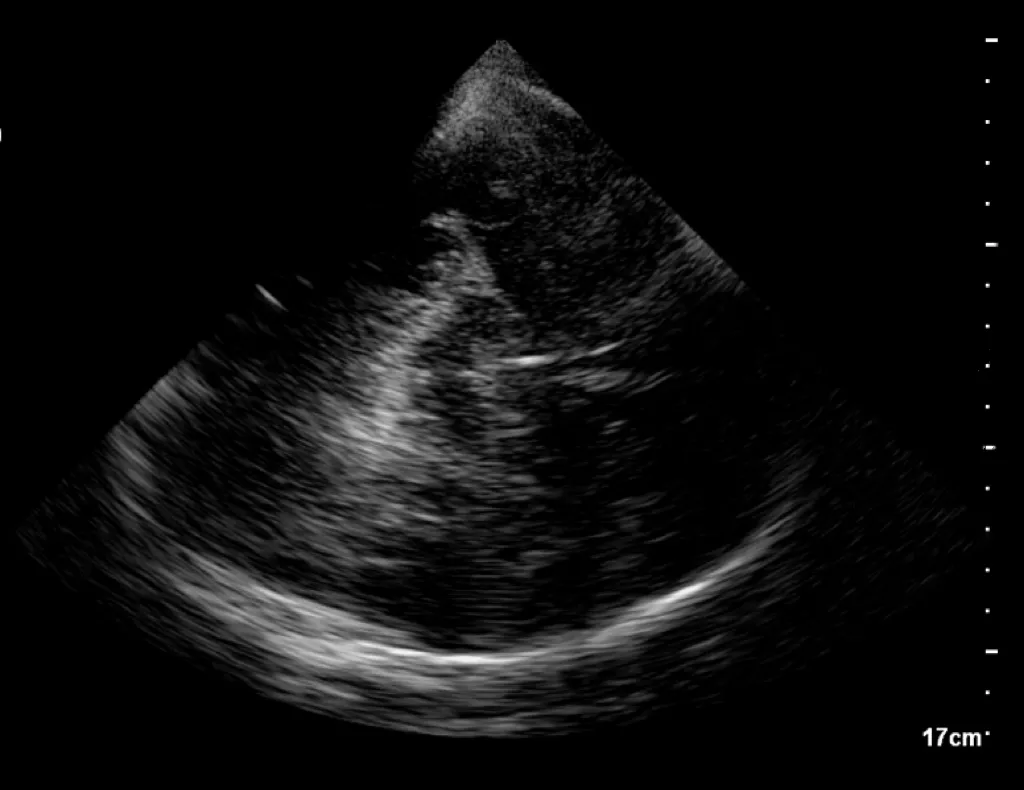
Traditional TCS adult brain imaging
Although ultrasound functional imaging has gained popularity in the field of brain science research due to its extremely high time + space resolution and the ability to detect 20 micrometres of extremely fine blood flow, it has the potential to be the best performing brain functional imaging tool, but due to the natural barrier of cranial bone, the technology remains at the stage of Nature and Science.
All of the teams at the forefront of brain science on the ultrasound pathway chose to bypass the bone marrow: Arbor and Merge Labs left the bone marrow or implanted PMMA, PEEK translucent implant imaging; Openwater used optics to measure brain blood flow and ultrasound to regulate it; Attune Neurosciences used MRI to position and ultrasound to regulate the deep brain.
It was based on the world's unique ultrasonic computing imaging capability, which broke the diffraction limit in textbooks and made it possible to read through the brain.
HUS technology is used for brain ultrasound imaging
2D brain and blood flow imaging for adults under HUS technology
One of the most persistent responses was from the global academic community. A company that never published papers produced what the academic community had long wanted. Their response was not to question the data, but to repeat: how can it be done in low frequency with high resolution?
Part 02 Low frequency spectrum:
It's a solution to the next generation of performance by lowering the frequency.
The anti-intuitive bias is not about choosing the mature technology for ultrasound, but rather about making the most industry-wide anti-consensus judgment about ultrasound.
The technological logic of the ultrasound industry over the past half century has been the detection of sound waves, the detection of sound waves, the reflection of sound waves through tissues, the reflection at the border, and the reconstruction of images based on the waves. The higher the frequency, the shorter the wavelength, the higher the resolution, but the faster the decay; the lower the frequency, the stronger the penetration, but the lower the resolution.
Thus, the evolutionary direction of the entire industry is highly consistent: rolling frequency, compression resolution within the limits allowed for decrease. 5G communications, chip systems, ultrasonic detectors and other logics are similar.
This logic was useful in most medical ultrasound scenes until it hit a wall: the cranial bone.
High frequency ultrasound encounters ultrasound almost completely reflected and absorbed, and low-frequency ultrasound can pass through it, but the resolution deteriorates to lose clinical value. Over the past few decades, the only validated use of ultrasound has been by TCDD, which can only measure the blood flow rate of a few large blood vessels, not to mention imaging. The industry has thus formed a deeply entrenched notion: full-brain ultrasound imaging is either open or unresolved.
It's a question that deserves to be re-examined from the first gender point of view. It's a question that all people in the industry want to improve the frequency, but the increase in frequency has already hit the wall.
This sounds simple, but it's actually equivalent to rewriting an entire technique of ultrasound imaging.
Traditional ultrasonic image quality depends largely on the physically focused performance of the probe, and the focused path is reversed: the complexity of the waveforms is largely left to the algorithm, which uses GPU computation to calculate the image at the level of physical reconstruction.
This path leads into reality, stepping on nodes that explode with computing power. Because of the enormous computing capacity of the silicon imaging algorithm, which is more than a thousand times that of traditional ultrasound, and requires high-performance GPUs for real-time physical reconstruction, no Intelligent, no Intelligent today, has created this extremely computing-efficient ultrasound model, which has made it a leading customer in the field of global ultrasound.
That's because this set of ultrasonic models based on acoustic space intelligence + algorithms, which show the performance of extremely powerful Scaling, from 0.25 tons / second of the first generation prototype machines, to 5000 tons / second today, the imaging performance improved thousands of times in five years.
Part 03
From ultrasound devices to critical brain science infrastructure
Brain science has to keep moving forward, and one bottleneck that cannot be avoided is data. In particular, the same brain, at different times and in different states, is able to retrieve high-quality data repeatedly.
The implanted electrode can record neuroelectrical activity directly, but can open holes and receive only local signals.
The EEG is non-invasive, portable and inexpensive, but the signal through the scalp and cranial layers decreases and the signal noise is too low.
While fMRI is able to see the entire brain non-invasively, the equipment is expensive and difficult to track people's daily activities.
Functional ultrasound can accurately observe changes in blood flow associated with neuronal activity in the brain, but cannot penetrate bone marrow.
The potential of functional ultrasound along this pathway has been increasingly demonstrated in research. In 2011, Macé et al. published a groundbreaking paper on Functional ultrasound imaging of the brain in the journal Nature Methods. Since then, functional ultrasound has progressed to a more precise scale, combining microbubble positioning with super-determination technology, and functional ultrasound has been used in animal experiments to observe 20 micron-scale neurotransmitter activity.
Returning to reality, the functional ultrasound brain is slowly becoming less widespread, and the cranial bone is the last wall, but this barrier has already been broken.
Currently, the brand's brain ultrasound products have been approved in the medical scene and have completed systematic clinical verification and commercialization in many of the top hospitals in China and abroad. The business itself is relatively strong, the global ultrasound has long been a multibillion-dollar mature market dominated by GE, Philips, while brain ultrasound is a long-term unresolved dilemma.
If the story stops there, it seems that what Liu did is still just a device that shows the commercial value of the technology today. But Liu's larger vision is to change the way brain science gets data and become a key infrastructure on the AGI path.
There are two possibilities behind this, one for strengthening the other.
One is that ultrasound can be wearable, allowing the brain to be observed for long periods of time.
Unlike MR, CT patients need to be inspected in large equipment, ultrasound has a wearable engineering foundation: the probe can be made into a thin array that fits the skin and can be integrated into a headgear.
Wearable ultrasound reading brains have been experimented with in humans. In 2025, a study published in Science Advances, which tailored an ultrasound helmet for a patient with a translucent bone marrow implant, recorded blood flow changes reflecting brain activity in real time while walking, and obtained repeated observations over 20 months. It essentially still needs to be opened, but has demonstrated the possibility of functional ultrasound tracking of human activity and long-term repeated use.
In a recent speech, Neuralink founder and current Arbor Neuroscience CEO Philip Sabes said: "Machine interfaces need to be redesigned to access human data. Well, you can pay 10,000 or 60,000 people to use a ring, but you can't get 60,000 people to get a brain implant".
This is precisely what the technological vision is that when devices are further miniaturized, wearable, and ultrasound brain function measurements can enter people's daily lives, focusing on their sleep, movement, mood, focus, and symptom stages prior to the onset of chronic disease, Enable Brain Science Oura Ring-class products.
At the same time, this would radically change the scale of data collection in brain science, producing billions of hours of data quantities like the Oura Ring, whereas the largest fMRI brain function datasets currently remain at 10,000 hours, and a large population of low-frequency data, lacking continuous observations of the same body over the long term.
The second is an ultrasonic natural read-write loop, which makes observations more of an intervention experiment.
Ultrasound can be used for both imaging and neuron control. Two capabilities can be integrated into the same probe, allowing researchers to observe: what happens in the brain after changing a stimulus parameter, whether the changes can be repeated, or whether they are related to improving symptoms.
Philip Sabes, founder of Neuralink, also recently said that focused ultrasound has shown tremendous potential in the field of neural regulation... If neural regulation is combined with functional ultrasound imaging, it's possible to directly observe what's going on in the brain at the same time as the intervention.
In other words, we hope that the technology of the future can really do this: intervene, observe, treat, learn.
In June 2026, a pre-printed report by the UCSF team showed that in a mouse experiment requiring an artificial voice window, the algorithm used the same probe to perform stimulation and imaging, and then selected the next set of parameters based on the brain's blood capacity response.
This is precisely the direction that Liu hopes to move in, using ultrasound to achieve the brain's read-write loop, giving Liu the opportunity to use Liu's observations, Liu's interventions, and Liu's observations as tools for more researchers to use, so that each experiment can help the next one do better.
The demand for brain data has already been written by a research team at the forefront of AI. OpenAI announced a collaboration with Merge Labs to develop a basic model of brain science to explore new types of brain interfaces; the Meta-supported Silicon Digital Brain Programmer plans to collect 150,000 hours of interactive mission brain records to build a brain science model.
The brain is the most important organ in the human body, but human understanding of the brain is only a small part of the iceberg. How far brain science AGI can go largely depends on how deeply, for how long, and on how large a scale we can observe the real brain.
The idea is to open up more space for this kind of data supply, and if ultrasound can penetrate the brain, it will bring the best brain science data possible. Brain non-invasive x whole brain x high resolution x real-time x wearable, enabling brain science AI companies, brain machine interface companies to break through to AGI level.
In different cycles of time, the sale of pumpkin seeds is a remarkable business. In today's gold rush in brain science, pumpkin seeds are a scarce supply of data.
Part 04
A pioneering example of smart space acoustics
Understanding Liu's role in the company ultimately goes back to its founder, Liu, who is both a top hardware engineer and the progenitor of Hardcore Theory Researcher.
In 2003, while still a bachelor's student at Western, he first came into contact with the neural network, which was deep learning in the cold-blooded field of the decade before the outbreak, an experience that brought him not technology, but a set of mathematical languages. In 2008, the second year after entering, he made the contradictory judgment: the bottleneck of the ultrasound industry is in basic theory, not engineering optimization.
Specifically, the question of how to achieve high performance with low frequencies is rarely discussed in an academic community. Since 2009, he has been working on the problem, a decade.
What makes this judgment really special is that its chain of reasoning is completely open to the public: the coefficient of decay of ultrasonic waves, the formula for the diffraction limit, which is available in any textbook; the high frequency impact wall is the everyday sense of all practitioners. What is lacking is that someone can really connect the meaning behind these two.
Calculation is one of the necessary conditions, but not sufficient: low-frequency ultrasonic beam synthesis algorithms must be derived from zero, high-end detectors must be self-designed to manufacture, mechanical engineering must be refined a bit.
In 2021, the first prototype machine was born; in 2024, the results extended from basic research on acoustic spatial intelligence to brain ultrasound applications.
The combination of the two lines determines the shape of the company's organization: it doesn't start from an application scenario to look for technology, but from a physical problem that couldn't be done in the past. The problem can be studied in schools, says Liu, but in an organization with engineering delivery capabilities and commercialization capabilities, it brings a completely different speed and resource density.
Essentially, Neo Lab, a commercialized acoustic space intelligence company, uses the ability of bats to perceive sound waves in space for the first time as a computable, scalable product.
OpenAI was founded in 2015 and Anthropic was founded in 2021, and these two frontier labs have made the public aware for the first time that the deepest basic research can be done in the company, and the most advanced results can be presented in the form of products rather than papers.
In the last decade, AI has fallen into the water like a stone. The first circle is the big model, then the video generated, then the world model... Today's model stands at the intersection of two circles, acoustic space intelligence and brain science.
It's worth considering the direction in which the brain is represented. Since reading about the brain has been trapped in the past by various locks, now that the door through the skull has been opened, it's possible to look forward to a more incredible future.