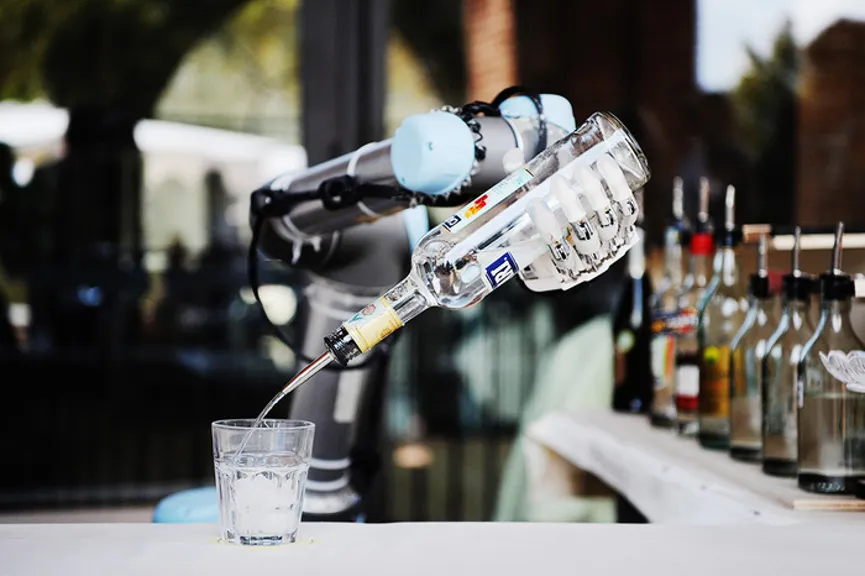
“ Old bottles of new wine, or new bottles of old wine?
In the first-tier market, robotics companies cover more and more wine companies' financing transfers.
A body-smart company that makes pumps for general robotic brains, lying on the list of shareholders; a company that makes unloading robots, with nearly 200 million yuan of financing, is a strategic investor in the Five Food Liquids Fund; a Golden Lion investment, owned by Lao Tzu, invests money in a startup that makes two-wheeled humanoid robots; and Ri Ri Ri, a taxpayer, puts the money in the pockets of the smart-manufacturing parent fund and monarch's capital as an LP.
If you want to understand the transition, you have to look at the white wine books.
In the first half of 2026, 20 publicly traded wine companies issued a poorly-looking half-yearly report. Wind data shows that these publicly traded wine companies collectively generated revenues of US$200 billion, shrinking by about US$14 billion; net profits of US$73.6 billion compared with evaporation of US$6.7 billion.
According to the report, the entire industry's inventory has surpassed 300 billion yuan, with 900 working days, and even if all wineries stop production immediately, they must be sold before the end of 2028.
For the first time in nearly a decade, the company's net profit declined for the first half of the year, with revenue plummeting by 36.35% in Guangzhou, where 13 out of 20 wineries doubled their net profit.
The industry, which used to be a high-yield, high-growth industry, is now experiencing a long downturn, high stocks, price ups and downs.
Alcohol is becoming increasingly difficult to sell, and money flows to robots.
This is what is called an old bottled new wine cellar. Cash on the accounts of a white wine enterprise is like a stagnant cellar, which continues to exist, it is just an altar wine.
The old bottles in their hands are hard-hitting, 100-year-old brands, huge cash flows, huge supply chain scenes; and the new wine they want to put in now is robots, physically intelligent.
But it's worth asking, how many of these new wines are actually poured into old bottles, and how many are just put in the mouth of the bottle?
01.
It's not about drinking, it's about drinking.
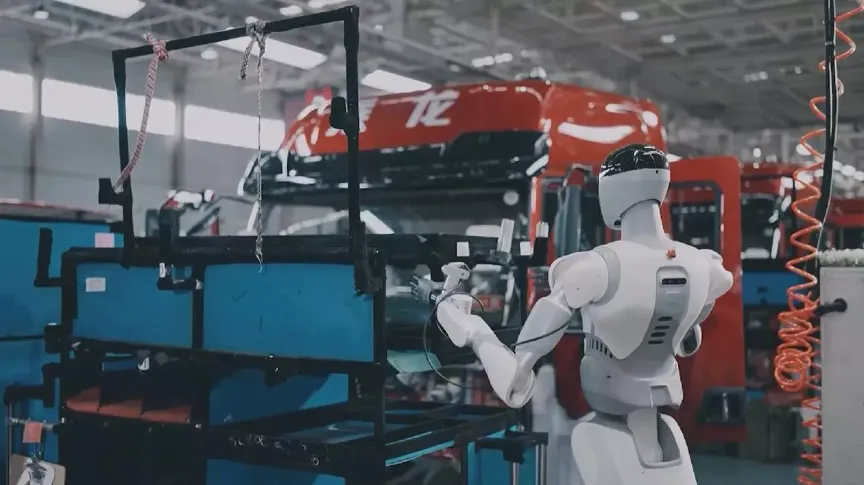
It's not a complicated way of crossing robots. It's actually two completely different paths.
The first way is to pitch, which is the dominant strategy of the white wine giant.
In August 2023, the company set up two 10-billion-dollar funds with a total investment of 5.5 billion yuan to invest in a new generation of information technology, biotechnology, new energy, new materials and high-end equipment.
Two years later, the answer emerged.
In July 2025, Taipei Goldstone Fund invested in polymer robots, along with Tencent, Deep Ventures, and China Securities. In February 2026, Taipei High-Quality Growth Fund invested in Small Rain Intelligent, a multi-brain embroidery robotics platform company, founding team from Xiaomi, Huawei. In March, Taipei Technology joined Taipei Intelligent Technologies, a company focused on embroidery robotics industrialization, and a related company for smart robots appeared on the shareholder list.
In less than a year, the four pieces have fallen, all of them smart, face-to-face racetrack companies, and the investment map of the platform is stretching from selling wine to selling coconuts.
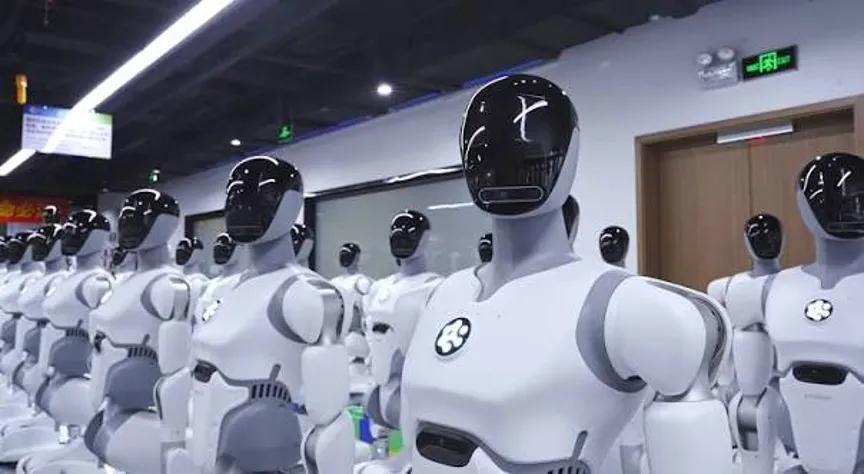
In November 2025, Golden Gate, a subsidiary of Liu Xia Group, participated in the tens of millions of yuan angel round financing of Moon Dynamics, marking two-wheeled humanoid robots, facing industry, logistics, and other scenarios.
Yang River and Choi Gong chose a safer way to make the LP. Yang River invested $300 million in the Ho Chi Minh Smart Manufacturing Mother Fund, explicitly investing early, investing, investing long-term, and investing in hard technology; Choi Gong Li invested $100 million in subscribed monopoly capital and reached the robotic racetrack through professional GP.
The second way is to make a beer with a straw. In your own workshop, let a robot make a beer alive.
In 2024, an automated reconnaissance robot appeared in the outdoor pottery area of the Loro estate, designed jointly by Loro and CSG Special Robot Company, a subsidiary of Kodak Intelligent. The robot is equipped with sensors that detect alcohol concentration and pottery appearance in real time.
The most feared leakage and evaporation of the pottery was previously due to man-made inspections, low efficiency, limited coverage. The robots could roam the area day and night, controlling the losses at an earlier stage.
A deeper stage of transformation occurs at the brewing junction. Adultery, the most experimental process in white wine making. Teachers have to sprinkle a layer of wine in a bucket of vinegar to determine directly the wine rate and quality. This process used to be only by the eyes and hands, students followed the teacher's instruction, and for several years they did not have to leave the classroom.
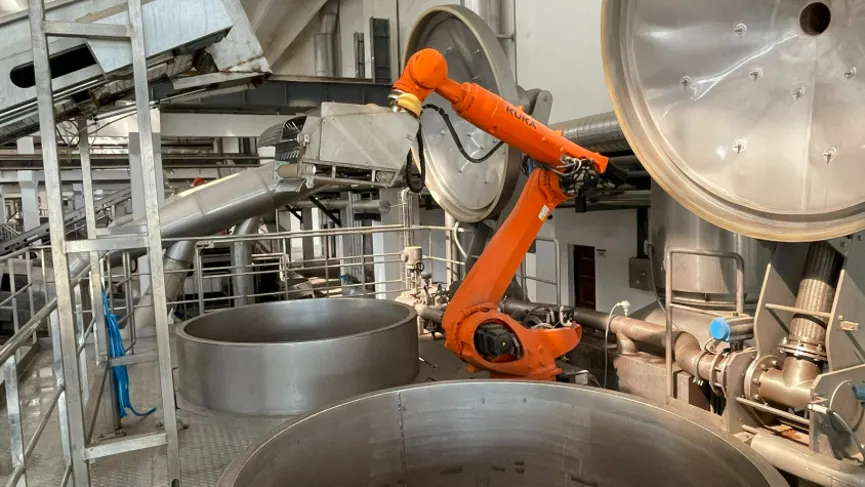
A team such as Tech Tech Tech and the Kuca Robot have done a great job. High-precision trajectory capture and digital modeling of non-hereditary hunter-gatherer maneuvers at the national level has led to the creation of the country's first simulation hunter-gatherer knowledge base, which translates teacher hunter-gatherer maneuvers into a robotic language.
As a result, the homogeneity of robotic dissemination has been improved by more than 40 percent over man-made dissemination, and the wine production rate has increased by an average of 1.8 percentage points. It is known that 47 wineries have been introduced in the country, and brands such as Cucumbers, Measurements and White Cucumbers are used.
It is reported that 124 cameras, 186 wireless sensors, and 34 core process indicators, including automatically collecting grain feed, feed, stove, and indoor temperature, have been deployed in the brewery.
Guangzhou Lao has mapped the entire park and tens of thousands of equipment 1:1 into digital microorganisms, improving equipment utilization by 45 percent and reducing maintenance costs by 25 percent.
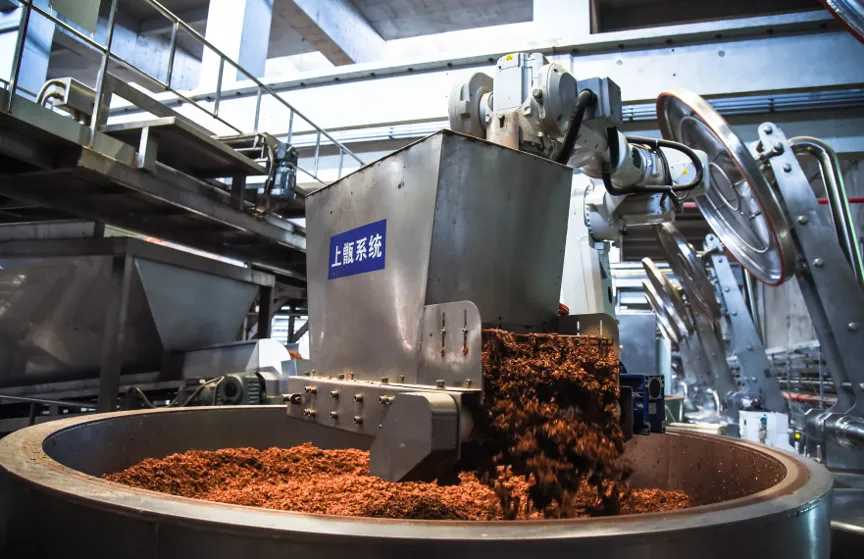
After the introduction of the industry's first intelligent beer robot, the country's wine industry saw a 67 percent reduction in human resources, a 60 percent reduction in site demand, a 54 percent reduction in water consumption, and a doubling of unit capacity.
The brewing industry is moving in a more pragmatic direction. Viet Cong is partnering with Ho Chi Minh City State University to introduce the Unitree G1 humanoid robot into the beer production line, carrying out tasks such as carrying cargo containers, grabbing coatings, and more. Japan's Tri-Deri has deployed seven robotic arms and eight AGVs at its Osaka plant, reducing the labor time for raw material processing to a third of what it was, saving about 2,000 hours a year.
Investing money is the money of the future and spending money is today's money. But two things point to the same judgment, and wine companies are using robots to redefine the boundaries of beer brewing.
And there is a third way between the casting of a spear and the casting of a spear, and that is to come down from the field, and to make money, and to make flesh.
Five grains of liquid is the most typical player.
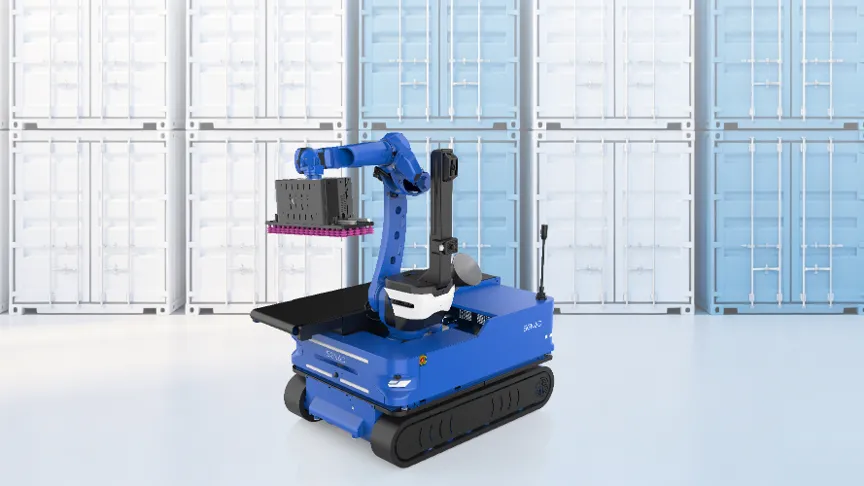
In November 2025, Push Group, a subsidiary of the Five Grain Liquid Group, jointly founded Sichuan Chinese Smart Equipment Limited, with a registered capital of 25 million yuan, and the scope of operations is clearly written in smart robot research and development, industrial robot manufacturing.
In September 2026, the Five Food Liquids Fund, as a strategic investor, participated in nearly 200 million yuan of financing for Synecdoche. Synecdoche's core product is autonomous unloading robots, and the wine and water industry was one of its earliest run-in scenarios.
Five grains of liquidity, this step, is equivalent to the completion of the superimposition of the status of the shareholder of the shareholder, first as a customer and then as a shareholder, which is the most comfortable position of industrial capital.
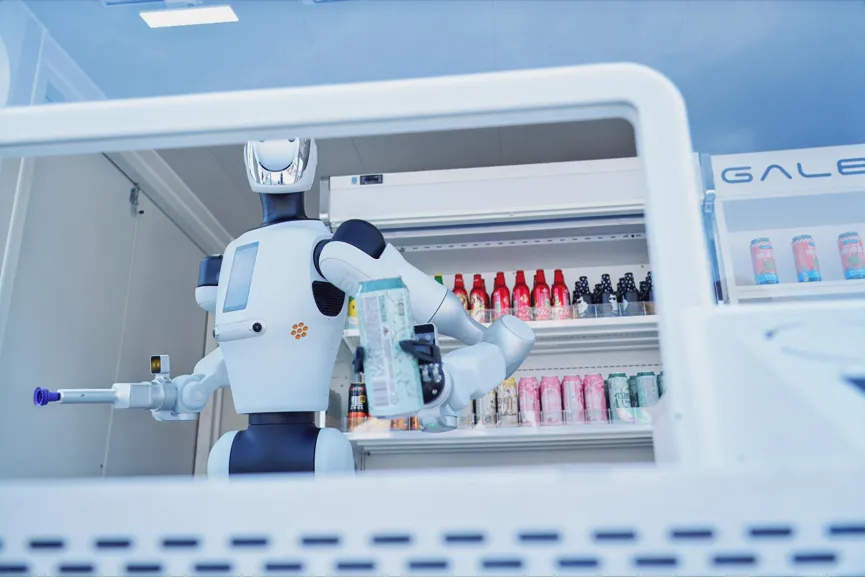
In November 2024, Qingdao Nine Source Technologies, a wholly-owned technology subsidiary, was founded with a $50 million investment, which included the development of AI application software; in July 2026, in partnership with Galaxy General Robot, the company set up a robot retail store, interactive robots, and other smart consumer scenes on the Qingdao Beer Festival.
02.
It's not about drinking.
It's easy to think that they've all been transformed when you look at the news of cross-border robots; but when you look at it, the vast majority of white wine giants are still in the bidding stages.
The white wine industry is undergoing structural contraction rather than cyclical adjustment. Demographic changes, declining acceptance of white wine by young consumers, and the popularity of the concept of healthy drinking will not be reversed as the economic cycle warms up.
For a company with a market capitalization of nearly two trillion, 50 billion in cash flows are the biggest risk, and not investing is the biggest risk. A leading wine industry analyst told the media that the top wine companies with large reserves of money choose cross-border AI, rather than unprecedented, rather than the reversal of the big cycle of downward spirits.
But the voice of the questioner is not small: segregation, technological change and uncertainty in the market make the results difficult to predict. More specifically, the concern is that if wine companies do not have a deep understanding of robotics, if the demand for physical intelligence in the internal scenario is not just necessary, investments can be reduced to a barrel of fresh appliances, a barrel of technology and industry that cannot form a true value chain.
This is not in line with the underlying impulse of white wine capital investing in finance and real estate at the time, but merely as a signpost for a more sexy track.
What is certain is that when industrial capital comes in with the scene, investment is no longer a waste of money, but a waste of seedlings.
03.
The bottle is that bottle, the wine is not that cup anymore.
The best thing about the white wine industry is that it takes five years for a bottle of Champagne to be distilled, and it takes five years for a bottle to be distilled. This business model shapes a unique characteristic of the industry: it's not rushed, but it looks far away.
When this personality encounters a robot, it is logically not inconsistent with a similarly long-termist, similarly overnight track in pre-volume production.
The difference is that in the past, the long-term ambition of the winemaker was to put the wine in a bottle until it was alcoholised; now, they put the capital into a fund until an industry matures.
For the robotics industry, the entrance of wine companies has also released a signal. The body-smart cocktail scene driving the cocktail is changing from a slogan to real gold and silver. When the most traditional wine industry starts using robotic cocktails, the attitudes of other industries will relax.
Of course, no one can guarantee that the money spent on the platforms will flourish. The technological routes of the robotics industry are still changing rapidly, the four-legged robot dogs launched today may be replaced by two-legged robots tomorrow; today's running logistics unloading scenes may be covered by more general schemes tomorrow.
But at least one thing is certain: when beermakers start to seriously study how robots work, the turning point in the industry may come sooner than imagined.
The bottle is not changed, the wine is changed. As for the new wine, it is not good to drink until it is old enough.