It's a new beginning.
Higher goals, higher standards
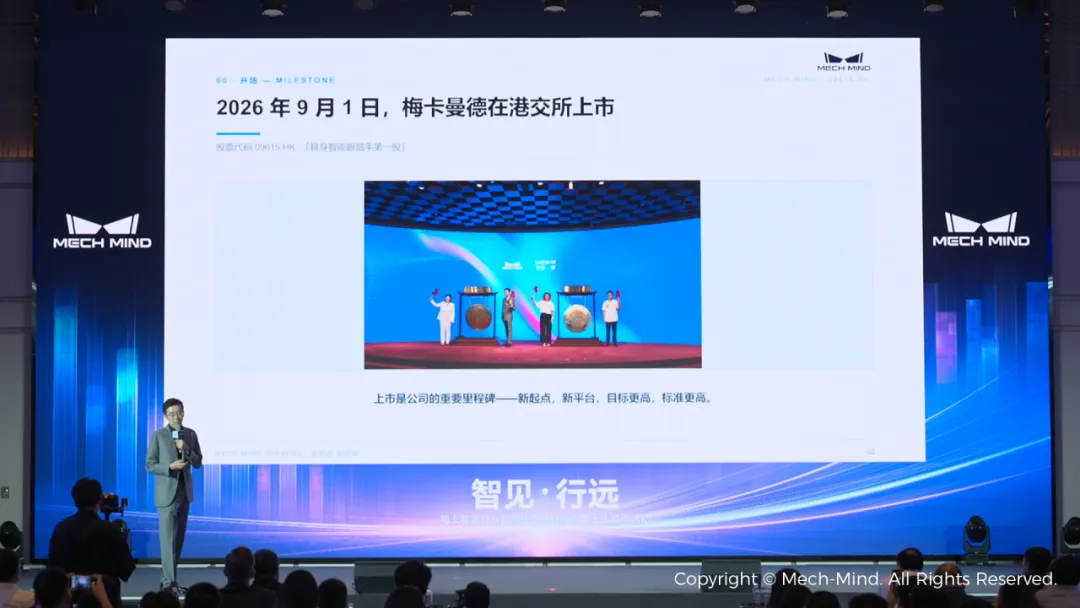
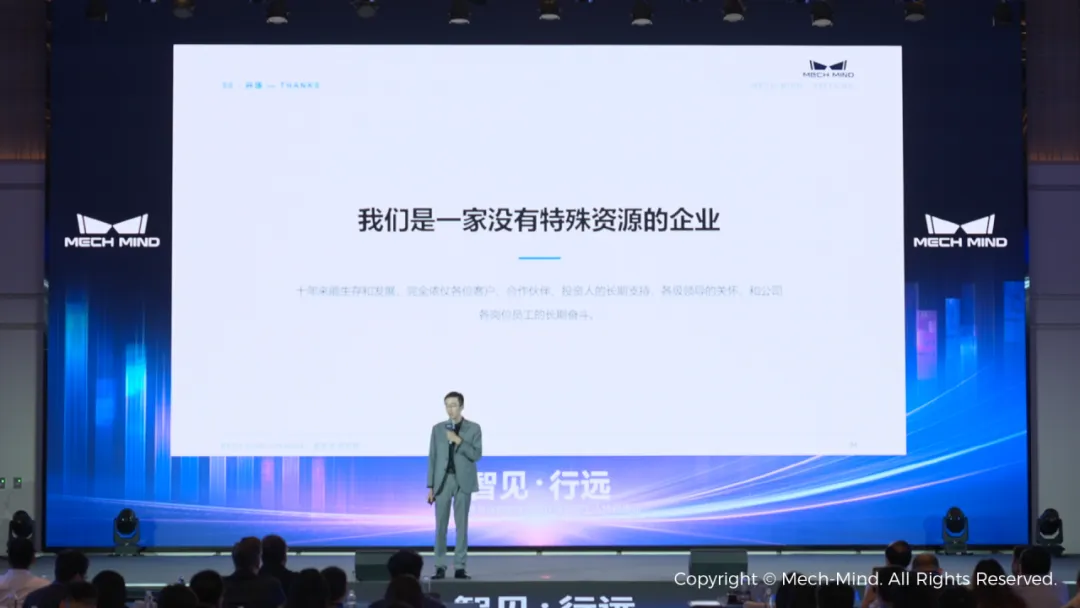
On 1 September, McCandless was listed on the Hong Kong Joint Stock Exchange (HK) as the first stock with a smart eye and brains. The listing is an important milestone for the company, as well as a new starting point and platform, which means McCandless has to strive for higher goals, higher standards. The growth over the past decade has been steadily supported and struggled by customers, partners, investors, leaders at all levels and all employees.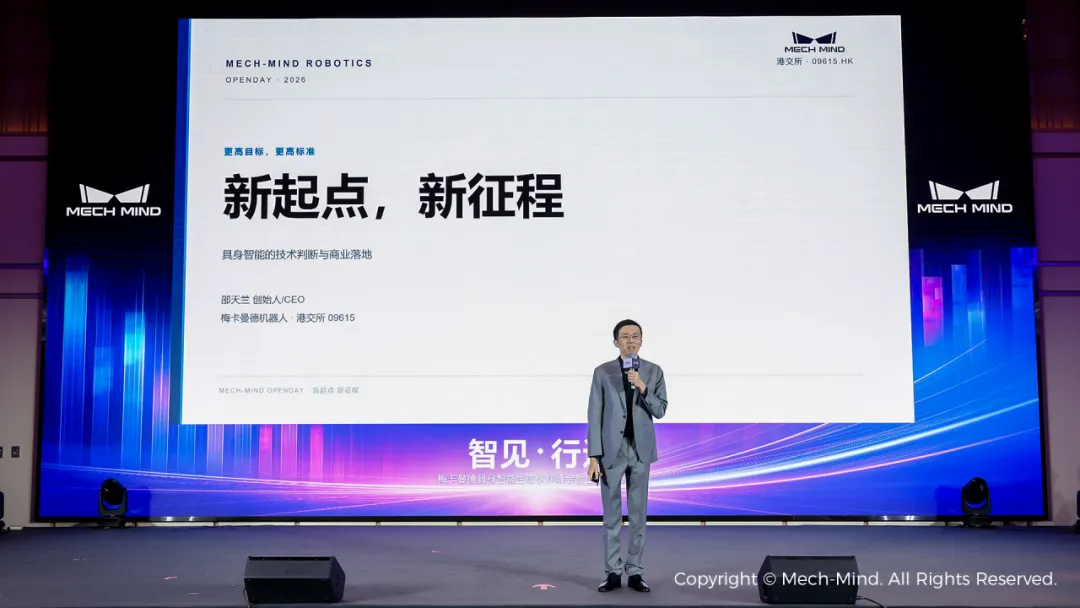
Sliding to see
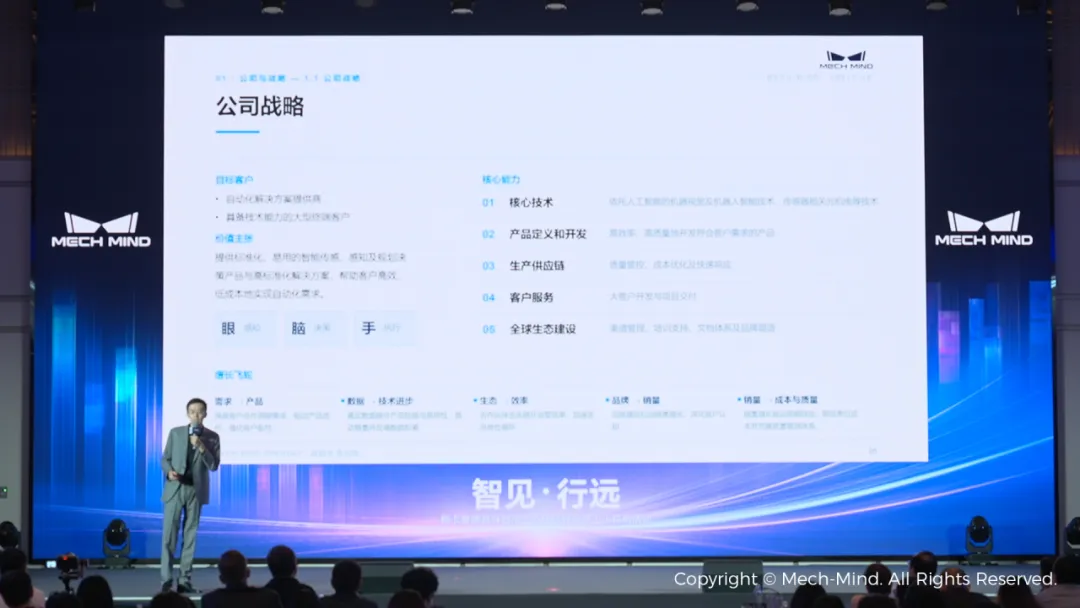
Looking to the future, McMand's strategy has always revolved around customer value: providing standardized, easy-to-use smart sensing, perception and planning products and high-standardized solutions to automation solutions for automation solution providers and large terminal customers with technical capabilities to help customers achieve automation needs more efficiently and at low cost.
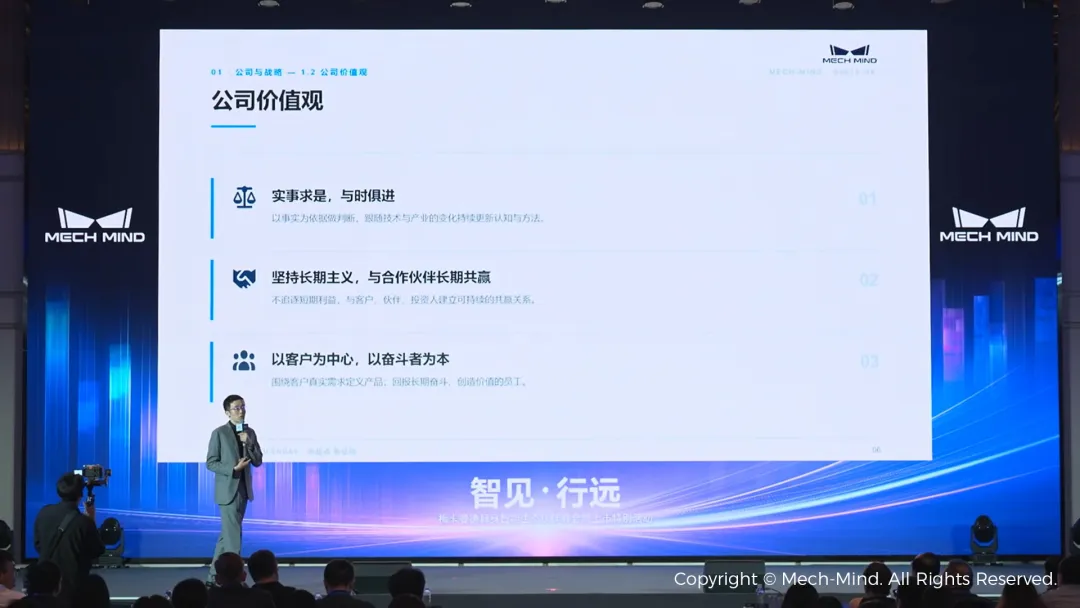
Underpinning this strategy is McCandless' long-standing values of being realistic, up-to-date, long-term, win-win with partners, customer-centric, struggler-driven.
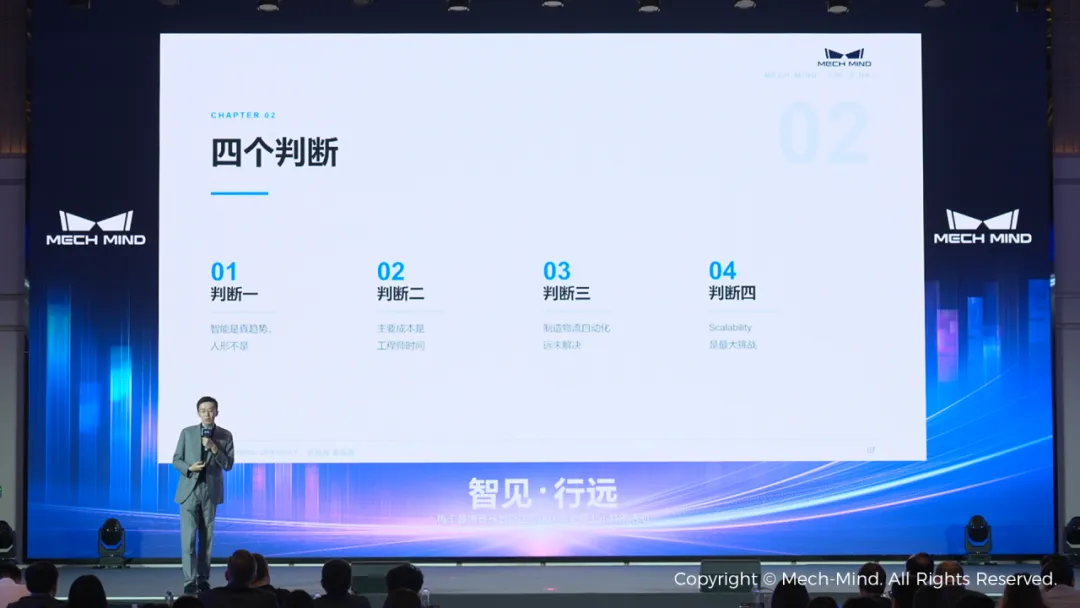
Four judgmentsLook at the trends, look at the landing problems.
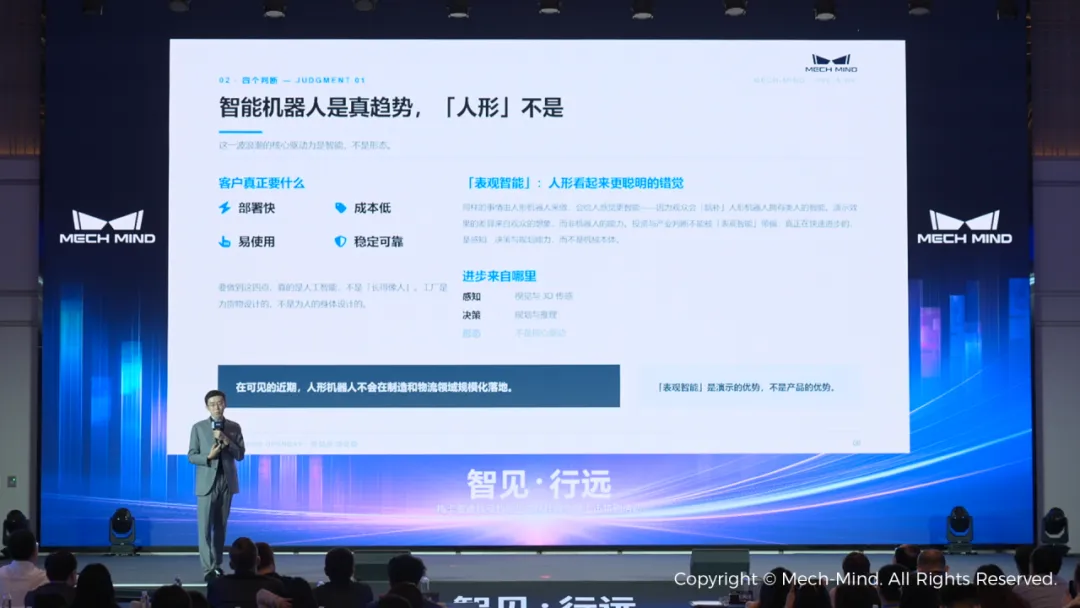
Around the development of physical intelligence, TianLan made four judgments. First, intelligent robots are the real trend, but humanoids are not. The customer really needs to deploy quickly, cost-effectively, easily and reliably, and the key to determining the experience is perception, decision-making and planning skills. In manufacturing and logistics, industrial robots, collaborative robots and other forms of robots will continue to serve different scenarios in the long term.
Sliding to see
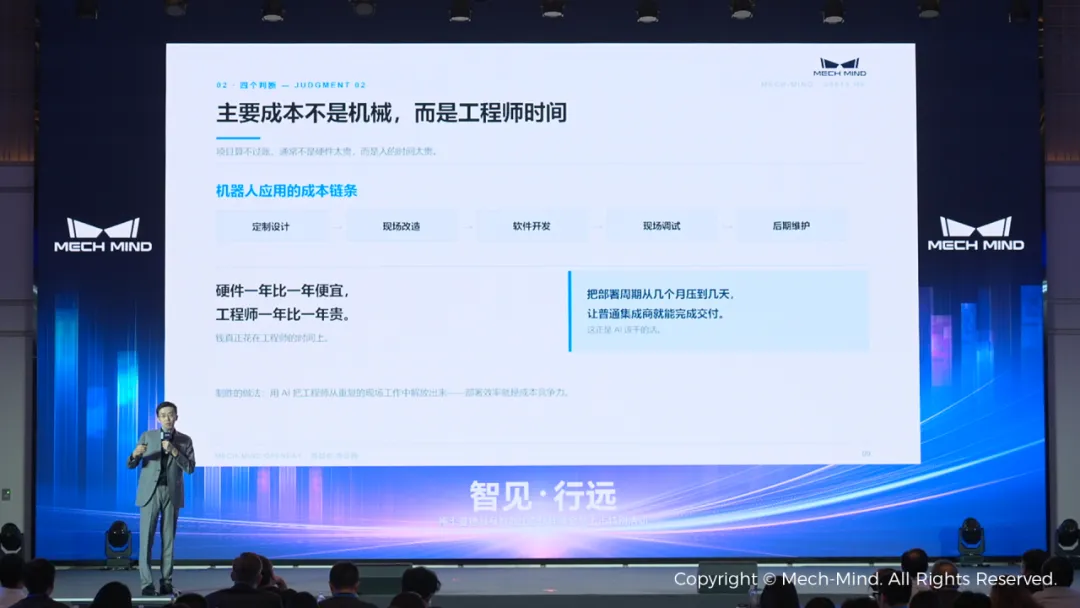
Second, the main cost of robot applications is often not mechanical hardware, but engineers' time. From program design, software development, on-site modeling to later maintenance, a large amount of customization work has elevated the synthesis book. With AI, increasing the standardisation level, compressing deployment cycles from a few months to a few days or even shorter, allowing more partners to complete deliveries on their own, it is only possible to really reduce application barriers.
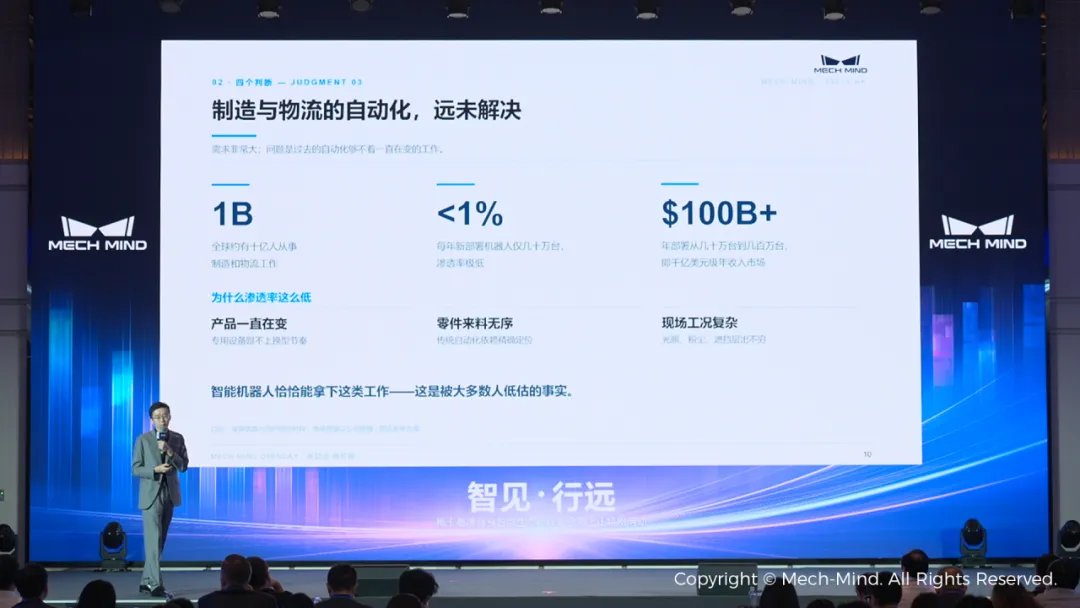
Third, manufacturing and logistics automation are far from solved. A lot of hard, dangerous, repetitive work is still waiting to be automated and the market space is wide.
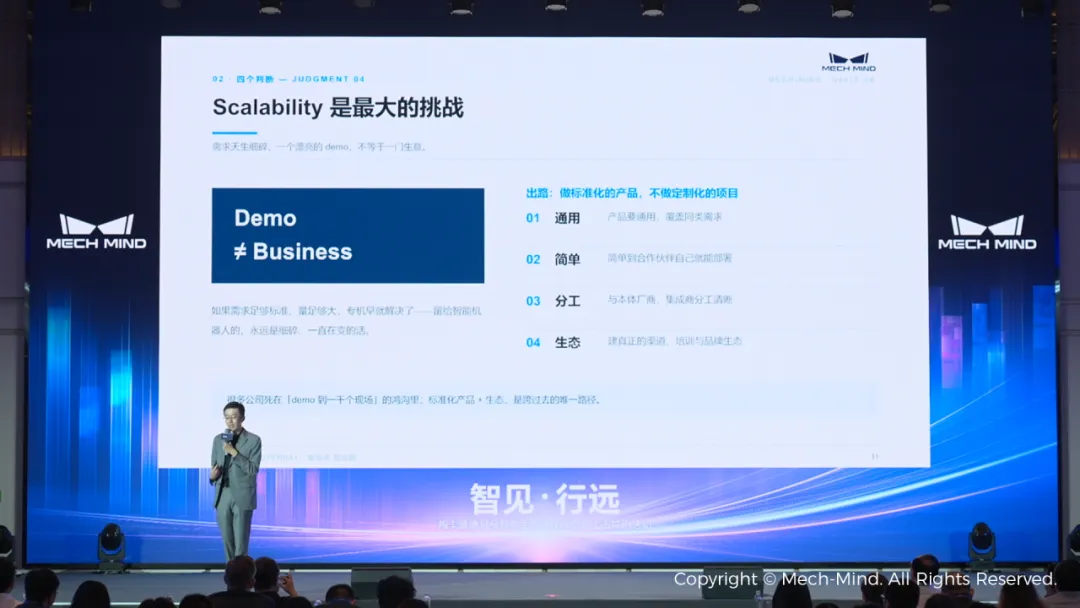
Fourth, the biggest challenge in the industry is scalability. It's not hard to make a presentation, it's hard to make a product generic, simple, reliable, and through rational division of labor and ecological collaboration, copied from one place to hundreds of thousands of places.
Technical routes
Moving towards uniformity, multi-layered architecture and combined generalization
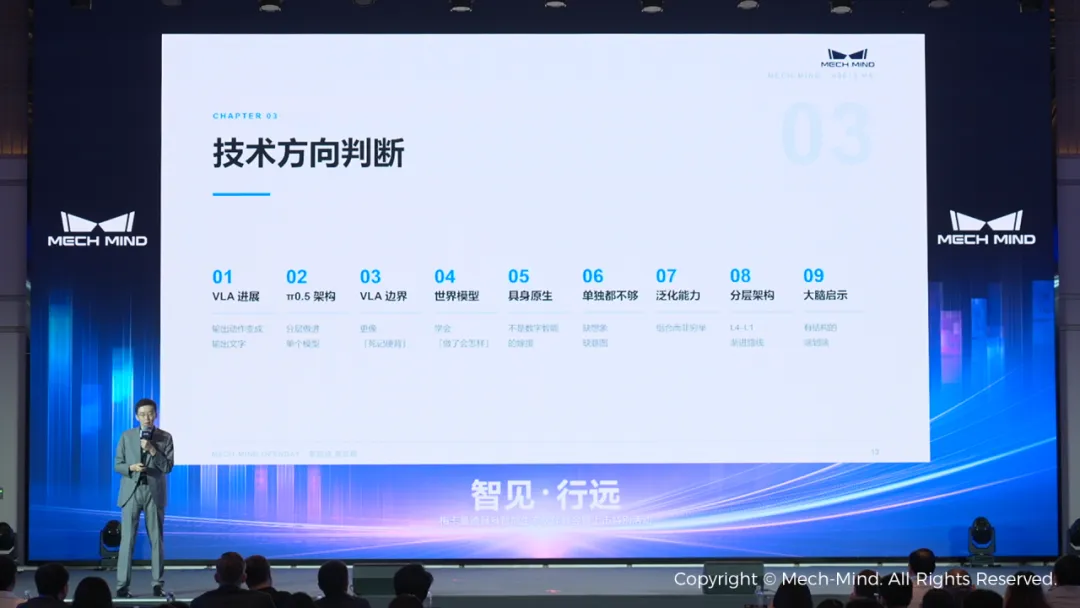
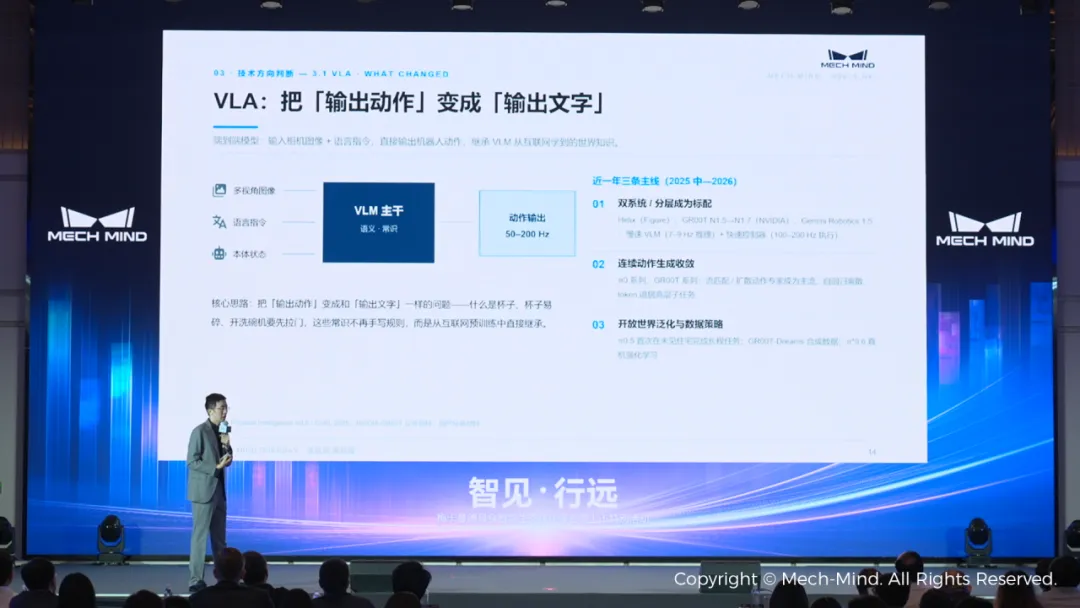
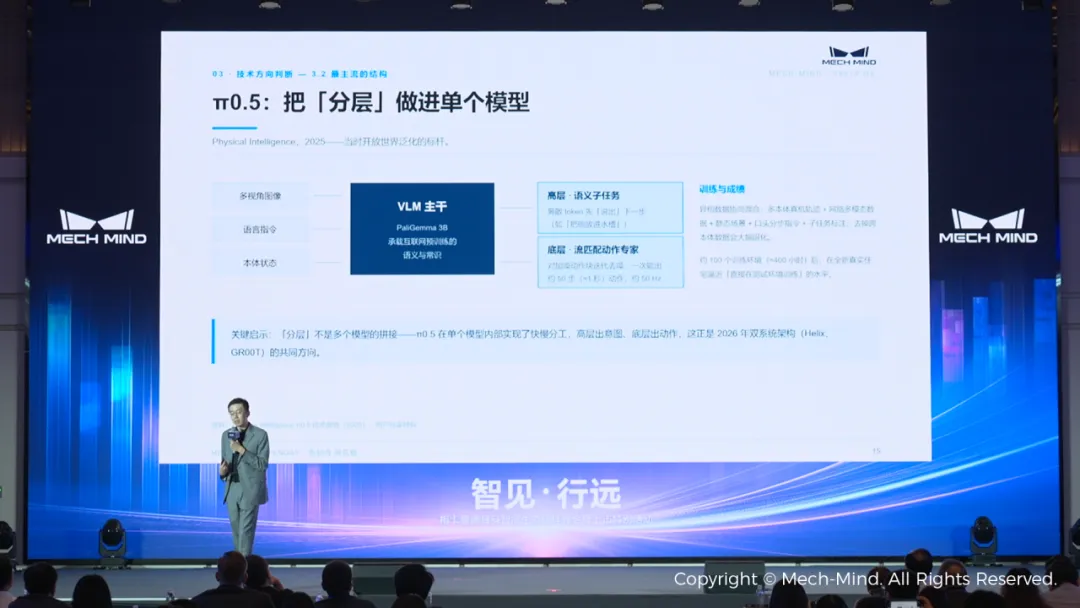
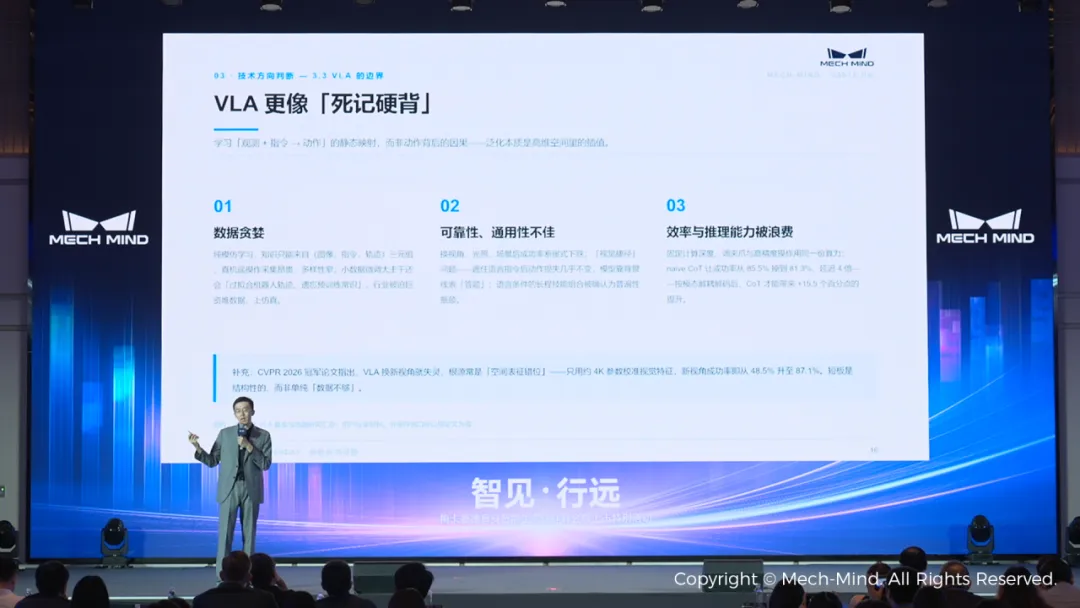
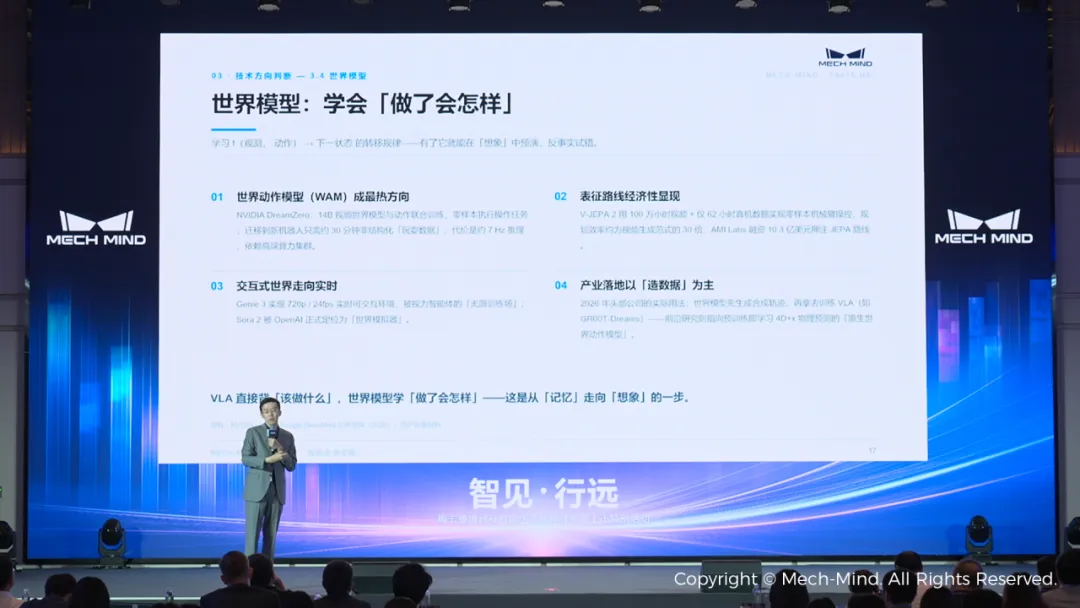
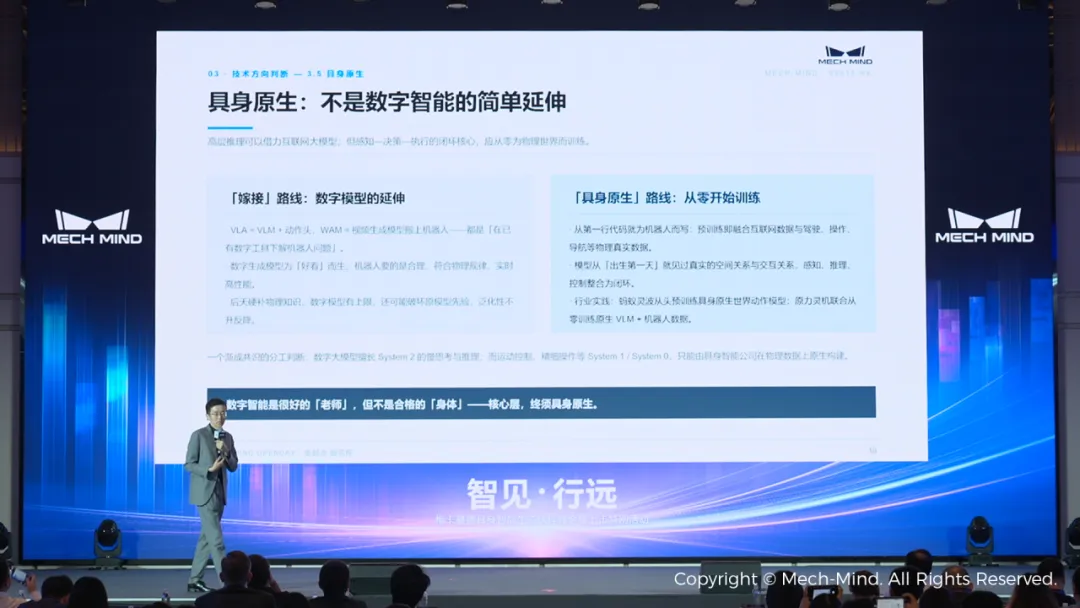
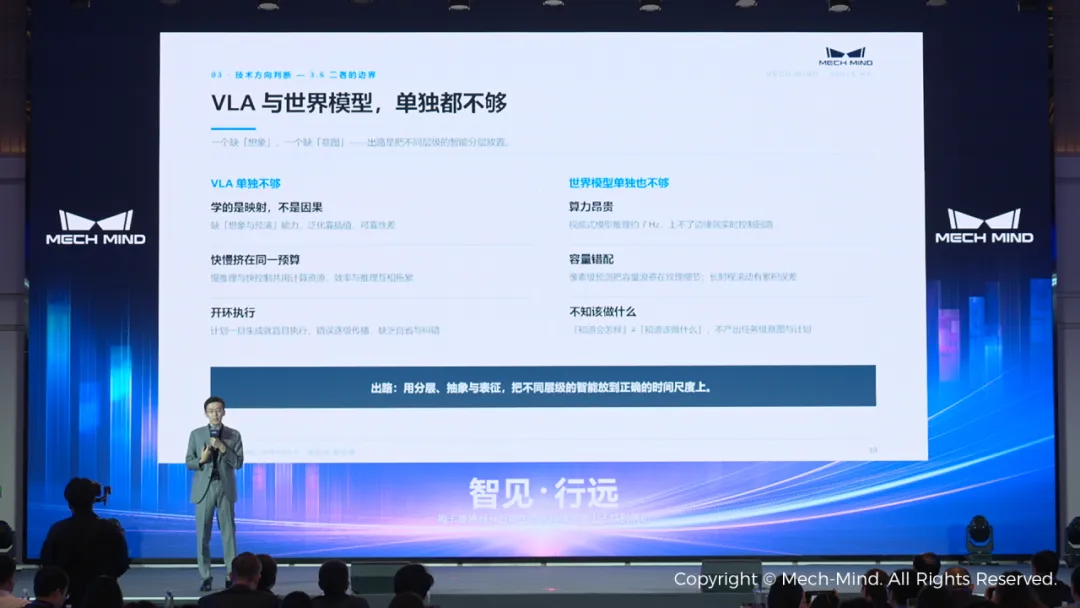
In technical terms, Titanlan believes that VLA and the world model have made significant progress, but the single paradigm still has boundaries: the former is good at learning from observation and instruction to motion mapping, possibly subject to data volumes and generalization capabilities; the latter is able to describe what happens when a mouse takes action, but not naturally answering what a mouse should do.
Sliding to see
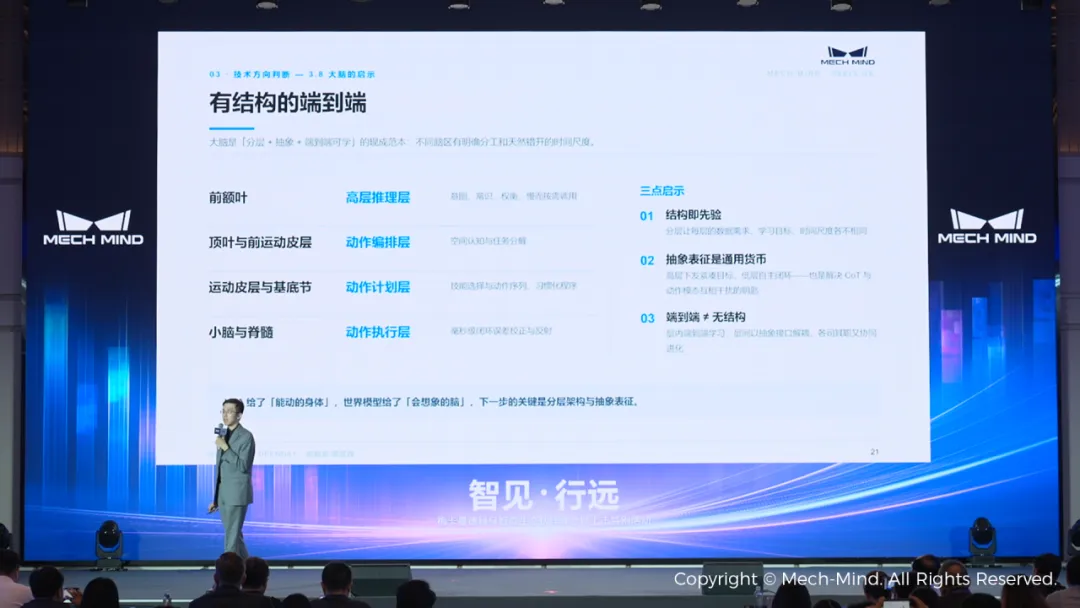
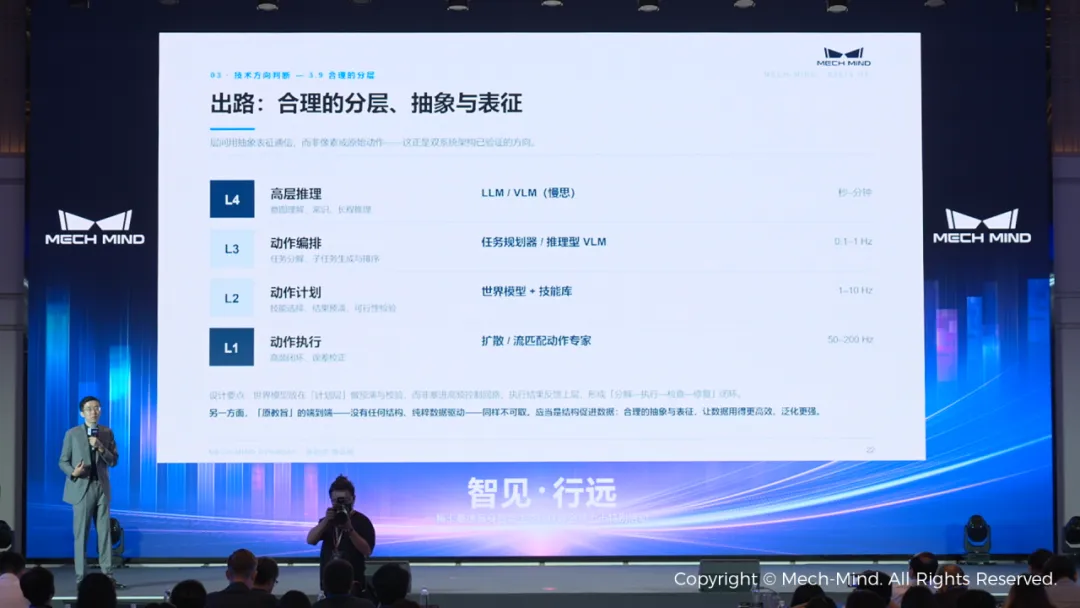
McCamand attaches more importance to the technological systems that originate in the physical world, as well as to rational sub-layering, abstraction and representation. Inspired by the structure of the human brain, the robotic brain can place intentional understanding and long-range reasoning, task and action compilation, skill selection, high-frequency control and error correction at different levels, cooperating at their respective appropriate time scales.
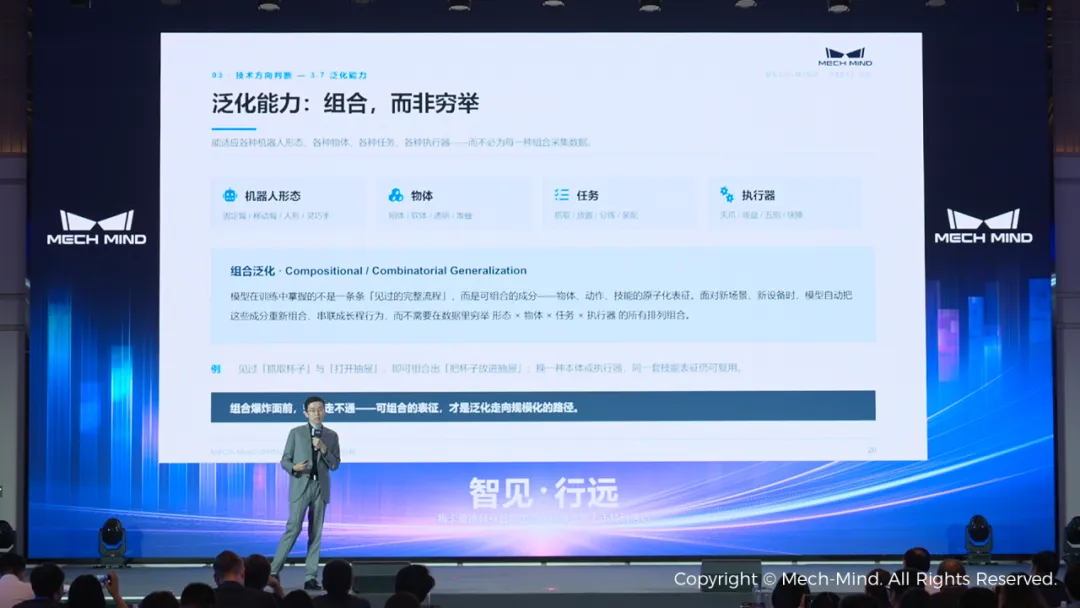
The core capability pursued by this system is the generalization of combinations. Robots do not have to pick up all of the combinations of shapes x objects x tasks x executors, but instead learn replicable objects, movements and skill representations, and reassemble them in new scenarios. This creates a polymorphic puzzle: the same set of robotic brains can be adapted to different entities such as single-arms, two-arms, different axis-numbers of robots, and different executors such as claw claws, suction disks, and so on, allowing the underlying capabilities to transform and migrate across tasks.
Moving from demo to scale
Real products must pass on-site testing
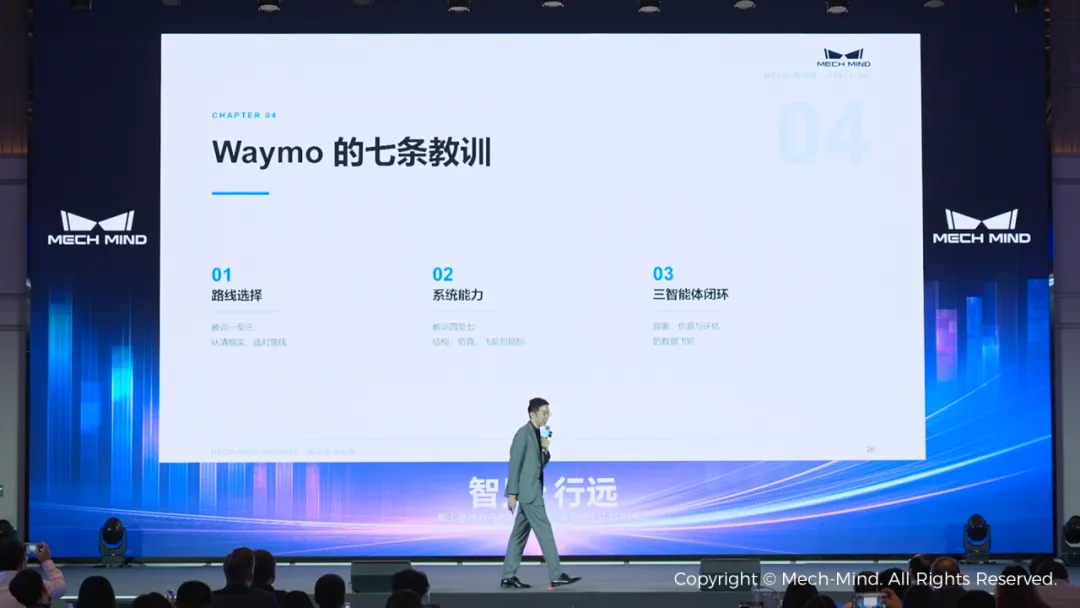
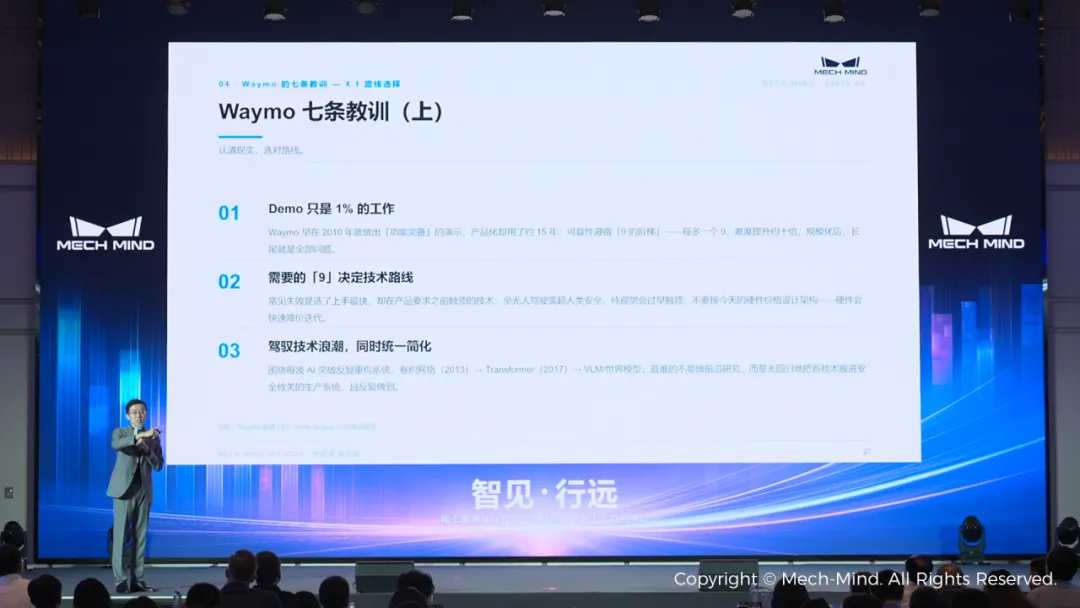
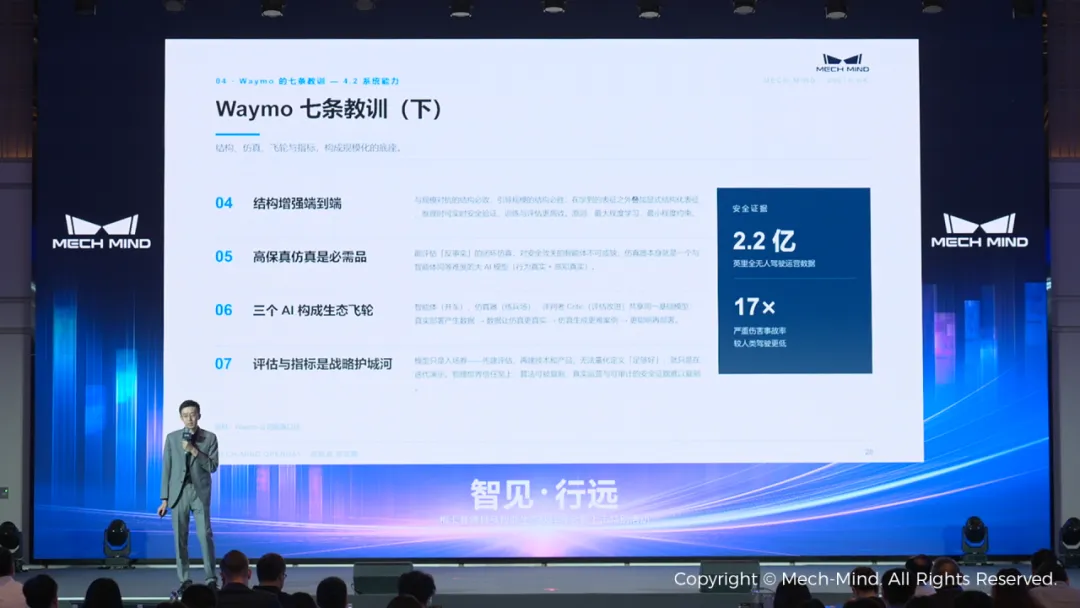
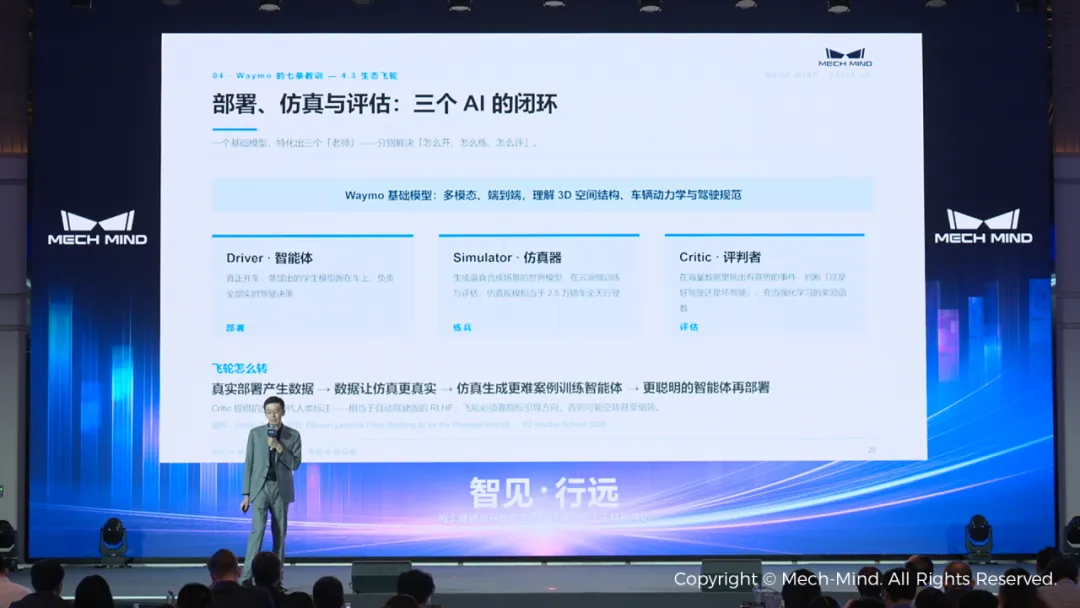
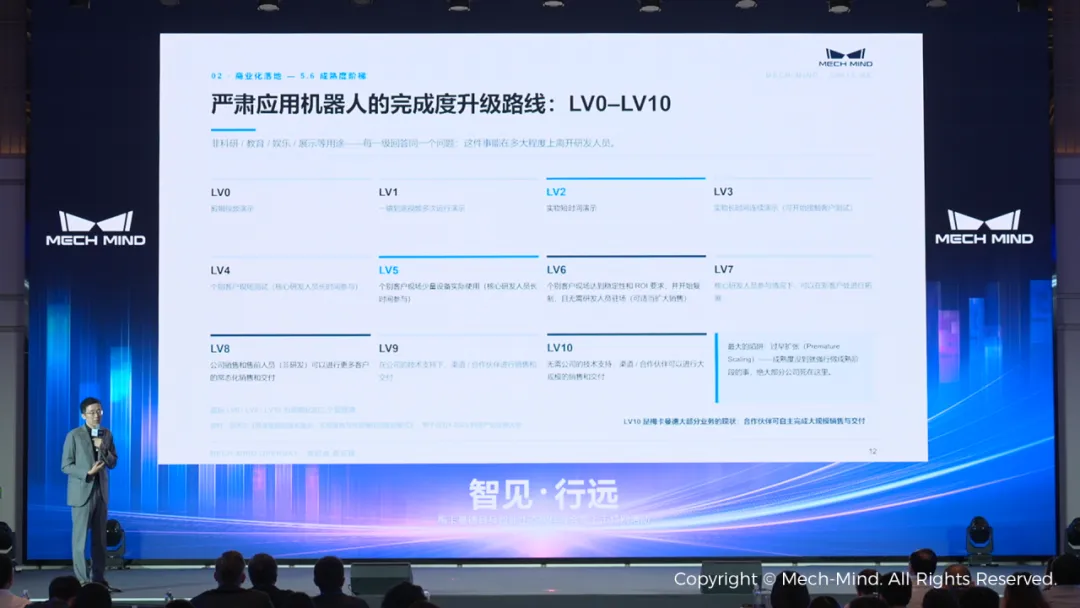
From technical demonstrations to commercial landings, a long staircase of maturity lies in the middle. Citing Waymo's experience of building physical world AI, Tianlan points out that demos are only a small part of choosing a high enough technical route from the upper limit, and establishing a deployment, simulation and evaluation loop to continue transforming new technologies into products.
Sliding to see
From LV0 to LV10, he further outlined the process of product-oriented applications of robots: from clipped presentations to the end of a mirror, to the stable operation on the customer's premises, to sales, pre-sales and the ability of partners to complete sales and deliveries independently.
Sliding to see
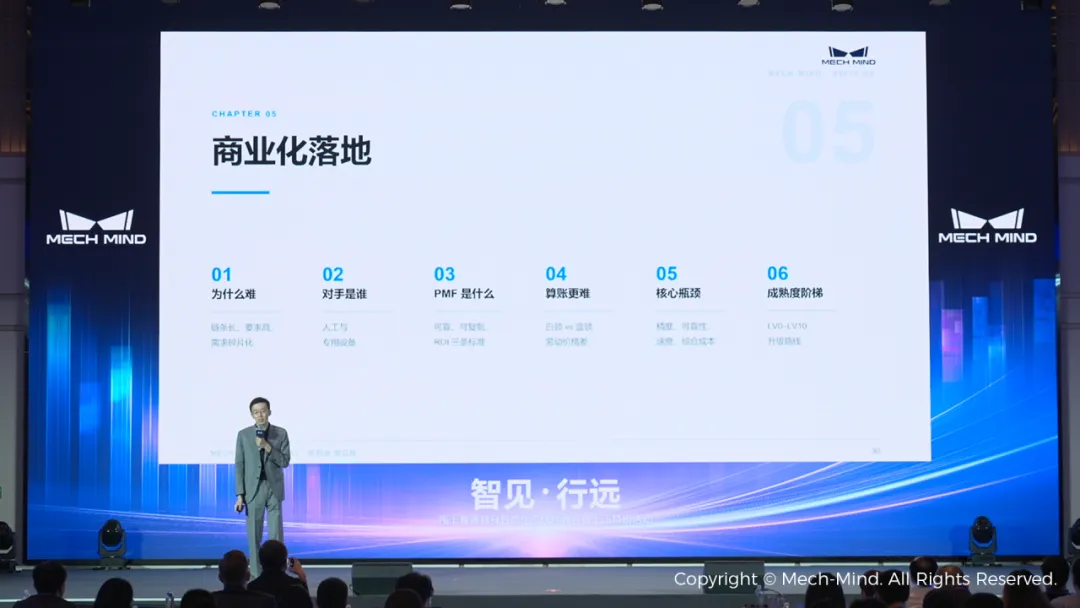
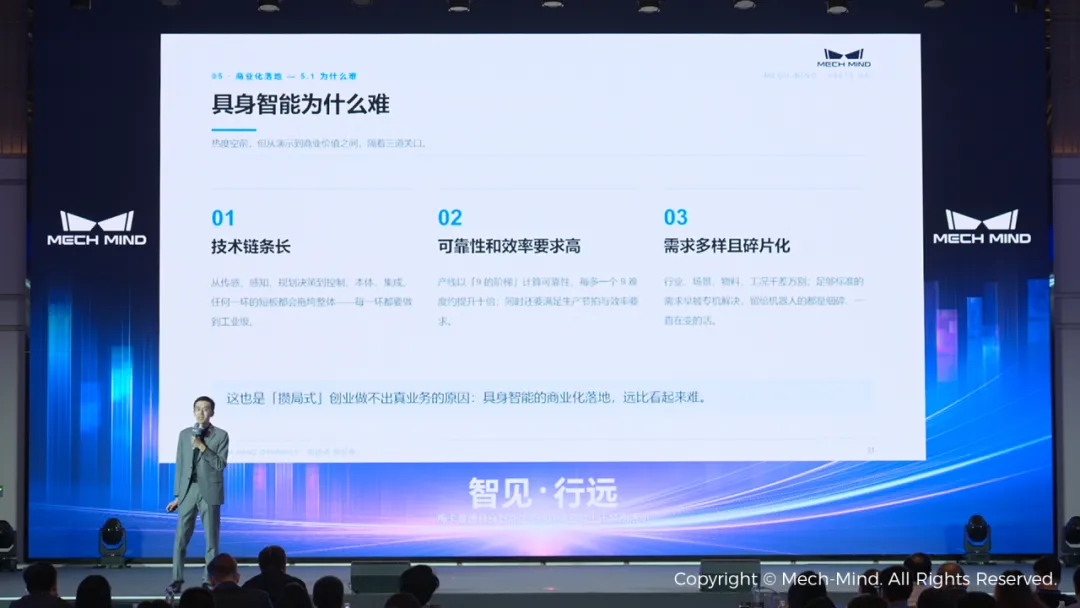
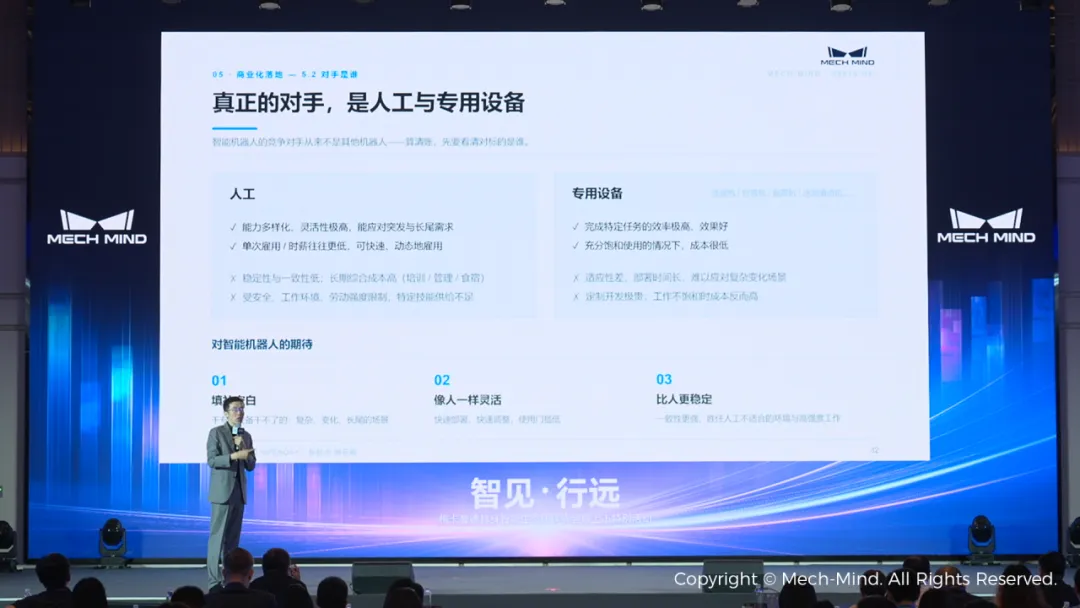
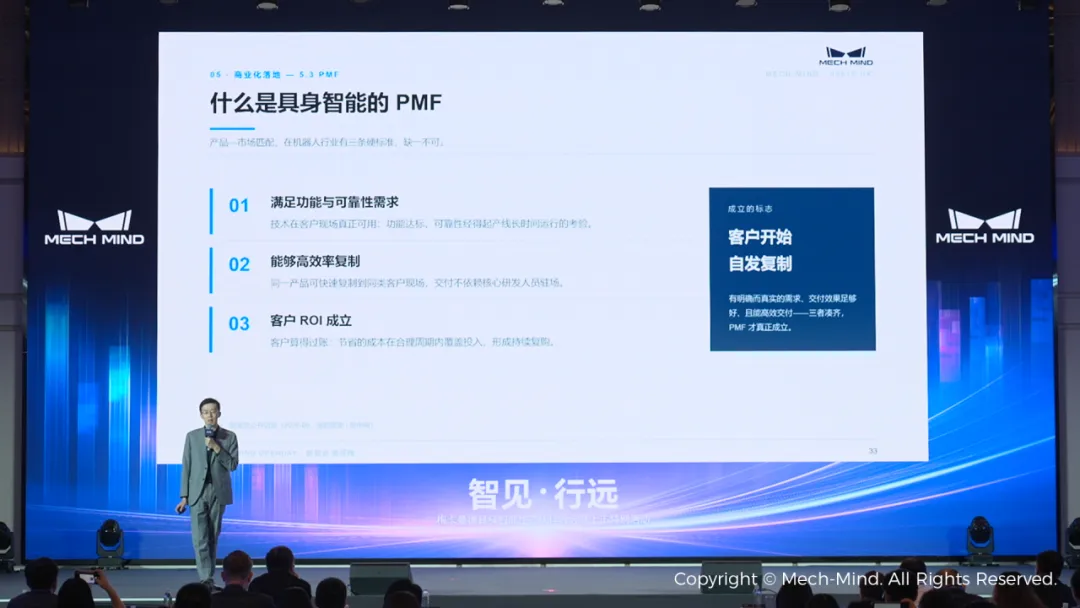
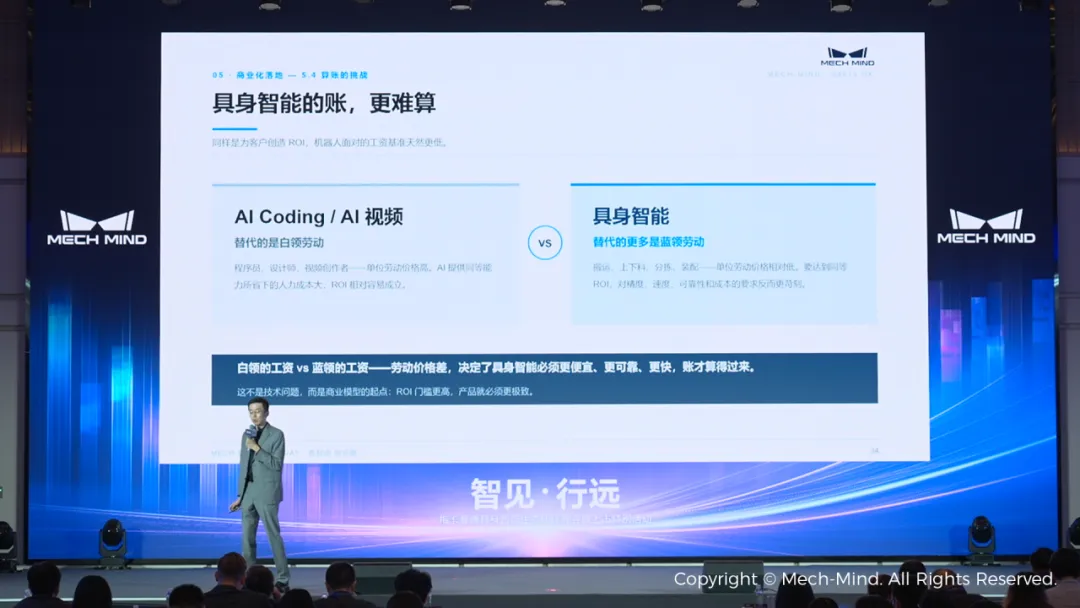
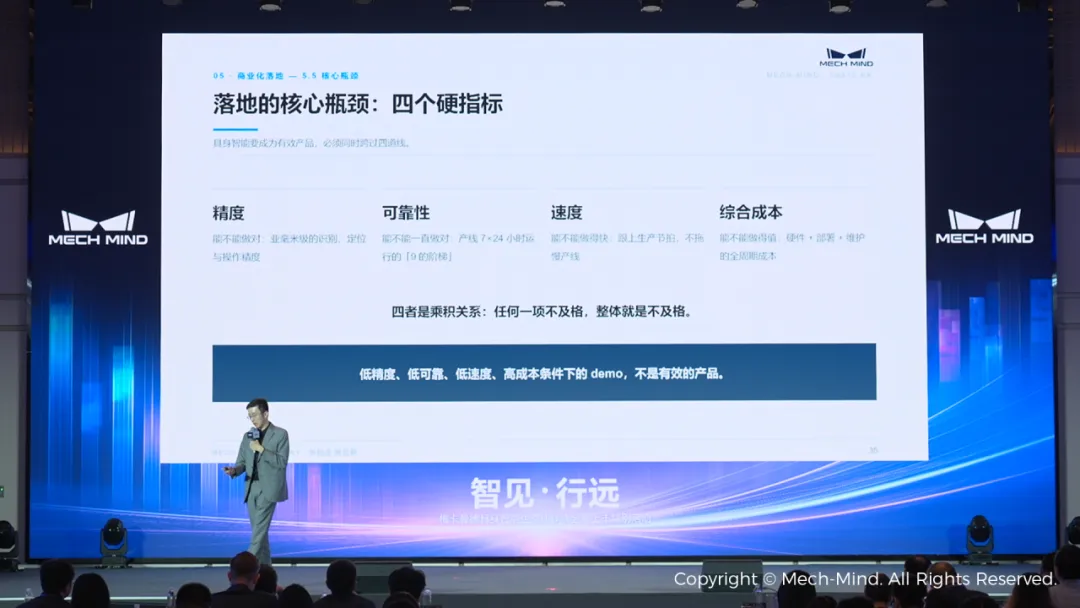
To match the market for products with physical intelligence, three conditions must be met at the same time: functionality and reliability to meet customer requirements; the same product can be copied efficiently; customer ROI is established and willing to continue using and automatically replicate. In conclusion, products must cross the four thresholds of accuracy, reliability, speed and synthesis.
Standardized products in the blink of an eye
Supporting industrial collaboration and sustainable evolution
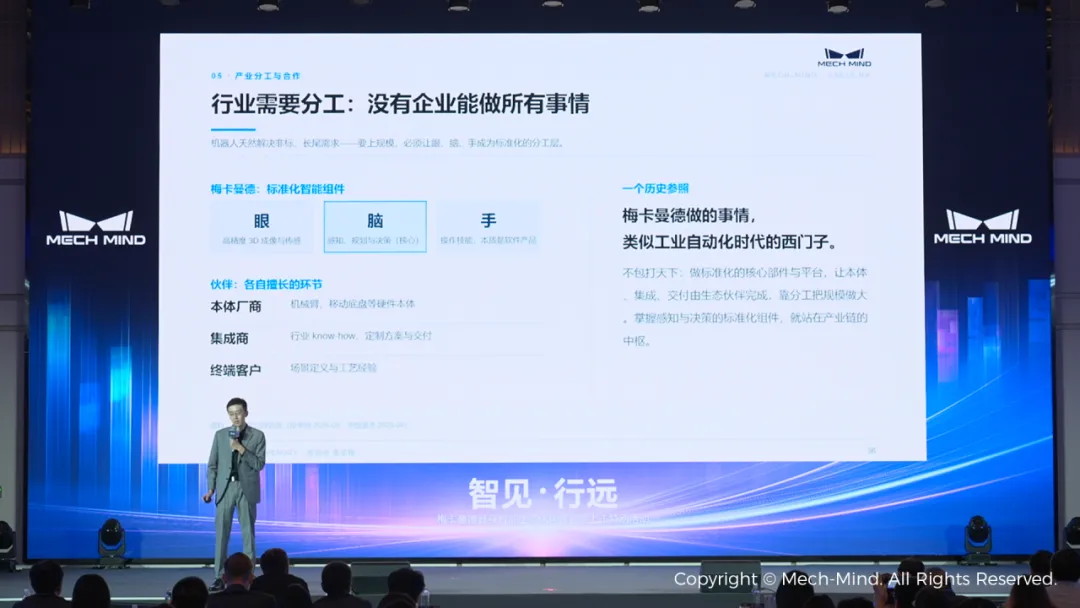
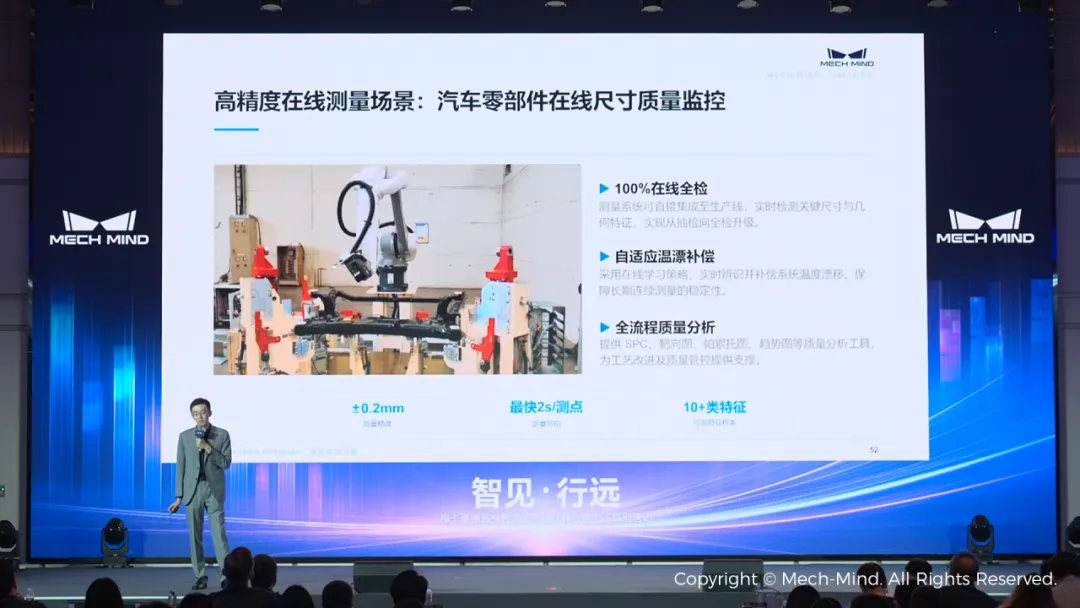
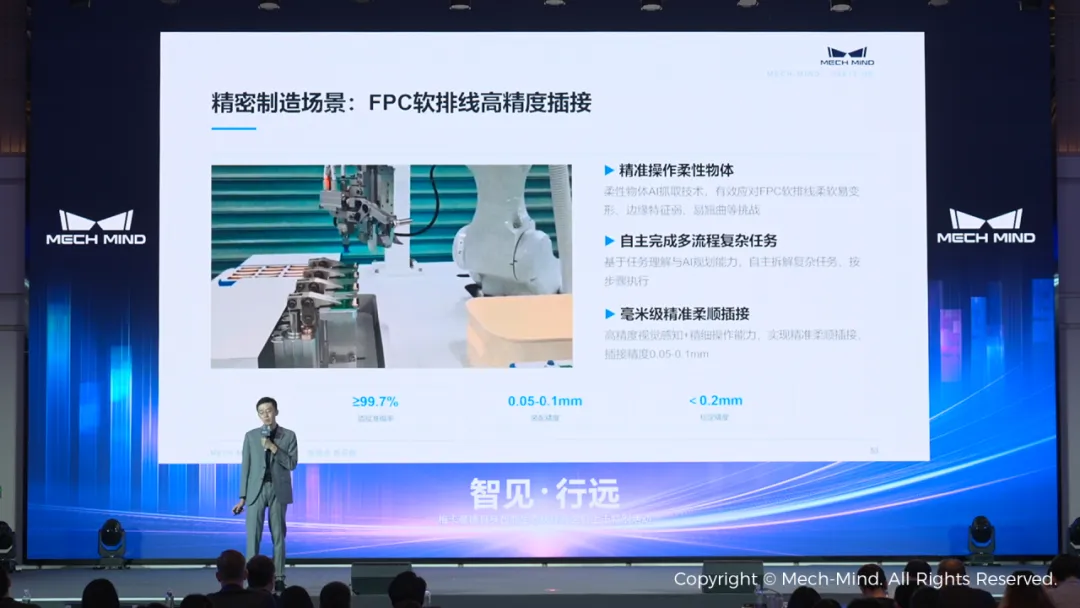
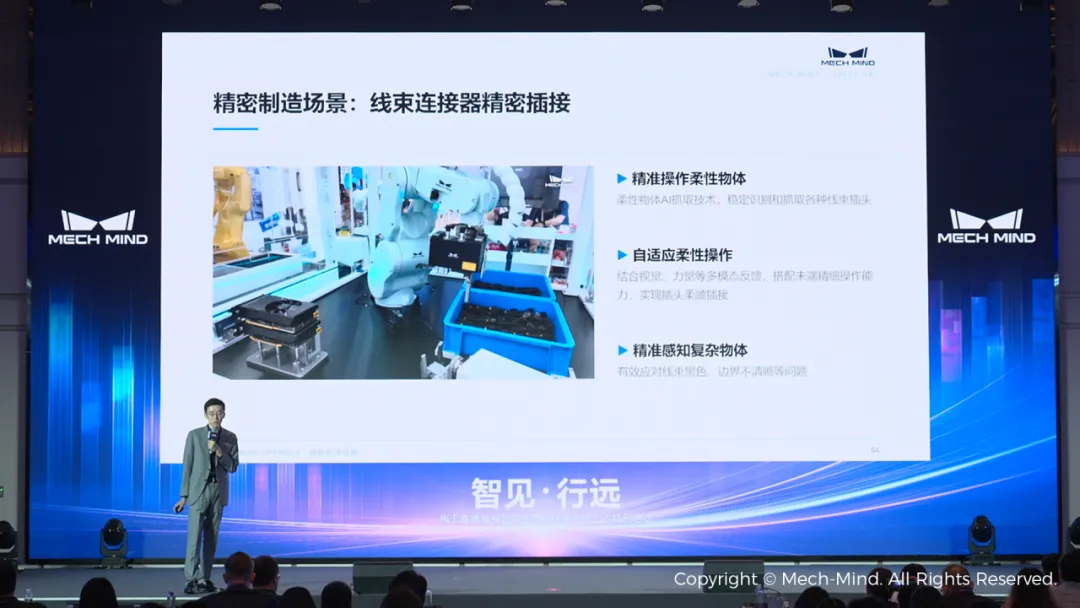
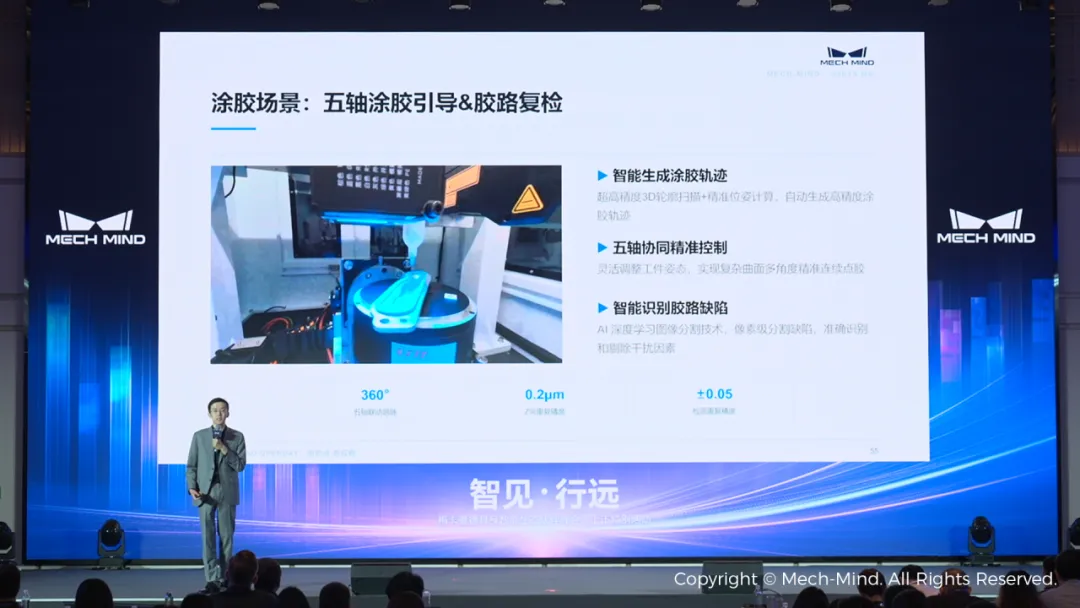
The robotic technology chain is long, demand is diverse and fragmented, and no single company can encompass all the links. McCandless chose to embrace machine intelligence-related capabilities as a standardized brainstorming product: focusing on brainstorming perception, planning and decision-making, using brainstorming to obtain high-quality information about the physical world, to complete brainstorming operations, and to work with the robot's own manufacturers, system integrators, and end-customers to develop and scale applications.
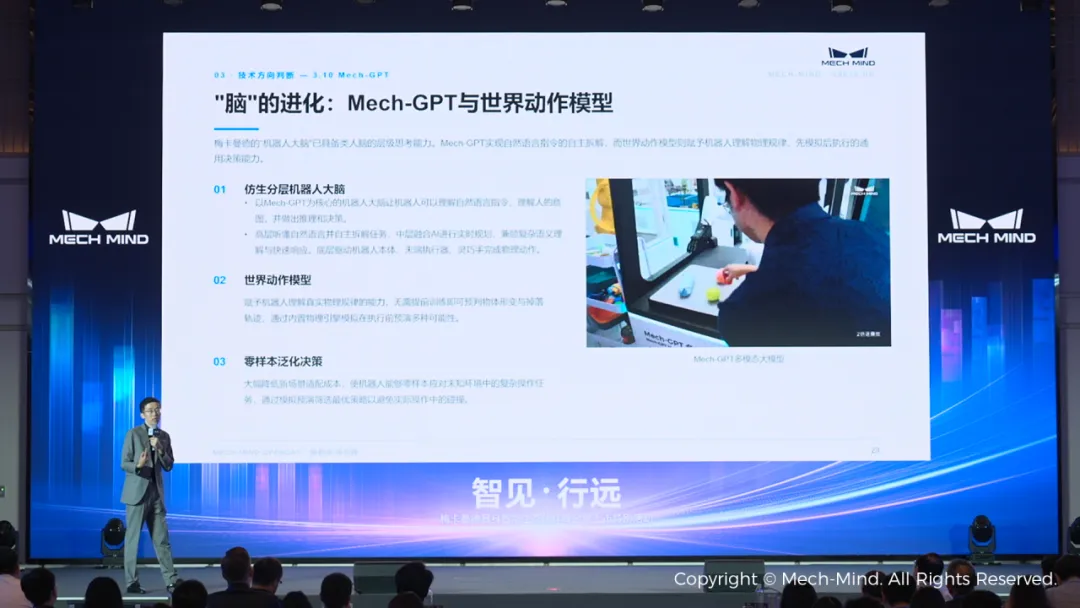
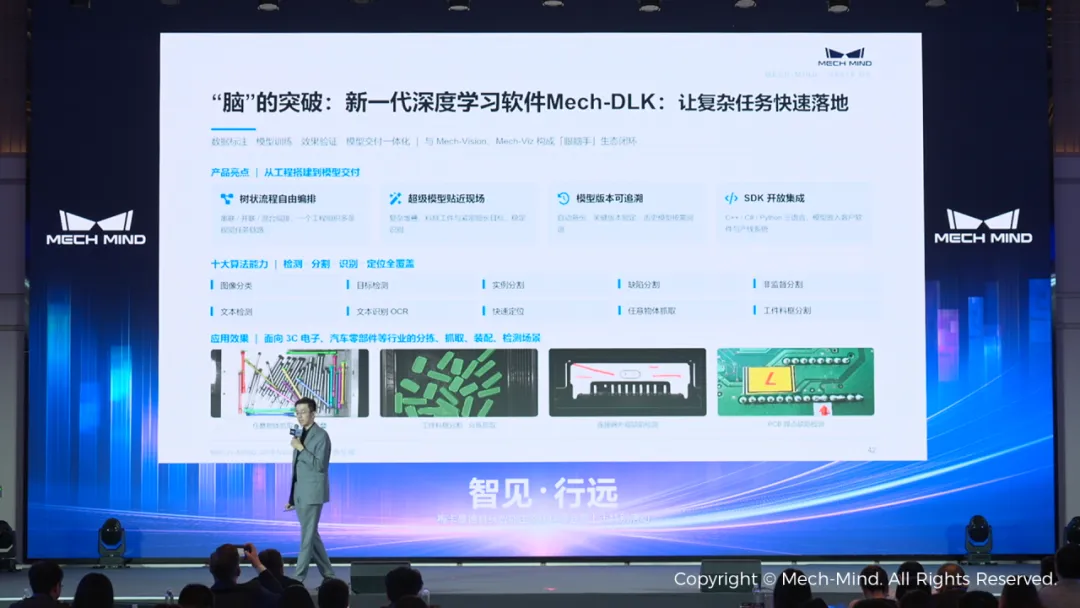
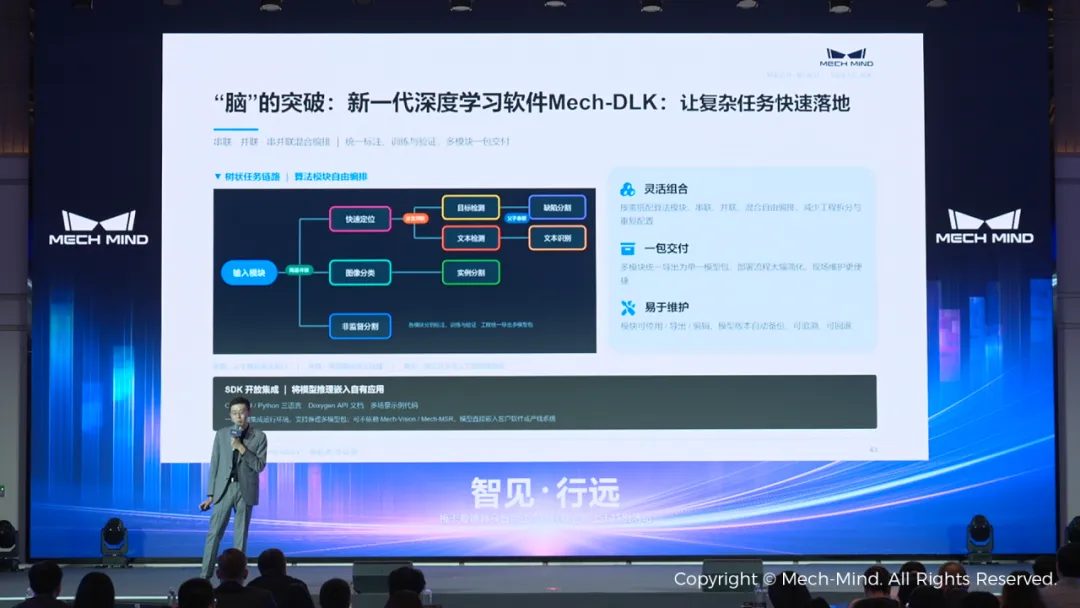
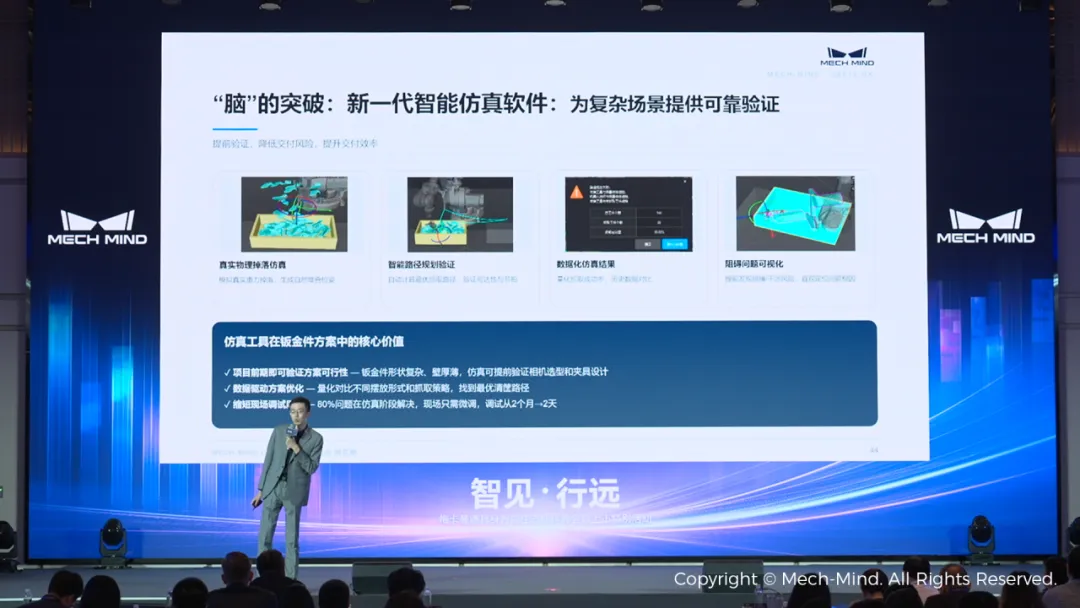
Sliding to see
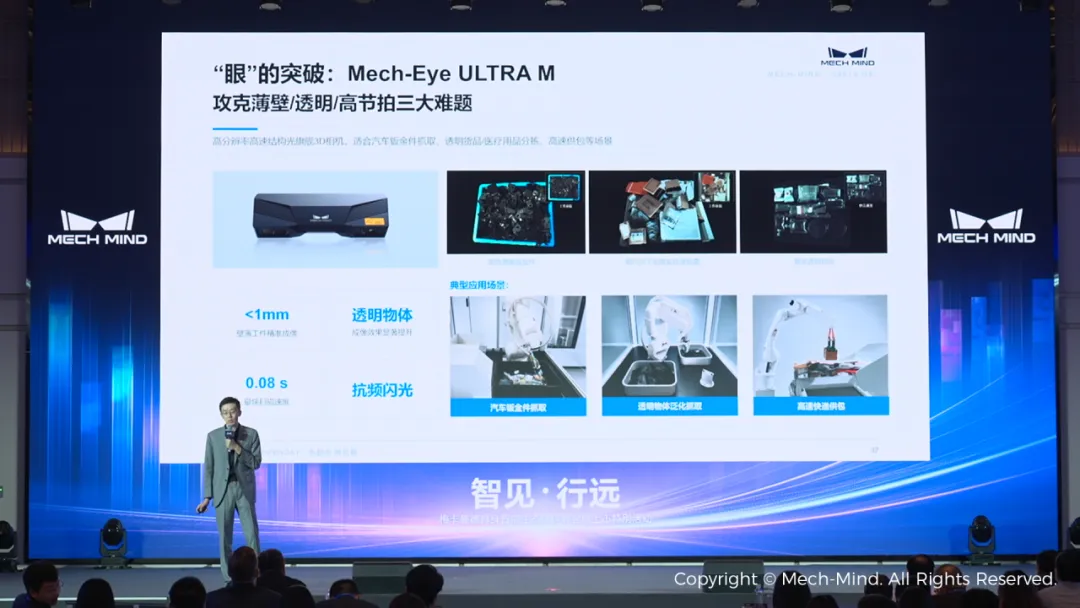
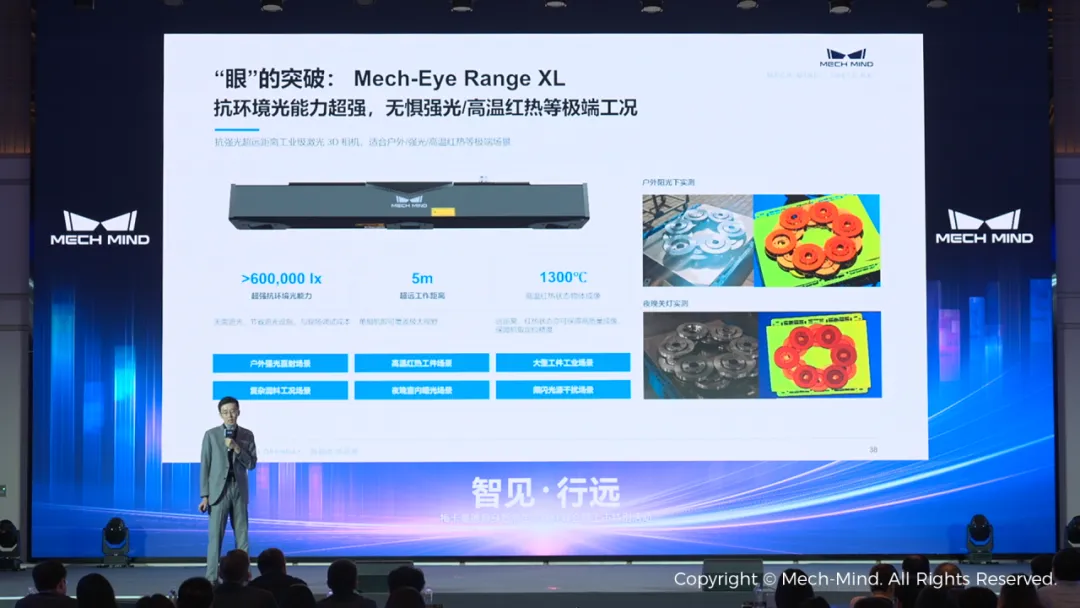
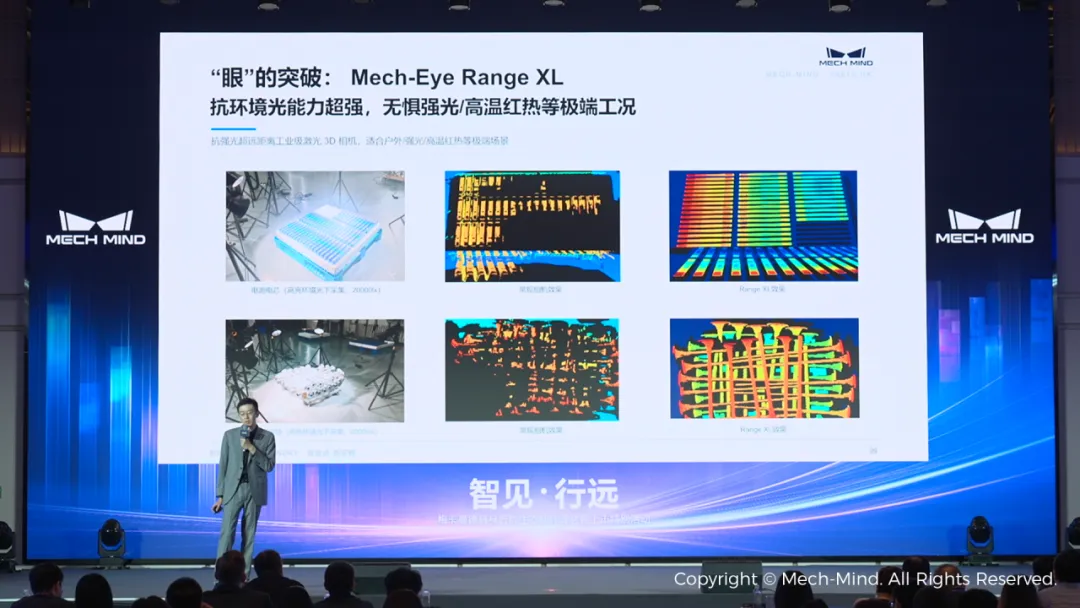
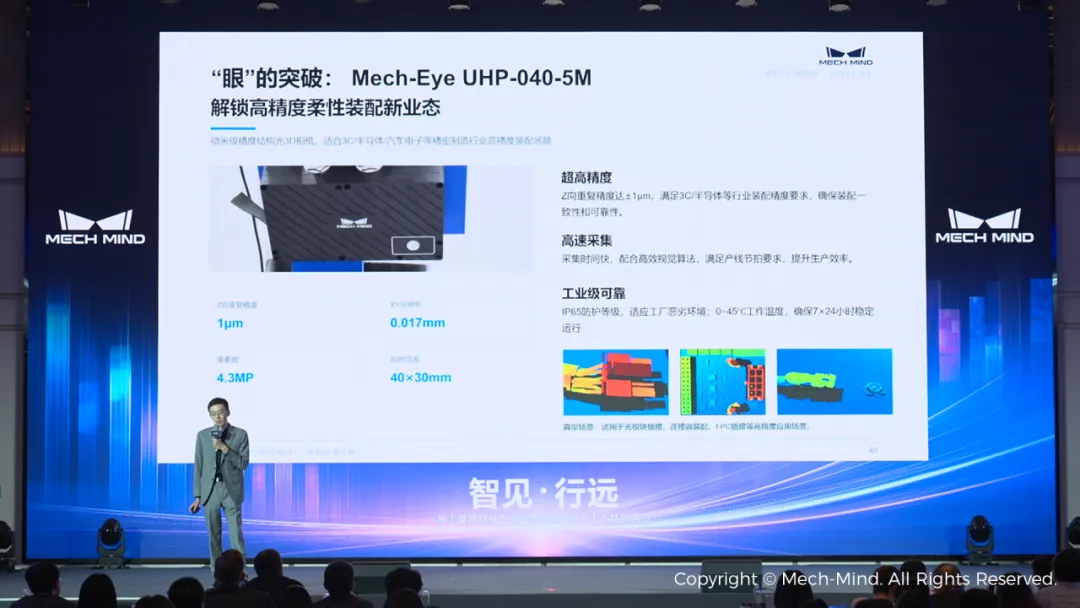
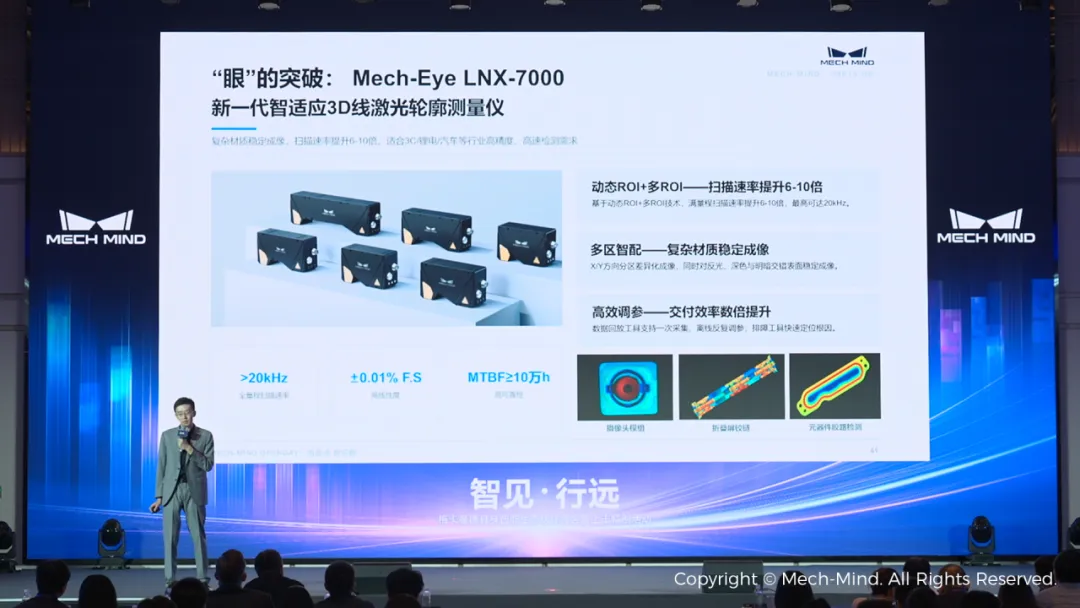
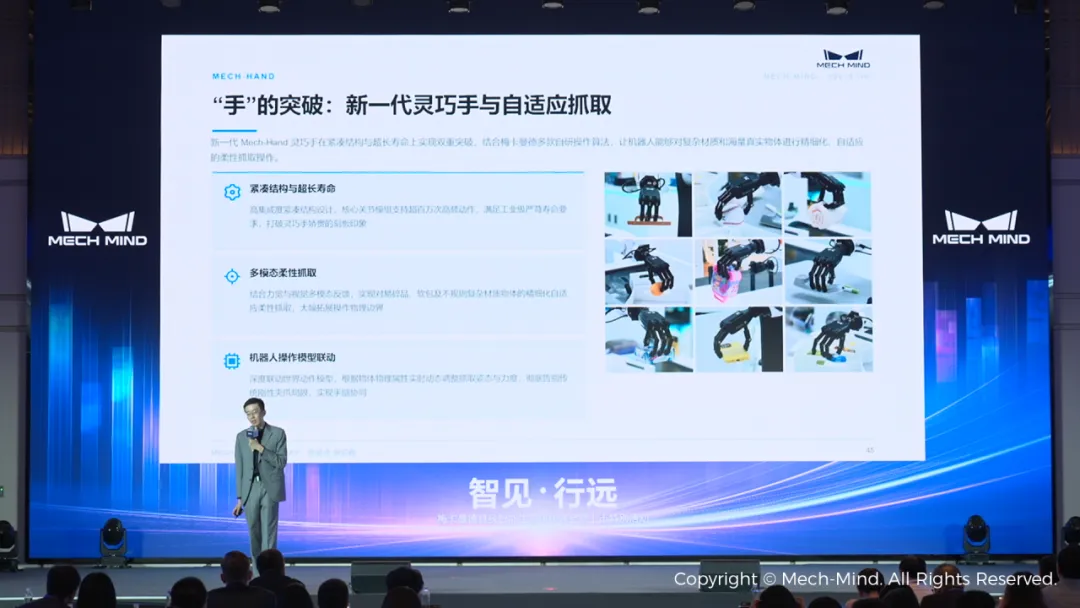
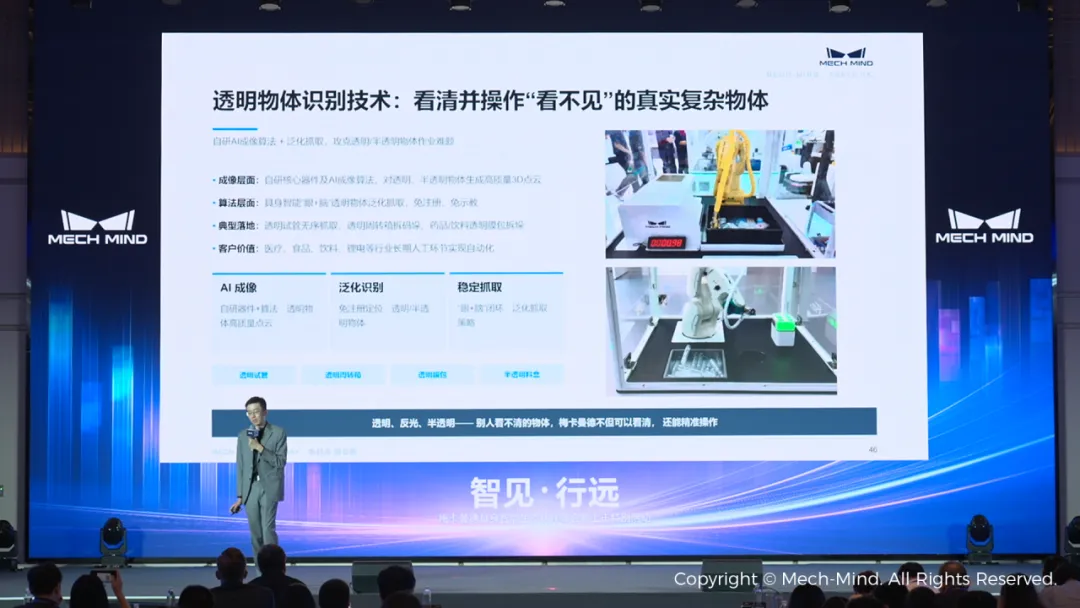
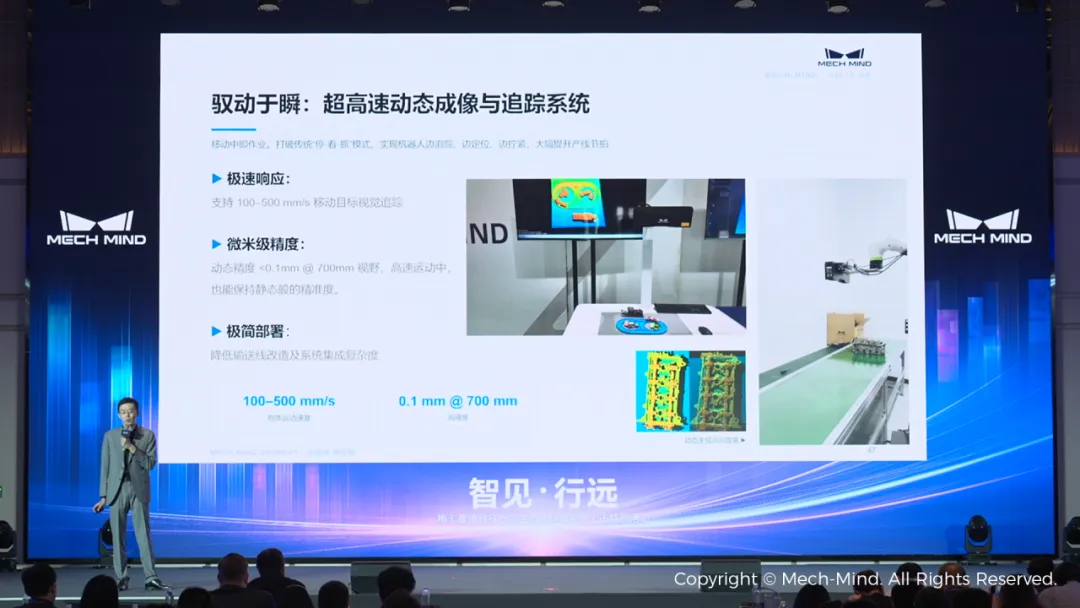
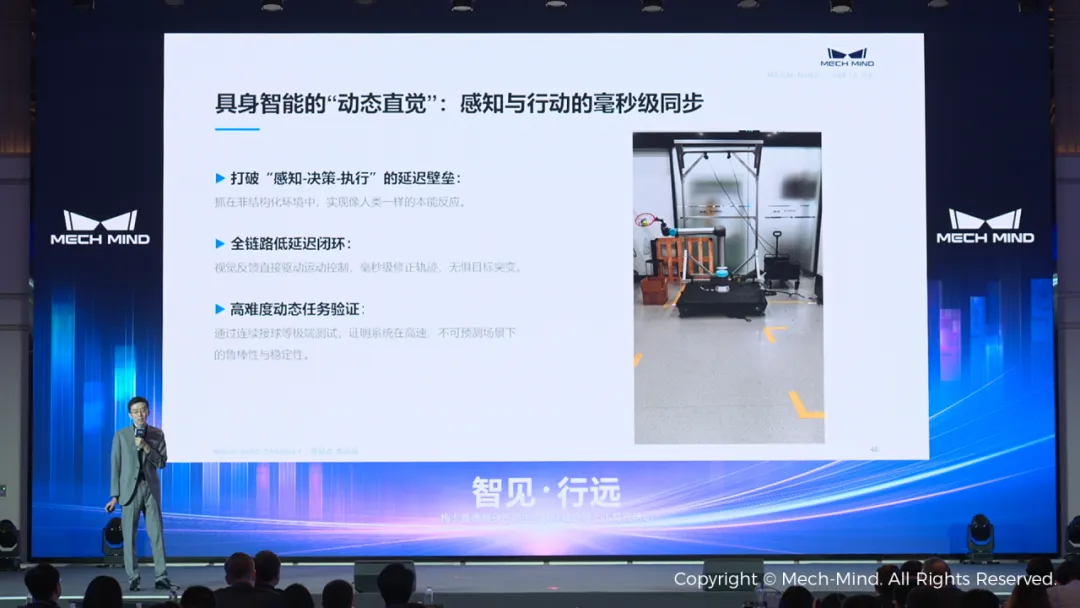
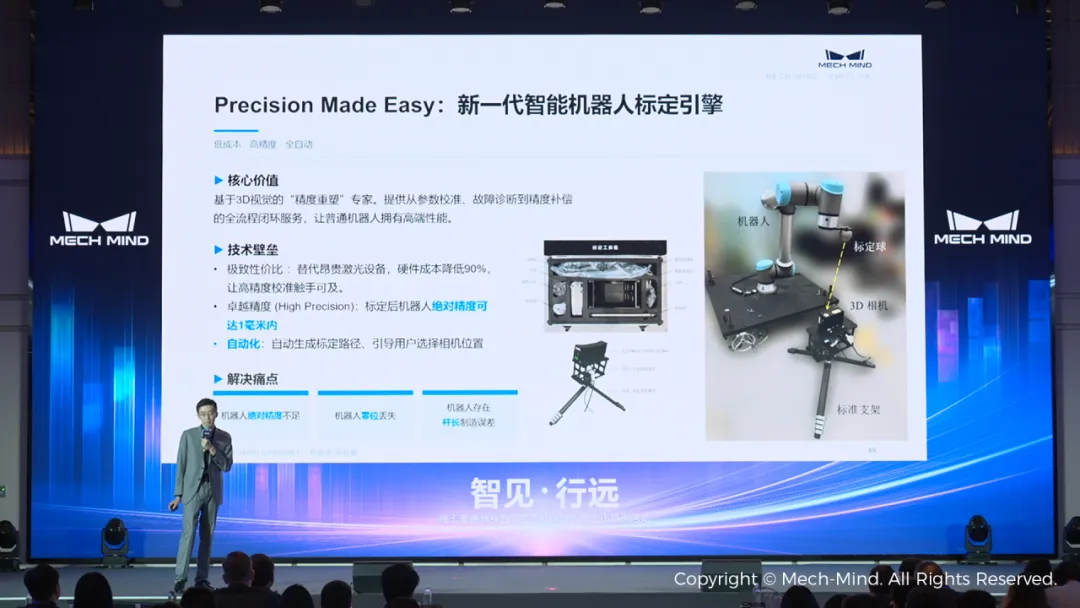
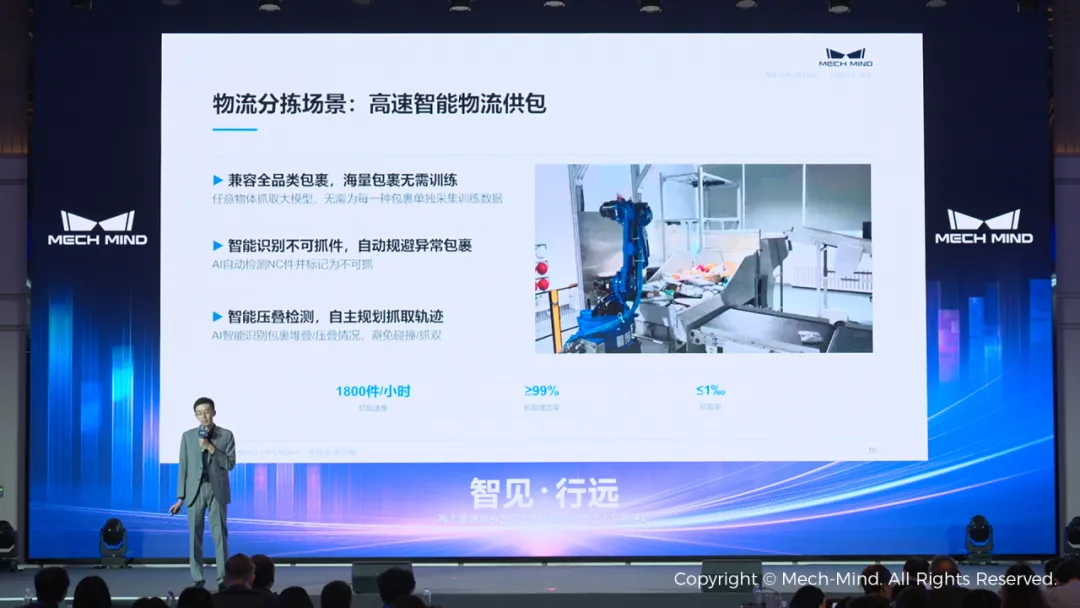
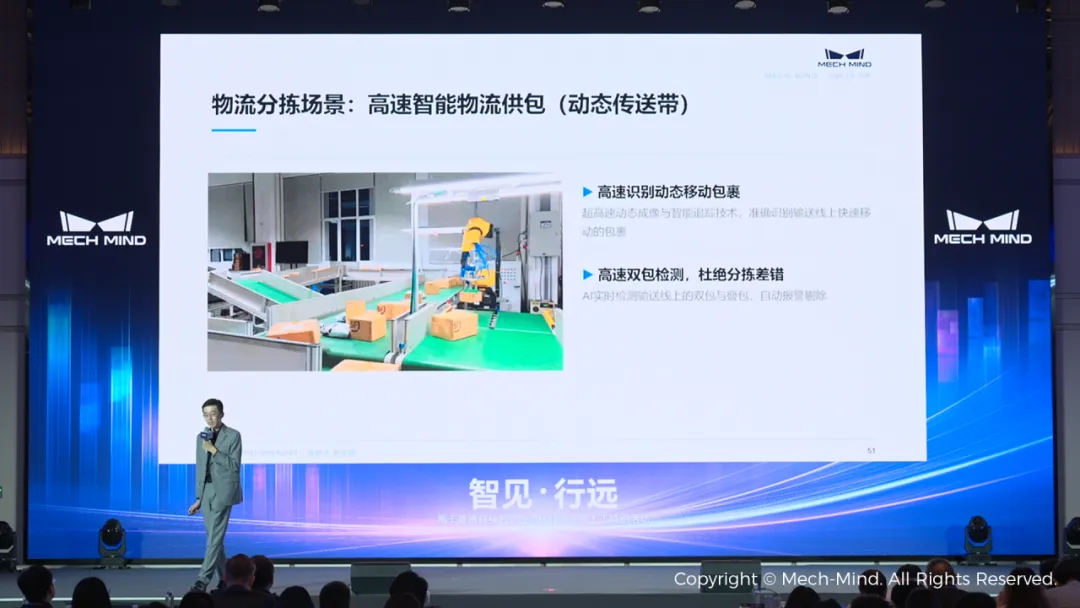
At the summit, McCamand also showcased the latest developments in the system. Mech-GPT, World Action Model, Mech-DLK and intelligent simulation capabilities continue to evolve to make model training, effectiveness verification and on-site deployment simpler and more efficient; Mech-Hand, the third-generation Mech-Hand, further improves life expectancy and flexibility; Mech-Eye, multiple Mech-Eye 3D cameras and wired laser turbines that measure products, continue to expand the perceptual boundaries of transparency, reflection, distance, extreme environments and precision manufacturing landscapes.
These technologies and products are not isolated functionality superimposed on each other, but are synchronized around real tasks: from seeing and understanding the physical world, to planning, executing and correcting feedback, and then turning field data into models and products to allow the same general capabilities to continue to be adapted to more robots and applications.
The prospects are wide
But you can't rush to profit.
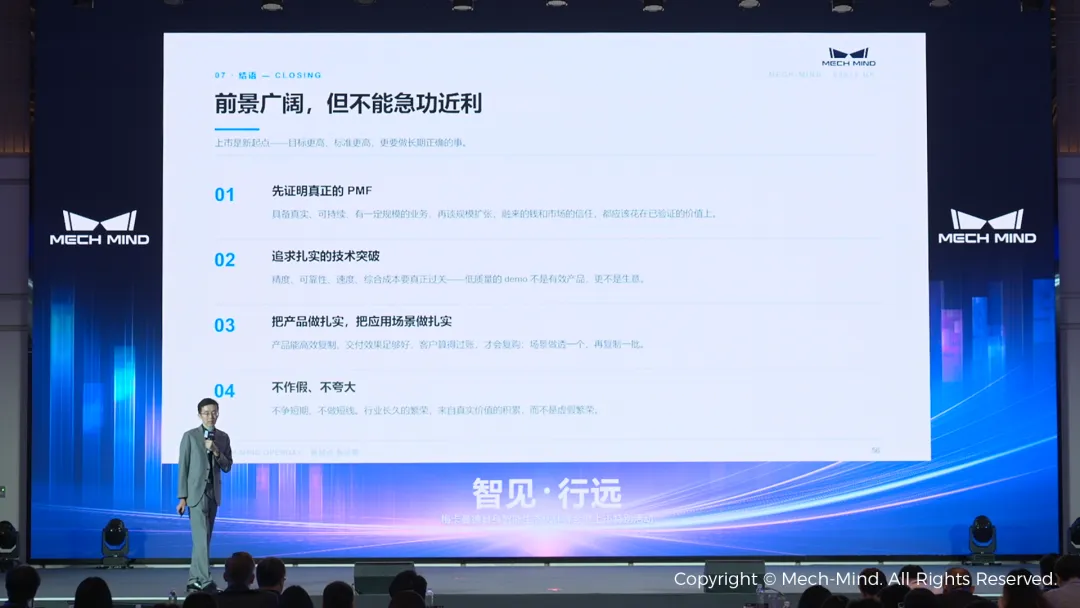
At the end of his speech, Tan Tanlan said that the prospects for physical intelligence are so broad that even if only a fraction of the demands in manufacturing and logistics are addressed, a huge market can be created. But the hotter the industry, the more it needs to stick to long-termism: pre-testing true, sustainable product market matching, then driving scale expansion; continuing to break through key technologies, consolidating product and application scenarios; not faking, not exaggerating, not pursuing short-term fake prosperity.
The launch brings a new platform and a greater responsibility. At a new starting point, McCandless will continue to focus on real customer value, perfecting its smart eye bracelet technology and product system, and bringing more real-world scenarios to smart robots that are available, reliable and replicable with global partners.
* Source: McCandless
The company is holding a billion-dollar order that lets AI do the job of plugging robots into a publicly-traded company: Who's fucked, how's fucked?