
“ Three routes, one sentence.
In September 2026, technological innovation completed the initial public offering advisory filing, adding a new seat to the IPOs table.
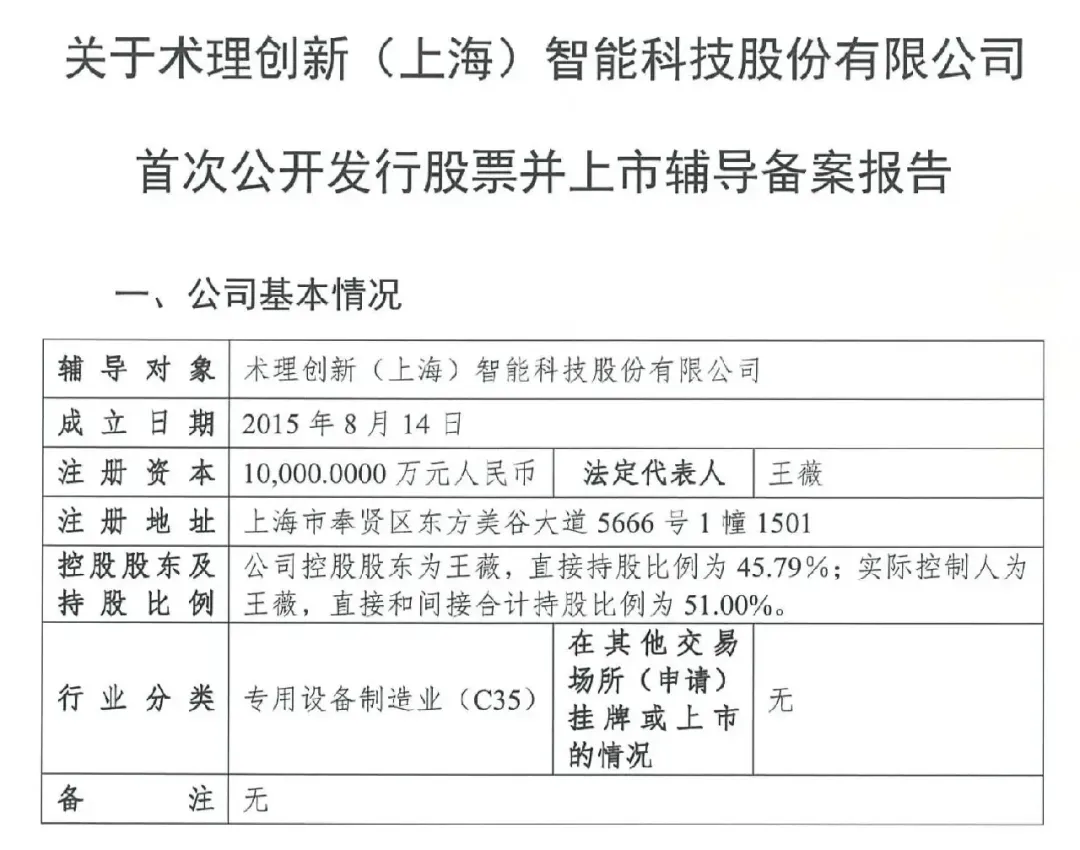
Prior to this, the initial public offering of Boriconco's startup was accepted, and StrongMindTech was exposed to the secret form of submission of a holding application. In just six and a half years, three enterprises with a brain interface entered the capital market in succession.
Who's going to be the number one player in the brain interface is still the focus of the industry. But behind the IPO rush, a more central question is emerging: what kind of brain interface companies are the capital markets paying for?
This problem has been overshadowed by technological breakthroughs over the past decade. Now, capital markets no longer accept advanced silicon technology as the only answer.
01.
The brain-machine interface starts to work, and the accounts start to work.
Over the past decade, the core question that has been addressed by the brain-machine interface industry is: Can brain signals be read?
The answer has become increasingly clear. From Neuralink promoting human experiments to domestic enterprises promoting the registration of medical devices, brain-machine interfaces are moving from scientific exploration to real applications.
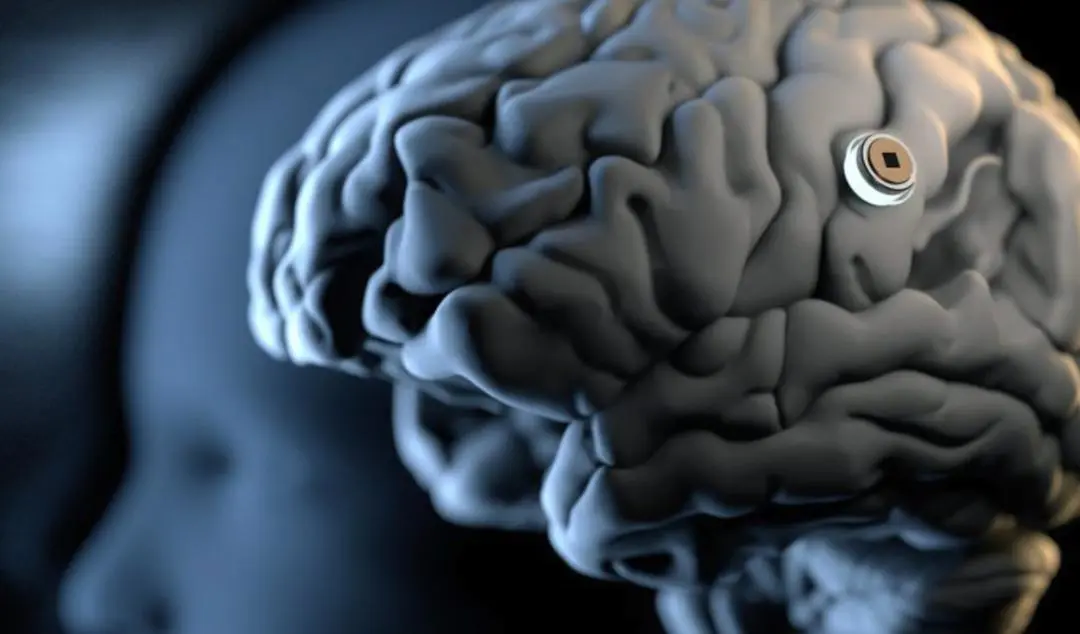
But after the technological breakthrough, the real difficulty in the industry has only just begun. Because the brain machine interface is not common hardware. It connects the human body, the medical system and long-term services. Even with advanced algorithms, a company must answer several real-world questions: why do hospitals buy? why do doctors use it? why do patients accept it? how does the payment system cover?
These issues determine whether a technology can enter the industry from the laboratory. This is why the focus of competition in the brain interface industry is changing. In the early days, enterprises competed with the number of electrode channels, signal collection capacity, and algorithmic accuracy.
Capital markets are helping the industry complete a screening: who has the strongest technological imagination and who has the ability to truly land?
From this point of view, Boricon, technical innovation, and strong brain technology are actually answering the same question: How do brain-machine interfaces move from technological breakthroughs to business closures?
02.
Get to the hospital and find a clinical admission
At a time when many companies are betting on higher channels and stronger signals, the innovation of the newest IPOs is focused on another question: how does the brain interface really get to the hospital?
Rehabilitation is the first landing point of its choice.
Founded in 2015, Technik Innovations focuses on non-invasive brain-machine interfaces. Its main product focuses on the rehabilitation of motor dysfunction caused by strokes, brain injuries, and other disorders through the collection of brain electrical signals from patients, identification of motor intentions, and auxiliary training of equipment such as extraosteum drive.
Simply put, it's not about trying to give healthy people superpowers, but about helping people who have lost some of their mobility re-establish connections between their brains and their bodies.
From a technical point of view, this route is not the most advanced. But from an industrial point of view, it has a real advantage: demand already exists.
The number of stroke patients in China is over 28 million, and there are still a large number of new cases every year, with a significant proportion of patients with motor dysfunction requiring long-term rehabilitation treatment. For brain machine interfaces, rehabilitation is a natural business entrance for stroke patients. Clear medical needs, stable medical conditions, mature hospital systems, and payment pathways are being explored.
And the path of technological innovation is not just to find an easy-to-follow application scenario. Hospitals are both an application scenario and could be a data entry point.
Unlike conventional electronic devices, brain machine interfaces are faced with highly individualized brains. Age, disease status, and brain area differences affect the performance of neural signals. This means that the core of future business competition may not be just hardware parameters, but who can continue to accumulate real patient data and continually optimize algorithms and products through clinical feedback.
03.
The first step towards commercialization is to register the head certificates.
If technological innovation represents clinical in-depth cultivation, then Boricon represents another path: technological highs.
In March 2026, the NEO-ONE SCI implanted brain-machine interface system, developed independently by Boricon, was approved by the National Drug Enforcement Administration (NDA), becoming the world's first commercially approved invasive brain-machine interface medical device.
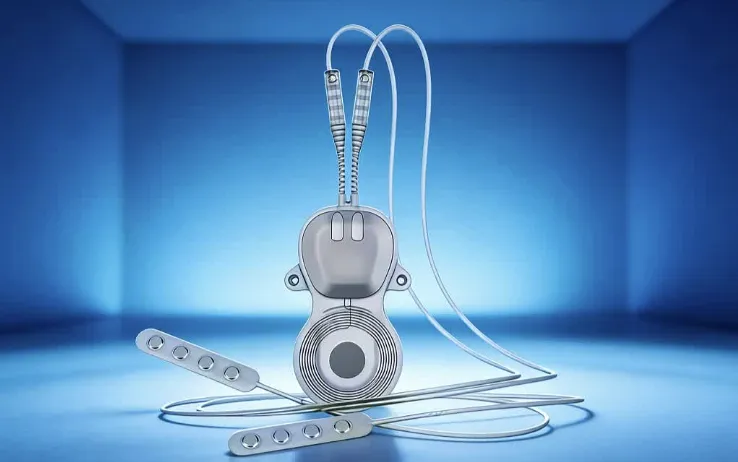
The significance of this registration certificate is obvious. It means that invasive brain-machine interfaces actually enter the medical device system for the first time.
But for Boryo, getting certification is just the beginning of commercialization.
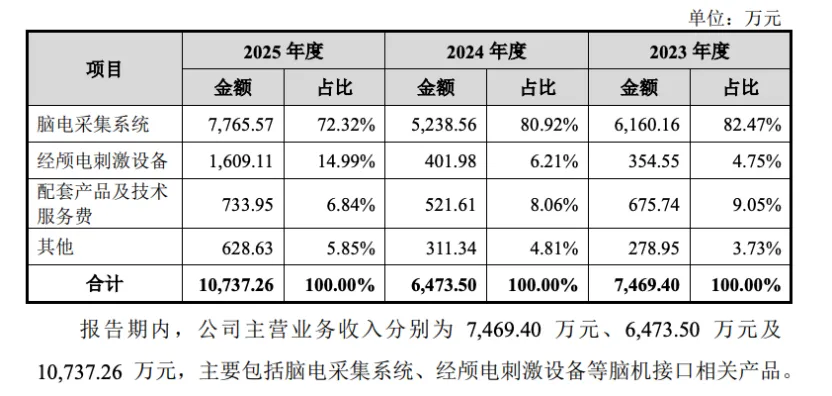
According to the disclosure, Boricon's current revenue is still mainly from traditional brain products. In 2025, the company achieved an operating income of about 108 million yuan, and brain collection systems are still the main source of revenue, accounting for more than 70 percent. While representing future invasion products in the imaginary space, it has not yet made a revenue contribution. Boricon also suggested in the book of shares that the company's future profitability will still depend on the growth in sales of existing products, as well as progress in research, development, registration and commercialization of products.
As a result, a certificate of registration can prove that a product can enter the healthcare system but cannot create a market automatically.
The real test for invasive brain-machine interfaces is just beginning: how to get technology into hospitals, into clinical processes, and ultimately form a sustainable business cycle.
04.
Leave the hospital and target a bigger market
Unlike Boricon and technical innovations, strong brain technology attempts to answer another question: Is it possible for brain-machine interfaces to get out of hospitals and become the new entrance to human interaction with smart devices?
Strong Brain Technology, founded in Hangzhou in 2015 by Dr. Hanbi Liu, of the Center for Brain Sciences at Harvard University, focuses on non-invasive brain machine interfaces. Its products cover intelligent simulated hands, simulated legs, and smart hands. Neural-control prostheses are the company's most representative exploration.
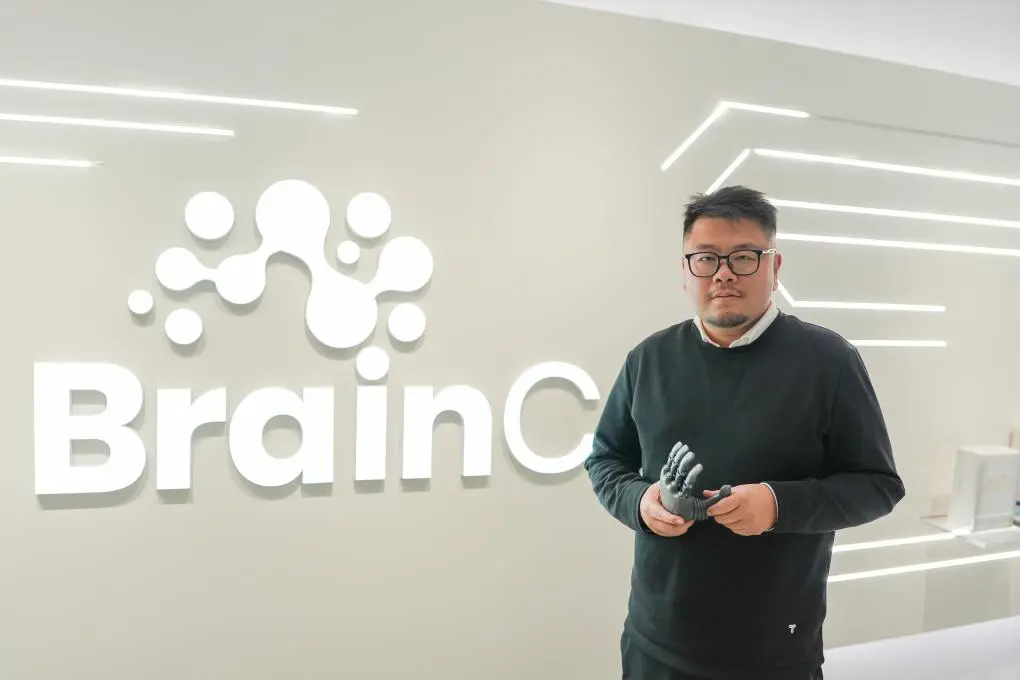
Traditional prosthetics rely primarily on the control of myopic electromagnetic signals, while brain-machine interfaces want to further read the user's intent for brain movement, making the device control more natural.
In January 2026, the company completed about 2 billion yuan in financing, with the participation of industrial giants such as IDG Capital and Warden International, and Bluetooth Technology, to create the largest single financing record in the field of brain machine interfaces in China.
In the eyes of these industrial capitalists, it is not only the technology of brain-machine interfaces itself, but also the capacity to manufacture at scale in the future. If brain-machine interfaces need to enter the domestic scene in large numbers in the future, then the supply chain, cost control and production capacity will be key.
Strong brain technology is betting that brain machine interfaces will eventually be used by more ordinary users like smart hardware.
In early 2026, Strong Brain Technologies was exposed to a confidential IPO filing that could raise hundreds of millions of dollars. If successful, it would likely become the first company to be listed on the Hong Kong Stock Exchange.
05.
It's only just the beginning.
Putting technological innovation, Boricon, and strong brain technology together, you will see a significant change: the brain-machine interface industry is forming three business lines.
Boricon is a pioneer in betting technology, opening up a high-value medical market. Strong brain technology betting scale manufacturing, making brain machine interfaces accessible to the general public.
The three companies are actually answering the same question: what kind of product will brain-computer interfaces be in the future? a high-value medical device? a rehabilitation treatment program? or the next generation of smart hardware?
There are currently no standard answers.
However, it is certain that the first stock is only a point in time. It can only prove that companies enter the capital market, it cannot prove that the industry is mature. It really determines the future of the brain machine interface, who can complete the complete cycle from technology, products, clinical to commercialisation.