
“ In order to tackle complex cases internally and externally, global hypotheses can be adapted.
If only one standard joint replacement was done, the answer might be high enough accuracy to run the process.
But when a patient's skeletal structure has deviated from the standard answer, even when accompanied by severe conjunctivitis, insufficient bone mass, or undergoing reconstructive surgery, the situation becomes much more complicated. Preoperative planning, where the prosthetics are placed, how many bones are cut, and how the lines of restoration and soft tissue balance are balanced cannot simply be used with fixed parameters.
That's what makes surgical robots really difficult.
The 12th Annual Academic Meeting of the Asian Association of Artificial Joints (ASIA 2026) was held in Hainan, China from 10 to 12 September. The conference brought together more than 100 experts from 23 countries and regions including Vietnam, Indonesia, Russia, Malaysia, South Korea, China and other countries to discuss complex knee replacements and robotic assisted rehabilitation.

At the Asian Joint Surgery Conference, AI placed the robotics of Bone Surgery in three different scenarios: live surgical broadcasts, hands-on workshops, and a satellite conference on complex cases.
Putting these links together, you'll see a clear signal: the complex case applications that are already being advanced are being put more focused on Asian orthopaedic surgeons.
01.
A joint replacement takes complicated cases to the operating table
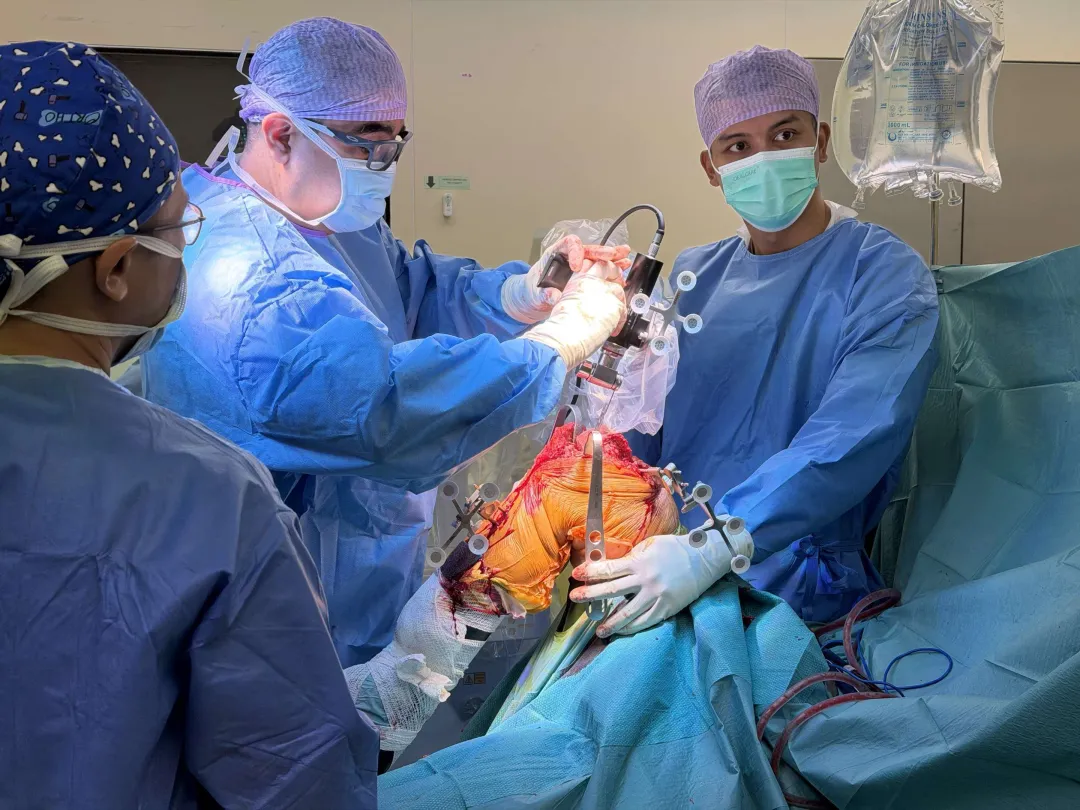
The live broadcast of the operation on September 10 is the most intuitive entry to the line.
The patient was a 66-year-old woman who had been suffering from right hip pain for several years. In 2023, she underwent surgery for developmental hip disorders and was advised not to undergo treatment.
In contrast to the common degenerative arthritis, an obvious feature of developmental arthritis is that the anatomical shape of the arthritis of the patient may be altered to varying degrees.
This also means that when it comes to the joint replacement stage, how to choose the prosthetic model, where to place the cup, and how to determine the angle, more emphasis is placed on planning for the patient's own anatomical conditions.
At the time, Dr. Hokawa, head of osteology at the Rikin Hospital of the Shanghai University of Transportation Medical School, was a professor of orthopedics. Prior to the surgery, Liu completed a three-dimensional reconstruction based on patient CT data, which determined the size, location and angle of the prosthetic; during the surgery, the navigation system continued to track the position of the bone and provide quantitative references for prosthetic implants.
In patients with individual differences in this type of anatomical structure, the technique was to bring pre-operative individualized planning to the surgical stage more accurately.
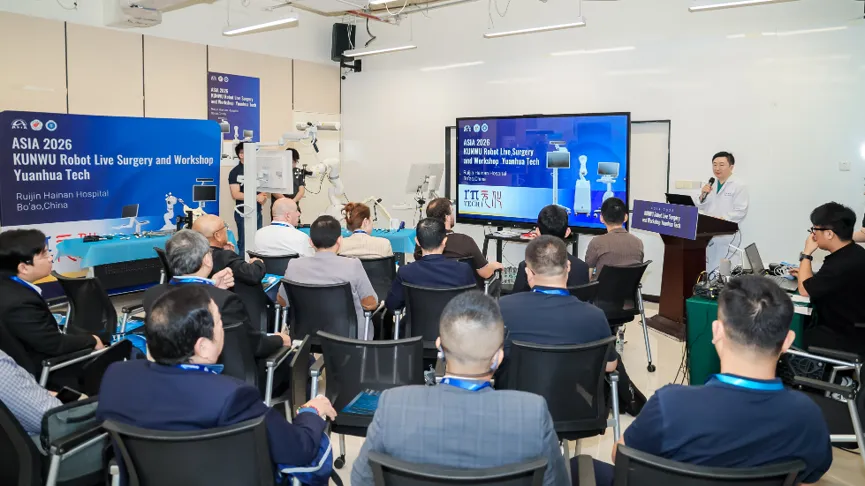
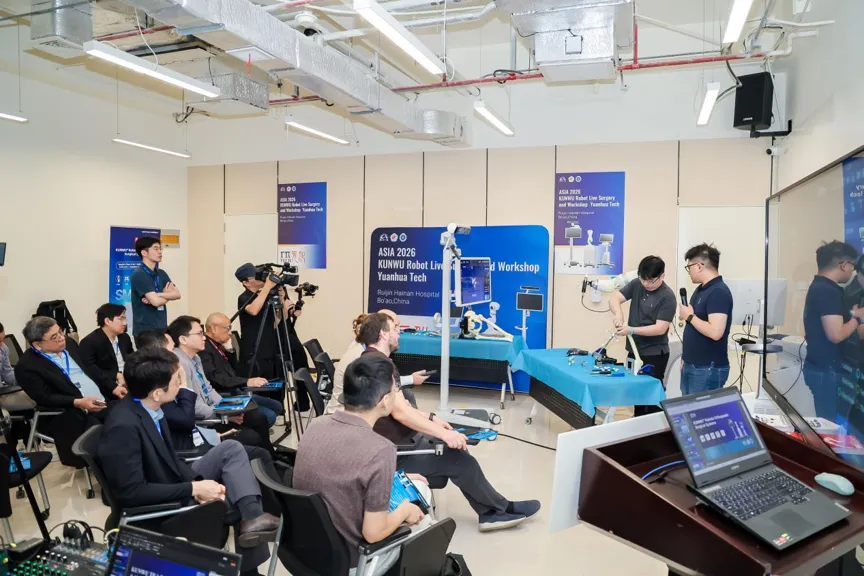
In addition to the surgical demonstration, the site also set up a hands-on robotics practice workshop. Physicians can further access core processes such as pre-surgery planning, navigation registration and mechanical arm operation, bringing the systemic capabilities seen in previous live surgical broadcasts to the actual operating level.
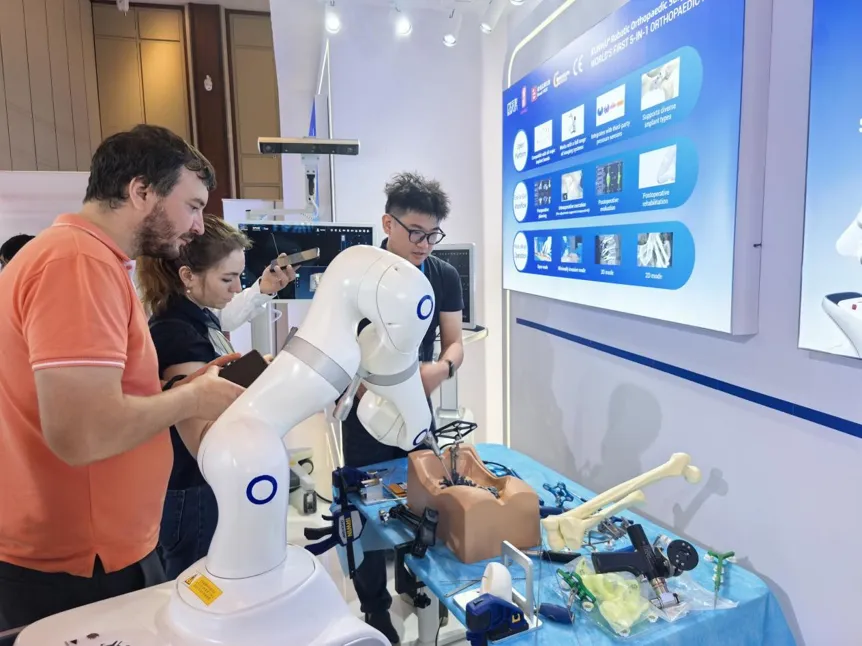
This is not the first time that zinc has been used in complex anatomically complex joint replacement cases. It has previously been used in cases of long-term hip bone fractures that have caused significant changes in the structure of zinc joints, as well as cases of severe bending and convulsive fusion of the knee joint.
Therefore, on September 10, the operation was more like a series of demonstrations of the clinical applications of differential intelligence. The next day, this complex case application was further written into the satellite conference program.
02.
From complicated kneeling to renovation, kneeling enters more difficult scenes
The 11 September satellite conference was co-hosted by G. Ruslan Nazaruddin Simanjuntak, chairman of the Malaysian Society of Knee Surgeons, ALTY Orthopaedic Hospital joint replacement expert, and Prof. Zhang Juntak, Army Medical College New Bridge Hospital. The latter focused on robotic assisted joint replacement, which was involved in robotic assisted TKA and its learning curve research in the early days of clinical exploration of domestic orthopaedic robots.

Complex Cases Unlocked: redefining the clinical possibilities of complex cases with a new generation of fusion orthopaedic surgical systems.
Both reports revolve around complicated cases of polio.
KUNWU-Assisted Complex Hip, Knee, and Revision Arthroplasty therapy, developed by Prof. Tsai Wei, General Hospital of the People's Liberation Army of China, focuses on the use of arthroplasty in complex hip joints, complex knee joints, and reconstructive joint replacements;

Professor Hokawa, affiliated with the University of Shanghai Transportation Medical School, Rykin Hospital, discusses the application of robotic assisted knee replacement in complex cases with a thesis titled The Application of Robot-Assisted TKA in Complex Cases.

Looking at the two themes together, the focus is very clear: Differential intelligence has been shown not only to cover which techniques, but in the already entered joint replacement scenario, the same set of planning, navigation and execution capabilities can continue to cope with more complex patient conditions.
Behind this is the foundation on which the knee joint has been formed. Currently, the system covers the entire knee replacement, the entire knee joint replacement, the single knee replacement, the spine and the five types of trauma.
In other words, the five-by-one answer is a set of systems that can cover how many surgeries; and this time, ASIA 2026 from live cases to satellite conference topics, the complex case arrays are starting to be placed in a more reliable position.
03.
From the first to the 60th, the monkeys really got off the ground overseas.
For a surgical robot that will eventually fall into clinical use, complex cases are only part of the boundary of capability. Another more realistic question is: can it continue to be used outside the familiar domestic hospital system?
In addition to ASIA 2026, another group of more direct advances are taking place overseas.
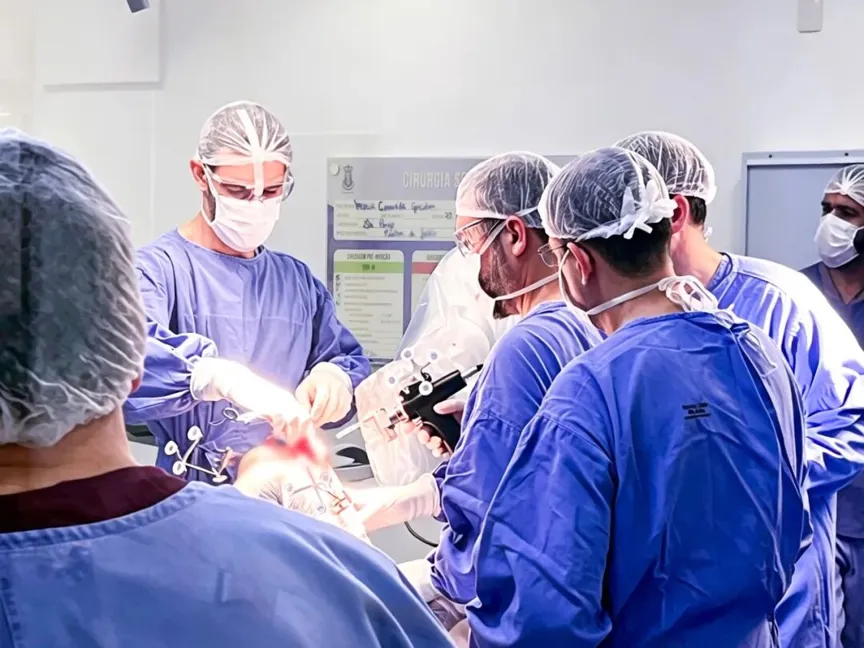
At the end of May, Liu completed her first local clinical surgery in Brazil. A 73-year-old female patient underwent a robotic-assisted knee replacement, and more importantly, the surgery was not a Chinese-supported prosthetic, but a Brazilian prosthetic.
This means that after entering a new overseas hospital, it is not necessary to change a doctor's habit of using the original prosthetics, but rather to adapt it to a system that already exists locally.
This feature was subsequently further verified in Malaysia.
As of the beginning of September, 21 surgeries had been completed in over 60 days following the completion of the local autopsy in July this year. The 21 surgeries used the same international branded fake that was already in use by local doctors, and were not tied to a particular supporting product.
According to the latest information provided by Diversified Smart, the cumulative number of plastic surgeries in Brazil and Malaysia has reached 60.
From Brazil's first stage to Malaysia with 21 in a row and a cumulative total of 60, the conclusion of this pathway is clear: domestic orthopedic surgical robots go offshore, no longer relying on the model of plastic robots + domestic prosthetics packaging out of the sea, but can be directly embedded in the original orthopedic systems and surgical practices of local hospitals.
The first surgery solved the problem of not being able to access local hospital beds; and when surgeries continued to accumulate, what really proved to be the system's ability to be applied sustainably clinically under different patients, different prosthetics and different hospital processes.
This is also a real step forward for cross-border landings in terms of diversified intelligence.
04.
The next step for osteopathic surgery robots is not just precision
If you only look at ASIA 2026, a live surgical broadcast, a workshop and a satellite conference will be the culmination of AI. But if you look at the progress made over the past few months, you've reached a much more observed stage.
On the one hand, more complex joint replacement scenarios such as developmental abnormalities, severe deformities and renovations are tested to see if the "Five-One" system can cover more difficult patient conditions under the same set of planning, navigation and execution capabilities; on the other hand, from the first in Brazil, the first in Malaysia, to two overseas markets with a cumulative of 60 surgeries, the test is whether the system can continue to be used after leaving the domestic hospital system.
The two lines, which seem to be different, are actually answering the same question: what kind of cases, what kind of hospitals, and what kind of medical system can an orthopaedic surgery robot bring to when it completes a precise surgery?
Sub-millimeter accuracy can be demonstrated by parameters, and a demonstration surgery can also be concentrated. But when osteopathic surgery robots began to enter more complex patients, adapt to different hypotheses, and continue to be used in overseas hospitals, they showed not only single-surgery capabilities, but more complete clinical adaptability.
Of course, the long-term benefits of complex cases still require more clinical data, and 60 overseas surgeries are far from being able to demonstrate the scale of commercial success.
This is also a key step for domestic orthopedic surgical robots to move from a single-point breakthrough technology to a silicon system-level clinical capability model.