It's the first time in the history of the world.
In the first half of 2026, the smart racetrack craze has exceeded 46 billion yuan in financing, and the single price of humanoid robots has officially entered the "under 10,000 yuan" threshold.
Every few weeks there's a new robot demo all over the web. But behind that, the entire industry collides with an invisible wall: real-world data is too expensive, too slow, and it's basically "unstoppable".
How did you break up?
A recent cutting-edge test yielded an exciting set of data: in complex operations, using simulation data that is five times the size of real machine data to train, directly improving the real-world success rate of robots by 40%, while the cost of obtaining it is only one-third of real machine data.
This set of data reveals an increasingly clear consensus among the industry.
If we go to the GPT moment of physical AI, the demand for data will exceed the two to three levels of quantity of the large model.
The good news is that the domestic blackhorse "Village Technology", which is firmly on this path, has already made key breakthroughs in underlying technology.
They succeeded in reducing the cost of producing a single simulation scene from hundreds of dollars to less than ten dollars, and the production cycle was shortened directly from the "week-level" to the "minute level".
However, after the acceleration of environmental production, a more critical issue has just emerged.
From "generating available simulation environments" to "training deployable robotics strategies", there is still a whole network of technical links that need to be worked out.
This is also the direction in which virtual technology is advancing.
In May this year, the company launched AnySceneGen in conjunction with Pepper Robot, which promotes the large-scale production of simulation scenes and assets.
Based on this, Virtual Technology will further extend its R&D to automated task execution, interactive data collection, closed-circuit analysis, end-to-end model training and deployment.
In recent years, the company has launched new developments in finance and core team.
In the last two months, the company has completed its angel rounds and angel+ rounds of financing, totaling tens of millions of yuan.
At the same time, Dr. Ho-Swimming, the former head of human-computer algorithms, officially joined as CTO.
Behind these advances is the increasingly clear technology and product layout of real-time technology: through the self-developed IntimeVerse simulation training system, scene generation, physical properties alignment, automated task execution, large-scale data acquisition, training evaluation and end-to-end deployment, connecting the issues exposed in real-world tasks to feedback for the next round of data production and strategy training.
Competition for physical intelligence is expanding to training infrastructure along the lines of model and body.
On a race track dominated by corporate bodies and brains, time-lapse technology betting is something that hasn't erupted yet, but it's about to happen sooner or later with simulated data and training systems, solving the last mile between "doing a demo" and "doing a real thing".
Top talent in the fieldAll In is a simulated startup.Dr. Ho-Swimming's participation is one of the strongest signals that virtual technology has released.
Around the need for synergies between the production of models with physical intelligence, robotic learning and control, founder and CEO Wang Deung assembled a core team of academics, engineers and landers that complement each other closely.
Dr. Wang served as the head of Amazon's Alexa Big Model Technology, leading the free-time team to advance the Code-to-Space technology route, building editable, interactive, and physically-enabled 3D assets and simulation spaces.
The newly appointed CTO is Dr. Ho Swimming, from the Institute of Automation of the Chinese Academy of Sciences, and before joining Virtual Technology, he was the head of the Guwahati Robot-Body Intelligent Algorithm, responsible for the research and development of the entire chain from simulation data generation, VLA/VA model design, to the construction of real machine data infrastructure and end-to-end deployment, published more than 30 papers in top international academic conferences and journals such as ECCV, CVPR, ICRA, IROS, and holds more than 10 patents.
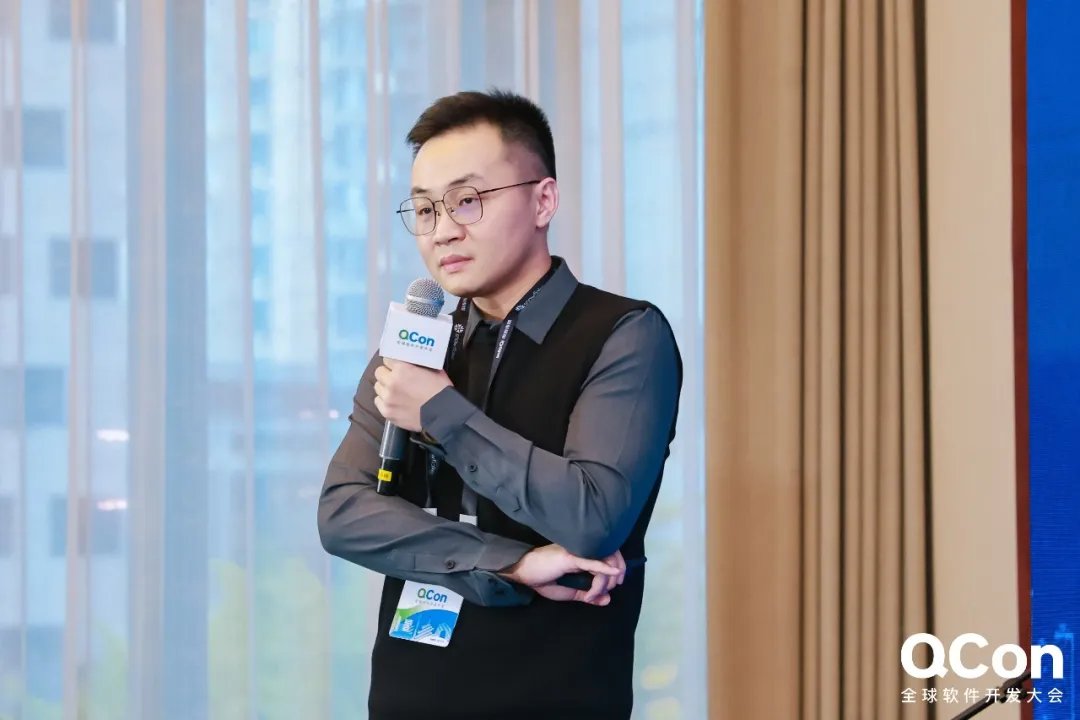
Newly appointed CTO of Virtual Technology Swimming
A long-time investor interested in physical intelligence told Xinhua: "Hoo Swimming is a firm simulation company, one of the few in the industry with both data generation, model training and edge deployment expertise, with an in-depth understanding and practice of the entire chain of simulation training".
On the robotic perception and control side, the team introduces Suzhou, a leading scientist with a deep academic background and extensive experience in industrial settings.
Suzhou is an associate professor at the Institute of Automation of the Chinese Academy of Sciences, with a long career in control science, computer vision, artificial intelligence, and machine learning theory, covering perception, decision making, and control.
Its related research is one of the industry's earliest representative achievements in creating interactive simulations of scenes and synthesizing robot-operated data through text or single images.
To date, the three core technology members each have a distinct technical longboard to form a complementary system covering key links.
Academic research, model engineering and real-machine practice are closely linked together to support a technical closure that covers "simulation space-generating simulation task data collection, simulation operating model training, simulation verification and feedback".
Why betting on fakesBeyond the scale of the data, there is also the efficiency of iteration.Why choose an all-in-furniture simulation startup at a time when one of the top talents in deep-furniture algorithms is at the top?
It is the ability to determine the speed of development: allowing data production to keep pace with model iteration.
Today, Ego data has become an important source of data for people with physical intelligence, thanks to the flexibility of its collection, wide scope, but there are still three barriers from collection to training.
First, efficiency is dependent on manpower and time.
By collecting 10 hours per day, 30% of which is available as an example, a person can only contribute 3 hours of effective data per day. To expand output, it is necessary to continuously increase the input of people, equipment and organizations. This pathway can be extended, but is always a linear solution.
Second, the model is changing and the data requirements are changing.
The concept of a swimming pool will shorten the current state of physical intelligence, comparable to that of autonomous driving, to the stage prior to the end-to-end program: routes are parallel, the paradigm is undefined.
From VLA to WAM, different schemes have different requirements for observation frequencies, resolutions, motion representations and perceptual patterns.
As an example of the real-time edge-side model being developed by real-time technology, precision operations require 60Hz and high-resolution inputs. Data previously collected at 10Hz with low-resolution requirements cannot be replenished with unrecorded details.
An iteration of the model may lead to a new round of acquisition needs. The earlier the data accumulates, the more it is necessary to consider whether it can support subsequent changes.
Thirdly, human beings demonstrate thatThe robotsThere's still a distance to the action.
Ego data records behaviour from a human perspective. It is translated into actions that can be performed by robots, requiring gesture estimation and physical mapping. Detailed operations aimed at intensive contact, visual-based collection schemes, and critical information such as sensation, touch, etc. are required.
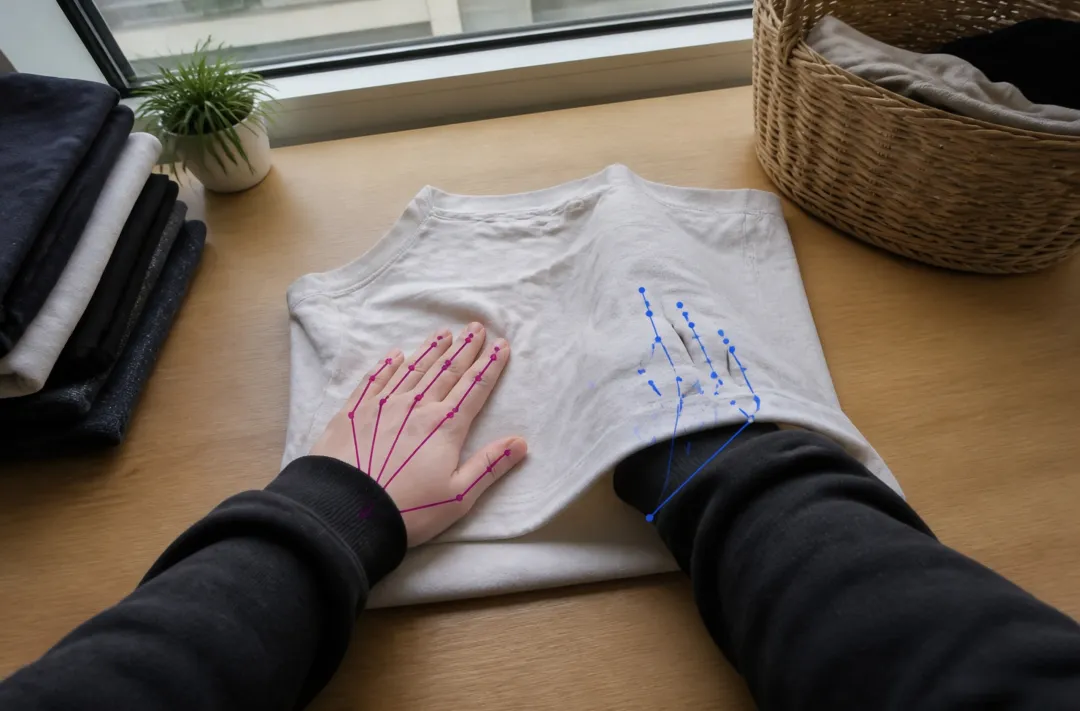
Ego data is difficult to accurately estimate gestures (especially in the presence of shadows).
These three nodes point to the core values of simulation: supporting the exponential growth of data size, providing accurate and multi-form operational information that enables data to fit the needs of different training paradigms.
Models require a higher collection frequency, a new camera perspective, or a different robot configuration to adjust configuration, complete adaptation, and reorganize collection in an existing environment. Simulation can also directly record the state of objects in the environment, track movement and contact information, and reduce dependence on after-event estimates and labeling.
Once the process is run, the capacity can be expanded in parallel with the computation; the already established environment can also continue to serve the next round of training. The model continues to evolve, and the initial inputs are accumulated and replicated.
And data production and verification of effects must be advanced simultaneously. In real-time technology, physical parameter recognition, real-time data alignment and task-level evaluation are integrated into the same process.
It's a waste of time.TechnologyBet on the underlying logic of simulation: both to scale production data, to respond quickly to model changes, and to continually verifyThe robotsIt's a great way to improve your skills.
Sim2Real Gap: the obstacleWhat are the parameters that can be crossed?When it comes to simulation, there must be a sharp question in the industry: can the Gap of Sim-to-Real (simulation to reality) be crossed?
In response, Wang Deong, CEO of Virtual Technology, started from the principle of primacy by breaking the problem into two layers:First learn the common laws of the physical world and then adapt the parametric differences to the specific environment。
He used the Earth and the Moon as an analogy.
"The gravity of the Earth and the Moon is different, but it follows the same physical laws".
"People climb the moon without having to re-learn to walk, and if they adjust their pace and energy, they can gradually adapt to the new gravitational environment". Wang explained, "Models need to learn the framework in which the physical world operates, not the precise values of each parameter".
In his view, this is highly consistent with the development of the big model.
Early training data was full of impurities, but because the data was large enough, the model learned the underlying framework.
Similarly, the visual simulation Gap is almost flattened, and the physical interaction simulation Gap is parametrically biased. It can be rapidly calibrated using a small amount of real-machine data, or RSI, to return to self-evolution.
Models can adjust strategies based on existing capabilities, applying the laws learned in simulation to real-world environments.
According to Wang, if the amount of data is large enough, within the next one to two years, the industry will be at a turning point in emulating data-driven intelligence.
IntimeVerseLet the scene, the data and the model form a closed loopMany people have a misconception that since it's a simulation, "creating data" should be done quickly.
This is not the case at all.
Traditional processes require models to manually build assets, lay out scenarios, and then simulate engineers to match physical parameters.
Producing a 100-square-meter simulation takes one to two weeks.
Each additional scenario variable, even if the asset is recycled, requires artificial alignment, parameterization, verification interaction, and linear increase in production costs.
It's just the first step in setting the scene right.
If subsequent data collection relies on man-made remote operation, the operator will also need to control the robot in a simulation environment, complete the task once, retrieve the trajectory, reposition and retry after failure.
Every effective data is backed by real human and time investments.
From the creation of environments to the collection of task data, the production of simulated data itself has remained in the "hands-on workshop" era, which is the real bottleneck of its slow and scalable application.
The IntimeVerse platform, built by Virtual Technology, is designed to break this bottleneck.
It contains four core modules:
Code2Space ((code-driven generated): single-scene cost fromHundreds of peopleThe U.S. dollar fell to10US DollarIt's inside.
Real-time technology directly generates underlying code through self-developed models, which are automatically mapped to complete 3D simulation scenarios with physical properties.
There is a key insight behind this: the process of human construction and use of space itself involves a set of abstract structural logic that can be broken down.
Wang Deong called it the "Chain of Modeling of spatial intelligence".
Code this set of logic, and then oversee learning, reinforcement learning and feedback, train models to output executable code, generate 3D assets and scenarios.
The code can be used to output natural variables that can be precisely controlled, to change the size of objects, combinations and spatial layouts, and to extend different conditions for the same task.
Asset2Physics: generating Sim-ready assets
To enter interactive training, all assets in simulation scenarios need to have reasonable quality, weight, inertia, friction and collision properties.
Real-time technology uses an interactive, micro-recognisable system to drive, pressure, and observe the reactions of active assets and environmental interactions in a simulation, and then, through gradient reversal, to adjust the physical parameters so that the physical behavior in the simulation is infinitely closer to reality.
In the words of the swimmer, "not 3D labeling, but interactive compilation of objects into simulated matter".
The physical calibration of a single asset can also be achieved on a minute scale, with the appearance and physical accuracy of the asset exceeding 95%.
Space2Data: Automated missionsDiscoveredWith numbers: the largest card point of the scale of the attack.
With simulation assets and scenarios, the next question is who is "active" in this simulation scenario?
It's back to the old linear way of using human-powered remote control.
The third core module, Space2Data, is an industry map of "automated acquisition".
Currently, the company's self-development program has implemented automated simulation numbers, which include two paths for automatic detection of known standardized tasks and unknown tasks.
Through perception, planning and action execution, as well as state monitoring, failure detection and replanning, the interaction process is organized into traceable trajectory data. Failure samples can also be used to locate inadequately covered environmental conditions and action links to guide the next round of collection.
The trajectory of success and failure is maintained, and the better the data is, the better the aircraft is.
Currently, the system has more than 90 percent success rate in simulation tasks, and the single RTX 4090 graphics card has more than five hours of daily output.
Data2Edge: Connect strategy training, evaluation and end-to-end deployment.
The ability to generate scenarios, calibrate physics, automatically collect, and simulate data in real-time technology has been built into the "upstream" capability.
But to really solve the last kilometre of a robot's landing, the data is just the beginning, and the data generated into the strategic model training will also need to be simulated and evaluated, with a small amount of real machine data aligned and deployed on the edges.
The addition of the swimming pool completely complements the technical version of the current technology.
First, the end-to-end lightening of the real-time body brain.Currently, the mainstream VLA/WAM body models are designed to be extremely heavy, so they can't run on the edge, or they can only do 1Hz.
This means that robots can only make one decision per second, far below the requirements of real-time operations.
The IntimeBrain program, powered by Ho-Swimming, achieved 20Hz real-time operation on 100 TOPS-powered edge-side chips through innovative design at the model structure level, which is 20 times that of the mainstream program.
This will be the industry's first end-to-end brain to actually do this in real time and with no significantly reduced accuracy.
Second, the multi-modal simulation benchmark.Being physically intelligent is not only about "seeing", but also about "touching", "holding".
It is difficult to do fine-tuning operations that are guided only by vision and success rates are difficult to achieve. However, the success rate can be significantly improved after the induction of force modulation.
The problem is that force has always been bad in simulation, and real-world experiments cannot be replicated by third parties.
The Multi-Modality Sim Benchmark, which is being promoted by Swimmingpool, is to establish a fair benchmark for assessing visual and cognitive input in simulation.
Third, the deep advancement of simulated automated data collection.He has a strong emphasis on automation in simulation and has a long history of research.
At this point, the four modules form a complete linkage, achieving a truly closed loop.
This also responds to an idea that has been repeatedly emphasized in the past: that they offer a complete synthetic experience kit.
A set of closed-loop systems covering scene generation, physical alignment, automated collection, model training, simulation evaluation and edge deployment.
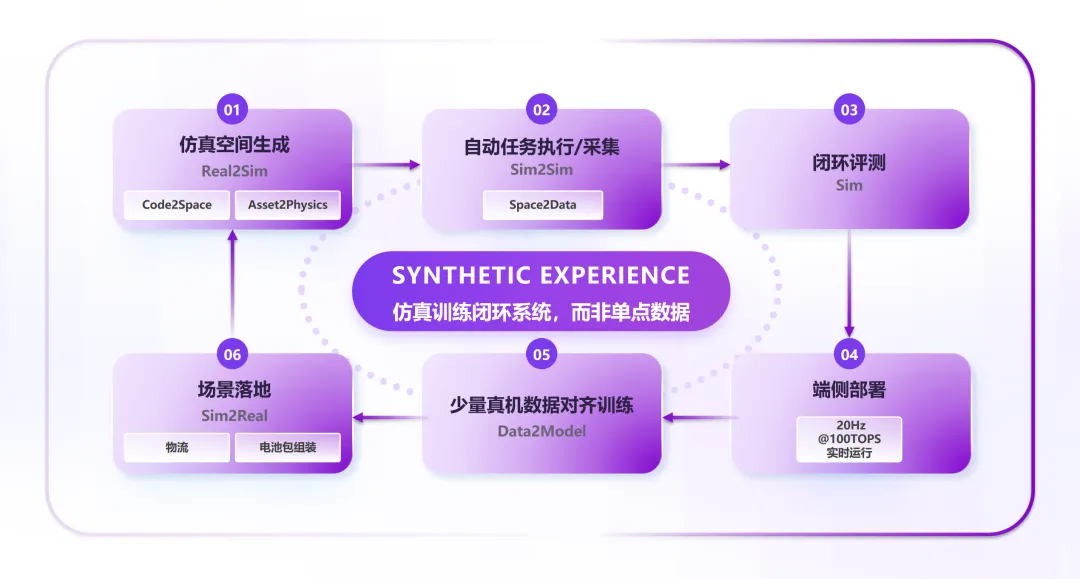 IntimeVerse: From scene generation to edge deployment, every step can be evaluated, counterfeited and continuously mutatedRejecting the "Great Pie"From manufacturing to business closure
With commercialization on the ground, vanity technology has chosen a highly pragmatic strategy: industrial manufacturing takes precedence.
Why don't you do the hottest thing in the capital, "Human robots do homework"?
"Physical AI and the physical world are directly linked, and the consequences of problems are much bigger and more intuitive than language models", explains Wang.
"The industrial landscape is relatively fixed, stable, with a high base of automation, and more suitable for testing and verification of new technologies. The home landscape involves more human-machine interaction and security issues and requires more mature technology".
He also emphasized one thing in particular: the value of being physically capable is not that the form is not like a person, but that it is capable of coping with complex situations and stably completing tasks.
Express delivery is a typical challenge: hard boxes, soft bags, disfigured parts are softly mixed, the quality and friction characteristics differ significantly, and packages continue to move, contact and disrupt each other.
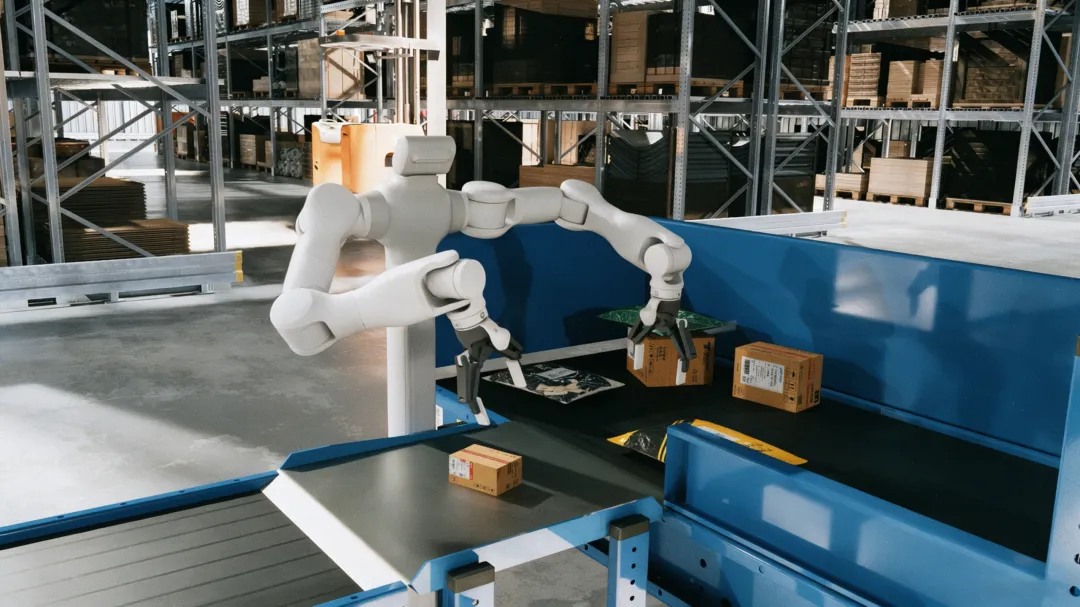
Logistics sorting scene: identifying packages, picking up and delivering packages
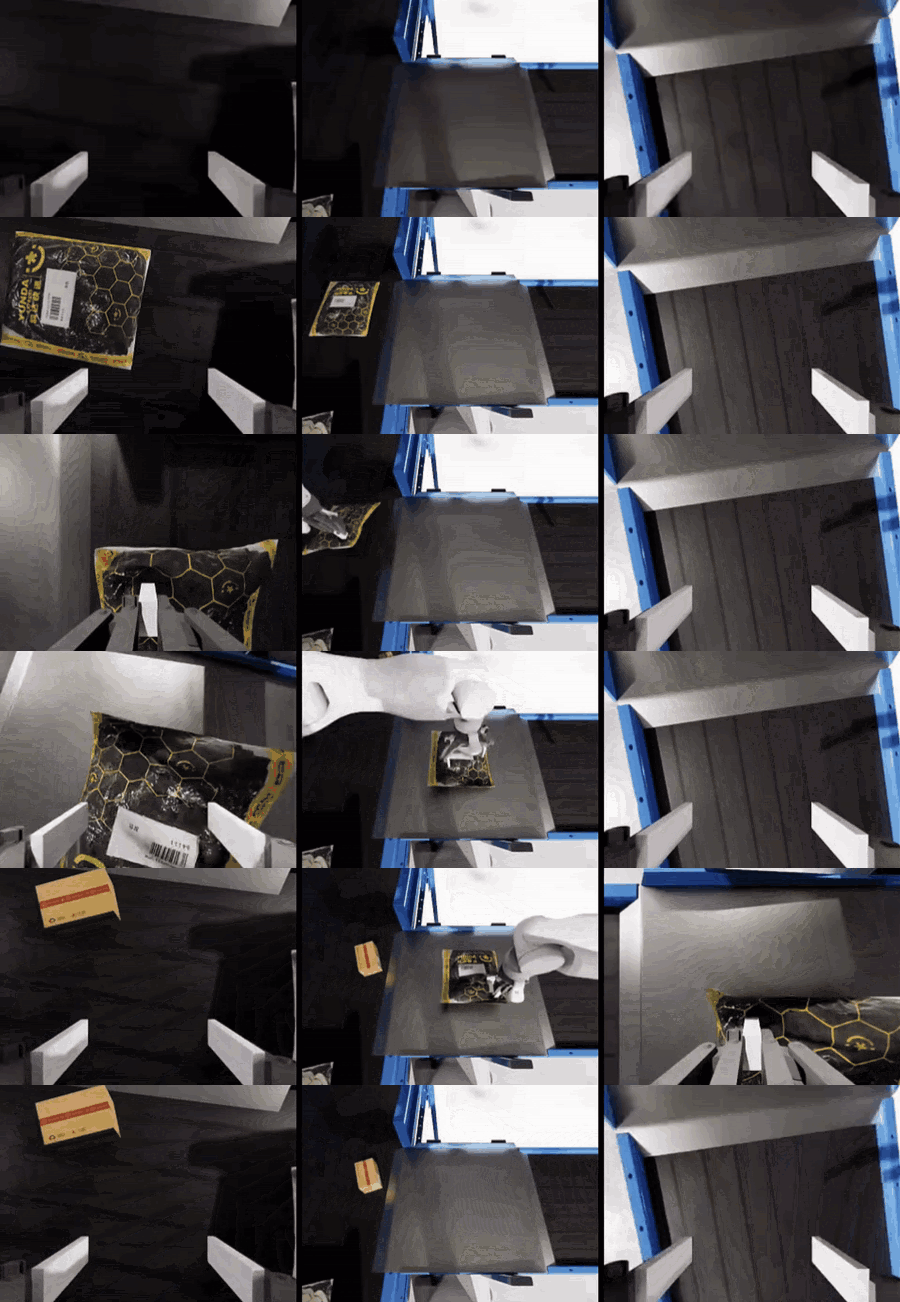
The left arm wrist angle, the head angle, the right arm wrist angle
This requires simulation systems to simultaneously process a variety of object shapes, physical properties, and dynamic interactions to provide an effective training environment for continuous operational tasks.
Around this scene, the company has completed the industry's first 100% simulation-based full-process delivery selection training program.
Orders to make "The Last Kilometer" more specificSimulation training capabilities in real-time have entered the customer project and delivery phase.
In terms of delivery packaging and battery packaging, the company is advancing scenario adaptation, training data production and strategy verification.
The former requires the processing of continuous movement, soft mixed packaging, and the latter involves precise contact with multi-step operation, with specific requirements for data quality, intrinsic adaptation and training effects.
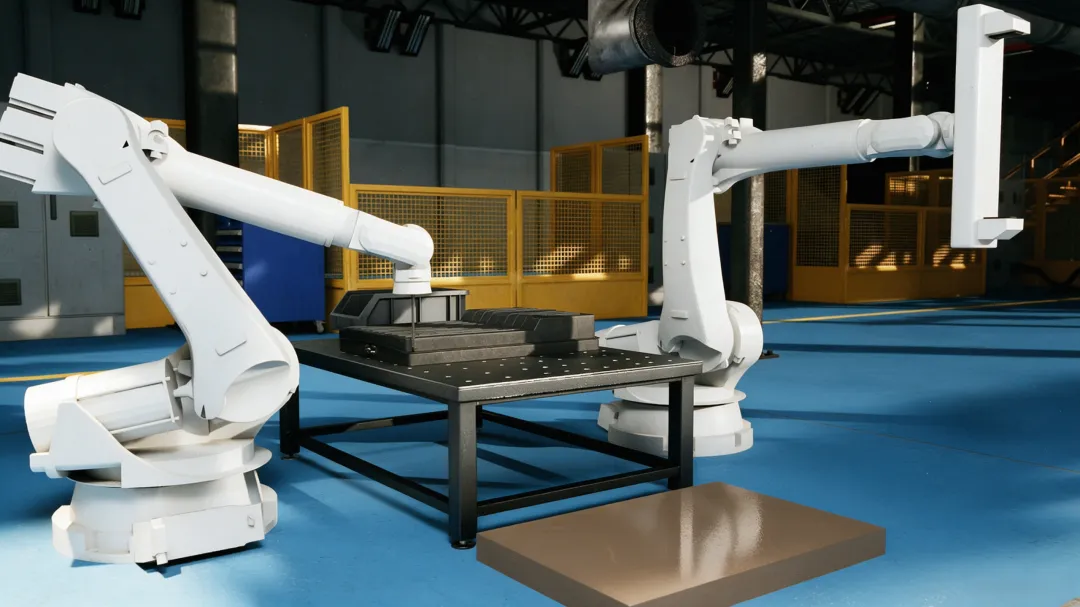
Industrial installation scene (battery pack): precise operation and long-term tasks
Left-arm wrist angle, right-arm wrist angle
Currently, the company is providing simulation training data and related services based on the demands of a new energy battery packaging company, while the company is also developing a simulation training data service for specific robot configurations and operations for a leading manufacturer of smart phones in Beijing.
As the project progresses, the client's tasks require access to the R&D process, the formation of scenarios, physical assets and mission libraries also continue to weaken, providing a reusable basis for the adaptation and delivery of subsequent projects.
When the whole industry is grabbing real-world data, what we see is the infrastructure gap between data supply and model generation.
In the blink of an eye, real-machine collection is essentially linearly expanded, while the demand for intelligent training data is growing exponentially; in this period of continuous expansion of supply and demand contradictions, the only way out is a simulation training system that continues to generate and evolve on demand.
From AnySceneGen to IntimeVerse, from space generation to customer delivery, this judgment is being implemented in products and orders.