It's the first time in the history of the world.
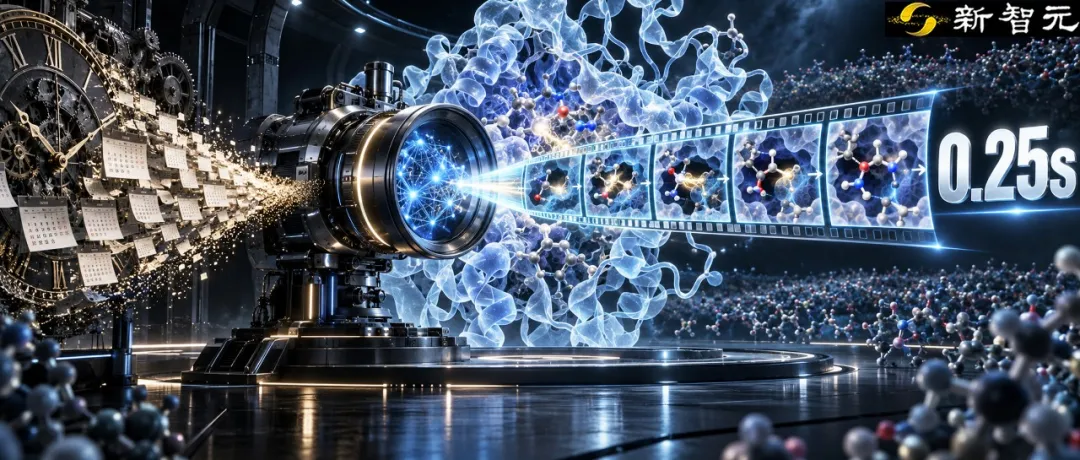
How long would it take to simulate the electronic structure and interactions of 100,000 atoms in a single chemical reaction with a computer? If, using traditional quantum chemistry, one step at a time, it takes theoretically about 13 million days, about 35600+ years, it is actually very difficult to execute. The reason is not very complicated. Simulation is one step forward, with each step advancing only 1 split-second, or one trillionth of a second; one step at a time can be used to recalculate the electronic structure and interactions of 100,000 atoms. This is just one step. Complete a complete reaction takes tens of millions or even millions of steps. Molecule Mind is an autonomously developed reactive machine learning field.QuantaMindWith an accuracy approaching DFT, at speeds comparable to classical molecular dynamics, the complete enzyme catalytic cycle was steadily simulated on the WAN-atomic level system, and the scale was pushed into internal industrial projects.One hundred thousand atoms per second.The paper was uploaded to the Science Advances website. The time it takes to simulate a single step of a 100,000 atomic-scale reaction system has been squeezed from the tens of millions of days of the traditional method to the tens of millions of days.0.25 seconds13 million days to 0.25 seconds, 4.5 trillion times faster, that's not optimization, it's a paradigm shift.Why is "reactive simulation" so difficult?In order to understand how hard it is to break through QuantaMind, we need to know where "reactive molecular dynamics" is. Conventional molecular dynamics (MD) can simulate how the molecular structure moves, folds, folds, and changes in structure.The binding relationship between atoms is predetermined and does not spontaneously break or form new chemical bonds.This means that conventional MD can tell you "how molecules move" but can't tell you "how reactions happen". Enzyme catalysis, proton transfer, changes in composition after couples, drug molecules and focus points are precisely the most critical mechanistic problems in research and development. To simulate these processes, reactive molecular dynamics is required: to allow AI to see the proton transfer, chemical breakdown and generation, and even complete catalytic cycles, on an atomic scale.First, the precision requirements are extremely high.Chemical reactions involve changes in the electron structure, and only quantum mechanical methods (such as DFT) can accurately describe binding and breaking bonds. However, the computational cost of DFT is O (N3) or even higher, and the system is slightly immobile.Second, time scales are extremely long.Many chemical reactions are rare occurrences in which self-dissociation may occur within a few nanoseconds, and the limiting steps of enzyme catalysis may take longer. To capture these events, the model must remain stable in a continuous spin of hundreds of thousands to millions of time steps, unable to run and "crash".Third, the scale of space is extremely demanding.Real biological systems consist of proteins, substrates, ions, and a large number of manifest water molecules, with tens of thousands or even hundreds of thousands of atoms in motion. The three dimensions of precision, time, and space are simultaneously filled, which is the "hell of hardship" of reactive molecular dynamics.Predicting accuracy on a single structure is not the same as performing a reliable long-term simulation.Accurately generating a single image does not mean continuously generating an "atomic film" that complies with the laws of physics. Many MFFs perform well in short-term simulations, but a long-term trajectory results in energy drift, structure collapse, and ultimately only small molecules, short time.How did QuantaMind break up?Three key designsQuantaMind is a reactive machine learning field framework developed independently by the molecular heart. The MLFF itself has been the direction in which leading international organizations are continuously investing, with related models and research released in recent years, such as Meta, Microsoft, and DeepMind. However, the key to QuantaMind is not to simply stack larger models, but to revolve around "reactive redesigning of data structures and training methods". First, training data centered on transition. Many MLFFs learn mainly from equilibrium or near-equilibrium concepts.5286 enzymes catalyze the transition structureIt's like teaching a person to draw: if you only give him a finished photo, he can never draw the dynamic process in the middle; but if you give him a breakdown of each piece, he can understand the laws of motion. Second, the DFT method is embedded. The quantum chemical data accuracy of different generalizations and subgroups is different, the traditional approach is either to use an accuracy of data (which only wastes other data), or simple mixtures (which do not distinguish the data quality). QuantumMind will calculate the set of coding into the identifiable categories of the model, once integrated into the training, allowing the model to be separated and use different levels of precision data.10⁻⁵ kcal/mol/atom/psOn a quantum scale, stable long-term simulations support tens of nanoseconds. This figure seems small, but in the MLFF field, energy drift control at this quantum scale means that the model actually passes the "long-term dynamic stability" test.Hard-core testingFour of the most shocking figuresQuantaMind's verification progresses gradually along the complexity of systems and processes, refining four of the most striking figures. Number one: the deviation is reduced by 87%. Proton transfer is the most basic reaction in biochemistry, and the proton dispersion coefficient is a rigorous test of the model's long-term reactive simulation capability. It is not a leap velocity, but the statistical result of protons forming after tens of thousands of "connections" between water molecules in a chain linkage network.0.87±0.10 Ų/psA similar MLFF study (Huo et al., 2023) compared to previously reported studies (Huo et al., 2023).The gap decreased by about 87%.More importantly, QuantaMind is not specifically trained in hydrogen ions, and it learns to jump protons on its own with its "general reaction capabilities". Number two: AI itself calculates the pH of water. Water auto-ionization is an extremely rare event, difficult to directly capture in limited simulations.6.34±0.06The model does not pre-write the experimental acetic acid rule in the traditional constant pH simulations, but naturally emerges from atomic reactivity dynamics as a macro pH that approximates the experiment. It estimates the acetic acid content and rate in and through 100 independent simulations, at the same quantitative level as the experimental value, and reproduces the microscopy and process on the pear-second scale. Number three: pKa 5.81, close to the NMR residue value 5.5.Let the hominins "decide" their own protons.The ionization, hydrolysis and equilibrium of the phosphate species in the buffer fluid have also been simulated simultaneously and realistically.5.81This means that the researchers can simulate the dynamic transformation of their residues in the acetic acid environment and more accurately describe the protein's response to pH changes. Numbers four: 1,7792 atoms, complete catalytic cycles, nuclear ratios verified r>0.99. This is the most iconic verification.17792 Atomic systemFor the full atomic reactive simulation, all atoms (including solvent water) were treated explicitly by QuantaMind, without the need for QM/MM region cuts. In a 6-nanosecond orbit, the complete simulation of the entire process of hydrogenation, de-hydrogenation, and catalytic point recovery observed pro-nuclear attacks, proton transfers, hydrogen cluster ruptures, and the formation of critical intermediates.14.5±0.1 kcal/molIn the experimental LCC class of enzymes, 14.5 and 16.5 are located in the range of 14.5 and 16.5.342 compositesFor independent DFT single-point verification, the Pearson coefficients for the nuclear distribution are equal.More than 0.99In the past, researchers looked at reaction simulations and often only looked at "screenshots": a static construct. This time, QuantaMind released the entire "catalytic film".From paper to industryWhere the border is being pushedThe paper validates 18,000 atoms, 6 nanoseconds. However, the QuantaMind step does not stop in the paper.2.1 x 10−6 seconds/atom/step(Single A100 80GB), up nearly twice as much as the paper version, reaching the current MLFF SOTA level. What does this mean? The simulation time of 100,000 atomic reaction system unit steps has been compressed from the ten million-day scale of the traditional method to 0.25 seconds.100 thousand atomsThe simulation time has expanded from the nanosecond level toThe Benner-second scaleA larger system, a longer time, means a more complete protein complex, a more real cell membrane environment, dynamic processes that can simulate biomolecular systems closer to real R&D environments. More importantly, QuantaMind has already delivered real results in industrial projects.In the field of enzyme engineeringThrough a combination of computation and experimentation, QuantaMind has been used to simulate more complex enzymatic catalytic reactions, and has discovered a variety of complex catalytic enzymes that play a critical role in the selection of mutations that follow the project. Traditional enzyme engineering is "re-measurement", with a large number of mutation schemes, each expressing a purification test, and multi-cycle experiments can be condensed. With QuantaMind, different mutations can be compared first at the end of the computation to change the path of proton transfer, reaction energy turbulence and key steps, and then more targetedly select the location of the mutations, narrow the experimental scope, and then move to "preliminary testing".In the field of antibody designIn a project aimed at extending the half-life, QuantaMind worked in collaboration with a self-developed AI model to simulate the state switching of critical residues within the target pH range, analyzing their micro-effects on local voltage, molecular composition, and binding. Experimental tests showed that the candidate antibodies obtained at a decomposition rate of pH 6.0 reached pH 7.4 below.62 timesQuantaMind's related functions have been integrated into the molecular heart of AI's native biological "intelligence" operating system MoleculeOS (MOS) to construct a connected "complete research and development workflow for the simulation of phosphates. Generate and predict models efficiently to generate and screen candidates". QuantaMind further simulates key candidates for the dynamic behavior of chemical reactions in specific environments, to judge the physicochemical rationality, understanding the mechanisms of action and to determine the optimization direction. This means that QuantaMind is not an isolated simulation tool, but a "mechanism evaluation engine" in research and development, so that each design can be interpreted and verified based on physical evidence.What is it?From structural breakdown to offensive responseIn 2016, Hu Jintao's RaptorX-Contact demonstrated for the first time that AI can effectively predict protein structure, two years earlier than AlphaFold1. This breakthrough directly led to the explosion of the field of AI protein structure prediction. But structural prediction answers the more difficult question of "how proteins grow". In real biological environments, how proteins catalyze, how they bind to body dynamics, how they change states under different pH levels, these "how they work" dynamic processes are the key to determining whether drugs work, and whether enzymes can effectively catalyze, and the gap in computational chemistry that has been missing for decades. From the quantum chemistry that can only calculate small molecules, to the classic MD that can calculate proteins, and to the reactive MLFF that can operate the entire simulated enzyme catalytic cycle with DFT, computing is moving from "auxiliary testing" to "pre-set prediction". When the catalytic process of ten atoms is fully "played out" in the computer, when the normal pH response performance is not accurately predicted prior to the experiment, when the enzyme mutation process is being tested again and blindly tested, the possibility of a black box in the biological reaction program is that the "big point" in the simulated enzyme reaction process is being opened up by 25 million seconds.The chemical-reactive "AI camera" is already in operation, and it will be filmed over the next decade in the entire life sciences.RoboInd editorial channelResearch, robotics companies and market intelligence for cross-border sourcing.Explore the channel ↗
Share this
End of editorialExplore more from Global Robotics News ↗