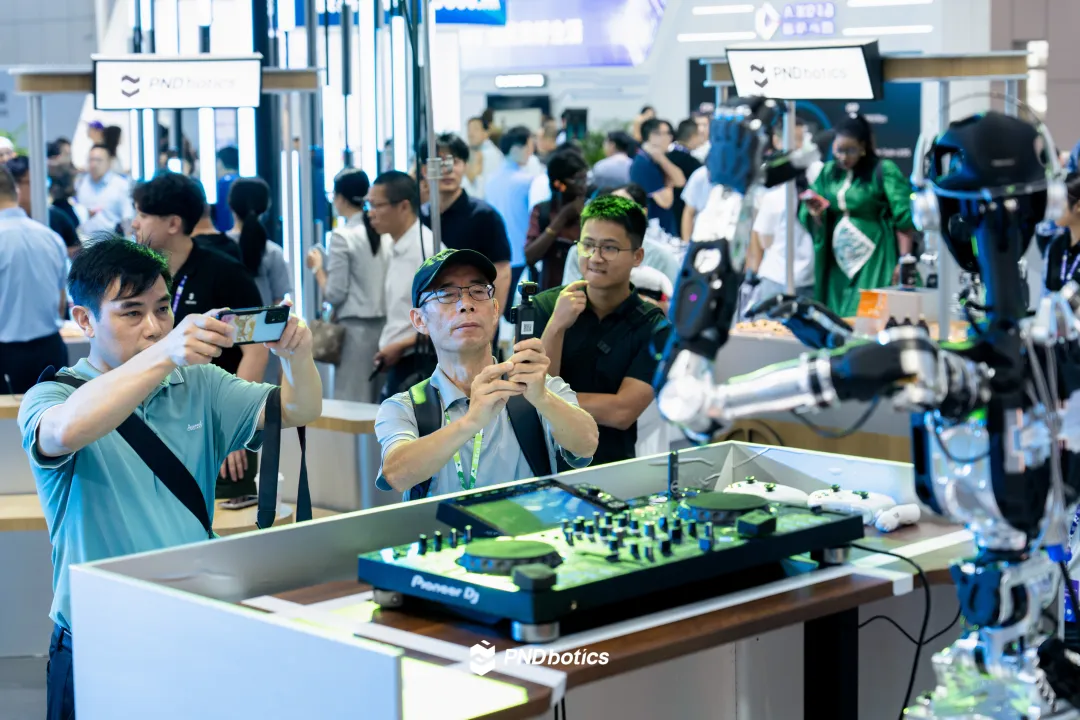
“ Robots for Work: Moving from a sports kit to a really active kit.
When a humanoid robot is standing in front of an industrial device, it is important not whether it can perform a beautiful action, but whether it can understand the task, recognize the environment, and adjust the execution method according to the changes in the scene, to complete a thing from start to finish in a real production rhythm.
From September 11 to 13, the 16th Smart Cities and Smart Economy Exhibition will be held at the Ningbo International Exhibition Centre. PNDbotics revolves around Robotics in the Real World (Robots in the Real World).
The scene corresponds to the Future Market: the latter responds to how robots integrate into everyday life, while the former faces a more specific question of whether humanoid robots can actually function in factories.
01.
The industrial scene is the most direct test of robotic systems
Laboratory environments can provide clear task instructions and relatively fixed operating conditions, but the real factory is the exact opposite: the state of the equipment, the location of the workpiece, the movement of personnel, the production rhythm together constitute a complex system of constant fluctuations. Robots not only need to complete a single action such as clutching, moving, but also to link these actions into a complete workflow and adjust execution strategies in real time according to changes in the scene.
Hence, the introduction of humanoid robots into the industrial scene was essentially a systematic test of their perception, understanding and execution of the entire chain of decision-making.
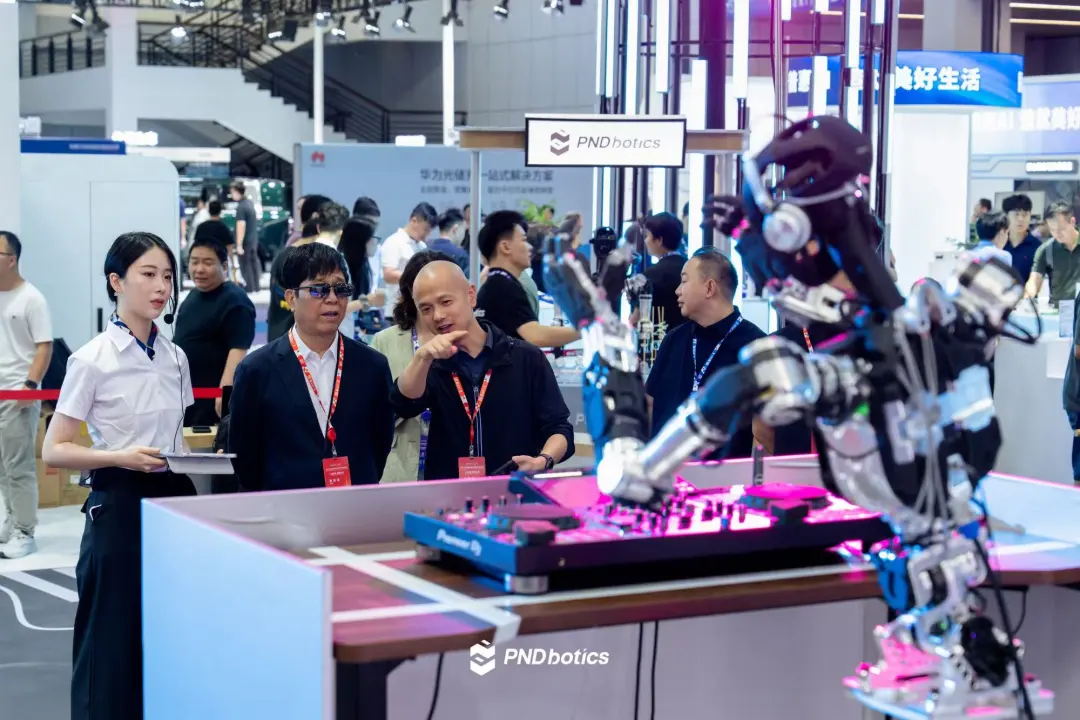
The presentation of the Future Factory by PNDbotics revolves around this logic. The site will demonstrate how human robots are effectively connected to real production environments through the practical operation of different process links.
02.
From a single point of action to a complete task, there is a whole set of system capabilities in the middle.
For industrial robots, clutching and unplugging is never a technical bottleneck. The real difficulty lies in: when to grab, what to grab, where to put, what to do next. These continuous decisions require the collaboration of modules such as visual perception, task understanding, motion planning and execution control to form a complete task loop.
PNDbotics hopes to demonstrate through this industrial scenario, not an isolated high-difficulty taskbar, but the ability of robots to process systems from perception to decision-making to execution.
When robots are faced with real workpieces, real equipment and real production environments, every successful execution is a test of system reliability, not a one-time demo.
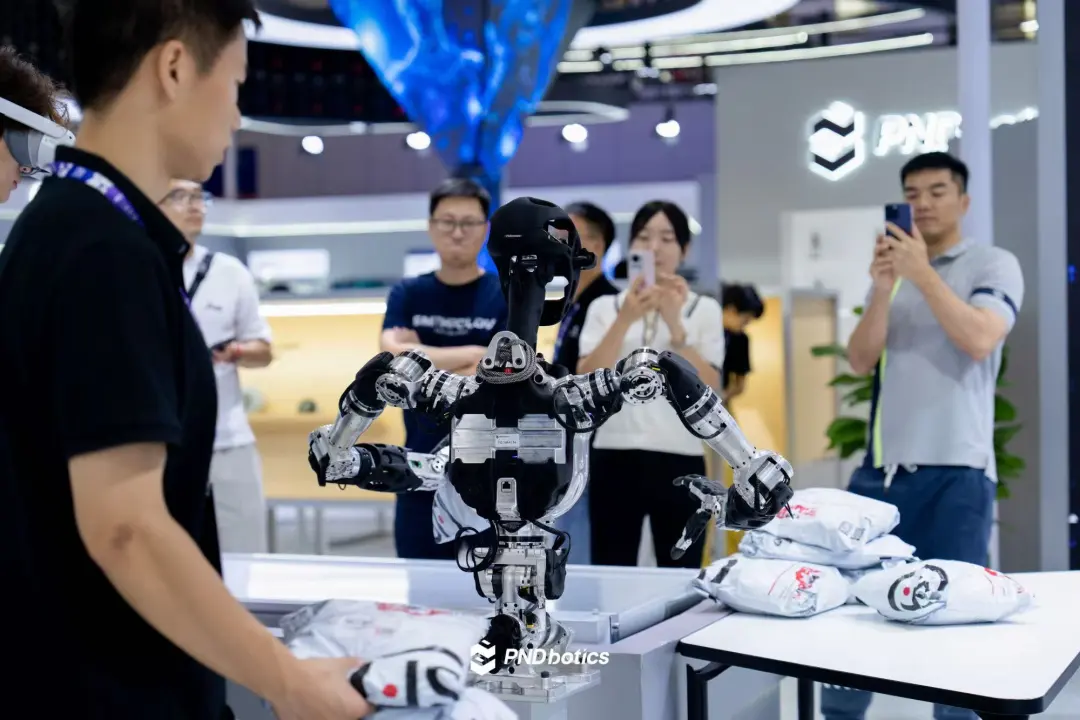
03.
Full capacity is an important foundation for industrialization
The development of physical intelligence is essentially a highly complex system engineering.
From the underlying core components, joint modules, to overall design, to robotic communication, algorithms, and ultimate application verification, every link affects how robots perform in the real world.
PNDbotics continues to build full-featured technical capabilities from components to systems, from hardware to algorithms, with the goal of advancing robots through software collaboration from motion-capable robots to mission-capable robots. This systemic capability, which is verified in a silicon lab at the core of real-world application complexity problems, is not the same as stability in the factory; completing a demo is not the same as having the ability to continuously create value.
From technical verification to real-world scenarios, it is the threshold that human-robot industrialization must cross.
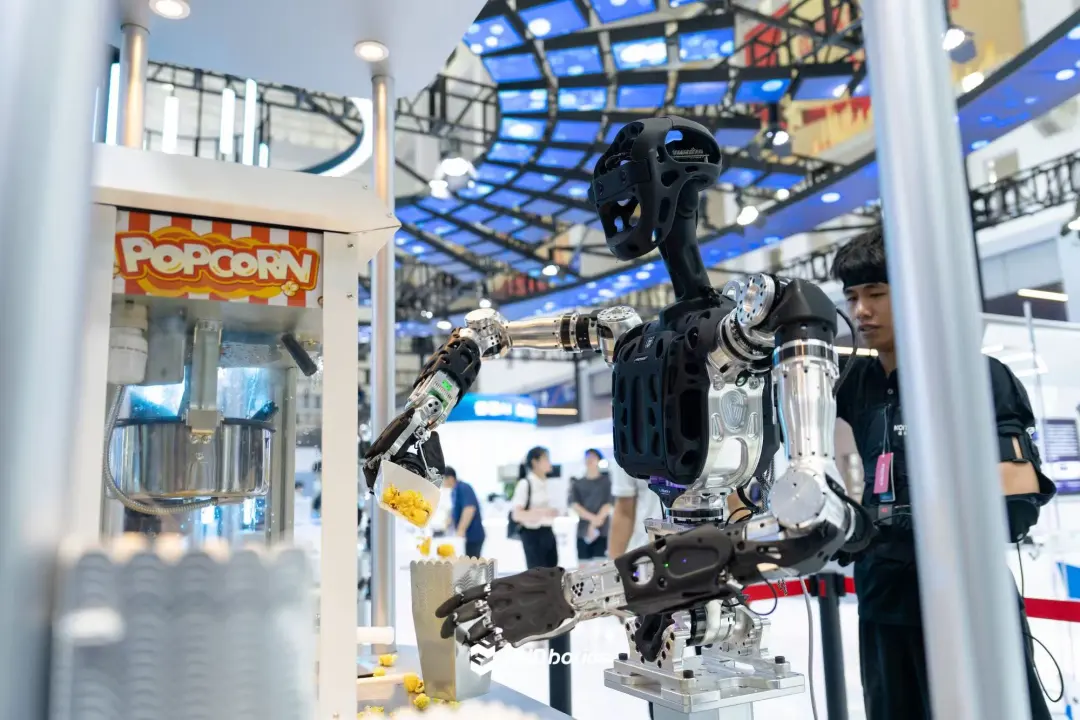
04.
What does it mean when a humanoid robot enters a factory?
For the manufacturing industry, the most direct value of a humanoid robot is not that it resembles a humanoid robot, but that it is naturally adapted to a large number of production environments built around the human way of working.
With the continuing evolution of AI algorithms, robotic bodies, core components, and physically intelligent technologies, humanoid robots are gradually moving away from future products and toward industrial tools.
At this Expo, PNDbotics wants to send a clear signal through Future Factory: robots don't just stand in the factory to showcase, they start to get really involved in the work. From the industrial scene to everyday life, from Future Factory to Future Market, PNDbotics is always answering the same question and allowing robots to enter the real world, solve real problems in real environments, and create real value.