“ Robots are starting to recognize their bodies again
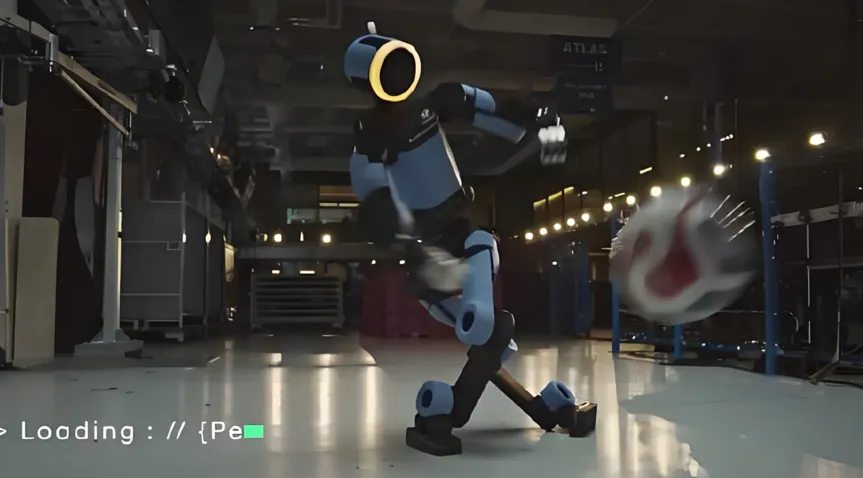
Why do robots move things? Why do they fall? Why do they pick things up? Why is high dynamics not doing well? At the 2026 World Man-made Robot Games, the Robotics Workshop found that robots on the course started to have their backs up, can perform almost all their physical abilities, achieve big jumps, can play, kickball, and even beat a human 100-meter record.
In 2026, the humanoid robot starts from the waist down, pulling out a very interesting water separator, with a waist-shaped robot that seems to be beginning to understand what is happening to its body. This is also a change in the 2026 evolution of body intelligence technology, which is becoming increasingly apparent but easily overlooked. Behind this, the focus of industry attention is closing the loop from the VLA's visual language to the Whole-Body Intelligence (WBI, Whole-Body Intelligence), which in structure will allow the humanoid robot to gradually have the waist, and will have full body dynamics.
Not only domestically, the latest generation of Google DeepMind robot models has begun to emphasize WBI in the second half of 2026, attempting to make models control the entire body from the feet to the fingertips; at the same time, academia is incorporating touch, sensation, bodily states, and physical dynamics into world models, allowing robots to not only predict what will happen next in the environment, but also predict how their own actions will change the body and contact states.
This means that the next stage of physical intelligence may not only be to give robots a smarter brain, but also how to make the brain truly have a body that can be perceived, predicted, controlled.
01.
The robot began to see the world from the mirror to the mirror to feel the world from the mirror.
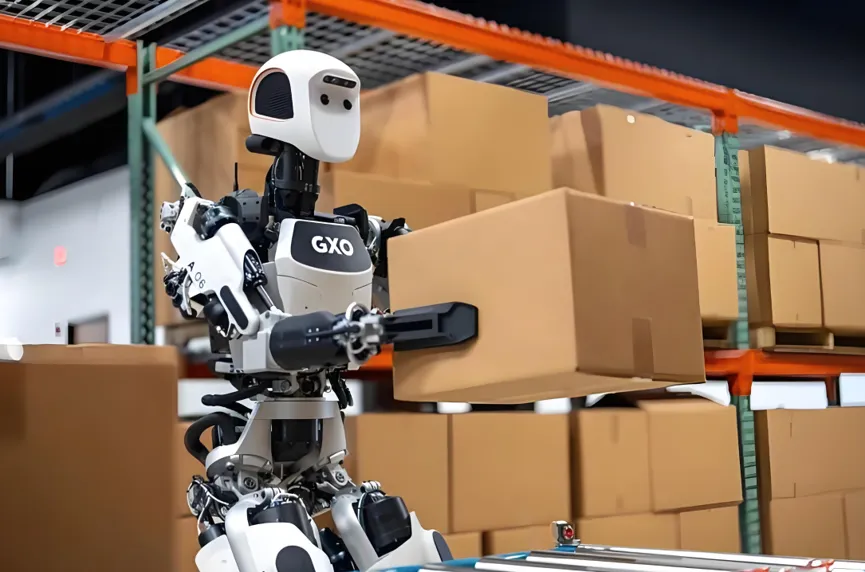
In the past few years, the most obvious advances in physical intelligence have been in visual and language. Robots are able to recognize objects, understand instructions, and then generate movements through the VLA model. But in the real world there is one very tricky feature: the decision to move and create defeated information, much of which is not in vision.
A robot picks up a cup and the vision can tell it where the cup is, but it can't fully tell it exactly how much force the cup wall is undergoing. The robot sends the plug to the plug, and the vision can help it locate its position, but it can't directly determine if the resistance is normal after the plug enters a millimeter. The machine arm grabs a soft object, the camera can see that the object is shaped, but the robot really needs to know how much force it has applied, what changes have occurred at the point of contact, and whether continuing the force will cause the object to slip or damage.
When humans do these actions, it's not just the eyes that rely on. Muscles, joints, skin, and the peripheral system continue to provide the brain with bodily states, and the brain then adjusts the next step according to these feedback. This is what the robot has been missing in the past, the closed loop. So what really changes is not how many joints the robot controls at the same time, but the logic that controls it starts with what moves I should do?
This is also the reason why core components such as kinetics, touch, and more have begun to regain capital attention in 2026. For example, six-dimensional sensors can simultaneously measure three-dimensional force and three-dimensional torque, allowing robots to obtain direct information about external contact and the state of physical attraction. Visual touch extends the robot's perception of the world to a deeper dimension. From the traditional robot control, it is a feedback element.
At the same time, this preconceived notion has become a core training paradigm in some newly-established full-body intelligence companies, which is why innovation companies can still get financing. For example, the founder of SourceCurse Future, Li Tianyan, proposed in RSS 2026 that WBI is not a single large model, but a set of system-level pre-training paradigms, dividing robotic intelligence into four capability levels, S2 mission semantics, S1 human-shaped basic capabilities, S0.5 means full-body motion generation, S0 real-time balance and control. Its core proposition is to start from training by putting cognition, body and environment together to learn, not afterwards.
02.
What WBI really needs is physical condition?
One misconception, however, is that WBI does not simply install more sensors on the robot. It really addresses the unified expression of the state of the body. For example, when a robot walks, the forces on the bottom of the foot change balance; when a robot bends down and picks up something, the arm load changes body weight; when a robot pushes the arm, the counteraction forces are transmitted to the trunk and legs; when a robot walks alongside and grabs objects, the movement and operation have actually become a coupling system.
This is also why recent whole-body control studies have increasingly emphasized physical dynamics, contact states, and the consequences of movement. For example, recent studies by the CMU Robotics Institute on the safety and agility of human robots show that human robots are faced with high-dimensional dynamics and ever-changing contact relationships, with almost all of the truly useful behaviors becoming control and safety issues at the same time.
Thus, a future robot may need to integrate a complete set of bodily states: vision tells it its external environment; joint encoder tells it its own posture; IMU tells it the state of bodily movement; foot pressure tells it the state of support; touch tells it local touch; and six-dimensional sensors tell it the overall gravity and momentum changes.
This is why force control should no longer be understood simply as a function of the end of the mechanical arm. When a robot begins to perform a full-body task, force is transformed from a local control variable to a physical state variable.
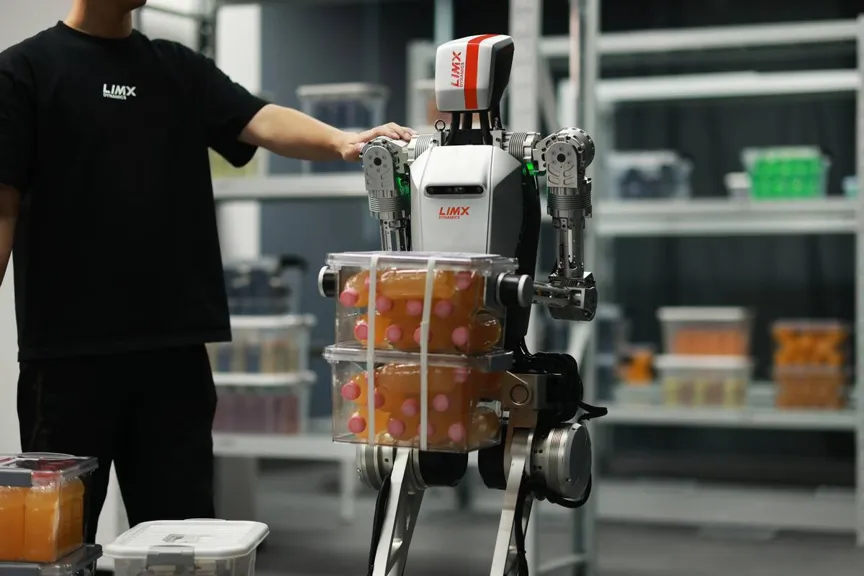
This change is very important. It means that the upstream value of the power sensor begins to change, and it will no longer only serve as a controller, but may enter the data loop of future body models.
On the industrial side, new companies such as DETA Intelligent have also come up with a Loco-manipulation approach that is hard to imagine in the early controller era. Their human-like robot-based model from the outset models the entire body as a modeling object, self-developed 3D world engines allow robots to understand spatial relationships, environmental changes and the consequences of action before action, the brain is responsible for scenic understanding and action decisions, the brain translates task intentions into continuous control of multiple joints throughout the body, while the power mix accompanies position accuracy, feedback and physical stability, which corresponds well to the narrative of mobility and operation that has actually become a hybrid system.
Putting the above changes together, we see a more interesting trend. WBI requires a physical state, and the world model begins to predict the contact state, and the touch and impulse begin to enter the model, and the physical perception itself begins to be re-understood. This means that the data structure of physical intelligence is changing.
In the past, when we talked about robot data, the first thing that came to mind was video, language, motion trajectory. But real physical interaction data should also include the robot's posture at the time, the state of each joint, the external forces that the body is subjected to, the location of the contact, how the momentum changes, whether the object slides, whether the movement is ultimately successful, and at what stage if it fails, the failure happens.
These data together describe, not what robots do, but why they succeed and why they fail. This could be an important part of the next phase of the intelligent data fleet.
Because for a model, a video of a robot can only tell it that its hands are stretched across its fingers. Synchronous vision, movement, joint state, and sensation data can tell it why its hands are stopped, why it changes direction, why it increases force, why it comes back, why it crawls back, and where the difference is between a successful action and a failed action.
This is the true value of physical data. In this sense, the perceptual layer may be changing its position in the physical intelligence industry. It used to be a precision hardware. In the future, it may also be an important collection point for robot physical data.
03.
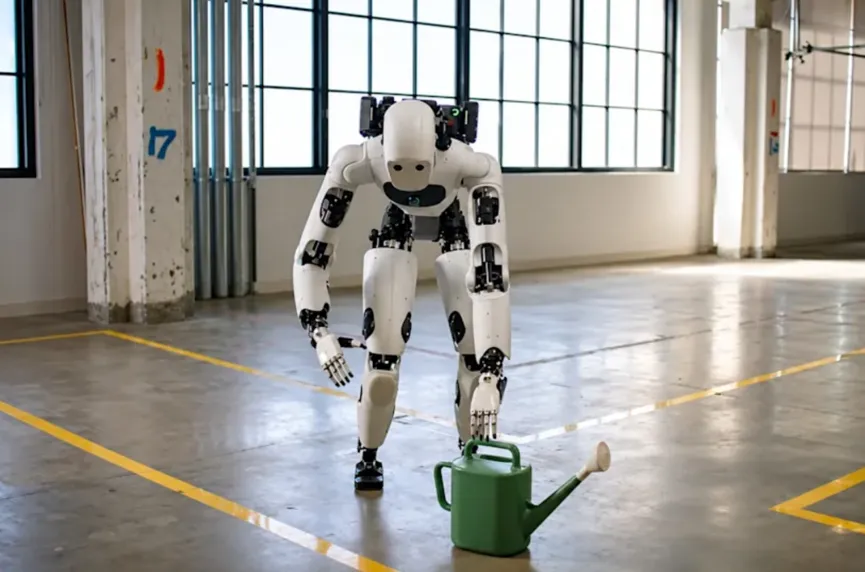
The world model is starting to learn what a mouse has touched.
This change has been very apparent in recent papers. In the past, when the world model was discussed, people focused more on video prediction: how the environment changes after a robot makes a move.
For example, TacForeSight, released in June this year, combined high-frequency wrist-force/force torque signals and two-finger tactile information into a touch world model to predict changes in touch states in the near future, and then used predictive results to adjust robot movements. Research has validated this approach in multiple exposure-rich tasks, particularly focusing on operational capabilities under dynamic disruption.
The changes in the paper are indeed worth the attention of the industry. Because the perception layer is moving from the past: occurrence of abnormalities→ sensor feedback→ controller correction, gradually moving towards: power→ prediction of future contact→ pre-adjustment. In other words, the perception layer is migrating from control signal to model input.
The perceptual layer provides not only a number to make a motion judgement for the control layer, but also constitutes a continuous, quantifiable body state information when robots come into contact with the physical world. It sends feedback from the perceptual layer to a condition variable that predicts a future state.
The previous logic was that the robot touched something, the sensor detected anomalies, the controller corrected. Now another logic is beginning to emerge, which is that the robot perceives the current contact, the model predicts what might happen next, and then pre-adjusts the action. If the real results and predictions are inconsistent, then re-planning. This will make the success rate of the task gradually, more likely to be optimized.
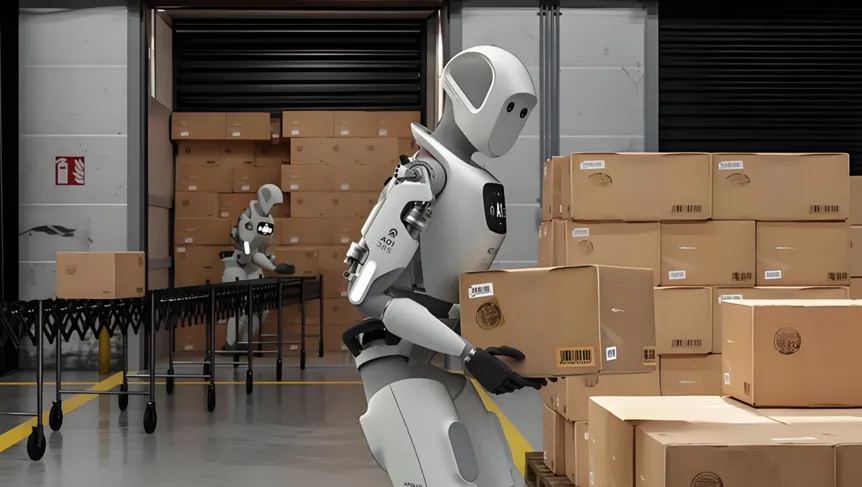
The role of the perceptual layer is no longer just to tell the robot that you've just made a mistake. It's to help the model determine what might happen next if it continues to do so.
For example, in August 2026, Daimon-TWM, the world's first tactile tactile-controlled model, was released by AI robots, which attempted to construct tactile-touch neural networks that traverse understanding, reasoning, prediction, and validation with native touch, from finger-point perception to brain reasoning, and then back to the control end of the movement. The model uses a three-dimensional tactile architecture, physical cognitive modules relying on tactile-touch to confirm contact states and forces and shapes, and drives decision-making modules by tactile-think chains to predict evolutionary trends and failure risks prior to the execution of the movement, and instantaneous manipulation modules achieve dynamic corrections at the millisecond level with 100Hz high frequency convergence.
Intel has taken a different path. Its Intuitive Touch World Action Model Being-H0.8, released in July 2026, introduced for the first time touch modeling systematically in mass model pre-training, unifying vision, touch, movement, and future state changes into the same Intuitive Space. While the core design is still a slow-motion expert's steering mechanism, the model calculates a context steering and caching at the start of each movement time zone, followed by a few steering points injected into the actual state of the latest observed locations in the time zone with touch feedback, dynamic generation or modification of the previous movement segments.
GigaBrain-WBC-0.5 is the first model of behavioural world controlled by a human body. Its core capability is to allow the robot to predict its next step and output its actions at the same time, both predicting its next state (e.g. whether the seat is loaded, no load in the hand, the height of the support on the foot, etc.) and predicting what the next command line might look like.
This is why the real competition for core components is becoming increasingly difficult to end up in the parametric table, and if the sensor is just one component, the competition can naturally unfold around accuracy, price and size. But if it becomes part of the body, the requirements will be completely different. First, accuracy. The model must believe in the data. Second, consistency, because the distribution of data between different robots, different batches cannot be uncontrollable. Third, long-term stability, the data generated by the robot's sensors after a few months should still be comparable. Fourth, the data produced by the sensor should be calibrated, and a uniform measurement scale between the different sensors needs to be established.
Therefore, future evaluations of a motion or touch sensor may also need to ask whether it can provide a reliable body state to the model in a stable manner. This will push the competition for core components, from pure hardware performance, to full integration capabilities.
04.
How can a person who is physically intelligent achieve a credible physical state?
Here's a very interesting counter-example. The Blind Dexterity study, released in late August, demonstrated on the Unitree G1 the ability to perform parts of its entire body without the use of visual, force/force sensors or touch sensors. The study showed that when a robot actively comes into contact with the environment, the joint encoder itself changes state and can carry a considerable amount of contact information. For example, Boston Dynamics Atlas' previous performance demonstrates this by relying on only two executors to cover its entire body. Its arms and legs also adopt symmetrical design, simplifying control and simulation. This refined architecture allows engineers to train robots more efficiently and quickly in virtual environments, transferring these capabilities to real robots.
This means that robots of the future will not simply move to the silicon sensors the more they will get better. The real direction is to give the robot more complete, reliable physical observability. Some information can come from the senses of the body. Some information can come from the touch. Some tasks require more direct, precise force and torque measurements.
When tasks involve precise assembly, smooth grappling, collision detection, human-machine collaboration, dynamic balance, and other scenarios, robots need not only to sense the anomaly, but also to know what the anomaly is; what the force is; where the direction is; how the momentum changes; whether the information is stable; whether it can be replicated across devices; and whether the WBI ultimately competes not in the number of sensors, but in the reliability of the physical state.
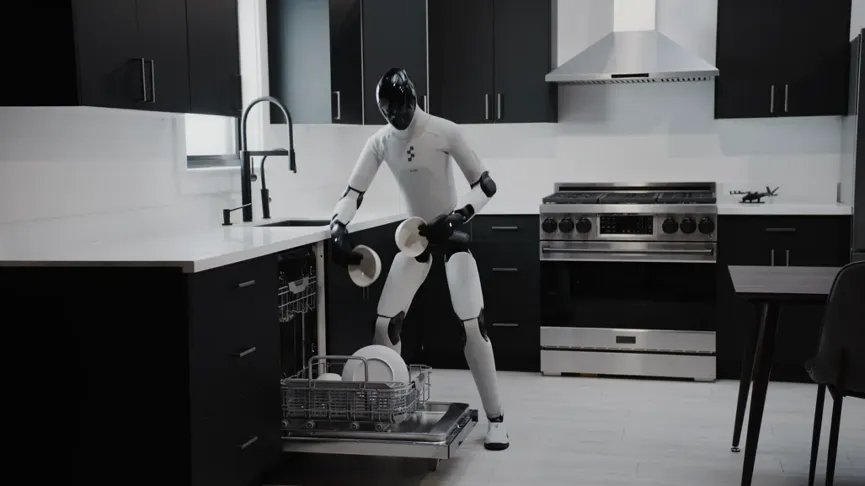
This shows that the future direction of being physically intelligent is not simply to give robots a bunch of sensors, but to make robots truly understand the relationship between different bodily signals. For example, joint encoders provide bodily states, IMUs provide gesture and movement changes, bottom sensors provide support information, vision provides external environments, touch provides local touch, force/force matrix sensors provide overall force and force matrix changes.
This trend has spawned a team that specializes in full-body tactile fusion. For example, in May 2026, modular technology focused on robotic multi-mode full-body tactile sensing systems, which were positioned to be a fusion program of robotic full-body tactile sensing, attempting to extend touch sensing from the fingertips to full-body contacts such as the torso, legs, and so on. This could be a direct response to the body of a robotic body itself as an implicit tactile system. When the touch extends from the fingertips to the entire body, the boundary between physical sensing and visual touch is blurring.
At the same time, the self-developed KAI World Model combines video generation with 4D space modeling, dealing with different tasks such as pure motion, pure operation, and whole-body motion operations in the same set of displays. It uses the KAI Bot's full-size body to cover nearly 80% of the body's touch skin, about 18,000 touch points, and extends to the entire body. In high-motion scenarios, the SMASH 2.0 human ping pong system has achieved multi-second identification of balls, trajectory prediction, motion planning, and full-body coordination, and has successfully defeated the ability to migrate from the tip of the finger to the entire body.
The value of the perceptual layer, therefore, should not be understood simply as a robot that cannot work without it. The real question is what tasks, what control layers, what accuracy and what reliability requirements are required for how much additional information apparent gravity can bring to robots, ultimately assisting in task decision making.
05.
WBI ultimately tested who might have the cleanest body data
The level of data cleanliness in the perceptual layer is an issue that has not yet been fully discussed in the physical intelligence industry today.
The big model competition in the past was essentially a competition between data, computing and model sizes. Physical intelligence would be much more complicated because robot data had to be tied to the real physical world. If the 10 cows that one robot feels today and the 10 cows that another robot feels don't have the same meaning, data would be difficult to migrate directly.
If the same robot's signals deviate significantly at different temperatures, the model can interpret sensor errors as environmental changes. If there are systemic differences in the output of different batches of sensors, the model's trained strategies can be difficult to migrate across hardware.
This is why in an age of physical intelligence, the consistency of sensors may be part of model generalization. This is an easily overlooked but very important technical relationship. The bigger the model, the more data, the more robots, the more important the problem is. As the scale expands, the heterogeneity of data is also expanding.
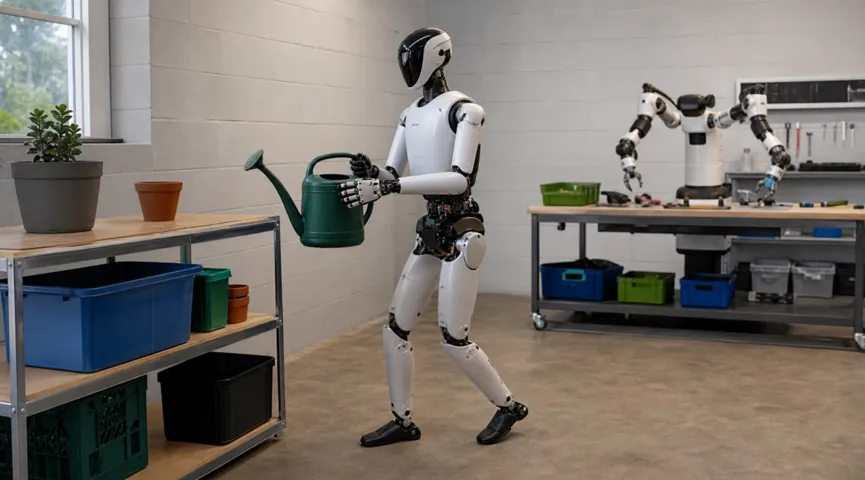
This is also a new value space for core parts companies. They aren't just manufacturing hardware. They're actually determining how accurately robots can recognize their bodies. Of course, this could also be the real reason why traditional digital factory models collapse under the training needs of physical AI and world models.
06.
From model competition to physical infrastructure competition
The real change that WBI brought about was not that robots suddenly learned to control more joints. It changed a more fundamental problem: robots began to need to understand their bodies. It needed to know what their bodies were in. It needed to know what they were going through. It needed to know what the consequences would be. It needed to know when to continue and when to withdraw. It needed to know why one contact was successful and another failed.
This is why recent research has begun to emerge in an increasingly clear direction: world models begin to predict contact; touch models begin to predict future states; whole-body control begins to consider how the environment changes physical dynamics; body perception begins to be reinterpreted as an implicit touch; and gravity begins to move from traditional control feedback into more complex body model closures.
The robot is transforming the body itself into data. The joints are data. The touch is data. The sensation is data. The underlying pressure is data. The disruption that the body experiences is also data. Every time a robot succeeds or fails, it can eventually become a model to understand the physical world.
So it's not just the model parameters that are bigger or robots that are more complex that are really worth the attention of the industry. There are also a number of innovative components and enterprises that have been at the bottom of the industry for a long time that are moving robots from hydrogen energy to hydrogen energy perception, control, and energy stability. These results together form an industrial chain that is gradually closing Chinese humanoid robots.
This may also be the reason for today's rethinking of the meaning of the core components of domestic production. At the height of the robotics industry, it is often easier to see robots standing on the stage. But what really determines whether robots can enter the factory is often what is stored in the body. Whether a sensor is stable. Whether a labeling system is reliable. Whether a production line can replicate lab indicators tens of thousands of times. Whether a company can continue to deliver products to customers on site and run for a long time.
These things won't create the hottest conferences, but they will create real industry barriers. And when the WBI begins to make robots re-recognize their bodies, the capabilities of the past, hidden at the bottom of the control system, are being pushed to the forefront of the body-smart industry for the first time.
These lines may eventually come together in the same direction: robots are moving from crankshaft to crankshaft to crankshaft to crankshaft to crankshaft to crankshaft to crankshaft to crankshaft to crankshaft to crankshaft to crankshaft to crankshaft to crankshaft to crankshaft to crankshaft to crankshaft to crankshaft to crankshaft to crankshaft to crankshaft.
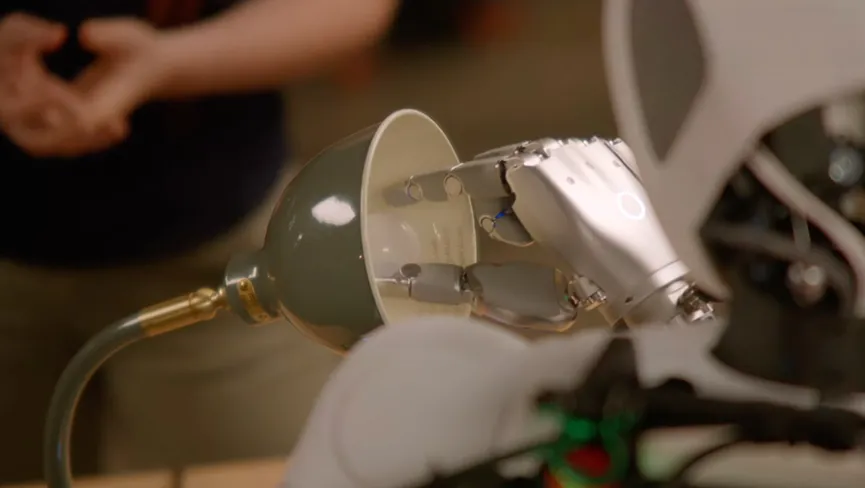
It may be the gateway for robots to get feedback from the physical world and an important interface for future physical data into models. But that doesn't mean that a core parts company can succeed as long as it steals the WBI's venture.
In the past, the sensor only needed to prove itself capable of measuring. In the future, it needed to prove itself capable of measuring with stability and accuracy. In the past, the maximum performance of a sample product was enough to form a technological highlight. In the future, it needed to replicate this performance to thousands of robots. In the past, core parts companies could compete around several parameters. In the future, customers' real concerns were long-term reliability, consistency, delivery capability and the ability to synchronize with the entire machine, control system, and model.
This is also a reassessment of the value that is taking place in the body-smart industry. The robotic brain is evolving rapidly, but it is still the body that really determines whether it can't be a production tool. While physical evolution often doesn't happen under the spotlight of conferences, it happens in parts and even deeper materials, structures, and production lines, and in those seemingly insignificant mistakes that engineers repeatedly process.
Real robot industrialization is not about making robots perform more and more. It's about letting them know what's going on in their bodies when they perform the same tasks for the first time and for the 100,000th time.
The parts industry will not be the most storytelling part of the robot boom, but the most trusted part of the robot body.