
“ There is still a mountain between collection and application.
The smart industry has never experienced such a ridiculous moment, and many people are beginning to reflect on the rationality of the first generation adoption model.
The story began with the rumors of an outsourcing of some of Beijing's leading smart enterprises, in order to get home scene data, after consulting with the residents, to collect data from the residents' homes with video equipment. As soon as the residents began to feel fresh, cooperative, but the data collection efficiency was extremely low, it needed to be repeated over and over, the backside residents began to get annoyed.
This is not an isolated case. Recently, there have been reports that recruiters from a company entered the village wearing data collection helmets, pretending to inspect community services equipment in their homes, and when they opened the door found that they were filming a video footage, the scene was embarrassing.

By 2026, everyone seems to believe that as long as there is enough data, Scaling Law can be replicated in the physical world. The focus of the competition is shifting from making robots to making robots with enough data. In order to collect data, robotic companies around the world are trying to do everything they can to outsource and dig into the real world, residential buildings, factories, warehouses, cafes, supermarkets, farms.
But there are some questions that no one really answers, how do we get these data to be sustainable in the long run, how do we get the data to work, and how do we get the data?
01.
Half a million hours vs. 100 billion hours: an unsolved account
Data training sites were once considered to be the best way to optimize data collection, and this model is not wrong, and all participants basically believe that it's a valuable industry that burns money and doesn't come at an efficient data scale.
According to incomplete statistics, as of the end of June 2026, over 70 robot training sites have been built in the country and 46 are under construction or planned. Media have previously revealed that medium-sized mining plants typically require 50 sets of mining equipment (mainly linear high-speed cameras, not traditional visual products), total input (including hardware, etc.) is around 50 million.
However, the State-owned Securities Research and Development Report of China's Intelligent Industry Development Report (2026) shows that as of early 2026, all available high-quality real physical interaction data combined is only about 500,000 hours. Industry estimates that to get a general robot to achieve a basic success rate of 70% to 80% in common tasks, the quantity of data required is 100 million hours.
Half a million vs. 100 million, the gap is 200 times. Half a million vs. 100 billion, the gap is 200,000 times. A more robust figure comes from Stanford University's AI Index Report 2026 released in April 2026, which says that if you look at the indicators of being able to enter the home, according to current data, the global success rate of GM robots in real-life home scenarios is only about 12 percent.
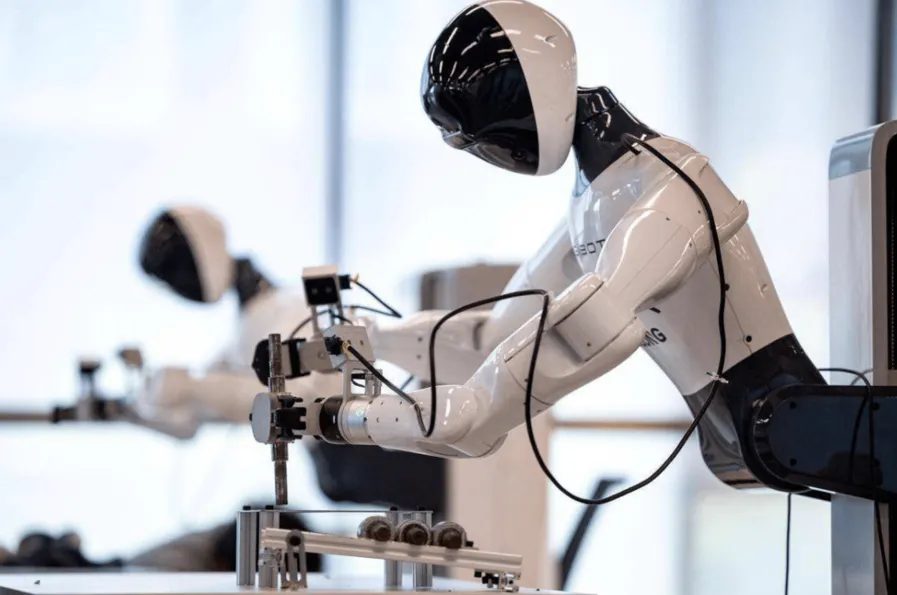
However, the cost of data collection has not been low. In a report on the Chinese robotics industry released in July 2026, Nanmura Securities noted that a 30-second real machine operation data collection cost has been as high as 5 to 15 yuan, at a one-time price of about 500 to 1000 yuan per hour, which is enough for 200,000 hours to require more than 200 million yuan.
It took the industry two years to build more than 70 training sites, and the initial investment could be in the tens of billions, but the real-world mission success rate is less than 2 percent. There are businesses who confess that 100,000 hours of data collected in tens of millions of yuan can only help to improve model capacity by 5 percent.
This isn't an algorithmic issue, it's essentially an industry-wide awareness of the issue of data mining that could be a problem.

02.
It's only 1.5 hours to collect 12 hours.
The difficulty of collecting data, far beyond the imagination of the outside world, is not something that can be achieved by building one or two training sites. The first core challenge facing the global data industry is that the size of data collection is not equal to the size of data that can be trained.
First of all, the raw data is only recorded by the correct thread, which is already difficult. For every action the robot performs, it needs to simultaneously process a multi-modular sequence of data flows: RGB images, depth information, angle and angular velocity of the connection, position and force of the endpoint, and the pressure distribution of the fingerprint array.
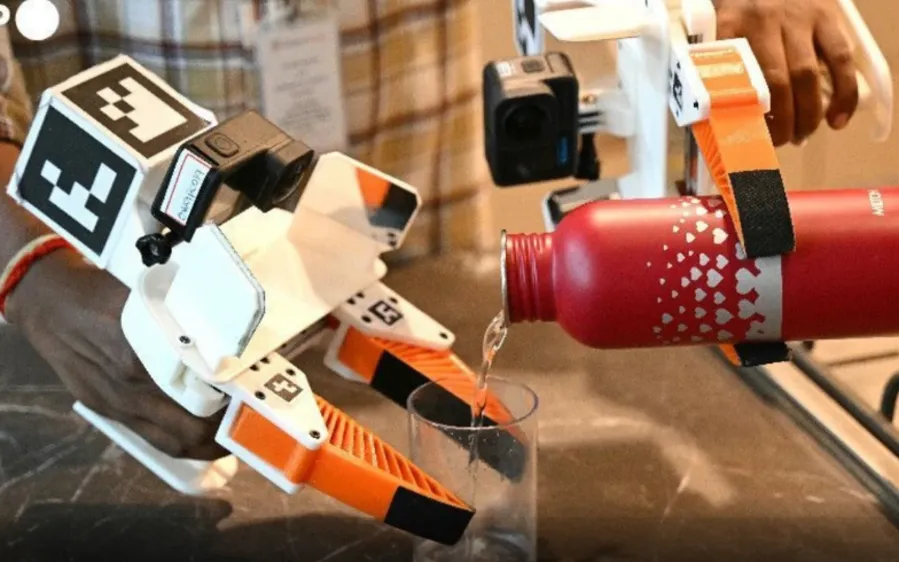
A founder of a personal data company noted that one of the major problems facing digital business today is that both supply and demand parties do not know what to buy, how to buy, what equipment to buy, how to define prices and qualifying lines, such as the demand documentation of the A side is sometimes written very roughly and lacks locality. Starting in the second half of 2025, the industry has also rapidly shifted to two non-essential collection routes, one is to collect Ego data, which allows users to wear digital cameras to work, and the equipment to record work images and movements; the other is UMI data collection, which allows users to work with their fingernails/handles, and relies on hardware cameras and sensors to record work.
Some analysts have revealed that there is a large number of devices on the global market that are equipped with headgear that collect ego data in real environments, selling at a minimum price of 7 yuan per hour. But because of the different hardware configurations of different brands, the data collection format is not uniform, and the data isolation phenomenon is severe, some companies have tried to combine over 200,000 data from more than 20 brands with mixed training, and the result is confusion.
Teams such as the University of Hong Kong have come to an anti-intuitive conclusion in a study published in T-RO: cross-body pre-training data is not necessary. Because models trained on high-quality single-body data perform better in the mitigation phase than multi-body pre-training. The diversity of demonstrators may even be the opposite, and differences in operating habits can interfere with strategic learning.
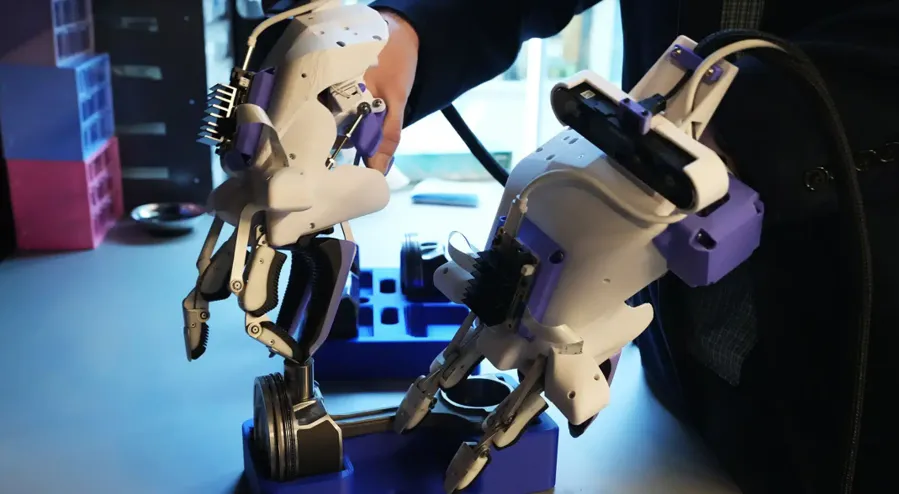
Second, most of the data, even if it's a certified pipeline, needs to be cleaned, labelled and aligned to get into the training pipeline of the customer.
Because the data is not standardized, the data collected by the hardware of different manufacturers varies in angle of view, inclination, accuracy, and time synchronous accuracy between touch and vision, and there is even a problem of loss, which ultimately leads to the data collected by the A robot, which the B robot cannot use directly.
And the loss of this layer of data cleaning is the most surprising. After a company bought back the data in bulk, half of the team was dragged to dry data cleaning, folded for almost a month and a half, and the data efficiency was only 10 percent. Multi-furniture companies revealed that the cost of cleaning the data is far higher than the cost of collecting the data.
After 12 hours of collecting and cleaning, more than 1.5 hours have been spent, which is already a high level in the industry. There are a number of domestic companies that have introduced data efficiency of 12.5% in most enterprises. While the overall level of the industry may not reach this figure. Recent studies in foreign countries have also shown that of the 20,000 hours of training data worldwide, less than 3,000 hours of effective data, less than 15% efficiency.
What's even more embarrassing is that this useless data still accounts for memory. As memory bar prices continue to skyrocket, more than 60 percent of companies currently choose to directly delete at least half of the historical data they previously spent heavily on mining because of the poor quality of the early years, lack of consistency in formats, and complete incompatibility with the new model architecture.
Some analysts believe that real-time effective data costs can be reduced to about 275 yuan per hour after remote operation in large-scale operations, such as multi-collection plants, and the cost of non-customized intangible data collection is about 100 yuan per hour, but these data are difficult to purify and meet the baseline requirements for acquisition by foreign model companies, which makes most of the data not available to buyers.
It's not that nobody wants to standardize the pipeline for data collection, marking, cleaning, etc., but training a data processing pipeline that's basically available in a pictorial scenario, typically requiring tens of thousands to hundreds of thousands of data, is stifling most of the players who want to be involved.
03.
The standards are not uniform, the data is not flying at all
From this, it can be seen that there are actually two levels of effectiveness in physical data collection: effective collection of raw data is correctly recorded; data sets are effective; after cleaning the labels can enter the training pipeline; but under the scenario demands of physical intelligence and physical AI, the more potential demand is model effectiveness; that is, can these data really improve the stability and generalization capabilities of robots after scaling up the collection?
Currently, most suppliers can only guarantee the first two layers, while customers expect a third layer effect.
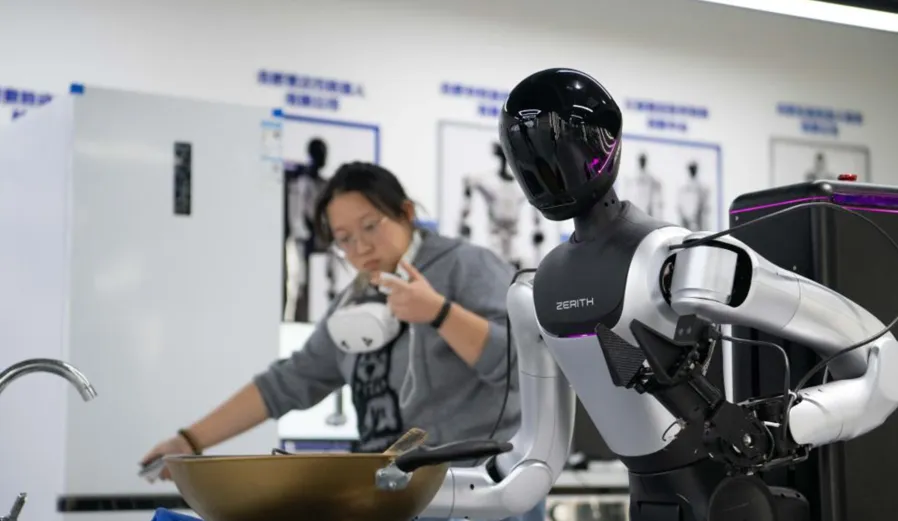
Everyone wants to build a data flyer, however, from a data point of view, the construction of the flyer is far more complex than imagined. Wang Wei of the Institute of Intelligent Studies noted at the Intelligent Congress that the current model remains largely to understand the world or simulate the level of action, the lack of modeling of future states, causal relationships and physical laws. The real world model of physical AGI should be able to form a unified state representation in multi-modal signals and learn how states evolve in the real world.
This means that in the case of the need to train models with physical intelligence, computations need to extract the causal structure of the physical world from the data, which is several times more difficult than a simple stack of data. However, most data companies have a pattern: collect→ clean→ deliver→ end. After data is delivered, models learn how to train, what data is effective, what data is redundant, and this information hardly flows back to the data collection link.
Because hardly anyone has seriously answered, can the experience of the physical world really be collected in this way and how should it be dated?
Ropedia co-founder Tom Hanks said in a speech at the AGI Playground 2026: AI has read everything, but has never really experienced anything. The big language model is learning what humans write, the text is naturally digital and should be available on the Internet. But physical AI needs to learn what humans do, how the world reacts to action, and what ultimately happens.
This is the most fundamental difference between physical AI and digital AI. It is not that the amount of data differs in several quantitative levels, but that the geometry of the different scenarios is completely different. These variables, which do not exist on the Internet, do not exist in text, and do not necessarily exist in most recovered data.
The entire industry has spent tens of billions of dollars collecting data, and the results of the measurements have not been evaluated, so what most people are doing is essentially producing a shadow of a physical world experience at a faster, lower cost.
The world's smart industry is booming, and the Scaling Law is still in place in the physical world. The stakes are $10 billion in financing, $50 billion in valuation. But can the laws of the physical world really be mastered by a simple stack of silicon data?
What's even worse is that no one is willing to pay for someone else's model. Data companies are paying for the money they deliver, model companies are paying for the money they produce, scenes are paying for efficiency, and the interests of all three are never on the same plane.
You're selling data sets, customers are trying to make the steering wheel model smart, the steering wheel is running, and the gap in the middle is creating more and more friction and disappointment.
The industry has spent billions of dollars collecting data, but no one has seriously calculated, how much data can actually fit into a model?
It's actually a bucket of data, and only a few drops are leaking from below. Each layer is eating away at the value of the metric data. Most companies claim that the million-hour milestone of metric metric metric metric metric metric metric metric metric metric metric metric metric metric metric metric metric metric metric metric metric metric metric metric metric metric metric metric metric metric metric metric metric metric metric metric metric metric metric metric metric metric metric metric metric metric metric metric meters.

For example, in July 2026, the Ministry of Industry and Communications approved the publication of the first standard for the quality of smart data sets. The rating indicators cover eight dimensions of completeness, consistency, diversity, authenticity, ease of use, practicality, scalability and security.
There are standards that are good. But the standard solution is how to evaluate aluminum, not how to solve aluminum production. Because even if the standard comes out, who will implement it? Today, the demand for lead customers has actually begun to converge, 60FPS,1080P, double-eyed, depth is becoming a common requirement, everyone is building their own data pipelines.
What's even more cruel is that this standard war, in a time when more than a hundred corporations are smart, is likely to be short-lived until the day of rapid unification. It took a decade for the automated driving industry to barely unify the data format.
04.
7 dollars an hour, and 17 billion dollars in business
In just two years, the data gap generated a complete industrial chain, with companies in the industrial chain quickly securing financing, but the rift also happened unintentionally.
In the first half of 2026, 25 Chinese smart data startups collectively received more than 17 billion yuan in financing. The world's first smart unicorn with data received 550 million yuan in orders in a quarter. Total financing of smart data reached 93.5 billion yuan, up 67 percent from the previous year.
However, at the top of the industry chain are the light wheel smartphones, valued at 10 billion, ordered at 100 billion. At the bottom, they are data collectors from all over the world. Some people wear headgear to collect data in a real environment and sell it to a robotics company for 7 yuan an hour.
The trainers told them: "Every shot you take is a robot's eye on the world. It's a beautiful tale. But for the collectors, it's just a day-to-day, repetitive process that can happen at any time because of equipment failures. They're fuels, not alchemists. The business model of data itself has a natural flaw.
Data collection is a good business: 17 billion dollars of financing goes in, equipment goes out, and data is collected. But when you look closely, it's almost impossible to really make money from the sale of the data kit itself. I'm sure the kit is just financing, not the value of the data itself.

And what's most embarrassing is that after collecting these data, not many people spend money buying them and training them on really big models that are available.
05.
And finally, the data is collected, so what?
In order to collect data, companies send people to knock on residents' doors. In order to collect data, collectors repeat the same moves over and over again in the sample room. In order to collect data, the industry spends more money, builds more training grounds, collects more 10,000 hours of data.
But the success rate of real-life home scenes has only improved by less than 2 percentage points in two years. Data is collected, and then what? Then most of the data is piled up in servers. They are cleaned and spend multiple times the cost of collection. They are labeled, different manufacturers, different standards, different formats.
Data flows from the collection end, without being cleaned, labelled, into the trading market, and eventually disappears in the black box of model training. No one knows which data is really useful, which is noise.
The entire industrial chain, although the training ground is in Gaddafi, but the pipeline is broken. The path to success of big language models is clear. There is already a huge amount of text on the Internet→ Large-scale pre-training→ intelligent emergence.
It's a cycle of death from egg to egg. The old lady has warned the police that the egg can still be solved, but if the data is still unable to make the robot really learn how to work, it's not just the old lady.