It's the first time in the history of the world.
It's so shocking!
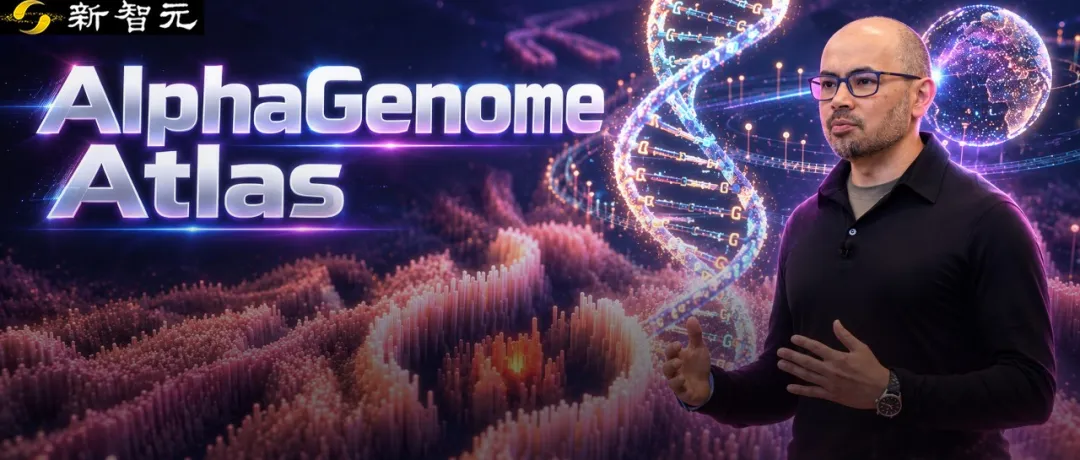
Recently, Google DeepMind has officially released the AlphaGenome Atlas, a massive success story.
It's a searchable prediction database with cutting-edge AI that covers the entire genome.
It completed an unprecedented engineering feat in the history of life sciences.
We're going to have to figure out all the potential "single-base mutations" in the human genome, together with 9 billion species, all at once.
This is another comprehensive mapping of the human life code by AI after AlphaFold mapped the "protein universe".

What is the concept of 9 billion?
The human genome has about 3 billion hydrogen base sites, with three variations at each point.
It would be almost impossible to put these 9 billion mutations in the lab if they were put in the past.
What is even more exaggerated is that for each mutation, it also gives about 27,000 predictive indicators to determine how it affects gene expression, RNA cutoff, chromosomal fusion, and the three-dimensional spatial image of DNA across hundreds of cell types in humans and mice.
9 billion multiplied by 27,000, resulting in a forecast value of over 240 trillion, all packed together to be 1PB.
AlphaGenome Atlas is 30 times the size of the AlphaFold database.
Demis Hassabis exclaimed, "AlphaFold has mapped the protein universe, and now AlphaGenome Atlas is beginning to map the human genome".
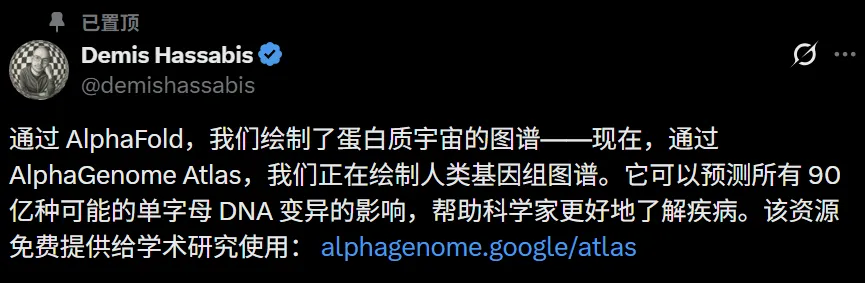
The most important thing is that this chart is a near-zero threshold for researchers:
You don't need a local environment, you don't need to write a line of code, you open the browser entry point, and the result is second.
From the structure of proteins to the effects of DNA variation, DeepMind paves the way for a map of life.
 "The book of heaven" is a book about life.Humanity has waited 23 years.
DNA is known as the "Language of Life" and is composed of four basic types: A, T, C, G.
In 1953, humans saw the double helix of DNA, and in 2003, the Human Genome Project was completed, and it took 13 years and $2.7 billion to read all three billion letter bases.
But reading is not the same as reading.
Of these three billion characters, only 2% of the region is responsible for encoding proteins; the remaining 98% does not seem to encode anything, but actually strictly controls when, in what cells, and how strongly each gene is expressed.
The overwhelming majority of variations related to disease and behaviour are contained in these 98% of non-coded areas.
What happens if one of the letters is changed?
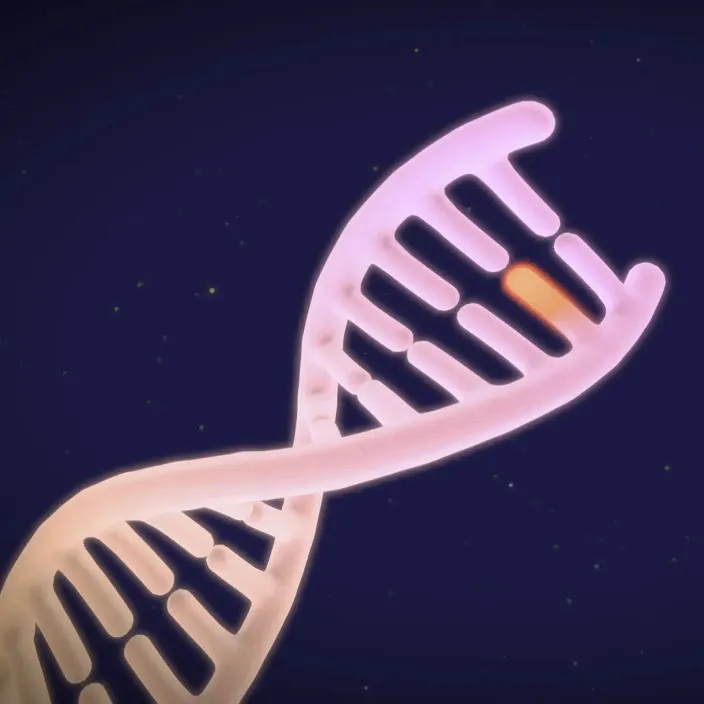
A single-stranded mutation is a single-stranded mutation.
In the billions of pairs of nucleic acids in the human genome, there are about 9 billion potential mononucleic acid substitutes.
It is impossible to complete a task if one-by-one verification is carried out in the laboratory.
AlphaGenome has thoroughly scrambled the table, read one million bases, grabbed local patterns with the curve layer, transmitted long-range dependencies of entire sequences with the Transformer, and directly predicted thousands of epigenetic and transcriptional trajectories, accurately to a single base.
Evaluating a variation results in a second as long as the sequence before and after the mutation is thrown into the model.
But even a second, multiplied by 9 billion, would take 285 years to complete.
What Atlas did was to compress the 285 years into an existing static detection table.
80 times fasterPutting 285 years into a tableHow do we find the most worthy mutations to study?
This time, AlphaGenome Atlas builds a multi-layered, high-resolution connectivity decryption system:
The bottom is the original prediction.
Atlas produced 27,000 molecular-effect predictions across key dimensions of gene regulation, covering hundreds of cell types and tissues in humans and mice.
It reveals how mutations affect chromosomal availability, transcription, and cutoff in different tissues, at different stages of development.
The middle layer is one-size-fits-all.
To help scientists screen for "high-risk variants" for a second, DeepMind used AlphaGenome (which is good at regulating mechanisms) and AlphaMissense (which is good at predicting erroneous mutations that can cause disease) to synthesize an intuitive single metabolic/pathogenic score for the AVI indicator AlphaGenome Variant Impact.
The higher the rating indicates the greater the risk of harm, the same measurement is used for the encoded and non-encoded zones.
As a result, it occupies 98% of the unencoded "dark matter" zone. This is where the vast majority of human complexity and disease-associated mutations hide.
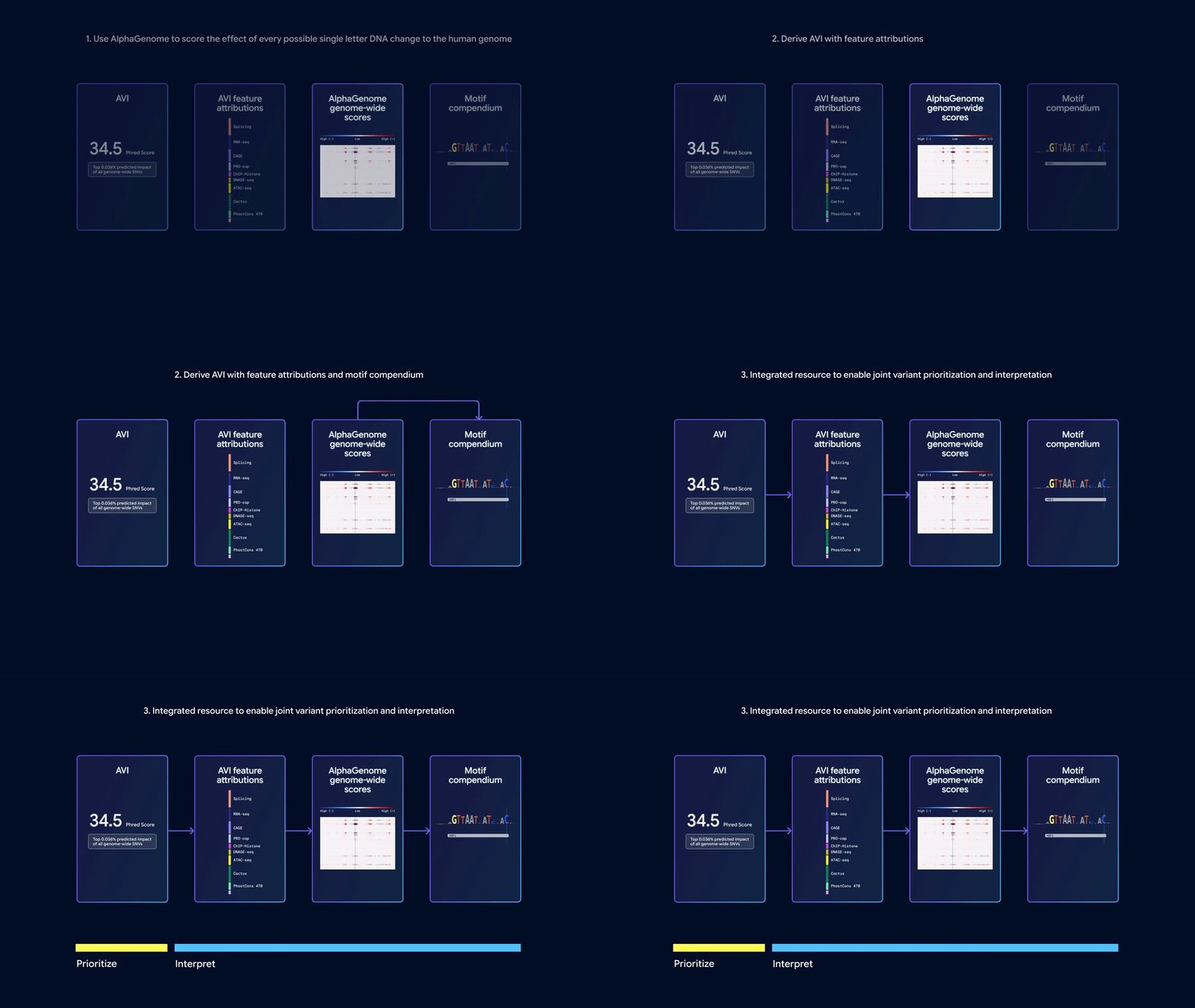
Full transparency attribution dismantled
AI can't just be a "black box rating".
Atlas also deconstructed the AVI scores of each variant as explanatory biological contributions, telling the scientists exactly what to expect.
This mutation scores higher because it disrupts RNA shearing, interferes with chromosomal openness, or changes the abundance of gene expression.
The top floor is a panoramic vocabulary
The team extracted 2,601 high-frequency DNA patterns from mass predictions, marking 253 billion instances across the entire genome.
These layers of data are open vertically. Researchers can start with a variation and, with a few mouse spots, determine which control element, the core module in the element, and the corresponding transcription factors it destroys.
In the past, it took several years of collaboration between thematic groups, but now it has been reduced to a few mouse clicks.
Žiga Avsec, head of the DeepMind genome, revealed that in order to extract the 1PB data, the team increased the speed of the entire computational flow line by 80 times.
Solving the SuspensionIdentifying the culprits of childhood illnessWhat is the real military power of this system?
Prior to its official release, DeepMind's pioneering collaboration with the world's leading research institutions has produced stunning results.
In rare disease studies, one of the most troubling headaches is that genetic data has been collected, but the key changes to the explanation of the disease have not been found.
The Broad Institute's Anne O'Donnell-Luria and Laura Covill team had been in contact with a child with epilepsy since infancy, which was accompanied by epilepsy, delayed development and low muscle tension.
However, genetic analysis failed to confirm this, and the case remains unsolved for a long time.
This time, they rearranged all of the candidate variants that were released to AVI.
The result was a G-to-A mutation in a subset of the DNA1 gene on chromosome 9.
Atlas even restored the DNAM1 "crime scene": it created an incorrect cut-off point (an erroneous RNA spelling instruction) that caused the translated protein to become abnormally elongated.
Subsequent wet experiments fully confirmed the mechanisms of AI prediction and successfully detected the molecular hangover that led to Cerebral Palsy.
526 candidate variants, squeezed to 15 geographic zonesAnother use of Atlas is to help researchers analyze rare variants in populations.
Individual rare variants occur less frequently, and the effect is easily submerged in background noise with a large number of harmless variations.
Gareth Hawkes, of the University of Exeter, used the Atlas for the full genome data of more than 54,000 participants in a UK biological sample library.
Research on predicted molecular effects will analyze rare variants.
According to DeepMind, this method found more than 22 percent of non-coding genetic associations and helped to locate the regulatory variations that affect the abundance of circular proteins, involving PLA2G7 and the cellular oxygen-sensing gene EGLN1.
In another analysis of the body mass index (BMI), Hawkes focused on the 1% largest non-coding variation that Atlas predicted to affect, identifying 19 genetic regions and narrowing the scope for subsequent targeted studies.
Atlas also compiles more than 2,500 repeated DNA short sequences and their locations.
They are similar to "words" in the genome, helping researchers find the binding location of regulated proteins and tracking which regulated links are disturbed by non-coding variants.
Life sciencesWith a direct-to-view forecast mapThe new findings have one thing in common, which is that the patient is delicious.
No research team has ever run AlphaGenome from head to toe in a local engine room, and all the breakthroughs are based entirely on a "direct checklist".
For the first time in human history, researchers from any corner of the globe can see a complete map of the human genome and its variations as soon as they open their browser.
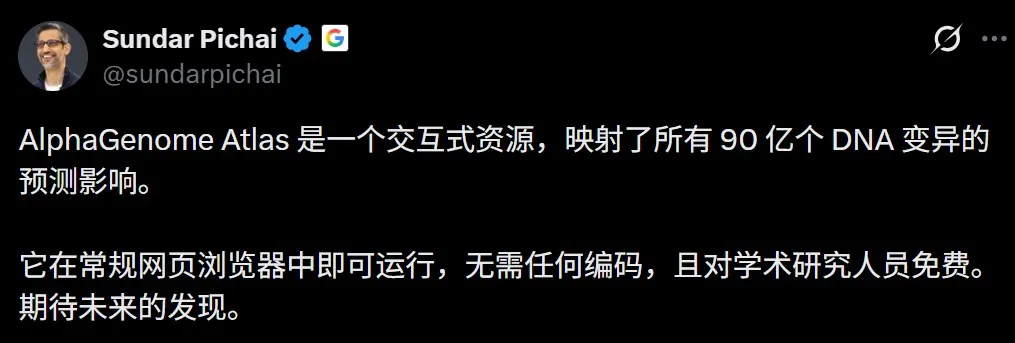
To read a non-coding mutation, it often required GPU resources, senior bio-sign engineers, and time to modulate complex pipelines.
Today, these technological barriers are completely wiped out by this static chart.
In addition to web portals and APIs, Atlas also uses native tooling skills to access Google's Antigravity smartphone platform.
DeepMind has previously packaged more than 30 scientific databases, including AlphaGenome, UniProt and others, into Agent Skills packages.
In the official presentation, the researchers say a word about AI, and the intelligent organism automatically checks the location, ranks the danger, draws a structural map, and gives verifiable hypothesis chains.
The age of speculation is overAfter 23 years of drowning, humanity has finally found a guide to the interpretation of the "Book of Life".
The AI labels each potential misspelling in 3 billion characters in advance, along with the possible molecular consequences, and provides a complete list of human misconceptions.
Looking back at DeepMind's path in the field of biocomputing:
In 2020, AlphaFold attacked the three-dimensional folding of proteins; in 2022, the AlphaFold database opened up 200 million protein structures worldwide; in 2023, AlphaMissense completed the pathogenesis of 71 million protein variants; and in 2025, AlphaGenome read non-coded control zones.
To date, Atlas has completed a poor mapping of the possibility of a single-stranded mutation in the entire human genome.
In just five years, DeepMind has transitioned from analyzing the physical form of a single protein to deleting all single-stranded changes in the entire human genome.
From "Reading Life" to "Predicting Life".
The next era of life sciences has begun.