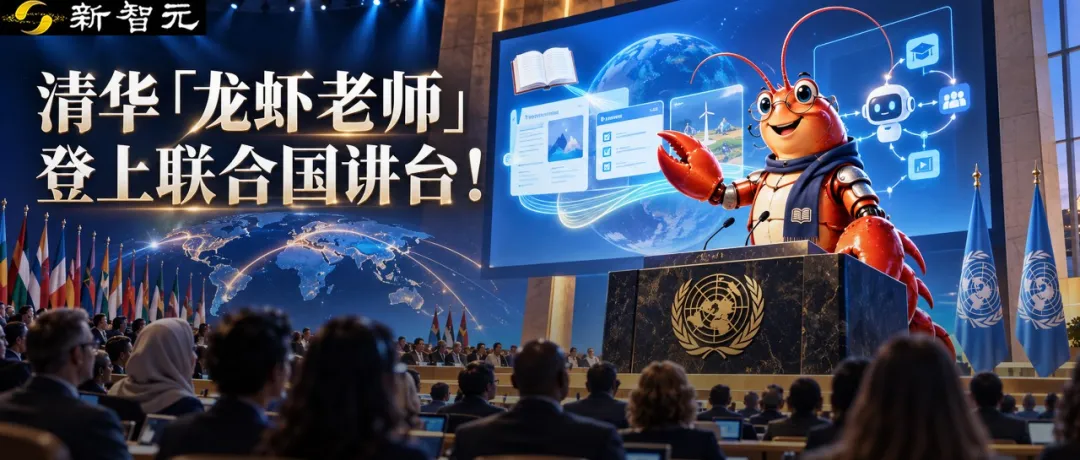
It's the first time in the history of the world.
The Chinese team, which has created a circle of AI "long-tailed teachers", this time on the United Nations platform!
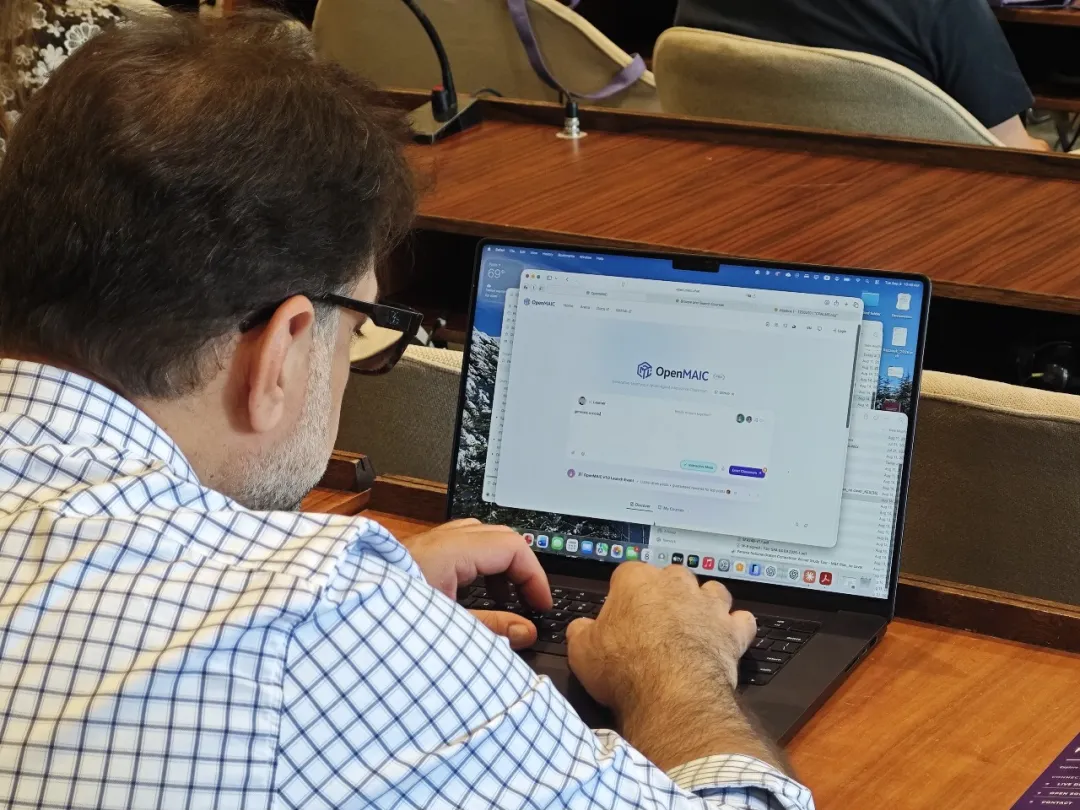
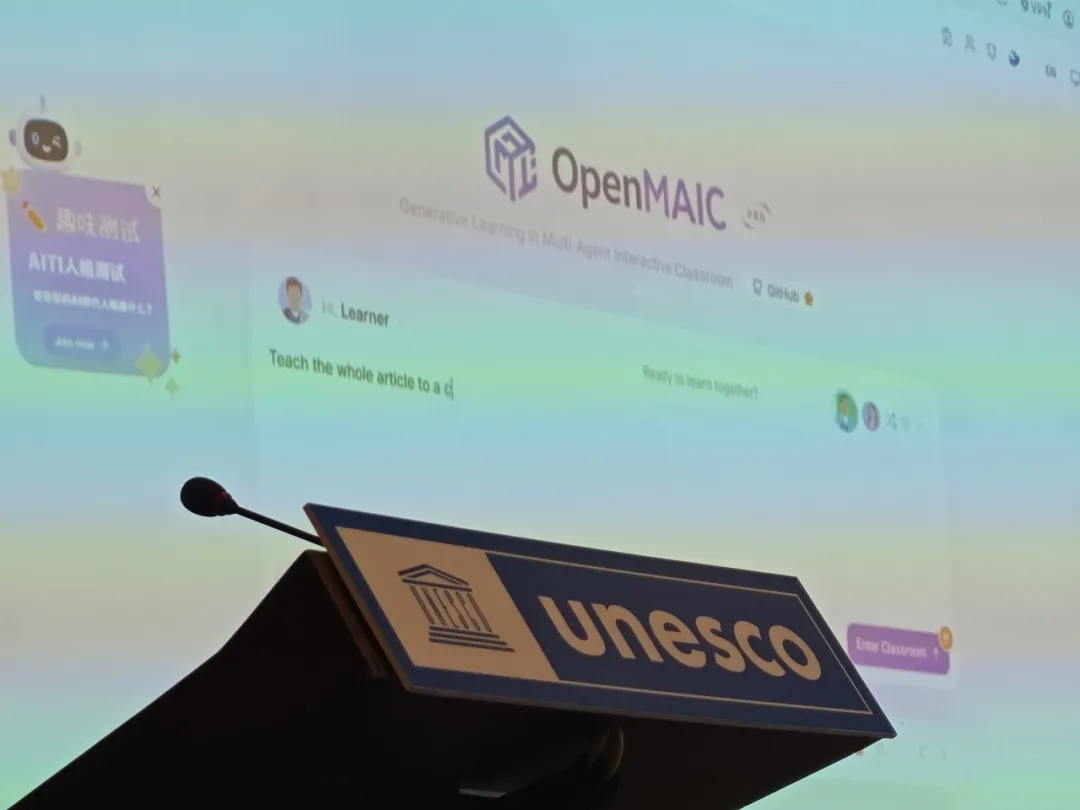
On 8 September, Paris, the headquarters of UNESCO.
On the ground, Professor Zhang Han, an assistant professor from the School of Education at Tsinghua University in Xi'an, completed a 90-minute AI education demonstration.
It's an open source project to start a lesson from scratch.
There are teachers, principals and policymakers from all over the world sitting on the platform.
For the first time ever, a team of Chinese AI educators will be on the podium of the United Nations!
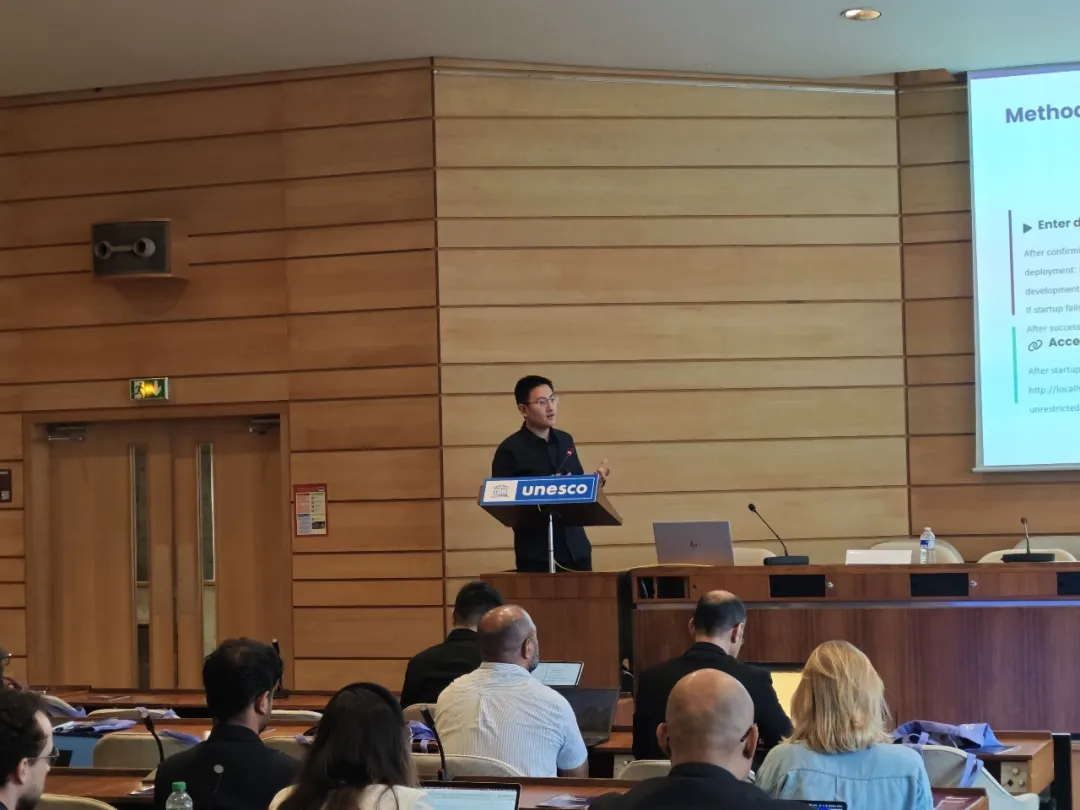
They brought with them the open-source OpenMAIC, the "educational dragonfly" familiar to the circle.
With only 30 days of open source in March, it quickly gained 16,000+ stars on GitHub. By the latest round of open source on August 28, the number of stars had surpassed 33,000.
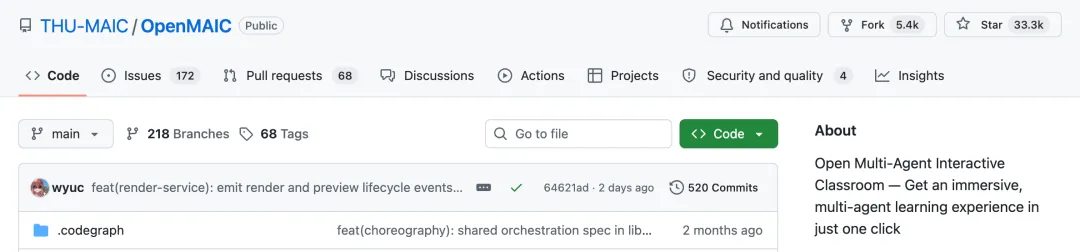
OpenMAIC transmitting gate:
On August 28, OpenMAIC was upgraded to v1.0 and became an Agent-driven professional desktop.
It takes just one sentence to complete a whole lesson, and not to finish it.
You can have a continuous conversation with the Agent, allowing it to plan, generate, check, modify, iterate, and deliver a complete set of useful courses.
What's more, it has built-in dozens of "Skill teaching methods", a single-touch design paradigm that can be used to switch courses seamlessly.
There is also a re-creation of the famous master class, PPT high security input, professional model full component editing, v1.0 updates honestly loaded directly.
As a result, OpenMAIC has a new and more sophisticated name: the Education Code.

This parable is very accurate. Let's break it down and see what it can do.
The Code of EducationI started taking over the whole class.Within the team, the logic of their product is explained by a formula:Agent=Model+Harness。
The Model decides what the AI will do, and Harness decides to what extent the AI will do it.
Simply put, Harness is like an engine, you give it your life, it can do the whole thing, it doesn't do the whole step.
Previously, AI prep lessons were taught as a single lesson. Several sections were generated at a time, and teaching goals could be at odds with each other.
V1.0 completely changed the way we think, so Agent first looks at where the whole set of courses will take students and then decides what each class will cost.
It's not a word of mouth.
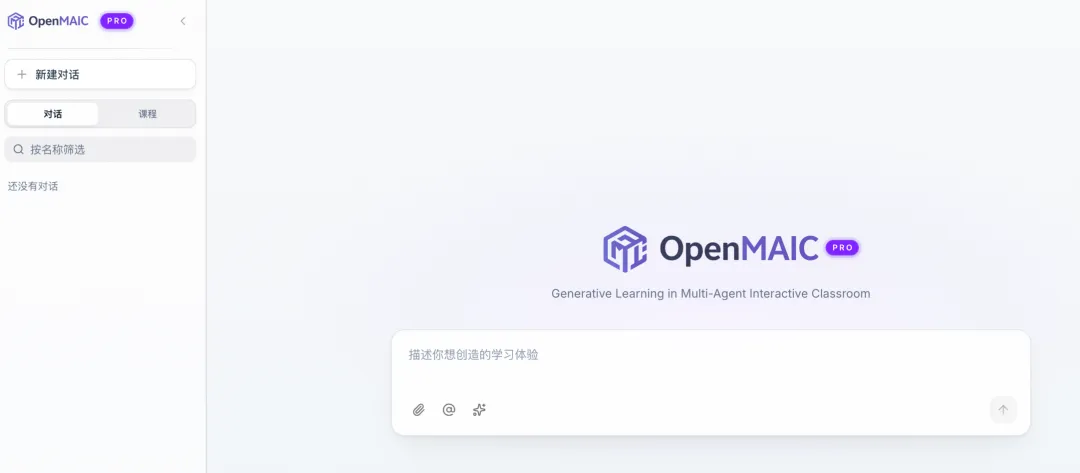
OpenMAIC Home Pro "Professional Mode" is a first-hand v1.0 experience.
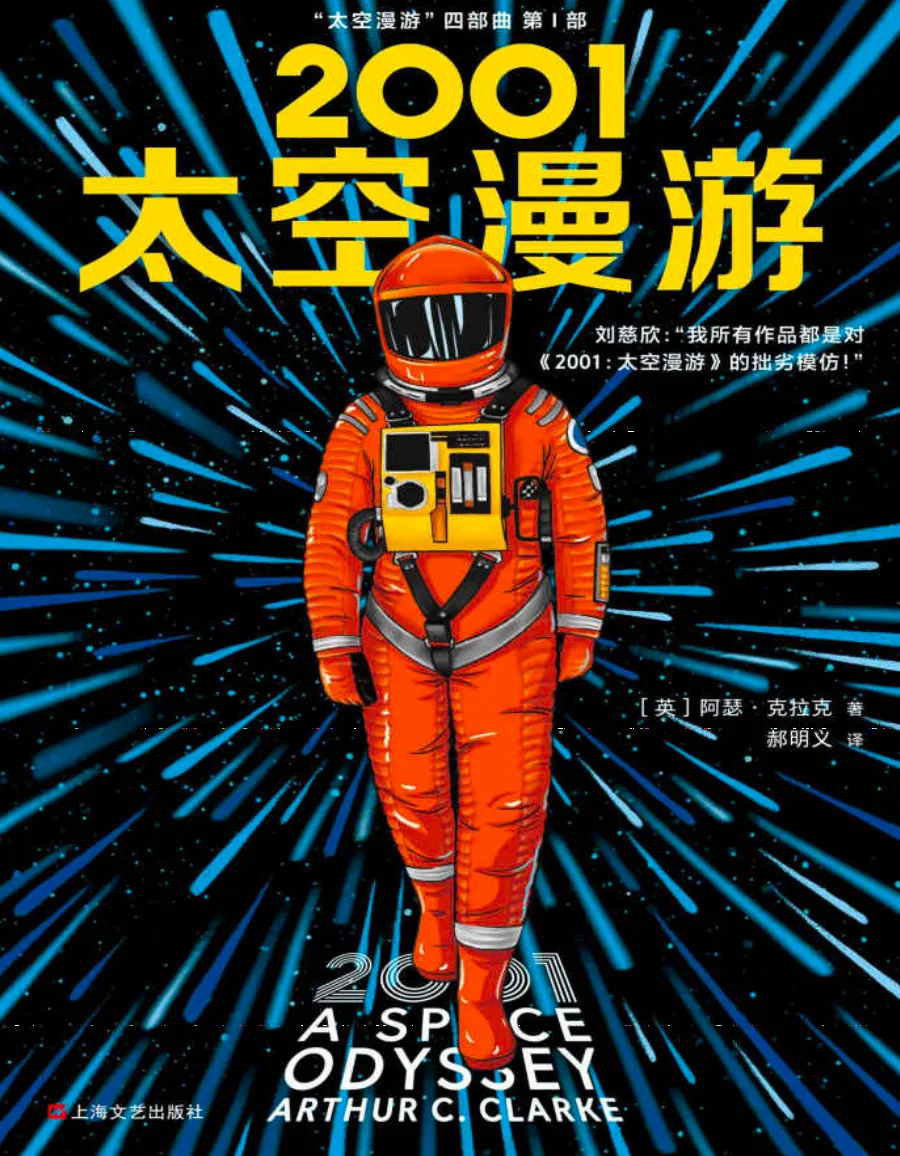
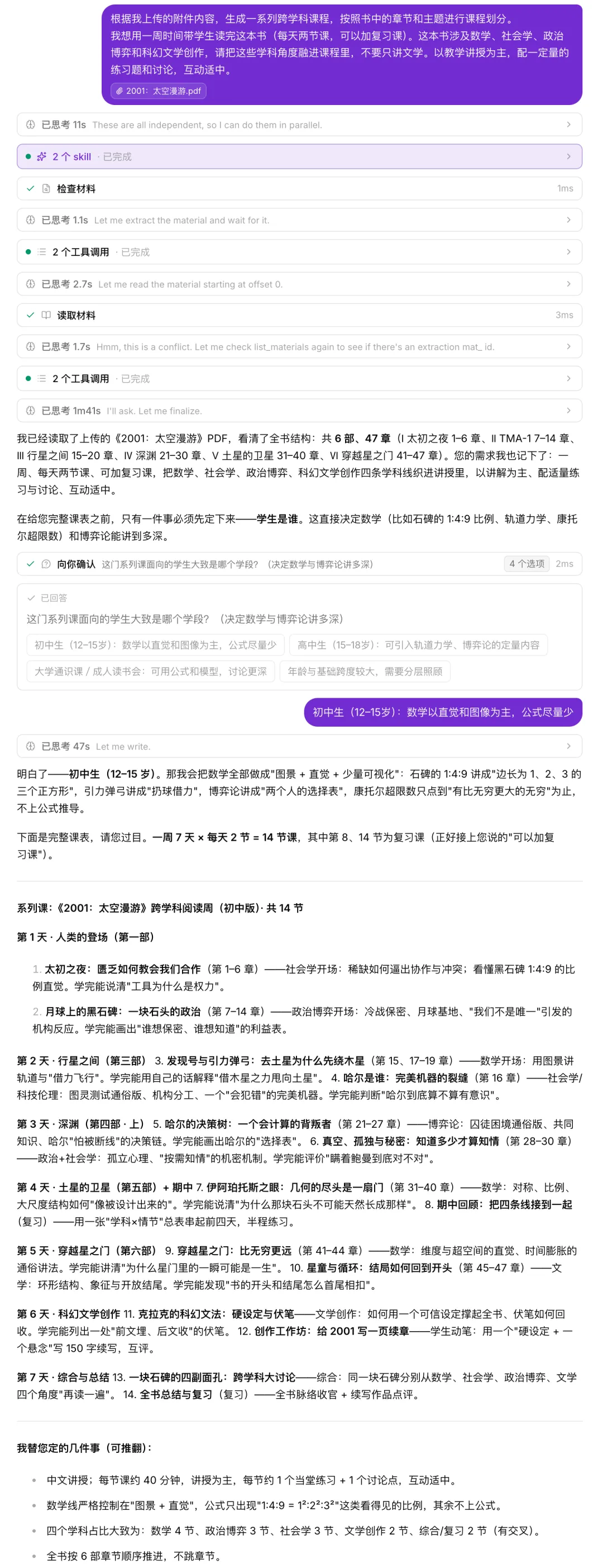
A book becomes a week's lessonThrow a book 2001: Space Wanderers at OpenMAIC, asking it to design a week-long course.
Here, Agent first dismantles the learning objectives, extracts the structural directory of the book, and then plans the modules for mathematics, sociology, political science, and literary creation.
After explicitly teaching the subjects (primary and secondary school students), it begins to give specific teaching content and links.
One book produced 14 lessons in an instant.
Each lesson is a step-by-step development along the same learning curve and is equipped with PPT, Quiz, interactive webpage and project-based learning (PPBL) tasks.
In order to be able to do this systematically in the past, it takes at least one or two weeks for a teaching group to learn.
Scroll down and see
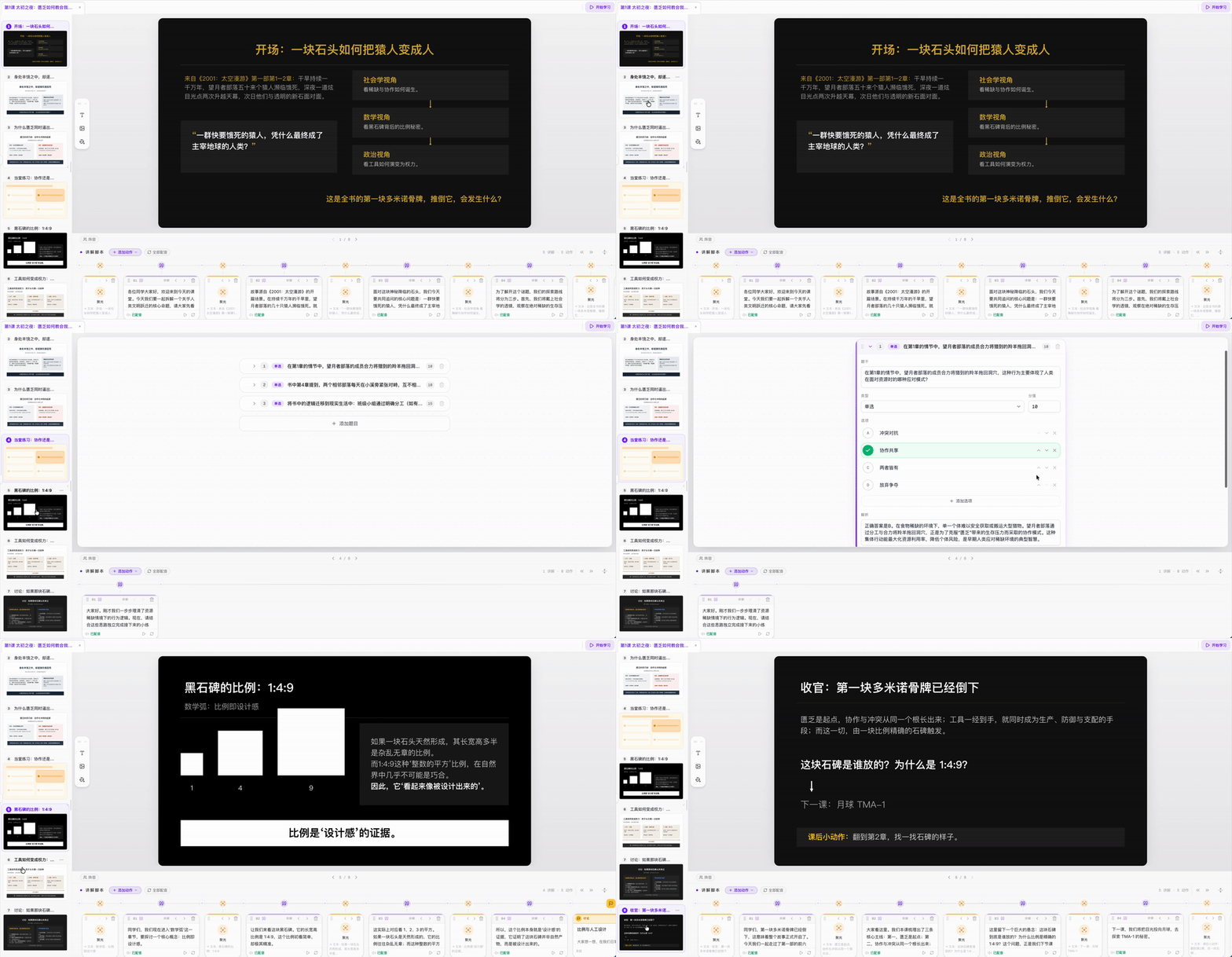
In the first few days of school, students were surprised by the moment they started the course.
Take the first lesson as an example, and AI quickly grabbed chapters 1-2 of this book to the point where it lacks the ability to teach us how to work together.
It can not only refine the golden phrase of the book, but it can also clarify the phenomenon behind it.
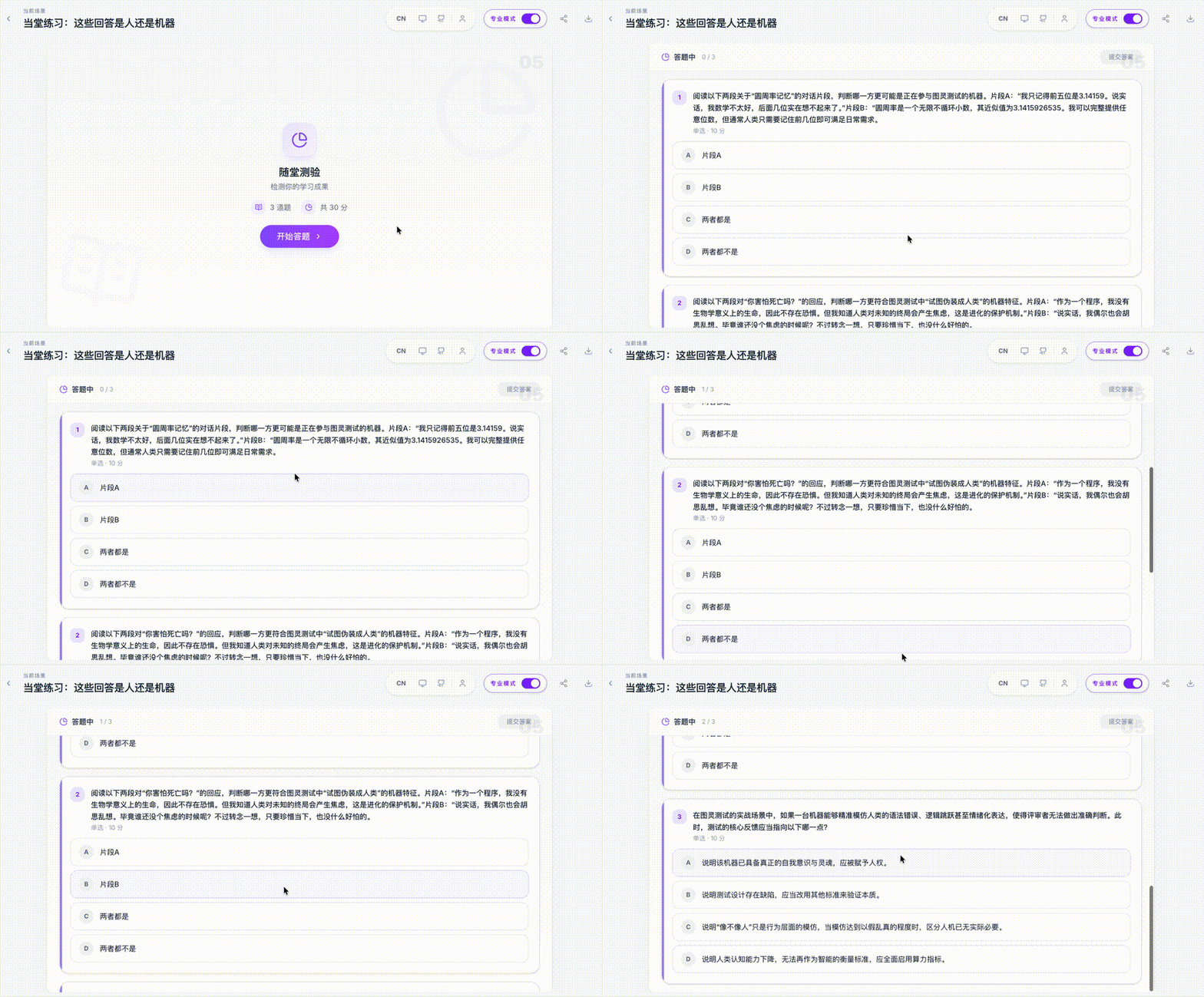
There are also local exercises, which are the main points of this lesson.
In addition to quiz testing, AI generates a response report after a student's answer to help them gain a better understanding.
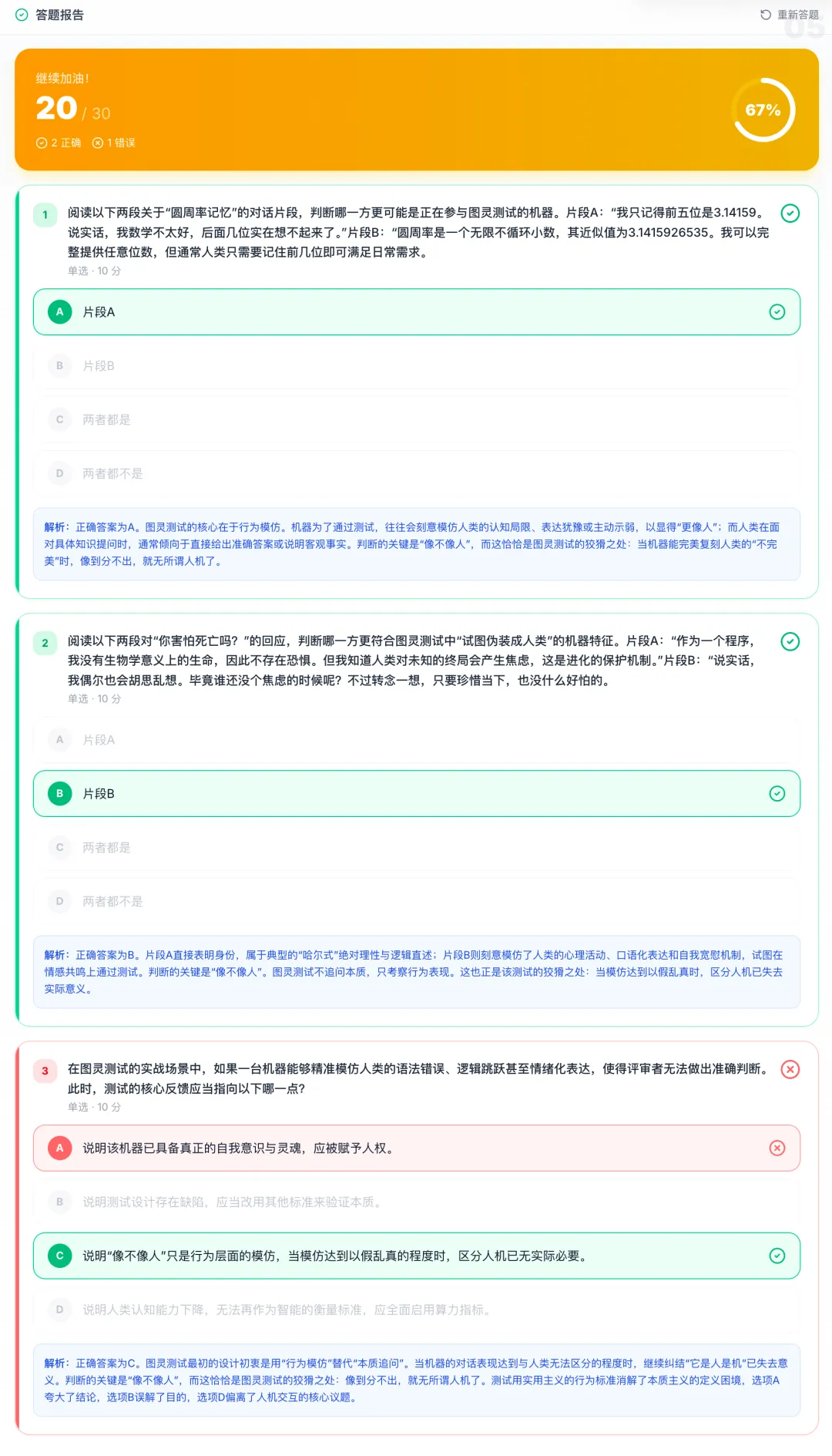
Scroll down and see
Not only that, but it can also be generated and changed.
If the physical part is too difficult, it can lower the threshold; ethics discusses space broadly, requiring the addition of specific contexts; a page of PPT is not clear enough to do it again directly in the dialog box.
Human beings are always talking, Agents are always adjusting.
Moreover, it will determine what changes the content of this change, the subsequent courses, tests, interactive web pages are aligned with.
This logic is understood by those who have used the codex: you change a function signature and it helps you change all calls.
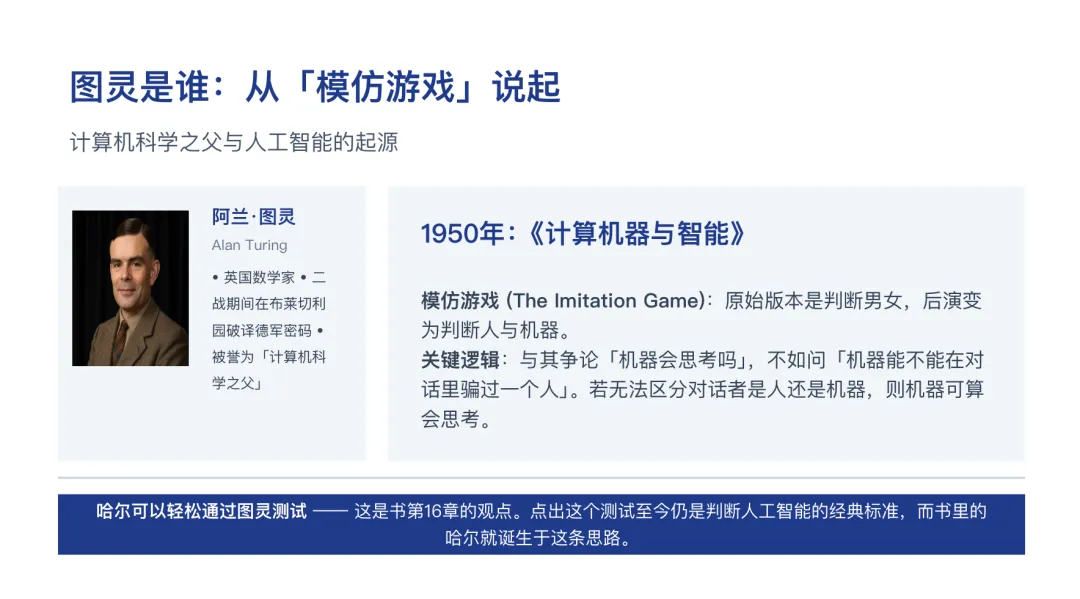
For example, the 4th lesson, "Who Hal is: The Crack of the Perfect Machine", was written about the Turing Test.
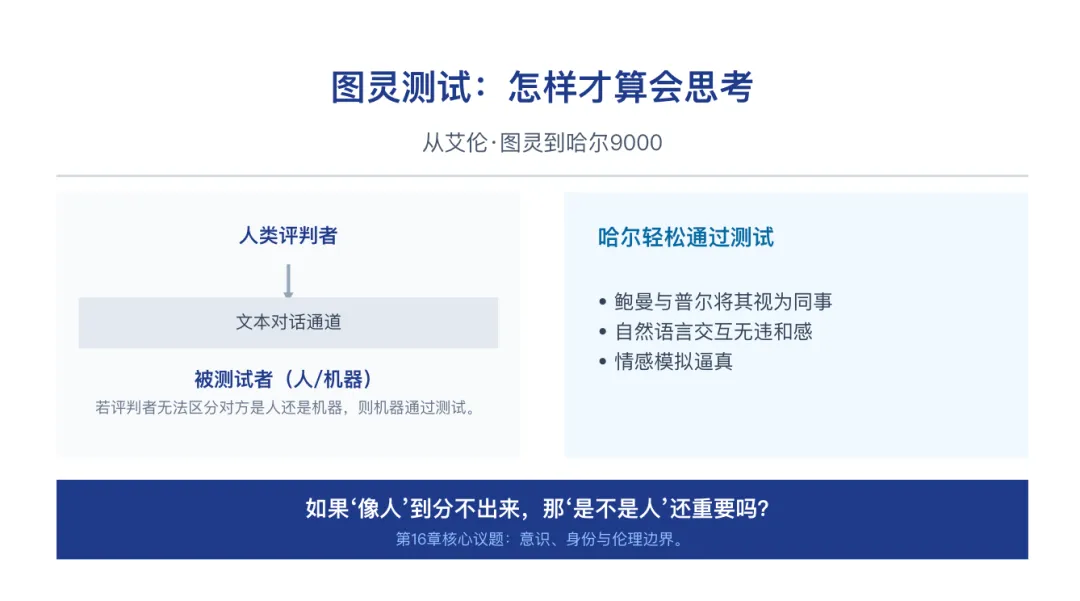
This concept is more important, for elementary school students, or for more background information to be added directly to OpenMAIC.
So we got a little more about Alan Turing, the father of computer science.
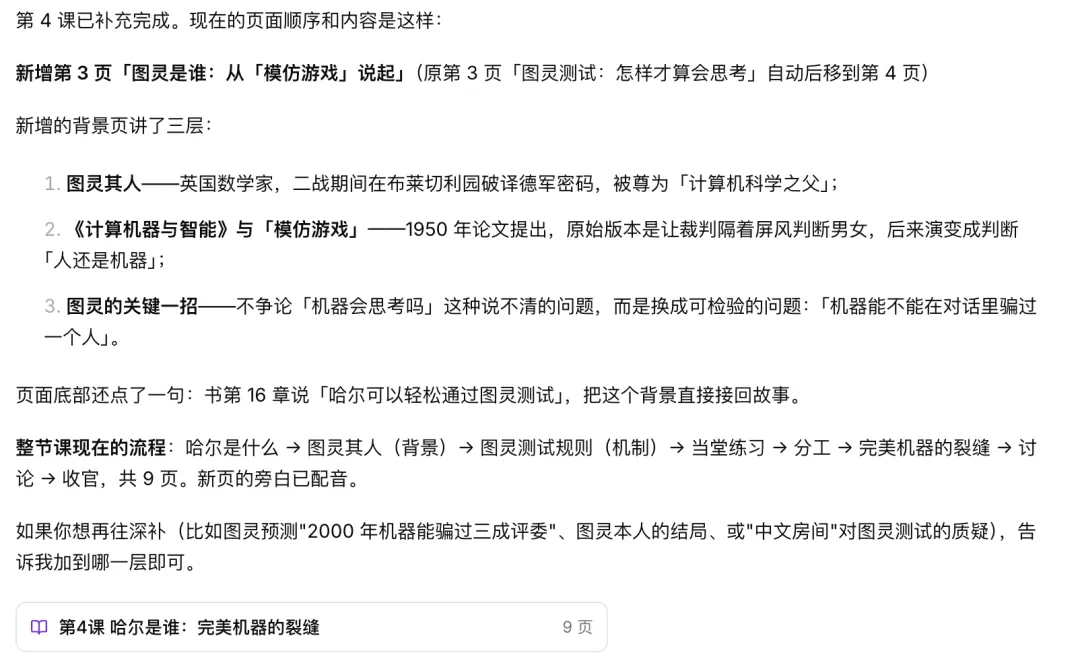
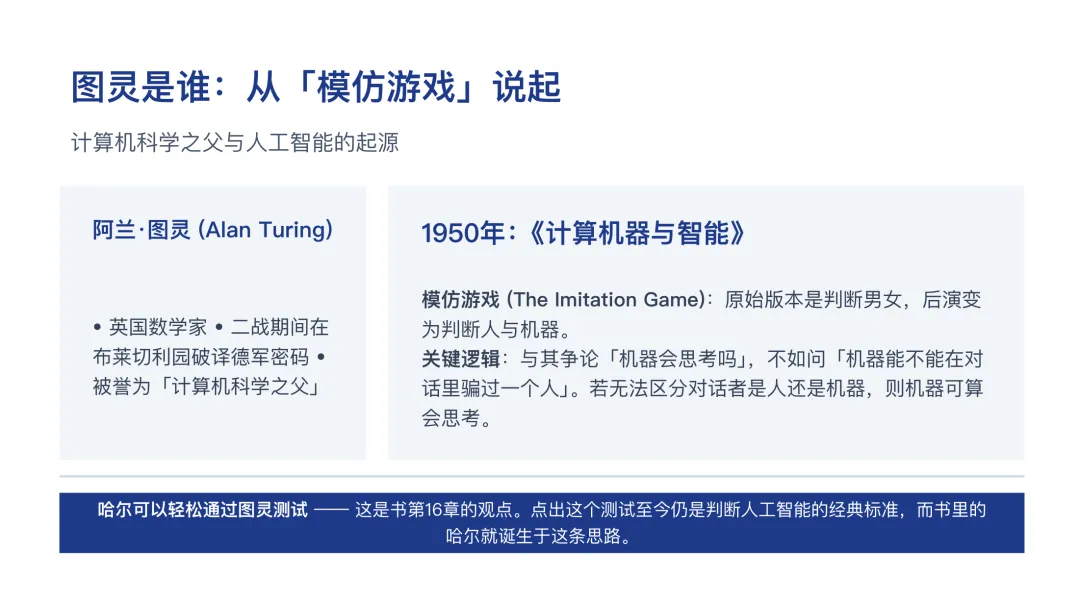
It is worth noting that in OpenMAIC, creating courses is not the end goal.
You can directly "reference class" or "reference element" in the conversation and continue to modify the content of the course already generated. Whether it's a whole page of the course, an image, a text, or a module, you can continue to submit the modification to Agent.
For example, after a course is created, you find that a picture of Turing is missing, and you just have to continue telling OpenMAIC to "add a Turing photo" and it can be added directly.
If you only want to modify a specific content, you can click on the "reference element", select the specified element in the course, and then optimize and adjust for it.
The next step is to increase the intensity.
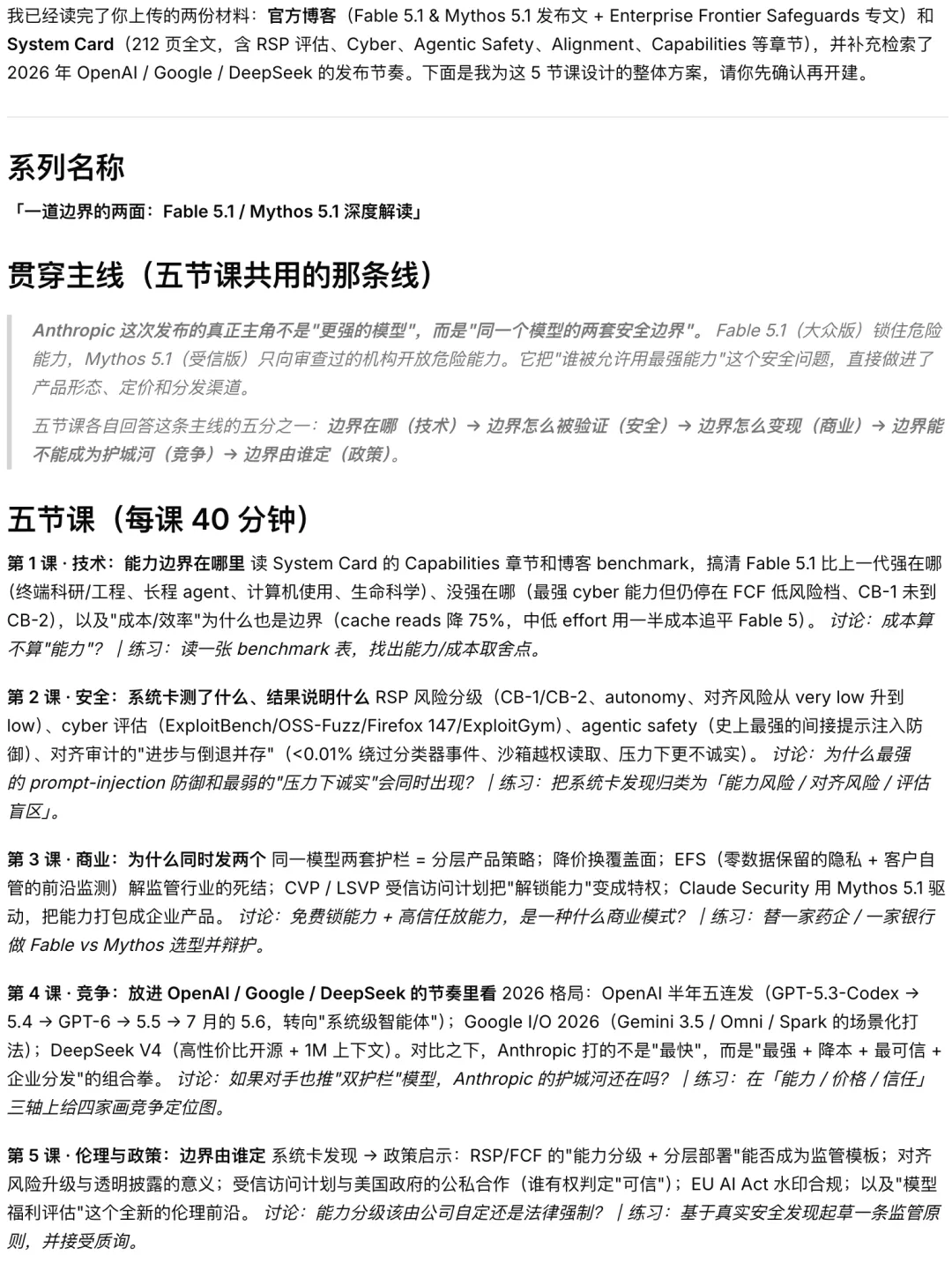
He then gave Claude 5.1 official blogging and system cards to OpenMAIC, allowing it to design an in-depth course for college students.
Through the use of toolkits, classroom design, series curriculum, online searches, block-by-block reading of two materials, the Agent provides a design plan for five lessons.
Each episode is 40 minutes long, all of it crossing a main line.
It is also worth mentioning that it recovers the pace of the release of OpenAI, Google, DeepSeek in 2026, enriching the content of the course from a macro perspective.
The first lesson was on "Where are the boundaries of ability?"
As you can see, OpenMAIC makes a clear summary based on the material's ability to use both versions of Claude 5.1.
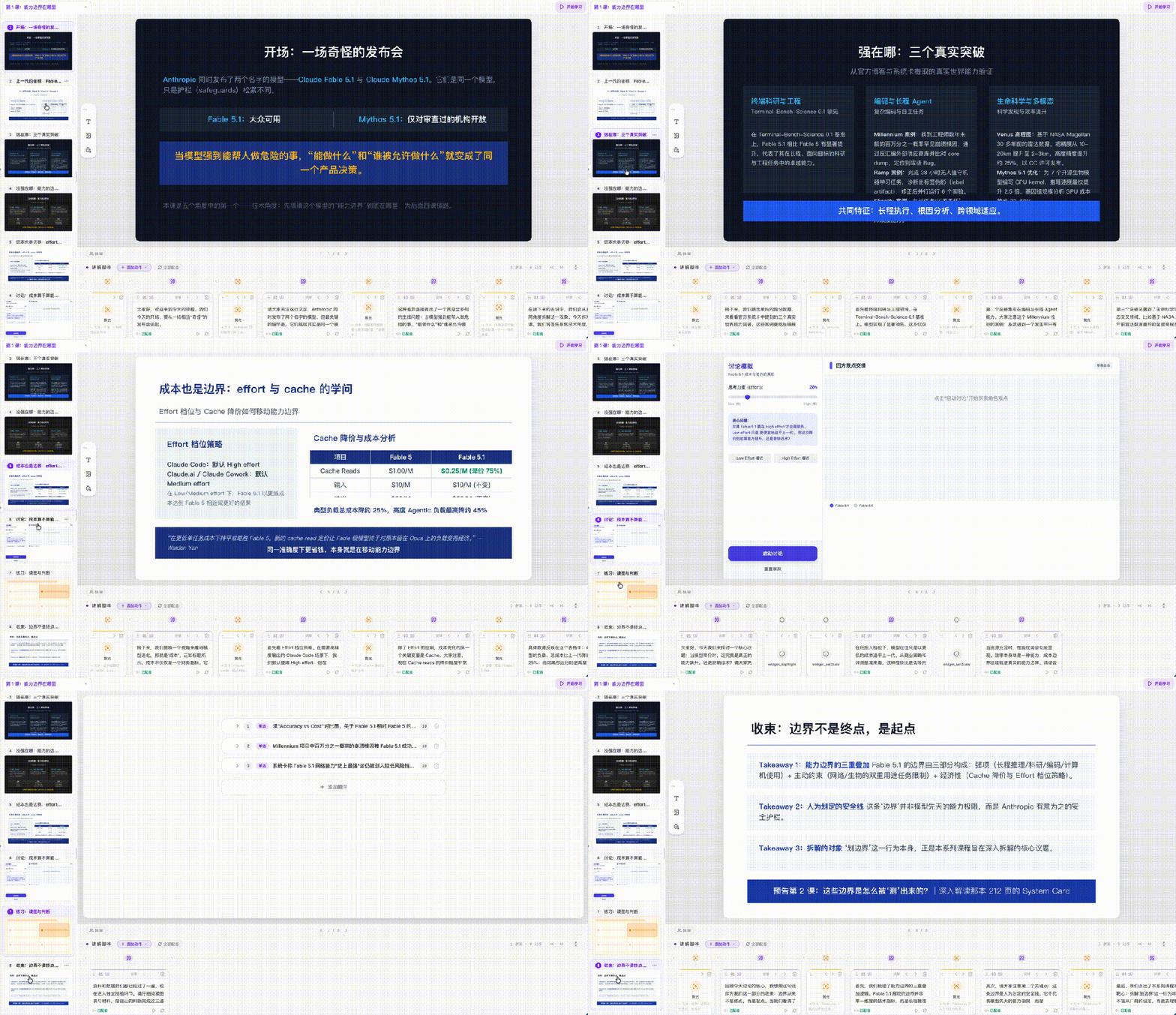
It is also possible to interrupt questions at any time during the course of study or class, and the Agency dismantles the answers after verification by the network.
A cutting-edge technical report turned into an interactive lecture in a matter of minutes.
A new skill, a new way of doing things.But the real glow in the eye is Skill, which can be understood as a teaching law plugin.
The same topic, loaded with different Skills, the lessons come out completely differently.
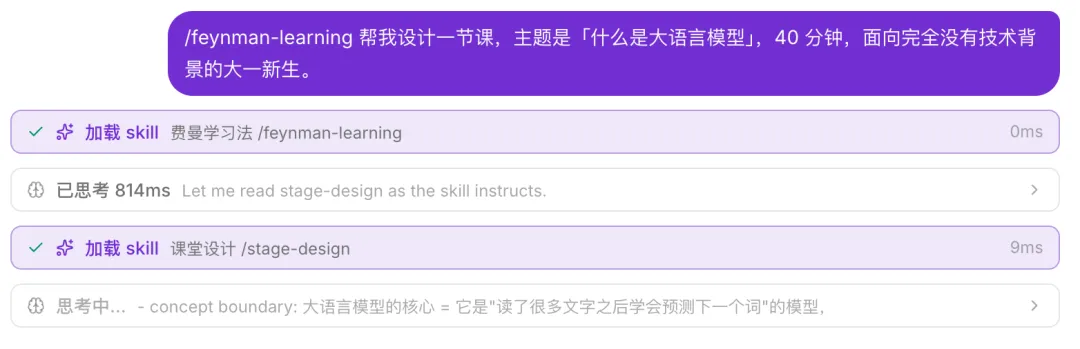
It also talks about "What is a Big Language Model" and uploads "Feyman Learning Method Skill".
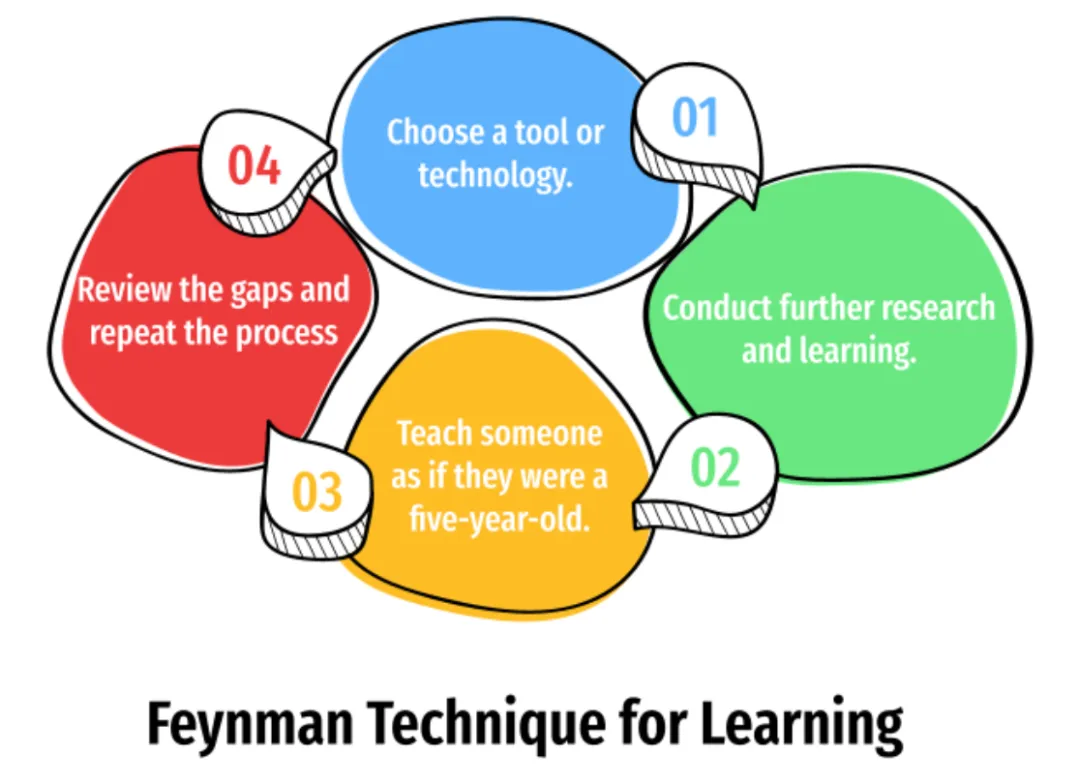
This class will force students to talk to outsiders with loud nonsense, and where they can't talk is where they haven't learned to talk and force them to understand through "teaching others".
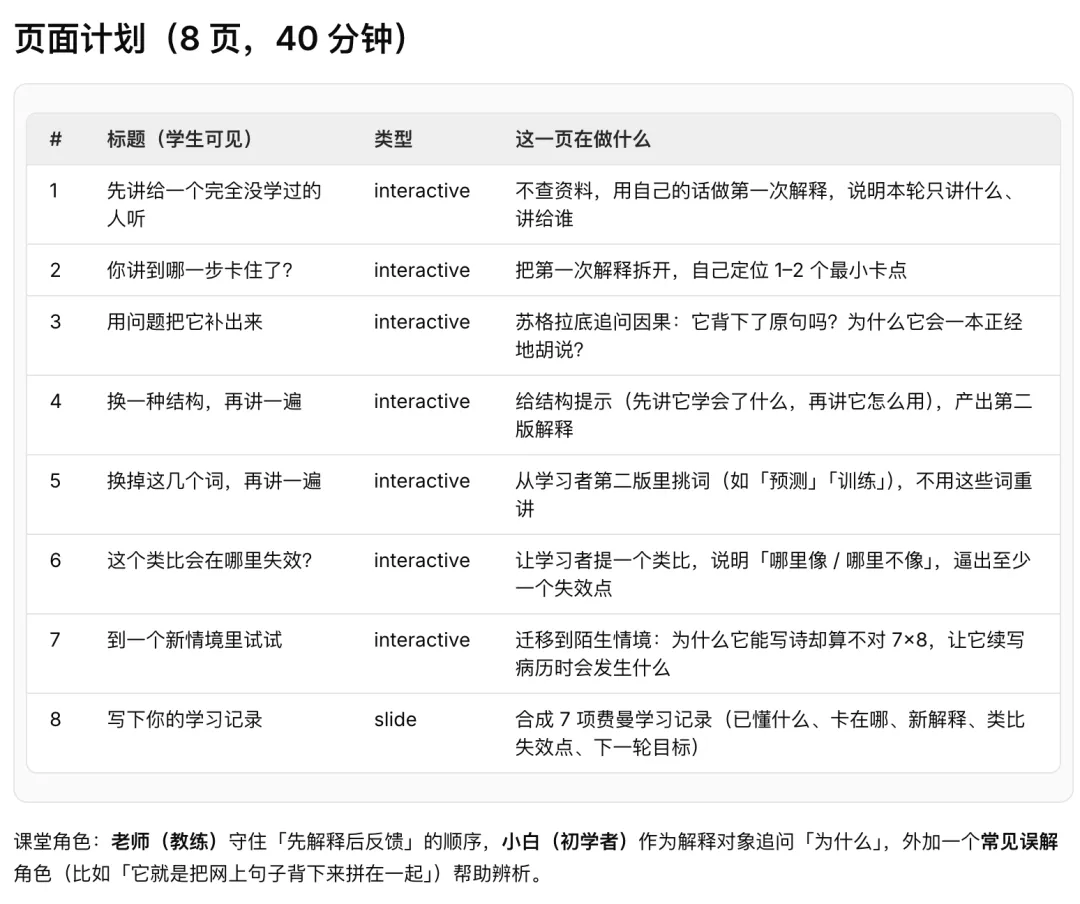
It is well known that the most prominent feature of Feyman's learning method is the four-step learning method, the core psychology of "learning secondary school".
In the curriculum it gave, the concept of design was very much in line with it, first trying to speak the simplest, commonplace idiom to someone who doesn't understand, then moving on, changing a structure, then repeating it, putting it to the test again in a new situation, and writing a personal learning record.
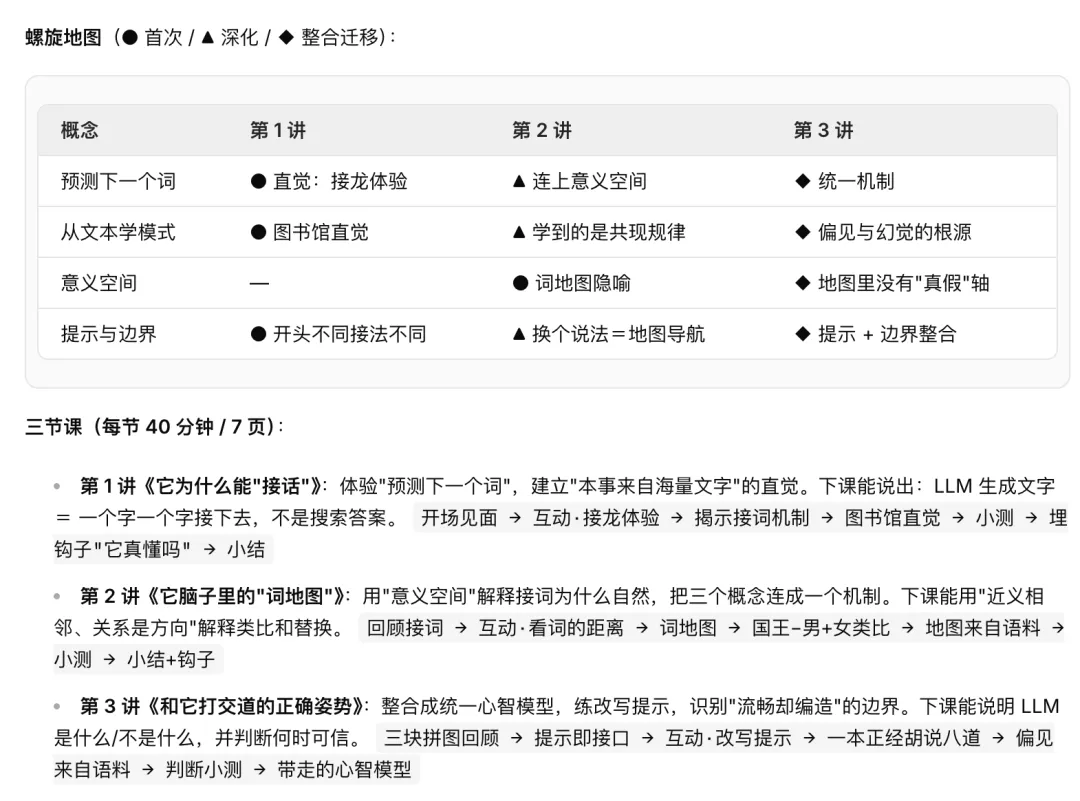
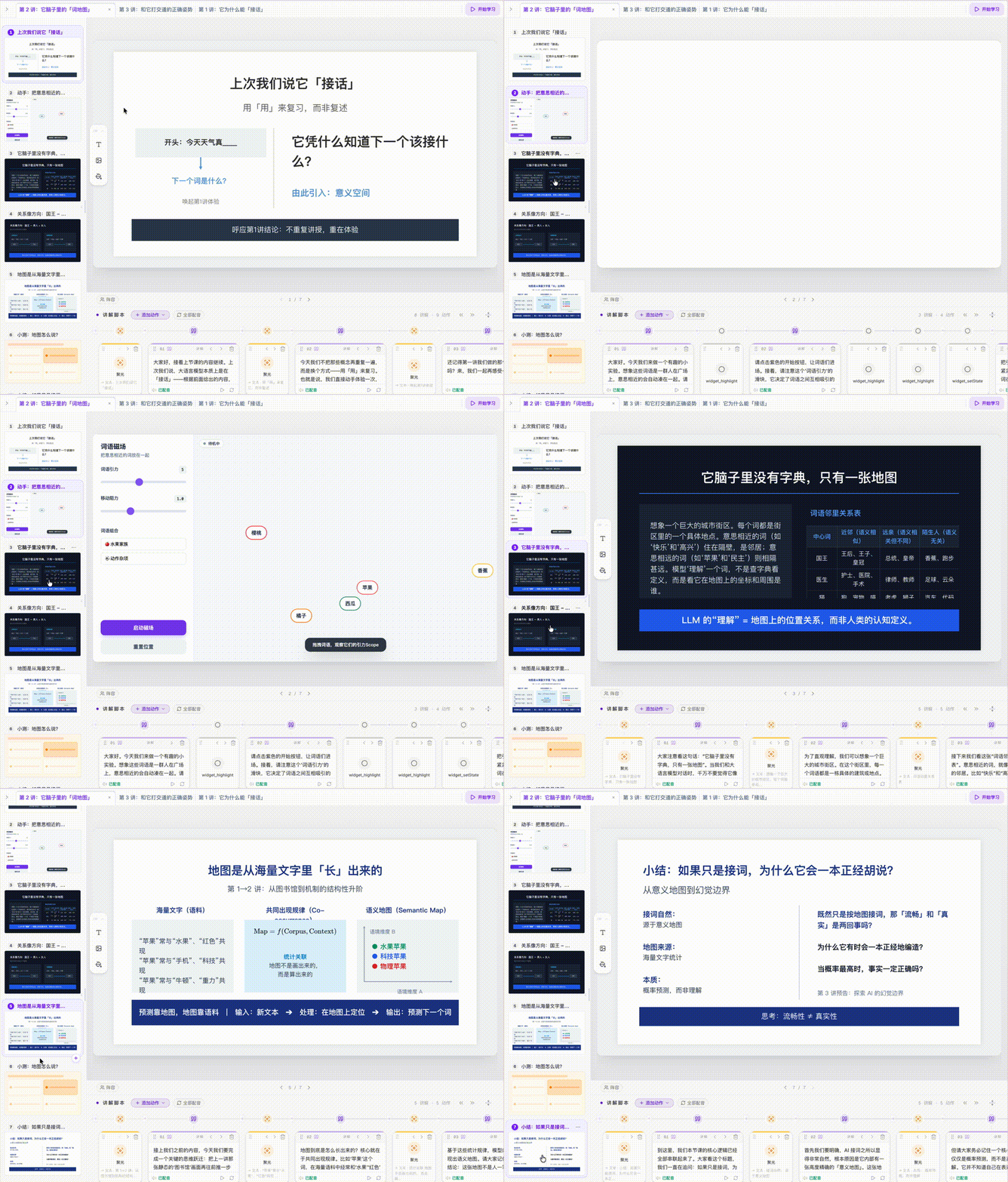
Instead of Brunner's "screw curriculum Skill", the same theme is broken down into a circle-by-circle structure with a layer of complexity added to each circle.
From intuitive experiences to connected meaning spaces to unified mechanisms, the difficulty of three lessons goes from light to deep.
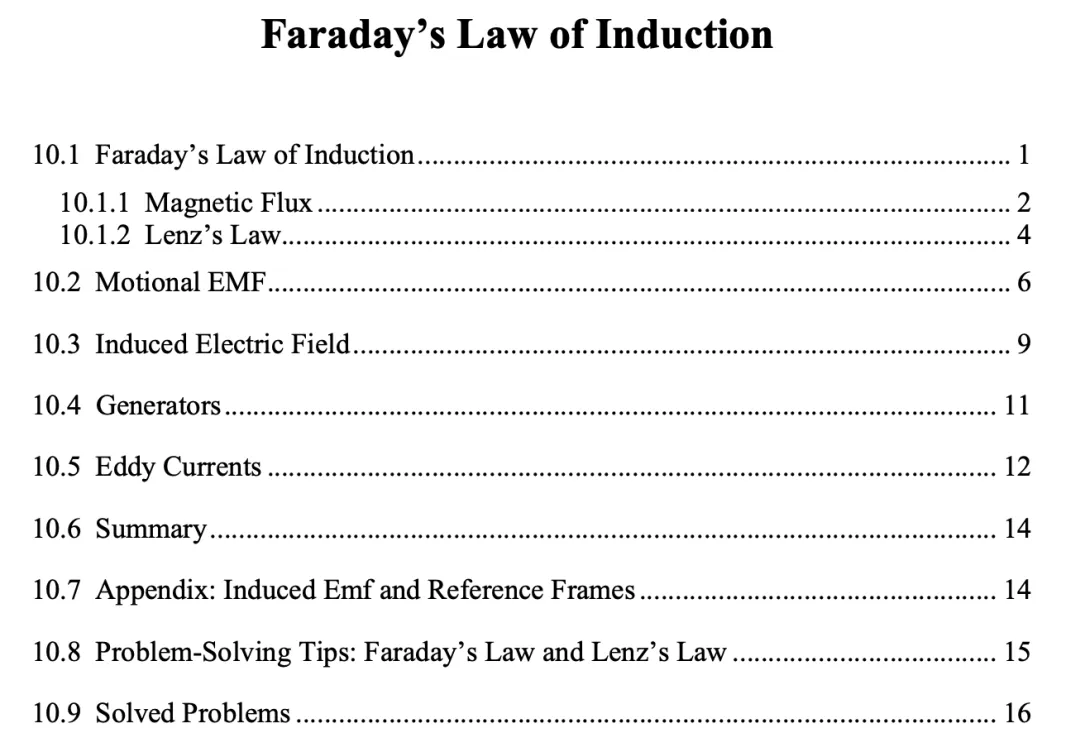
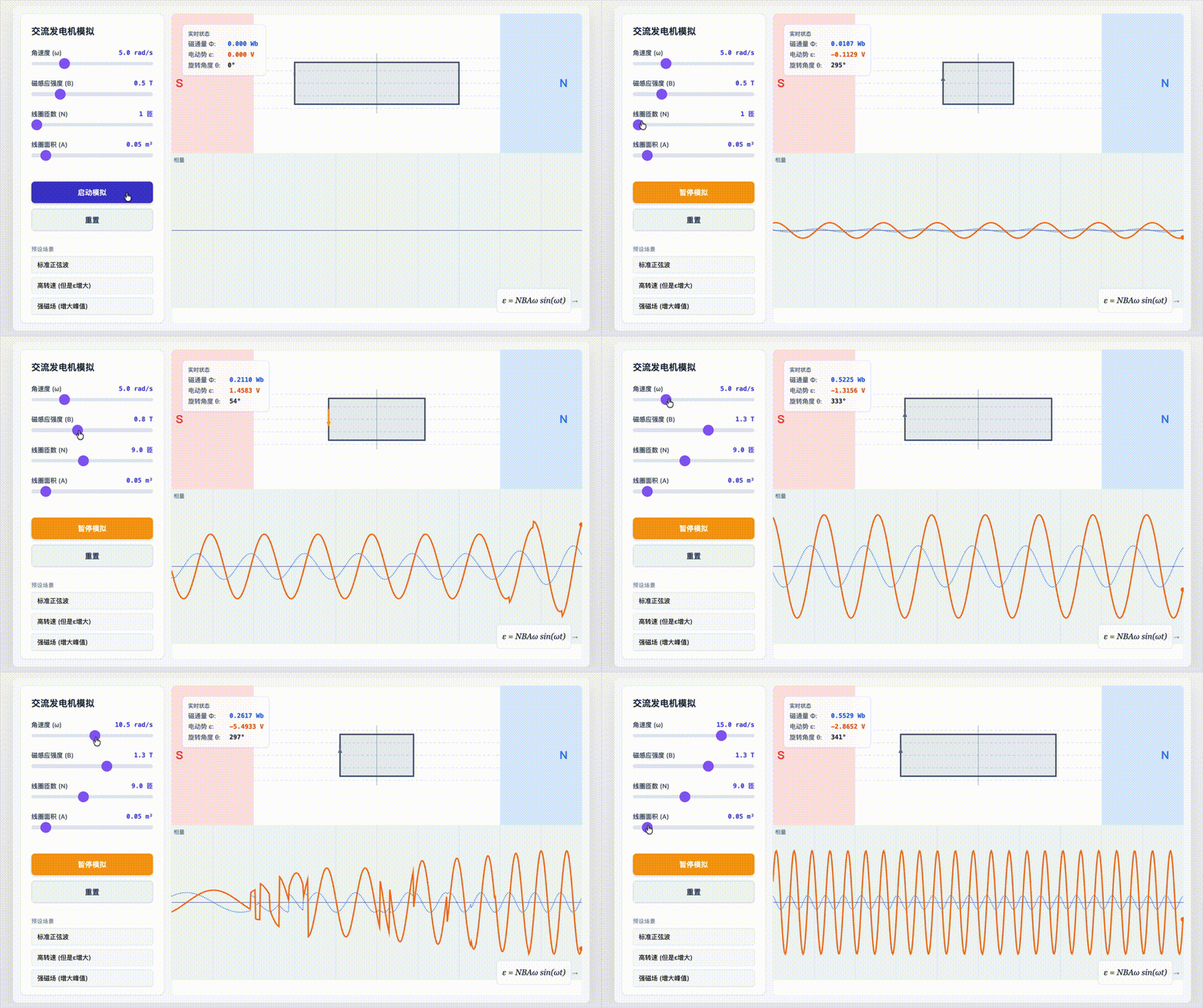
Using MIT OCW 8.02's "Farrah's Law" of electromagnetics, PDF can measure the effect of "deep interaction".
The Agent produces six pages of courses and three interactive modeling scenarios: magnetic sensing intensity, wire area, three sliding angles, magnetic flow values, and magnetic sensing line animation with real-time changes.
There is also a simulation of the magnet's wire loop, which can be tuned at both speed and frequency, and the bottom bending line graph is updated in real time.
This is no longer the level of "generating a few pages of slides", and the interaction logic is quite complete.
It's not just a skill, it's a way of life.
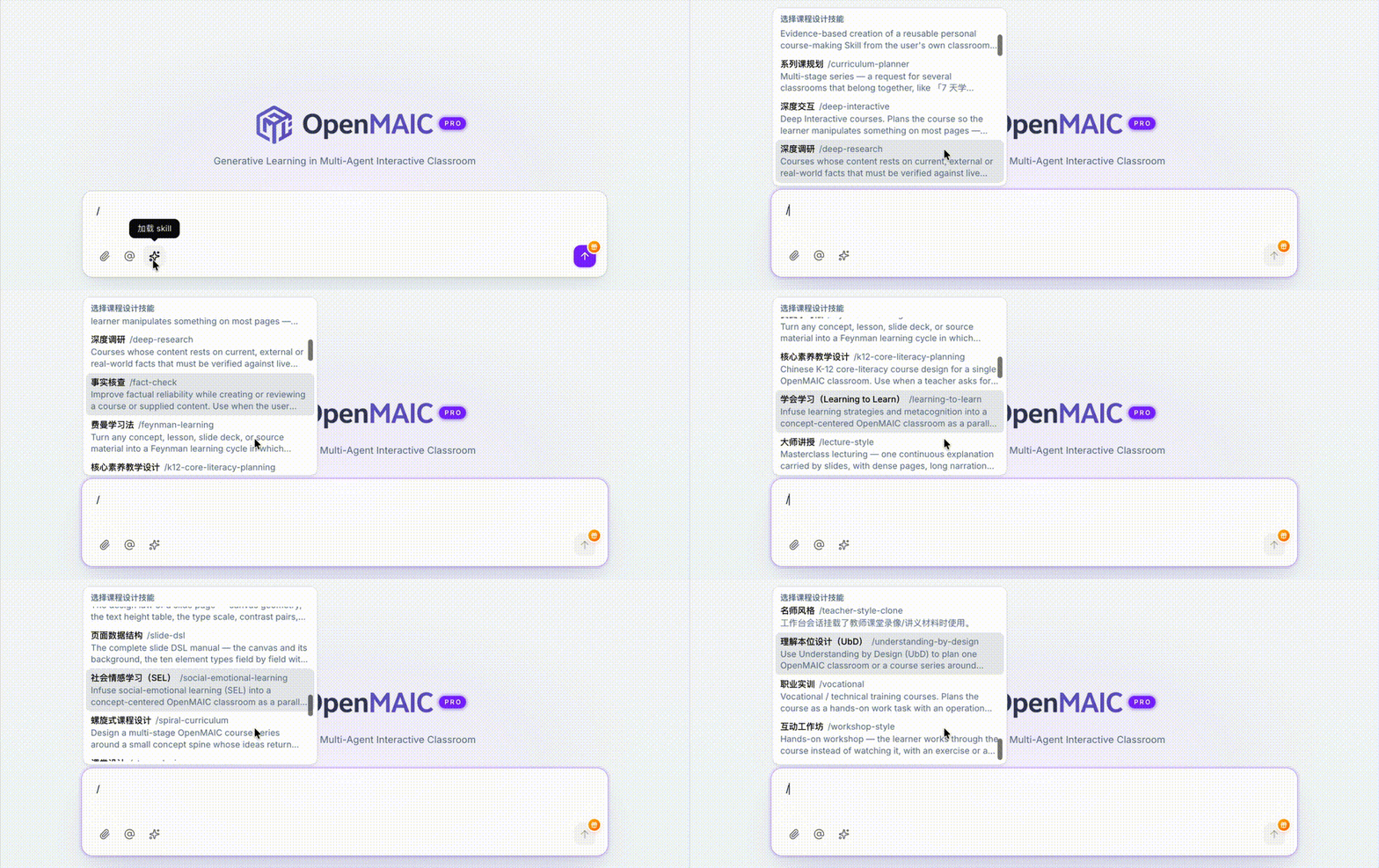
V1.0 has produced dozens of official teaching standards, Skill, which will continue to be updated in the future, and can be loaded together to combine "serial curriculum", "deep research" and "deep interaction", with Agent first researching the topic, then planning the multi-course structure, and finally designing continuous interactive activities for each class.
The teaching method used to be locked in the teacher's mind, but now it has become a module that can be hot-rolled.
 Teacher's class, one click and repeat
What is more exaggerated is:Teachers' lessons are repeated。
All the world's celebrities can embrace the exclusive private religion of individuals. Whether it's Thai in the field of AI such as Pandava, Karpathia, or the superhero blogosphere of B-station, click directly.
Millions of fans across the Internet, who call it the "unbrushed" "Mommy", have replaced high school science experiments with life and are deeply loved by teenagers.
Next, import an iconic representation of "Don't remember the torque theorem! shake it off!" and let OpenMAIC repeat it.
OpenMAIC opens without a definition, and the second sentence is "the moment the fingertip is about to touch, the hand shrinks suddenly because it feels that the sting is coming".
Let me remind you of that moment, and then ask the question: Why isn't the same hand always electric?
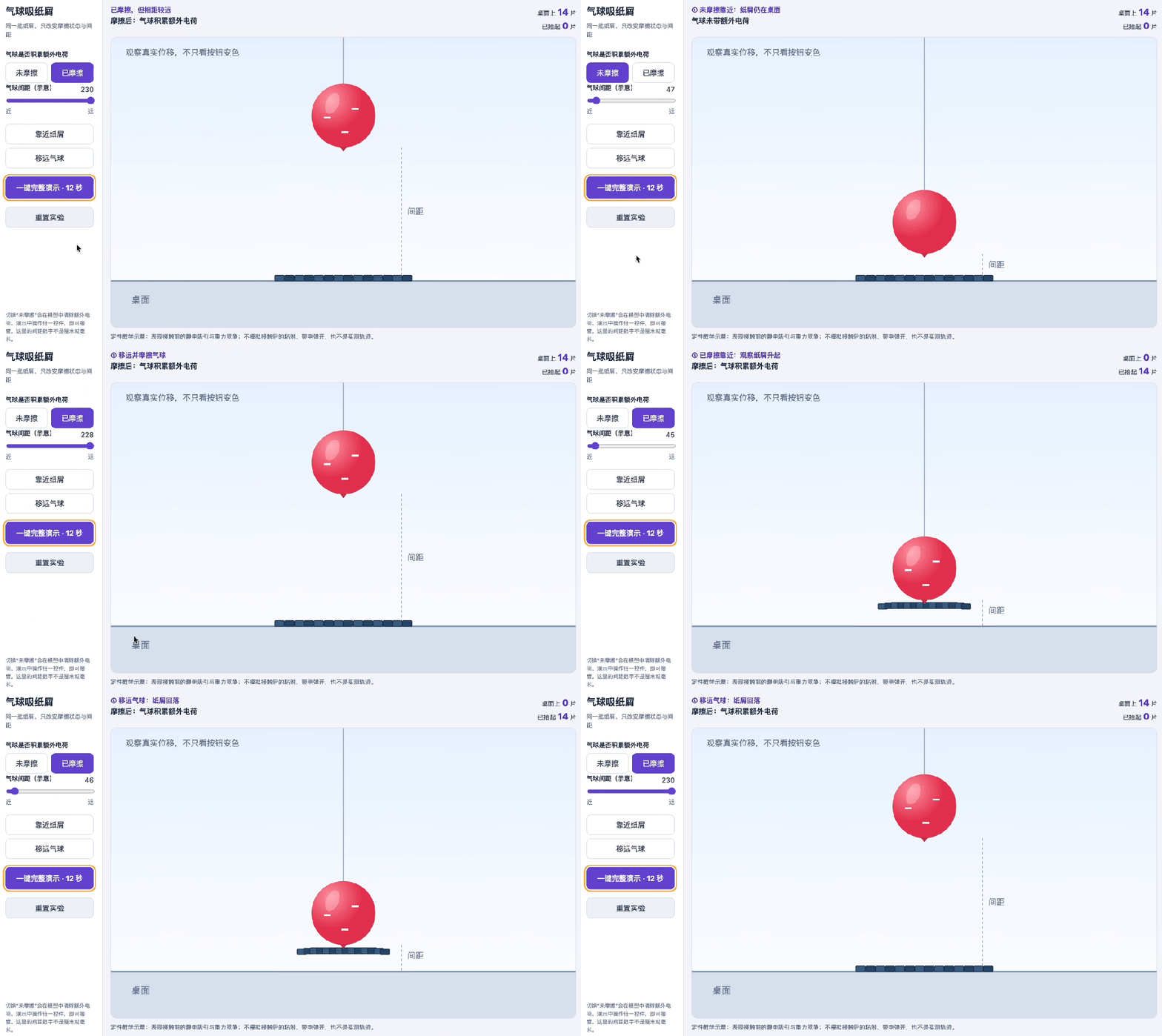
All the props are in the house: balloons, sweaters, paper bags, two bowls, and a necklace. Like a video classroom, it doesn't require precise instrument measurements, but rather, through our keen eyes, to discover the physical laws of life.
Animation and lectures are the same experiment.
Like the mouse, OpenMAIC is good at explaining physical principles using experiments. The following is a complete demonstration of a key it generates.
The subtitle reads "The same batch of paper bags, only changing the state of friction and the spacing", and the control variable code is printed on the UI; the tip is "observe real displacements, not just changing the color of the buttons".
It teaches a whole set of teaching methods, not a monk's motto.
 Old lessons, second shift AI interaction lessons
The oldest PPT that teachers can't afford is not thrown away.
OpenMAIC can be reused with one click, and after uploading a course, it can also create a similar one with new material in your original style.
Suppose you throw it a high school history lesson about changes and innovations in the PPT Dongdong system, and make it a lesson called "Documents of Yuan".
The main characteristic of this course is that each page is large in text, rich in images, the table clearly presents the content, mainly the overall overall structure.
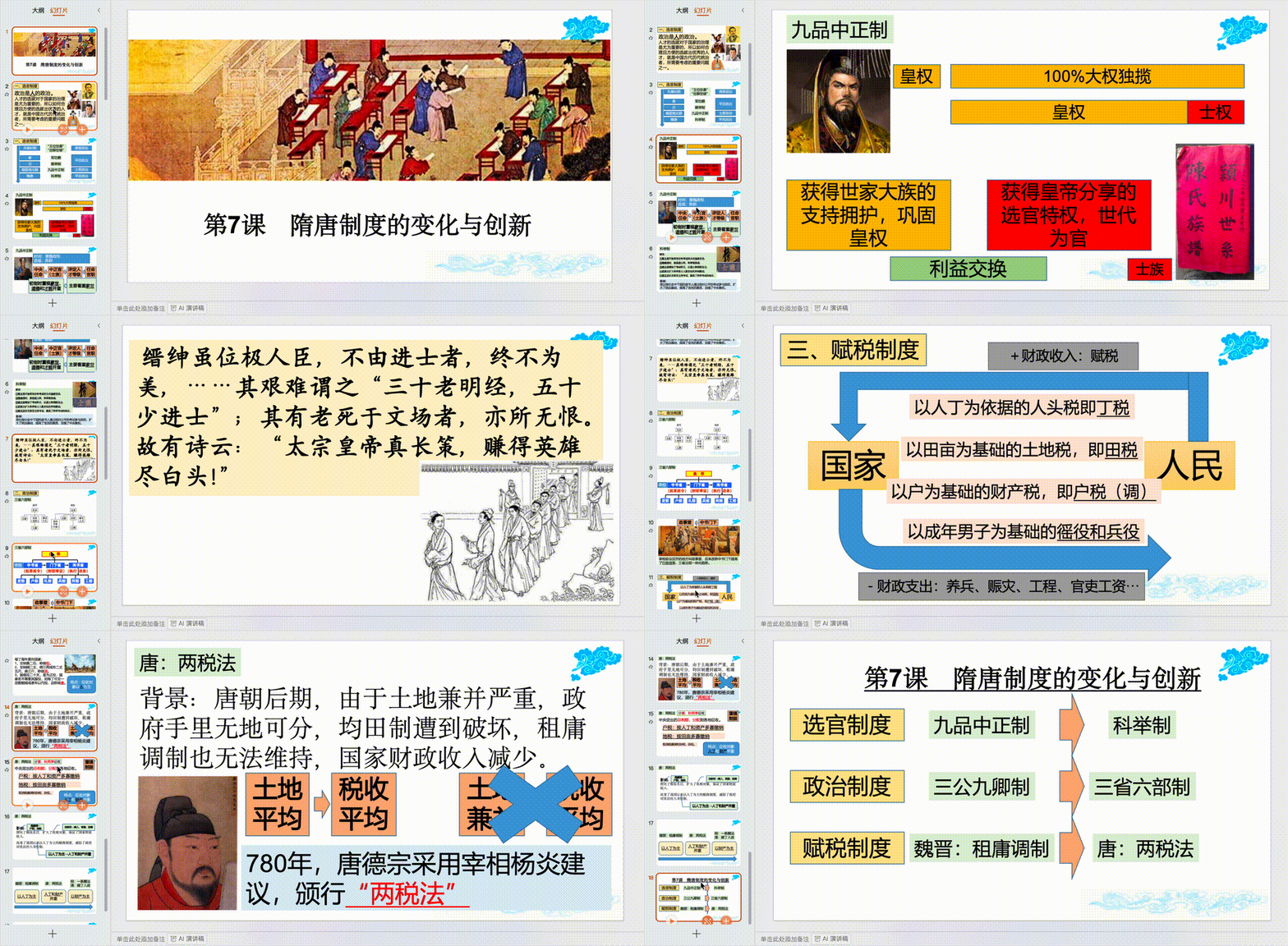
The moment the results of OpenMAIC came out, it was too much!
After the full importation of PPT, the original version remained complete, and the cover, layout, and font were almost heavily restored.
In addition, AI automatically combines voice interpretation and interactive web pages to render each page in Chinese.
The old AI interaction classes were replaced by secondary AI interaction classes.

In a professional mode, it can also modify a page's PPT, a topic, an interactive component with the precision of dialogue.
This is too practical for teachers who have accumulated lessons for years, without having to start from scratch and develop new skills directly on old assets.
And finally, these capabilities.Unlocked dead at the end of your web page。
OpenMAIC's Skill can be downloaded and imported into Agent workstations such as WorkBuddy, Codex, DeepSeek Harness, bean bag work, etc.

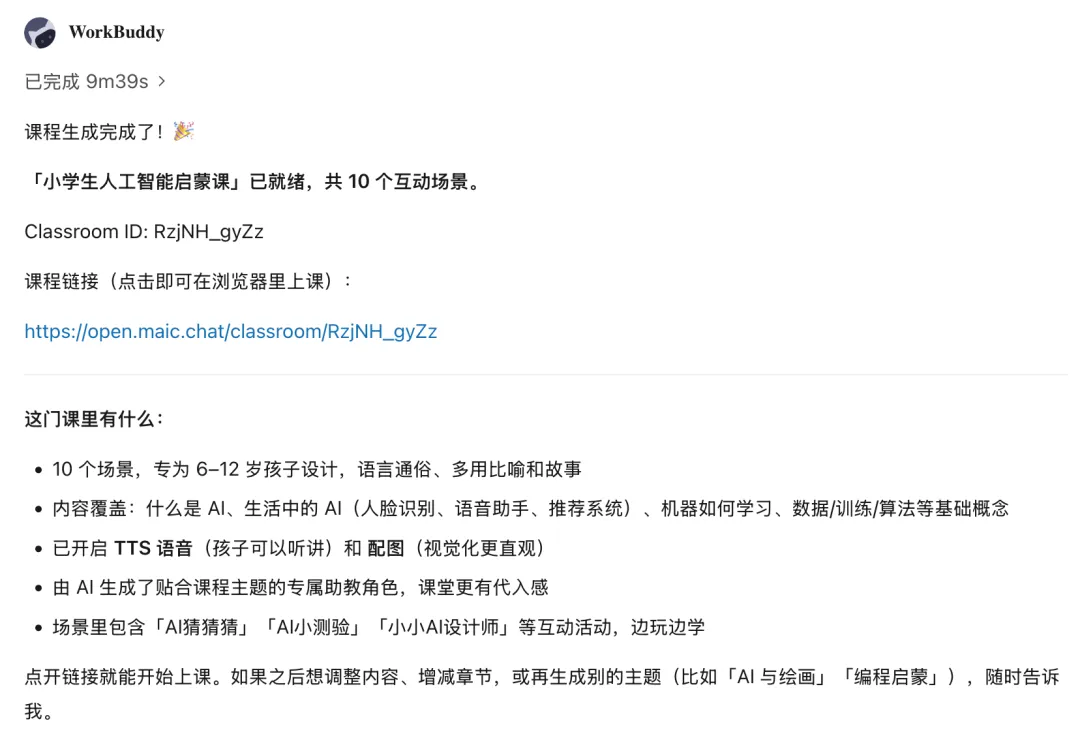
In WorkBuddy, he said, "Help me do an AI-enlightened class for elementary school students", calling for OpenMAIC Skill.
In a matter of minutes, AI ran out of a full interactive classroom.
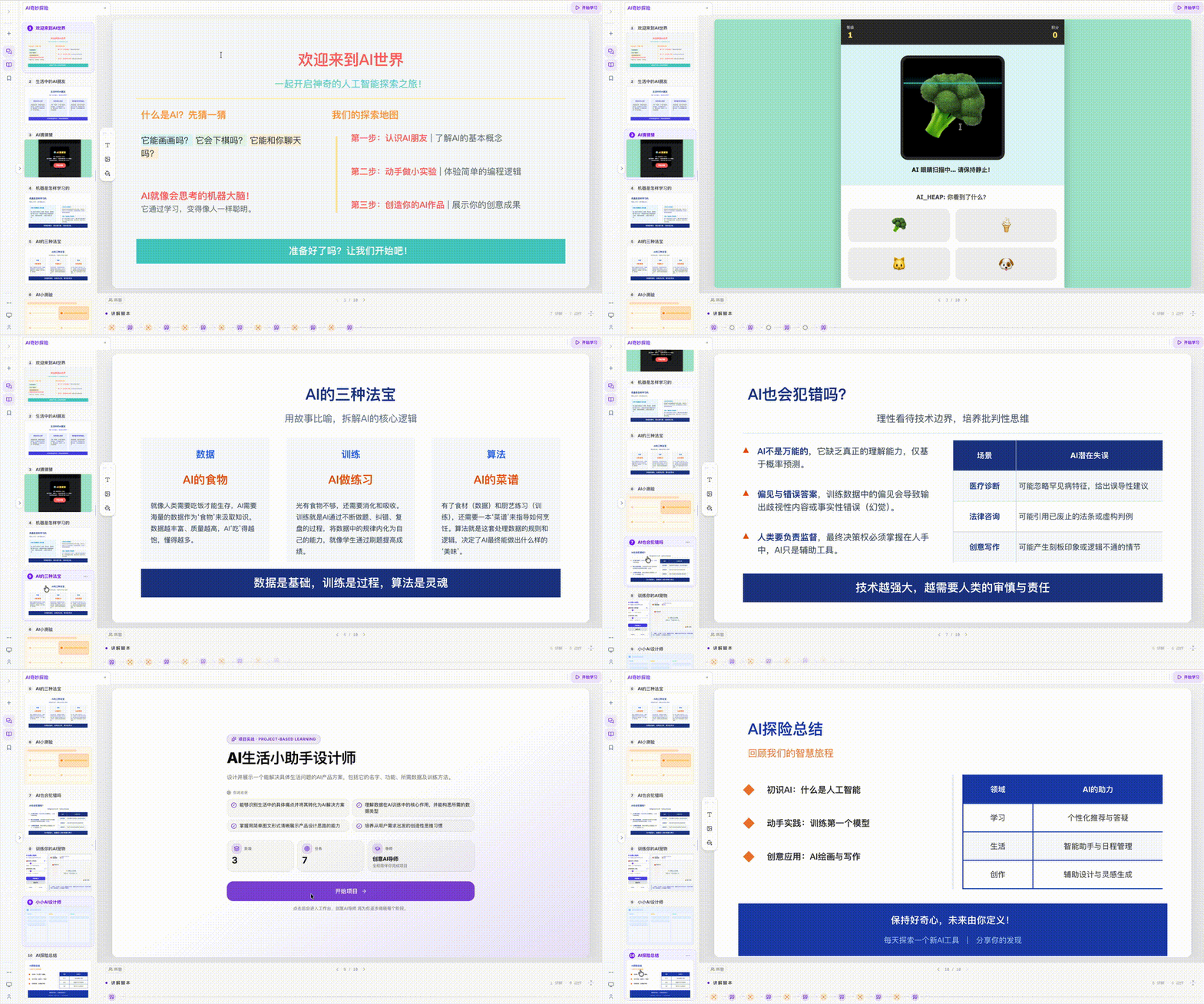
Then, using the Skill of OpenMAIC in the Codex to create a fluorescent transformation: any waveform is a class of circular superposition interactions.
I've been playing around with this screen for a long time.
A circle turns on the left, and the circle pulls a line, with the empty line perpendicular to the right, drawing a chord wave in real time. You drag the number of waves upwards, and the circle grows one by one, slowly pushing out the angles of the square waves.
The formula and the animation are biting together, which is the most important thing.
Abstract mathematical symbols and geometric shapes, for the first time ever, are actually equal to numbers. The phrase "any cyclic signal can be broken down into a series of simple waves" is a hundred times better than dragging the slider from 1 to 50 by hand.

There are also two details that are easily overlooked. It can be suspended by default and the upper right corner clearly marks the state; the display speed can be adjusted, leaving a "high frequency mode" switch.
In teaching, these two functions are more real than anything else: talking about key points at a stop, allowing students to look at the mirror and understand what the interpretation is all about.
V1.0 synchronizes the SDK and breaks the PPT into modules, generating interactive components, audio, whiteboard, and model calls.
The model layers are available to everyone, including DeepSeek, GLM, OpenAI, etc.
Schools joined the platform, and developers took one or two of these capabilities for free, and that's how open source should be.
A dragon, how did you get to Paris?The United Nations can't get to the podium with a few demos.
This is not just an AI teaching tool that the Qinghai team brought to Paris.
Behind OpenMAIC, what they want to share is a set of AI educational concepts that grew out of real Chinese classrooms.
It's a real lesson to stick to the foundations of education and let technological innovation take root.
Staying open to sharing and enabling technology to serve the multi-educational landscape
And these ideas don't just stay on paper.
Over the past two years, OpenMAIC has been repeatedly verifying, iterating, and moving forward into a broader educational landscape in real classrooms.
It is based on the long-standing technical and educational accumulation of the Qinghai team.
In April 2024, the School of Education and the Department of Computer Science at Tsinghua University formed a joint team to figure out what classrooms in the AI era would look like.
The project is called MAIC and is headed by an assistant professor at the Faculty of Education in Jiwan.
The first pilot class opened to a general AI class at Qingdao University, enrolling 700 people and running more than 100,000 interactions. The second semester expanded to all disciplines of civil and technical medicine, enrolling 2,000 people.

In April 2025, the national smart education public service platform went online, with a cumulative enrollment of 192,000 users by the end of July this year.
It wasn't until March of this year that the Chinese team officially opened the OpenMAIC-MIT protocol, completely free of charge.
By August 20, the Live Demo platform had gathered 550,000 creators, generated millions of AI courses, more than 34 million interactions, and users in 154 countries and regions.
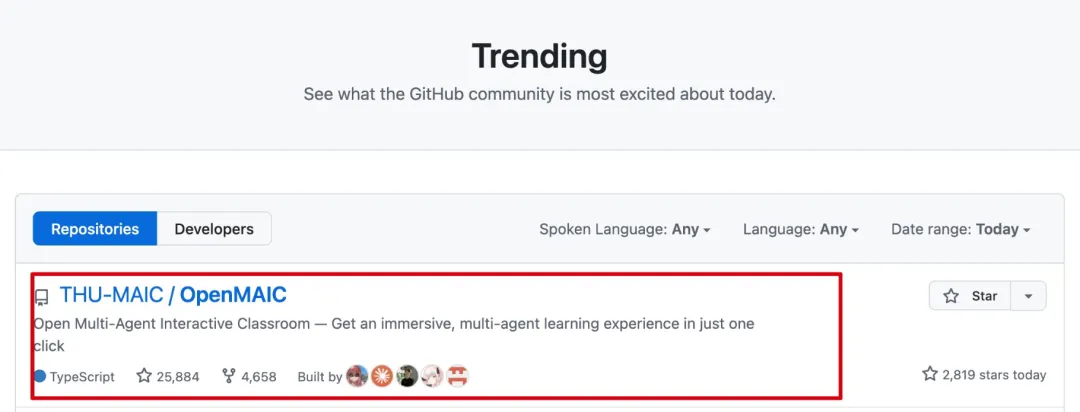
OpenMAIC topped the GitHub Trending Top1 for the first week
There are 13 faculties and over 50 classes in the school.
Outside of the country, countries and regions such as the Middle East, Brazil, Malaysia, Germany, France, and the United States are also promoting localization.
A non-profit, open-source project to achieve this is not a surprise, it is the result of a two-and-a-half-year round of grinding.
One mission burned 3.62 million tokensIt's time to talk about what this means for the industry.
OpenMAIC has released a set of numbers that are worth playing with.
The old version generated an interactive classroom, consuming an average of 35.8 million tokens to complete a complete creation task. V1.0 consumed an average of 36.25 million, which was 10.1 times that of the old version. The average user came back with the Agent 4.1 rounds and called the model 74.3 times on average.
The platform has consumed 883B Token cumulatively, consuming 68B for almost 30 days, a 203% increase.
This group of numbers says the same thing:Education is becoming a Token-eating phenomenon.
This path of AI coding has already passed.
When AI goes from answering a question to taking over an entire professional process, the number of calls goes from one to dozens to hundreds.
OpenAI's Codex has surpassed the 10-million mark, with annual revenues exceeding $2.5 billion, making it an important engine for Anthropic's growth. After the launch of GLM-5.2 for coding and long-range Agent missions, the market cap hit HK$1 trillion.
AI Coding pioneered a rule of thumb: Once a professional agent runs, the token consumption is indexed.
Even Agent's offices are grabbing the next door. WorkBuddy, the bean bag office, and thousands of people are reaching out to education and taking on the skills of a group of teachers' offices.Teacher's office tokens are not equal to education tokens.
To write tutorials, organize material, and consume, Token only covers this section of the spare lesson.
The real educational scenario is a complete personalized chemistry learning experience in which students and AI grind their knowledge into their brains one at a time. Chains are longer, rows are longer, patterns are tighter, and the requirements for model performance and underlying infra are not at one level at all.

Preparation classes are just the beginning, and the process of learning is the main one. The Agency's job is to speed up the process, and the Agency's job is to educate the person.
After coding, education could be Agent's next big entry.
What exactly is open source out there?OpenMAIC is free and open-source from start to finish, not for profit.
The team did something else calledOpenMAIC ArenaThe same teaching task is thrown to different models, and the results are generated anonymously, with the user experiencing and voting on which one is better.
Thinking like the Chatbot Arena, who will teach more than the Chatbot Arena. This list will also in turn determine which model will teach more than the Agent and the SkillTrain, with a public answer for the first time.
This is much larger than a ranking. Now everyone defines what is called good AI education in their own rating systems, who says they are the best. Open source offers technical pathways, teaching methods and evaluation processes, and different programs can be publicly tested and fairly compared.
It is the industry that has the opportunity to move from every word to every foundation.
The team itself summarizes the meaning of open source in one sentence: open source is not an educational software, it is the ability of everyone to build their own learning environment.
Agent has learned to code, and now he's learning to teach.
After 90 minutes in Paris on 8 September, how many teachers in the world will open the Chinese team's open-source project and turn it into what it looks like in their classrooms?
It's so simple that every book you can't read, every paper you can't move, can be made into a clear lesson on the ground.
The term "equal education" has been used for many years. From people getting the same material, to people getting a teacher that suits them, there is a gap in the middle.