It's the first time in the history of the world.
OpenAI has just released GPT-Images-2.5:
Production delays were halved, editing accuracy improved, new Sketch hand drawing input functionality was added, and the API ended with the first slow-release of two-tier models.
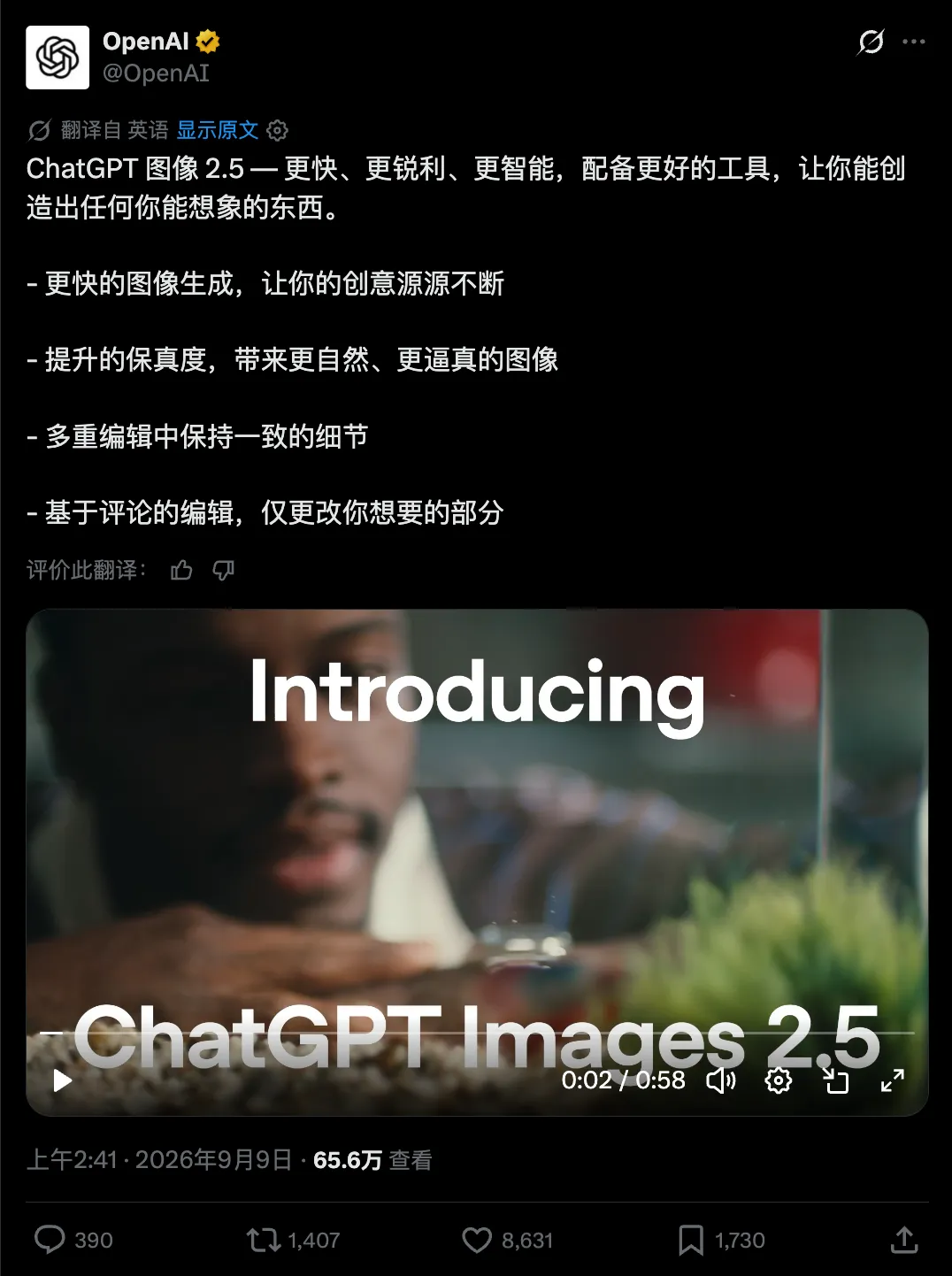
It is available to ChatGPT, ChatGPT Work and Codex users, free of charge.
According to this figure, about 4.3 million images per day pass through the system, generating a rapidly changing sensory coverage far beyond normal functional transformation.
OpenAI has published the combined output of ChatGPT Images and the GPT-Image API: 3 billion images per week.
Demo surprise: Chinese decoder is goneHow powerful is GPT-Image-2.5?
The Chinese code has disappeared!
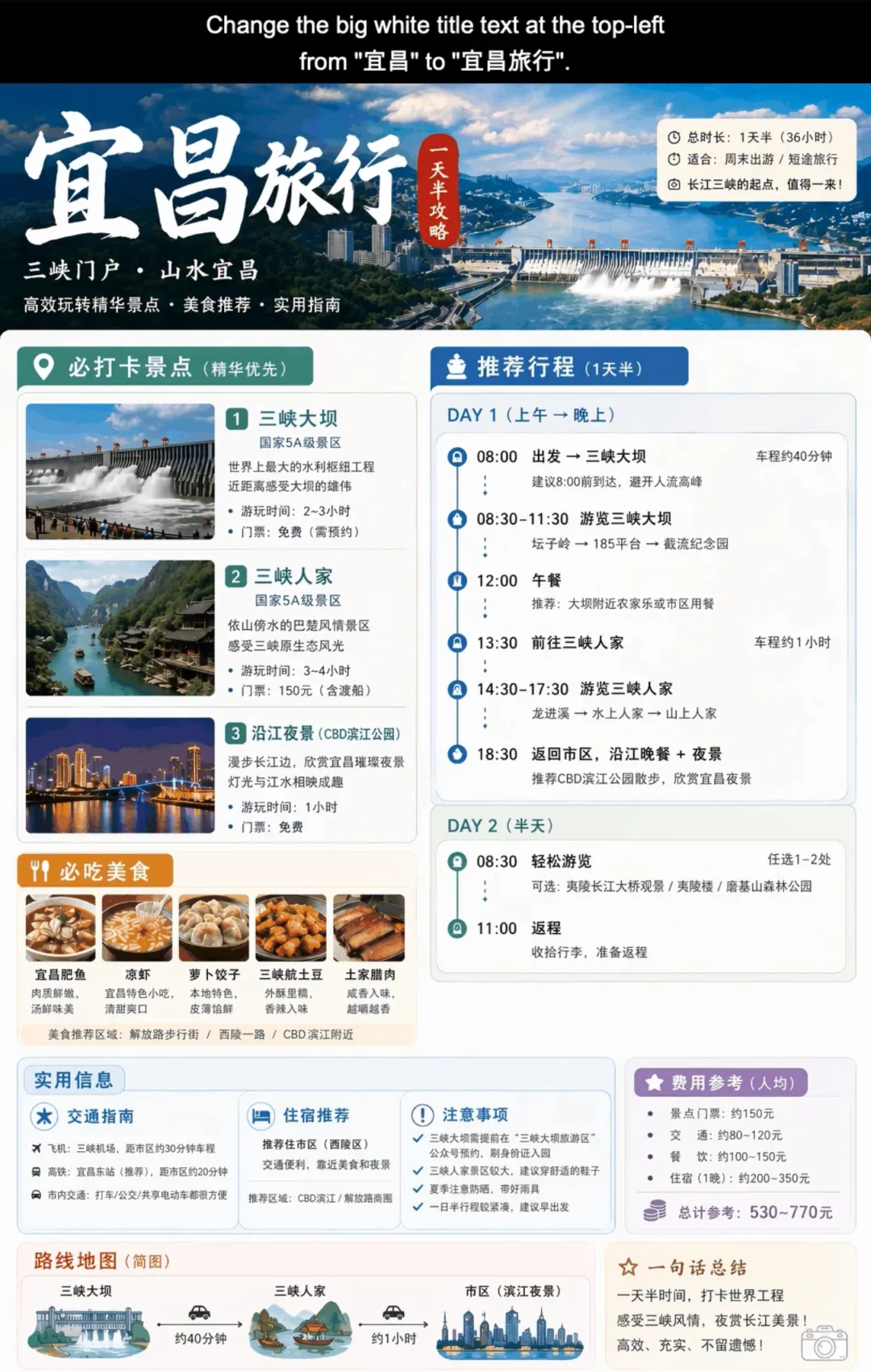
This is a reference image:
This is a retrospective image of the output:
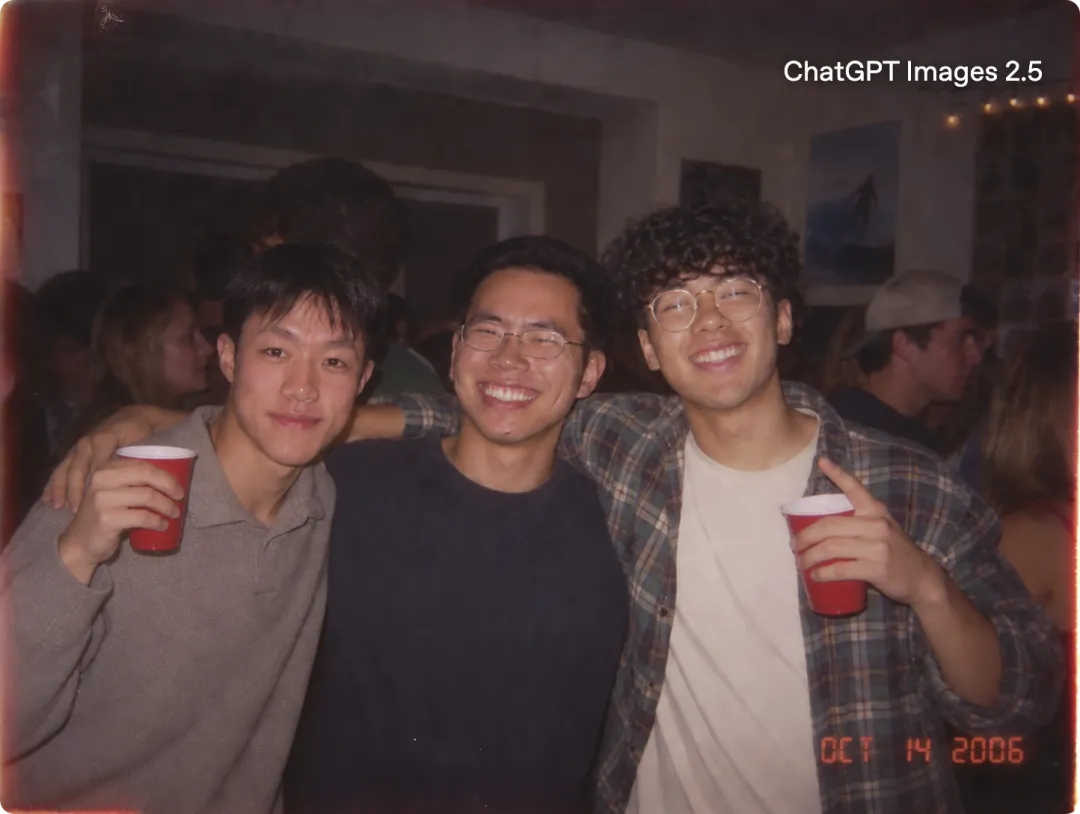
Can you tell the difference between real photos and AI-generated images?
Old photos will be printed, extracted and re-posted into high-resolution e-photos, a bunch of snacks.
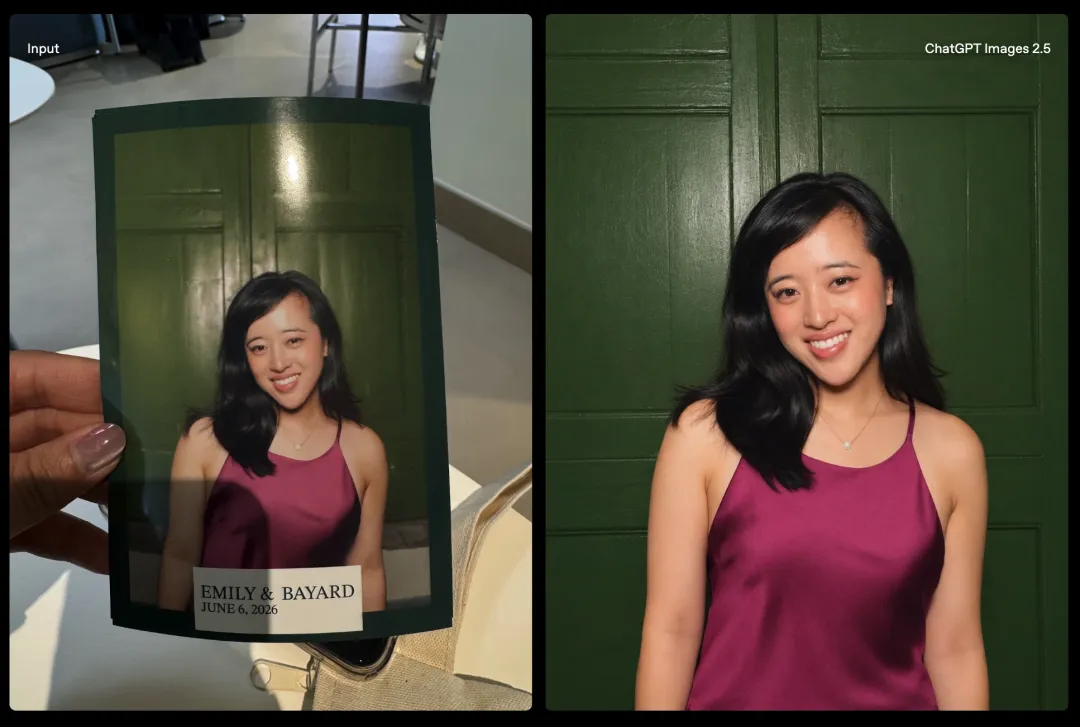
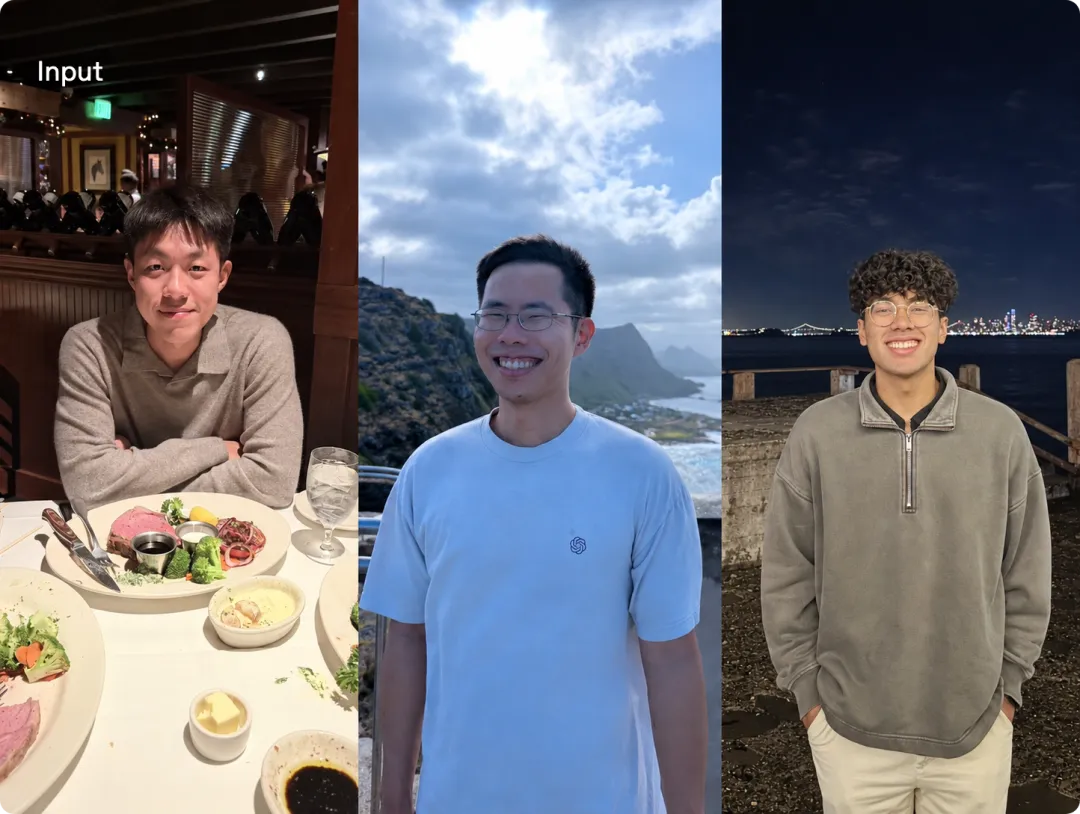
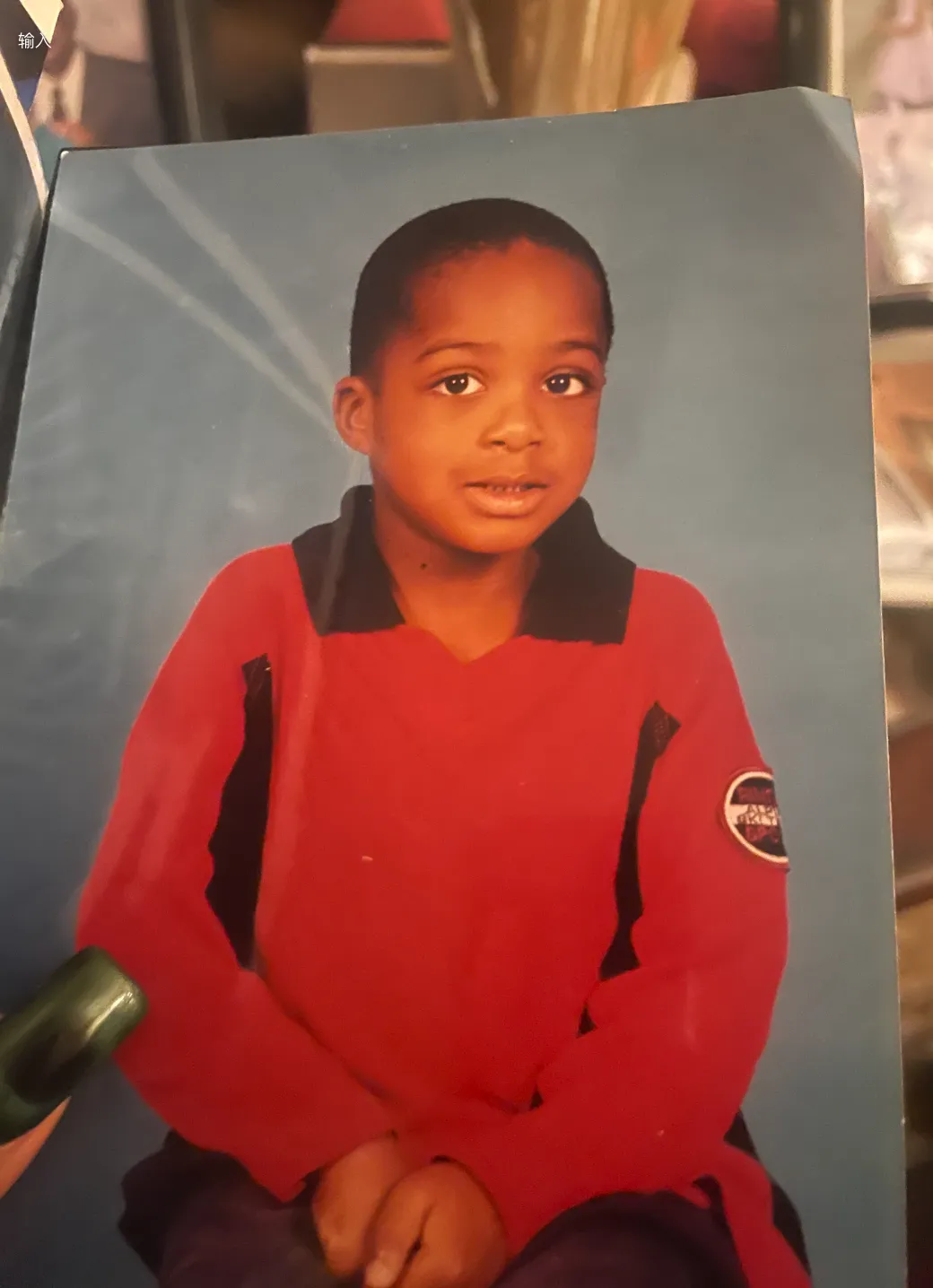
If you want to change the visual effects of the test clothes, give them directly to ChatGPT:
Input:
Output:
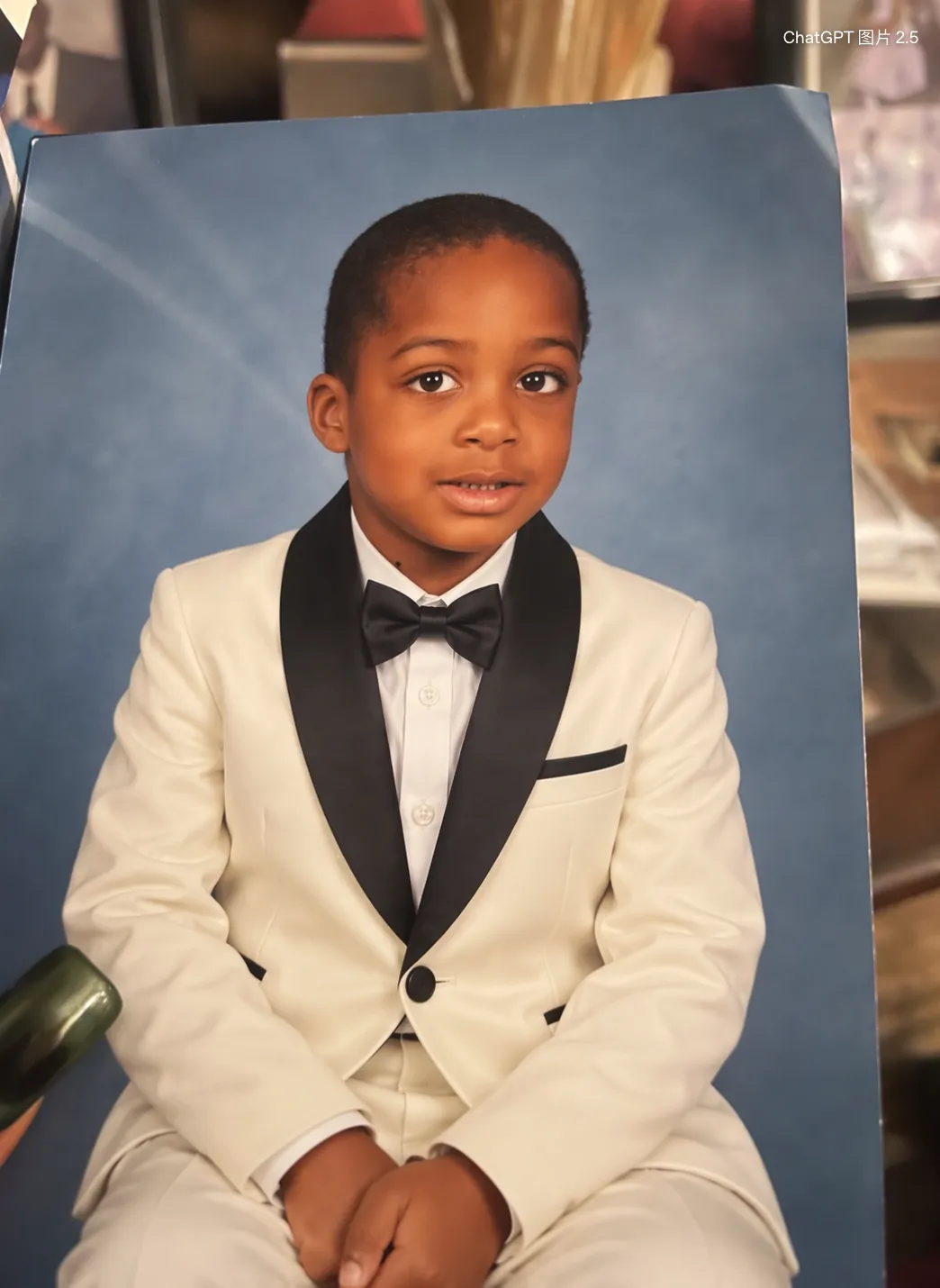
The original image was inserted, and the child screwed up:
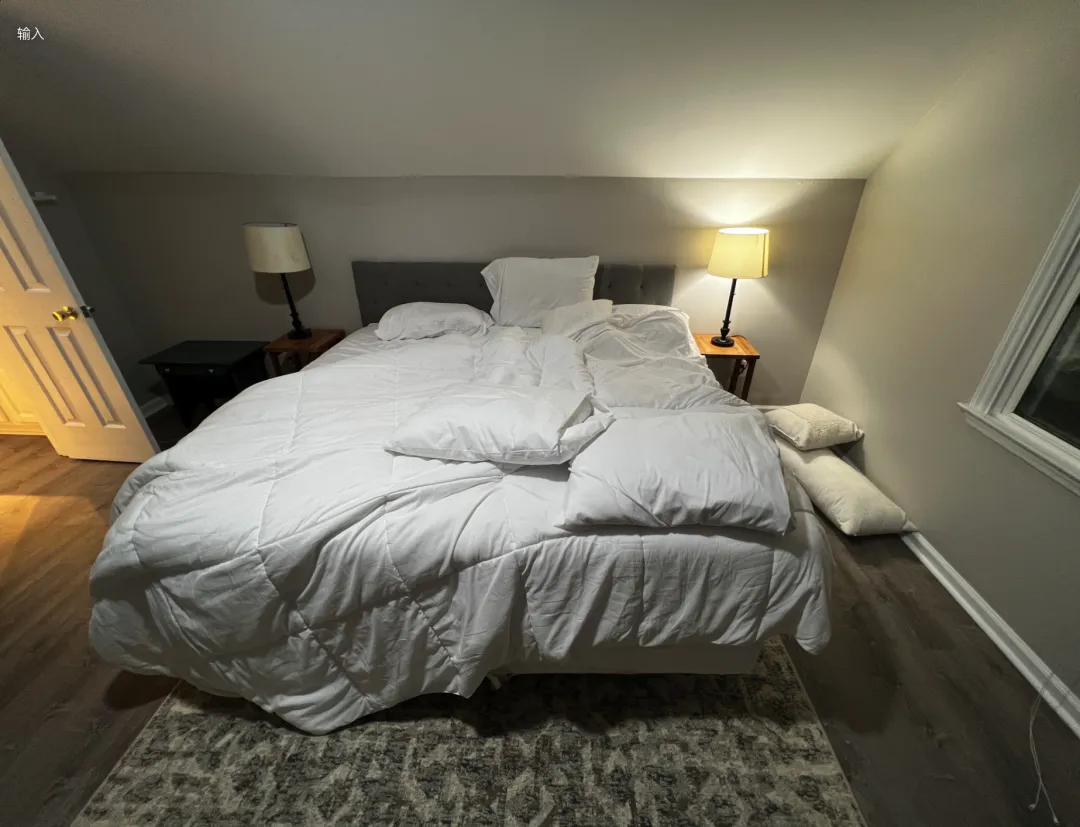
The following is a list of some of the images that have been uploaded:
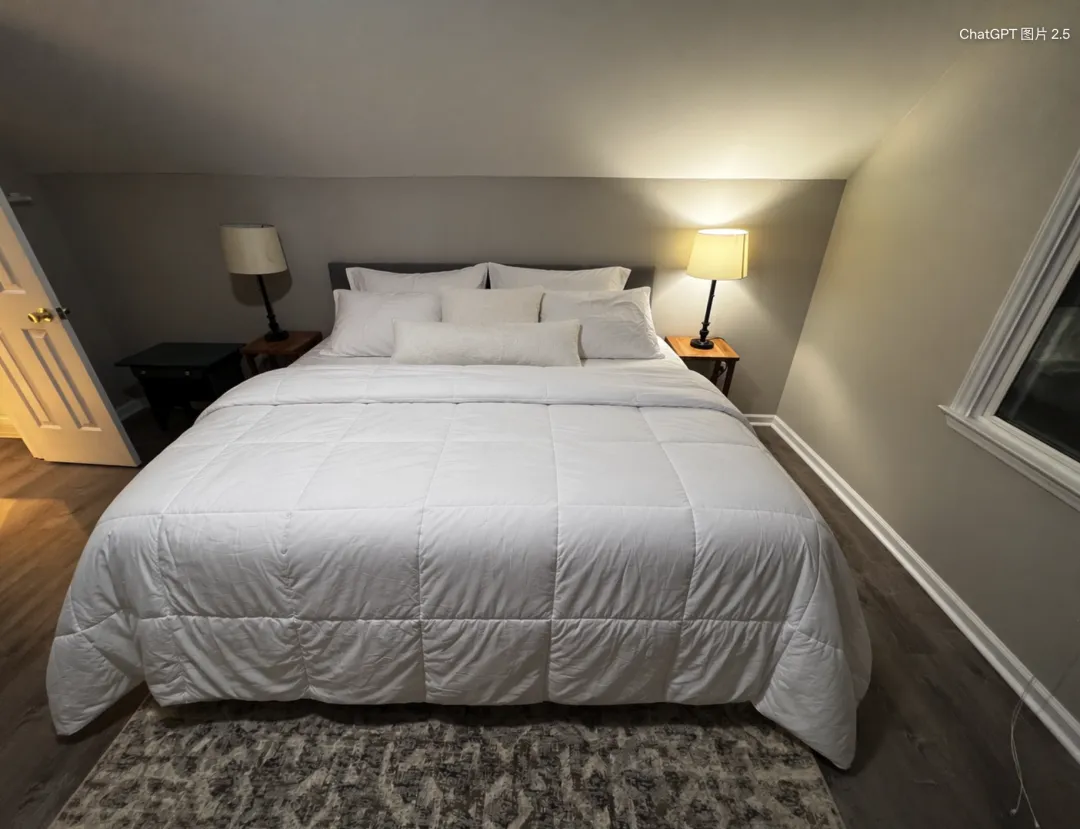
The scene's consistency is so strong that you can't see where the gang is going.
Almost half, and it's all right.Speed improvement is the most direct. The figures given by OpenAI are up to a 50% reduction in generation delays compared to Images 2.0.
At the same time, the color quality of the images and textures is improved, and the subjects of the reference images are also better restored.
Precision editing addresses an old problem with the Graphics tool: the user requests to change the location, and the model changes the parts that don't allow it to move.
According to OpenAI, Images 2.5 can only modify the designated area, retaining the composition, lighting and subject characteristics of the remaining elements of the image, and significantly improving stability under complex backgrounds and multi-subjective scenarios.
Users can also place comments directly on the image, locate the locations that need to be modified, and operate logically close to the design tool Figma.
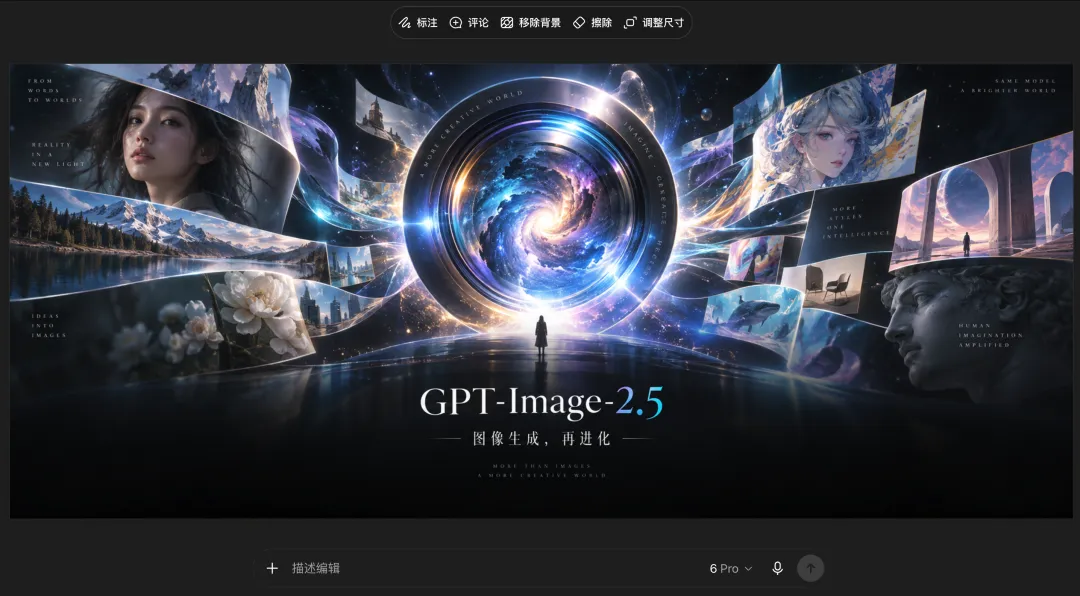
Multi-cycle editing consistency is the third improvement.
When the same image is modified repeatedly in a long conversation, the editing results of the previous rounds are maintained, and the image quality does not decrease with each round.

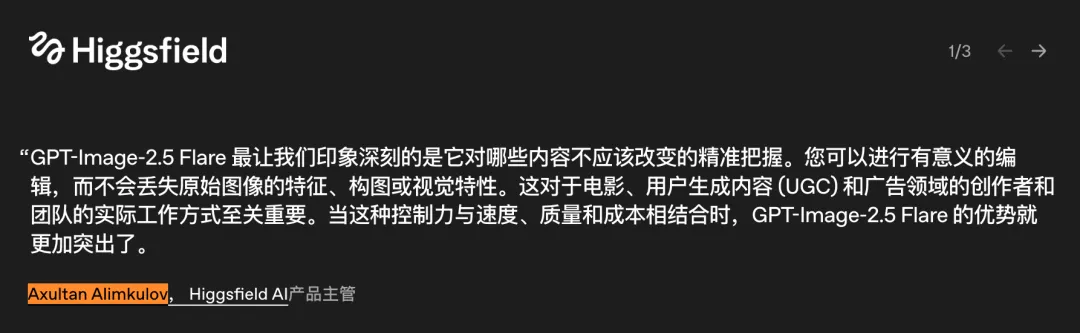
Axultan Alimkulov, Head of Product at Higgsfield AI, commented on Flare:
What impressed us most was its understanding of "what not to change".
Make a meaningful edit without losing the characters, composition and visual style of the original.
At the product level, Images 2.5 brings four new features.
The input to Sketch is to enter @Sketch into the ChatGPT dialog box and open the hand drawing board. The user draws a sketch, with text describing the style and details, and ChatGPT uses the sketch as a reference to generate the finished product.
Examples of OpenAI include room layout sketches, interior design renderings, character outline sketches, and illustrations. The curtain does not paint, but instead draws spatial relationships and approximate proportions, allowing the model to understand the structure of the image.
The templates cover high-frequency formats such as posters, merchandise charts, brochures.
Select a template, fill in the information and style preferences, and map the model according to the default structure, avoiding the attempt to write Prompt from scratch.
Prompt sharing allows users to send out a complete Prompt that generates good graphics, and others to bring in their own photos and details to create personal versions within the same framework.
A "80s retro portrait" Prompt has been circulating on social media platforms, allowing users to upload self-portraits with the same style of photos.
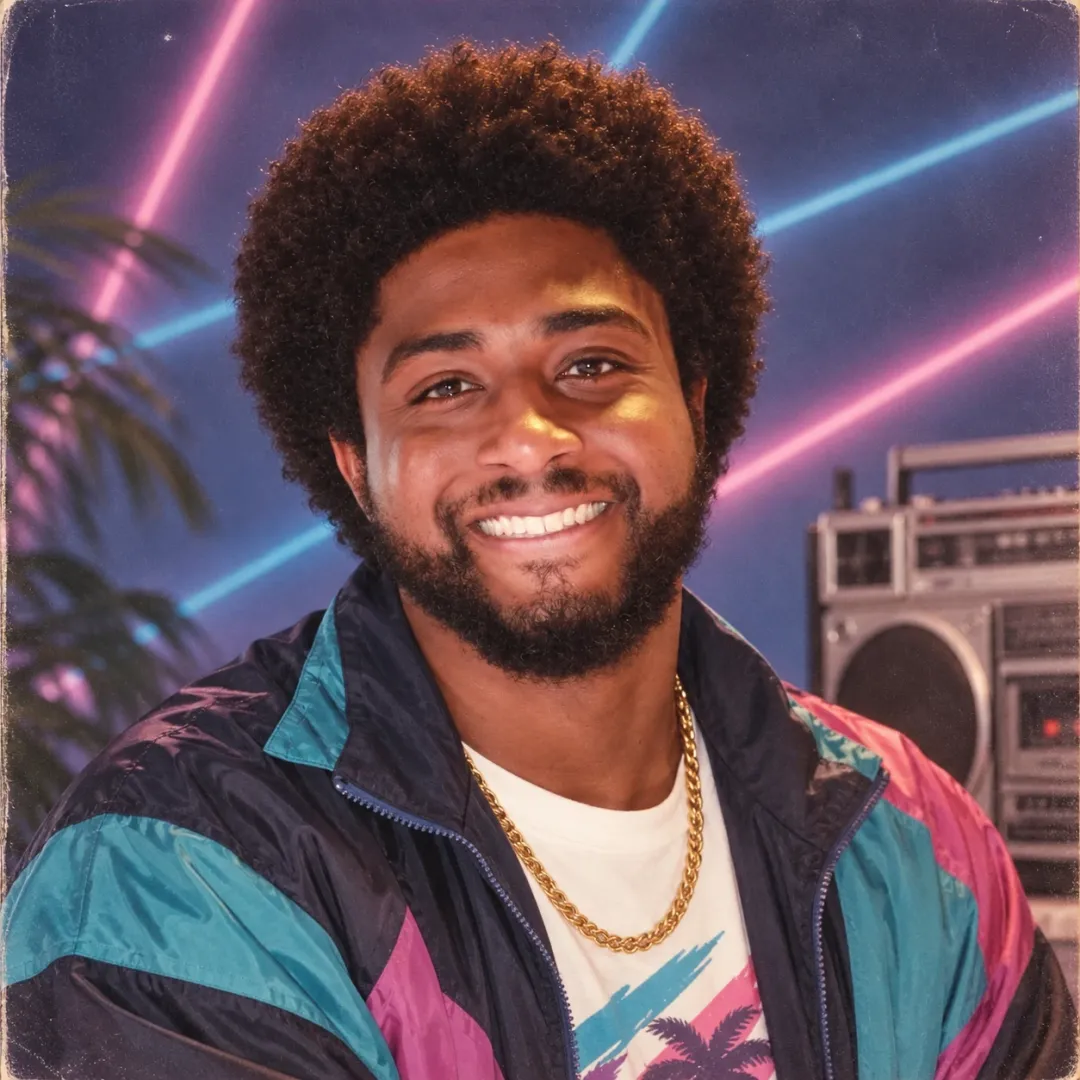
The four functions point to the same change: the process of transforming images into images in the brain, no longer just by typing!
Flare and Sunburst: API for the first timeFor developers, OpenAI is simultaneously launching two image models at the end of the API: GPT-Image-2.5 Flare and GPT-Image-2.5 Sunburst.
Flare is primarily produced at speeds and in bulk, and OpenAI has positioned it as the default option for most applications.
Applicable scenarios include social content, product experience charts, fast prototyping and high-frequency charts.
The data provided by Lucky Liao of the Manus review team is more specific: Flare achieved 2 to 4 times the GPT-Image-2 mapping speed in their tests, and the improvements in transparent background generation are directly useful for programmatically generating brand materials, demonstration texts, and web graphics.
Sunburst locates high-end creative workflows in exchange for more sophisticated editing controls with longer generating times.
The typical scenario given by OpenAI is a graph of brand-marketed finished materials and refined products.
Adobe has confirmed access to Images 2.5 in Firefly.
Matt Chotin, Adobe's senior product director, said that version 2.5 brought faster generating speeds and consistency in resolution, allowing images to remain clear and authentic after multiple iterations.
The split of the two models corresponds to two needs: high frequency, low latency and high precision customization.
Flare delivers runtime scenarios, Sunburst delivers premium scenarios, and developers don't have to wait for unnecessary accuracy, depending on the business model.
This is the first time that the OpenAI image API has synchronized product layering, logic and language model APIs in terms of speed and quality.
Images 2.5's name continues the pace of OpenAI's image product line: architecture unchanged, speed and accuracy take flight one round at a time.
At the end of 2024, GPT-Image-1.5 uses the same system.
Two versions of.5 are less than a year apart, and the frequency of conversion of the image model is aligned with the language model.
This is the world's strongest bio-graphic model, leading the way in segmentation.
OpenAI's continuously enhanced multi-modal capabilities, most likely in the face of Anthropic models, enhance the capabilities of base models such as GPT-7 by including Computer-Use capabilities.